
Catch Survey Analysis Relationship of absolute and relative

Catch Survey Analysis
Relationship of absolute and relative abundance • Quick aside for “stratified random sampling”
Indices of abundance • Use to determine the relative abundance of population • Types: • • CPUE from fishery Spawn deposition surveys Standardized trawl surveys Acoustic surveys
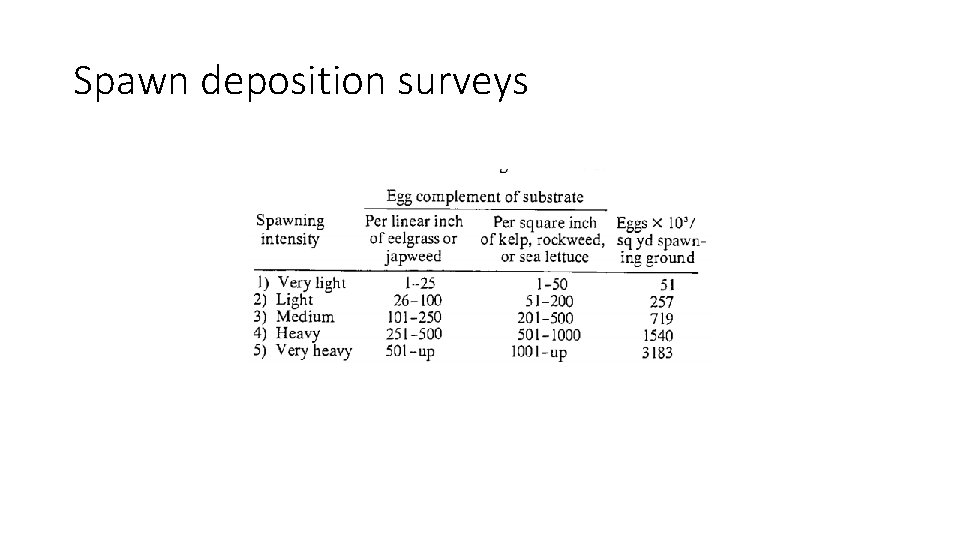
Spawn deposition surveys
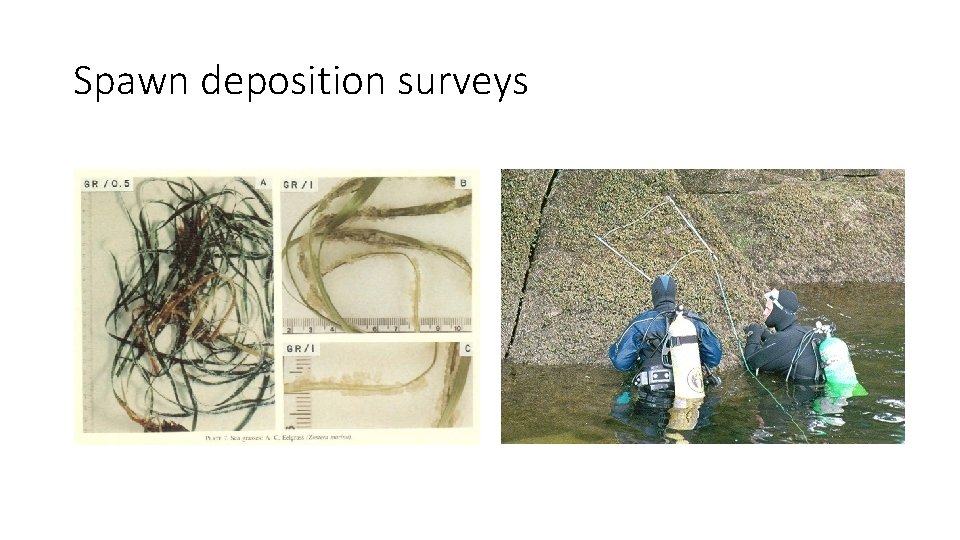
Spawn deposition surveys
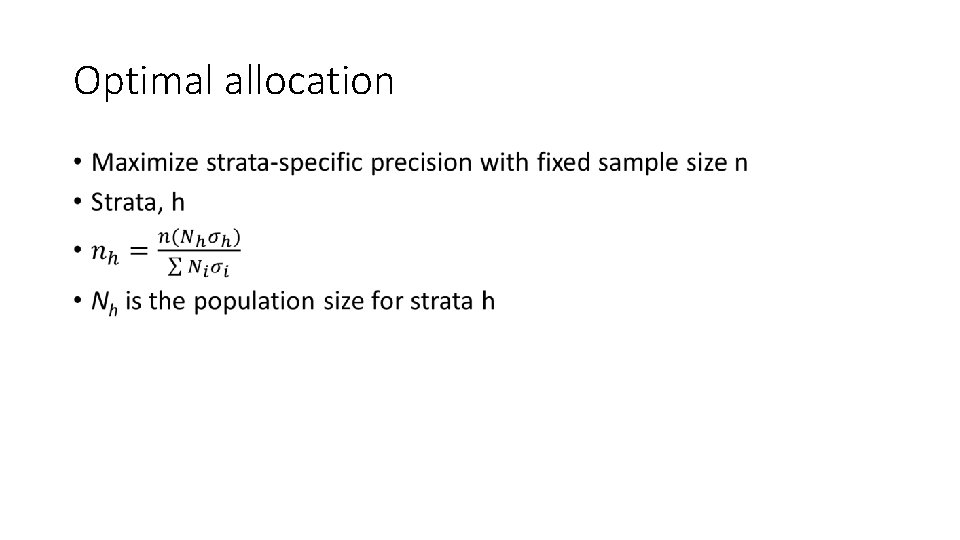
Optimal allocation •
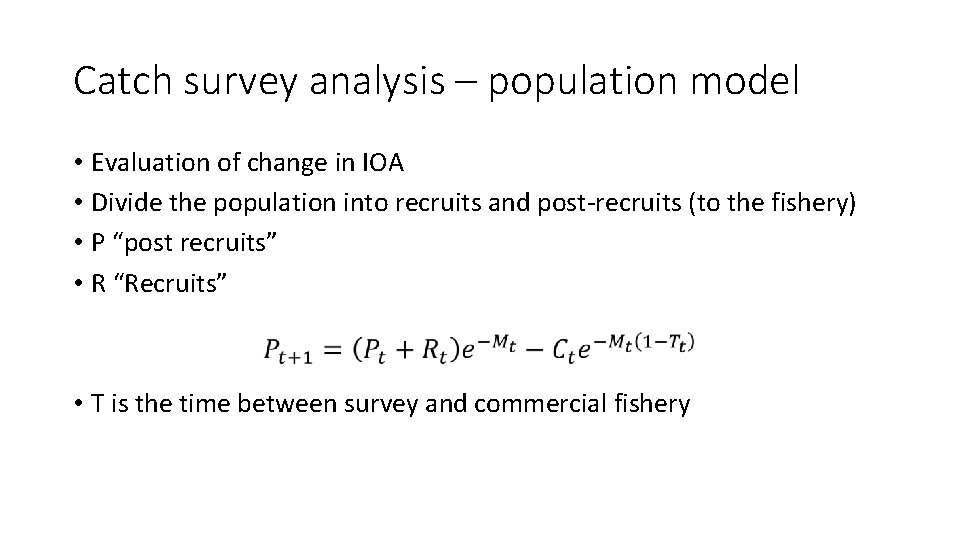
Catch survey analysis – population model • Evaluation of change in IOA • Divide the population into recruits and post-recruits (to the fishery) • P “post recruits” • R “Recruits” • T is the time between survey and commercial fishery
So, we have a stage-structured population • Lets evaluate the population model.
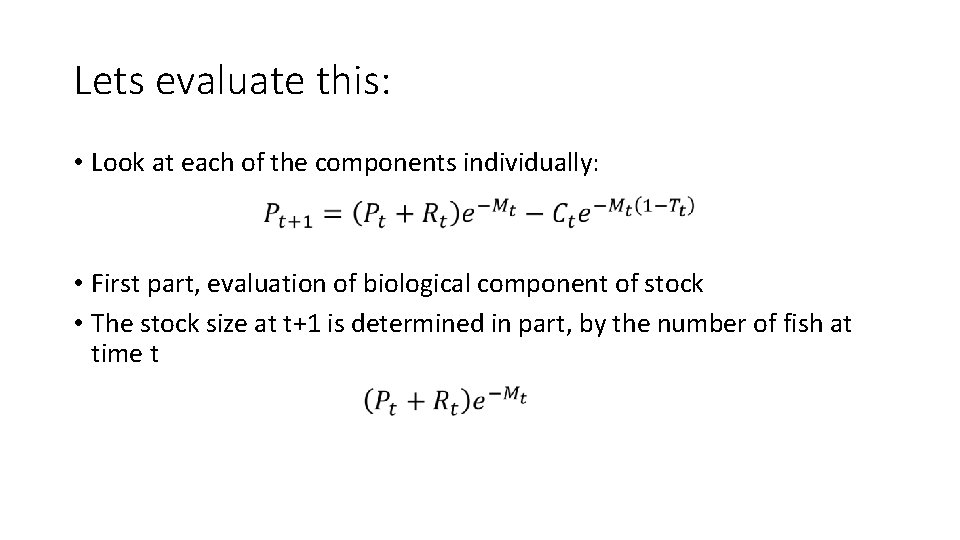
Lets evaluate this: • Look at each of the components individually: • First part, evaluation of biological component of stock • The stock size at t+1 is determined in part, by the number of fish at time t
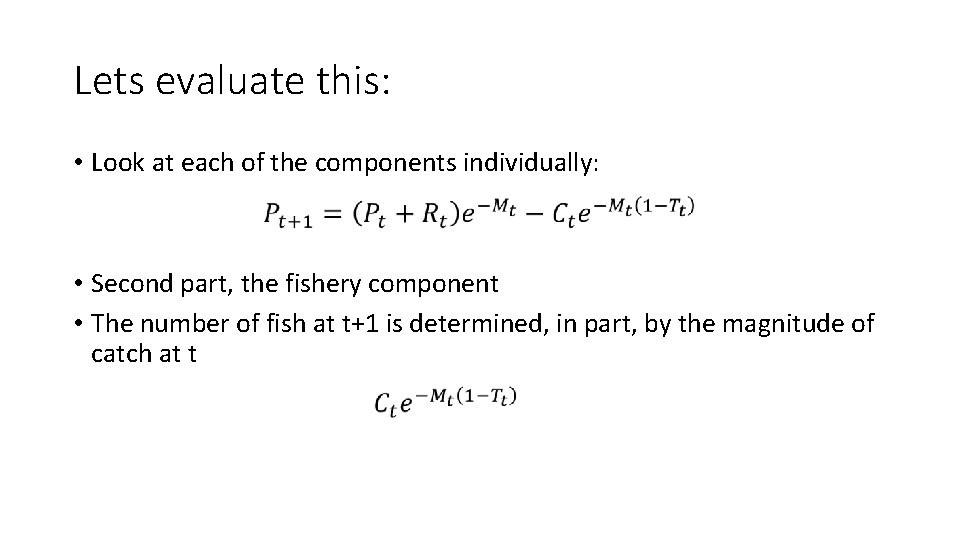
Lets evaluate this: • Look at each of the components individually: • Second part, the fishery component • The number of fish at t+1 is determined, in part, by the magnitude of catch at t
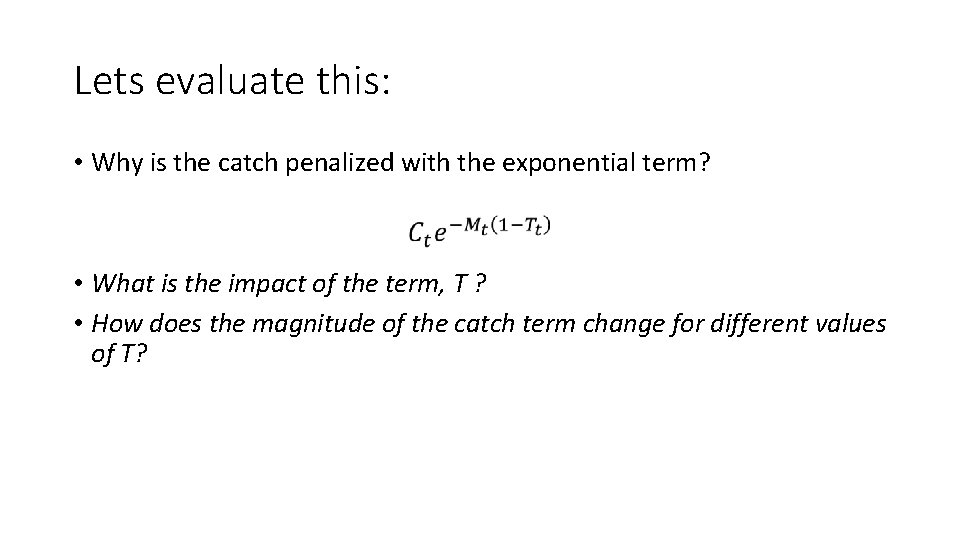
Lets evaluate this: • Why is the catch penalized with the exponential term? • What is the impact of the term, T ? • How does the magnitude of the catch term change for different values of T?
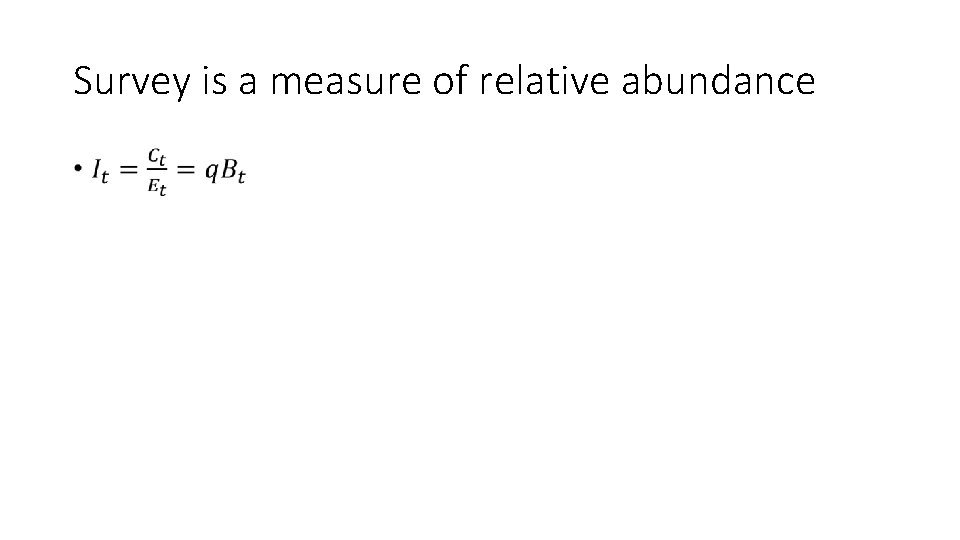
Survey is a measure of relative abundance •
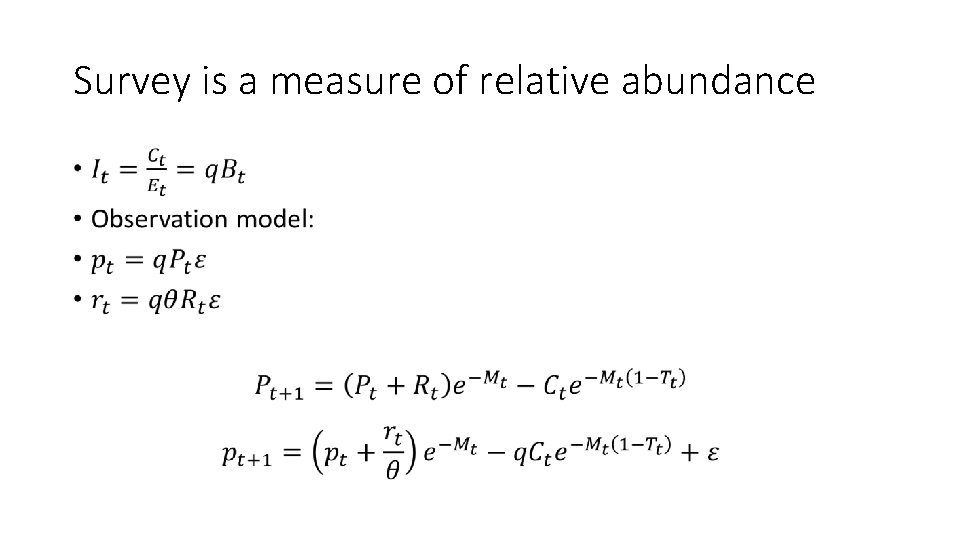
Survey is a measure of relative abundance •
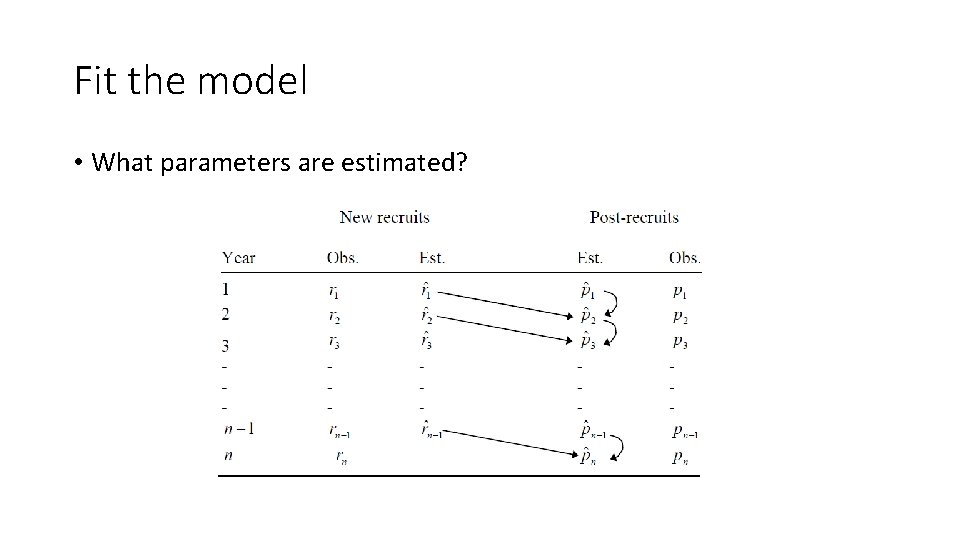
Fit the model • What parameters are estimated?
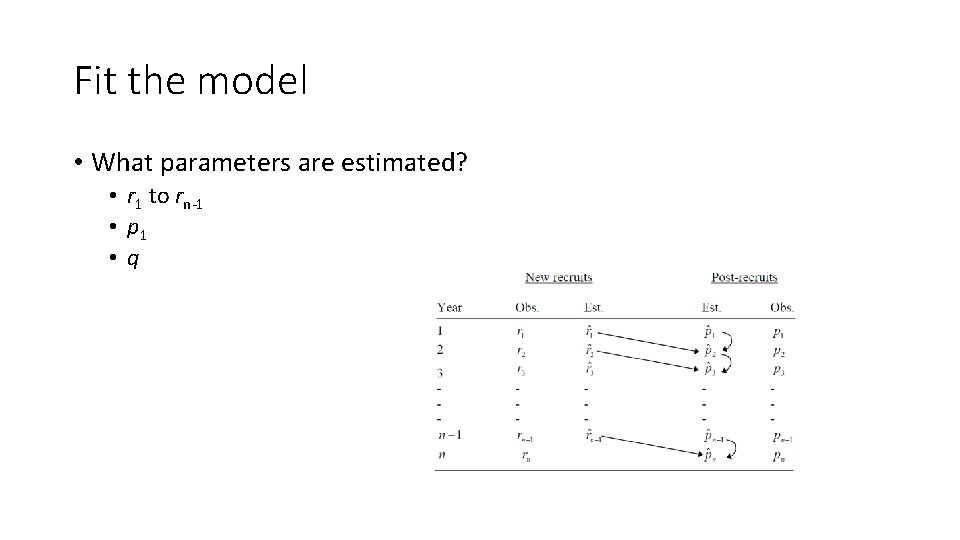
Fit the model • What parameters are estimated? • r 1 to rn-1 • p 1 • q
- Slides: 15