
Catastrophic Events Natural Disasters Natural Disaster Any event




- Slides: 60
Catastrophic Events Natural Disasters
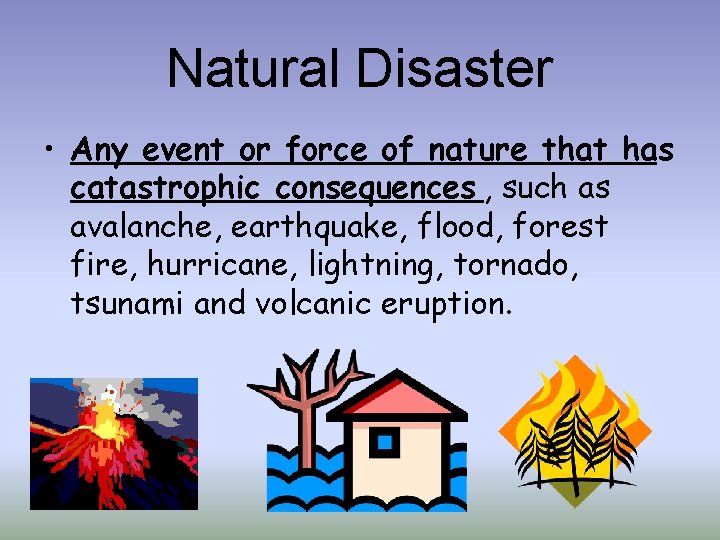
Natural Disaster • Any event or force of nature that has catastrophic consequences , such as avalanche, earthquake, flood, forest fire, hurricane, lightning, tornado, tsunami and volcanic eruption.
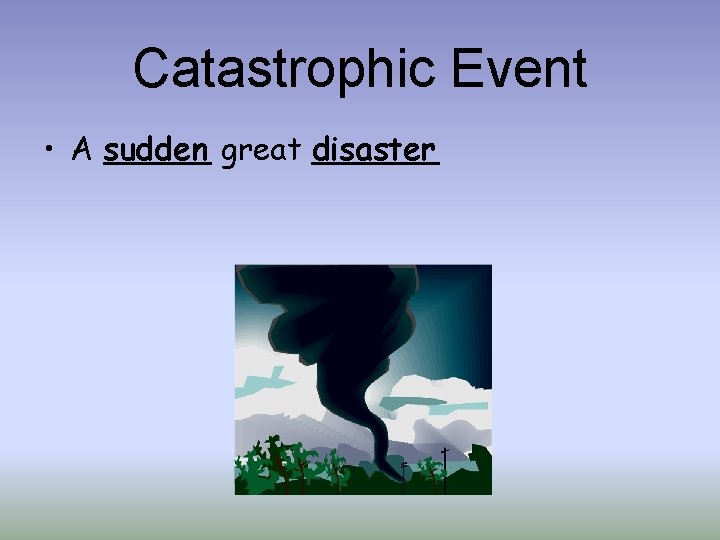
Catastrophic Event • A sudden great disaster
Disasters • Catastrophic events are sudden , natural or man-made, situations where change & destruction occur. • All catastrophic events are the Earth’s way of maintaining equilibrium during change. • Since Earth’s dynamics are uncontrollable , accurate predictions are not always possible; studying these has an impact on scientific thought, society & the environment
Equilibrium • Equ = equal libra = a balance • A condition in which all acting influences are cancelled by others , resulting in a stable, balanced, or unchanging system. • A state of balance between any powers, forces or influences.
What you need from this Power. Point… • • • Name of natural disaster Main features of it How does it form? Where is it most likely to occur? What impact it could have on humans, wildlife, environment?
Wildfires • Lightning strikes cause one out of every five wildfires. • Wildfires can spread slowly from burning material along the forest floor or spread rapidly by wind causing it to jump along the tops of trees. • Drought conditions, wind, high temperatures and low humidity are conditions that help wildfires spread.
Wildfires • Wind has the biggest impact on a wildfire. • It gives the fire additional oxygen, further dries the fuel, and pushes the fire faster. • Wildfires can produce their own winds that can be ten times stronger than the winds around them.
Wildfires • A wildfire can destroy millions of acres of forest. • Watersheds can have all the vegetation burned off leaving the area prone to erosion. • Animals may become endangered due to habitat destruction. • The economic losses can impact humans if a fire sweeps through an inhabited area.
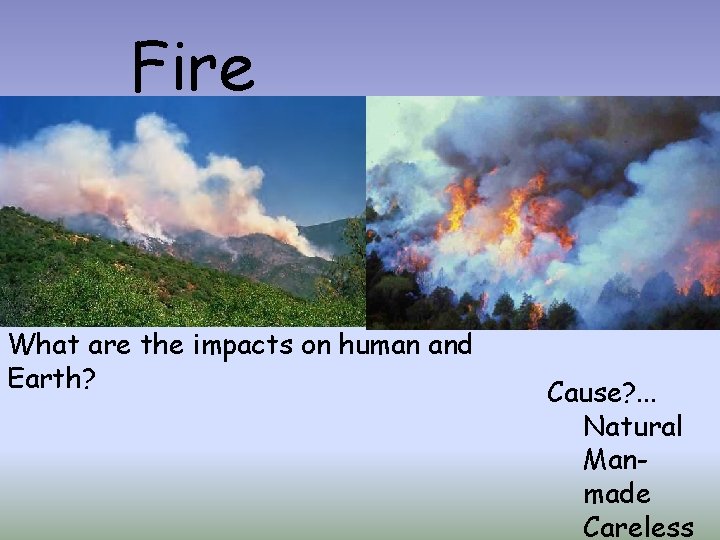
Fire What are the impacts on human and Earth? Cause? . . . Natural Manmade Careless
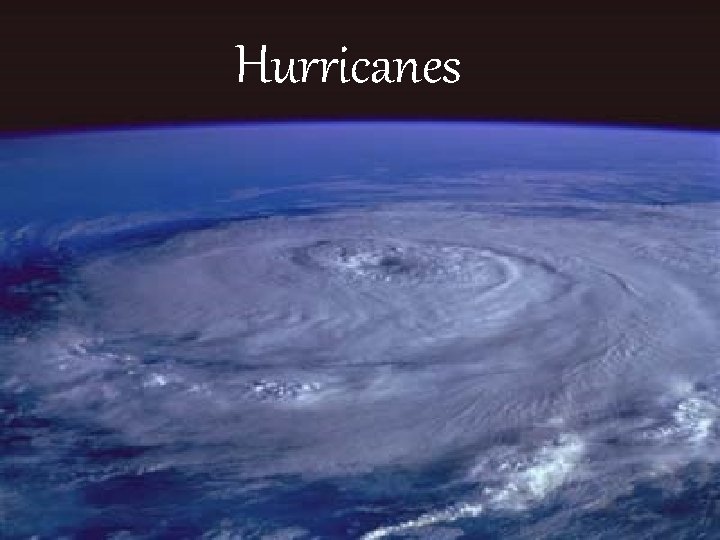
Hurricanes
Hurricanes • On average, ten tropical storms develop over the Atlantic Ocean, the Caribbean Sea, or the Gulf of Mexico each year. • About six of these develop into hurricanes • Many of these storms remain over the ocean.
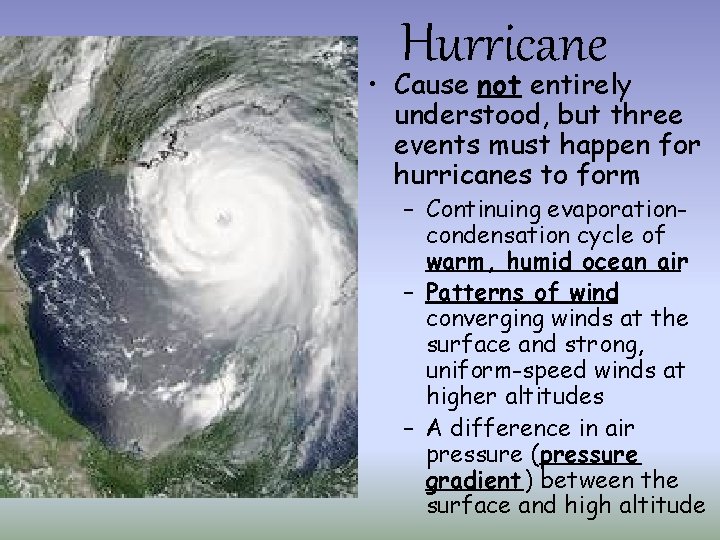
Hurricanes • Hurricanes start out as tropical depressions , then develop into tropical storms (tropical cyclones). • When the winds reach a constant speed of 74 mph or more, it is upgraded to a hurricane. • Hurricane winds blow in a spiral around a calm center called an eye. • The eye can be up to 30 miles wide and the storm can be 400 miles in diameter.
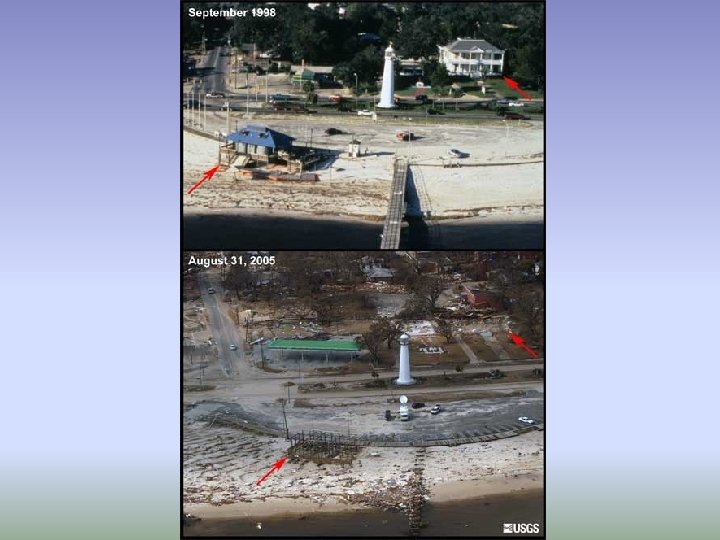
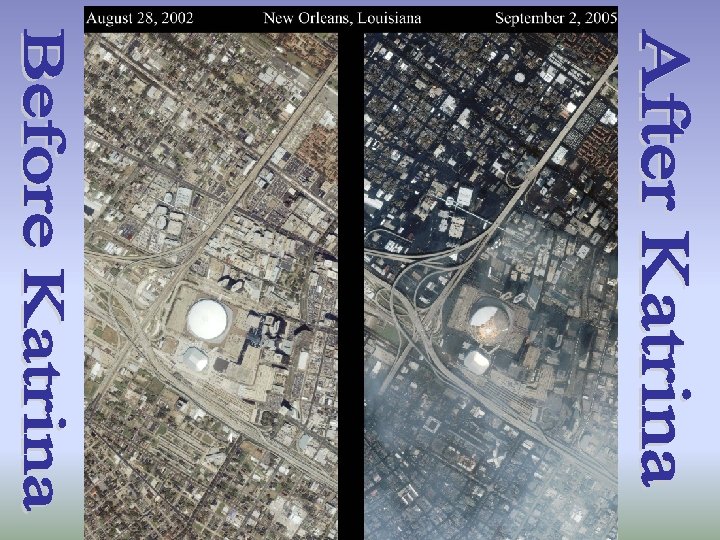
Hurricanes • A single hurricane may last a week or more and travel the length of the East Coast. • A hurricane can have torrential rains, high winds, and a storm surge as it approaches land. • Most deaths from hurricanes are due to flooding. • Winds can drive ocean water up the mouth of rivers.
Hurricanes • Flooding can trigger mudslides or landslides. • Tornadoes can be spawned by hurricanes. • Economic costs and habitat loss is common.
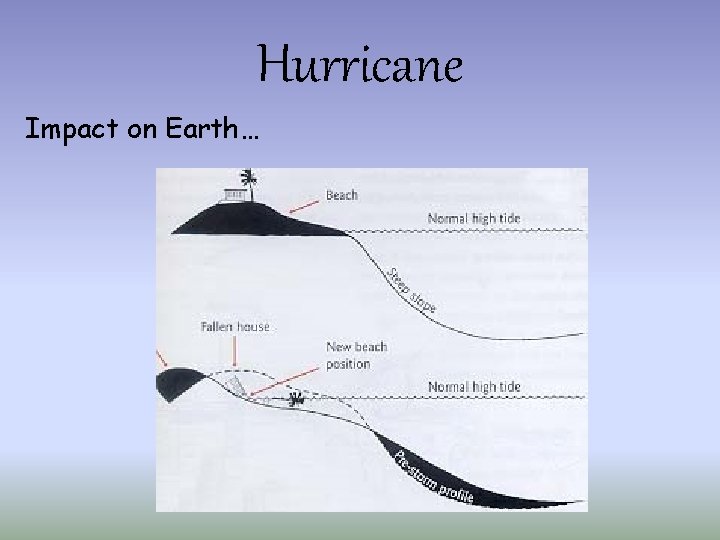
Hurricane Impact on Earth…
Hurricane • Cause not entirely understood, but three events must happen for hurricanes to form – Continuing evaporationcondensation cycle of warm, humid ocean air – Patterns of wind converging winds at the surface and strong, uniform-speed winds at higher altitudes – A difference in air pressure (pressure gradient ) between the surface and high altitude
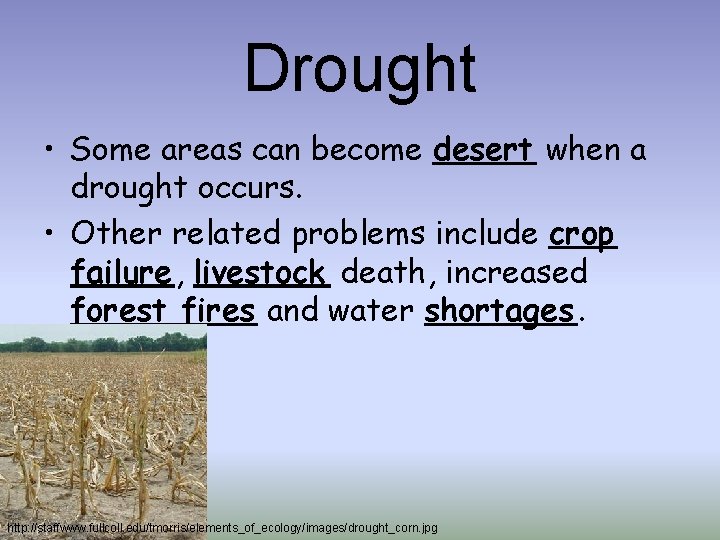
Drought • A drought is an unusually long period of dry weather that lasts long enough to cause water supply shortages. • One dry year is usually not long enough to produce a severe drought. • The severity of the drought depends upon the degree of moisture deficiency , the duration and the size of the affected area.
Drought • A dry spell that lasts into the second or third year can cause serious problems because the water supply is not being restored. • Surface water and subsurface water supplies below normal can affect humans, as well as plant growth.
Drought • Some areas can become desert when a drought occurs. • Other related problems include crop failure, livestock death, increased forest fires and water shortages. http: //staffwww. fullcoll. edu/tmorris/elements_of_ecology/images/drought_corn. jpg
Drought
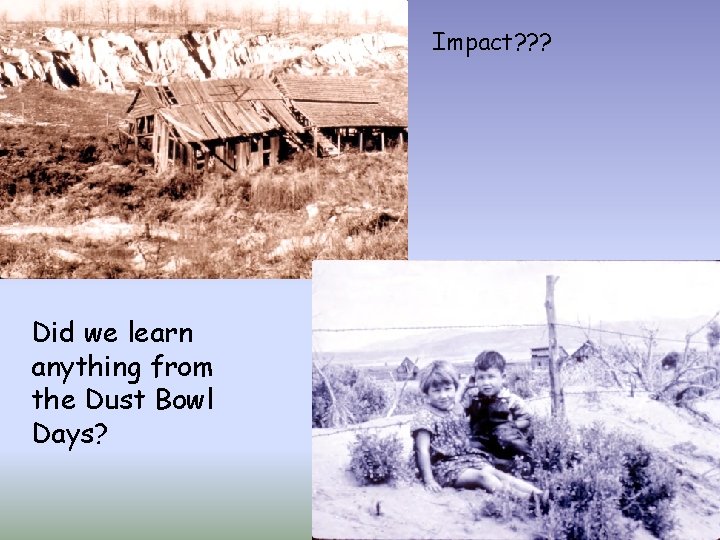
Impact? ? ? Did we learn anything from the Dust Bowl Days?
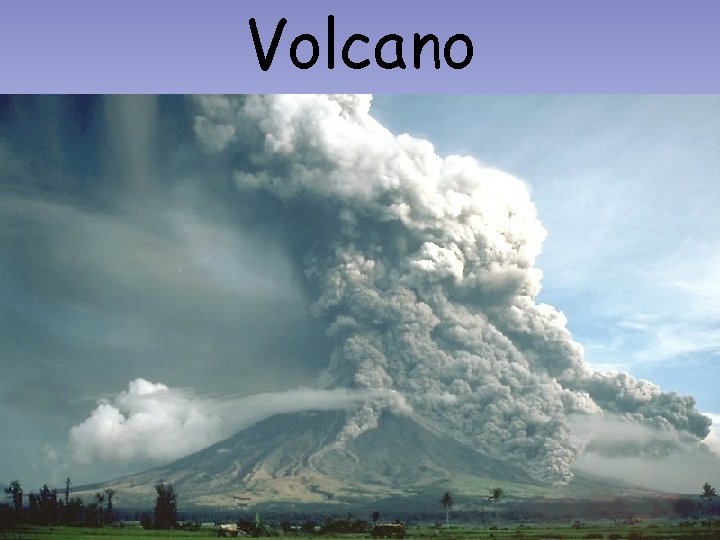
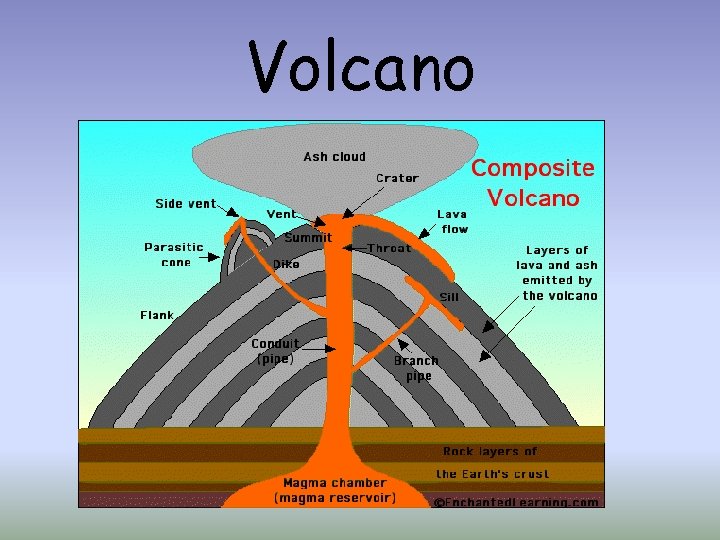
Volcano • A volcano is a vent in the Earth which allows molten rock (magma) to escape to the surface. • When pressure from gases within the magma become too great, an eruption occurs. • Once the volcano erupts , the Earth moves to a state of equilibrium until pressure builds again.
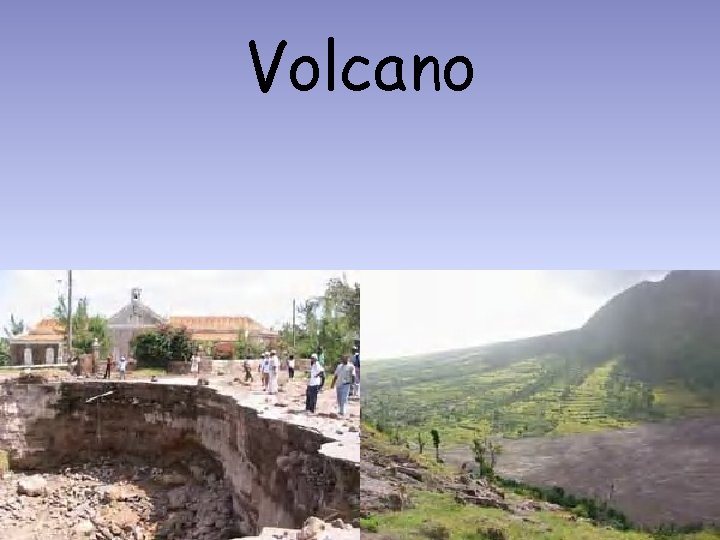
Volcano • Eruptions can be slow and fairly quiet or violently explosive. • Hazards include searing hot, poisonous gases, lava, and pyroclastic flows, landslides , mudslides, earthquakes , increased fire hazard, explosions, rockslides, flash flooding and tsunamis.
Volcano • Volcanic ash is very fine glassy rock fragments. • It can affect breathing , contaminate water supplies, collapse roofs , disrupt machinery, and cause jet engines to fail while flying.
Volcano
Rearrange the land Make new land Kameni Islands…possible source for myth of Atlantis
Volcano
Volcano
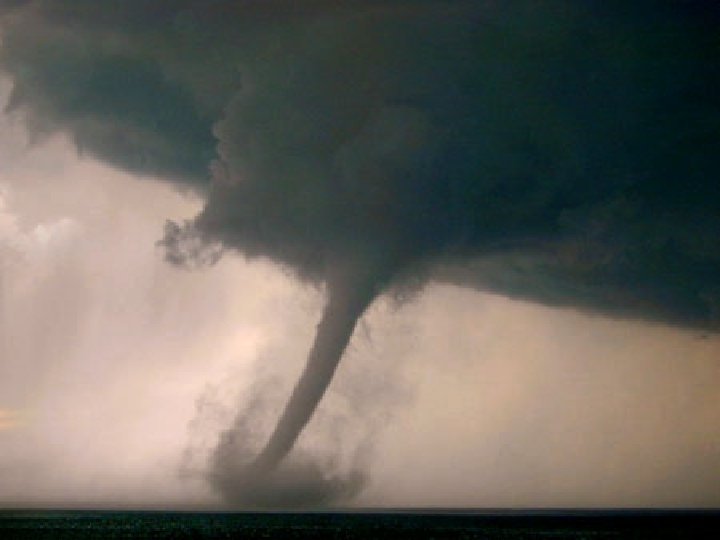
Tornado • A tornado is a violently rotating column of air extending from a thunderstorm to the ground. • The most violent tornadoes have wind speeds of 250 mph or more. • Damage paths can be in excess of one mile wide and 50 miles long.
Tornado • Tornadoes in the winter and early spring are often associated with strong, frontal systems that form in the Central States and move east. • Thunderstorms develop in warm, moist air in ahead of eastward-moving cold fronts while the cold, dry air is behind it to the west. • These thunderstorms often produce large hail, strong winds and tornadoes.
Tornado • Along mountains, tornado producing thunderstorms can form as the air flows up the slope to higher land areas. • Tornadoes can form to the right and in front of the path of a hurricane as it comes on land. • The high winds from the tornado and the hail from the thunderstorms cause the most damage.
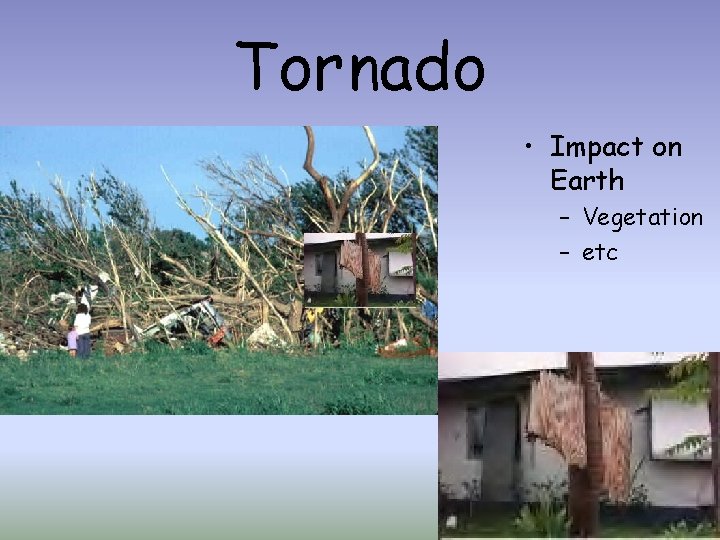
Tornado • Tornadoes can destroy buildings and vehicles, uproot trees, and scour the soil off the ground. • Tornadoes may appear transparent until the dirt and debris it picks up gives it color. • Two or more tornadoes may form at the same time.
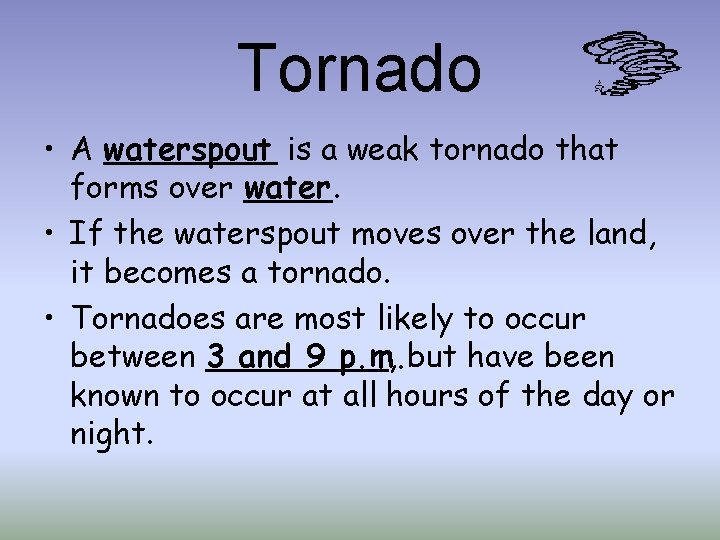
Tornado • A waterspout is a weak tornado that forms over water. • If the waterspout moves over the land, it becomes a tornado. • Tornadoes are most likely to occur between 3 and 9 p. m. , but have been known to occur at all hours of the day or night.
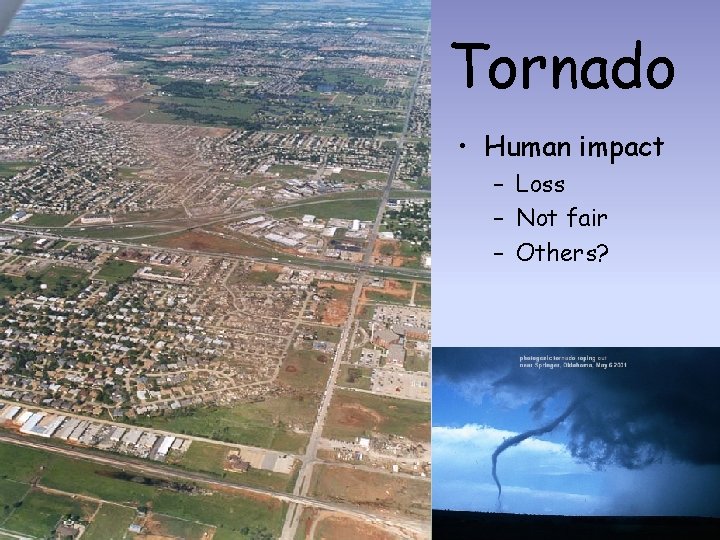
Tornado • Human impact – Loss – Not fair – Others?
Tornado • Impact on Earth – Vegetation – etc
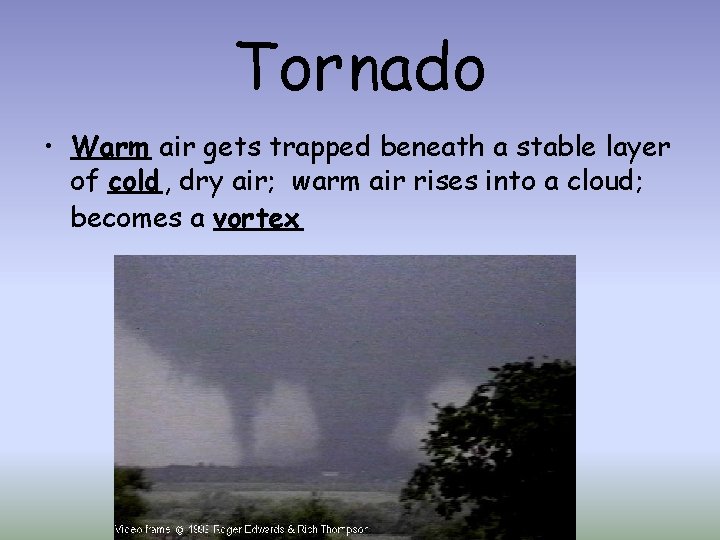
Tornado • Warm air gets trapped beneath a stable layer of cold, dry air; warm air rises into a cloud; becomes a vortex
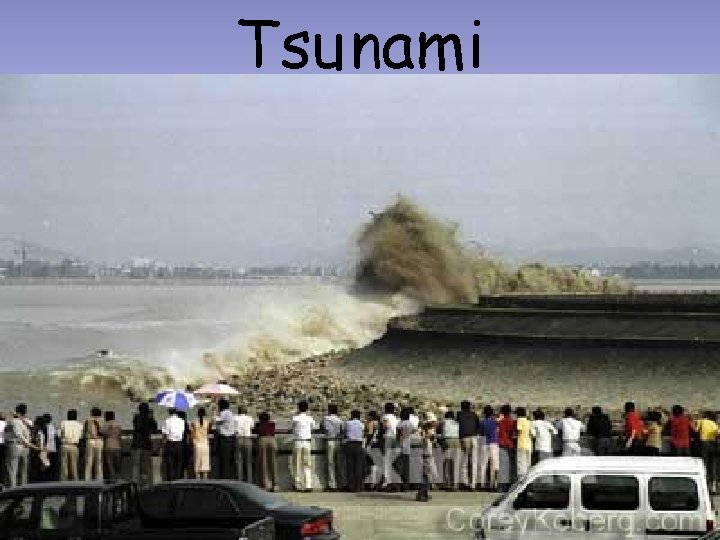
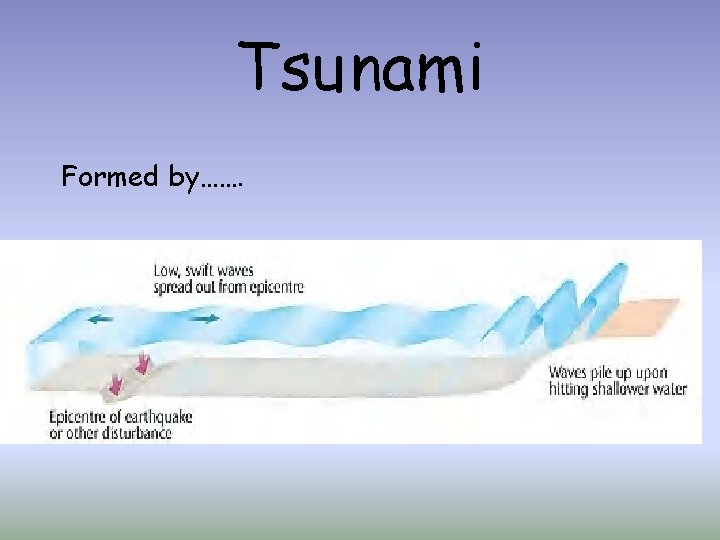
Tsunamis • Tsunamis are ocean waves produced by earthquakes, volcanic eruptions, meteorite impact, or underwater landslides. • They are a series of waves that can travel between 450 -600 mph in the open ocean. • Ships in the open ocean would not feel the tsunamis because the wavelength would be hundreds of miles long and have amplitude of only a few feet.
Tsunamis • As the wave approaches the coast, its speed decreases and its amplitude increases. • From the starting point of the tsunamis, the waves travel outward in all directions. • As the wave approach the coast, the time between successive wave crests varies from 5 to 90 minutes.
Tsunamis • The first wave is usually not the largest or most destructive. • Often the waters will pull back before the wave arrives. • They are not v-shaped or rolling waves. • Tsunamis often come ashore as a rapidly rising turbulent surge of debris filled water.
Tsunamis • The waves can travel upstream in coastal estuaries, and rivers. • Tsunamis can occur during any season and at any time of day or night. • Areas of risk are less than 25 feet above sea level and within one mile of the shore. • Impact includes drowning, flooding , contamination of drinking water, loss of habitat or human homes, fires from broken gas lines, etc.
Tsunami
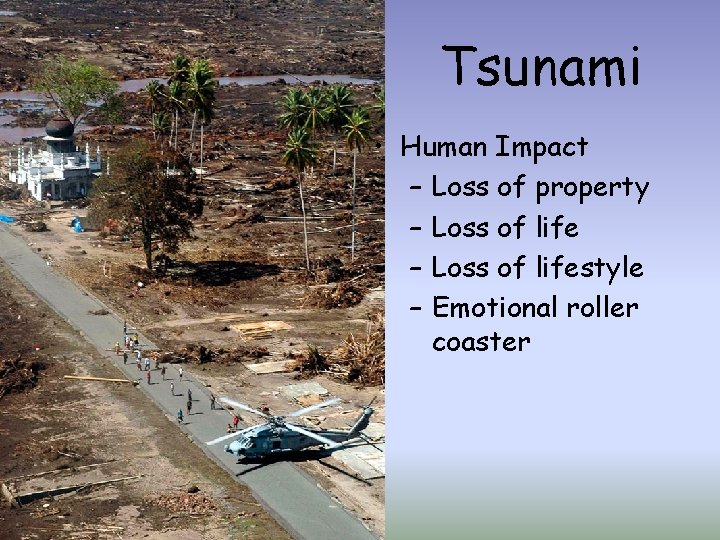
Tsunami • Human Impact – Loss of property – Loss of lifestyle – Emotional roller coaster
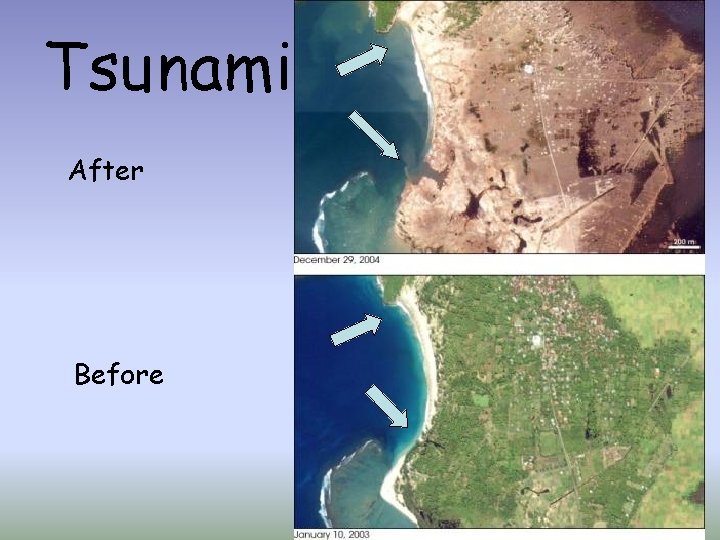
Tsunami After Before
Tsunami Formed by…….
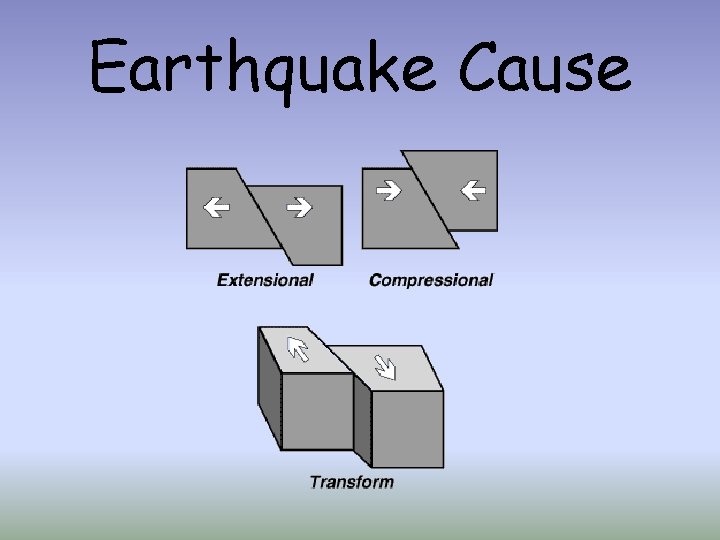
Earthquake • An earthquake is the vibration of the Earth’s surface that occurs after a release of energy in the crust. • This release of energy can be caused by a volcanic eruption or movement of segments of the crust. • The crust may bend as the stress builds and exceeds the strength of the rock, breaks and snap into a new position.
Earthquake • This process releases pressures in the crust and the Earth’s crust reaches equilibrium again. • Seismic waves are created when the crust breaks. • The waves travel outward from the source of the earthquake at various speeds, depending on what material they move through.
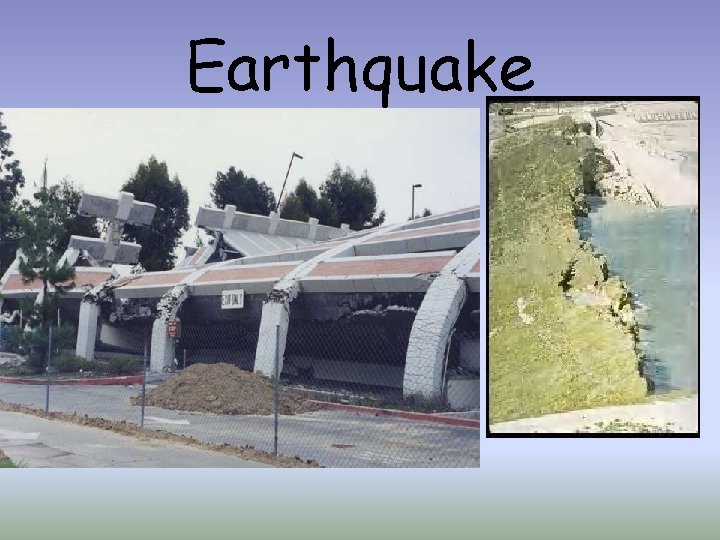
Earthquake • Earthquakes impact rupture breaks in the ground, landslides, avalanches, fires, tsunamis, property damage, and loss of life.
Earthquake
Earthquake Cause
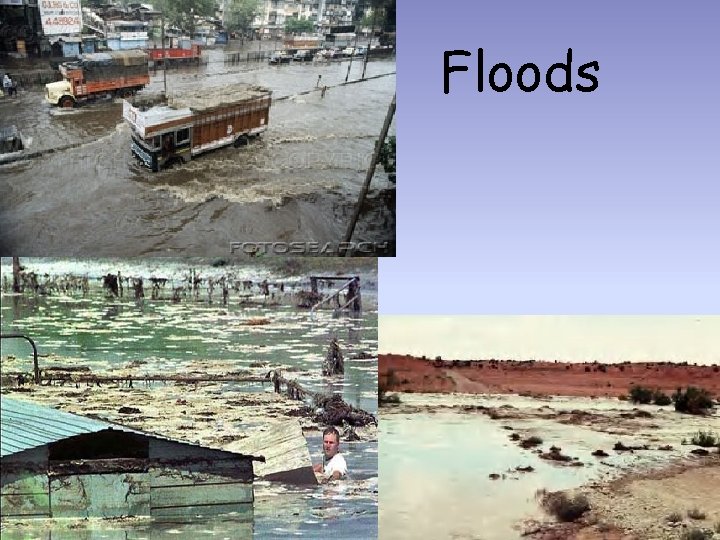
Flood • A flood is an overflowing of water onto the land that is normally dry. • A flood can be caused by intense or long term precipitation from thunderstorms, hurricane storm surges, or melting snow. • Floods can last from a few minutes to months. • The amount of flooding is controlled by the amount of water that builds up as well as how porous the soil is.
Flood • Humans have altered the landscape in several ways • The most impact results from paving the ground for housing, roads, and parking lots. • Neither asphalt nor concrete is porous • All precipitation that fails becomes runoff.
Flood • Most of the world’s population lives near the coast or on flood plains. • Floods can cause loss of life, disease, property loss or damage, contamination of drinking water and destruction of crops and livestock.
Floods
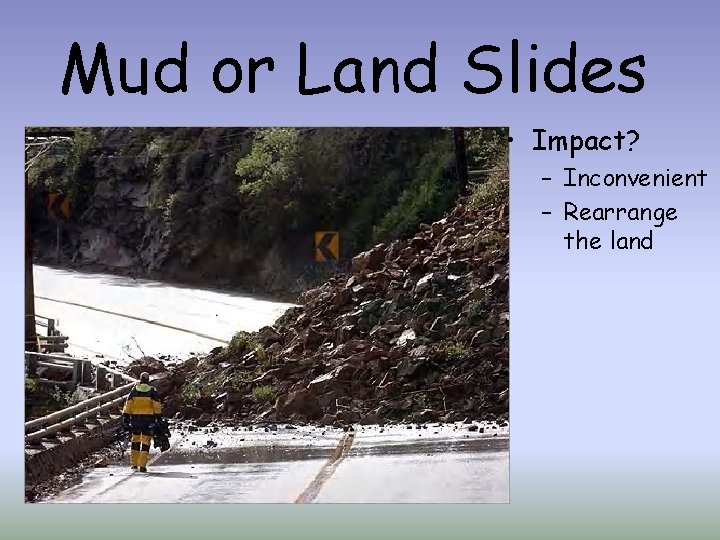
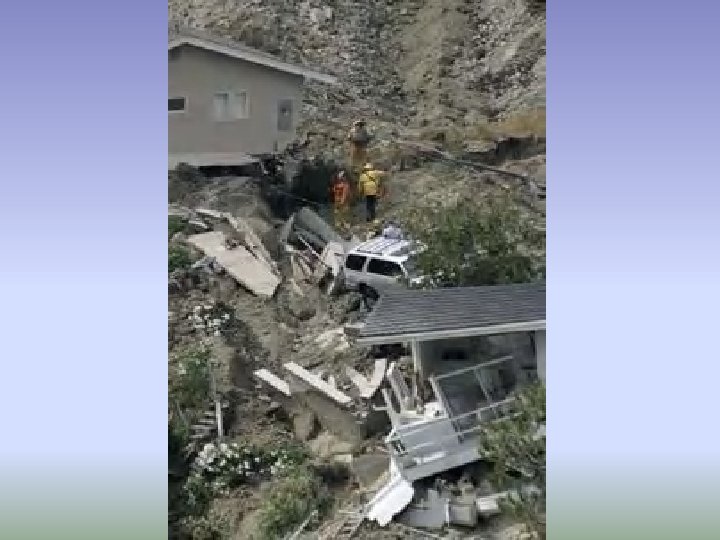
Mud or Land Slides • Impact? – Inconvenient – Rearrange the land
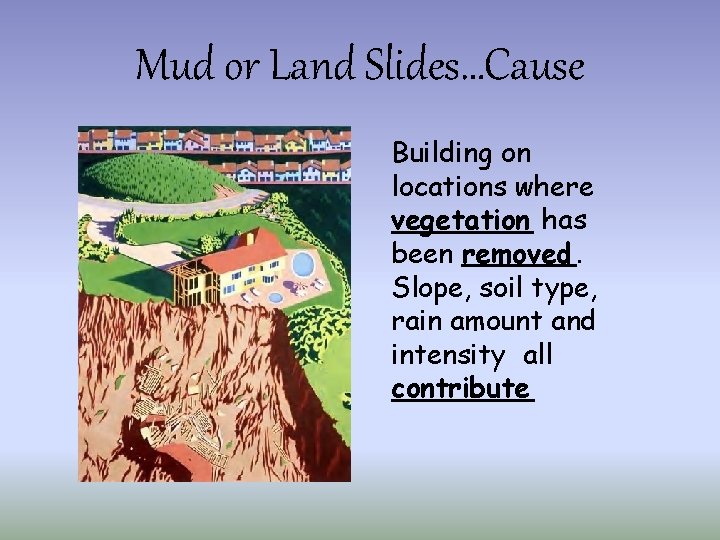
Mud or Land Slides…Cause Building on locations where vegetation has been removed. Slope, soil type, rain amount and intensity all contribute