
Catastrophe Theory Mafuyu Kitahara English Theme 8 2006

- Slides: 11
Catastrophe Theory Mafuyu Kitahara English Theme 8 2006 -07 -10 Summary of Chapter 15, Carver & Scheier (1998), On the Self-Regulation of Behavior, Cambridge Univ. Press.
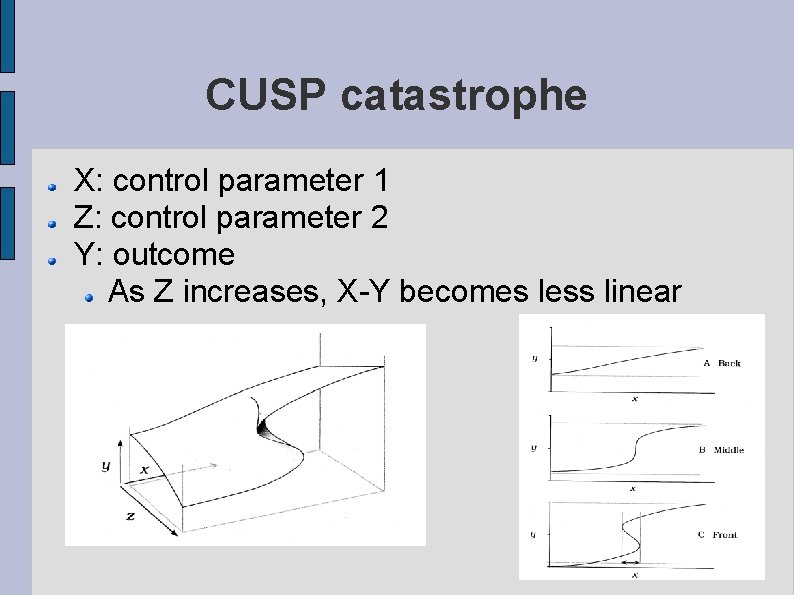
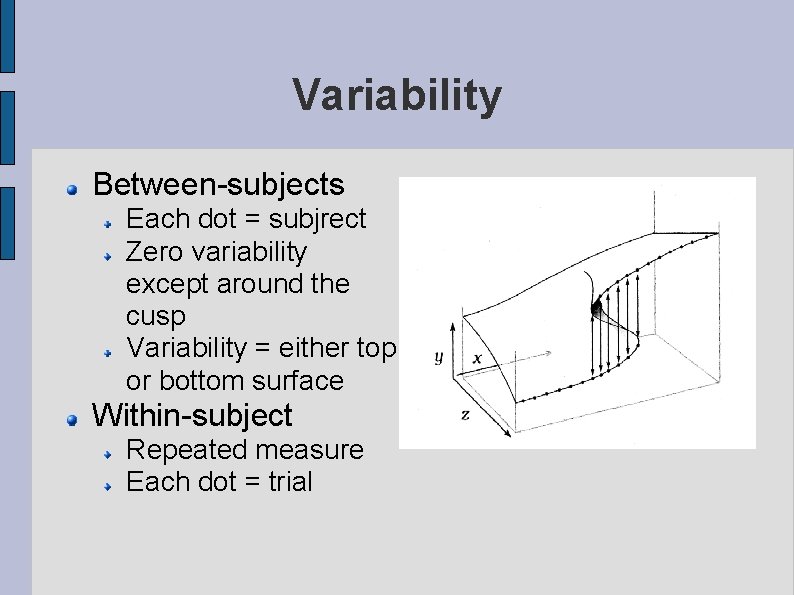
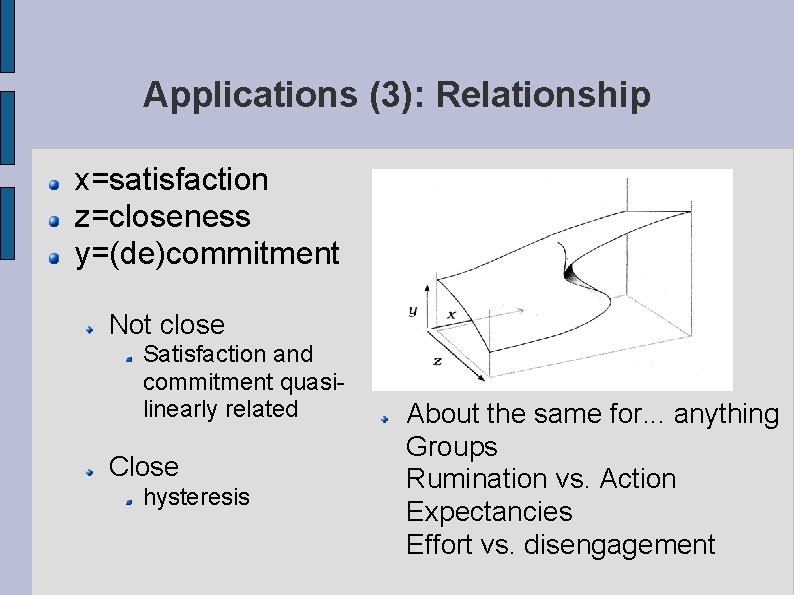
CUSP catastrophe X: control parameter 1 Z: control parameter 2 Y: outcome As Z increases, X-Y becomes less linear
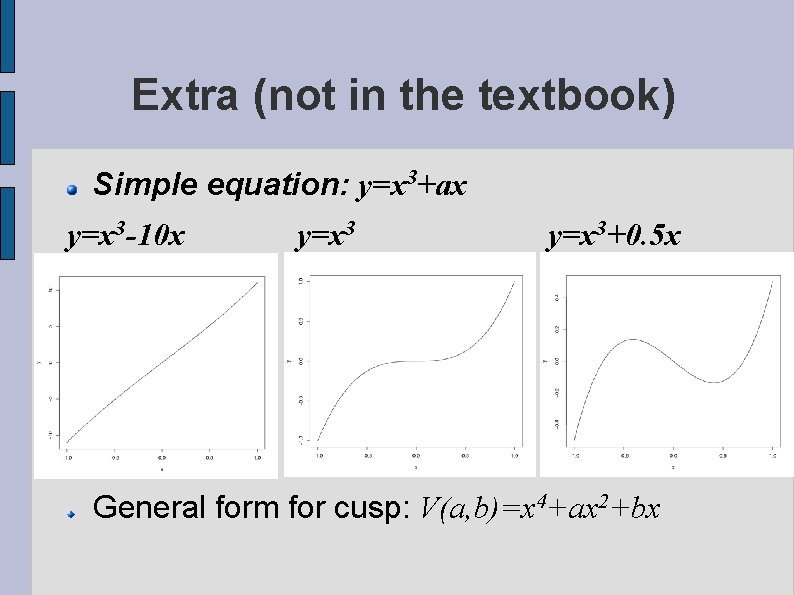
Extra (not in the textbook) Simple equation: y=x 3+ax y=x 3 -10 x y=x 3+0. 5 x General form for cusp: V(a, b)=x 4+ax 2+bx
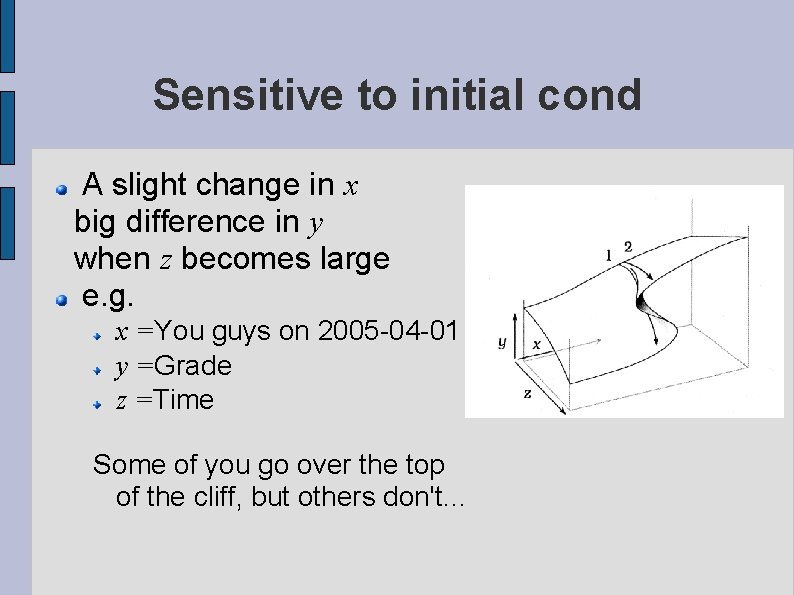
Sensitive to initial cond A slight change in x big difference in y when z becomes large e. g. x =You guys on 2005 -04 -01 y =Grade z =Time Some of you go over the top of the cliff, but others don't. . .
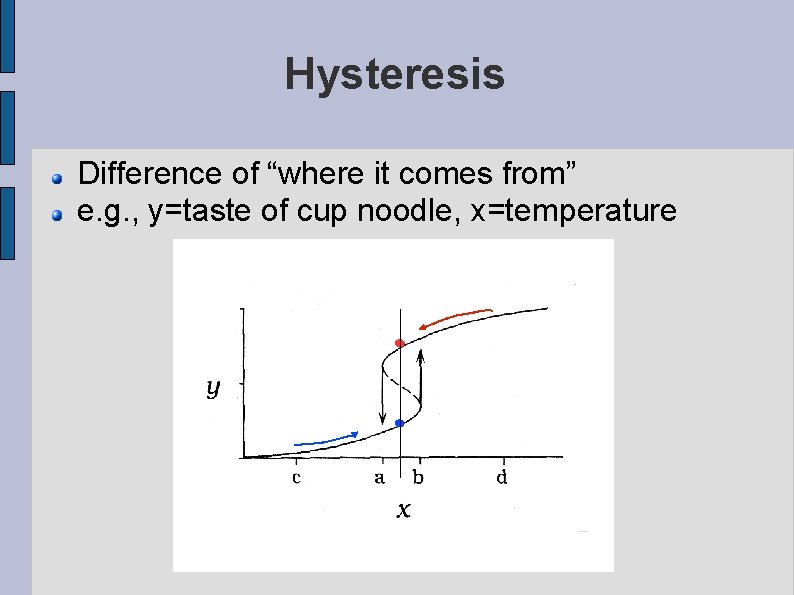
Hysteresis Difference of “where it comes from” e. g. , y=taste of cup noodle, x=temperature
Variability Between-subjects Each dot = subjrect Zero variability except around the cusp Variability = either top or bottom surface Within-subject Repeated measure Each dot = trial
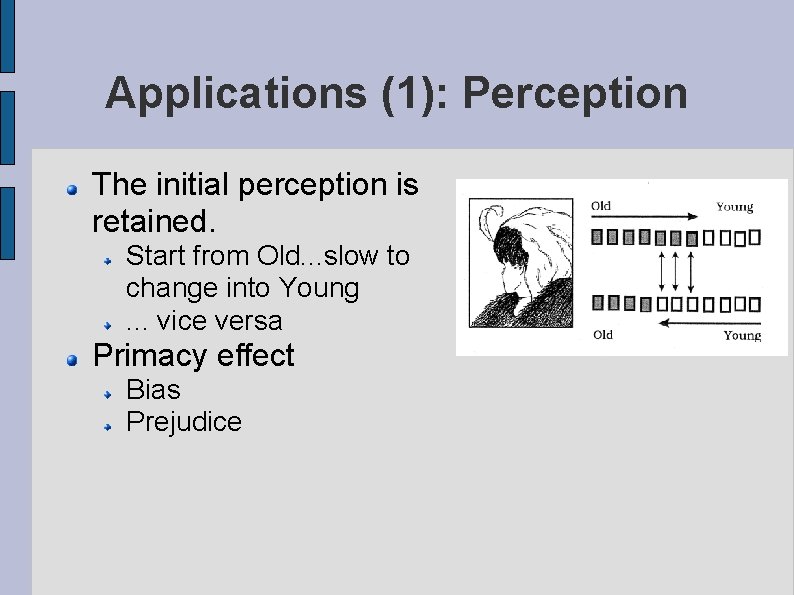
Applications (1): Perception The initial perception is retained. Start from Old. . . slow to change into Young. . . vice versa Primacy effect Bias Prejudice
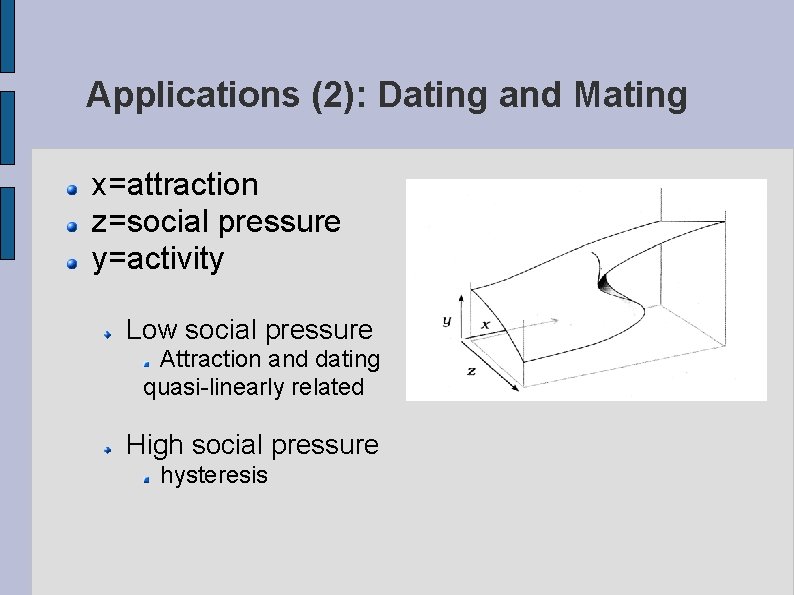
Applications (2): Dating and Mating x=attraction z=social pressure y=activity Low social pressure Attraction and dating quasi-linearly related High social pressure hysteresis
Applications (3): Relationship x=satisfaction z=closeness y=(de)commitment Not close Satisfaction and commitment quasilinearly related Close hysteresis About the same for. . . anything Groups Rumination vs. Action Expectancies Effort vs. disengagement
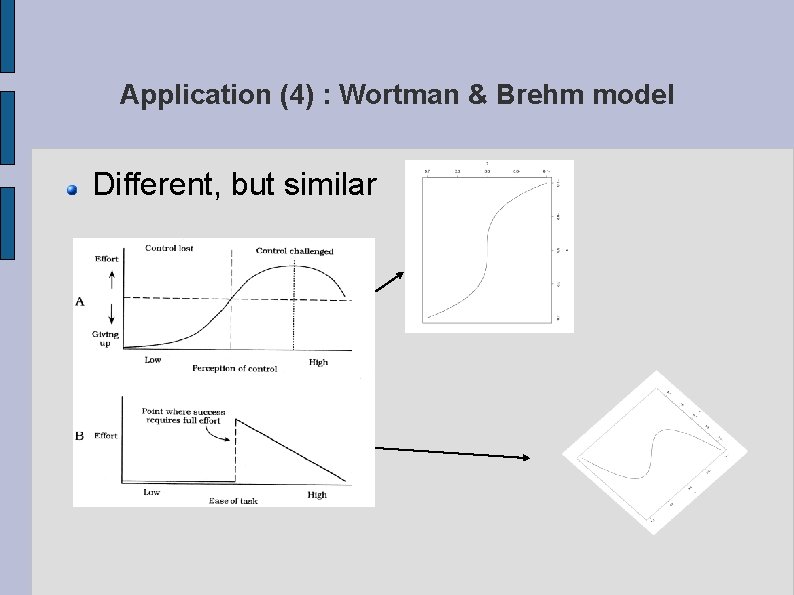
Application (4) : Wortman & Brehm model Different, but similar
Report Due date: Friday, August 4 th Required items: Word-processor output A 4 paper, max 1000 words School-of-Law coverpage Theme: Summary and commentary on any chapter(s) of the textbook or reference material