
Catalyst 6513 Complete Chapter 19 Lesson 2 Assessment
- Slides: 30
Catalyst 6/5/13 Complete Chapter 19 Lesson 2 Assessment on page 595. Take benchmark review packet. This is OPTIONAL.
Catalyst 6/5/13 Catalyst Announcements Suggested HW: Work on Ch. 19 Lesson 2 of packet. Chapter 18 packet due this Friday, June 7 th Benchmark Exam#4 Part II Friday, June 7 th Will take projects until June 23 rd Radioactive Waste Discussion City Design Project Work Time/Classwork Time
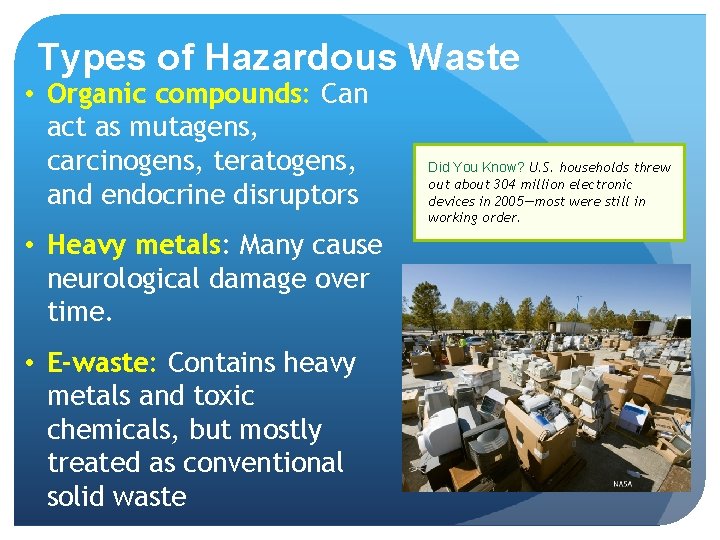
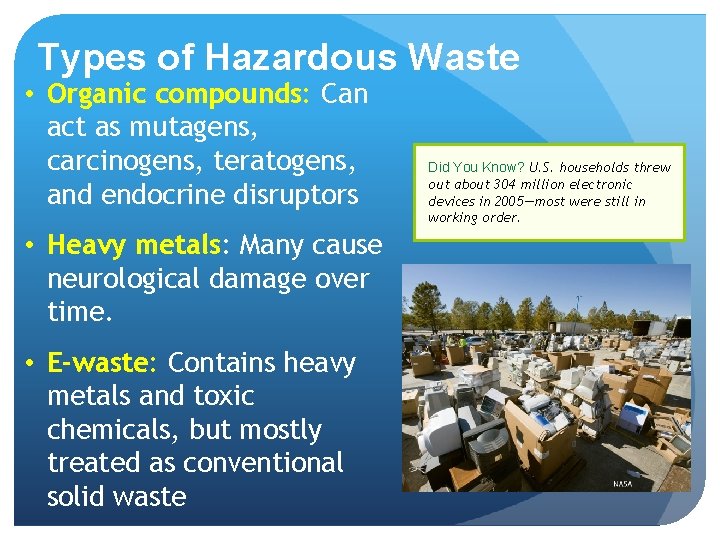
Types of Hazardous Waste • Organic compounds: Can act as mutagens, carcinogens, teratogens, and endocrine disruptors • Heavy metals: Many cause neurological damage over time. • E-waste: Contains heavy metals and toxic chemicals, but mostly treated as conventional solid waste Did You Know? U. S. households threw out about 304 million electronic devices in 2005—most were still in working order.
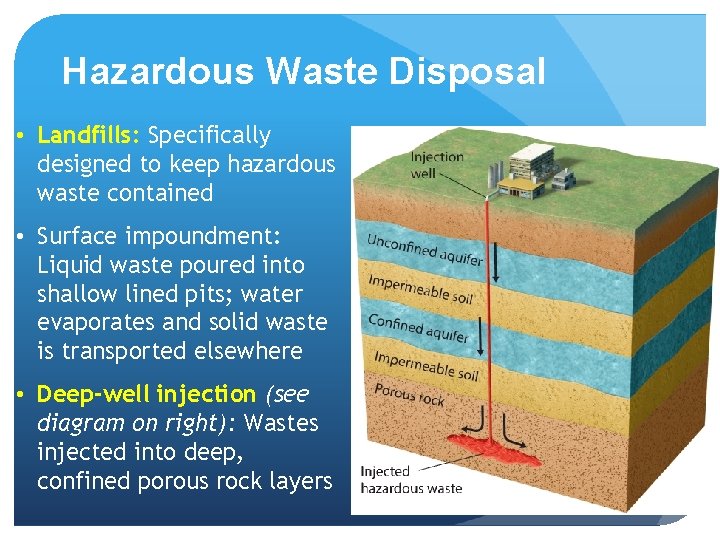
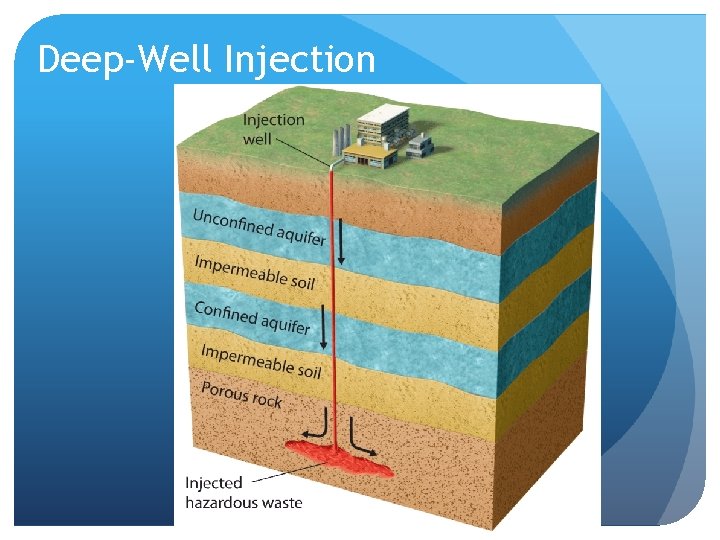
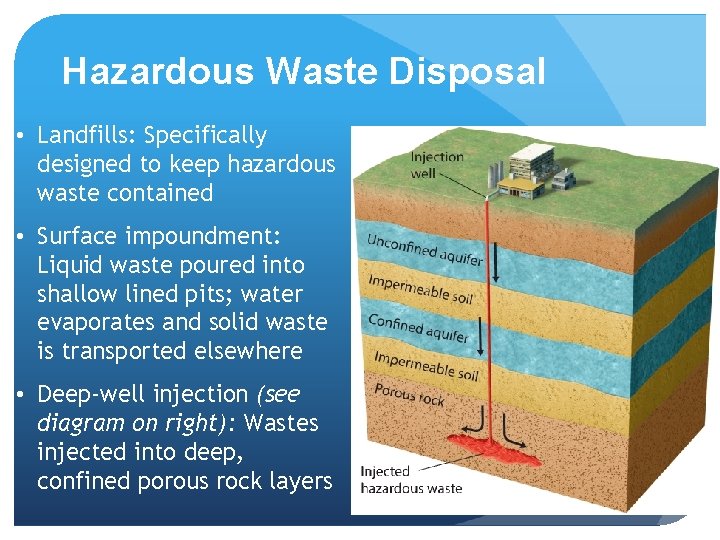
Hazardous Waste Disposal • Landfills: Specifically designed to keep hazardous waste contained • Surface impoundment: Liquid waste poured into shallow lined pits; water evaporates and solid waste is transported elsewhere • Deep-well injection (see diagram on right): Wastes injected into deep, confined porous rock layers
Deep-Well Injection
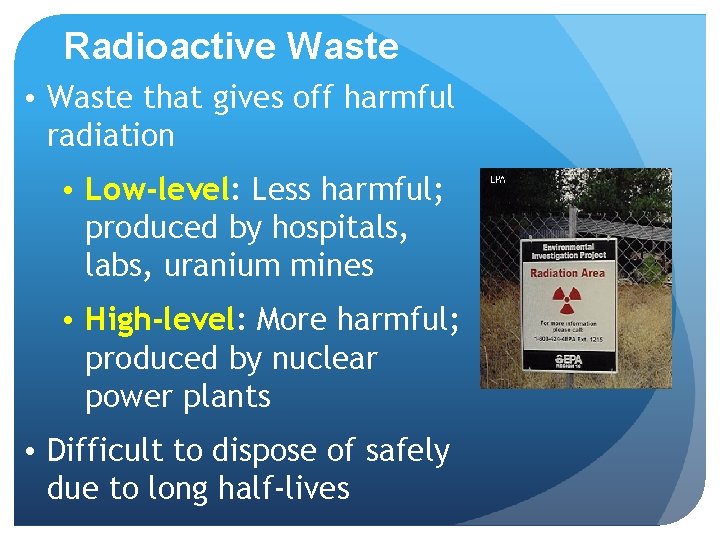
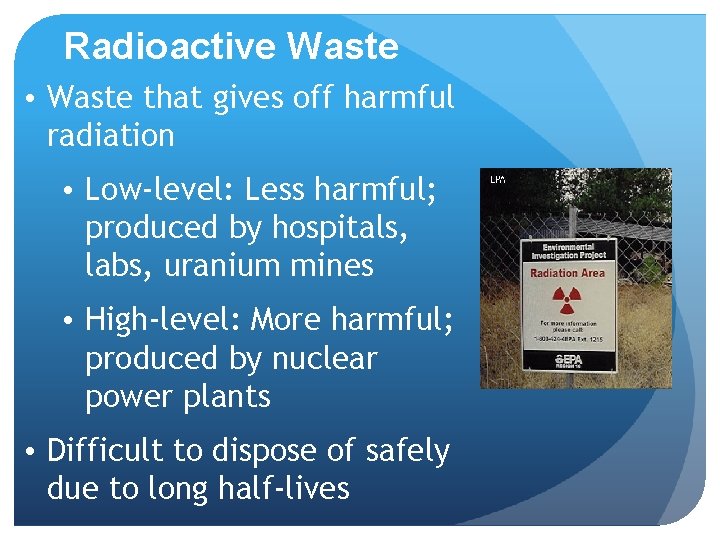
Radioactive Waste • Waste that gives off harmful radiation • Low-level: Less harmful; produced by hospitals, labs, uranium mines • High-level: More harmful; produced by nuclear power plants • Difficult to dispose of safely due to long half-lives
Radioactive Waste Management http: //www. youtube. com/watch? v=Gl. Et. Q 2 ql x. EU
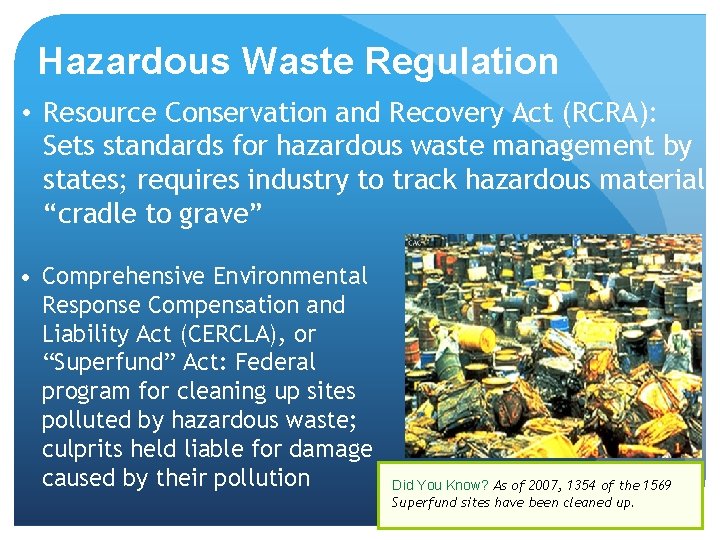
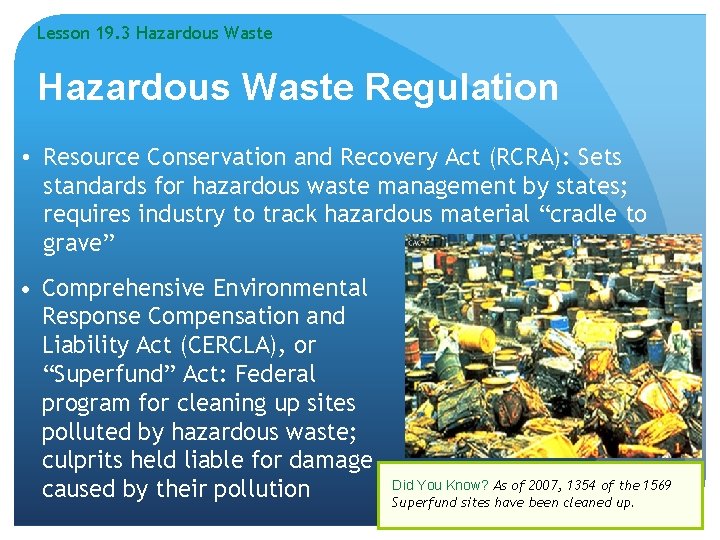
Hazardous Waste Regulation • Resource Conservation and Recovery Act (RCRA): Sets standards for hazardous waste management by states; requires industry to track hazardous material “cradle to grave” • Comprehensive Environmental Response Compensation and Liability Act (CERCLA), or “Superfund” Act: Federal program for cleaning up sites polluted by hazardous waste; culprits held liable for damage caused by their pollution Did You Know? As of 2007, 1354 of the 1569 Superfund sites have been cleaned up.
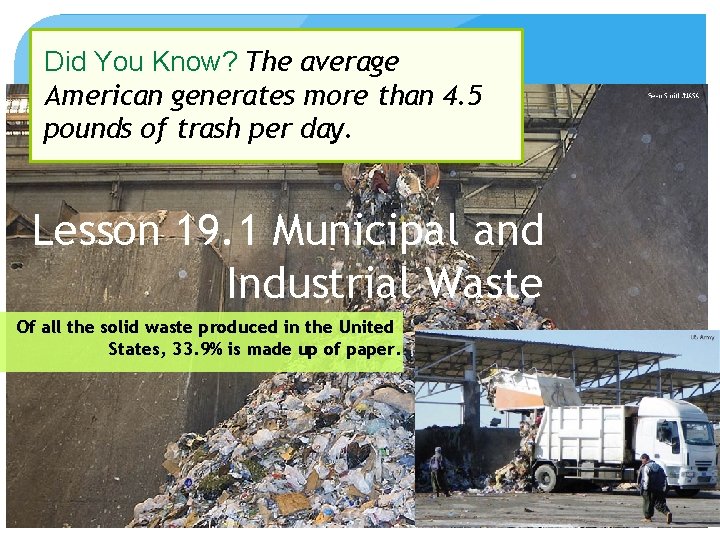
Did You Know? The average American generates more than 4. 5 pounds of trash per day. Lesson 19. 1 Municipal and Industrial Waste Of all the solid waste produced in the United States, 33. 9% is made up of paper.
What Is Waste? Any unwanted material or substance that results from a human activity or process Municipal solid waste: From homes and businesses Industrial waste: Resulting from manufacturing, agriculture, and mining Hazardous waste: Toxic, reactive, flammable, and corrosive Wastewater: Includes used, discarded water and runoff
What do we do to all our trash?
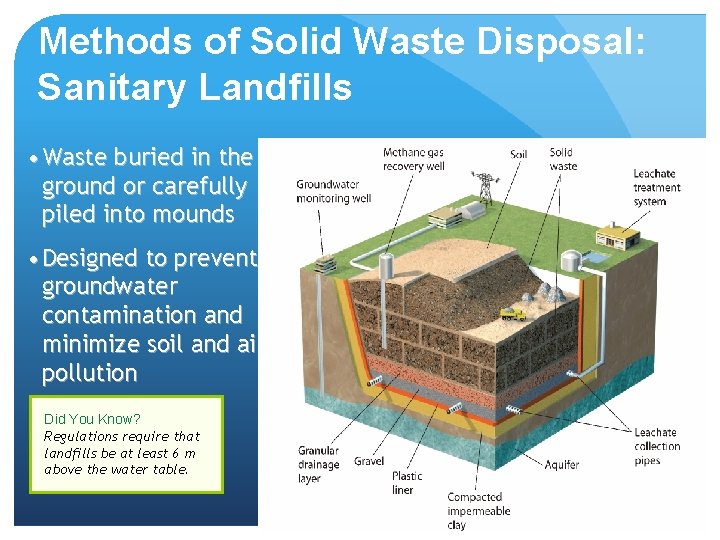
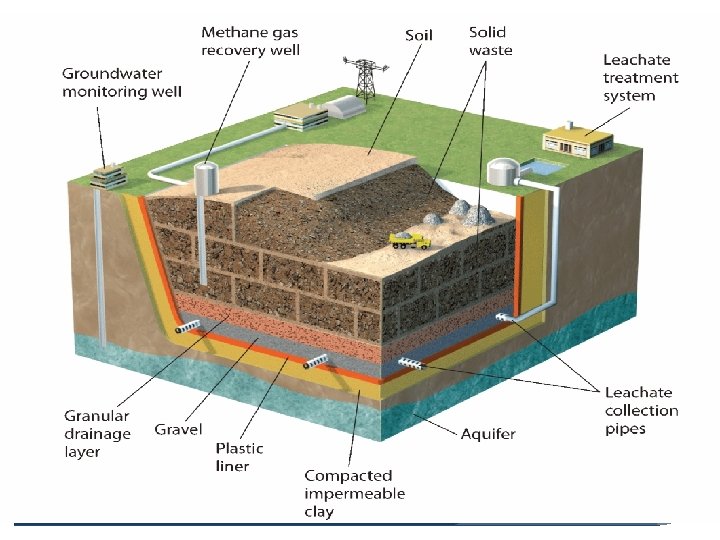
Methods of Solid Waste Disposal: Sanitary Landfills • Waste buried in the ground or carefully piled into mounds • Designed to prevent groundwater contamination and minimize soil and air pollution Did You Know? Regulations require that landfills be at least 6 m above the water table.
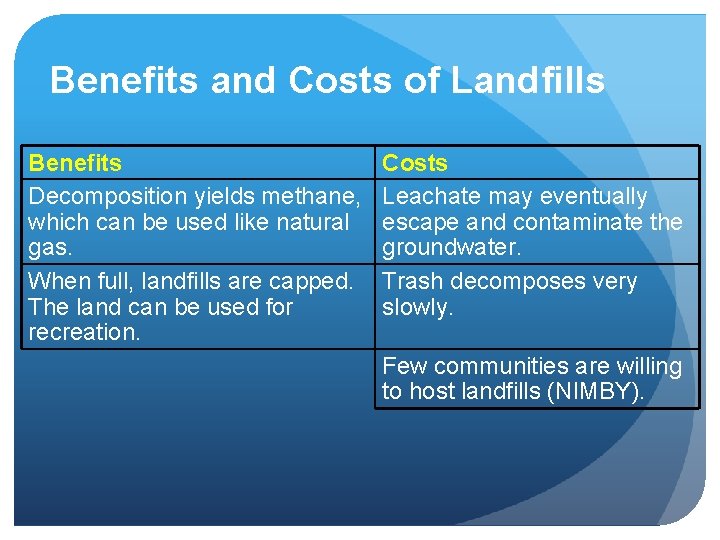
Benefits and Costs of Landfills Benefits Decomposition yields methane, which can be used like natural gas. When full, landfills are capped. The land can be used for recreation. Costs Leachate may eventually escape and contaminate the groundwater. Trash decomposes very slowly. Few communities are willing to host landfills (NIMBY).
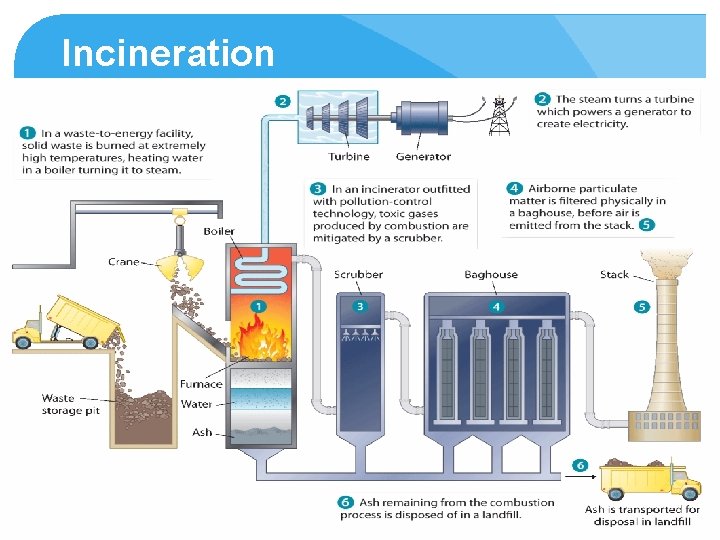
Incineration
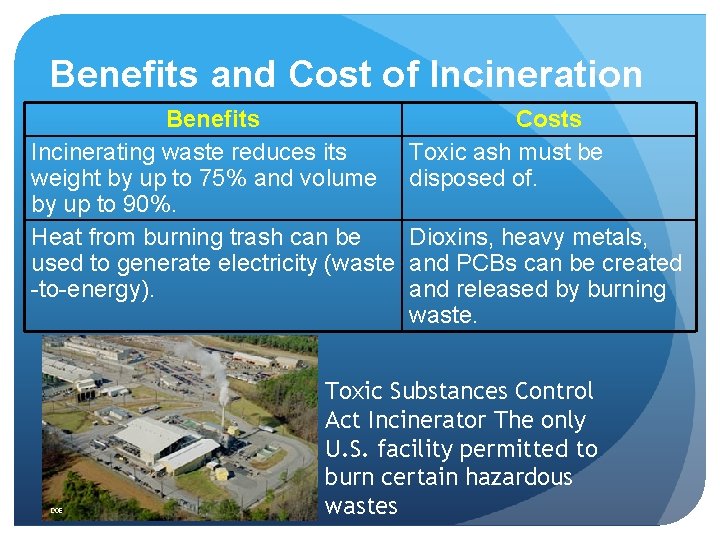
Benefits and Cost of Incineration Benefits Incinerating waste reduces its weight by up to 75% and volume by up to 90%. Heat from burning trash can be used to generate electricity (waste -to-energy). Costs Toxic ash must be disposed of. Dioxins, heavy metals, and PCBs can be created and released by burning waste. Toxic Substances Control Act Incinerator The only U. S. facility permitted to burn certain hazardous wastes
Waste to Energy http: //www. youtube. com/watch? v=lmt. Ou. Ae d 5 n. M
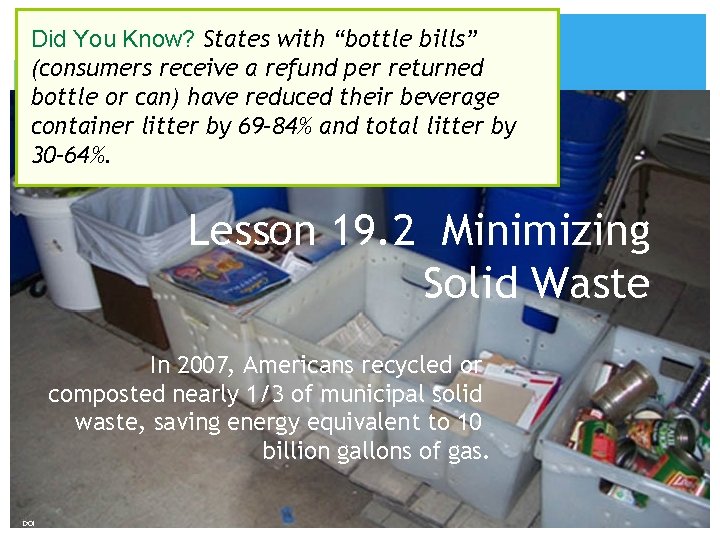
Did You Know? States with “bottle bills” (consumers receive a refund per returned bottle or can) have reduced their beverage container litter by 69– 84% and total litter by 30– 64%. Lesson 19. 2 Minimizing Solid Waste In 2007, Americans recycled or composted nearly 1/3 of municipal solid waste, saving energy equivalent to 10 billion gallons of gas.
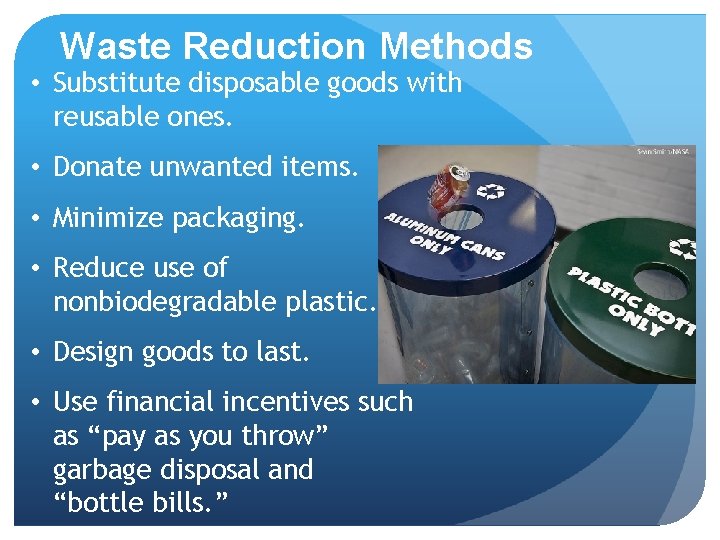
Waste Reduction Methods • Substitute disposable goods with reusable ones. • Donate unwanted items. • Minimize packaging. • Reduce use of nonbiodegradable plastic. • Design goods to last. • Use financial incentives such as “pay as you throw” garbage disposal and “bottle bills. ”
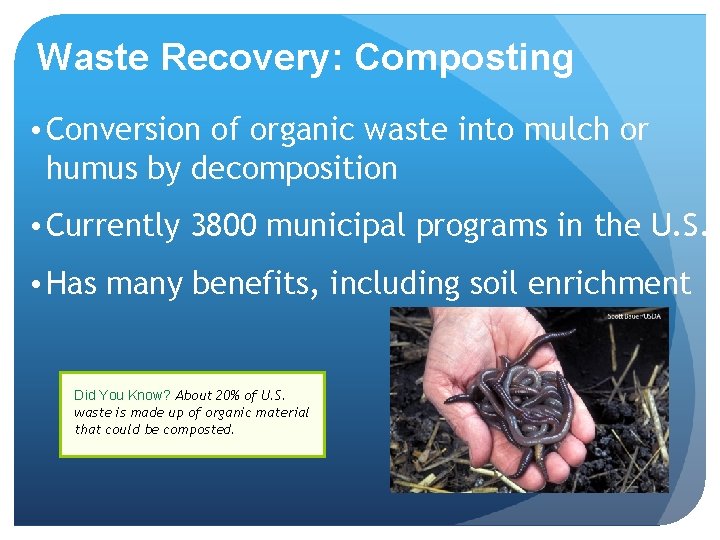
Waste Recovery: Composting • Conversion of organic waste into mulch or humus by decomposition • Currently 3800 municipal programs in the U. S. • Has many benefits, including soil enrichment Did You Know? About 20% of U. S. waste is made up of organic material that could be composted.
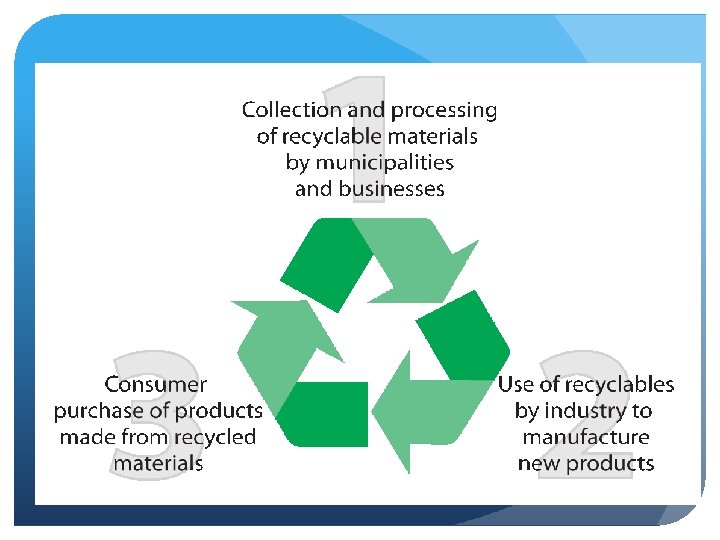
Waste Recovery: Recycling • Collection and reprocessing of waste materials • Recycling rates among U. S. communities vary from 5 to 50%. • Many programs run at a financial loss, but that doesn’t take into account the effects of not recycling.
Video: How Recycling Works http: //www. youtube. com/watch? v=Y 68 t. Bx. V rn. Xg http: //www. youtube. com/watch? v=c. B 1 Xvcp wa. Eg
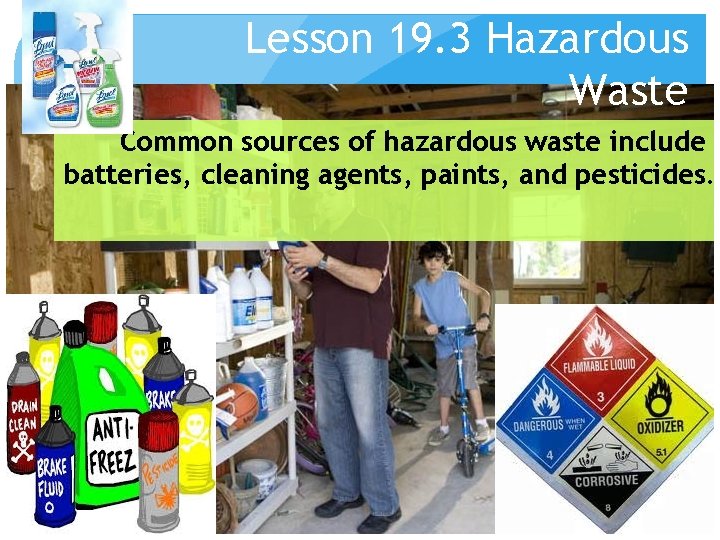
Lesson 19. 3 Hazardous Waste Common sources of hazardous waste include batteries, cleaning agents, paints, and pesticides.
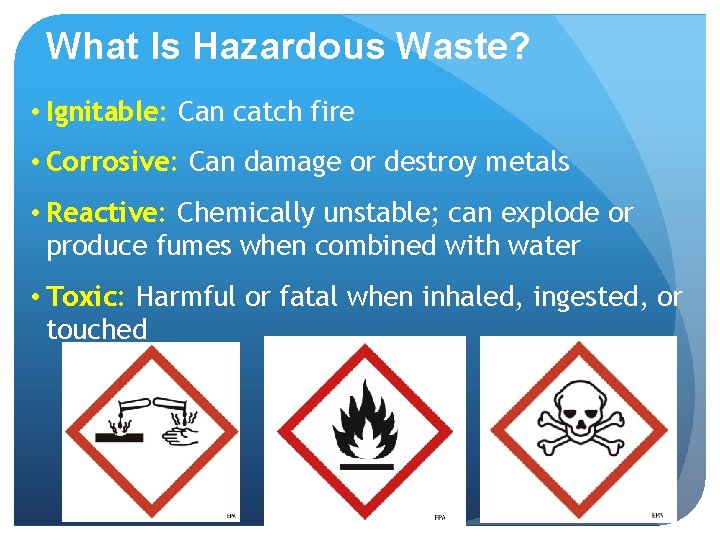
What Is Hazardous Waste? • Ignitable: Can catch fire • Corrosive: Can damage or destroy metals • Reactive: Chemically unstable; can explode or produce fumes when combined with water • Toxic: Harmful or fatal when inhaled, ingested, or touched
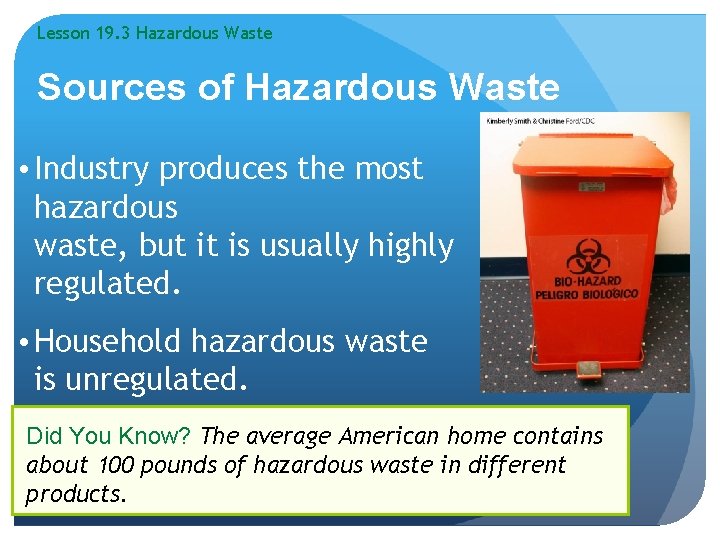
Lesson 19. 3 Hazardous Waste Sources of Hazardous Waste • Industry produces the most hazardous waste, but it is usually highly regulated. • Household hazardous waste is unregulated. Did You Know? The average American home contains about 100 pounds of hazardous waste in different products.
Types of Hazardous Waste • Organic compounds: Can act as mutagens, carcinogens, teratogens, and endocrine disruptors • Heavy metals: Many cause neurological damage over time. • E-waste: Contains heavy metals and toxic chemicals, but mostly treated as conventional solid waste Did You Know? U. S. households threw out about 304 million electronic devices in 2005—most were still in working order.
Hazardous Waste Disposal • Landfills: Specifically designed to keep hazardous waste contained • Surface impoundment: Liquid waste poured into shallow lined pits; water evaporates and solid waste is transported elsewhere • Deep-well injection (see diagram on right): Wastes injected into deep, confined porous rock layers
Radioactive Waste • Waste that gives off harmful radiation • Low-level: Less harmful; produced by hospitals, labs, uranium mines • High-level: More harmful; produced by nuclear power plants • Difficult to dispose of safely due to long half-lives
Lesson 19. 3 Hazardous Waste Regulation • Resource Conservation and Recovery Act (RCRA): Sets standards for hazardous waste management by states; requires industry to track hazardous material “cradle to grave” • Comprehensive Environmental Response Compensation and Liability Act (CERCLA), or “Superfund” Act: Federal program for cleaning up sites polluted by hazardous waste; culprits held liable for damage caused by their pollution Did You Know? As of 2007, 1354 of the 1569 Superfund sites have been cleaned up.