
Cataloging in Publication Data Block in the 21
Cataloging in Publication Data Block in the 21 st Century Saturday, June 28, 2014
Cataloging in Publication Data Block in the 21 st Century Preliminary Results of a Survey of Libraries p. 2
Why we did the survey § Recommendations at the 2013 Summer CAG meeting § Resource Description & Access (RDA) implementation § CIP E-books Program § Review utility of card layout Cataloging in Publication Data Block in the 21 st Century p. 3
CIP Data Block Survey Committee § Members: § Karl Debus-López, Chief, U. S. Programs, Law, and Literature Division, Library of Congress, Chair of the CIP Advisory Group § Lynn Fields, Director of Technical Services at Southern Illinois University Edwardsville, ALCTS Representative to the CIP Advisory Group § Marilyn Mc. Croskey, Professor of Library Science and Head of Cataloging, Missouri State University, AASL Representative to the CIP Advisory Group § Rebecca Mugridge, Associate Director for Technical Services and Library Systems at University at Albany, SUNY § Regina Romano Reynolds, Director, U. S. ISSN Center, Library of Congress § Caroline Saccucci, Dewey Program Manager, Library of Congress § Camilla Williams, CIP Program Specialist, Library of Congress § David Williamson, Cataloging Automation Specialist, Library of Congress § Michele Zwierski, Manager, Database Management/Resource Sharing, Nassau Library System Cataloging in Publication Data Block in the 21 st Century p. 4
Demographics 420 Respondents p. 5
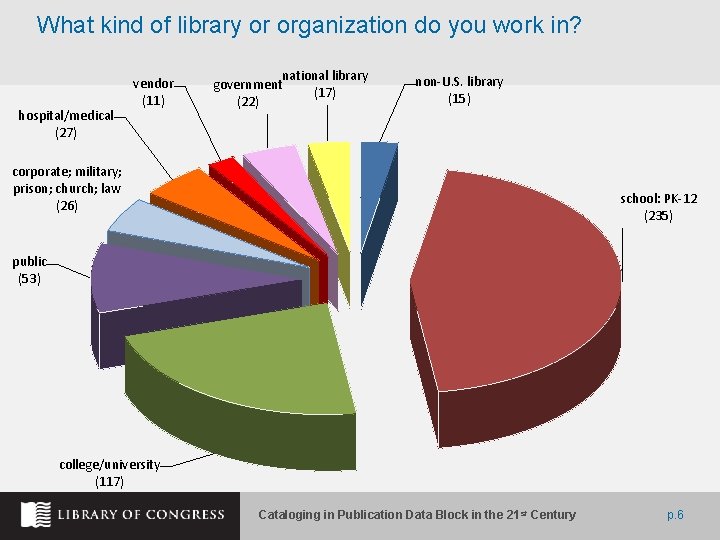
What kind of library or organization do you work in? hospital/medical (27) vendor (11) national library government (17) (22) non-U. S. library (15) corporate; military; prison; church; law (26) school: PK-12 (235) public (53) college/university (117) Cataloging in Publication Data Block in the 21 st Century p. 6
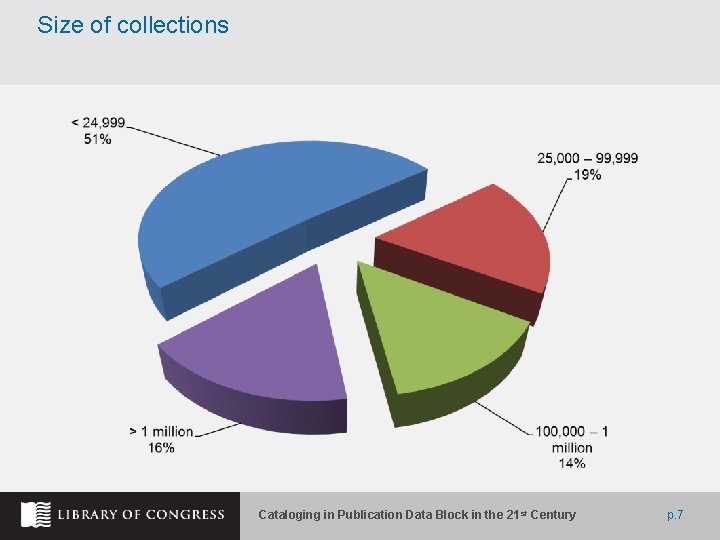
Size of collections Cataloging in Publication Data Block in the 21 st Century p. 7
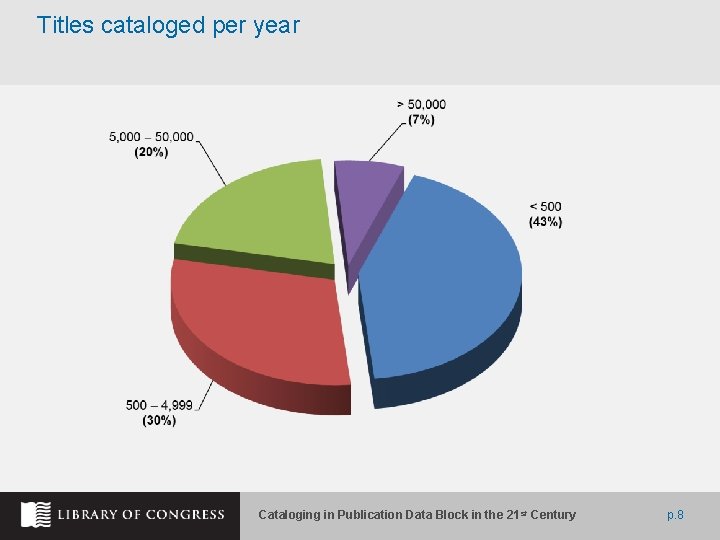
Titles cataloged per year Cataloging in Publication Data Block in the 21 st Century p. 8
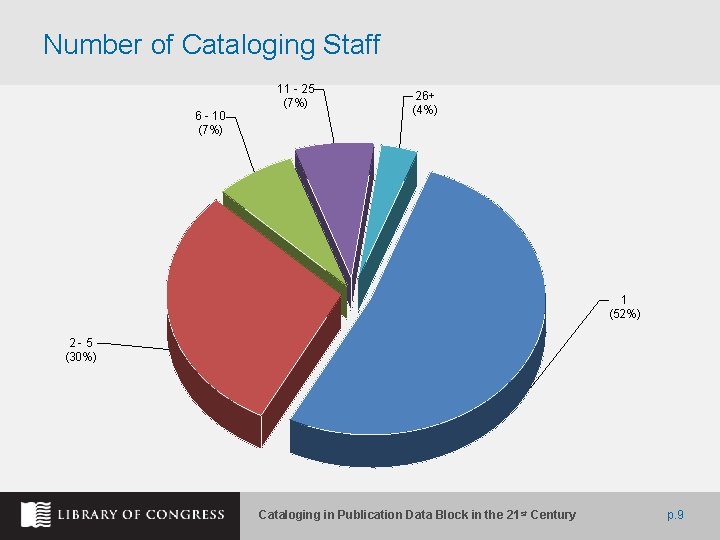
Number of Cataloging Staff 6 - 10 (7%) 11 - 25 (7%) 26+ (4%) 1 (52%) 2 -5 (30%) Cataloging in Publication Data Block in the 21 st Century p. 9
The CIP Data Block How is it used? p. 10
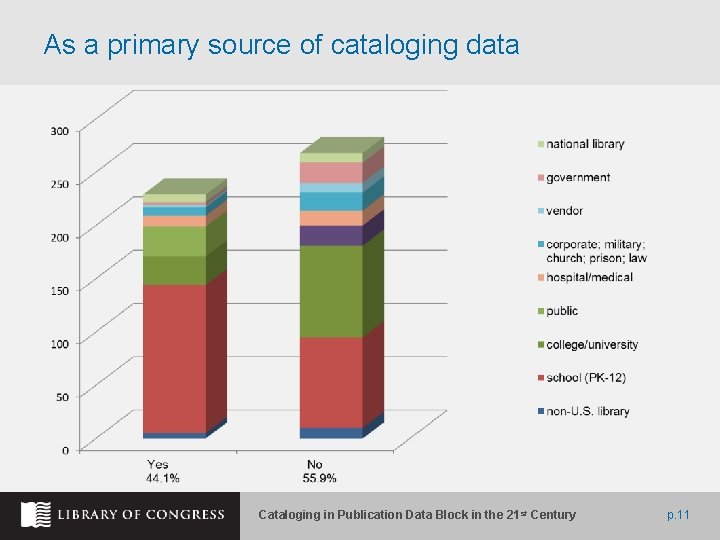
As a primary source of cataloging data Cataloging in Publication Data Block in the 21 st Century p. 11
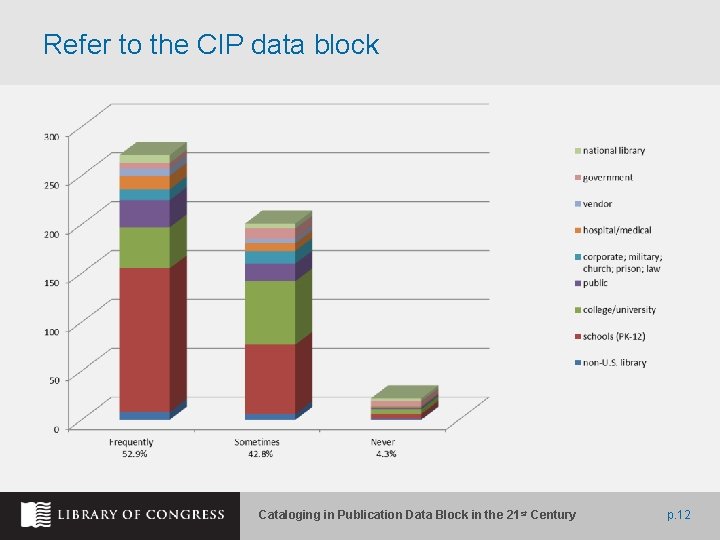
Refer to the CIP data block Cataloging in Publication Data Block in the 21 st Century p. 12

Manually transcribe CIP data block Cataloging in Publication Data Block in the 21 st Century p. 13
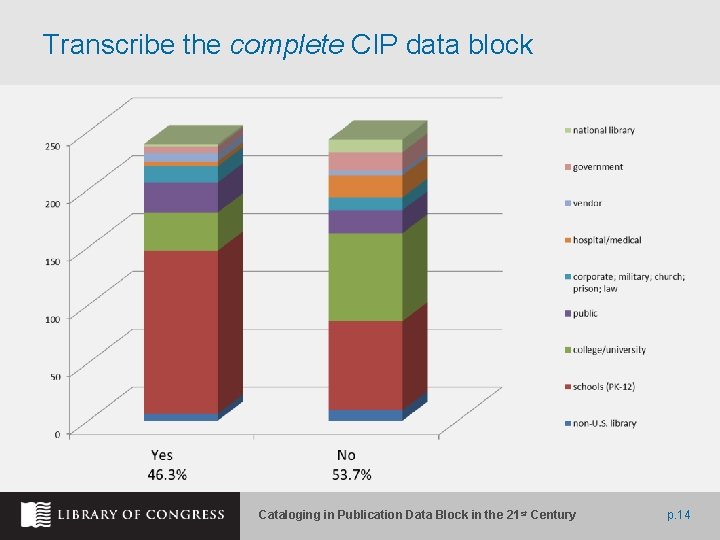
Transcribe the complete CIP data block Cataloging in Publication Data Block in the 21 st Century p. 14
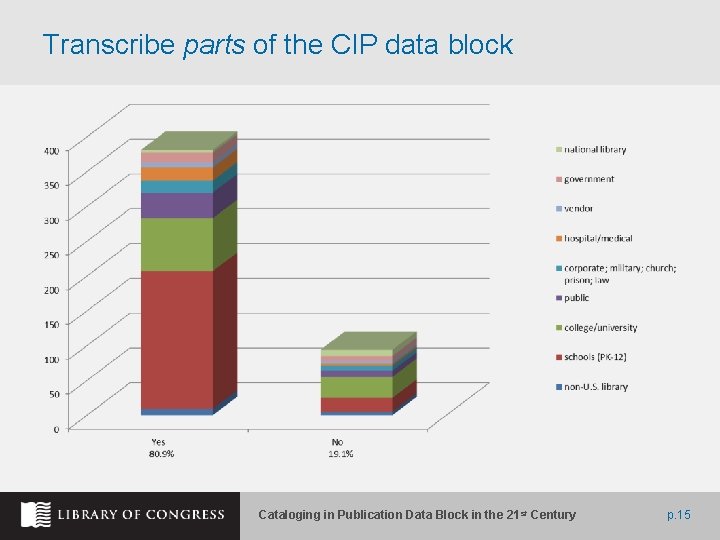
Transcribe parts of the CIP data block Cataloging in Publication Data Block in the 21 st Century p. 15
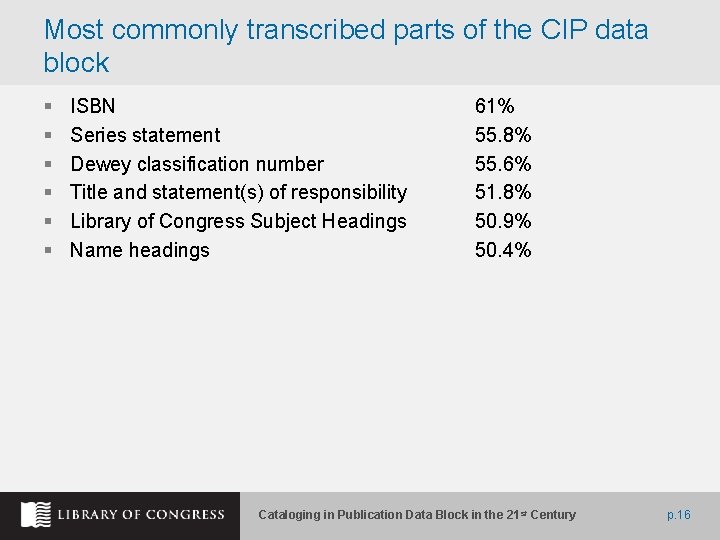
Most commonly transcribed parts of the CIP data block § § § ISBN Series statement Dewey classification number Title and statement(s) of responsibility Library of Congress Subject Headings Name headings 61% 55. 8% 55. 6% 51. 8% 50. 9% 50. 4% Cataloging in Publication Data Block in the 21 st Century p. 16
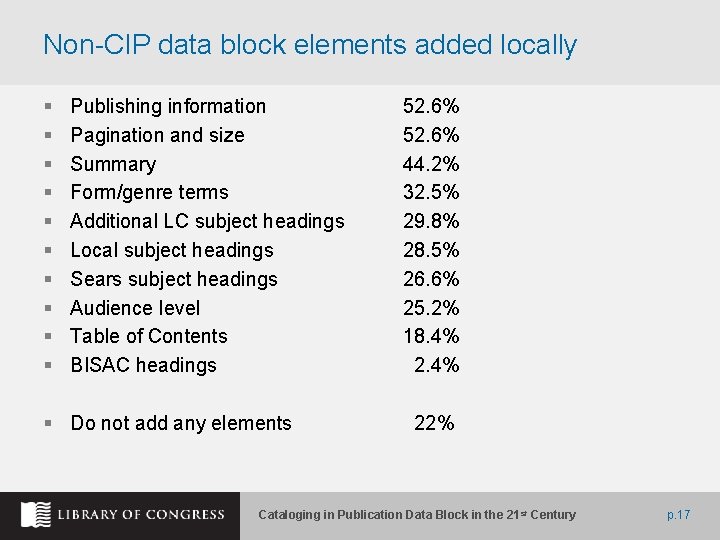
Non-CIP data block elements added locally § § § § § Publishing information Pagination and size Summary Form/genre terms Additional LC subject headings Local subject headings Sears subject headings Audience level Table of Contents BISAC headings § Do not add any elements 52. 6% 44. 2% 32. 5% 29. 8% 28. 5% 26. 6% 25. 2% 18. 4% 22% Cataloging in Publication Data Block in the 21 st Century p. 17
The CIP Data Block What elements should be changed, added, or kept p. 18
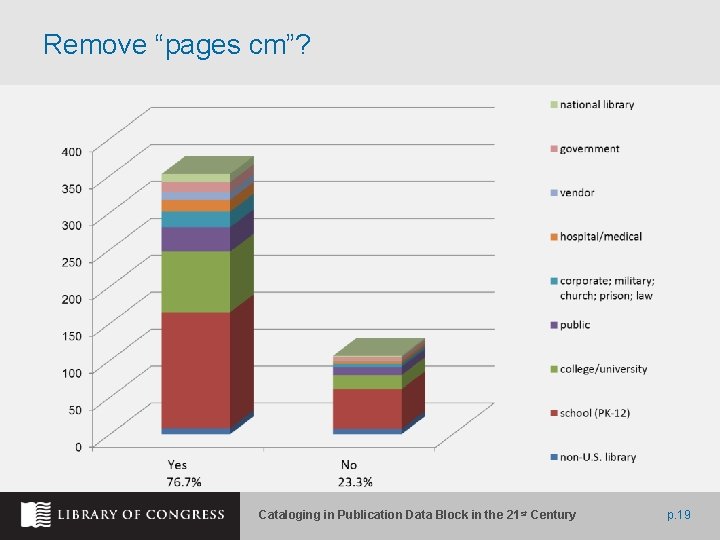
Remove “pages cm”? Cataloging in Publication Data Block in the 21 st Century p. 19
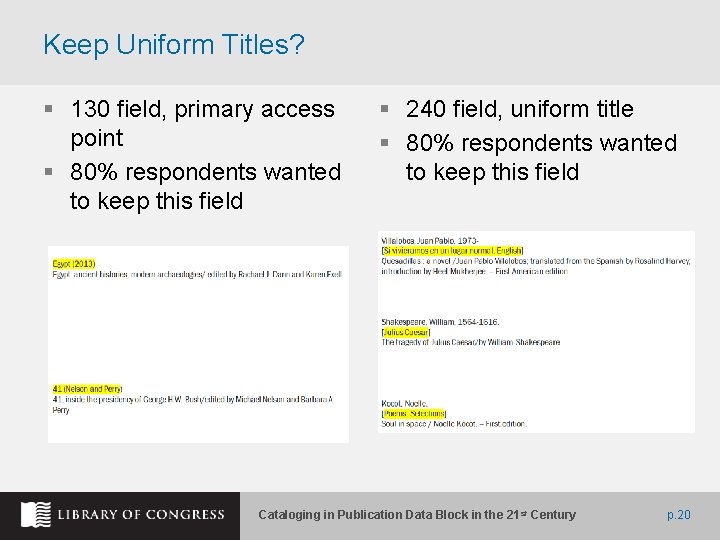
Keep Uniform Titles? § 130 field, primary access point § 80% respondents wanted to keep this field § 240 field, uniform title § 80% respondents wanted to keep this field Cataloging in Publication Data Block in the 21 st Century p. 20
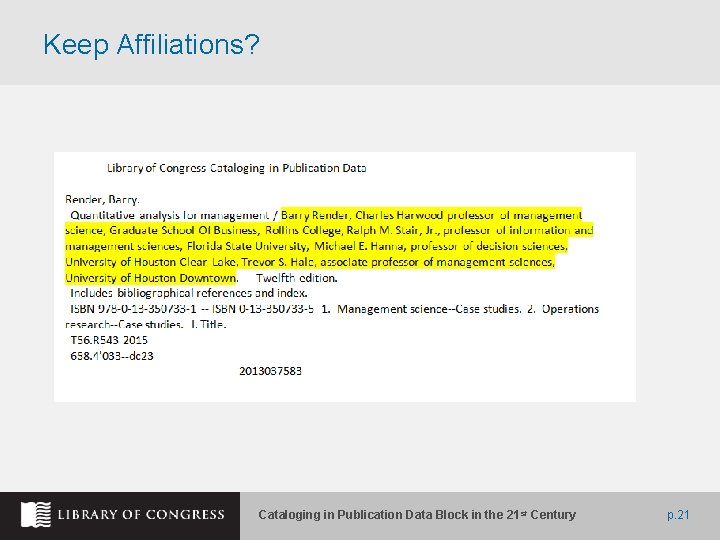
Keep Affiliations? Cataloging in Publication Data Block in the 21 st Century p. 21
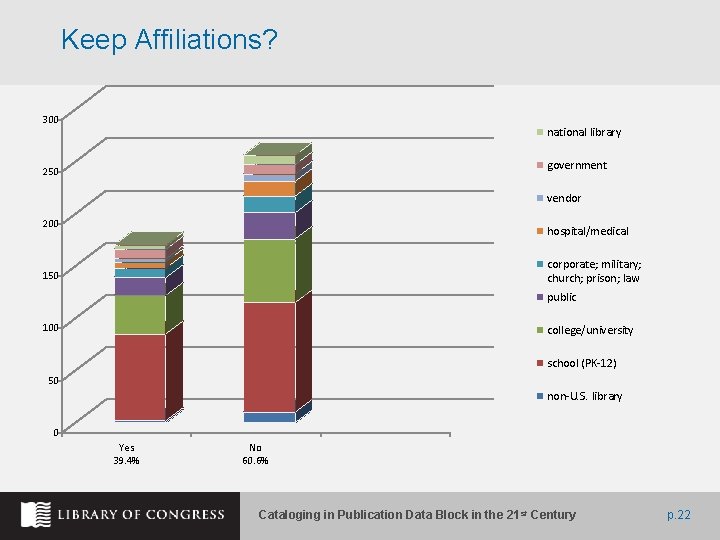
Keep Affiliations? 300 national library government 250 vendor 200 hospital/medical corporate; military; church; prison; law 150 public 100 college/university school (PK-12) 50 non-U. S. library 0 Yes 39. 4% No 60. 6% Cataloging in Publication Data Block in the 21 st Century p. 22
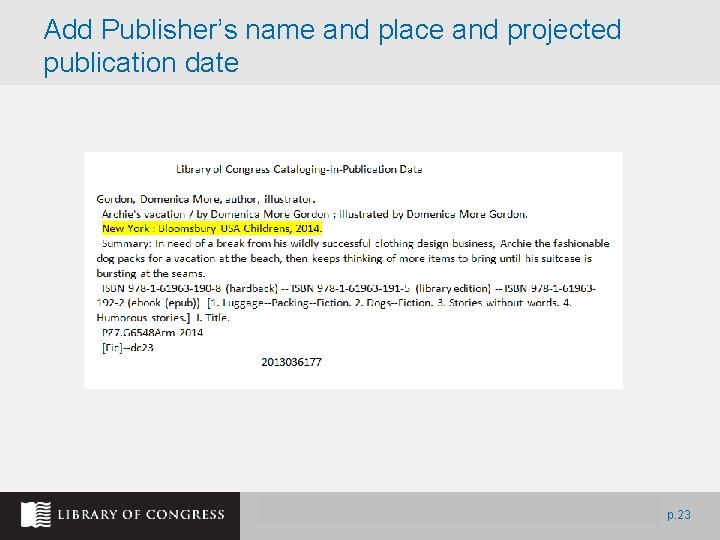
Add Publisher’s name and place and projected publication date Cataloging in Publication Data Block in the 21 st Century p. 23
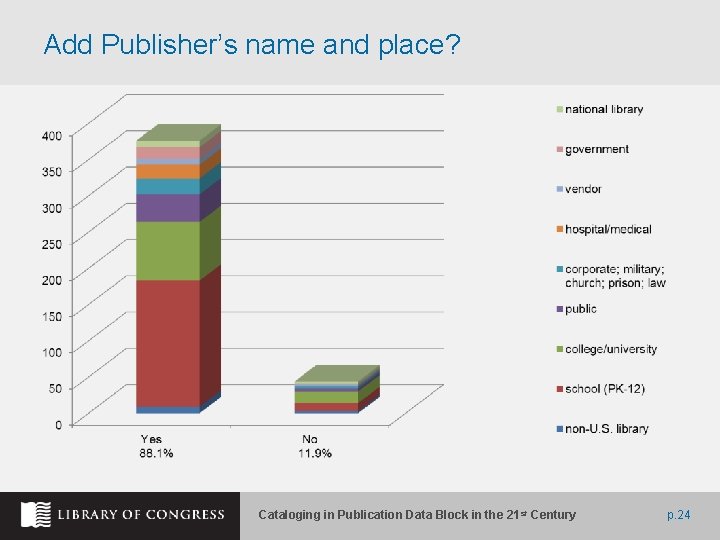
Add Publisher’s name and place? Cataloging in Publication Data Block in the 21 st Century p. 24
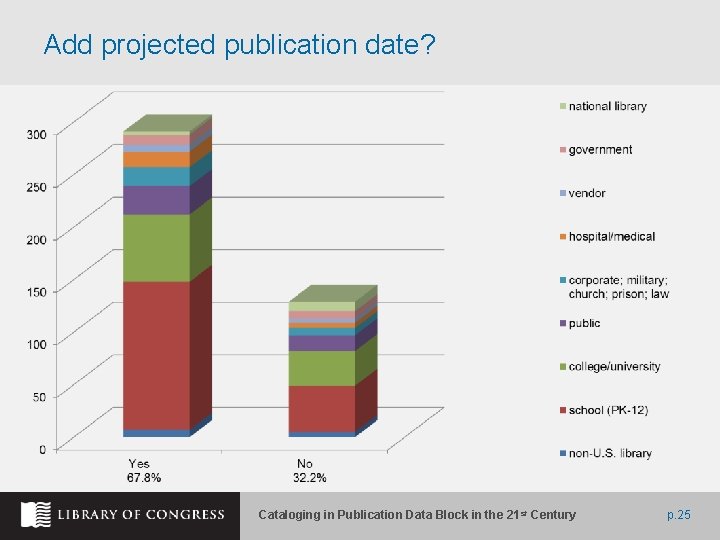
Add projected publication date? Cataloging in Publication Data Block in the 21 st Century p. 25
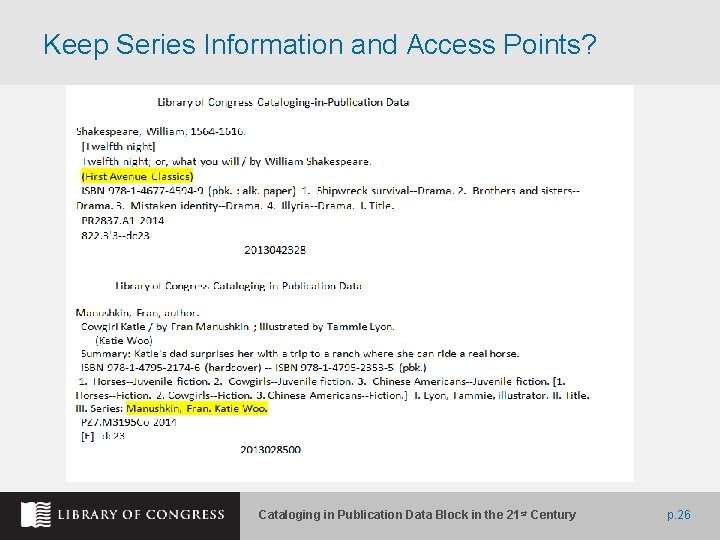
Keep Series Information and Access Points? Cataloging in Publication Data Block in the 21 st Century p. 26
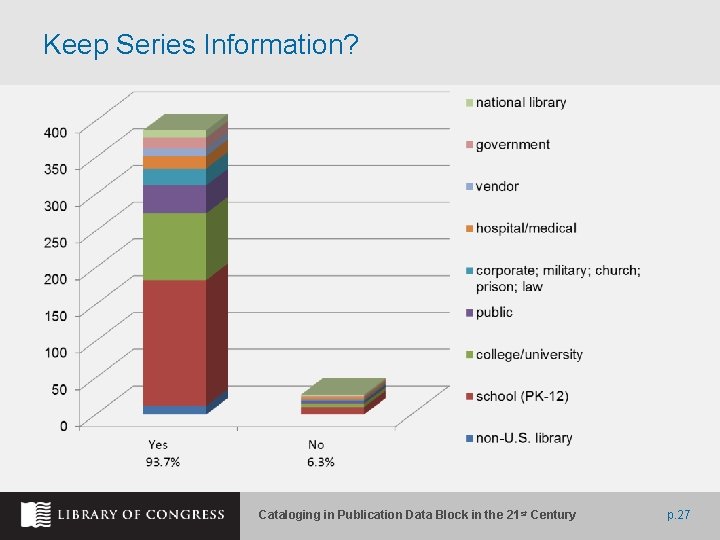
Keep Series Information? Cataloging in Publication Data Block in the 21 st Century p. 27
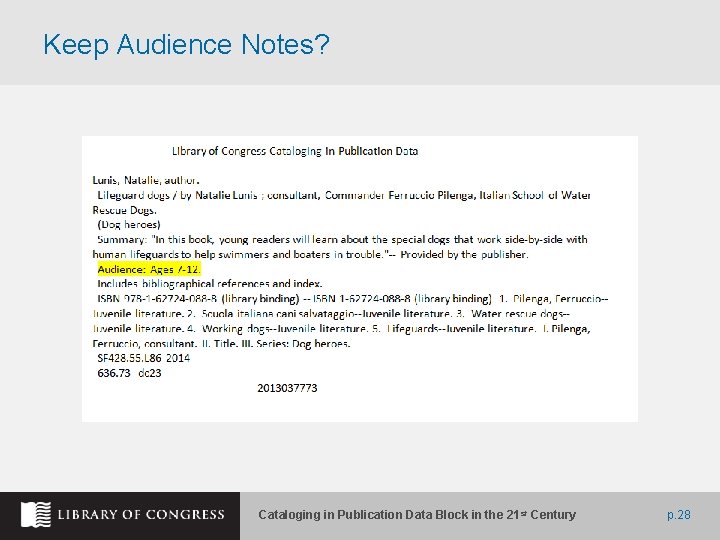
Keep Audience Notes? Cataloging in Publication Data Block in the 21 st Century p. 28
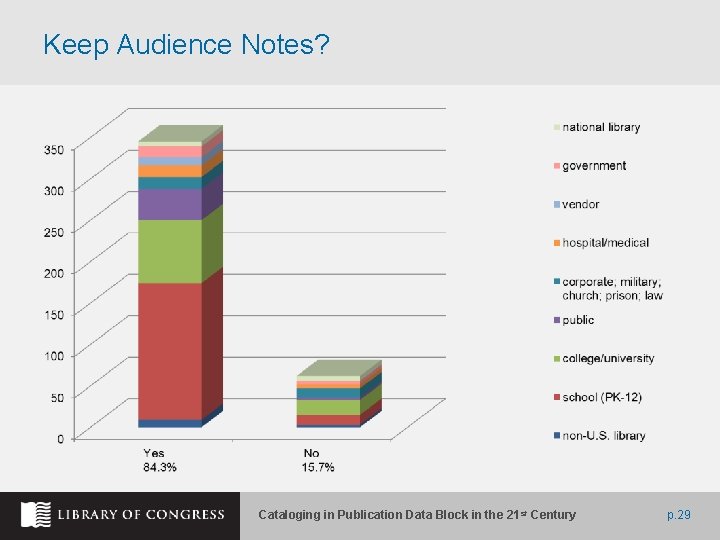
Keep Audience Notes? Cataloging in Publication Data Block in the 21 st Century p. 29
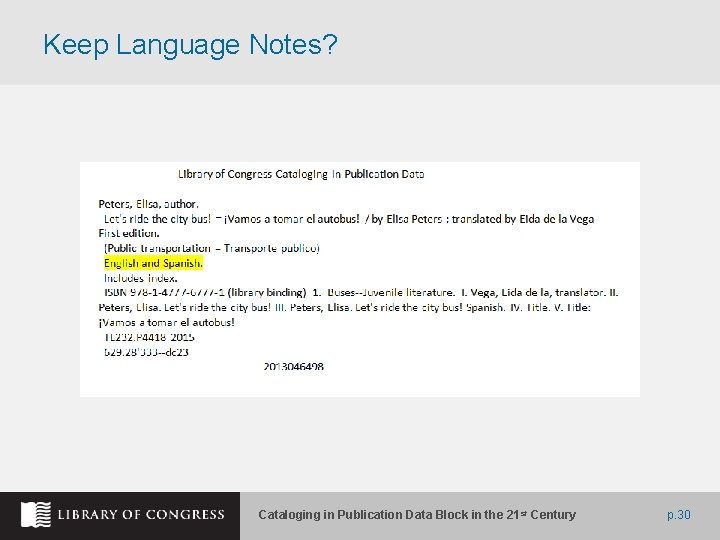
Keep Language Notes? Cataloging in Publication Data Block in the 21 st Century p. 30
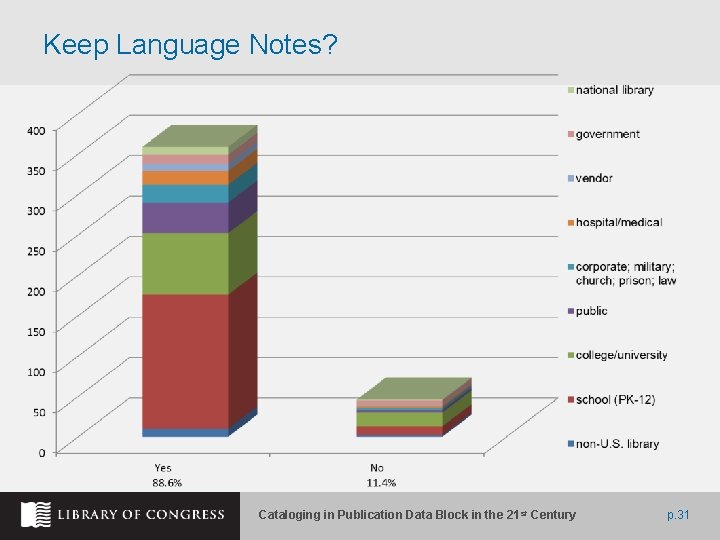
Keep Language Notes? Cataloging in Publication Data Block in the 21 st Century p. 31
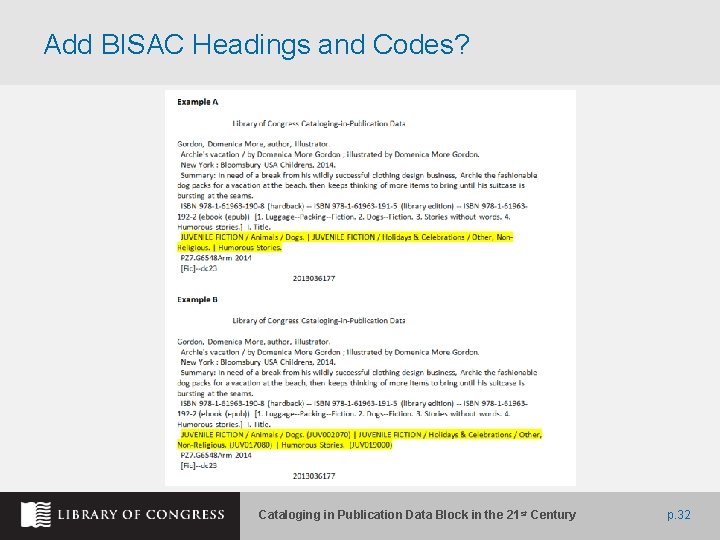
Add BISAC Headings and Codes? Cataloging in Publication Data Block in the 21 st Century p. 32
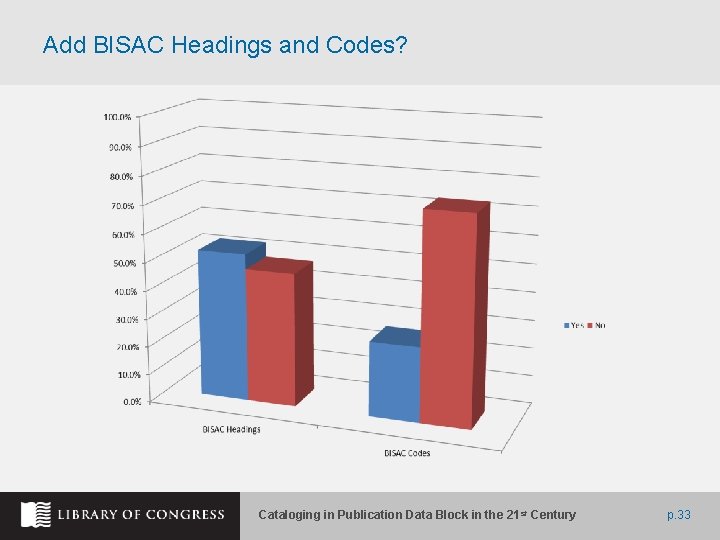
Add BISAC Headings and Codes? Cataloging in Publication Data Block in the 21 st Century p. 33
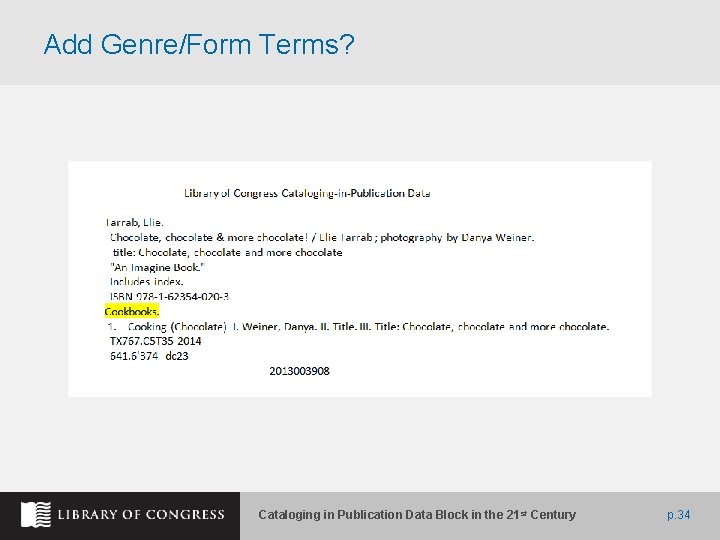
Add Genre/Form Terms? Cataloging in Publication Data Block in the 21 st Century p. 34
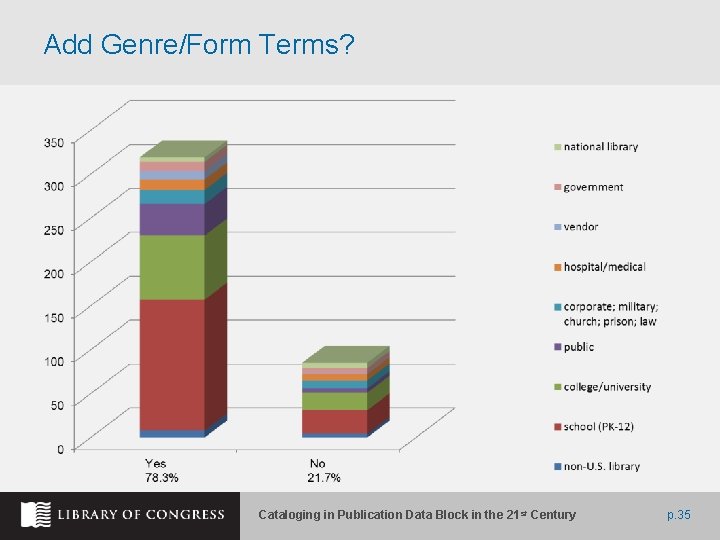
Add Genre/Form Terms? Cataloging in Publication Data Block in the 21 st Century p. 35
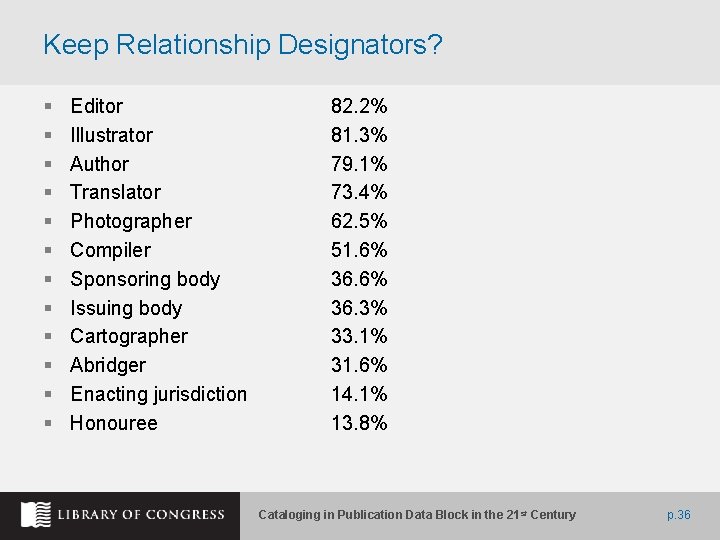
Keep Relationship Designators? § § § Editor Illustrator Author Translator Photographer Compiler Sponsoring body Issuing body Cartographer Abridger Enacting jurisdiction Honouree 82. 2% 81. 3% 79. 1% 73. 4% 62. 5% 51. 6% 36. 3% 33. 1% 31. 6% 14. 1% 13. 8% Cataloging in Publication Data Block in the 21 st Century p. 36
The CIP Data Block New layout? p. 37
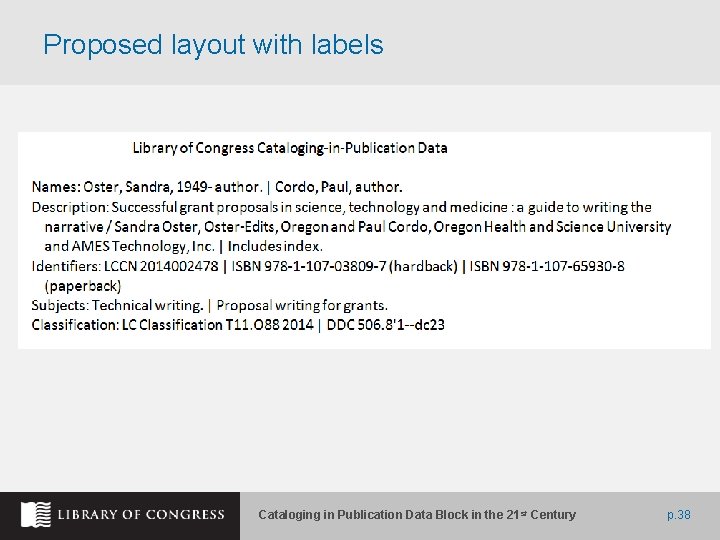
Proposed layout with labels Cataloging in Publication Data Block in the 21 st Century p. 38
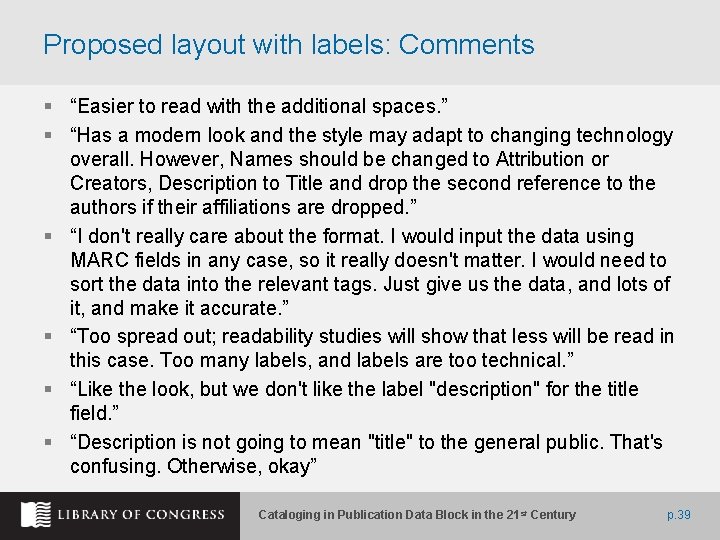
Proposed layout with labels: Comments § “Easier to read with the additional spaces. ” § “Has a modern look and the style may adapt to changing technology overall. However, Names should be changed to Attribution or Creators, Description to Title and drop the second reference to the authors if their affiliations are dropped. ” § “I don't really care about the format. I would input the data using MARC fields in any case, so it really doesn't matter. I would need to sort the data into the relevant tags. Just give us the data, and lots of it, and make it accurate. ” § “Too spread out; readability studies will show that less will be read in this case. Too many labels, and labels are too technical. ” § “Like the look, but we don't like the label "description" for the title field. ” § “Description is not going to mean "title" to the general public. That's confusing. Otherwise, okay” Cataloging in Publication Data Block in the 21 st Century p. 39
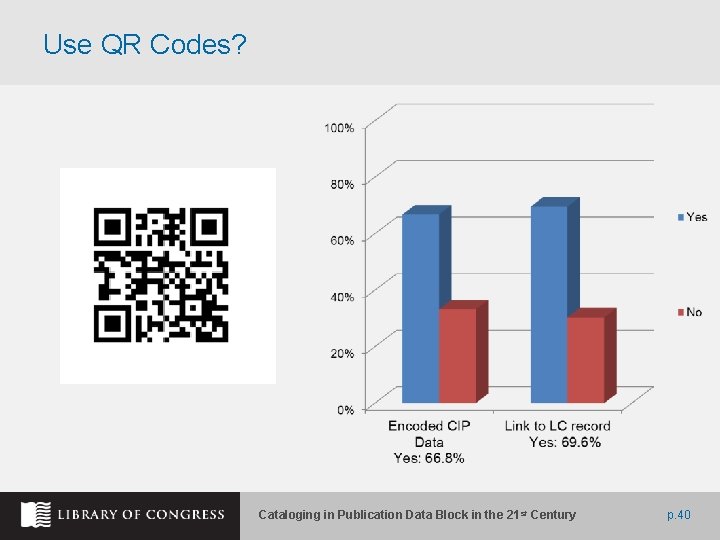
Use QR Codes? Cataloging in Publication Data Block in the 21 st Century p. 40
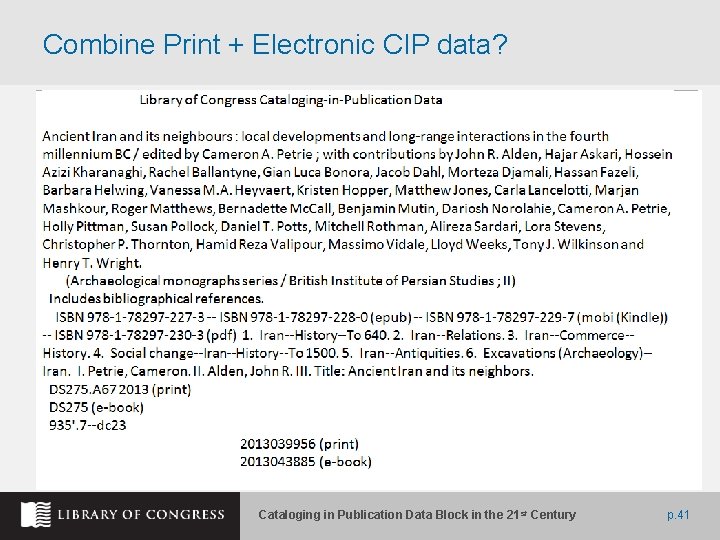
Combine Print + Electronic CIP data? Cataloging in Publication Data Block in the 21 st Century p. 41
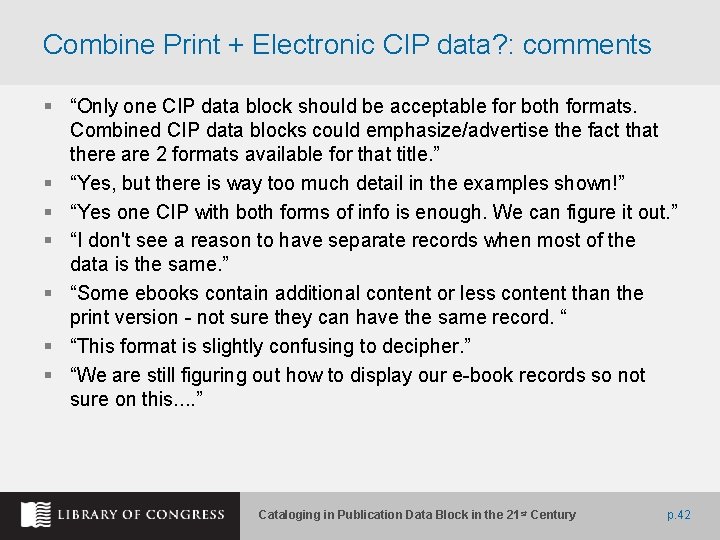
Combine Print + Electronic CIP data? : comments § “Only one CIP data block should be acceptable for both formats. Combined CIP data blocks could emphasize/advertise the fact that there are 2 formats available for that title. ” § “Yes, but there is way too much detail in the examples shown!” § “Yes one CIP with both forms of info is enough. We can figure it out. ” § “I don't see a reason to have separate records when most of the data is the same. ” § “Some ebooks contain additional content or less content than the print version - not sure they can have the same record. “ § “This format is slightly confusing to decipher. ” § “We are still figuring out how to display our e-book records so not sure on this. . ” Cataloging in Publication Data Block in the 21 st Century p. 42
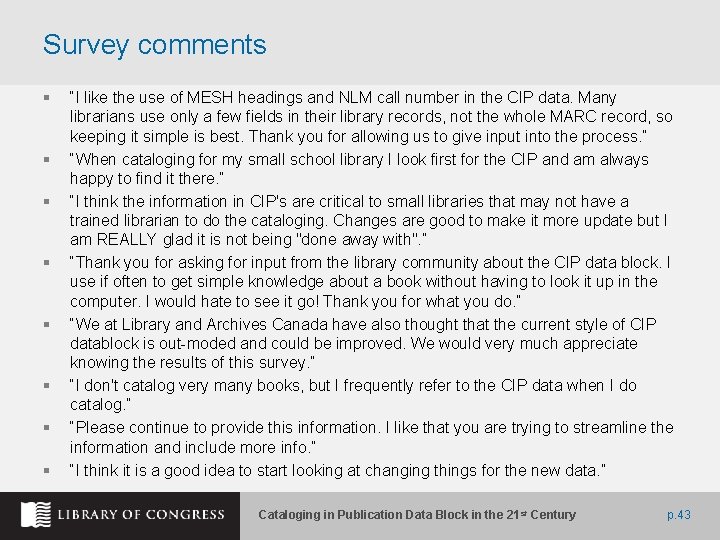
Survey comments § § § § “I like the use of MESH headings and NLM call number in the CIP data. Many librarians use only a few fields in their library records, not the whole MARC record, so keeping it simple is best. Thank you for allowing us to give input into the process. ” “When cataloging for my small school library I look first for the CIP and am always happy to find it there. ” “I think the information in CIP's are critical to small libraries that may not have a trained librarian to do the cataloging. Changes are good to make it more update but I am REALLY glad it is not being "done away with". ” “Thank you for asking for input from the library community about the CIP data block. I use if often to get simple knowledge about a book without having to look it up in the computer. I would hate to see it go! Thank you for what you do. ” “We at Library and Archives Canada have also thought that the current style of CIP datablock is out-moded and could be improved. We would very much appreciate knowing the results of this survey. ” “I don't catalog very many books, but I frequently refer to the CIP data when I do catalog. ” “Please continue to provide this information. I like that you are trying to streamline the information and include more info. ” “I think it is a good idea to start looking at changing things for the new data. ” Cataloging in Publication Data Block in the 21 st Century p. 43
The CIP Data Block Next Steps p. 44
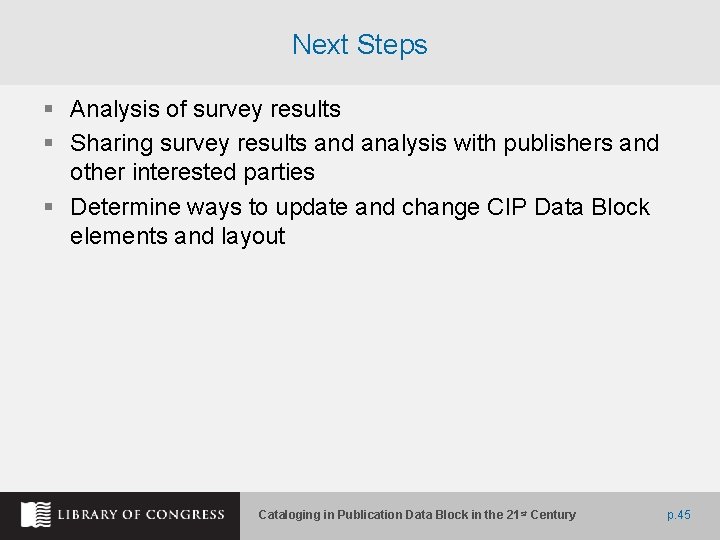
Next Steps § Analysis of survey results § Sharing survey results and analysis with publishers and other interested parties § Determine ways to update and change CIP Data Block elements and layout Cataloging in Publication Data Block in the 21 st Century p. 45
Thank You! http: //www. loc. gov/publish/cip/ p. 46
- Slides: 46