
Casting Quiz Click here to start Scoring Get



- Slides: 34
Casting Quiz Click here to start Scoring Get a question correct at first attempt 1 mark Get a question correct at second attempt ½ mark Get a question correct at the third attempt 0 marks
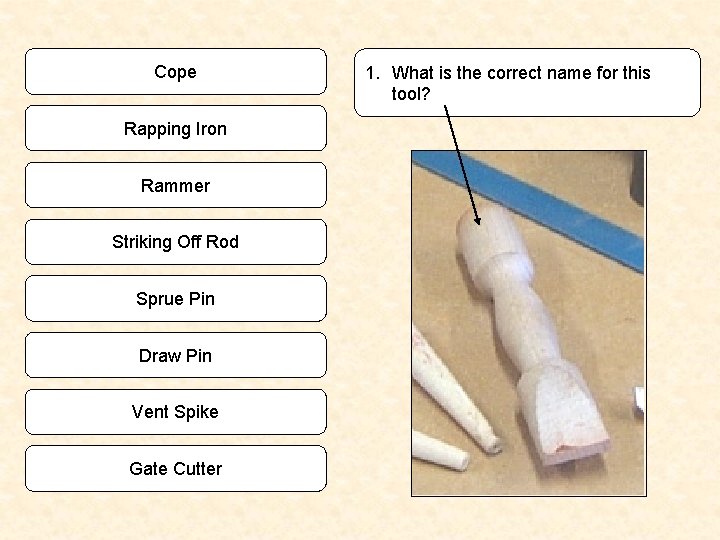
Cope Rapping Iron Rammer Striking Off Rod Sprue Pin Draw Pin Vent Spike Gate Cutter 1. What is the correct name for this tool?
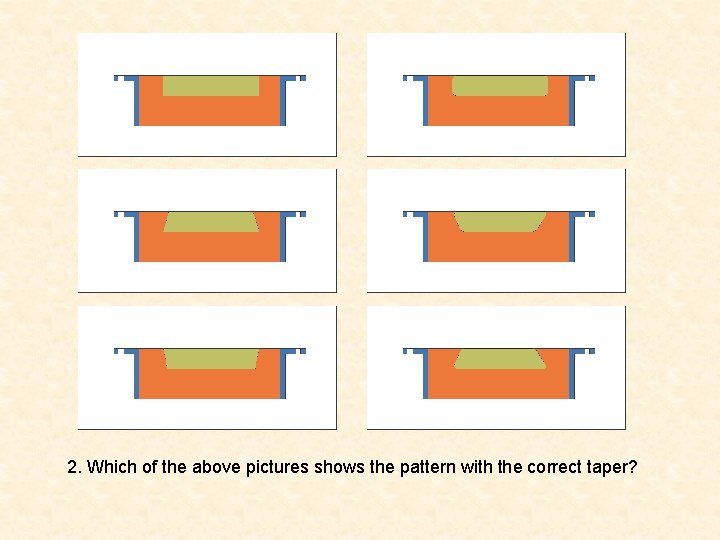
2. Which of the above pictures shows the pattern with the correct taper?
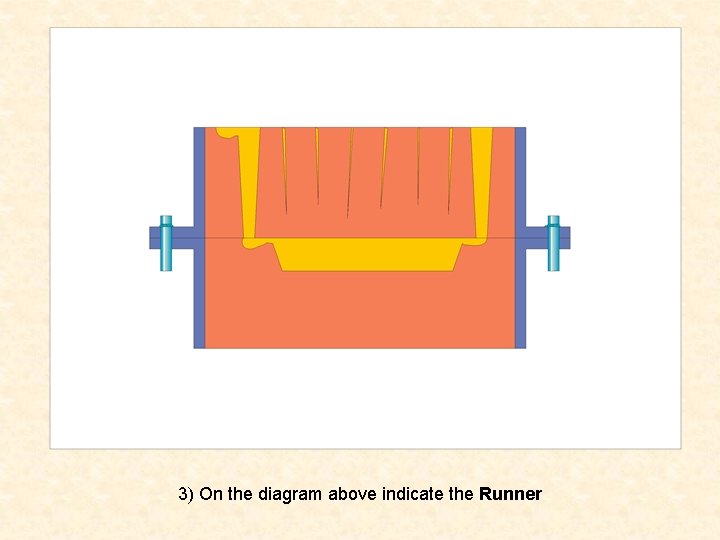
3) On the diagram above indicate the Runner
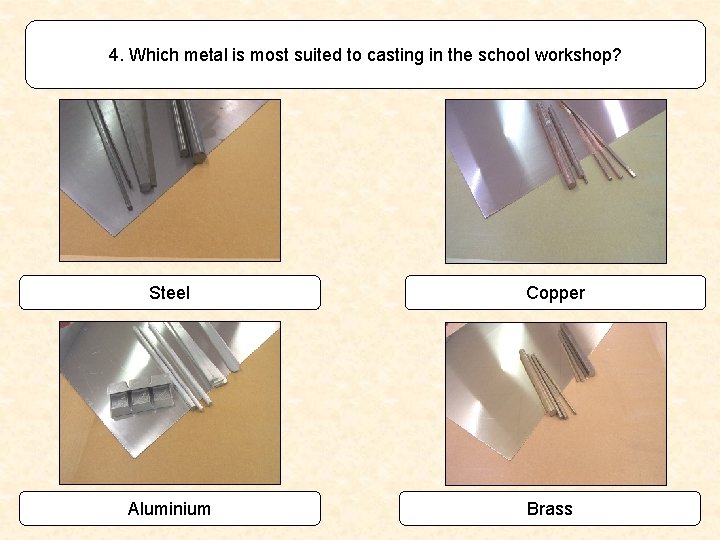
4. Which metal is most suited to casting in the school workshop? Steel Aluminium Copper Brass
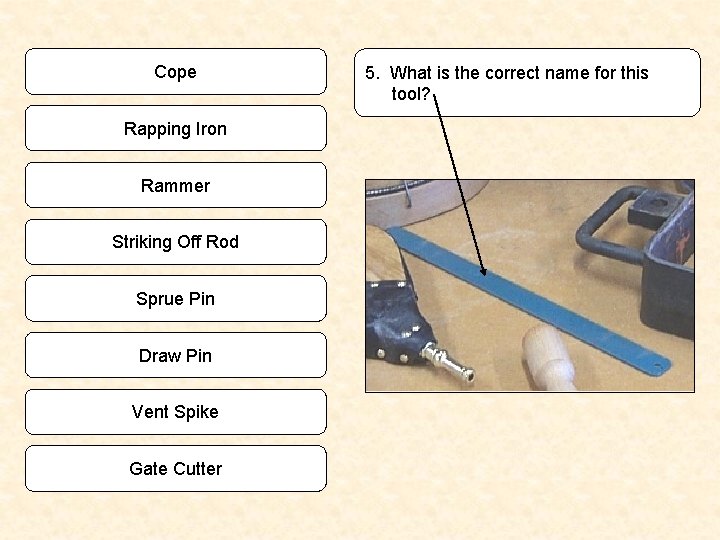
Cope Rapping Iron Rammer Striking Off Rod Sprue Pin Draw Pin Vent Spike Gate Cutter 5. What is the correct name for this tool?
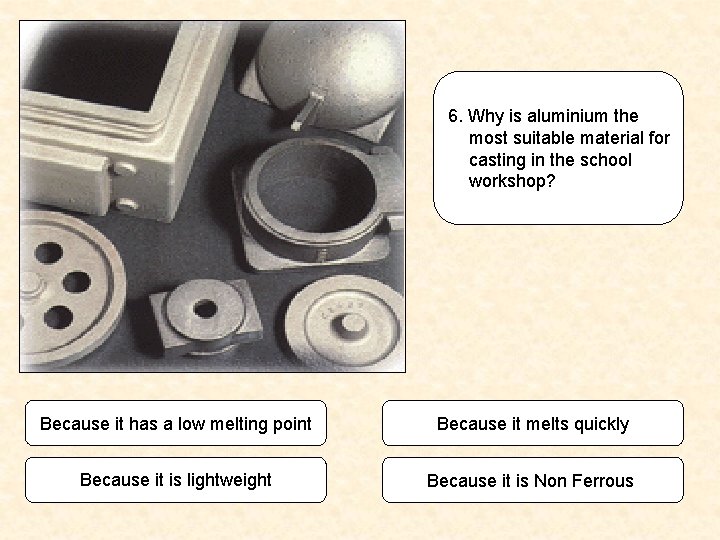
6. Why is aluminium the most suitable material for casting in the school workshop? Because it has a low melting point Because it melts quickly Because it is lightweight Because it is Non Ferrous
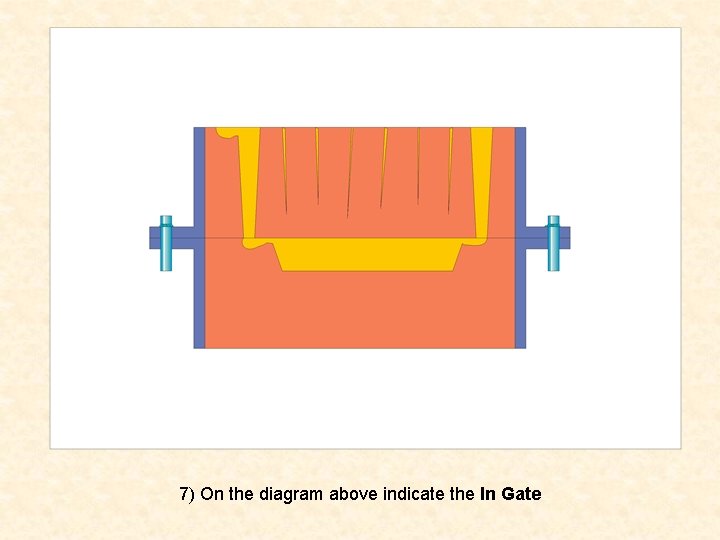
7) On the diagram above indicate the In Gate
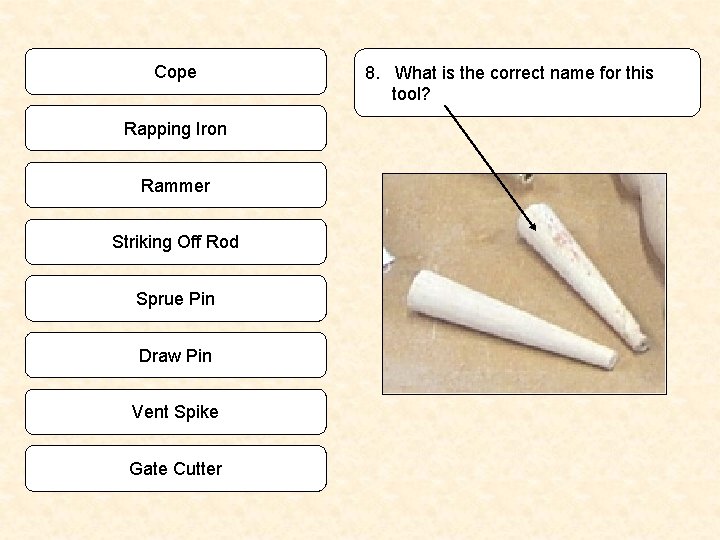
Cope Rapping Iron Rammer Striking Off Rod Sprue Pin Draw Pin Vent Spike Gate Cutter 8. What is the correct name for this tool?
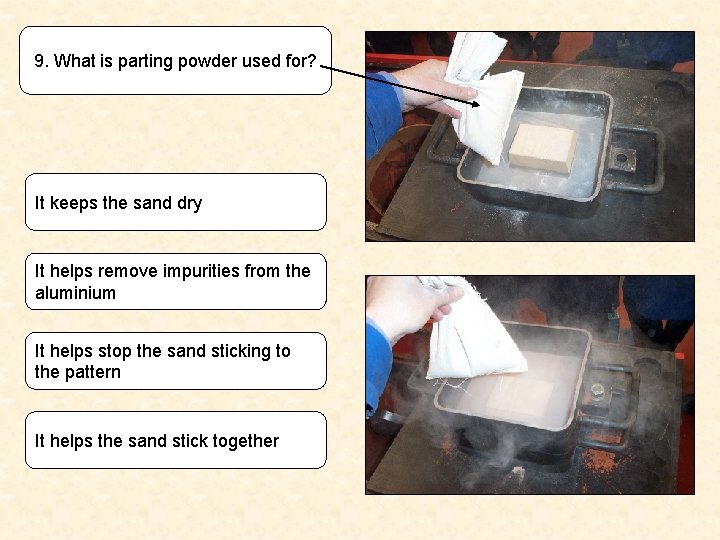
9. What is parting powder used for? It keeps the sand dry It helps remove impurities from the aluminium It helps stop the sand sticking to the pattern It helps the sand stick together
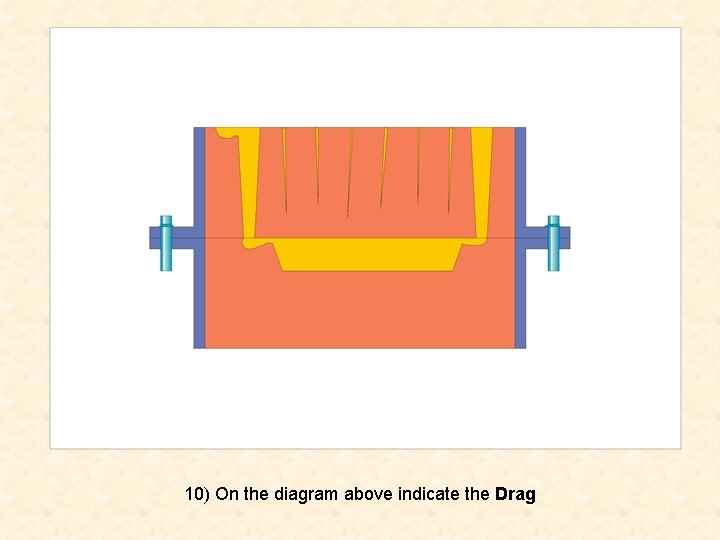
10) On the diagram above indicate the Drag
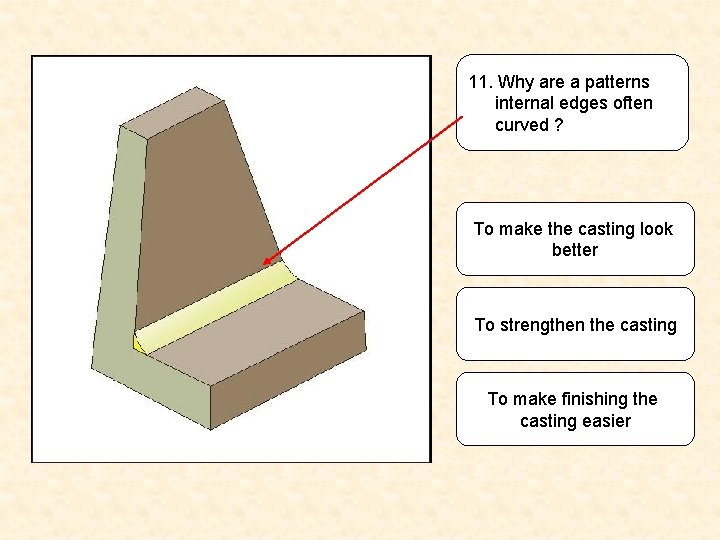
11. Why are a patterns internal edges often curved ? To make the casting look better To strengthen the casting To make finishing the casting easier
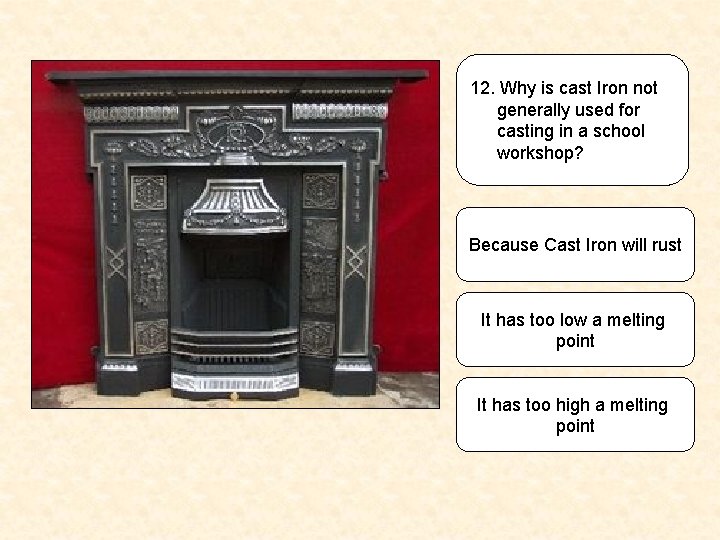
12. Why is cast Iron not generally used for casting in a school workshop? Because Cast Iron will rust It has too low a melting point It has too high a melting point
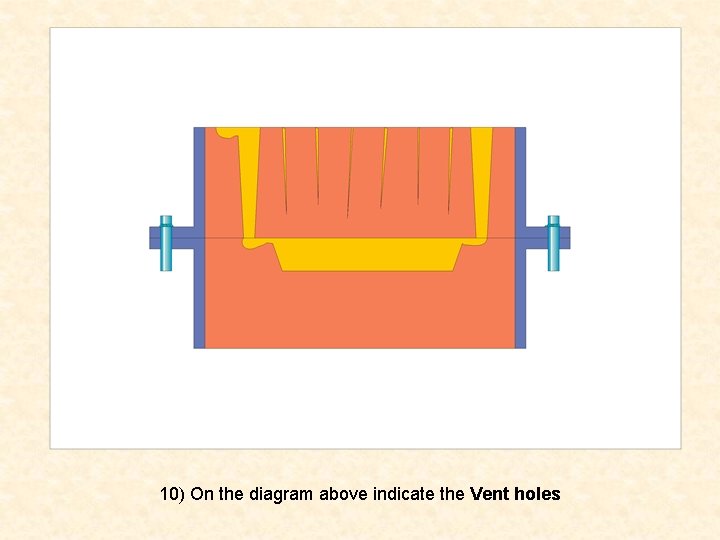
10) On the diagram above indicate the Vent holes
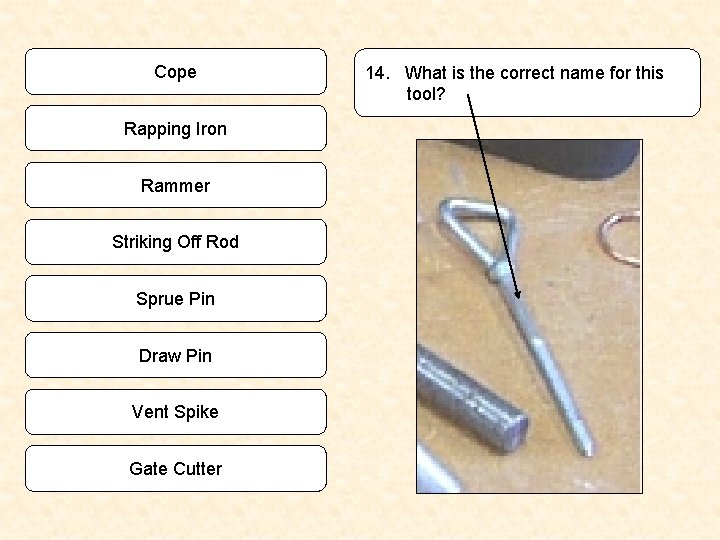
Cope Rapping Iron Rammer Striking Off Rod Sprue Pin Draw Pin Vent Spike Gate Cutter 14. What is the correct name for this tool?
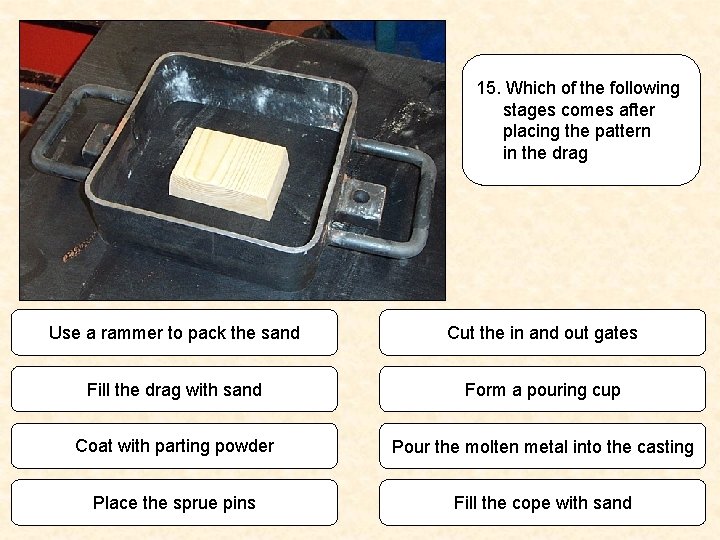
15. Which of the following stages comes after placing the pattern in the drag Use a rammer to pack the sand Cut the in and out gates Fill the drag with sand Form a pouring cup Coat with parting powder Pour the molten metal into the casting Place the sprue pins Fill the cope with sand
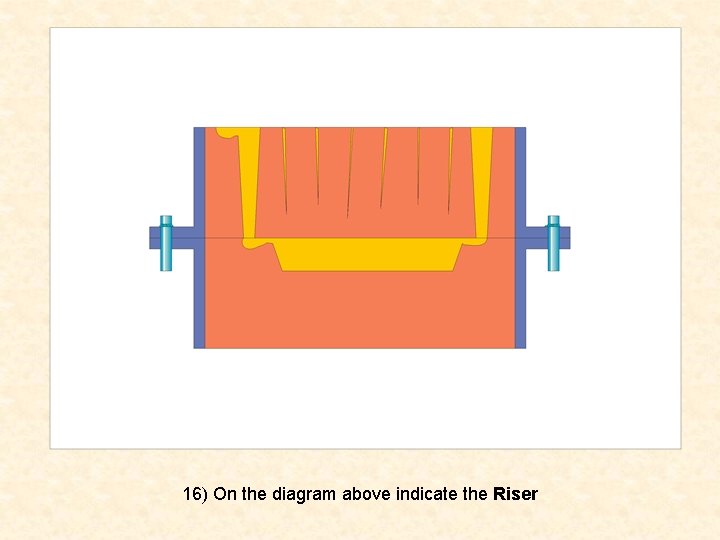
16) On the diagram above indicate the Riser
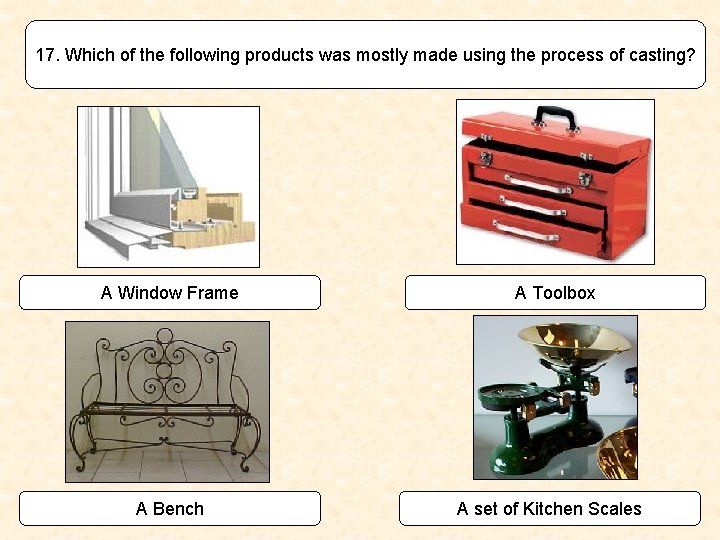
17. Which of the following products was mostly made using the process of casting? A Window Frame A Bench A Toolbox A set of Kitchen Scales
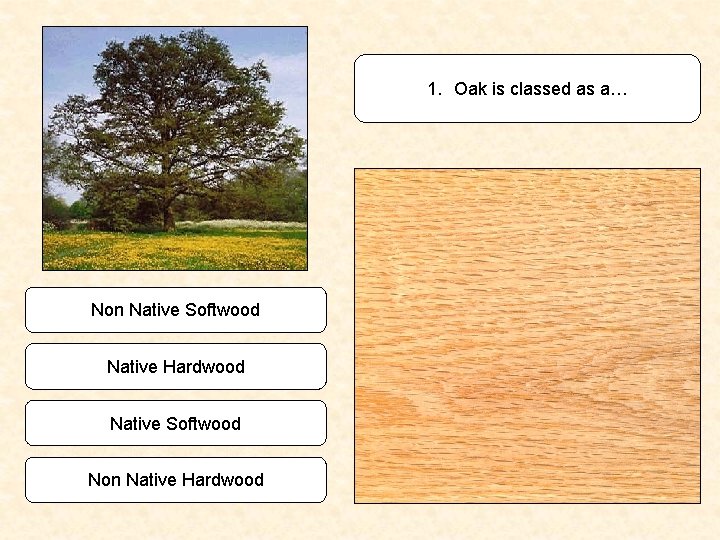
1. Oak is classed as a… Non Native Softwood Native Hardwood Native Softwood Non Native Hardwood
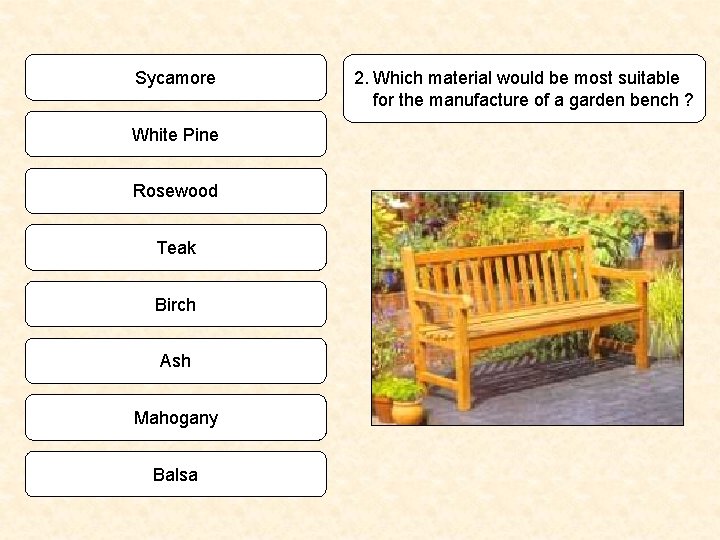
Sycamore White Pine Rosewood Teak Birch Ash Mahogany Balsa 2. Which material would be most suitable for the manufacture of a garden bench ?
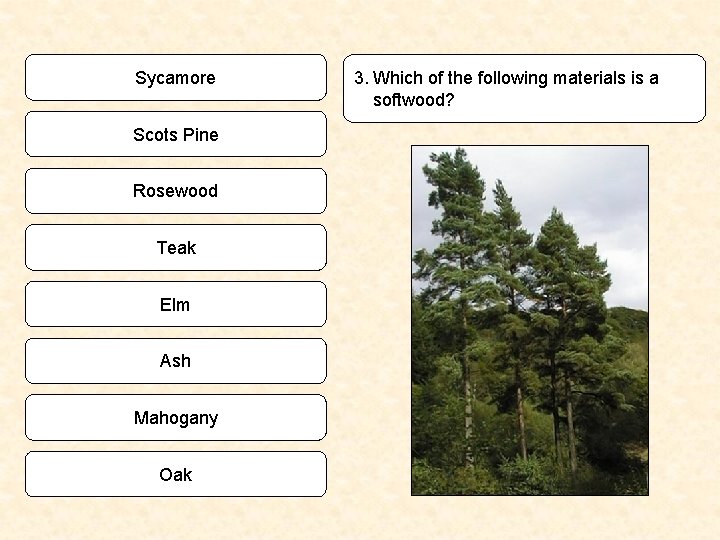
Sycamore Scots Pine Rosewood Teak Elm Ash Mahogany Oak 3. Which of the following materials is a softwood?
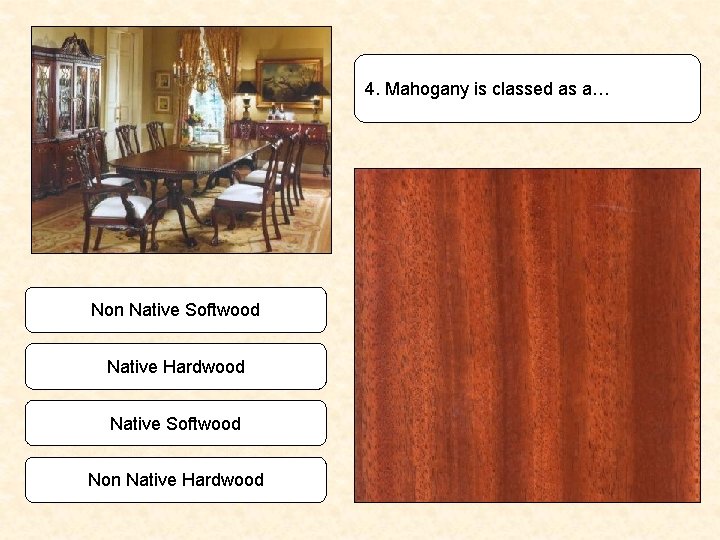
4. Mahogany is classed as a… Non Native Softwood Native Hardwood Native Softwood Non Native Hardwood
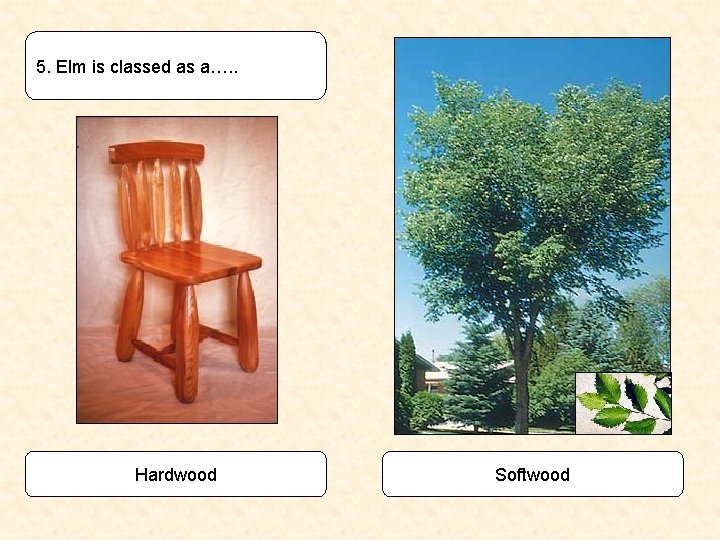
5. Elm is classed as a…. . Hardwood Softwood
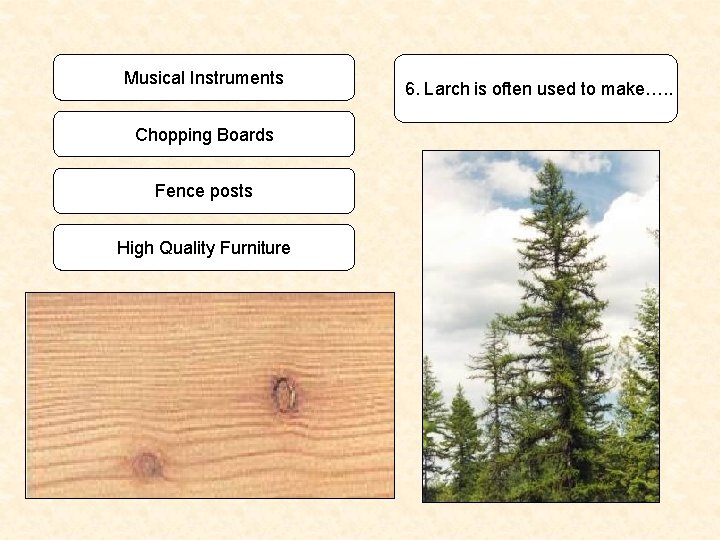
Musical Instruments Chopping Boards Fence posts High Quality Furniture 6. Larch is often used to make…. .
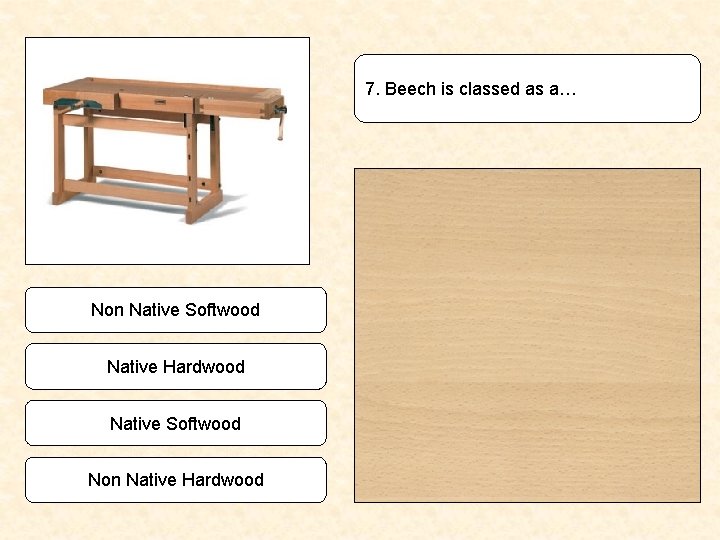
7. Beech is classed as a… Non Native Softwood Native Hardwood Native Softwood Non Native Hardwood
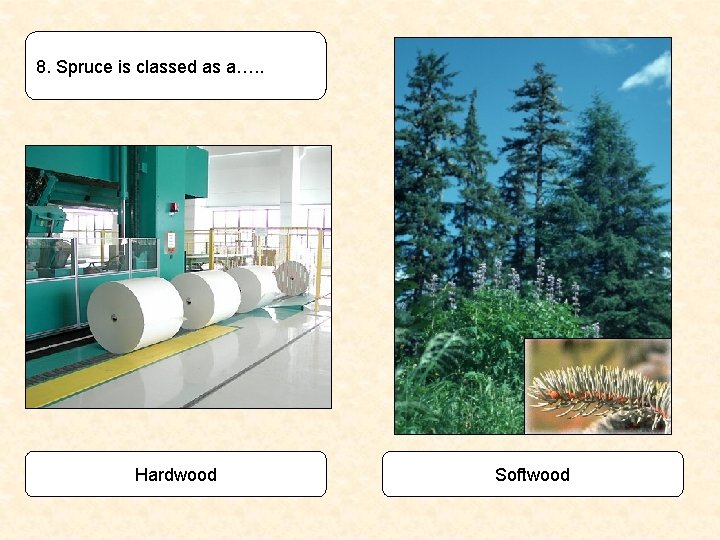
8. Spruce is classed as a…. . Hardwood Softwood
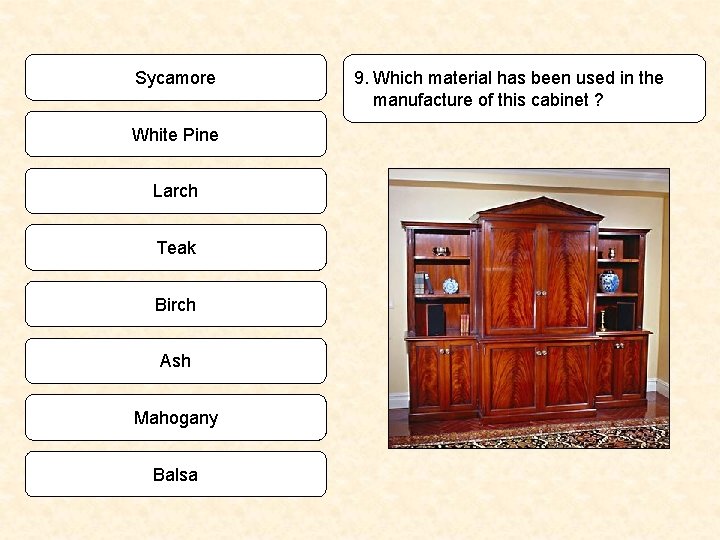
Sycamore White Pine Larch Teak Birch Ash Mahogany Balsa 9. Which material has been used in the manufacture of this cabinet ?
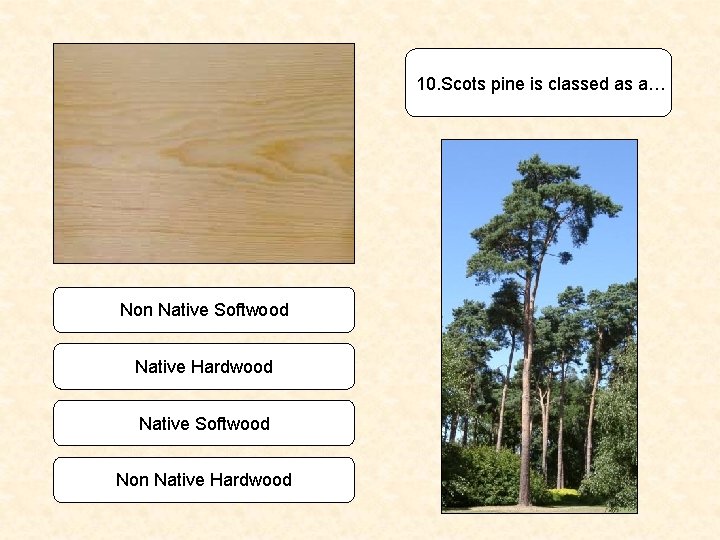
10. Scots pine is classed as a… Non Native Softwood Native Hardwood Native Softwood Non Native Hardwood
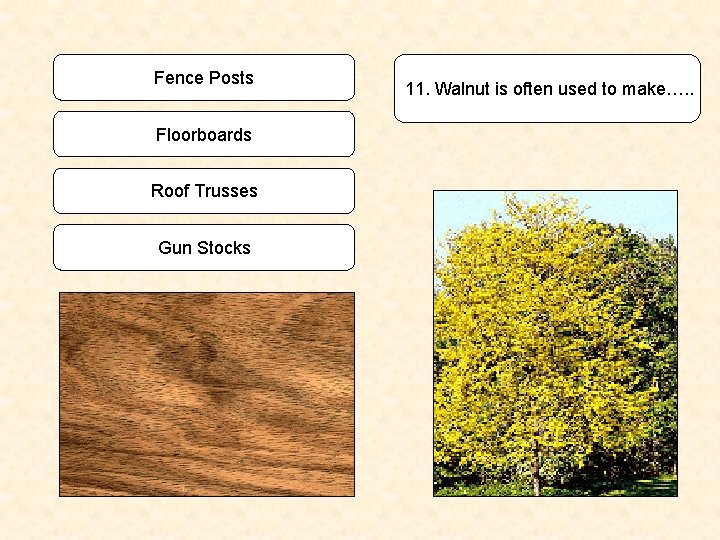
Fence Posts Floorboards Roof Trusses Gun Stocks 11. Walnut is often used to make…. .
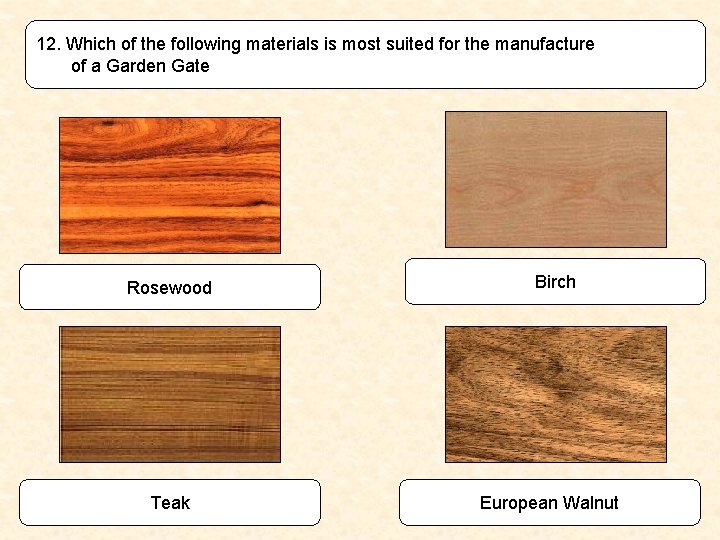
12. Which of the following materials is most suited for the manufacture of a Garden Gate Rosewood Teak Birch European Walnut
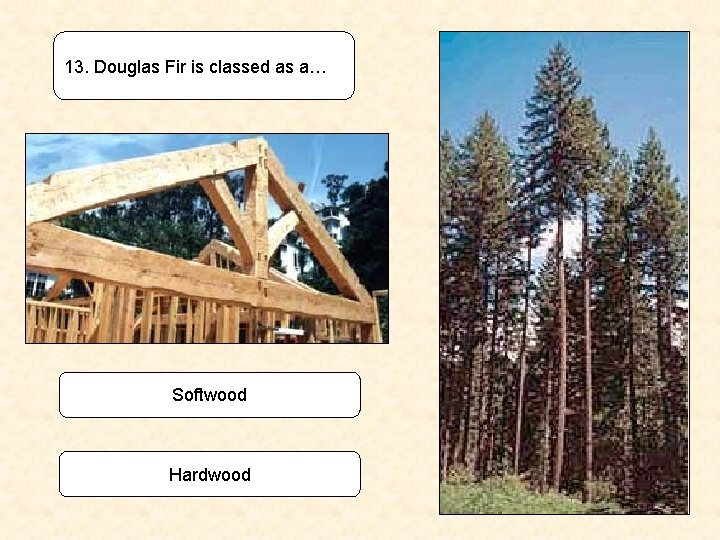
13. Douglas Fir is classed as a… Softwood Hardwood
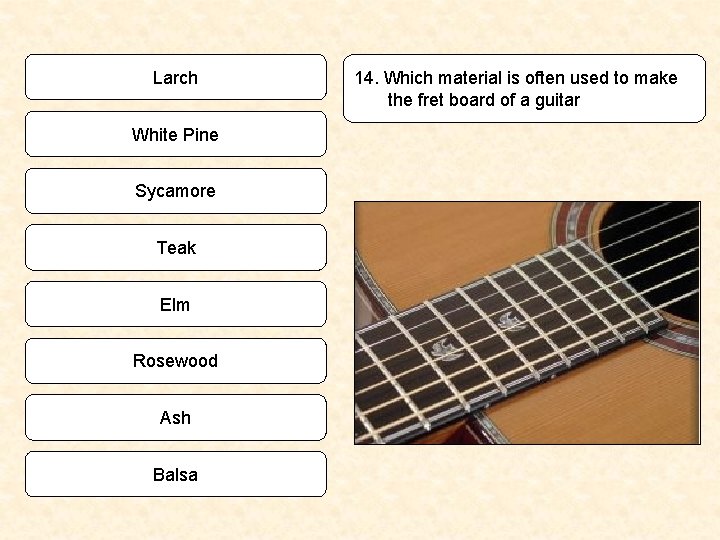
Larch White Pine Sycamore Teak Elm Rosewood Ash Balsa 14. Which material is often used to make the fret board of a guitar
Quiz Completed Well Done Click here for score
Wrong Click here to try again