
Caste System in Ancient India Aleksandra Reed Ph


- Slides: 10
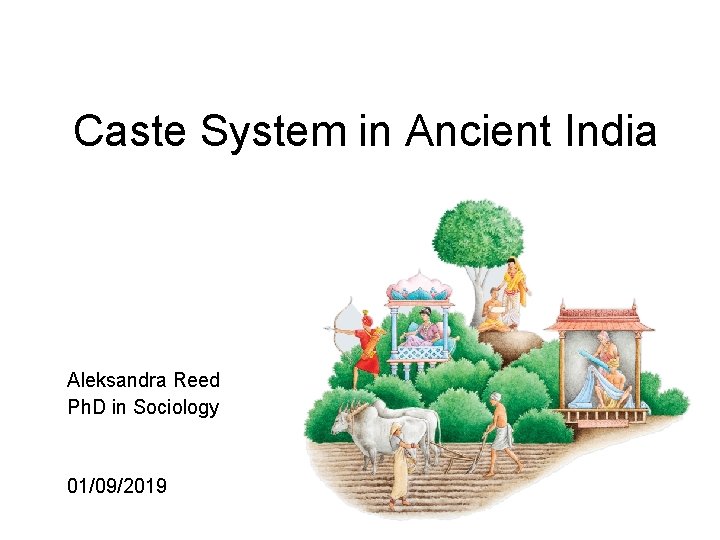
Caste System in Ancient India Aleksandra Reed Ph. D in Sociology 01/09/2019
Origins of caste system • Castes were first described in the book called “Rig Veda”, one of the main manuscripts of the Vedic Period (1500 -1000 BCE). So the caste system is about 3000 y. o. • Caste system is considered and explained in Hindu religion. • Caste system is based on religious understanding of the world. Castes are given from above, they are sacred because they are the way this world was created by gods (the primary God Brahma). • Caste system – division of people into segregated social groups different one from another by professional occupation as well as rights and obligations. • Caste limits the mobility of an individual, his/her freedom of choosing profession and marriage partner, getting education and knowledge, having special kinds of food and etc.
Origins of caste system
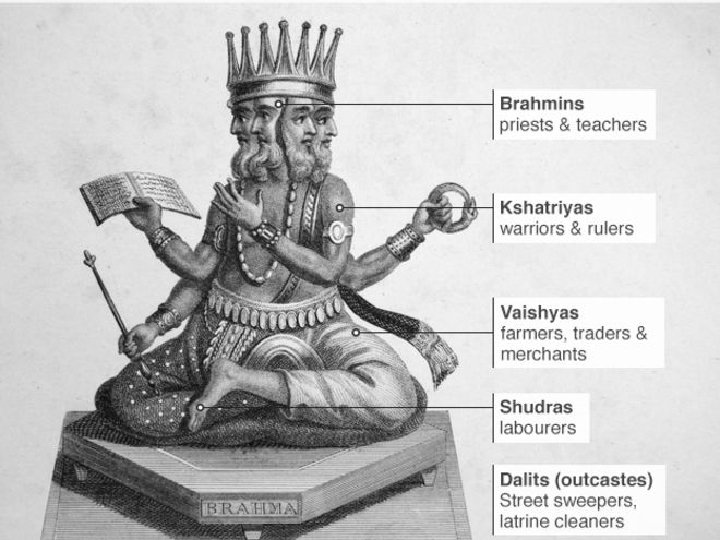
Castes System C l e a n D Ir t y • Brahmins: most educated, advising the rulers, rituals of serving to the Gods, praying, white color • Kshatrias: educated, powerful, war and governance, protection of brahmins, women and the weak, red color • Vaishyas: farming or commerce, wealthy, ancient “middle class”, had their own houses, yellow (golden) color • Shudras: not educated, labour workers, servants, didn’t have own houses, lower caste, black color • Untouchables (outcaste): “dirty” work, living outside of the settlements, no access to water sources, no access to temples
Castes in Modern India • Modern India context: – 1. 3 billion people – 80% of population is rural – Over 50% is poor • There is more than 3000 castes and subcastes, depending on ethnical diversity of the population of the certain region • 90% of marriages are still made inside of the caste (land of origin, family network, socialeconomic conditions)
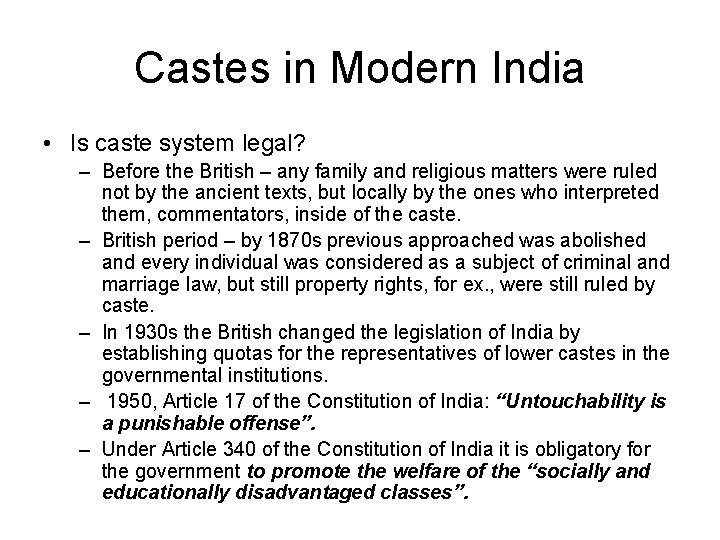
Castes in Modern India • Is caste system legal? – Before the British – any family and religious matters were ruled not by the ancient texts, but locally by the ones who interpreted them, commentators, inside of the caste. – British period – by 1870 s previous approached was abolished and every individual was considered as a subject of criminal and marriage law, but still property rights, for ex. , were still ruled by caste. – In 1930 s the British changed the legislation of India by establishing quotas for the representatives of lower castes in the governmental institutions. – 1950, Article 17 of the Constitution of India: “Untouchability is a punishable offense”. – Under Article 340 of the Constitution of India it is obligatory for the government to promote the welfare of the “socially and educationally disadvantaged classes”.
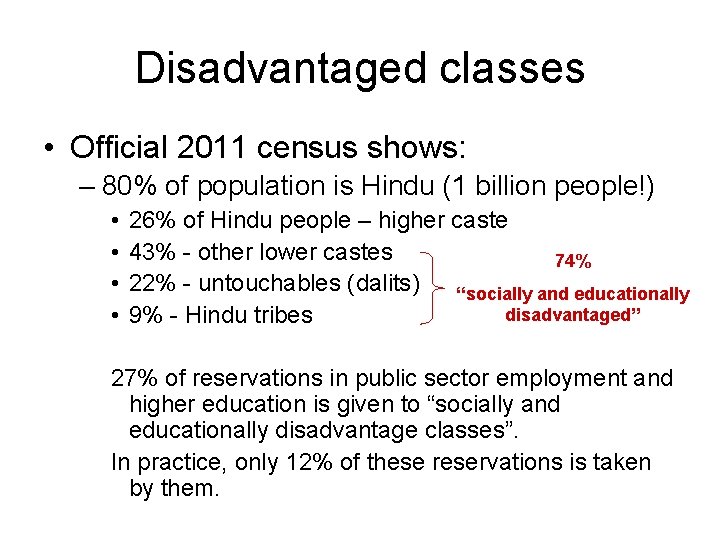
Disadvantaged classes • Official 2011 census shows: – 80% of population is Hindu (1 billion people!) • • 26% of Hindu people – higher caste 43% - other lower castes 74% 22% - untouchables (dalits) “socially and educationally disadvantaged” 9% - Hindu tribes 27% of reservations in public sector employment and higher education is given to “socially and educationally disadvantage classes”. In practice, only 12% of these reservations is taken by them.
Conclusion • Caste system is a historically inherited reality of modern India’s society which is still visible due to social and educational inequality • Caste system helps to sustain the hierarchy and power, as well as social and economic inequality • Caste system is a challenge for modern India to improve human and civil rights protection of each citizen
Thank you!
Additional materials • Videos on The Caste of Untouchables (Dalits) – UN project link 1 – The Untouchable Kids of India link 2