
Caste as Varna and Jati Caste actually comes
- Slides: 8
Caste as Varna and Jati
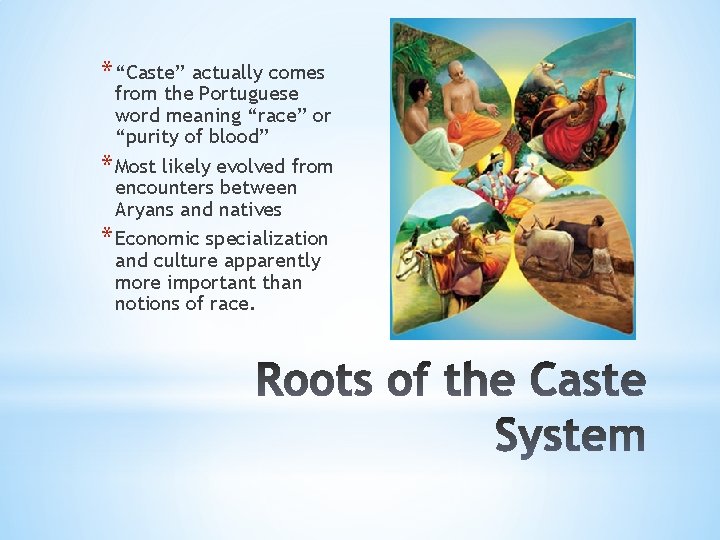
* “Caste” actually comes from the Portuguese word meaning “race” or “purity of blood” * Most likely evolved from encounters between Aryans and natives * Economic specialization and culture apparently more important than notions of race.
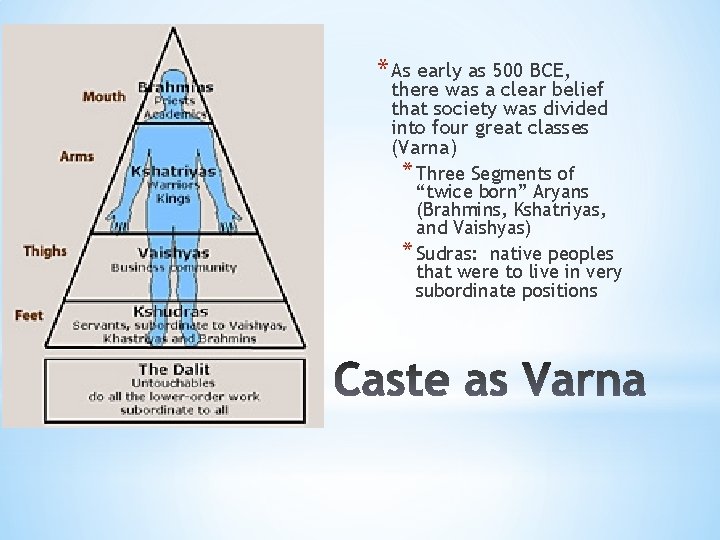
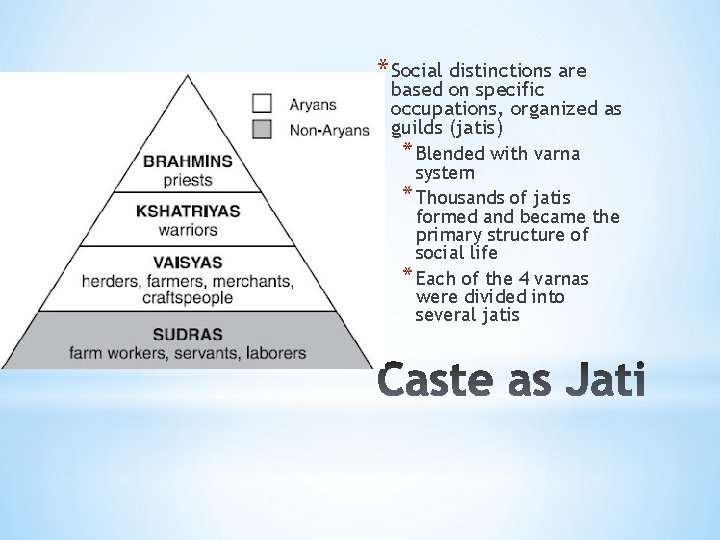
* As early as 500 BCE, there was a clear belief that society was divided into four great classes (Varna) * Three Segments of “twice born” Aryans (Brahmins, Kshatriyas, and Vaishyas) * Sudras: native peoples that were to live in very subordinate positions
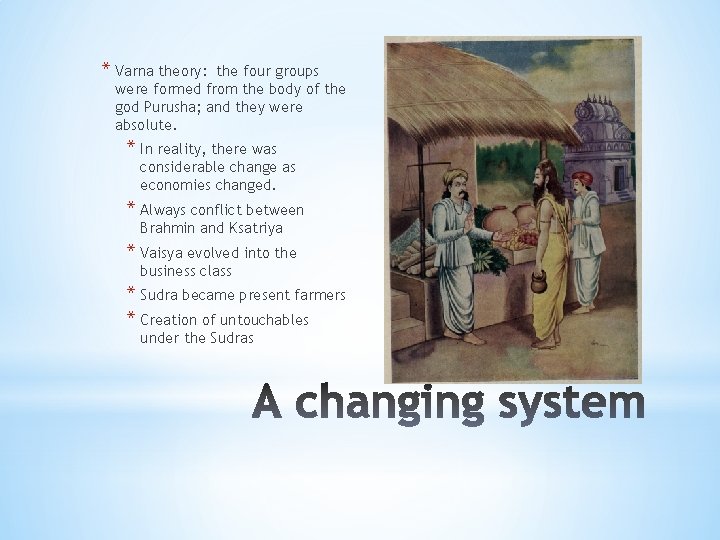
* Varna theory: the four groups were formed from the body of the god Purusha; and they were absolute. * In reality, there was considerable change as economies changed. * Always conflict between Brahmin and Ksatriya * Vaisya evolved into the business class * Sudra became present farmers * Creation of untouchables under the Sudras
* Social distinctions are based on specific occupations, organized as guilds (jatis) * Blended with varna system * Thousands of jatis formed and became the primary structure of social life * Each of the 4 varnas were divided into several jatis
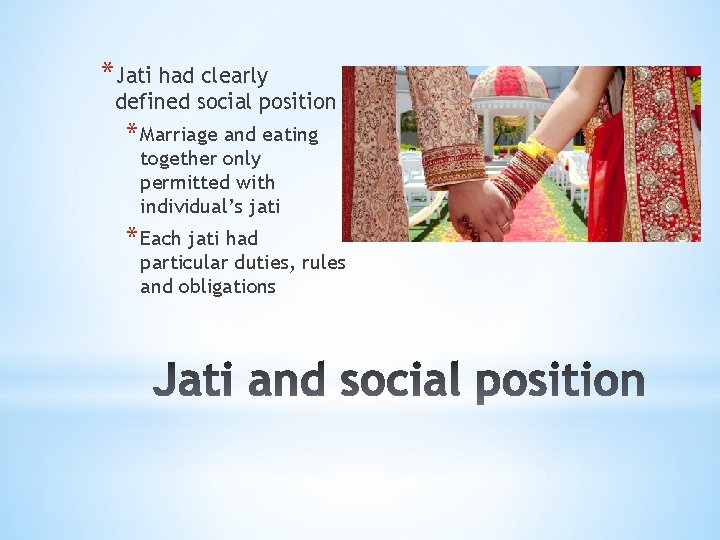
*Jati had clearly defined social position * Marriage and eating together only permitted with individual’s jati * Each jati had particular duties, rules and obligations
* Inherent inequality supported by idea of karma, dharma, and rebirth. * Birth into a caste determined by good or bad deeds (karma) of a previous life * Rebirth in a higher caste determined by performance of present caste duties * Threat of social ostracism for violating rules of the jati * Individuals couldn’t raise social status, but whole jatis could improve social standing.
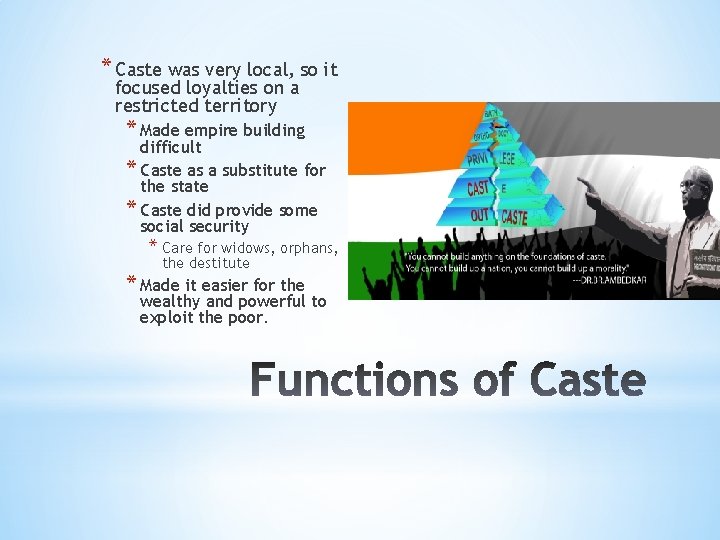
* Caste was very local, so it focused loyalties on a restricted territory * Made empire building difficult * Caste as a substitute for the state * Caste did provide some social security * Care for widows, orphans, the destitute * Made it easier for the wealthy and powerful to exploit the poor.