
Cast Blasting as a Cost Saving Reclamation Tool
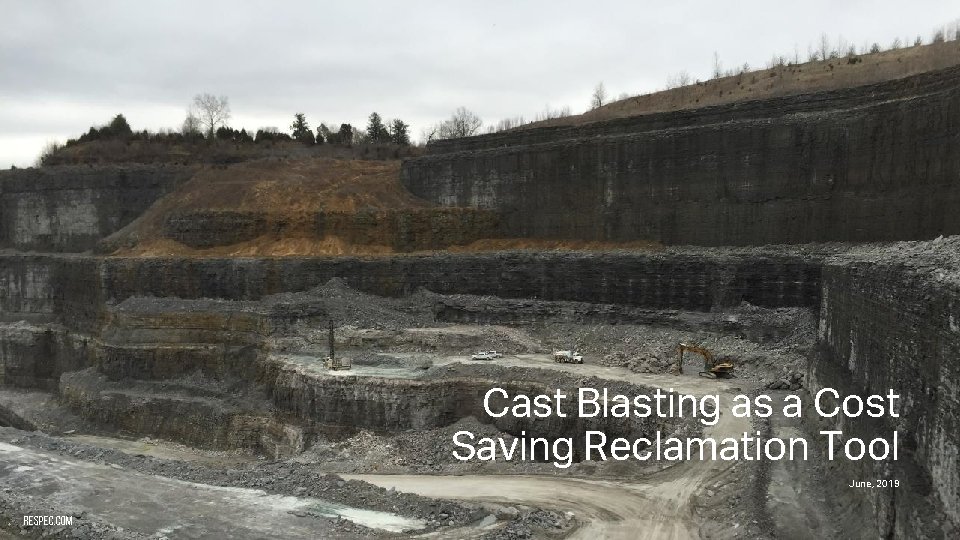
Cast Blasting as a Cost Saving Reclamation Tool June, 2019 RESPEC. COM

What is cast blasting? • Cast blasting is commonly used in surface coal mines for production • • Use drilling and blasting methods to move as much material to a final location as safely possible The amount of material that is blasted into it’s final placement location is typically referred to as cast-tofinal. • Cast blasting is not commonly used in surface coal mines for reclamation purposes. • • RESPEC. COM Reclamation design has a different profile geometry for material’s final resting location. Cast blasting can be used, but with a slightly different take. 2

What is cast blasting? • https: //www. youtube. com/watch? v=myqj_TCn. Iv. A • • Regular blasting (not a cast blast) on upper bench Closer to a cast blast on lower bench • https: //www. youtube. com/watch? v=I 3 xc 53 G 331 Q • • First 1 minute of videos are cast blasts in coal mines Notice controlled throw of material compared to first video • These videos show that cast blasting can move a large amount of material a distance that means we have to move much less material with shovels and trucks RESPEC. COM 3
Background • Using drilling and blasting methods to move material to a final location. • Cast blasting is common in surface coal mines for production • • Shots are loaded into a hole and blasted in sequence Move materials (interburden / overburden) off of the coal seam • Blasting for reclamation rarely considered • • RESPEC. COM Most available blasting tools not designed for reclamation Change to pay up front bonding instead of self bonding 4
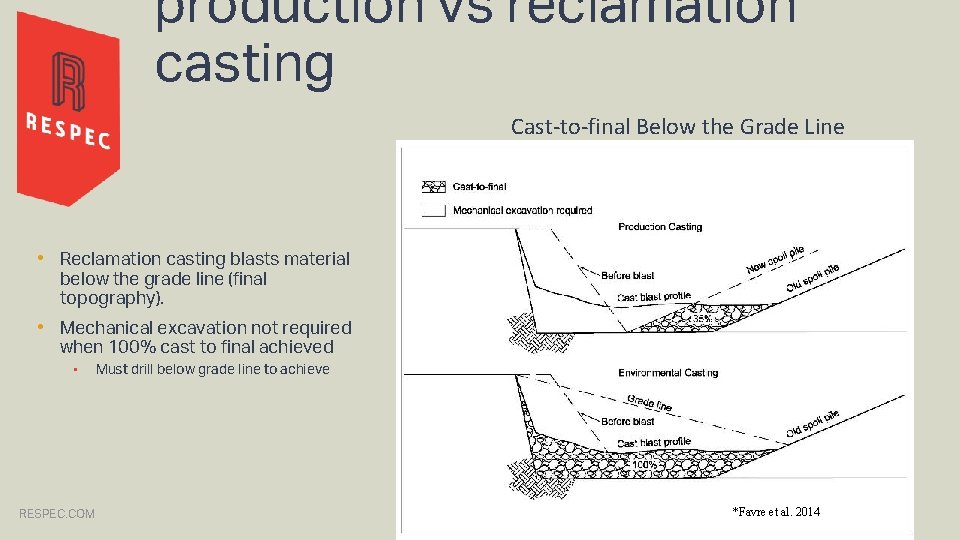
production vs reclamation casting Cast-to-final Below the Grade Line • Reclamation casting blasts material below the grade line (final topography). • Mechanical excavation not required when 100% cast to final achieved • RESPEC. COM Must drill below grade line to achieve *Favre et al. 2014 5

Why Cast Blast? Lower permit bonding requirements by reducing mechanical excavation and hauling RESPEC. COM To Save Money! 6

Reclamation by Blasting Compared to Backfilling Reclamation by Blasting Backhaul and fill Backfill Required: 70 yds / linear ft of highwall Backfill Required: 268 yds / linear ft of highwall *Loop et al. 1994 November 5, 2020 RESPEC. COM 7
No simple task • Contractors usually control: • • • Timing Burden to spacing ratio Burden velocities Inclination Detonator accuracy • Engineers can control: • • Powder Factor (explosive energy( Highwall height to pit width ratios “Predicting cast-to-final percentage is difficult for a reclamation cast blasting site with no prior records in such application. ” – Worsey et al. November 5, 2020 RESPEC. COM 8
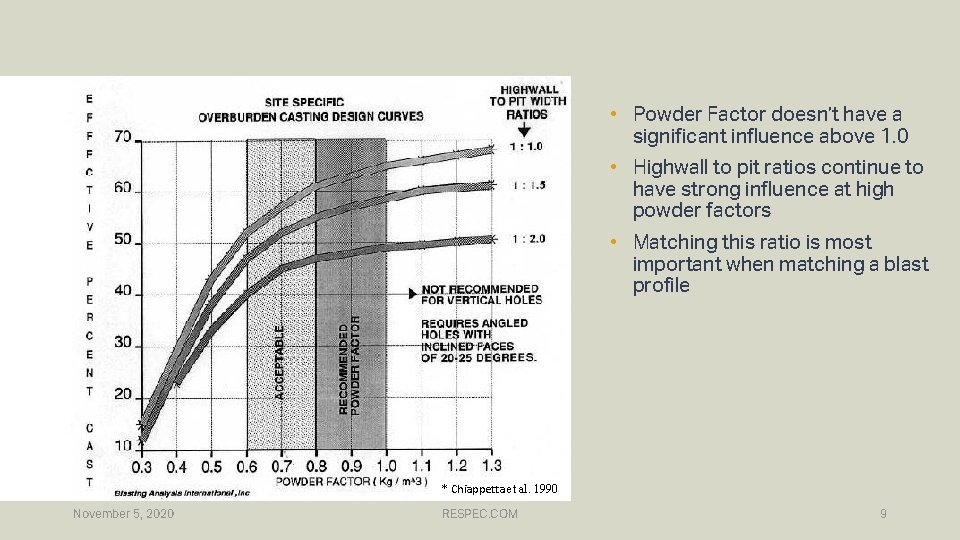
• Powder Factor doesn’t have a significant influence above 1. 0 • Highwall to pit ratios continue to have strong influence at high powder factors • Matching this ratio is most important when matching a blast profile * Chiappetta et al. 1990 November 5, 2020 RESPEC. COM 9
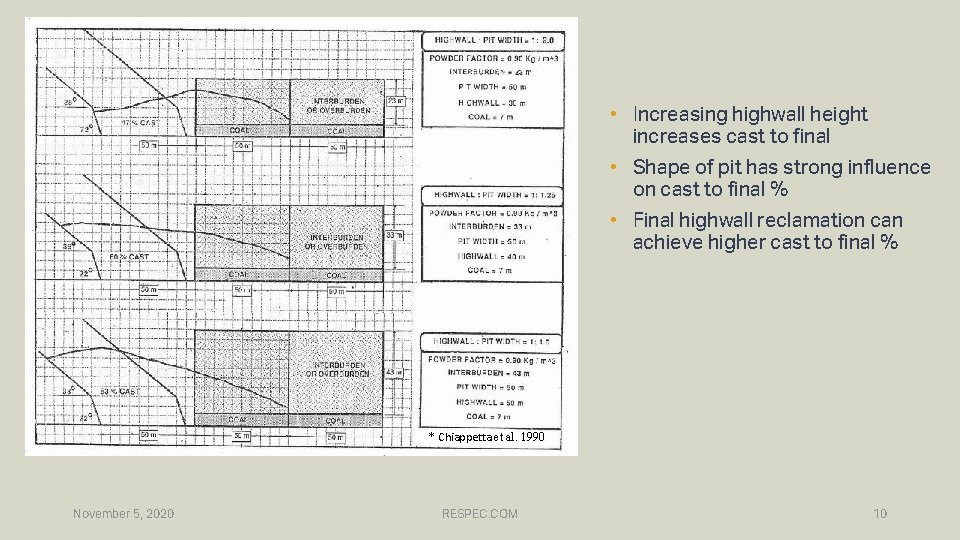
• Increasing highwall height increases cast to final • Shape of pit has strong influence on cast to final % • Final highwall reclamation can achieve higher cast to final % * Chiappetta et al. 1990 November 5, 2020 RESPEC. COM 10
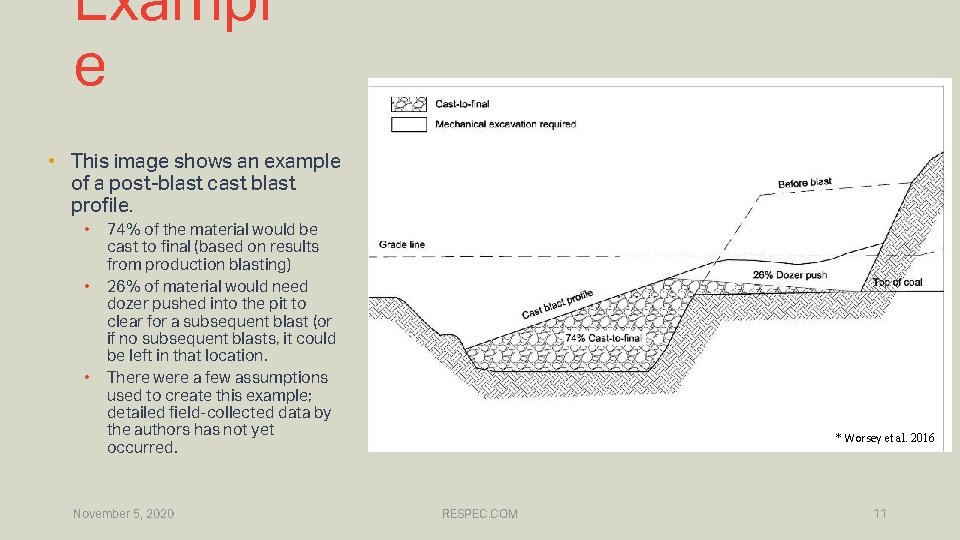
Exampl e • This image shows an example of a post-blast cast blast profile. • • • 74% of the material would be cast to final (based on results from production blasting) 26% of material would need dozer pushed into the pit to clear for a subsequent blast (or if no subsequent blasts, it could be left in that location. There were a few assumptions used to create this example; detailed field-collected data by the authors has not yet occurred. November 5, 2020 * Worsey et al. 2016 RESPEC. COM 11
Limitations • When fill requirements are more than one blast into the bench some material has to be excavated to free the face and optimize the cast of the next blast • Cast-to-final percentages reduce as more cast blasts are used (2 to 3) • Mass balancing method has scenarios in which it could favor cast-tofinal percentages November 5, 2020 RESPEC. COM 12
Conclusions • Cast blasting is a viable option for reclaiming highwalls to natural topography • Cast-to-final percentages of 60 to 100 percent are very achievable when cast blasting for reclamation in surface coal mines • Expensive modeling is not required to figure out cast-to-final percentages for permits using reclamation blasting • Using cast blasting can save money on the cost to reclaim highwalls November 5, 2020 RESPEC. COM 13
References • Chiappetta, F. , Srihari, H. , & Worsey, P. Design of Overburden Casting by Blasting – Recent Developments. India: Journal of Mines, Metals and Fuels, Vol. 38, No. 9, pp 194 -208, 1990. Print. • Favreau, R. , Mahan, D. , & Favreau, P. , Comparison of Field and Simulated Cast Blasts. Cleveland, OH: International Society of Explosives Engineer, 2014. Online Paper Database. • Loope, J. , Petrunyak, J. & Postupack, C. , The Use of Explosives To Backfill and Reclaim Former Quary Sites. Cleveland, OH: International Society of Explosives Engineer, 1994. Online Paper Database. RESPEC. COM 14
- Slides: 14