
Casecontrol studies Dr Luis E Cuevas LSTM Julia
- Slides: 30
Case-control studies Dr Luis E Cuevas – LSTM Julia Critchley
Analytical (Observational) Epidemiology n n Cohort Studies Case-control studies n aim to identify potential associations between ‘risk’ factors and a particular disease or outcome
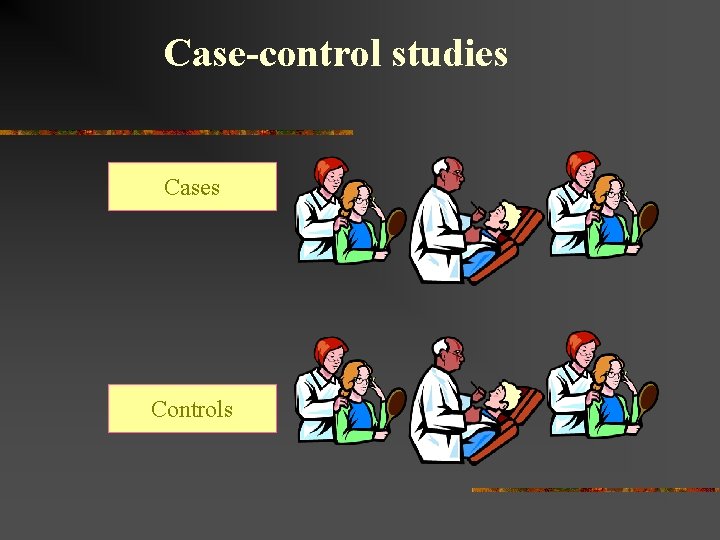
Case-control studies Cases Controls
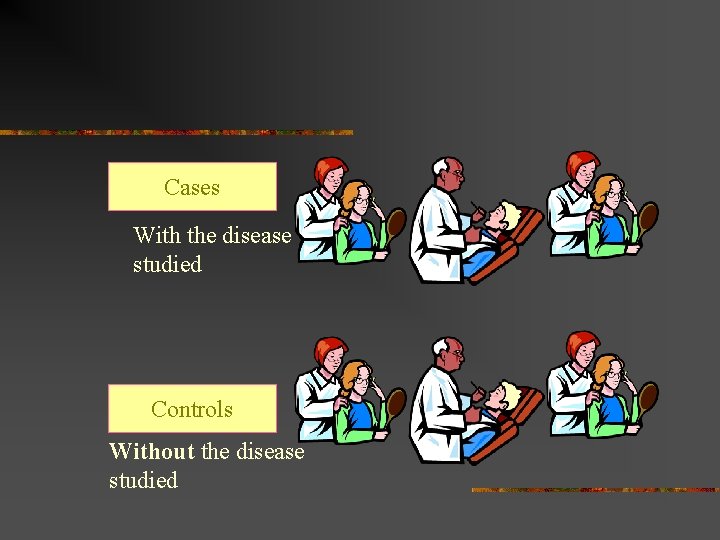
Cases With the disease studied Controls Without the disease studied
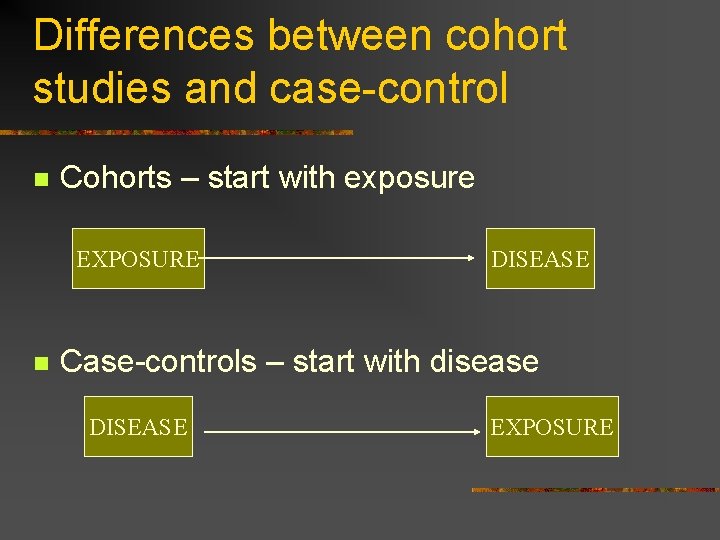
Differences between cohort studies and case-control n Cohorts – start with exposure EXPOSURE n DISEASE Case-controls – start with disease DISEASE EXPOSURE
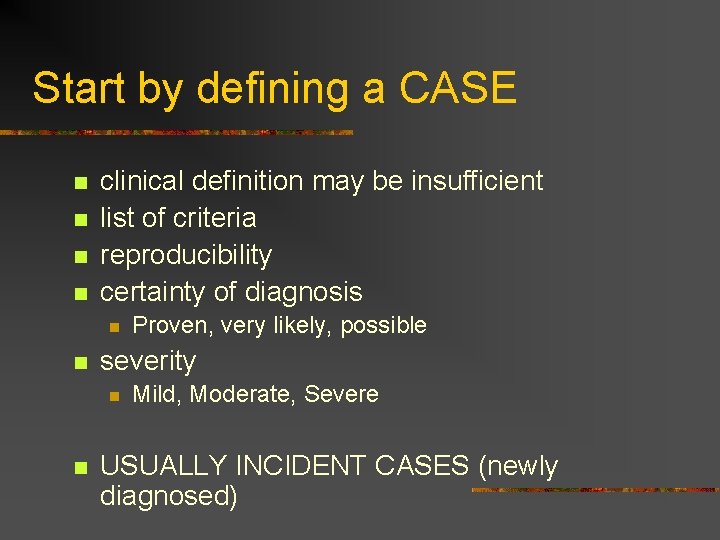
Start by defining a CASE n n clinical definition may be insufficient list of criteria reproducibility certainty of diagnosis n n severity n n Proven, very likely, possible Mild, Moderate, Severe USUALLY INCIDENT CASES (newly diagnosed)
How many? How many controls?
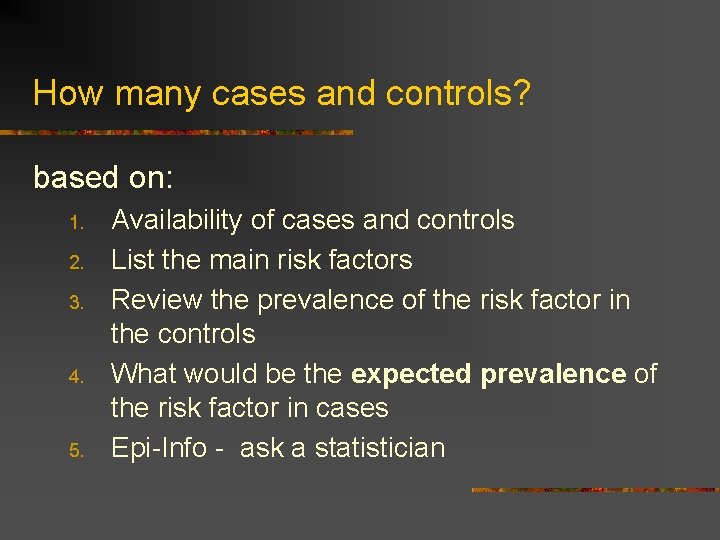
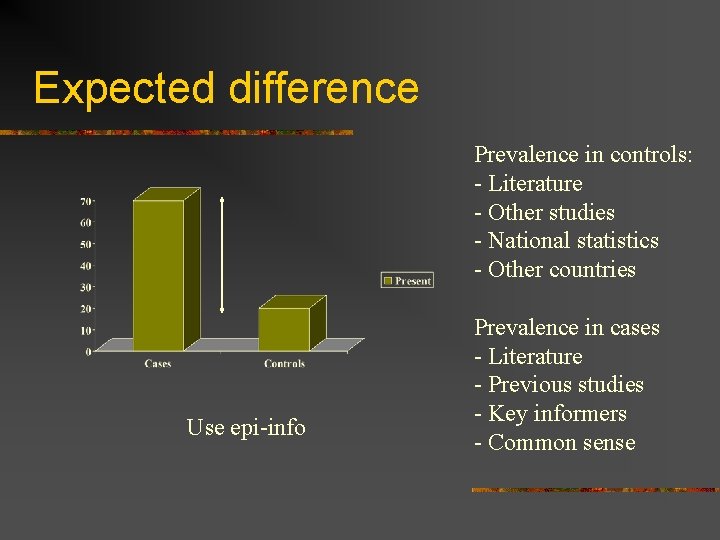
How many cases and controls? based on: 1. 2. 3. 4. 5. Availability of cases and controls List the main risk factors Review the prevalence of the risk factor in the controls What would be the expected prevalence of the risk factor in cases Epi-Info - ask a statistician
Expected difference Prevalence in controls: - Literature - Other studies - National statistics - Other countries Use epi-info Prevalence in cases - Literature - Previous studies - Key informers - Common sense
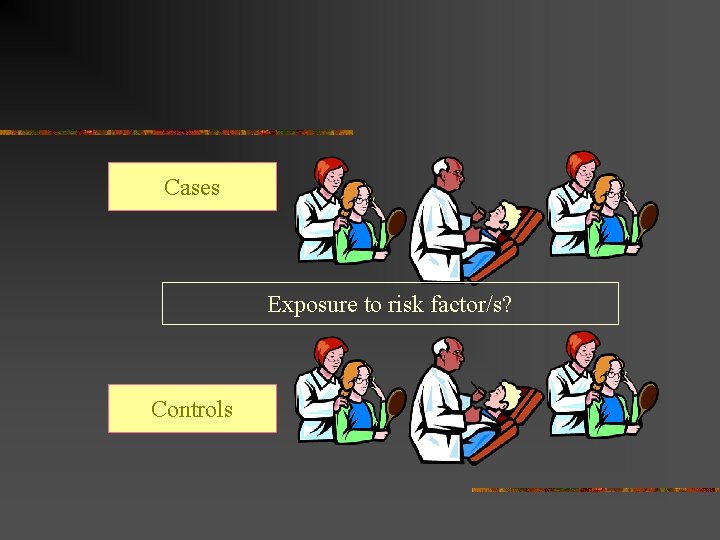
Cases Exposure to risk factor/s? Controls
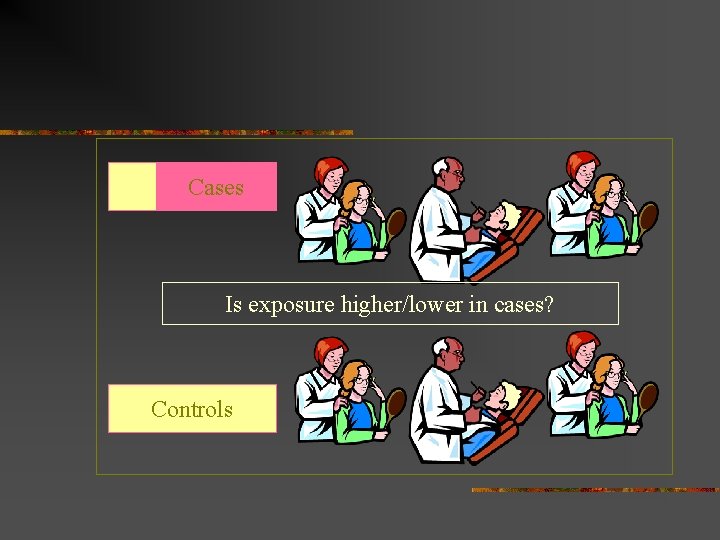
Cases Is exposure higher/lower in cases? Controls
When are these studies most useful? n Limited information on risk factors (some times carried out before cohort studies) n Incidence of the disease is low (rare diseases) n Study many risk factors simultaneously
Major problem with case-control studies is bias n Selection bias – differences in people who select themselves for studies compared with those who do not n Measurement bias – individual measurements of disease or exposure are more likely to be incorrect n Recall bias in case-control studies
How might you reduce these biases in practice? n Suggestions?
Example Physical activity and risk of coronary heart disease What are the factors that put a person at a higher risk of suffering from CHD?
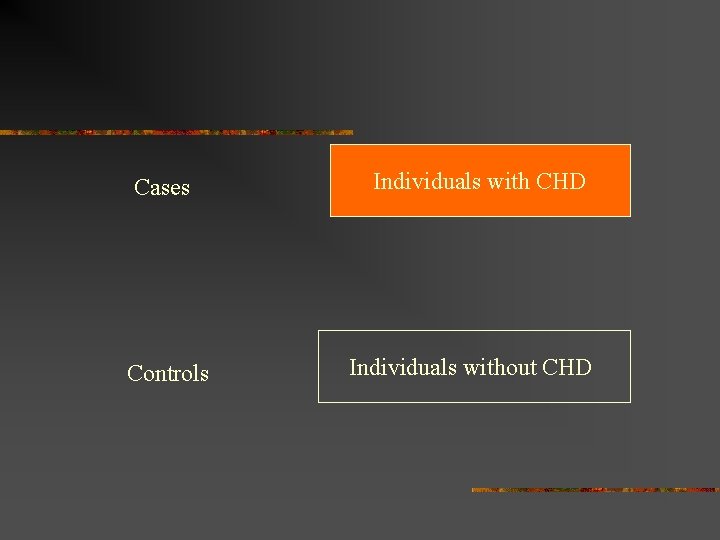
Cases Controls Individuals with CHD Individuals without CHD
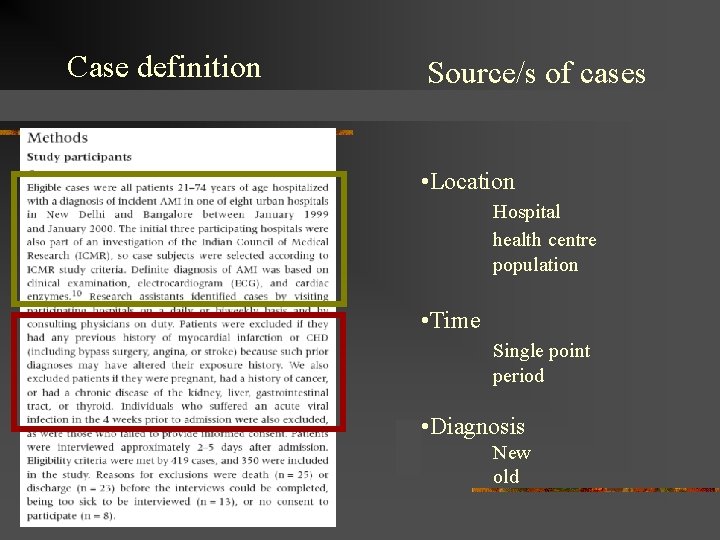
Case definition Source/s of cases • Location Hospital health centre population • Time Single point period • Diagnosis New old
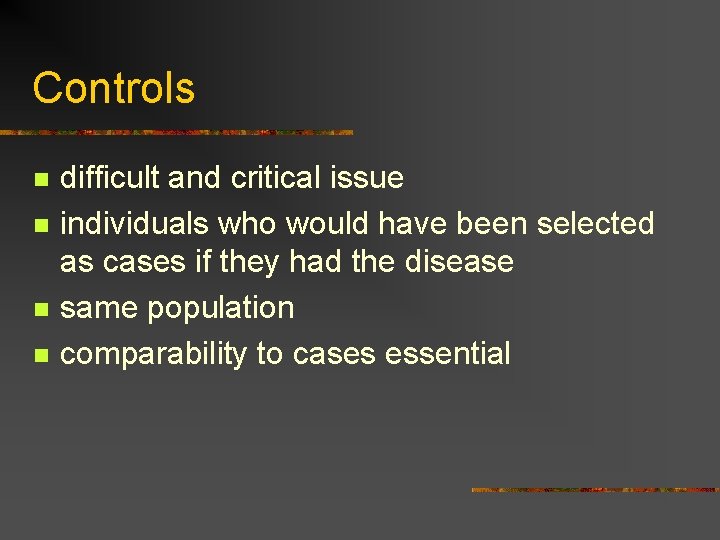
Controls n n difficult and critical issue individuals who would have been selected as cases if they had the disease same population comparability to cases essential
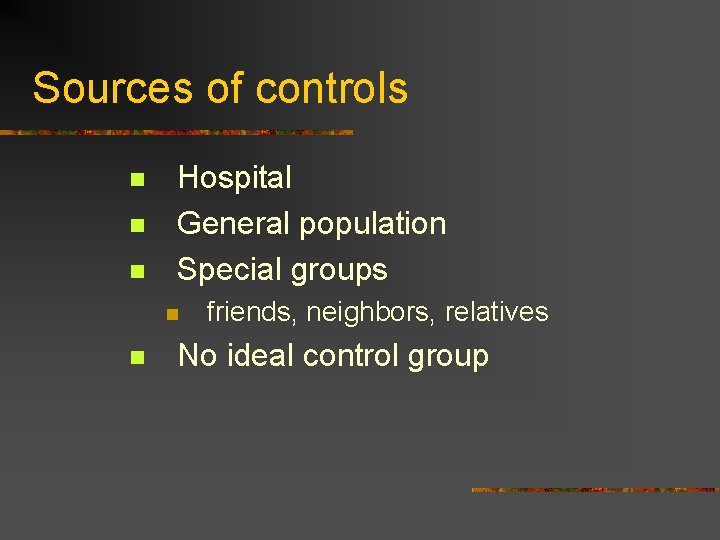
Sources of controls n n n Hospital General population Special groups n n friends, neighbors, relatives No ideal control group
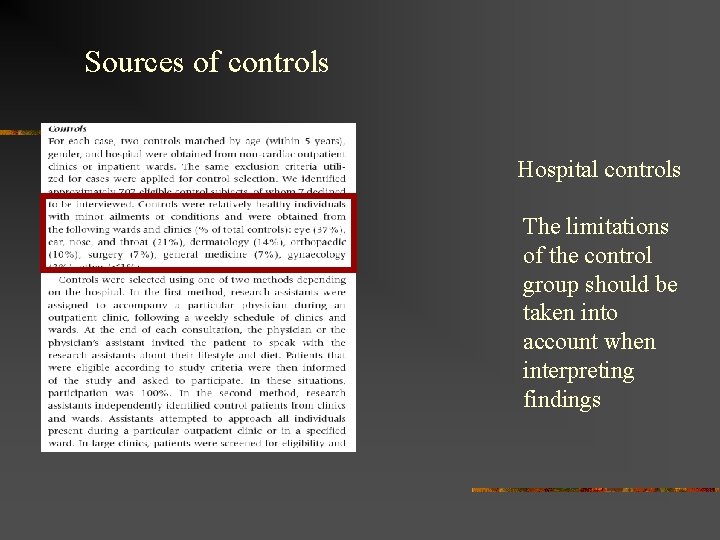
Sources of controls Hospital controls The limitations of the control group should be taken into account when interpreting findings
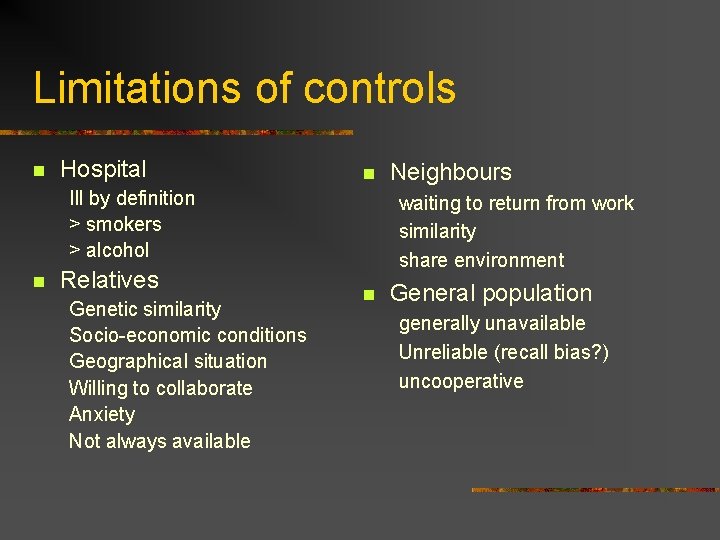
Limitations of controls n Hospital n Ill by definition > smokers > alcohol n Relatives Genetic similarity Socio-economic conditions Geographical situation Willing to collaborate Anxiety Not always available Neighbours waiting to return from work similarity share environment n General population generally unavailable Unreliable (recall bias? ) uncooperative
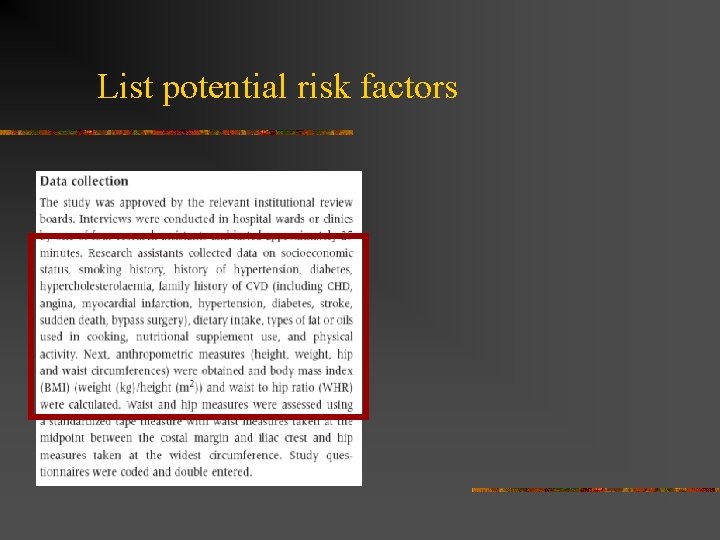
List potential risk factors
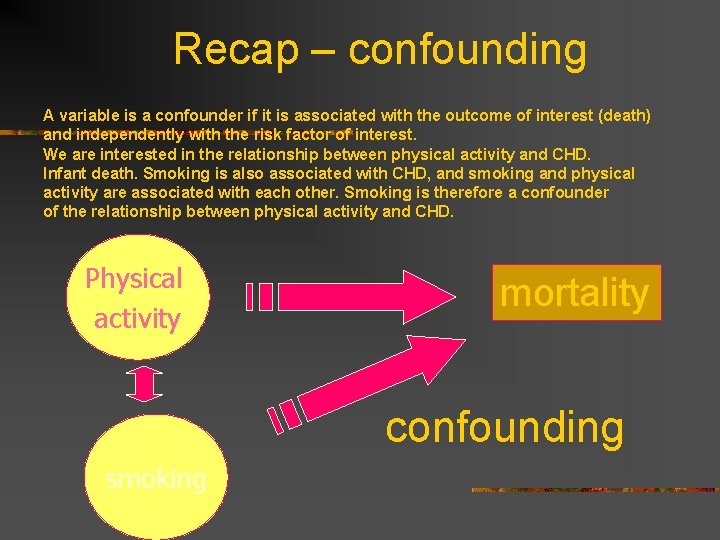
Recap – confounding A variable is a confounder if it is associated with the outcome of interest (death) and independently with the risk factor of interest. We are interested in the relationship between physical activity and CHD. Infant death. Smoking is also associated with CHD, and smoking and physical activity are associated with each other. Smoking is therefore a confounder of the relationship between physical activity and CHD. Physical activity mortality confounding smoking
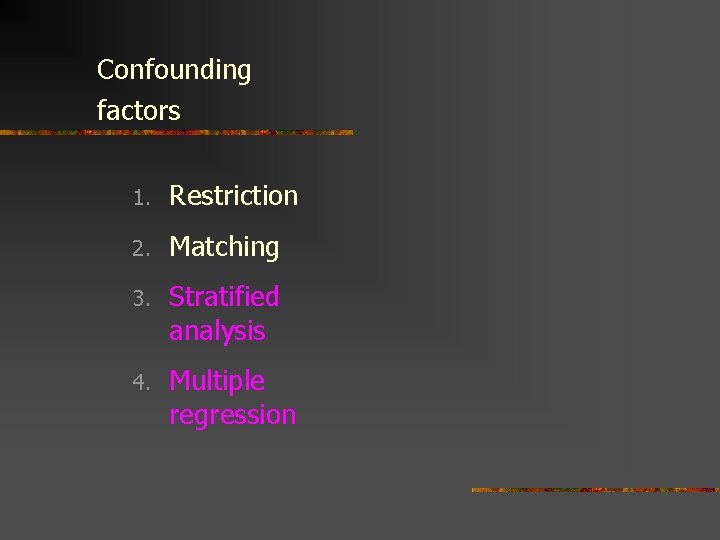
Confounding factors 1. Restriction 2. Matching 3. Stratified analysis 4. Multiple regression
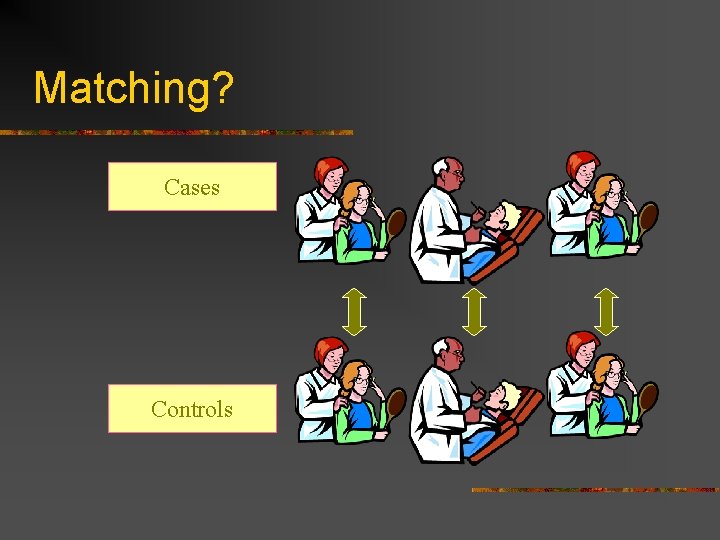
Matching? Cases Controls
n n To avoid confounding Age and sex More difficult to analyse Possible to ‘overmatch’
Assessing Causality n Statistically significant Odds Ratios show that there associations between the risk factor (physical activity) and the disease (CHD) n They don’t prove this relationship is causal
Criteria for assessing causality (Bradford Hill) n n n n n Exposure before onset of disease Strength of association Independence from confounding Consistent in different populations with different levels of exposure Consistent with different studies in different settings Dose-response relationship Biologically plausible Evidence from animal studies Removal of exposure reduces risk
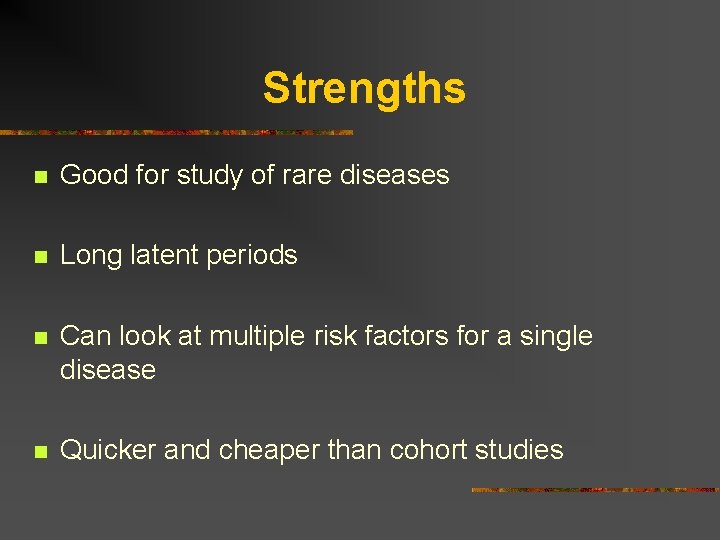
Strengths n Good for study of rare diseases n Long latent periods n Can look at multiple risk factors for a single disease n Quicker and cheaper than cohort studies
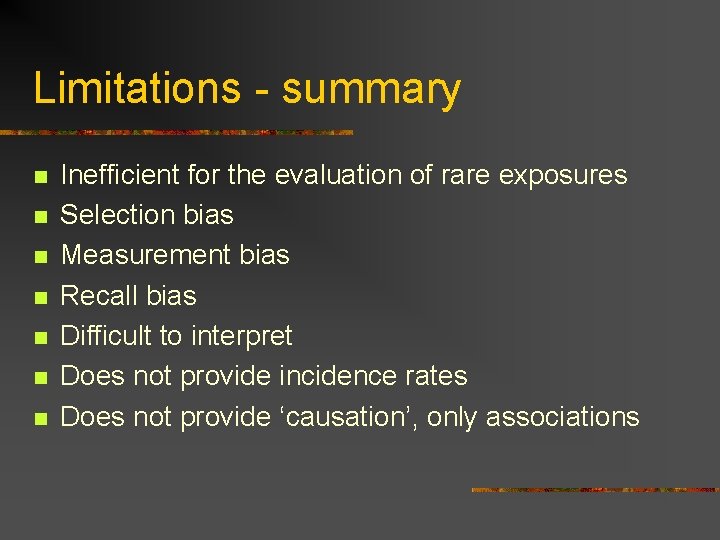
Limitations - summary n n n n Inefficient for the evaluation of rare exposures Selection bias Measurement bias Recall bias Difficult to interpret Does not provide incidence rates Does not provide ‘causation’, only associations