
Case Study PV Plant Concrete Cabins Presented by
Case Study: PV Plant Concrete Cabins Presented by: Justin Kretzmar Rocla (ISG)
ISG – Infrastructure Specialist Group
Justin Kretzmar BSc Eng (Civil) • Started at Rocla in 2010 • New product development, marketing and sales Jason Roberts BTech (Civil) • Started at Rocla in 2012 • Research, development and implementation of SCC at Rocla
Self-compacting Concrete (SCC) What is SCC? SCC refers to a Self-compacting concrete, that: • fill air voids, • without segregation • and excessive bleeding, • without vibration. *
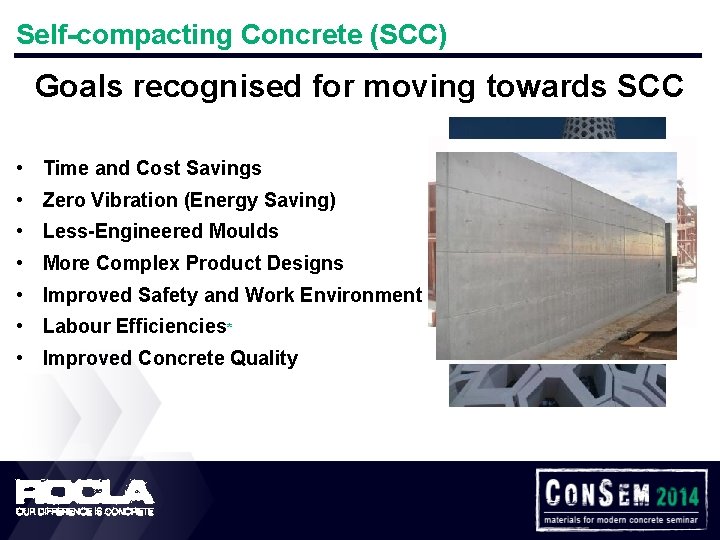
Self-compacting Concrete (SCC) Goals recognised for moving towards SCC • Time and Cost Savings • Zero Vibration (Energy Saving) • Less-Engineered Moulds • More Complex Product Designs • Improved Safety and Work Environment • Labour Efficiencies* • Improved Concrete Quality
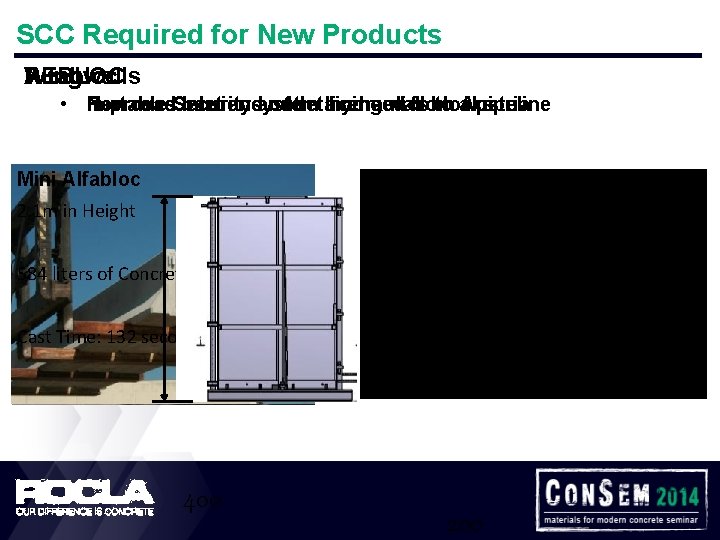
SCC Required for New Products REBLOC Alfabloc Wingwalls • New Portable Improves road. Security Inlet barrier and system and outlet retaining licensed hydraulics wall from blocks to a. Austria pipeline Mini Alfabloc 2. 1 m in Height 584 liters of Concrete Required Cast Time: 132 seconds 400 200
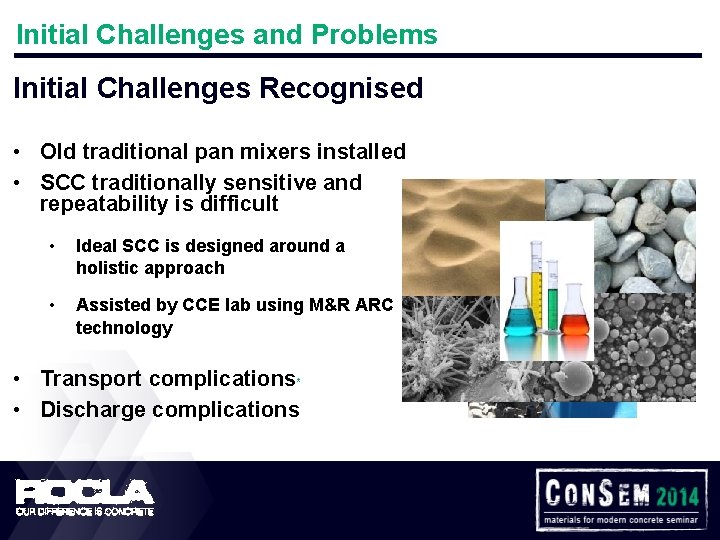
Initial Challenges and Problems Initial Challenges Recognised • Old traditional pan mixers installed • SCC traditionally sensitive and repeatability is difficult • Ideal SCC is designed around a holistic approach • Assisted by CCE lab using M&R ARC technology • Transport complications* • Discharge complications
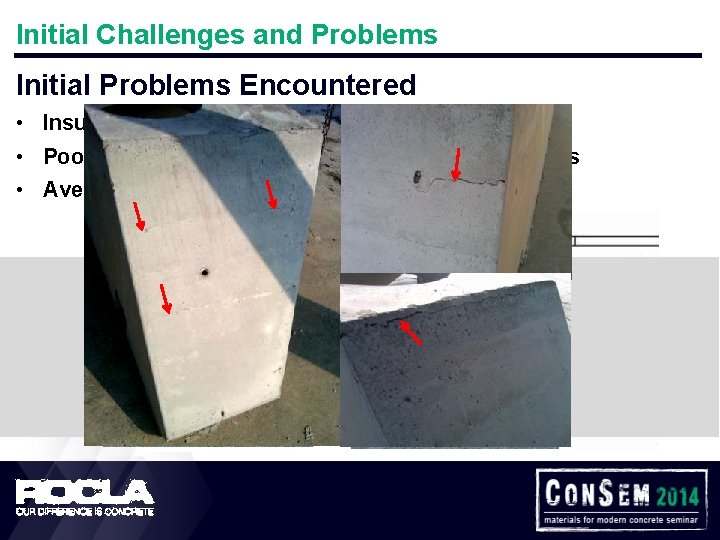
Initial Challenges and Problems Initial Problems Encountered • Insufficient Mixing Energy • Poor Repeatability with various Chemical Suppliers • Average Quality and Strengths Where to from here?
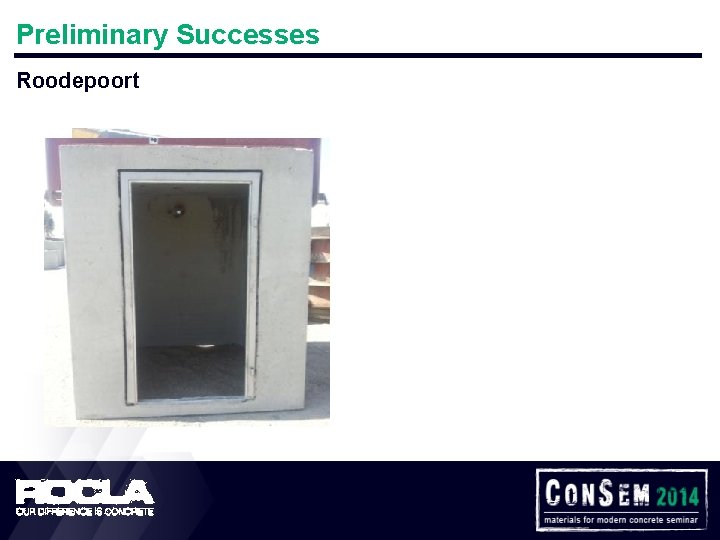
Preliminary Successes Roodepoort
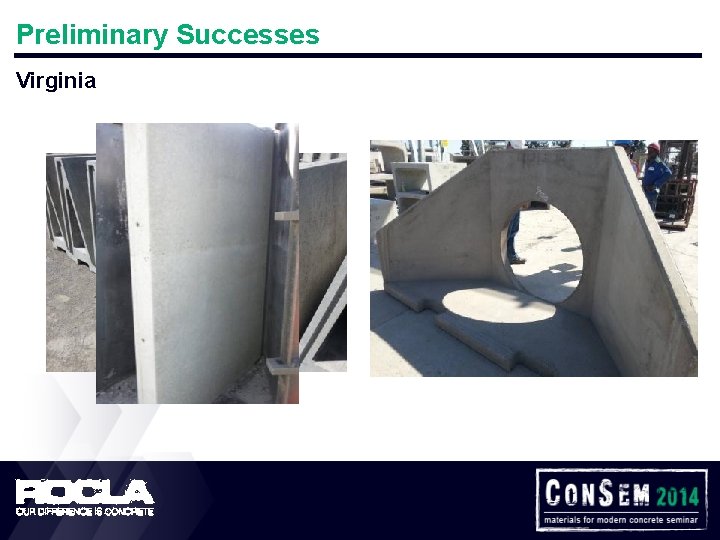
Preliminary Successes Virginia
Preliminary Successes Reasons for Success • Understanding how SCC works • Trying different mould release oils • Minimising vibration during transport • Maintaining a constant cast rate • Ensuring that the moulds were properly clean* • Educating the labour about this new concept
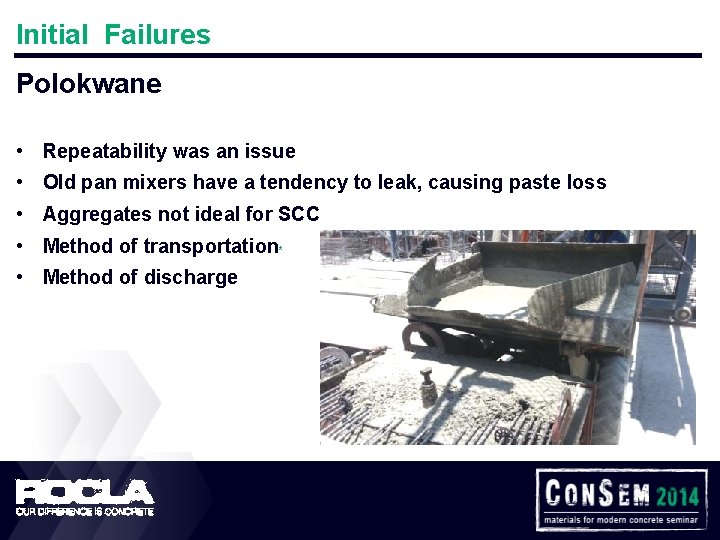
Initial Failures Polokwane • Repeatability was an issue • Old pan mixers have a tendency to leak, causing paste loss • Aggregates not ideal for SCC • Method of transportation* • Method of discharge
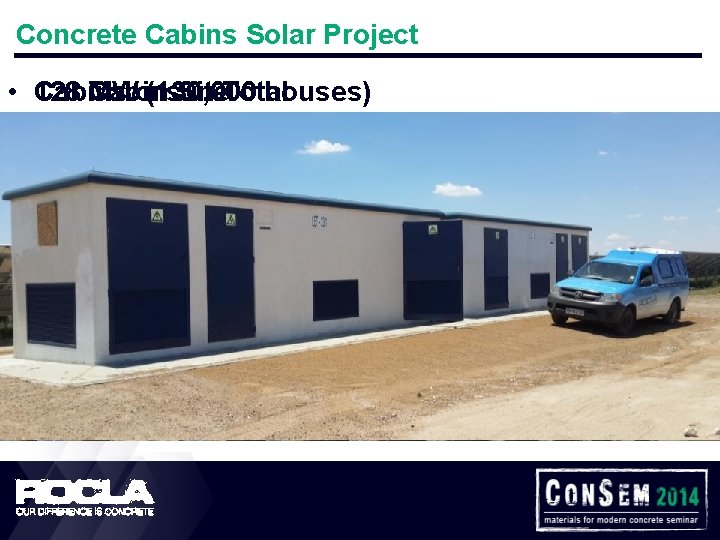
Concrete Cabins Solar Project Cabins in Total Cabins on Site • 128 MW (130, 000 houses)
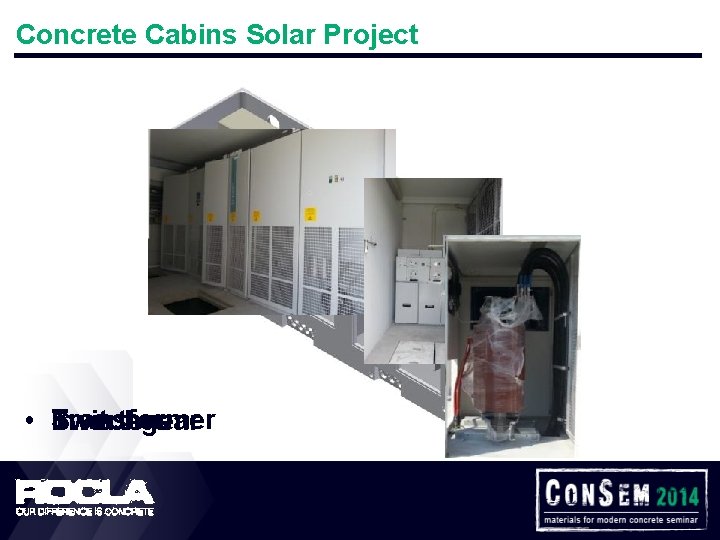
Concrete Cabins Solar Project Transformer Inverters • Switchgear
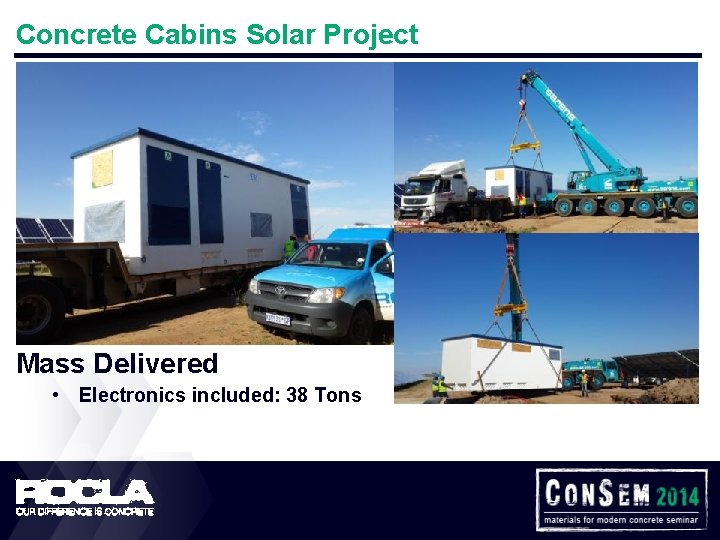
Concrete Cabins Solar Project Cabin Size • 8. 7 m x 2. 6 m x 3. 1 m Volume and Mass (individual) • Shell: 18 Tons Volume and Mass (complete) • Complete Cabin: 28 Tons Mass Delivered • Electronics included: 38 Tons
Concrete Requirements Strength Requirements • • 40 MPa at 7 days Minimum of 18 MPa at 16 hours Quality Requirements • • Provide concrete testing certification Architectural finish Production Schedule Requirements • One complete cabin per day Challenges • • Highly reinforced thin walled sections Wall thickness ranged from 40 – 100 mm
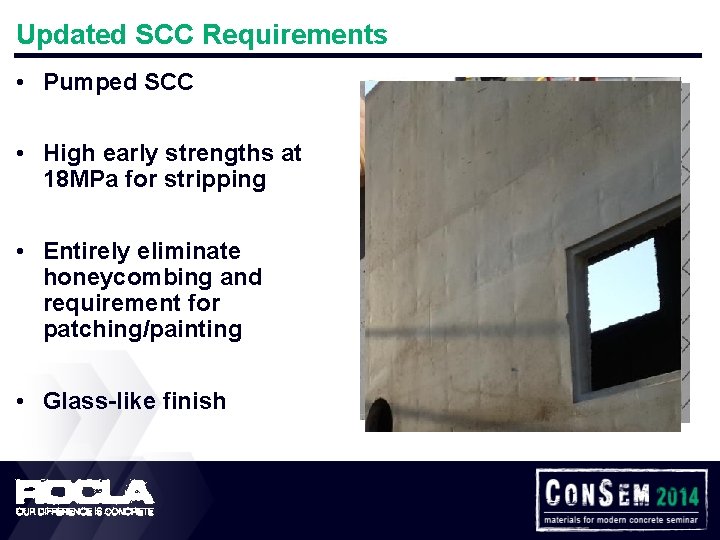
Updated SCC Requirements • Pumped SCC • High early strengths at 18 MPa for stripping • Entirely eliminate honeycombing and requirement for patching/painting • Glass-like finish
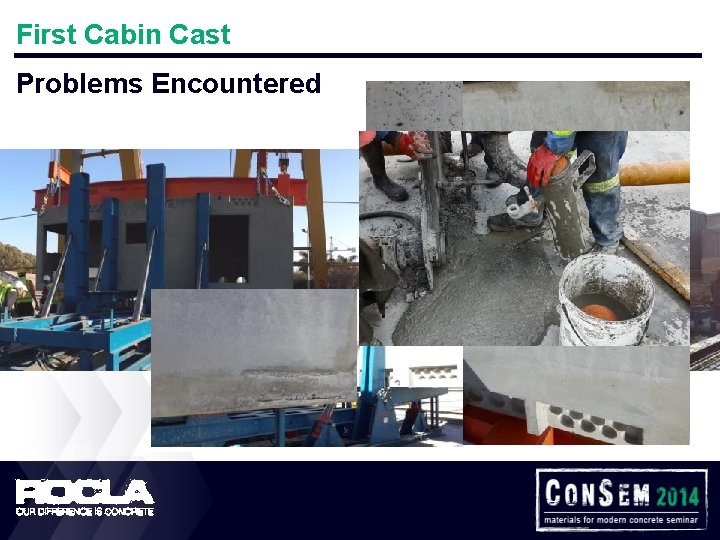
First Cabin Cast Problems Encountered • • • Pump blockages Pinholes and Blowholes Pullouts Bleeding and Segregation Low Early Strengths
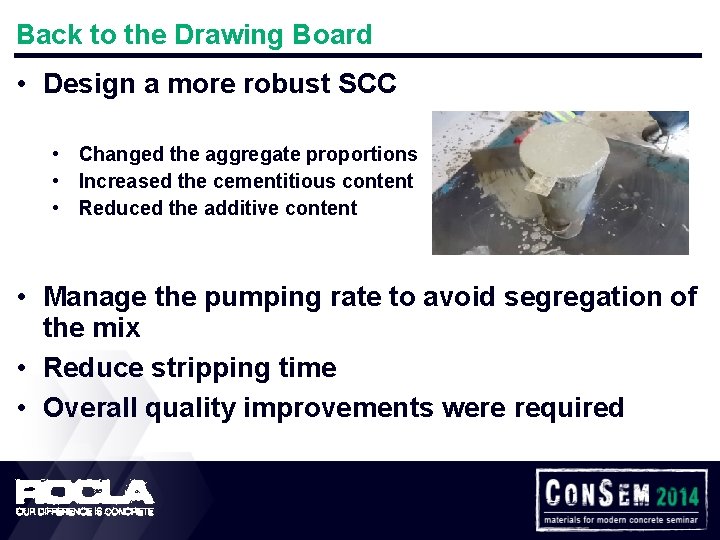
Back to the Drawing Board • Design a more robust SCC • Changed the aggregate proportions • Increased the cementitious content • Reduced the additive content • Manage the pumping rate to avoid segregation of the mix • Reduce stripping time • Overall quality improvements were required
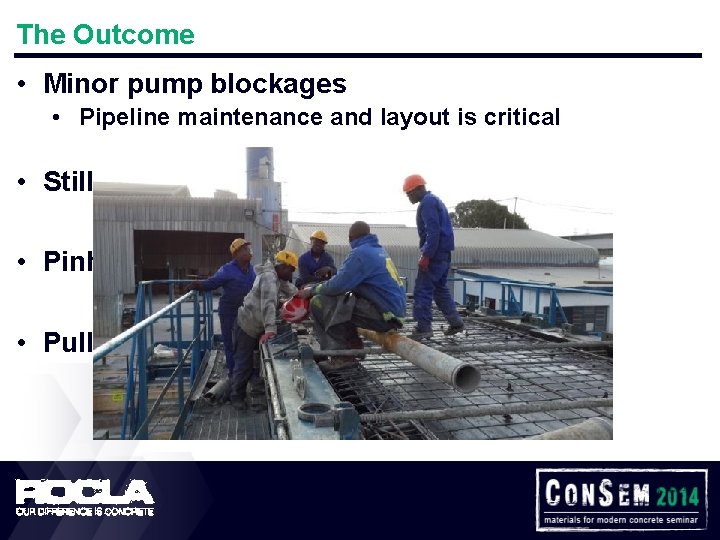
The Outcome • Minor pump blockages • Pipeline maintenance and layout is critical • Still low early strengths • Pinholes and Blowholes • Pullouts
Mix Design III • Introduced a hardening accelerator from Mapei at 1. 5% of the cementitious content The Outcome • Consistency of the SCC seemed to have changed • Stripping strengths at 16 hours were achieved • Product quality reduced • Pinholes and Blowholes still visible • Pullouts still occurred
Mix Design IV • Reduced the accelerator to 1% in hope to improve product quality The Outcome • The workability seemed to have improved • Stripping strengths reduced, causing delays • Pinholes and Blowholes still visible • Pullouts still occurred • Introduced steam curing
Mix Design V • Called in CCE Laboratory to analyse the SCC design and to comment on site procedures The Outcome • Increased the filler sand reduced the stone • Cast from two positions only • Near perfect product achieved • Pullouts still occurred • Areas of minor honeycombing occurred
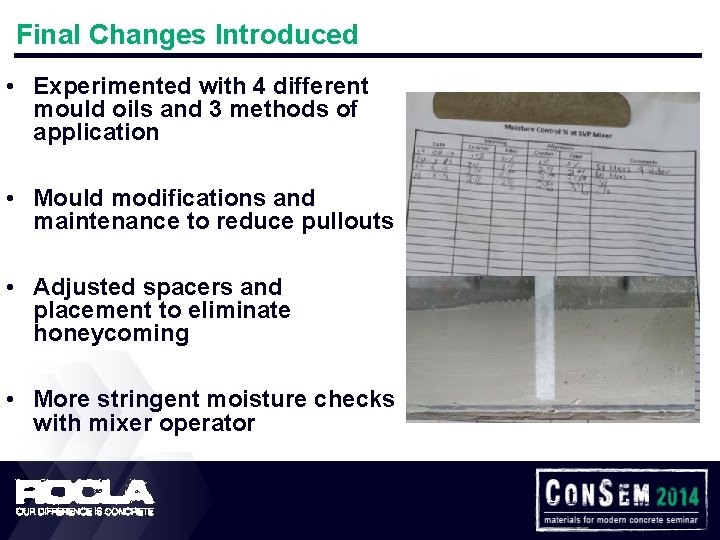
Final Changes Introduced • Experimented with 4 different mould oils and 3 methods of application • Mould modifications and maintenance to reduce pullouts • Adjusted spacers and placement to eliminate honeycoming • More stringent moisture checks with mixer operator
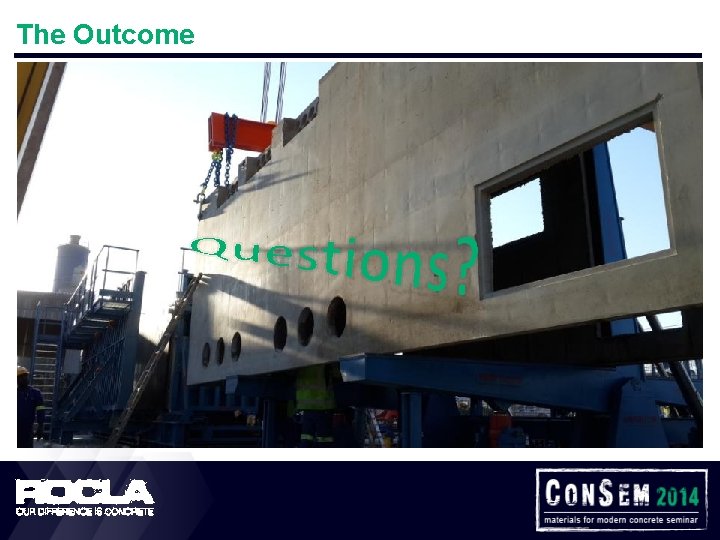
The Outcome
- Slides: 25