
Case study on acute burn injury from an
Case study on acute burn injury from an explosion by Ancy Biju & Bindu Alukkal Poulose
BURN.
Introduction �Mr X is a 21 years old female patient admitted to Emergency Department with approximately 40%of Body Surface Area (BSA) burns on 10 th July at 0450 hrs. �Patient assessed by doctors and interventions started for burn and pain. �To measure the severity of burn, some mandatory tests checked out.
On Assessment of Mr X Following details found on examination of Mr X in ED § Partial thickness burns of upper thigh(15%) & abdomen and anterior chest (18%) § Circumferential burn to left arm (8%) § Deep burns on lower left arm § Singed face-nasal hairs and eyebrows § She was experiencing too much pain
Vital signs Initial Vital signs of Mr X was �BP - 100/50 mm of H�SPO 2 - 93% on room air �Pulse – 120/minute �Respiration- 28/minute �Weight - 62 kg
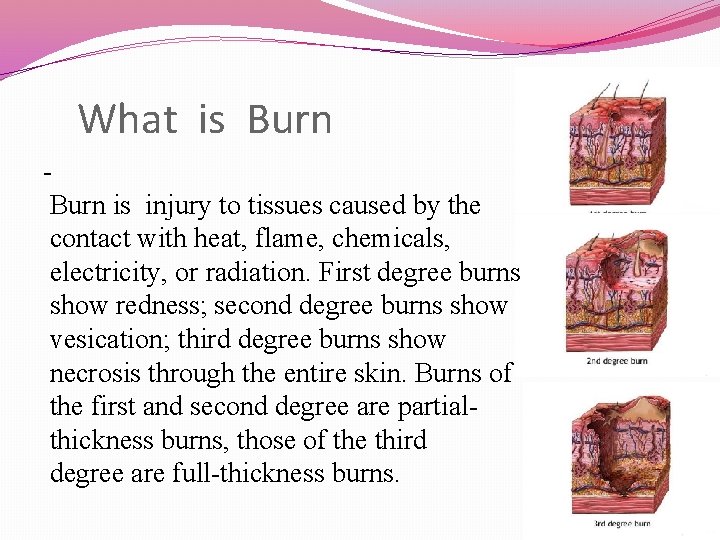
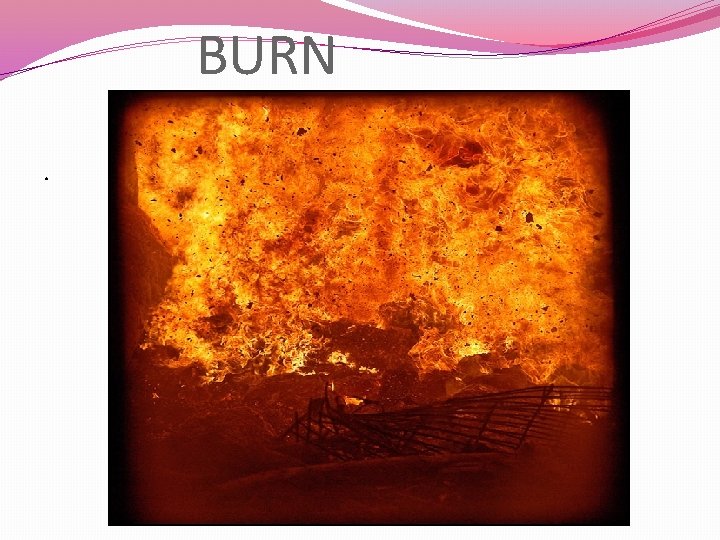
What is Burn - Burn is injury to tissues caused by the contact with heat, flame, chemicals, electricity, or radiation. First degree burns show redness; second degree burns show vesication; third degree burns show necrosis through the entire skin. Burns of the first and second degree are partialthickness burns, those of the third degree are full-thickness burns.

Defferent types of Burn Different Types of Burn -
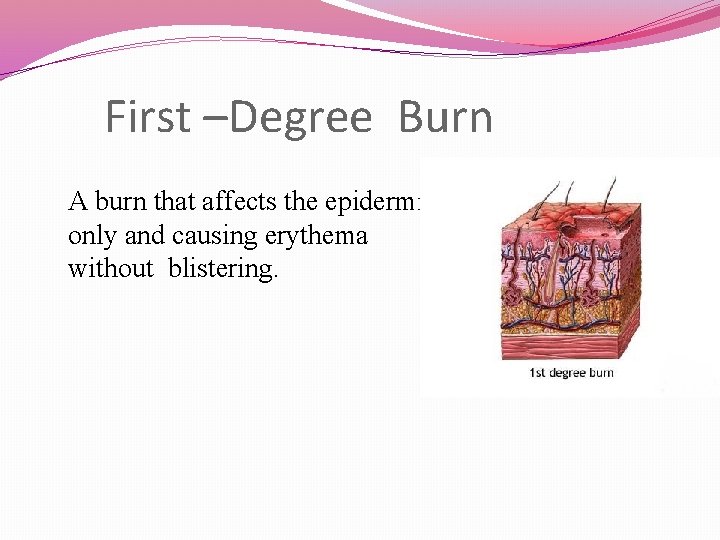
First –Degree Burn A burn that affects the epidermis only and causing erythema without blistering.
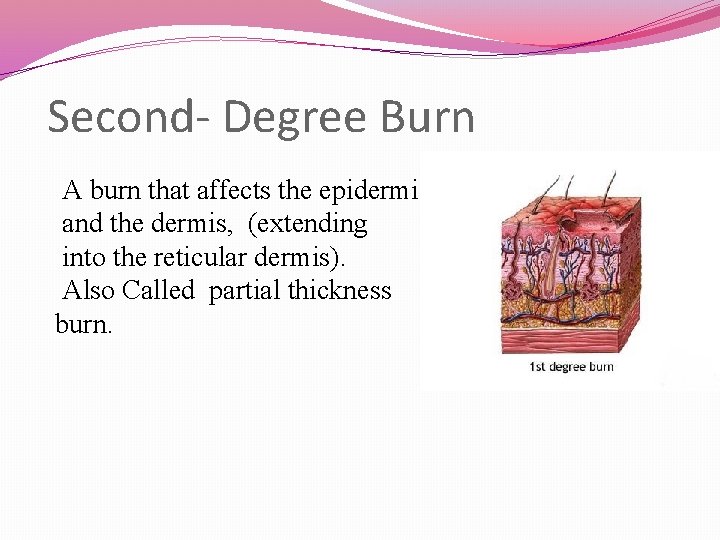
Second- Degree Burn A burn that affects the epidermis and the dermis, (extending into the reticular dermis). Also Called partial thickness burn.
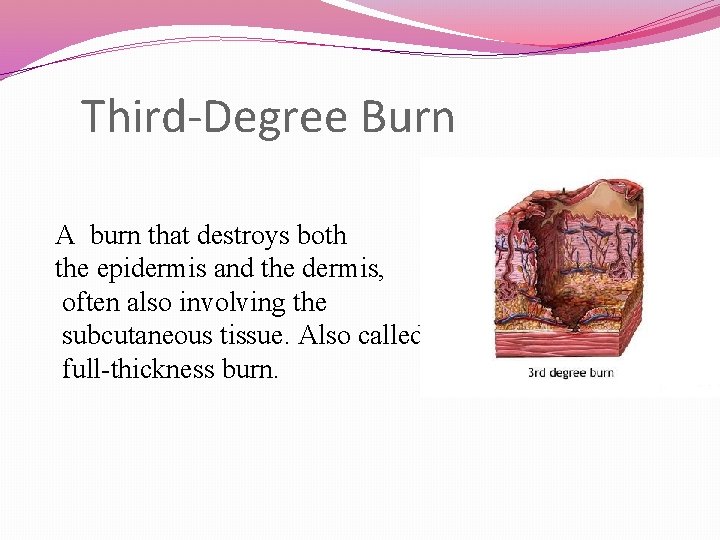
Third-Degree Burn A burn that destroys both the epidermis and the dermis, often also involving the subcutaneous tissue. Also called full-thickness burn.
Pathophysiology �The effect of burn depends on two factors The extend of body surface involved The depth of cutaneous injury. �The immediate physiological effect of a major burn injury is hypovolemic shock that occurs in conjunction with cellular and immunologic disruption within a few hours of injury. �Burn shock is a condition consisting of both hypovolemic cardiovascular component and cellular component
Management of burn Mr X need a comprehensive nursing management for Ø Meticulous wound healing Ø Adequate fluid volume replacement therapy Ø Pain Ø Adequate nutritional support Ø Prevention of infections and associated complication. Ø Modulation of hyper metabolic state Ø Early surgical excision and grafting Ø Psychosocial support
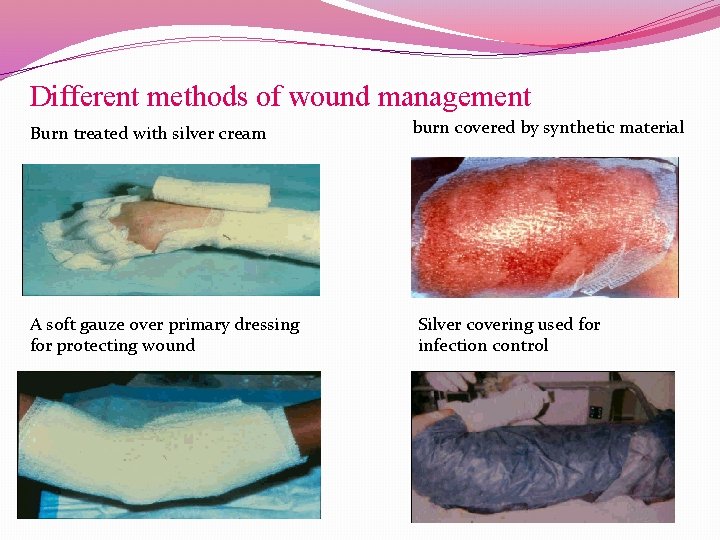
Different methods of wound management Burn treated with silver cream A soft gauze over primary dressing for protecting wound burn covered by synthetic material Silver covering used for infection control
Medical procedures of Mr X �Cardiac monitoring – for monitoring vital signs continuously including SPO 2 - because extensive tissue destruction and cell rupture delayed cardiac arrithymia or arrest may occur. � ABG-to assess acid base balance and lung capacity. (PH, Pco 2, Po 2, Hco 3 and BE levels). �Chest X-ray-checking the internal organs damage and Oedema and lung capacity. � Check ECG -12 lead ECG helps to find out cardiac arrithymia
� Blood tests-FBE-helps to find out hypo or hyperglycemia and the status of infection which is essential for wound healing. �Blood for grouping and cross matching- blood transfusion in case of emergency. �Urine analysis- monitor urine for the development of myoglobinuria, renal perfusion and urinary infection. �IV canula insertion –administer medication and fluid therapy. �Catheterization- to get accurate intake and output.
Physical assessment of Mr X § General examination according to Rule of 9 § Check vital signs every half hourly. § Assess airway, breathing and circulation. . § Assess daily weight and fluid intake and outputfor checking fluid resuscitation requirement § Assess severity of pain § Keep nil orally-preparing for intubation in case of emergency.
Medications for Mr X �Inj. Pethidine-an Opioid Analgesic (pain killer). �Inj. Cephazolin-anti bacterial agent(for preventing infections) �Inj. ADT 0. 5 ml IM-ADT booster(for tetanus prevention) �Silver Sulfadiazine- wide spectrum anti bacterial agent indicated for gram positive and gram negative organisms. �Solugel -
�Inj. Pethidine: It is an Opioid analgesic- Ordered for Mr X to reduce the severe pain. �Contraindication: Respiratory depression, severe hepatic dysfunction, brain tumour, arrhythmia �Side effects: Nausea, vomiting, Respiratory depression, drowsiness, disorientation, tremor, hallucination, seizures, irritation, hypotension. �Nursing responsibility: Before administering the medicine nurse monitor the vital signs especially blood pressure, respiratory rate, and pulse rate, watch for any side effects and follow the six rights of the medications . Ampoules should be protected from light before use.
�Inj. Cephazolin: It is a Broad spectrum anti bacterial agent- for stopping the growth of bacteria that are causing the infection. �Contra indication: hypersensitivity, renal impairment. �Side effects: GI upset, thrombophlebitis, nausea, vomiting, dizziness, anaphylaxis, hypotension, rash, purities. �Nursing responsibility: careful routine history taken to exclude any form of allergy to avoid anaphylaxis. inspect I/V site for signs of phlebitis .
�Inj. ADT 0. 5 ml IM – It is a Diphtheria- Tetanus Vaccine (ADT Booster). Because to prevent an aerobic wound contamination. . �Side effects: Redness, Pain, swelling on the injection site. �Contraindication: hypersensitivity. �Silver Sulfadiazine: It is a topical anti-bacterial agent against Gram negative organisms to prevent and treat wound infection. �Contraindication: hypersensitivity �Side effect : local reactions ( pain, burning, & rash), and skin discolorations.
Nursing Diagnosis �Alteration in body structure related to burn �Alteration in comfort, severe pain related to burn injury. �Risk for imbalanced nutrition and high risk for infection related to skin wounds. �Potential for fluid volume deficit. �Patient needs psychological support �Fear and anxiety related to hospitalisation and altered body image. �Altered tissue perfusion related to burn injury.
Nursing Management. �For managing pain pethidine 50 mg IV started and after 4 dose patients feels more comfortable. �After controlling pain starts Normal Saline 1000 mls 2/24 for fluid level management, the antibacterial agent- Cephazolin 2 g IV and tetanus booster ADT 0. 5 ml IM �Patients blood is taken for examination. �Chest X-ray done and it is clear. �ABG done and waiting for result.
�Patients vital signs are recorded continuously and coming to normal rates, check LOC-drowsy but rousable � Care plan contains 10 litres Hartman's over 24/24 to correct fluid balance. �Keep nil per orally. �Urinary catheter insert- to get correct input and output. �Wound dressing with Silver Sulphadiazine �For neck and face –solugel is applied �Checked weight
Discharge Planning It includes medication review v Controlling infection –aseptic techniques. v Pain management v Diet- a nutritious diet with plenty of fluid is important in the healing process. v Activity – is important to increasing circulation , preventing loss of muscle strength and improves general well being. v Wound care – teach to keep the wound clean and dry. v Family education – regarding wound care v Proper follow up These are the areas need to be trained by the nurses to the patient and the family.
Summery Mr X admitted with acute burn, but, with proper medical management his conditions become acceptable. After few days of hospitalisation, he can be discharged with improved health status. But, still some follow-up measures take to enhance a complete cure from burn injury. A proper nursing intervention including psychological support will helps Mr X to achieve a total cure quickly.
References Adriana. Tiziani (2006 ) Havard’s Nursing guide to Drugs ( 7 th edition ). Di Brown, Helen Edwards and Sharon L Lewis ( 2004 ) Lewis's Medical-Surgical Nursing (2 nd edition).

THANK YOU ALL
- Slides: 27