
Case study of a Volcanic Eruption You will
- Slides: 39
Case study of a Volcanic Eruption You will know one thing about each of the causes, effects and responses to an eruption You will know several things about each of the causes, effects and responses to an eruption and be able to link most of them together Lesson Objectives on an eruption case study You will know several things about each of the causes, effects and responses to an eruption
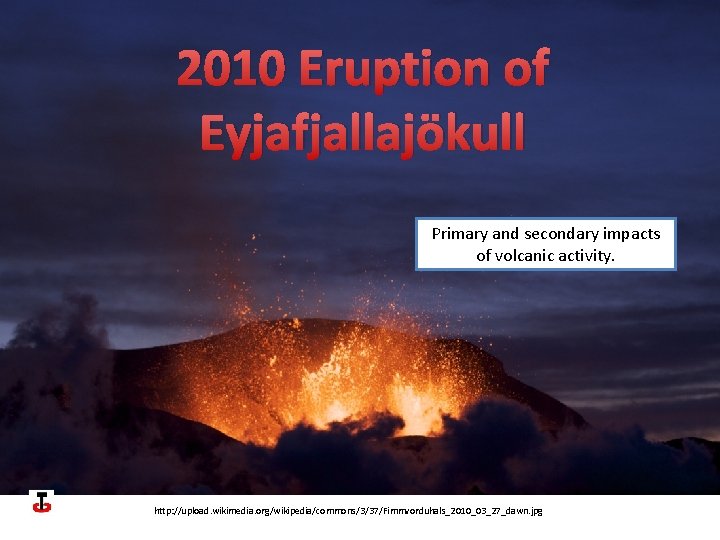
2010 Eruption of Eyjafjallajökull Primary and secondary impacts of volcanic activity. http: //upload. wikimedia. org/wikipedia/commons/3/37/Fimmvorduhals_2010_03_27_dawn. jpg
What’s in a name?
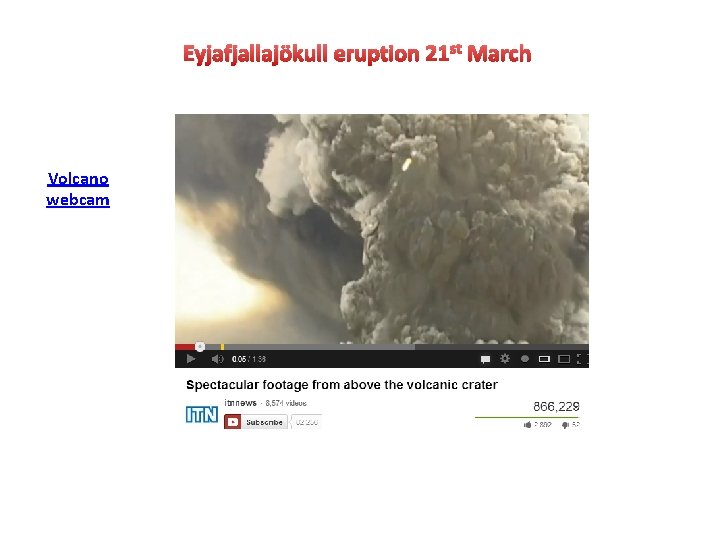
Eyjafjallajökull eruption 21 st March Volcano webcam
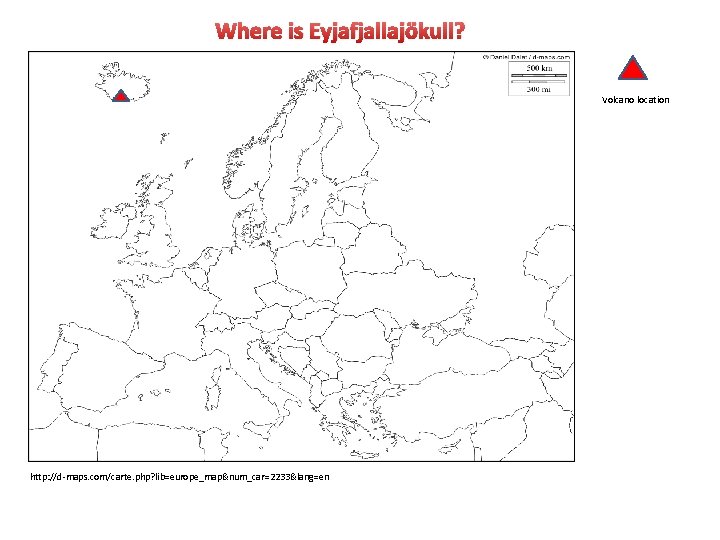
Where is Eyjafjallajökull? Volcano location http: //d-maps. com/carte. php? lib=europe_map&num_car=2233&lang=en
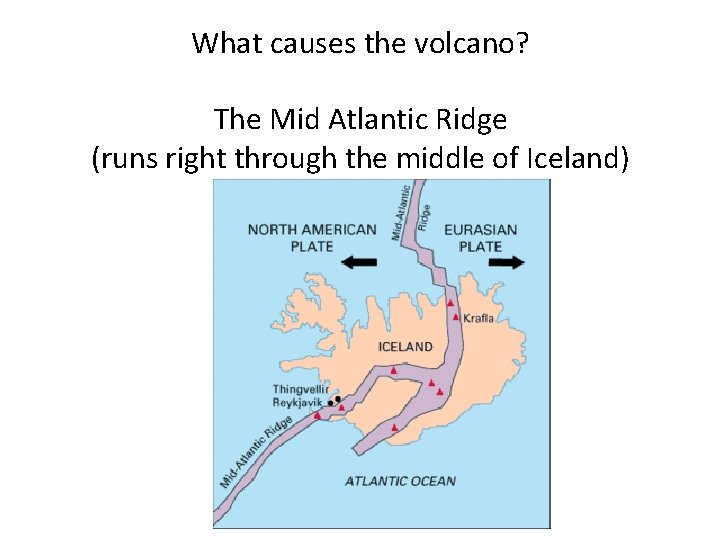
What causes the volcano? The Mid Atlantic Ridge (runs right through the middle of Iceland)
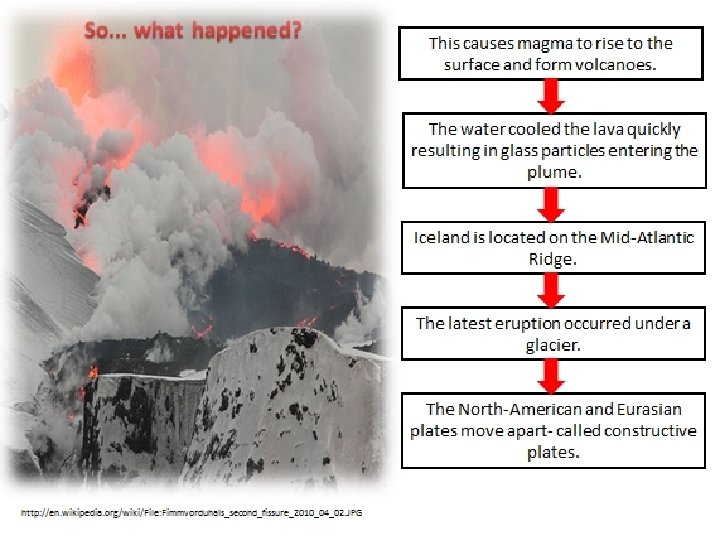
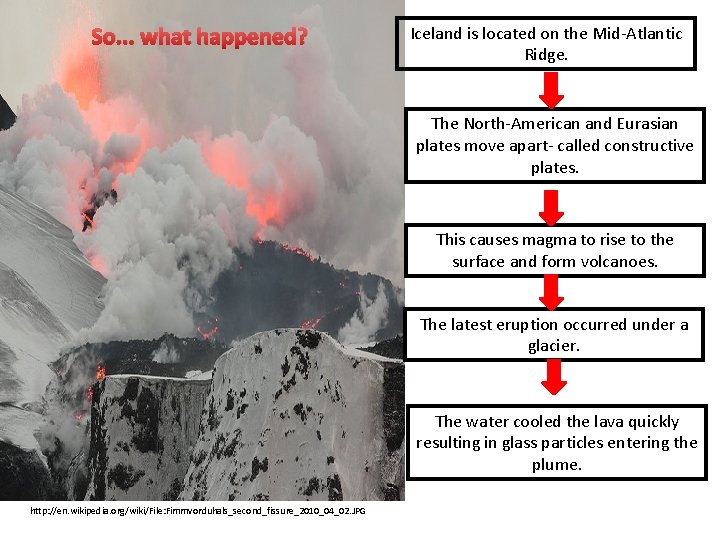
So. . . what happened? Iceland is located on the Mid-Atlantic Ridge. The North-American and Eurasian plates move apart- called constructive plates. This causes magma to rise to the surface and form volcanoes. The latest eruption occurred under a glacier. The water cooled the lava quickly resulting in glass particles entering the plume. http: //en. wikipedia. org/wiki/File: Fimmvorduhals_second_fissure_2010_04_02. JPG
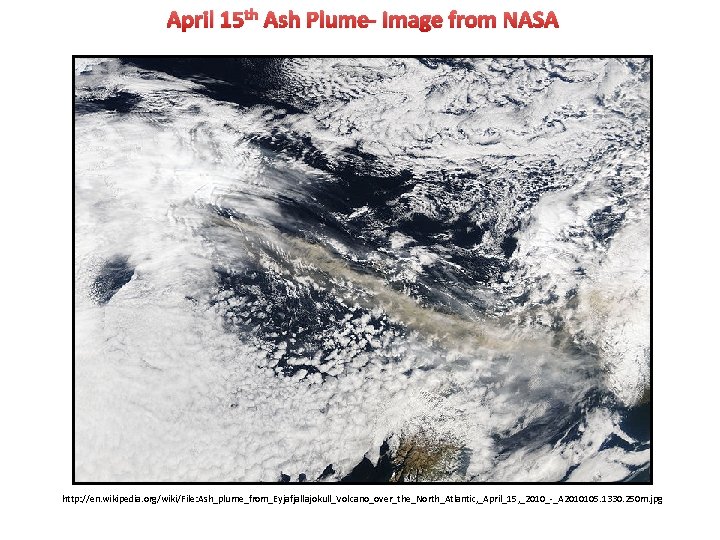
April 15 th Ash Plume- Image from NASA http: //en. wikipedia. org/wiki/File: Ash_plume_from_Eyjafjallajokull_Volcano_over_the_North_Atlantic, _April_15, _2010_-_A 2010105. 1330. 250 m. jpg
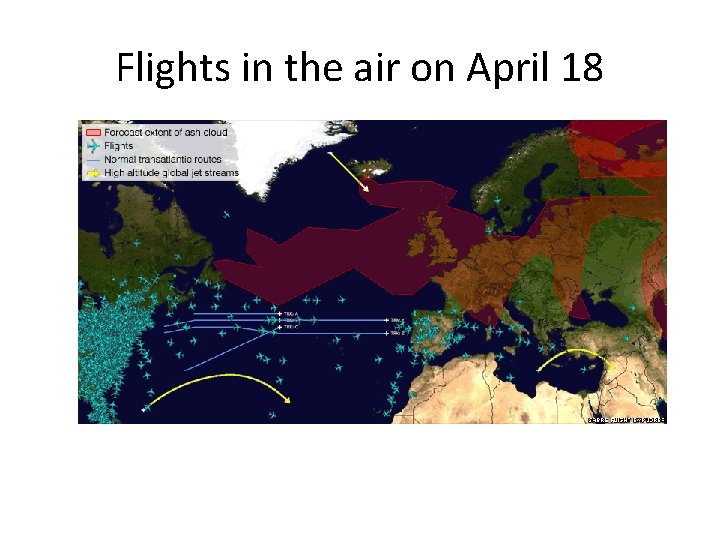
Flights in the air on April 18
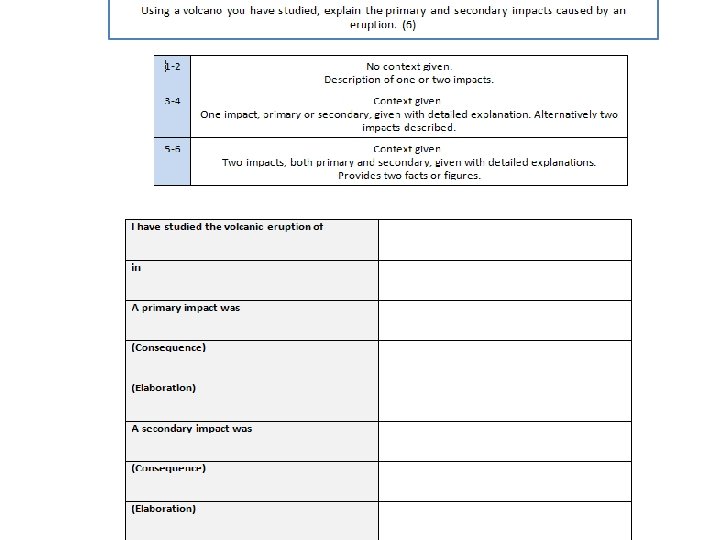
Primary and Secondary Impacts of Volcanic Activity Primary Impacts- occur as a direct result of the event. Secondary Impacts- occur because of a change to the environment as a result of the event.
1 20 countries closed their airspace for a period over six days. 100, 000 travellers were affected.
2 The volcano emitted 150 x 106 Kg of C 02 per day.
3 The volcanic ejected 250 million cubic metres of tephra.
4 500 farmers were evacuated from the area surrounding the volcano.
5 10 to 12 erupting craters ejected lava up to 150 metres into the air.
6 Molten lava flowed more than 2. 5 miles to the north-east of the fissures.
7 The ash had a high fluoride content, this contaminated streams and water.
8 Farmers were warned not to allow livestock to drink from streams, because of potential renal failure.
9 Livestock had to be moved indoors.
10 Ash covering made it difficult to farm or graze cattle.
11 The eruption caused ice to melt, this quickly cooled the lava resulting in a plume rich in abrasive glass particles.
12 Sudden melting of the glacier caused flooding in nearby rivers, one road washed away.
13 At its highest the plume reached 8 kilometres in height.
14 People were told to say inside their homes.
15 High sulphur dioxide levels caused problems for people with respiratory problems.
16 Volcanic lightning was witnesses, caused by the colliding of rocks ejected by the volcano.
17 Airlines lost money; British Airways $30 million dollars a day.
18 Kenyan farmers were losing $2 million a day as they couldn’t transport their flowers. Europe is 1/3 of their market.
19 There were no recorded deaths or injuries.
20 The cost of car hire rose, ferries become fully booked.
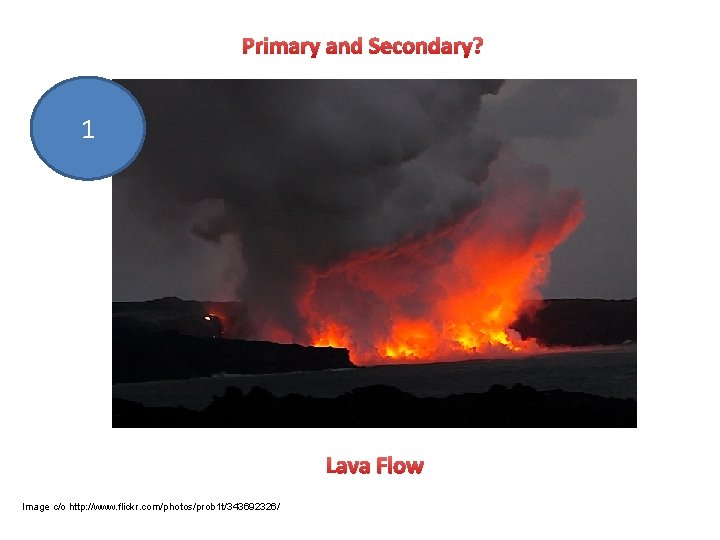
Primary and Secondary? 1 Lava Flow Image c/o http: //www. flickr. com/photos/prob 1 t/343692326/
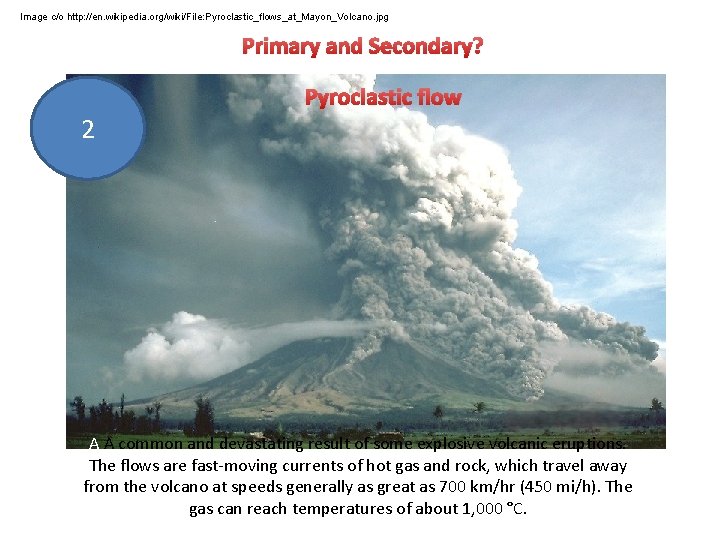
Image c/o http: //en. wikipedia. org/wiki/File: Pyroclastic_flows_at_Mayon_Volcano. jpg Primary and Secondary? Pyroclastic flow 2 A A common and devastating result of some explosive volcanic eruptions. The flows are fast-moving currents of hot gas and rock, which travel away from the volcano at speeds generally as great as 700 km/hr (450 mi/h). The gas can reach temperatures of about 1, 000 °C.
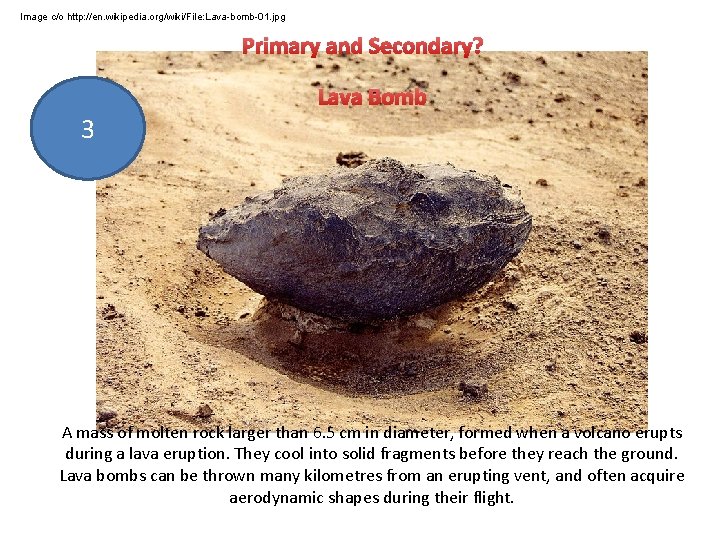
Image c/o http: //en. wikipedia. org/wiki/File: Lava-bomb-01. jpg Primary and Secondary? Lava Bomb 3 A mass of molten rock larger than 6. 5 cm in diameter, formed when a volcano erupts during a lava eruption. They cool into solid fragments before they reach the ground. Lava bombs can be thrown many kilometres from an erupting vent, and often acquire aerodynamic shapes during their flight.
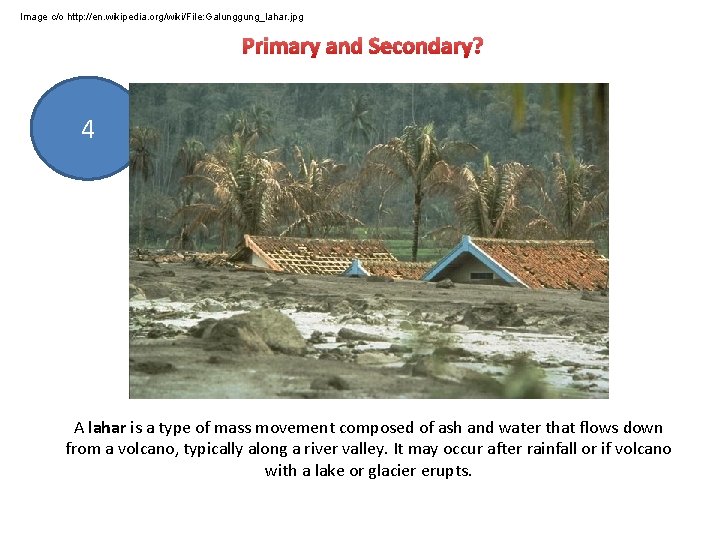
Image c/o http: //en. wikipedia. org/wiki/File: Galunggung_lahar. jpg Primary and Secondary? 4 Lahars A lahar is a type of mass movement composed of ash and water that flows down from a volcano, typically along a river valley. It may occur after rainfall or if volcano with a lake or glacier erupts.
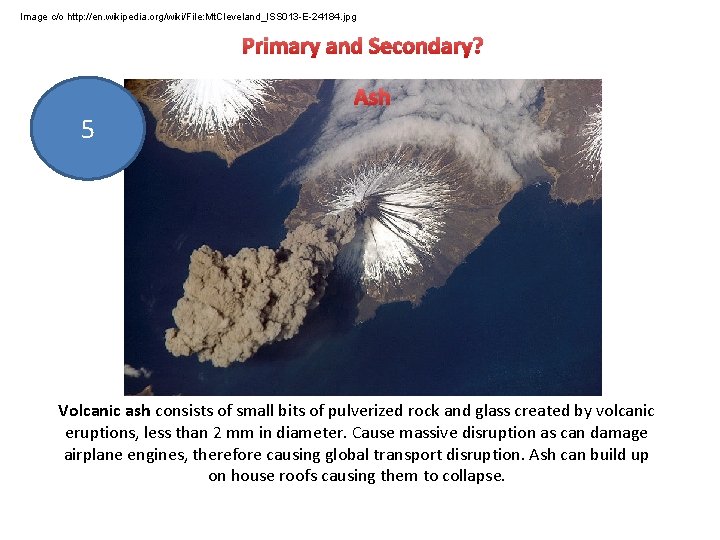
Image c/o http: //en. wikipedia. org/wiki/File: Mt. Cleveland_ISS 013 -E-24184. jpg Primary and Secondary? Ash 5 Volcanic ash consists of small bits of pulverized rock and glass created by volcanic eruptions, less than 2 mm in diameter. Cause massive disruption as can damage airplane engines, therefore causing global transport disruption. Ash can build up on house roofs causing them to collapse.
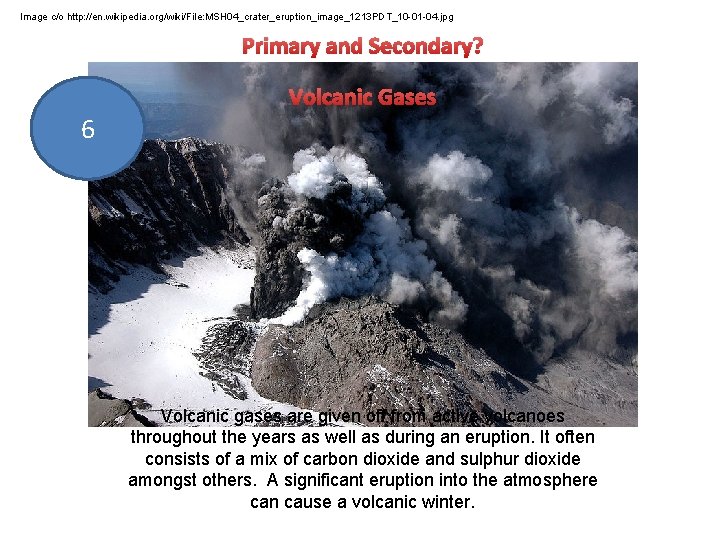
Image c/o http: //en. wikipedia. org/wiki/File: MSH 04_crater_eruption_image_1213 PDT_10 -01 -04. jpg Primary and Secondary? Volcanic Gases 6 Volcanic gases are given off from active volcanoes throughout the years as well as during an eruption. It often consists of a mix of carbon dioxide and sulphur dioxide amongst others. A significant eruption into the atmosphere can cause a volcanic winter.
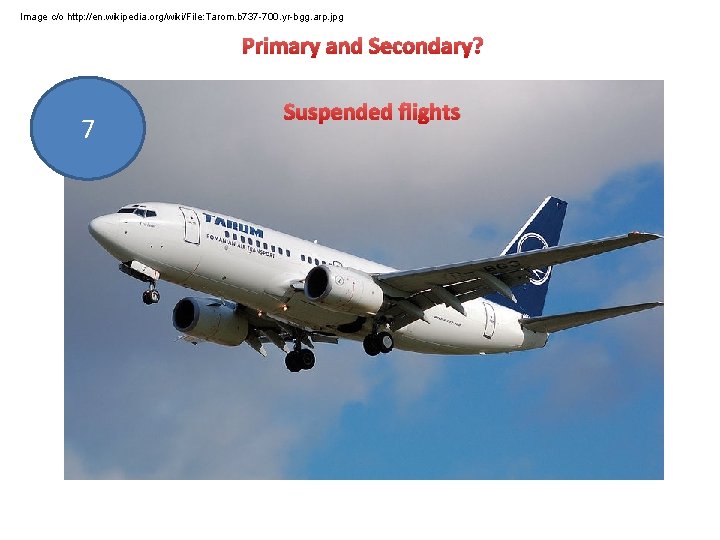
Image c/o http: //en. wikipedia. org/wiki/File: Tarom. b 737 -700. yr-bgg. arp. jpg Primary and Secondary? 7 Suspended flights