
Case Study Colombian rainy season 2010 Presented by
Case Study Colombian rainy season - 2010 Presented by: Falco J. Aguilar Rubio Social, Political, Institutional, Economic and Environmental Aspects of Water Resources 2010
Colombian Rainy Season - 2010 • Definition of the problem • Implications ▫ ▫ Social Political Economical Environmental • Recommendations
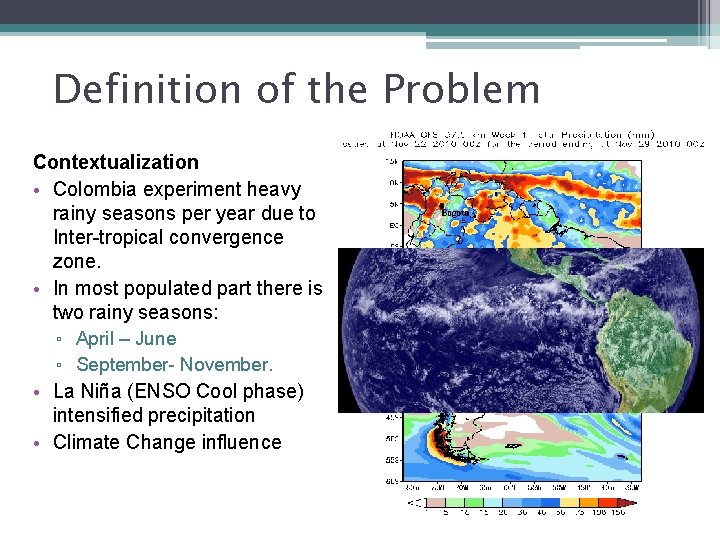
Definition of the Problem Contextualization • Colombia experiment heavy rainy seasons per year due to Inter-tropical convergence zone. • In most populated part there is two rainy seasons: ▫ April – June ▫ September- November. • La Niña (ENSO Cool phase) intensified precipitation • Climate Change influence
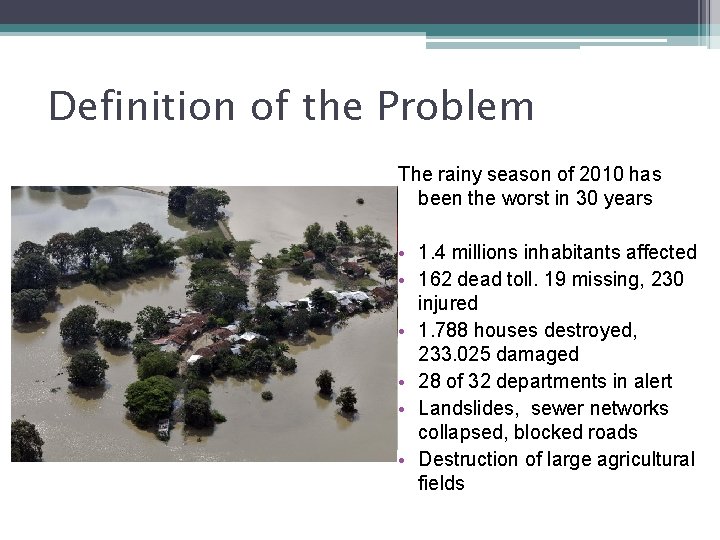
Definition of the Problem The rainy season of 2010 has been the worst in 30 years • 1. 4 millions inhabitants affected • 162 dead toll. 19 missing, 230 injured • 1. 788 houses destroyed, 233. 025 damaged • 28 of 32 departments in alert • Landslides, sewer networks collapsed, blocked roads • Destruction of large agricultural fields
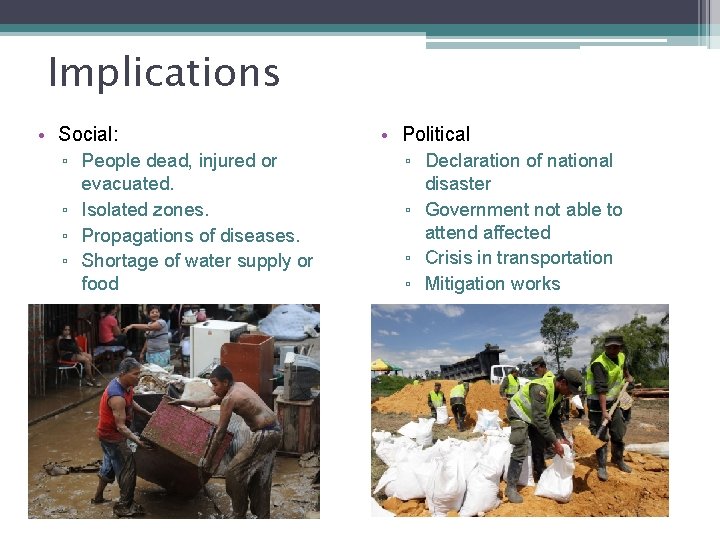
Implications • Social: ▫ People dead, injured or evacuated. ▫ Isolated zones. ▫ Propagations of diseases. ▫ Shortage of water supply or food • Political ▫ Declaration of national disaster ▫ Government not able to attend affected ▫ Crisis in transportation ▫ Mitigation works
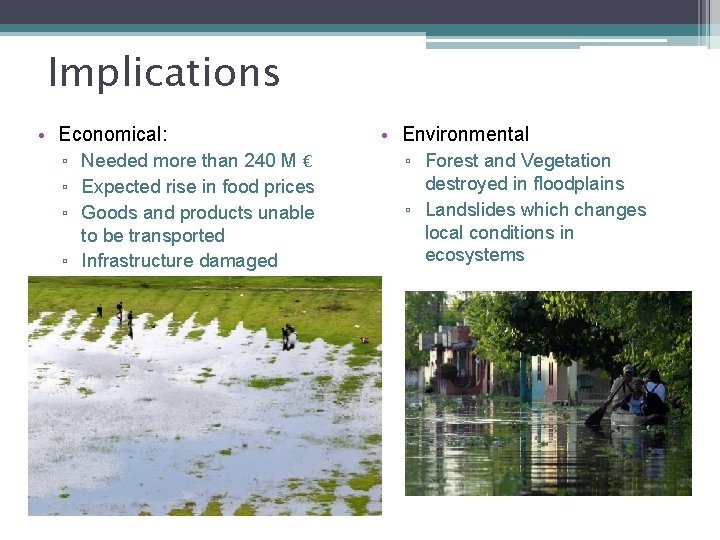
Implications • Economical: ▫ Needed more than 240 M € ▫ Expected rise in food prices ▫ Goods and products unable to be transported ▫ Infrastructure damaged • Environmental ▫ Forest and Vegetation destroyed in floodplains ▫ Landslides which changes local conditions in ecosystems
Recommendations • Since the phenomenon is know, mitigation structures must be built • Prevention campaigns to vulnerable population • Land use according to historical flooding events • Early warning system • International cooperation, for funding projects • Reforestation of river banks, as protection measures • Buffering systems upstream, in identified hazardous currents
Thanks! Questions – Comments?
- Slides: 8