
Case Study Bench Scale Testing to Identify Lead
Case Study: Bench Scale Testing to Identify Lead and Copper Treatment Technique for 2018 RCAP Conference LCR Compliance April 25, 2018
“The fundamental obstacle to creating community sustainability and implementing an effective strategy is capacity; a lack of time, resources, knowledge, and staff. ” Nathan Ohle Executive Director RCAP
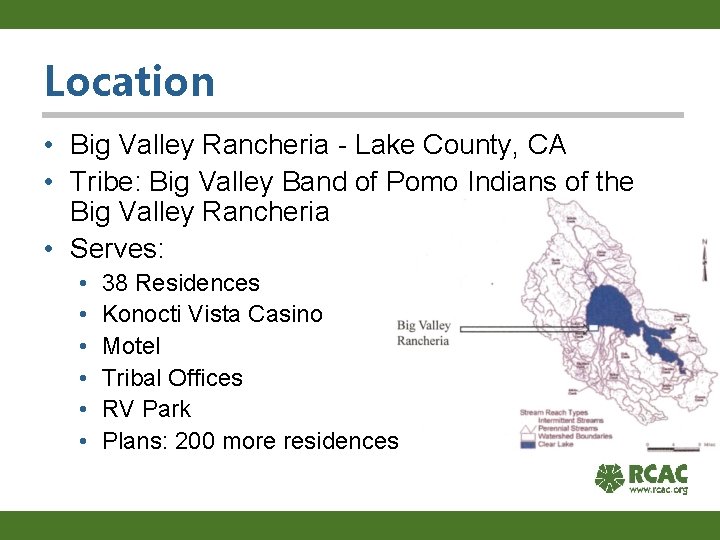
Location • Big Valley Rancheria - Lake County, CA • Tribe: Big Valley Band of Pomo Indians of the Big Valley Rancheria • Serves: • • • 38 Residences Konocti Vista Casino Motel Tribal Offices RV Park Plans: 200 more residences
Challenges To Be Addressed • Intermittent Lead and Copper Exceedances for 14 years • Bad Raw Water Quality • Inadequate Treatment • Sewer and Water Treatment equipment in same building
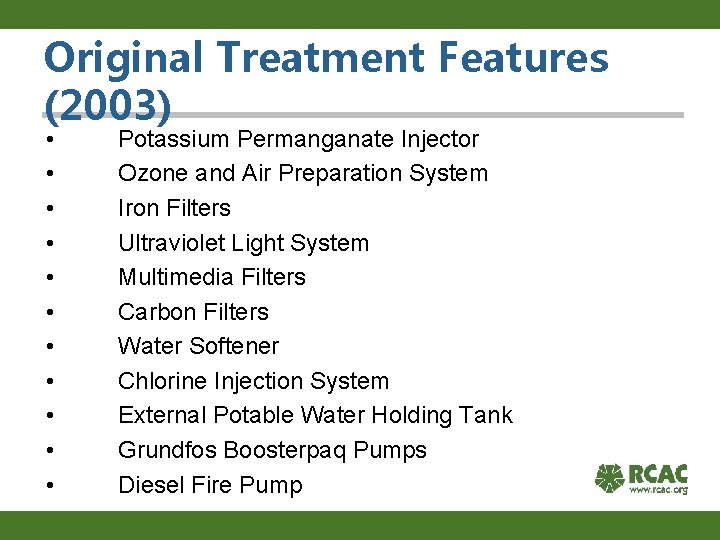
Original Treatment Features (2003) • • • Potassium Permanganate Injector Ozone and Air Preparation System Iron Filters Ultraviolet Light System Multimedia Filters Carbon Filters Water Softener Chlorine Injection System External Potable Water Holding Tank Grundfos Boosterpaq Pumps Diesel Fire Pump
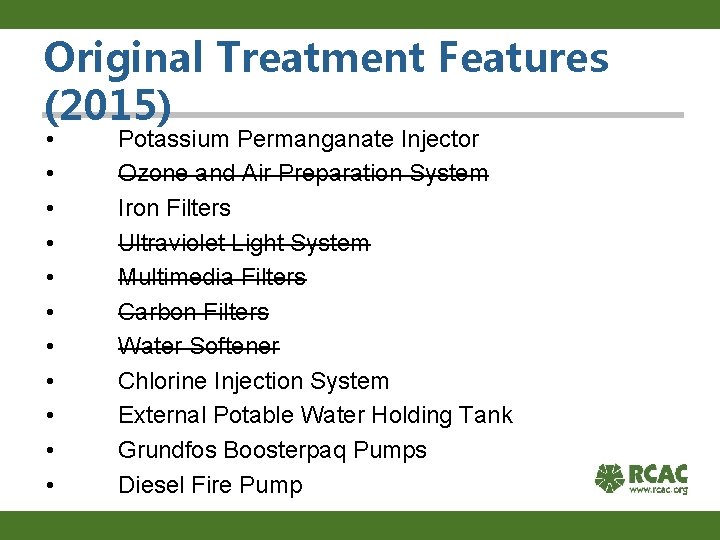
Original Treatment Features (2015) • • • Potassium Permanganate Injector Ozone and Air Preparation System Iron Filters Ultraviolet Light System Multimedia Filters Carbon Filters Water Softener Chlorine Injection System External Potable Water Holding Tank Grundfos Boosterpaq Pumps Diesel Fire Pump
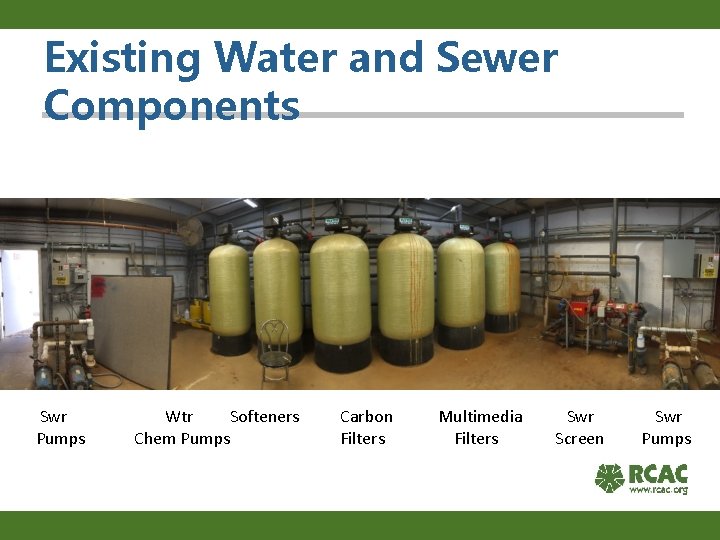
Existing Water and Sewer Components Swr Pumps Wtr Softeners Chem Pumps Carbon Filters Multimedia Filters Swr Screen Swr Pumps
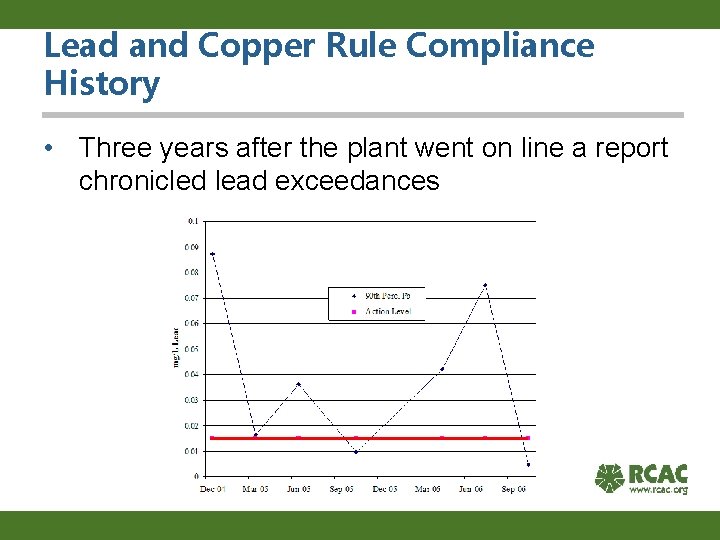
Lead and Copper Rule Compliance History • Three years after the plant went on line a report chronicled lead exceedances
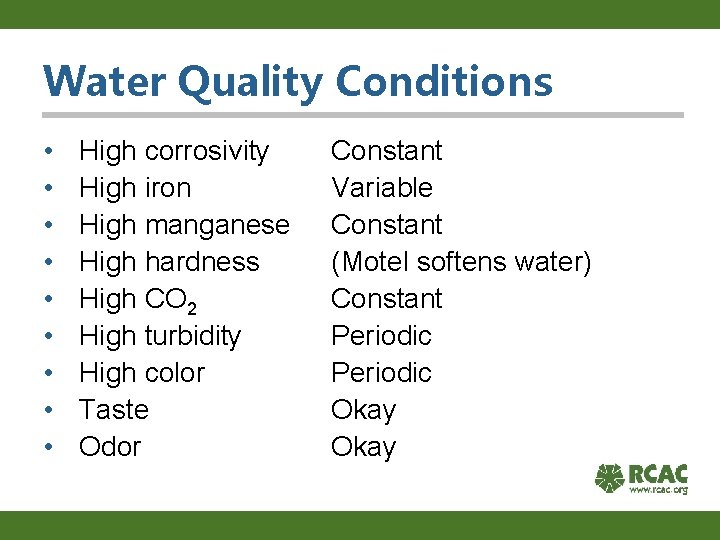
Water Quality Conditions • • • High corrosivity High iron High manganese High hardness High CO 2 High turbidity High color Taste Odor Constant Variable Constant (Motel softens water) Constant Periodic Okay
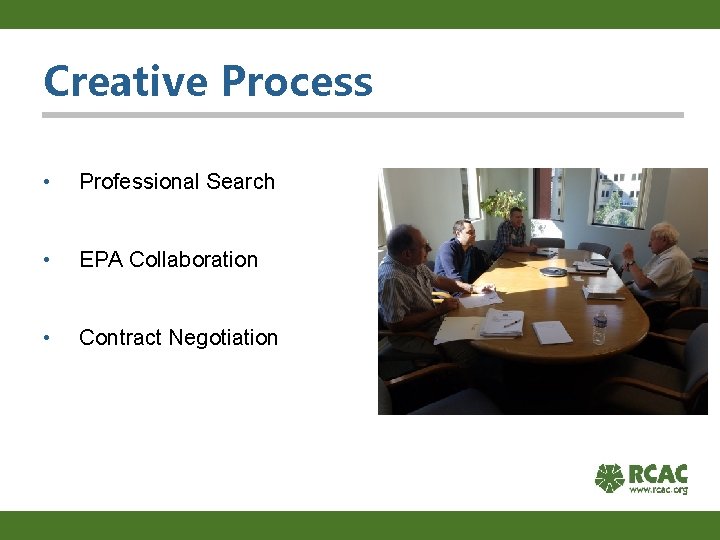
Creative Process • Professional Search • EPA Collaboration • Contract Negotiation
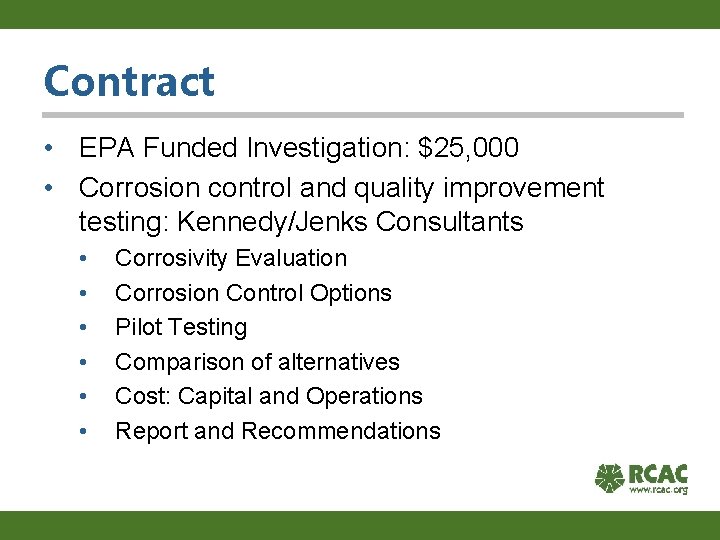
Contract • EPA Funded Investigation: $25, 000 • Corrosion control and quality improvement testing: Kennedy/Jenks Consultants • • • Corrosivity Evaluation Corrosion Control Options Pilot Testing Comparison of alternatives Cost: Capital and Operations Report and Recommendations

Corrosion Control Theory and Testing • Water Quality Parameter Testing • Plotting the balance/imbalance of chemical compounds at Various Points in System
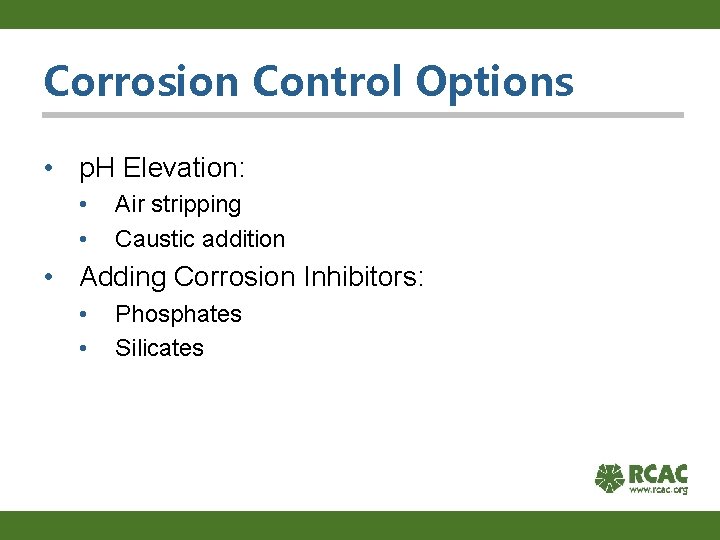
Corrosion Control Options • p. H Elevation: • • Air stripping Caustic addition • Adding Corrosion Inhibitors: • • Phosphates Silicates
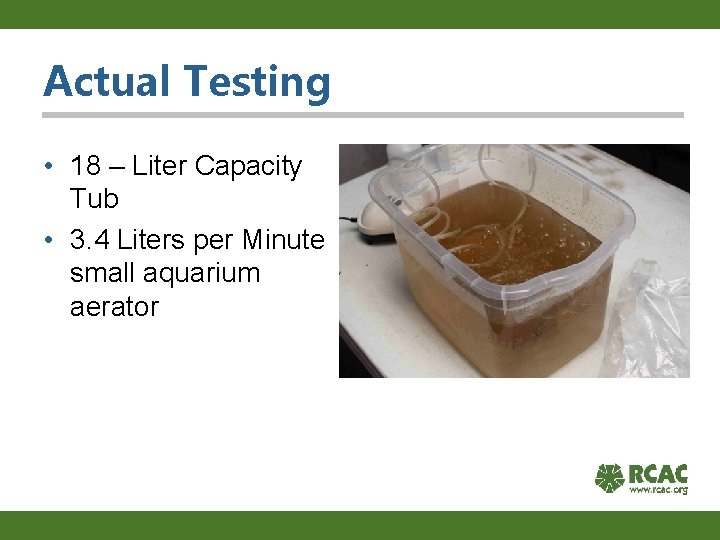
Actual Testing • 18 – Liter Capacity Tub • 3. 4 Liters per Minute small aquarium aerator

Lead and Copper LPR Probes in Tub Cover
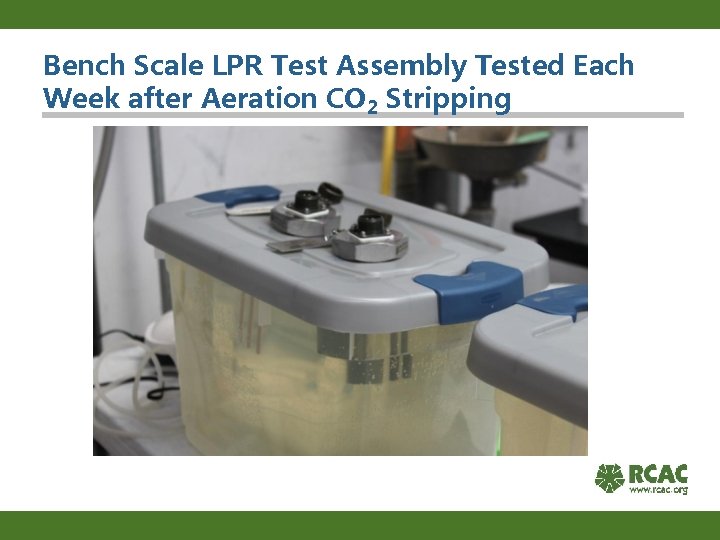
Bench Scale LPR Test Assembly Tested Each Week after Aeration CO 2 Stripping
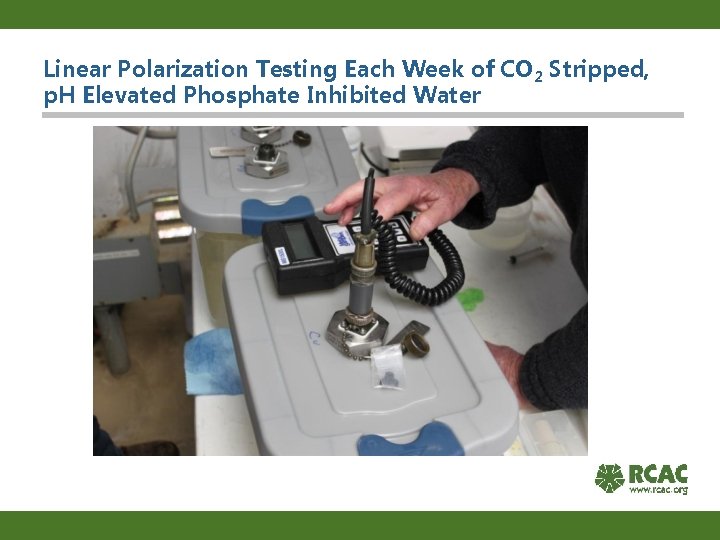
Linear Polarization Testing Each Week of CO 2 Stripped, p. H Elevated Phosphate Inhibited Water
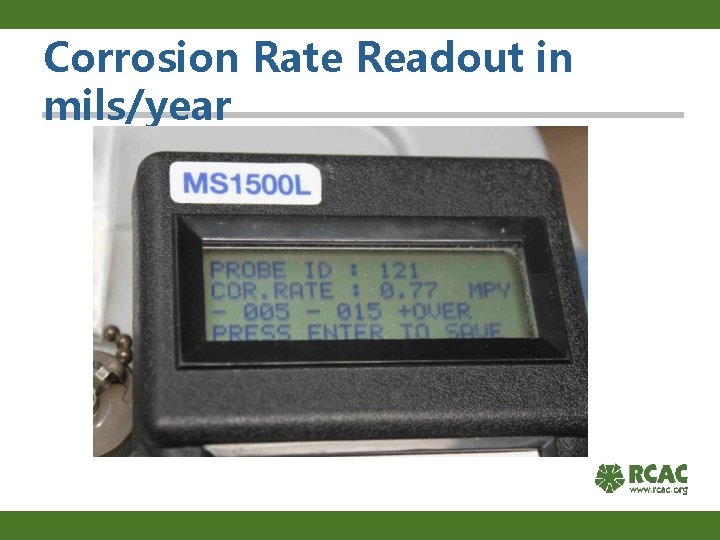
Corrosion Rate Readout in mils/year
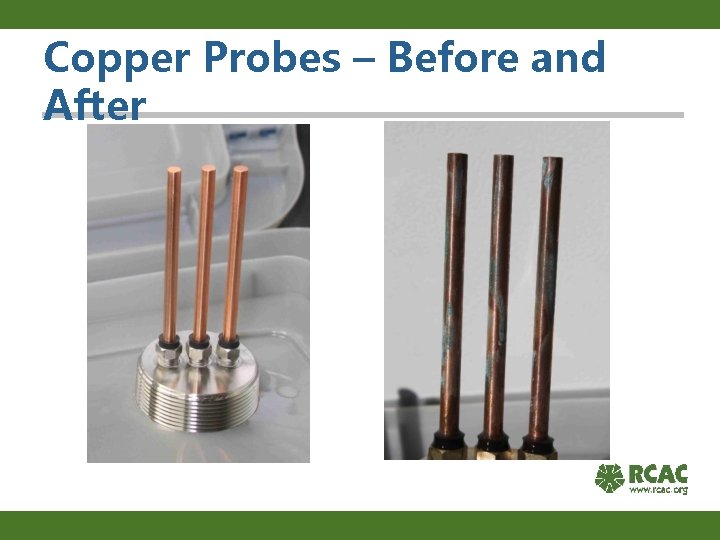
Copper Probes – Before and After
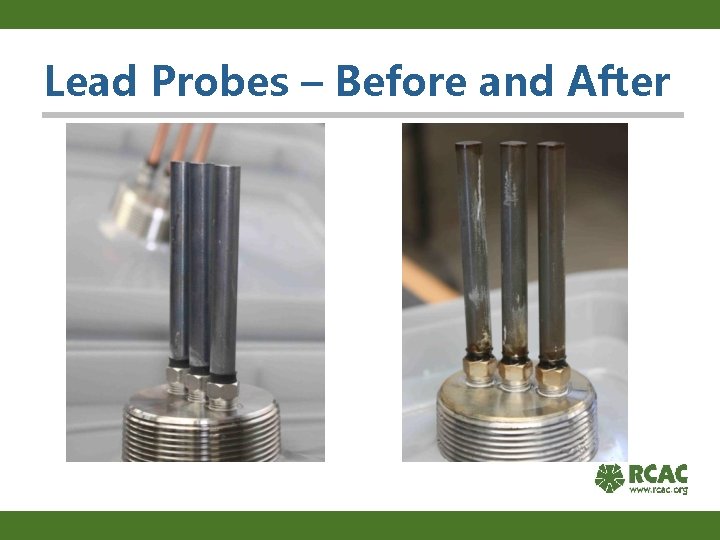
Lead Probes – Before and After
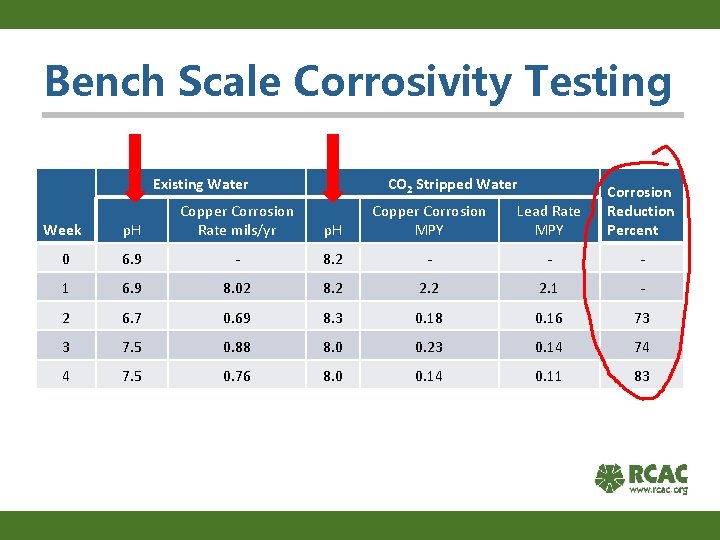
Bench Scale Corrosivity Testing Existing Water CO 2 Stripped Water p. H Copper Corrosion MPY Lead Rate MPY Corrosion Reduction Percent Week p. H Copper Corrosion Rate mils/yr 0 6. 9 - 8. 2 - - - 1 6. 9 8. 02 8. 2 2. 1 - 2 6. 7 0. 69 8. 3 0. 18 0. 16 73 3 7. 5 0. 88 8. 0 0. 23 0. 14 74 4 7. 5 0. 76 8. 0 0. 14 0. 11 83
Recommended Interim Water Treatment Improvements • Interim: • • Diffused air stripper: 60 -minute detention at 130 GPM Improved iron and manganese removal: Pyrolusite media to three existing and conversion of two GAC and four Zeolite filters to pyrolusite to reduce loading rate by two-thirds.
Recommended Interim Water Treatment Improvements Continued • Interim: • • Storage tank: Sludge removal and cathodic protection Cost: $200, 000 interim treatment and $300, 000 wastewater treatment plant separation by containment wall ($100, 000 CO 2 stripping and $100, 000 improved iron removal)
Long Range Treatment (for wastewater separation) • CO 2 Stripping • Water Softening by Lime with Iron. Manganese Precipitation • Filtration • Chlorination • Phosphate Inhibitor • Cost: $3 million
Project Outcome • Interim Water Treatment Improvements • Components: • Diffused air stripper • Improved iron and manganese removal • Storage tank sludge removal and cathodic protection • Cost: $200, 000 interim treatment ($300, 000 with wastewater separation) to achieve: • • Projected 80% reduction in corrosion rate Lead and Copper Rule compliance Lower treatment costs (Chemicals and Labor) New treatment plant process improvements identified
Project Outcomes • Tribal technical and managerial capacities expanded • Confidence built in outcome • Better understanding of responsibilities
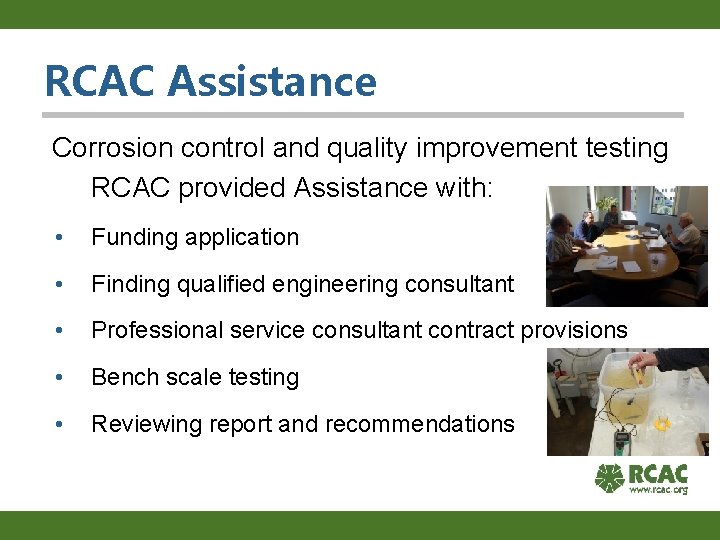
RCAC Assistance Corrosion control and quality improvement testing RCAC provided Assistance with: • Funding application • Finding qualified engineering consultant • Professional service consultant contract provisions • Bench scale testing • Reviewing report and recommendations
Big Valley Rancheria Corrosion Control Study Lessons Learned • Find the right engineer/scientist • The importance of collaboration between involved parties • Teachable Lessons • Obvious treatment methods aren’t • Importance of monitoring
The Collaborators • • • John Gicucki – Big Valley Rancheria Public Works Manager John Cruz – Big Valley Rancheria Lead Operator Sarah Ryan – Big Valley Rancheria Environmental Director Jason Gambatese – EPA Region 9 Project Manager Robert Ryder – Kennedy/Jenks Engineers
Big Valley Rancheria Corrosion Control Study For Further Information • Lee Schegg • lschegg@rcac. org • 916 -704 -8134
Big Valley Rancheria Corrosion Control Study Questions?
- Slides: 31