
Case study analysis MSc Ecological Management and Conservation


- Slides: 19
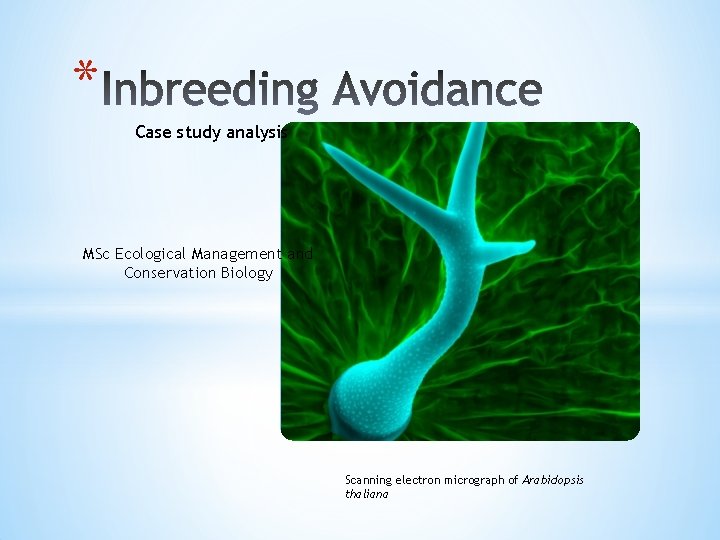
* Case study analysis MSc Ecological Management and Conservation Biology Scanning electron micrograph of Arabidopsis thaliana
Inbreeding implications • The average degree of relationship among individuals in small, isolated populations is higher than in large populations or one that receives many immigrants. Causing inbreeding depression as the homozygous mutations become expressed. (Godfray, 1994) Inbreeding is always bad ? • In most populations inbreeding is not recommended with the presence of deleterious alleles. The most aggressive agricultural weeds have benefited from selffertilization providing ecological advantages including rapid colonization(Marshall, 1967).
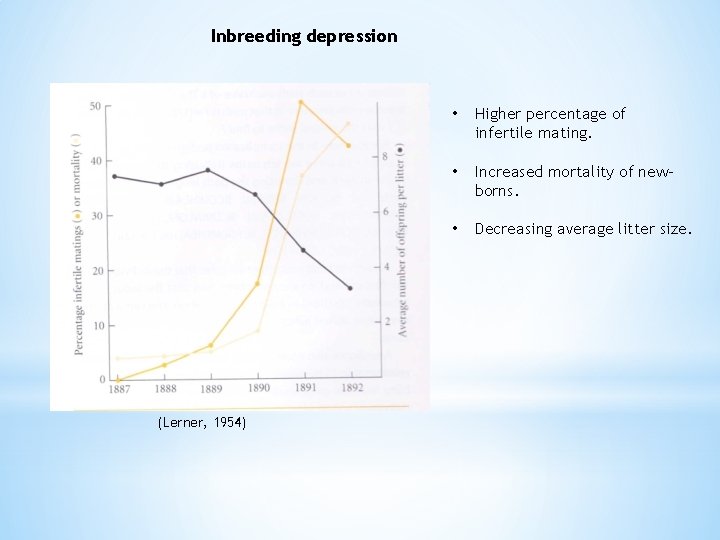
Inbreeding depression (Lerner, 1954) • Higher percentage of infertile mating. • Increased mortality of newborns. • Decreasing average litter size.
Avoiding inbreeding by delayed maturation/reproductive suppression
Delayed maturation and reproductive suppression • Whereby the age of sexual maturity or the reproductive capacity of offspring is delayed or suppressed due to the presence of opposite sex parents or siblings within groups. • Common reason why individuals in family groups do not interbreed. Pusey, A. and Wolf, M. (1996). Inbreeding avoidance in animals. Trends in Ecology & Evolution, 11(5), pp. 201 -206.
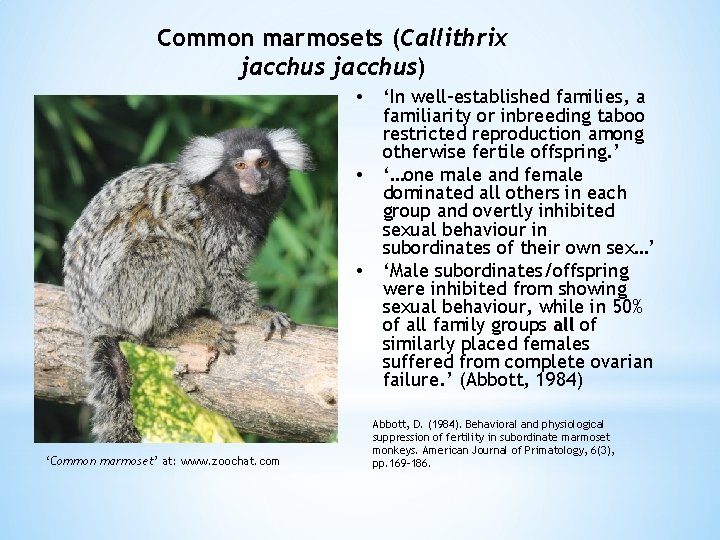
Common marmosets (Callithrix jacchus) • • • ‘Common marmoset’ at: www. zoochat. com ‘In well-established families, a familiarity or inbreeding taboo restricted reproduction among otherwise fertile offspring. ’ ‘…one male and female dominated all others in each group and overtly inhibited sexual behaviour in subordinates of their own sex…’ ‘Male subordinates/offspring were inhibited from showing sexual behaviour, while in 50% of all family groups all of similarly placed females suffered from complete ovarian failure. ’ (Abbott, 1984) Abbott, D. (1984). Behavioral and physiological suppression of fertility in subordinate marmoset monkeys. American Journal of Primatology, 6(3), pp. 169 -186.
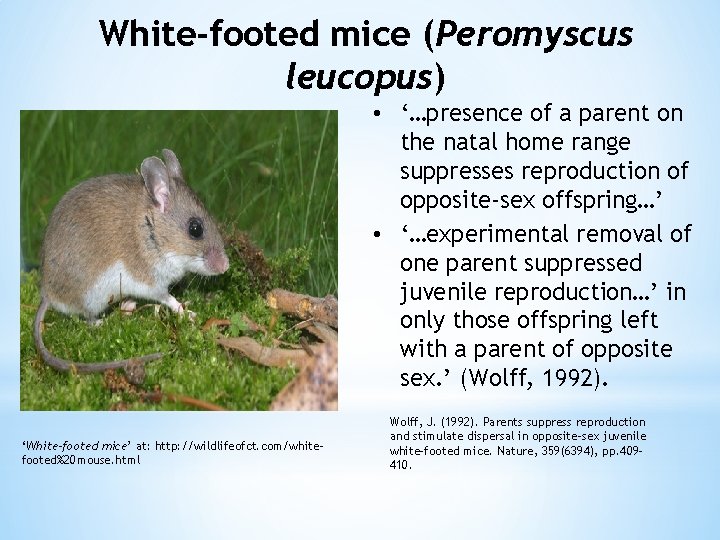
White-footed mice (Peromyscus leucopus) • ‘…presence of a parent on the natal home range suppresses reproduction of opposite-sex offspring…’ • ‘…experimental removal of one parent suppressed juvenile reproduction…’ in only those offspring left with a parent of opposite sex. ’ (Wolff, 1992). ‘White-footed mice’ at: http: //wildlifeofct. com/whitefooted%20 mouse. html Wolff, J. (1992). Parents suppress reproduction and stimulate dispersal in opposite-sex juvenile white-footed mice. Nature, 359(6394), pp. 409410.
Extra Pair Paternity
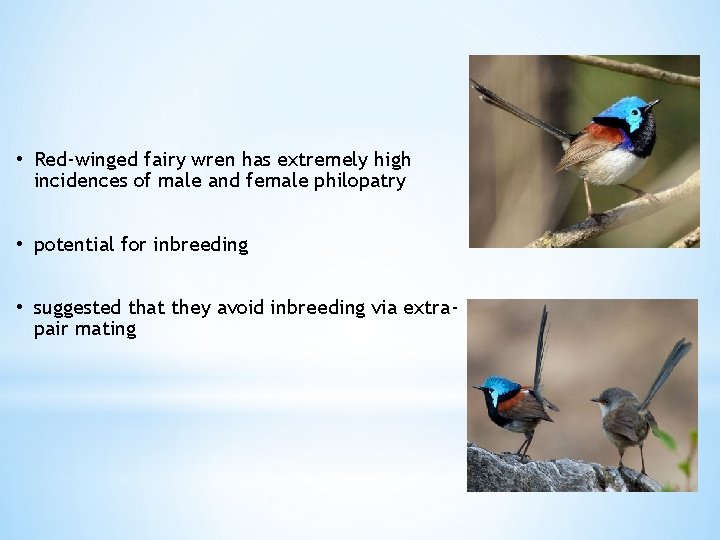
• Red-winged fairy wren has extremely high incidences of male and female philopatry • potential for inbreeding • suggested that they avoid inbreeding via extrapair mating
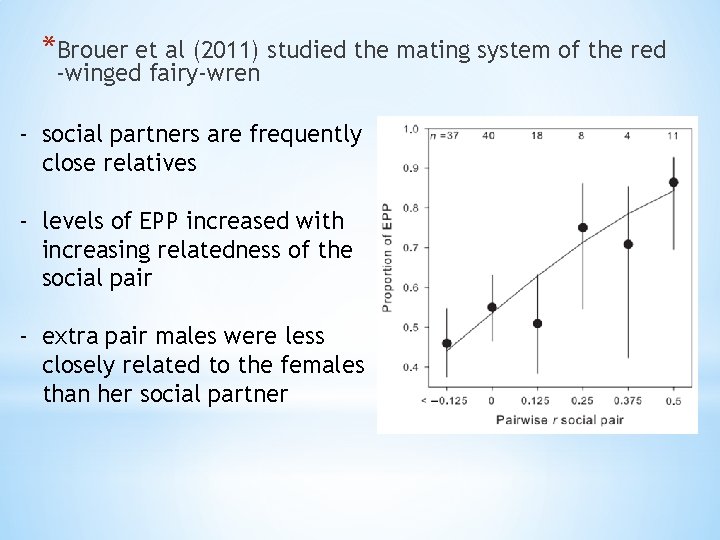
*Brouer et al (2011) studied the mating system of the red -winged fairy-wren - social partners are frequently close relatives - levels of EPP increased with increasing relatedness of the social pair - extra pair males were less closely related to the females than her social partner
Sex biased dispersal ‘Dispersal of individuals from their natal group or site, especially those of just one sex’ * widespread among mammals and birds * Separates close relatives, and thus prevent close inbreeding * whether they have evolved as inbreeding avoidance mechanisms, or whether they result from intrasexual competition or resource competition, remains contentious. * mating systems play a key role in determining the degree and direction of bias in dispersal
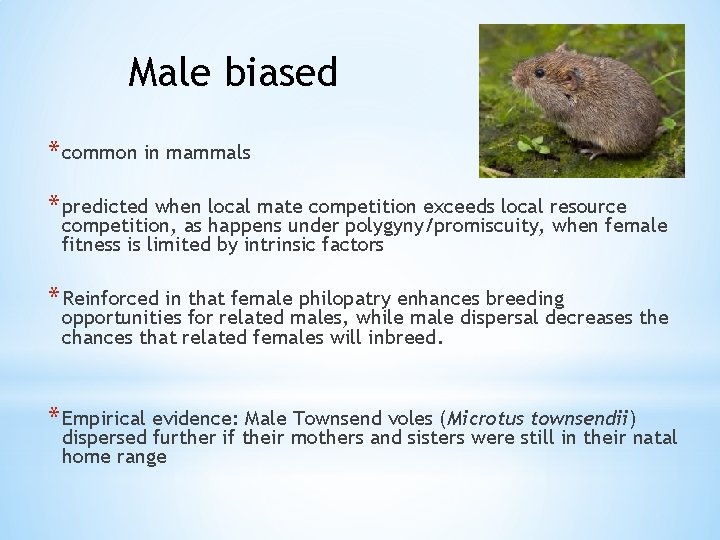
Male biased * common in mammals * predicted when local mate competition exceeds local resource competition, as happens under polygyny/promiscuity, when female fitness is limited by intrinsic factors * Reinforced in that female philopatry enhances breeding opportunities for related males, while male dispersal decreases the chances that related females will inbreed. * Empirical evidence: Male Townsend voles (Microtus townsendii) dispersed further if their mothers and sisters were still in their natal home range
Female biased *females are more likely to disperse in species in which male tenure in groups exceeds the time it takes daughters to reach sexual maturity. *Males benefit from site familiarity when acquiring and defending territories *Common in birds e. g. red grouse (Lagopus lagopus scoticus)
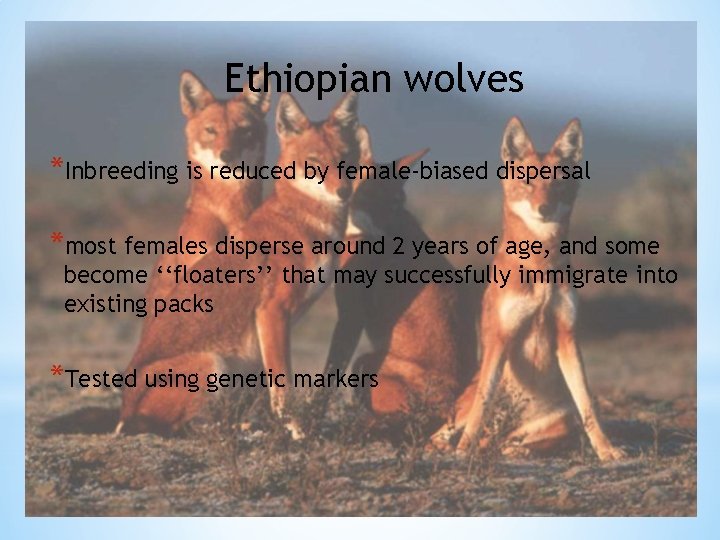
Ethiopian wolves *Inbreeding is reduced by female-biased dispersal *most females disperse around 2 years of age, and some become ‘‘floaters’’ that may successfully immigrate into existing packs *Tested using genetic markers
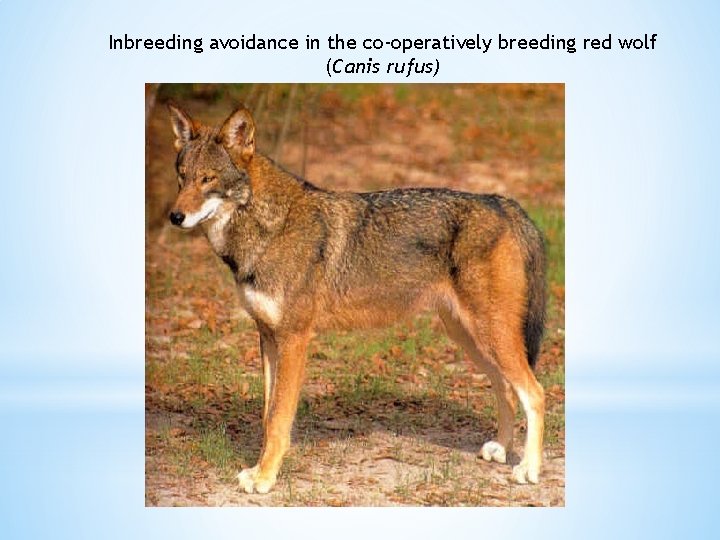
Inbreeding avoidance in the co-operatively breeding red wolf (Canis rufus)
Potential mechanisms for inbreeding avoidance among canids *Female-biased dispersal; extra-pair reproduction – Eithiopian wolf (Canis simensis) *Reproductive suppression of subordinates; high rates of dispersal for both sexes – grey wolf (Canis lupus)
Study of red wolves in North Carolina (Sparkman el al. , 2012) * Red wolves reintroduced in 1987 after extinction in the wild * Derived from captive population of 14 founders * 506 free-ranging wolves equipped with radio collars * Estimated >90% of wolves in the recovery area “known” * Results: * Breeding among first degree relatives rare: parents-offspring 4%; full siblings 4% * After dispersal from natal packs: 43% of individuals spent 1+ seasons as lone wolves; 30% of individuals spent time with other wolves in non-breeding packs
Conclusions : Factors reducing the risk of inbreeding * Behavioural reproductive suppression prior to dispersal * High dispersal rates * High proportion of young wolves spending time alone or as members of non-breeding packs after dispersal * Many breeding pairs consisted of 2 unrelated individuals in a new home range
References Abbott, D. (1984). Behavioral and physiological suppression of fertility in subordinate marmoset monkeys. American Journal of Primatology, 6(3), pp. 169 -186. Brouwer L, Van de Pol M, Atema E and Cockburn A (2011) Strategic promiscuity helps avoid inbreeding at multiple levels in a cooperative breeder where both sexes are philopatric. Molecular Ecology 20: 4796– 4807 Russell E and Rowley I (2000) Demography and social organisation of the red-winged fairy-wren, Malurus elegans. Australian Journal of Zoology 48: 161– 200 Pusey, A. and Wolf, M. (1996). Inbreeding avoidance in animals. Trends in Ecology & Evolution, 11(5), pp. 201206. Sparkman, A. M. , Adams, J. R. , Steury, T. D. , Waits, L. P. , Murray, D. L. , 2012. Pack social dynamics and inbreeding avoidance in the cooperatively breeding red wolf. Behav. Ecol. 23, 1186– 1194. doi: 10. 1093/beheco/ars 099