
CASE STUDIES MALARIA WHAT IS MALARIA Malaria disease
- Slides: 12
CASE STUDIES: MALARIA
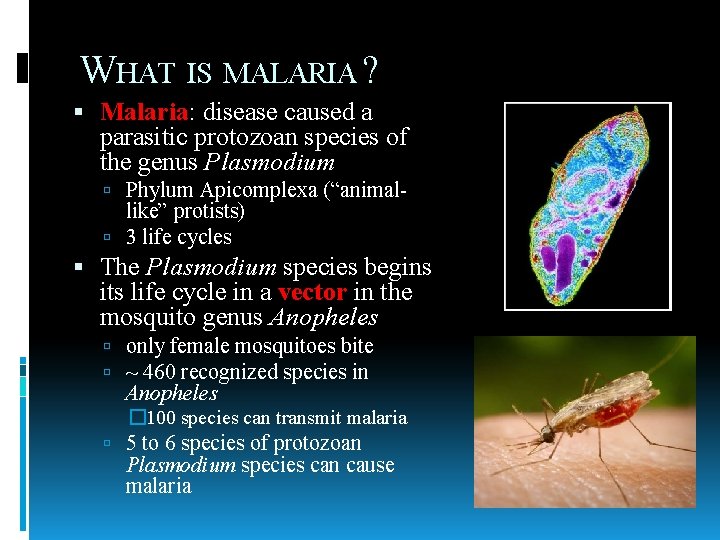
WHAT IS MALARIA ? Malaria: disease caused a parasitic protozoan species of the genus Plasmodium Phylum Apicomplexa (“animal- like” protists) 3 life cycles The Plasmodium species begins its life cycle in a vector in the mosquito genus Anopheles only female mosquitoes bite ~ 460 recognized species in Anopheles � 100 species can transmit malaria 5 to 6 species of protozoan Plasmodium species can cause malaria
SYMPTOMS Fever (flu like illness) Chills Rigors Myalgia Headache Cough Coma Death
OF PLASMODIUM AND MEN … Plasmodium falciparum is the world’s #1 killer Strains are the most virulent Most effective treatment using chloroquine However, P. vivax is a “silent killer”. It produces cells called hypnozoites Dormant phase--these can reside in the liver for years Chloroquine not as effective
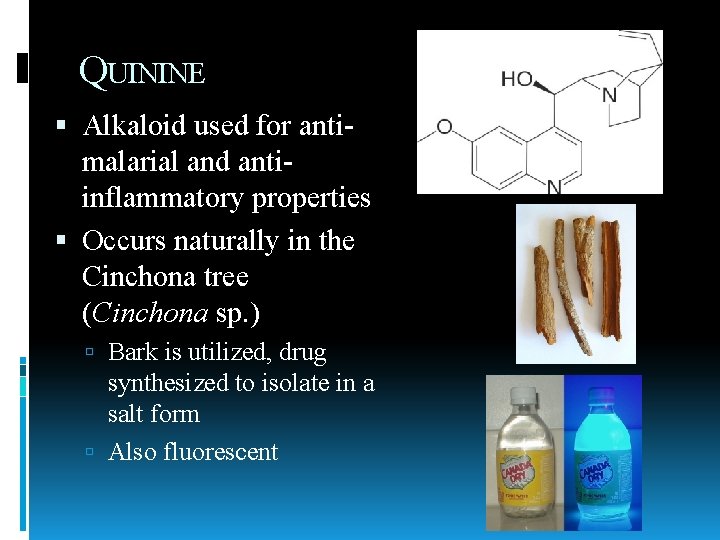
QUININE Alkaloid used for antimalarial and antiinflammatory properties Occurs naturally in the Cinchona tree (Cinchona sp. ) Bark is utilized, drug synthesized to isolate in a salt form Also fluorescent
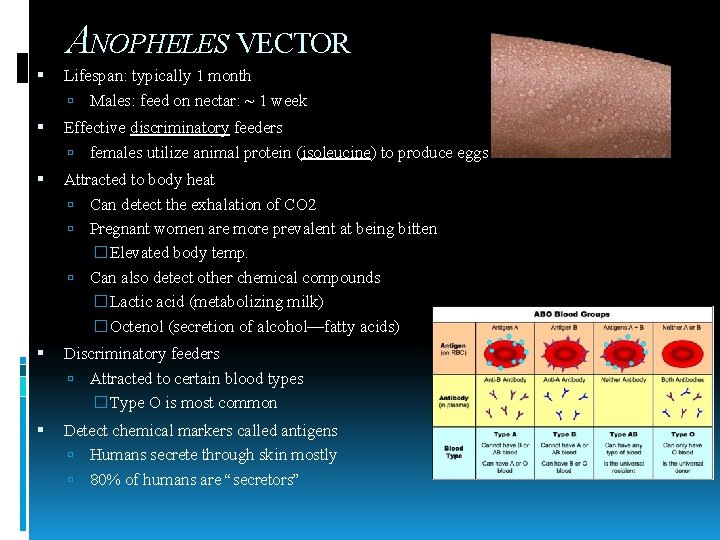
ANOPHELES VECTOR Lifespan: typically 1 month Males: feed on nectar: ~ 1 week Effective discriminatory feeders females utilize animal protein (isoleucine) to produce eggs Attracted to body heat Can detect the exhalation of CO 2 Pregnant women are more prevalent at being bitten �Elevated body temp. Can also detect other chemical compounds �Lactic acid (metabolizing milk) �Octenol (secretion of alcohol—fatty acids) Discriminatory feeders Attracted to certain blood types �Type O is most common Detect chemical markers called antigens Humans secrete through skin mostly 80% of humans are “secretors”
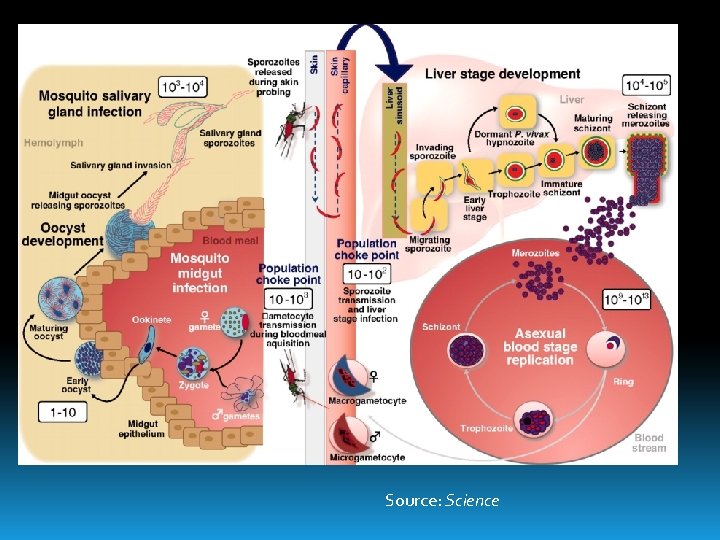
Source: Science
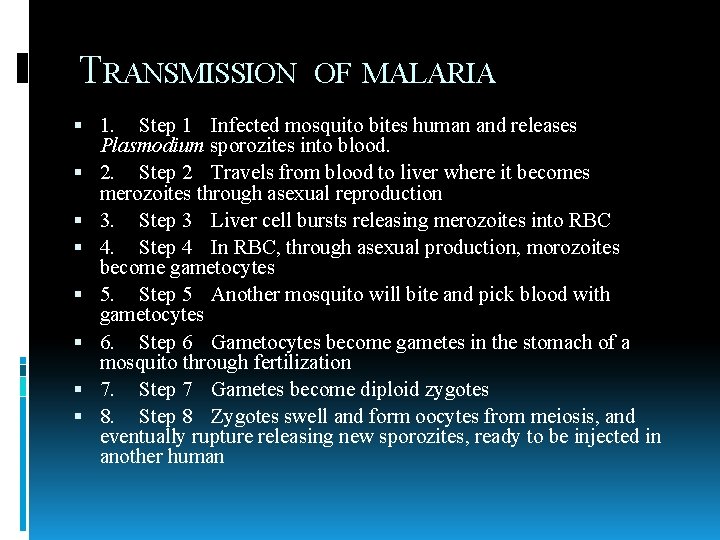
TRANSMISSION OF MALARIA 1. Step 1 Infected mosquito bites human and releases Plasmodium sporozites into blood. 2. Step 2 Travels from blood to liver where it becomes merozoites through asexual reproduction 3. Step 3 Liver cell bursts releasing merozoites into RBC 4. Step 4 In RBC, through asexual production, morozoites become gametocytes 5. Step 5 Another mosquito will bite and pick blood with gametocytes 6. Step 6 Gametocytes become gametes in the stomach of a mosquito through fertilization 7. Step 7 Gametes become diploid zygotes 8. Step 8 Zygotes swell and form oocytes from meiosis, and eventually rupture releasing new sporozites, ready to be injected in another human
MALARIA “ERADICATION ” Isla Hispañola in the Caribbean Islands (today the countries of Haiti and Dominican Republic) can have the potential of eradicating malaria from the island Only 1 Plasmodium species (P. falciparum) and 1 vector (A. albimanus) Prefers to bite cows
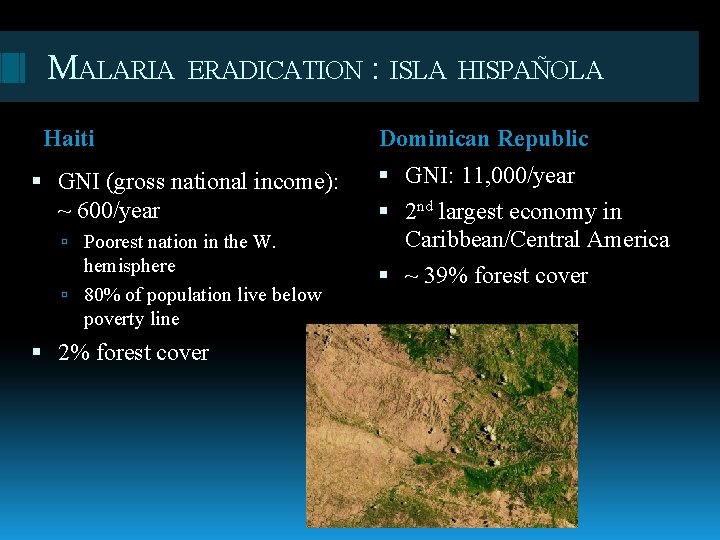
MALARIA ERADICATION : ISLA HISPAÑOLA Haiti GNI (gross national income): ~ 600/year Poorest nation in the W. hemisphere 80% of population live below poverty line 2% forest cover Dominican Republic GNI: 11, 000/year 2 nd largest economy in Caribbean/Central America ~ 39% forest cover
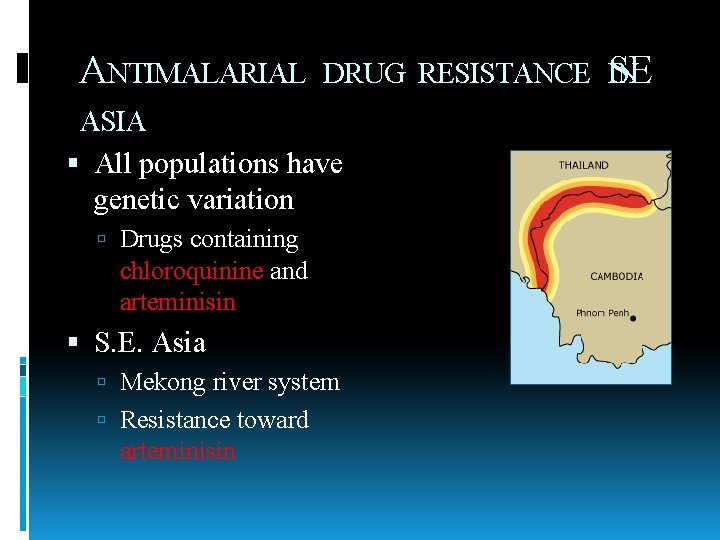
ANTIMALARIAL DRUG RESISTANCE IN SE ASIA All populations have genetic variation Drugs containing chloroquinine and arteminisin S. E. Asia Mekong river system Resistance toward arteminisin
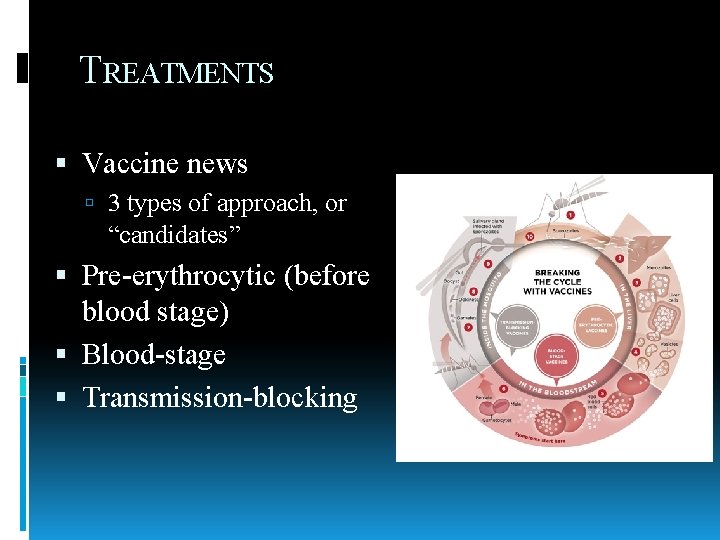
TREATMENTS Vaccine news 3 types of approach, or “candidates” Pre-erythrocytic (before blood stage) Blood-stage Transmission-blocking