
Case Presentation 1 3 2002 SINGLETON HOSPITAL History



- Slides: 28
Case Presentation 1. 3. 2002 SINGLETON HOSPITAL
History GP referral RE visual loss R 9/6 L 6/6 ? RP 16. 11. 01 • 54 yr old myopic Caucasian male • 2/7 distorted vision • POH • PMH Myope since childhood unremarkable
16. 11. 01 • No medical Treatment • Penicillin Allergy • FH Mother had cataract
16. 11. 01 • VA • Near R 6/6 L 6/5 R N/10 L N/5 (distorted) • Normal Anterior Segment • Posterior segment – lytic lesions, distributed in peripapillary – foveal fluid & marginal hg
16. 11. 01 • DD – Old /new CSCR – central CNVM 2 to ? POHS • FFA on 28. 11. 01
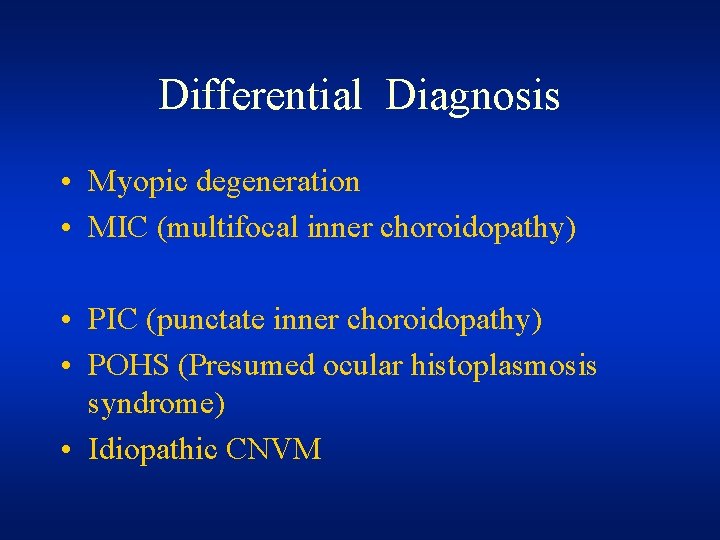
Differential Diagnosis • Myopic degeneration • MIC (multifocal inner choroidopathy) • PIC (punctate inner choroidopathy) • POHS (Presumed ocular histoplasmosis syndrome) • Idiopathic CNVM
Differential Diagnosis • Birdshot Chorioretinopathy • APMPPE (acute posterior multiple placoid pigment epitheliopathy)
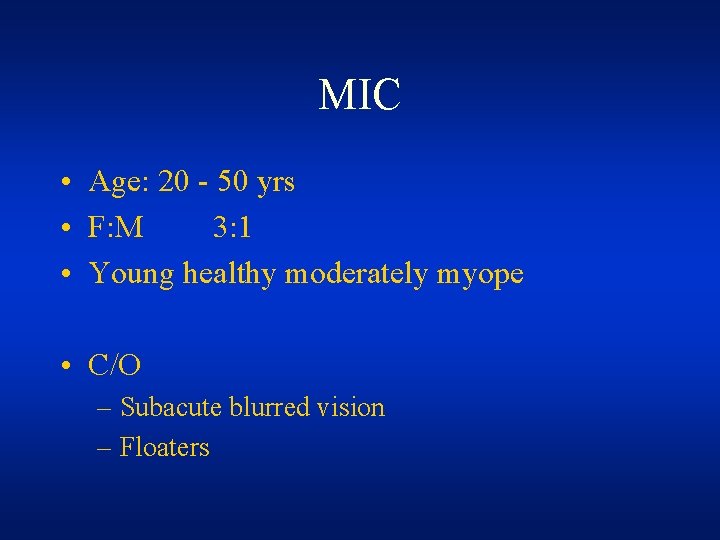
MIC • Age: 20 - 50 yrs • F: M 3: 1 • Young healthy moderately myope • C/O – Subacute blurred vision – Floaters
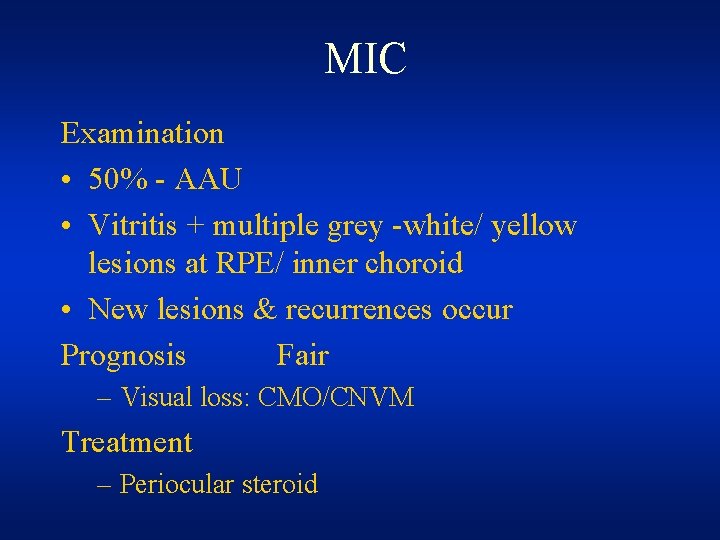
MIC Examination • 50% - AAU • Vitritis + multiple grey -white/ yellow lesions at RPE/ inner choroid • New lesions & recurrences occur Prognosis Fair – Visual loss: CMO/CNVM Treatment – Periocular steroid
PIC • Young healthy myope • Commoner in female • Unknown etiology • C/O – acute decreased VA/ central Scotoma
PIC • Exam – Quiet Anterior segment – Multiple white/yellow lesion in peripapillary region/ fovea in RPE/IC level +/- serous elevation of NSR – No vitritis – 1/3 rd develop CNVM • Prognosis • Treatment Good Controversial – Steroid – Submacular surgery
POHS • Endemic area of Ohio-Missisipi river valley • Exam – Histo spots • • atrophic punched out lesions around the disc maculopathy : pigment ring with overlying NSR det. Maculopathy develops in 2 nd decade NO vitritis
POHS • Treatment – early stages: steroids – CNVM: Photocoagulation/ Submacular sx • Prognosis Variable – Without treatment 59% with VA worse than 6/60 – Histo spots in macular area 25% chance of attack over next 3 yrs – No spots in macular area 2% chance of attack
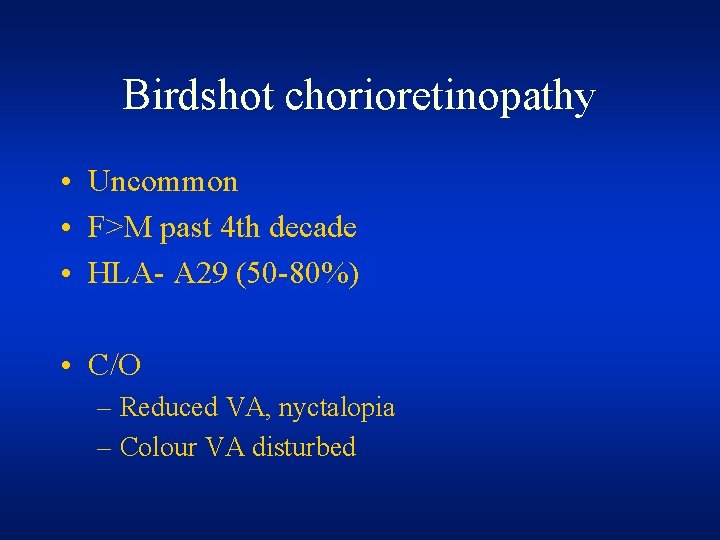
Birdshot chorioretinopathy • Uncommon • F>M past 4 th decade • HLA- A 29 (50 -80%) • C/O – Reduced VA, nyctalopia – Colour VA disturbed
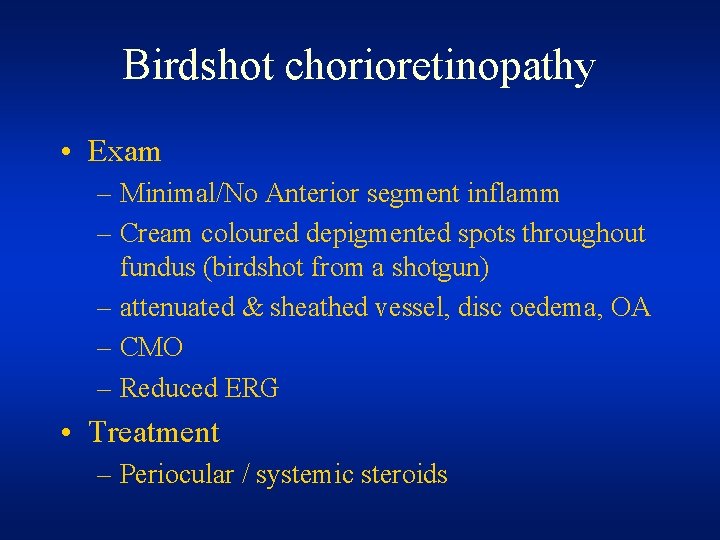
Birdshot chorioretinopathy • Exam – Minimal/No Anterior segment inflamm – Cream coloured depigmented spots throughout fundus (birdshot from a shotgun) – attenuated & sheathed vessel, disc oedema, OA – CMO – Reduced ERG • Treatment – Periocular / systemic steroids
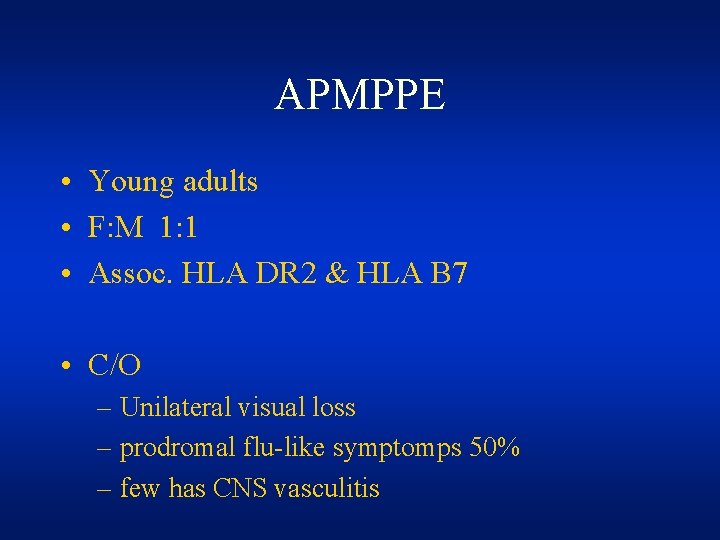
APMPPE • Young adults • F: M 1: 1 • Assoc. HLA DR 2 & HLA B 7 • C/O – Unilateral visual loss – prodromal flu-like symptomps 50% – few has CNS vasculitis
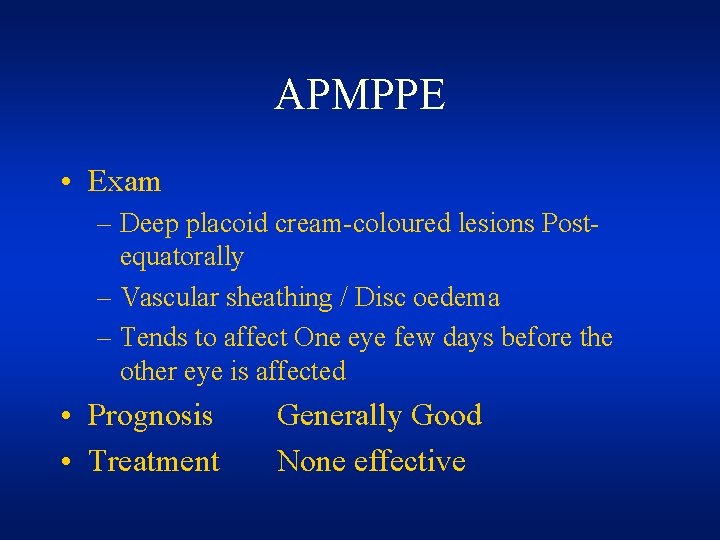
APMPPE • Exam – Deep placoid cream-coloured lesions Postequatorally – Vascular sheathing / Disc oedema – Tends to affect One eye few days before the other eye is affected • Prognosis • Treatment Generally Good None effective
30. 11. 01 • • • Review Noticed improvement RVA 6/5 LVA 6/4 Diag: CSCR review 5/52
11. 1. 02 • Sudden loss of VA 2/52 • RVA 6/18 LVA 6/5 • -4. 0/-1. 5 x 90 -3. 75/-1. 25 x 105 • FFA
15. 1. 02 • PIC • MIC • Idiopathic CNVM • Oral pred 40 mg od • f/u 3/52
5. 2. 02 • No change in VA • Distortion gone • Developed Diabetes
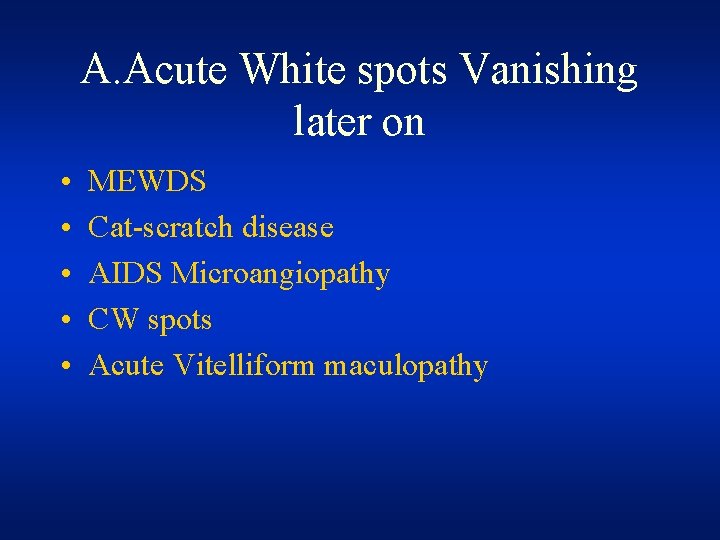
A. Acute White spots Vanishing later on • • • MEWDS Cat-scratch disease AIDS Microangiopathy CW spots Acute Vitelliform maculopathy
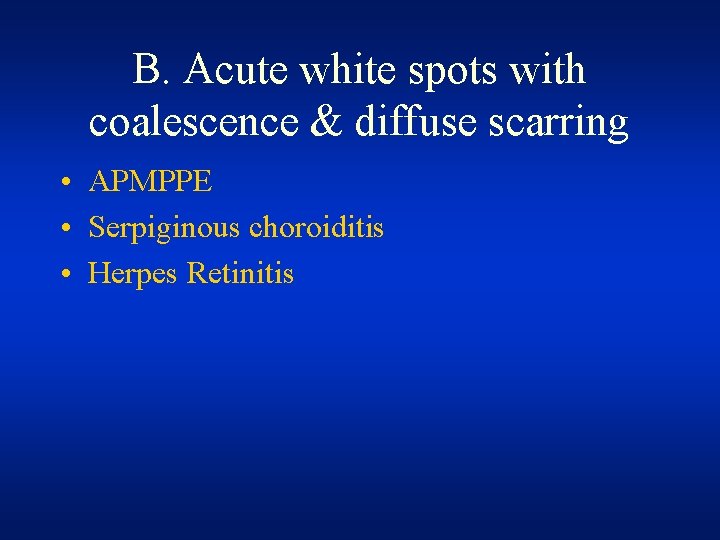
B. Acute white spots with coalescence & diffuse scarring • APMPPE • Serpiginous choroiditis • Herpes Retinitis
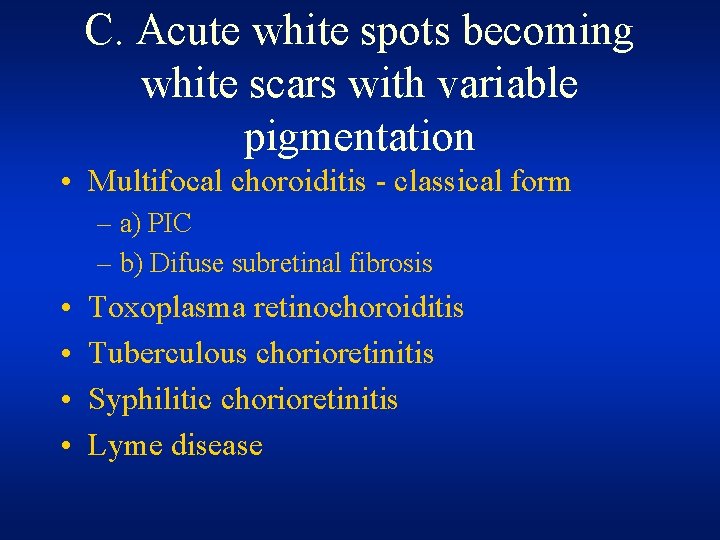
C. Acute white spots becoming white scars with variable pigmentation • Multifocal choroiditis - classical form – a) PIC – b) Difuse subretinal fibrosis • • Toxoplasma retinochoroiditis Tuberculous chorioretinitis Syphilitic chorioretinitis Lyme disease
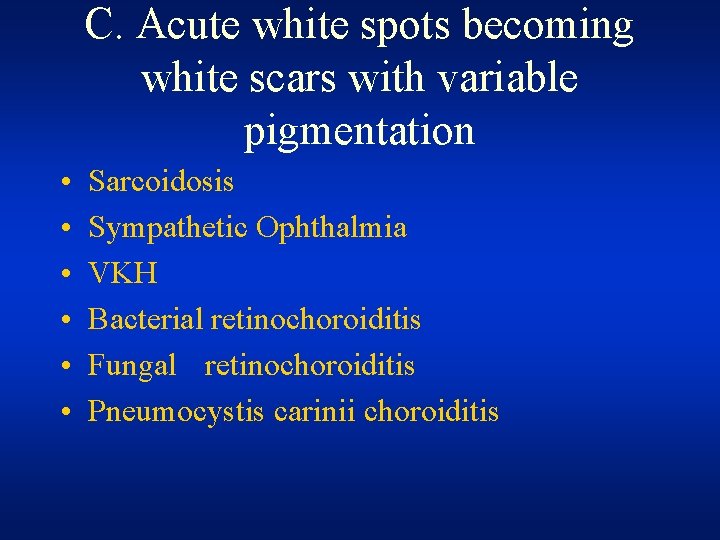
C. Acute white spots becoming white scars with variable pigmentation • • • Sarcoidosis Sympathetic Ophthalmia VKH Bacterial retinochoroiditis Fungal retinochoroiditis Pneumocystis carinii choroiditis
D. Late white spots with or without initial orange spots • Birdshot choroidopathy