
Case Planning and Intraoperative Routines Chapter 21 Types










- Slides: 37
Case Planning and Intraoperative Routines Chapter 21
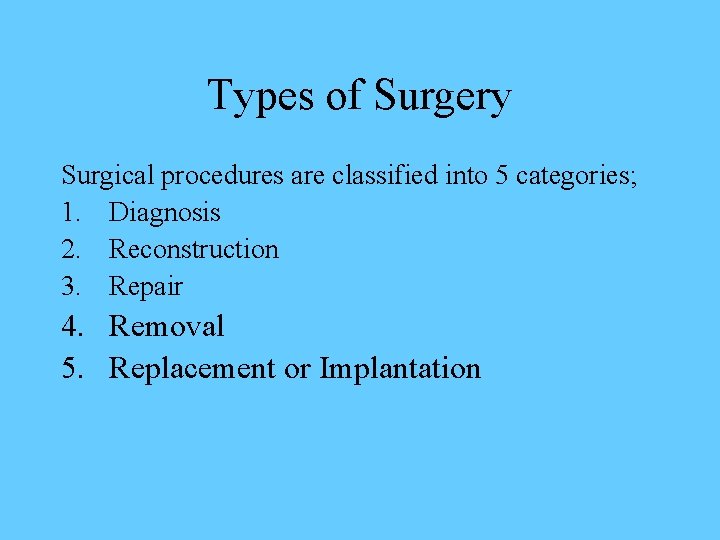
Types of Surgery Surgical procedures are classified into 5 categories; 1. Diagnosis 2. Reconstruction 3. Repair 4. Removal 5. Replacement or Implantation
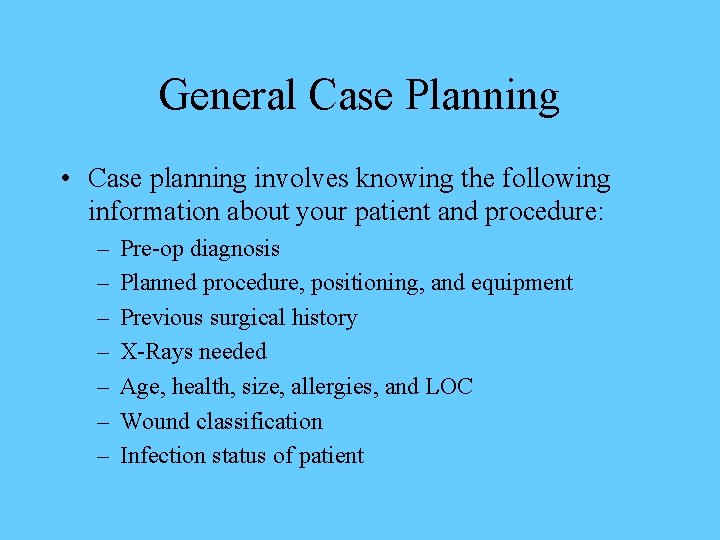
General Case Planning • Case planning involves knowing the following information about your patient and procedure: – – – – Pre-op diagnosis Planned procedure, positioning, and equipment Previous surgical history X-Rays needed Age, health, size, allergies, and LOC Wound classification Infection status of patient
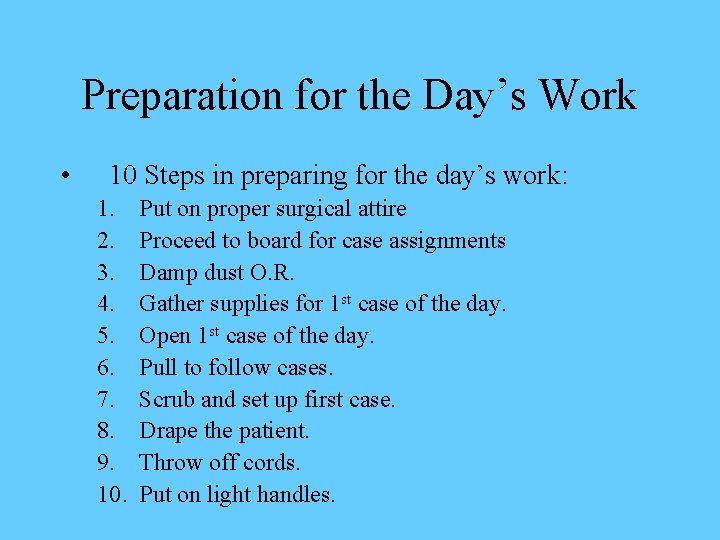
Preparation for the Day’s Work • 10 Steps in preparing for the day’s work: 1. 2. 3. 4. 5. 6. 7. 8. 9. 10. Put on proper surgical attire Proceed to board for case assignments Damp dust O. R. Gather supplies for 1 st case of the day. Open 1 st case of the day. Pull to follow cases. Scrub and set up first case. Drape the patient. Throw off cords. Put on light handles.
Step One • Put on Surgical Attire • Jewelry • Hair
Step Two • • Case assignments Posted Cases Information Posted Cases are grouped
Step two (Cont. ) • Start Times • O. R. Room Number
Step Three • Damp Dusting • Clean gloves worn • Gloves discarded
Step Four • Gathering supplies for 1 st case • Doctor’s preference card • Extra suture
Step Five • • • Opening 1 st case of the day Non sterile equipment Sterile supplies opened in logical manner Personnel to remain in room Gown and gloves for the scrub person
Step Six • Pull to follow cases • Case cart Alignment
Step Seven • Scrub and set-up • Always setup back table first • Same way every time
Step Seven (Cont. ) • • • Arrange drapes, gowns and gloves Avoid shifting items Stacking trays Labeling drugs Count
Step Seven (Cont. ) • • Counting needles Draping mayo stand cutting free ties Loading knife handles Arranging instruments
Step Eight • • Draping the patient Preparing surgeon’s gown Squaring off Maintain sterile technique by protecting hands
Step Eight (Cont. ) • Drapes can’t be adjusted • Towel clamps • Place 2 lap sponges at incision
Step Nine • • Throwing off cords Pick both cords up at the same time Measure cords Do not throw cords off field until secured.
Step Ten • Light Handles • Protecting gown sleeves
Surgical Counts • • Why? By Whom? When? How? What? Documentation In an Emergency
Lost and Retained Items • Due To: • How to Search for Item:
Maintaining Sterile Field • Keep an orderly surgical field
Maintaining Sterile Field • • Scrub person’s primary responsibility Instruments must be returned to mayo ASAP Instruments and cautery tip kept clean Fresh sponges should be kept on field
Instrumentation • Anticipating the surgeon’s needs requires constant watch of the field. Examples:
Hand Signals • • • Hemostat Scissors Knife Forceps Suture Free tie
Passing and Handling Instruments • • Handling and passing instrumentation Speed and coordination Instruments in locked position Pass instrument firmly
Passing Instruments • Long Instruments • Microsurgical Instruments
Passing Sharps • Scalpels should be passed, if no neutral zone is used, by grasping the handle in the middle with the cutting side of the blade down and toward the scrub. It is not released until grasped by the surgeon. • Always announce “new blade” if a new blade has been placed on the knife handle; this alerts the surgeon to how much pressure will be needed. • Sharp retractors can puncture or tear gloves or sleeves; always pass with the tips down and remove from the sterile field when not in use.
Handling Sponges • Surgical sponges • Used for:
Handling Sponges • Never handle with bare hands • Handle wet sponges gently • Never remove a surgical sponge from the surgical site • Types of Sponges – – – Ray-Tec Laps or Laparotomy sponges Dissectors Tonsil Sponges Cotton Balls Cottonoids or Patties
Maintenance of Sponges • Used lap and Ray-Tec sponges • Circulator retrieves sponges • Additional sponges
Specimens • • • Tissue removed from the patient Relate the name of the specimen Passing a specimen off the field. Preventing loss of specimen. Frozen sections
Specimens (Cont. ) • • Using counted sponges. Keep specimens separated and properly labeled Stone specimens Prevent touching unsterile area
Types of Specimens • • Tissue Fluid Stones Foreign Bodies Frozen Sections Amputations Cultures
Care and Handling of Tissue • Rough handling of tissue • Gently handling • Tissue must not be allowed to dry out during surgery
Retraction • • Retractors are used for wound exposure. Sharp tipped retractors Retractors can be hand-held or self retaining Technique:
Completion of the Procedure • • • Final Count Order to follow After skin closure After dressing is applied Securing dressing and drains.
Completion of Procedure (Cont. ) • Proceed to cleaning up field • Circulator accompanies patient • Circulator returns