
Case Peritoneal Dialysis PD 20 kg child with

- Slides: 17
Case – Peritoneal Dialysis - PD • 20 kg child with sepsis and oliguria on norepinephrine with a BP of 95/45 post-operative cardiac • Vent at 70% FIO 2 and a PEEP of 8 • FO at 15% • K of 6 meq/dl and a BUN of 100 mg/dl
London Peritoneal Dialysis in PICU Dr Mignon Mc. Culloch Evelina London Children’s Hospital, Guy’s & St Thomas’ Trust, London UK
PD access • PD catheter inserted by cardiac surgeons at time of surgery in theatre/OR • Elective PD started on return to PICU • Many cardiothoracic units work on this principle • PD catheters do not often work – in view of positioning
ACUTE PERITONEAL DIALYSIS Mignon Mc. Culloch Departments of Paediatric Nephrology & PICU Red Cross Children’s Hospital & University of Cape Town
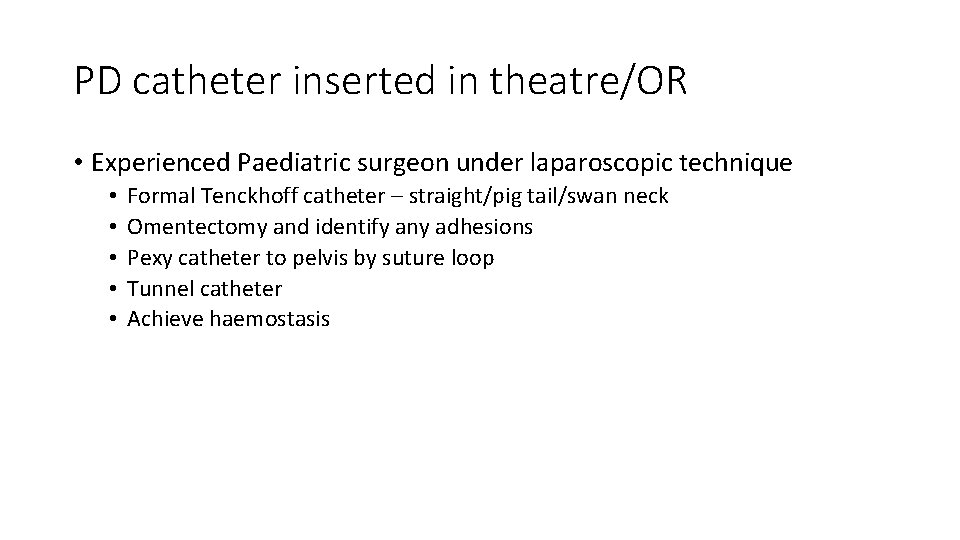
PD catheter inserted in theatre/OR • Experienced Paediatric surgeon under laparoscopic technique • • • Formal Tenckhoff catheter – straight/pig tail/swan neck Omentectomy and identify any adhesions Pexy catheter to pelvis by suture loop Tunnel catheter Achieve haemostasis
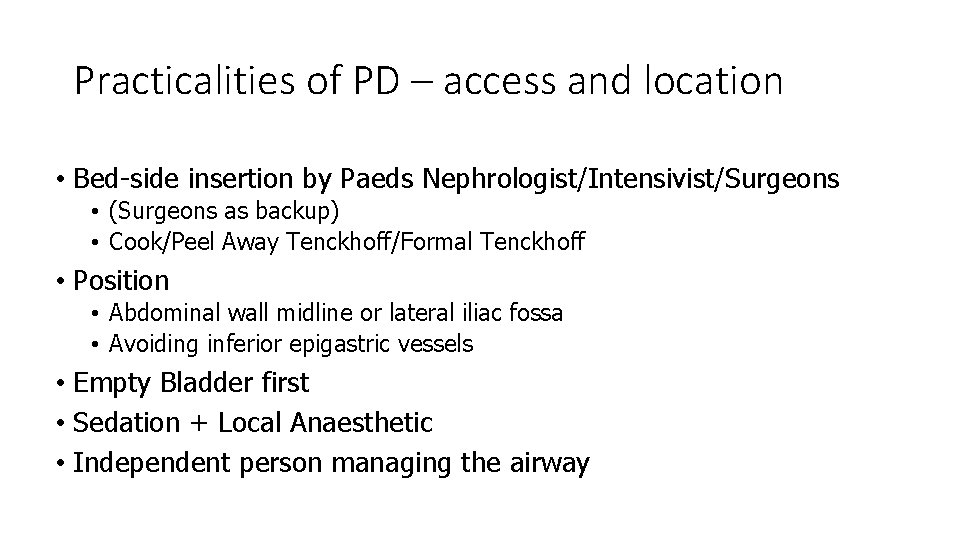
Practicalities of PD – access and location • Bed-side insertion by Paeds Nephrologist/Intensivist/Surgeons • (Surgeons as backup) • Cook/Peel Away Tenckhoff/Formal Tenckhoff • Position • Abdominal wall midline or lateral iliac fossa • Avoiding inferior epigastric vessels • Empty Bladder first • Sedation + Local Anaesthetic • Independent person managing the airway
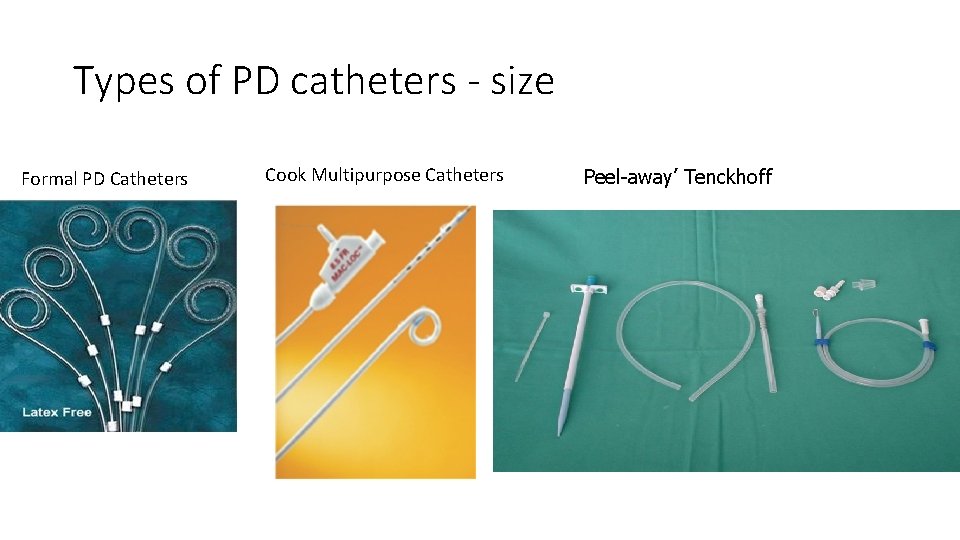
Types of PD catheters - size Formal PD Catheters Cook Multipurpose Catheters Peel-away’ Tenckhoff
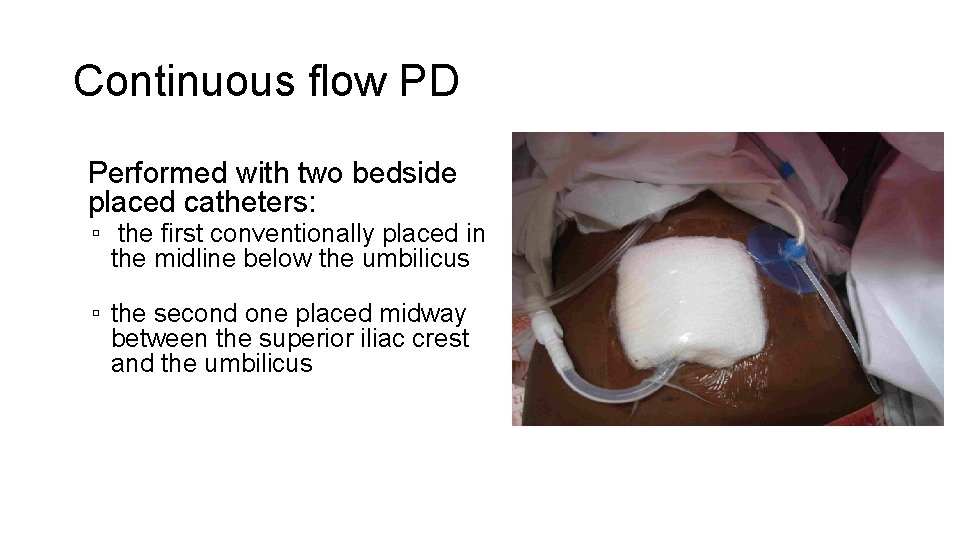
Continuous flow PD • Performed with two bedside placed catheters: ▫ the first conventionally placed in the midline below the umbilicus ▫ the second one placed midway between the superior iliac crest and the umbilicus
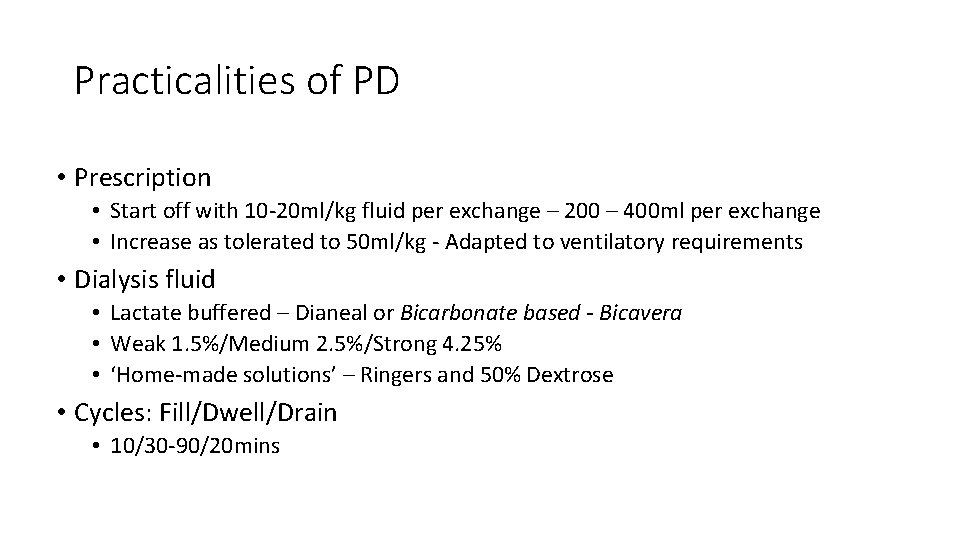
Practicalities of PD • Prescription • Start off with 10 -20 ml/kg fluid per exchange – 200 – 400 ml per exchange • Increase as tolerated to 50 ml/kg - Adapted to ventilatory requirements • Dialysis fluid • Lactate buffered – Dianeal or Bicarbonate based - Bicavera • Weak 1. 5%/Medium 2. 5%/Strong 4. 25% • ‘Home-made solutions’ – Ringers and 50% Dextrose • Cycles: Fill/Dwell/Drain • 10/30 -90/20 mins
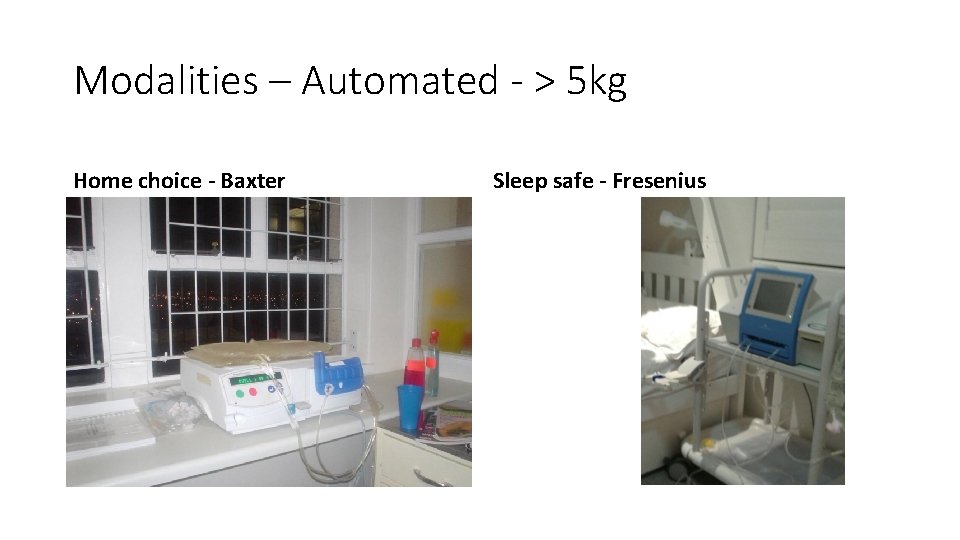
Modalities – Automated - > 5 kg Home choice - Baxter Sleep safe - Fresenius
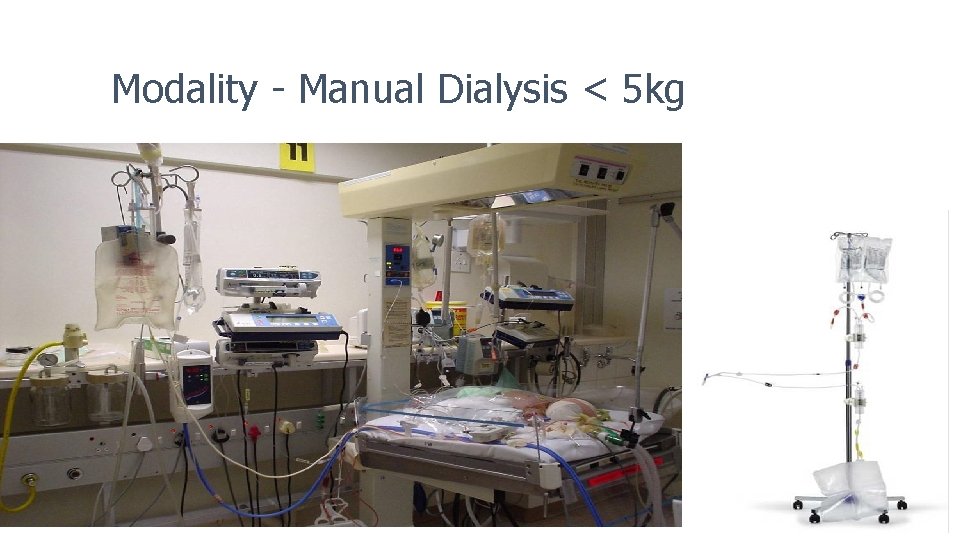
Modality - Manual Dialysis < 5 kg
What is your prescription • Over what period of time do you remove fluid • Usually continuous PD over 24 hrs • Variable depending on peritoneum – rate of equilibration • Review on a regular basis 4 -6 hrly - can be surprised by volumes that can be UF’d • How do you dose Medications & Heparin into bags • • Heparin in all 500 -1000 units/litre Cefotaxime/Vancomycin stat dose Antibiotics into bags – pending sensitivities Alterations according to drugs being dialysed off***** • Nutrition • Makes space for fluid • Neonates in particular – can use strength of bags for maintaining glucose when total fluid requirement is severely restricted • E. g. would not normally manage 40 ml/kg without hypoglycaemia
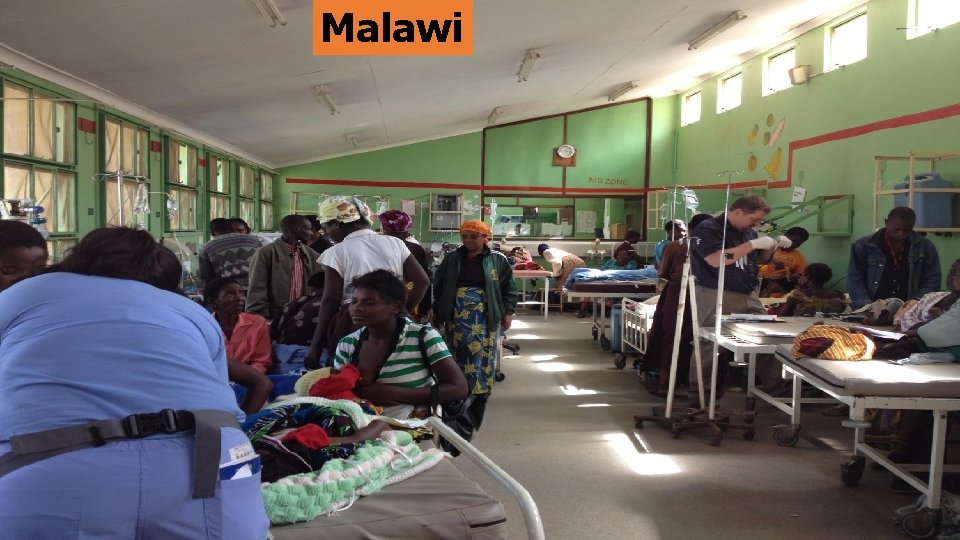
Malawi
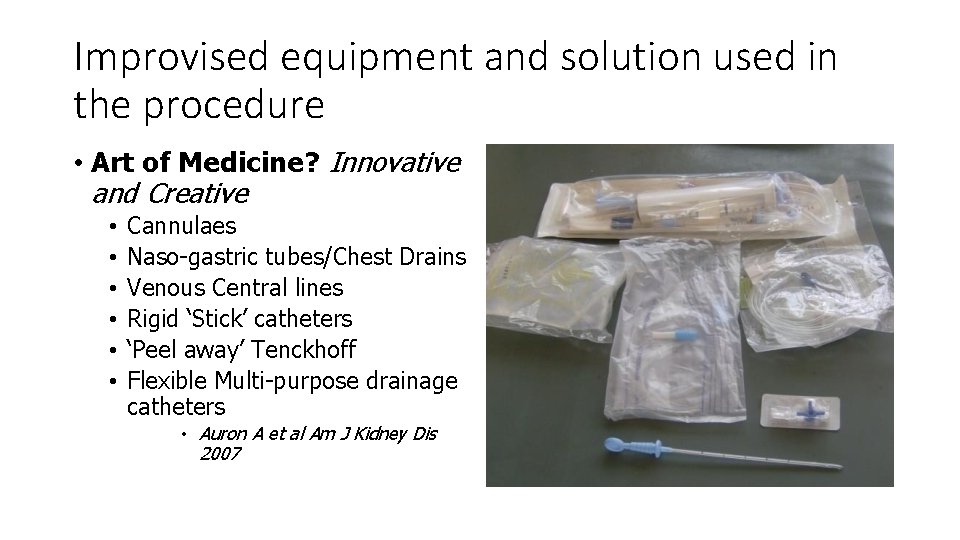
Improvised equipment and solution used in the procedure • Art of Medicine? Innovative and Creative • • • Cannulaes Naso-gastric tubes/Chest Drains Venous Central lines Rigid ‘Stick’ catheters ‘Peel away’ Tenckhoff Flexible Multi-purpose drainage catheters • Auron A et al Am J Kidney Dis 2007
Appropriate Research for Africa Tim Bunchman pic IMG_5847. JPG
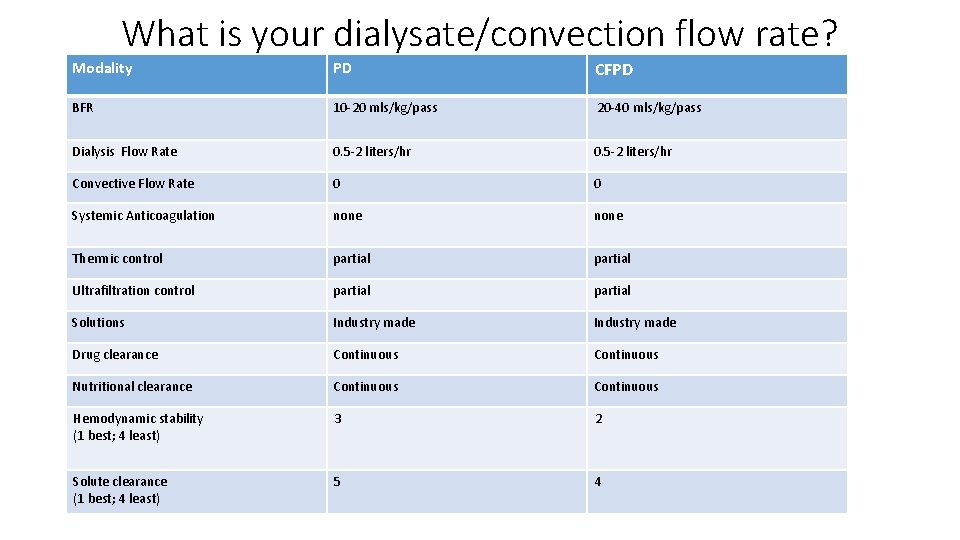
What is your dialysate/convection flow rate? Modality PD CFPD BFR 10 -20 mls/kg/pass 20 -40 mls/kg/pass Dialysis Flow Rate 0. 5 -2 liters/hr Convective Flow Rate 0 0 Systemic Anticoagulation none Thermic control partial Ultrafiltration control partial Solutions Industry made Drug clearance Continuous Nutritional clearance Continuous Hemodynamic stability (1 best; 4 least) 3 2 Solute clearance (1 best; 4 least) 5 4