
Case Based Presentation Hypertension in the ICU By
Case Based Presentation: Hypertension in the ICU By Noemie Chessex and colleagues UBC
Case • A 19 -year-old man presents to ED with episodic headaches that resolved spontaneously. • In the last week, the headaches have become much more severe and frequent, occurring almost daily, and are accompanied by throbbing chest pain, sweating, dizziness and palpitations.
Case • On arrival in ED, the pt is complaining of a severe headache, BP is 235/135 mm Hg, HR 90. • He has profuse sweating and is complaining of dizziness and chest pain. ECG shows non -specific ST depressions.

Question 1 • Define hypertensive urgency and hypertension emergency. What are some clinical findings associated with hypertensive emergenices? (Ibrahim)
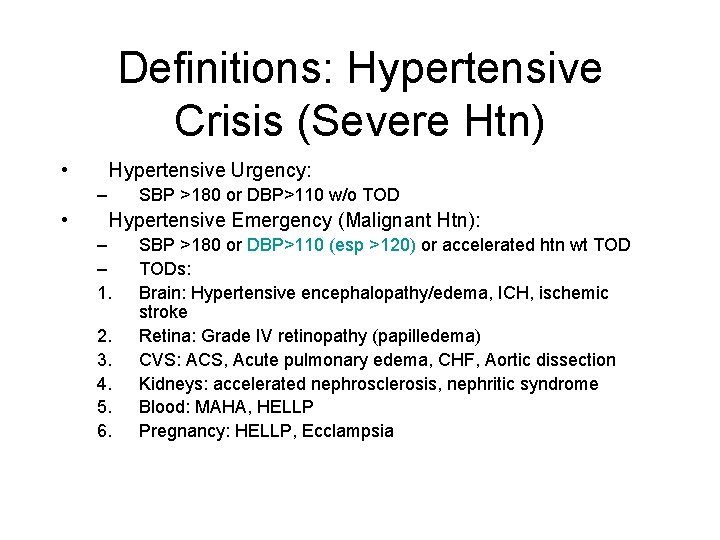
Definitions: Hypertensive Crisis (Severe Htn) • Hypertensive Urgency: – • SBP >180 or DBP>110 w/o TOD Hypertensive Emergency (Malignant Htn): – – 1. 2. 3. 4. 5. 6. SBP >180 or DBP>110 (esp >120) or accelerated htn wt TODs: Brain: Hypertensive encephalopathy/edema, ICH, ischemic stroke Retina: Grade IV retinopathy (papilledema) CVS: ACS, Acute pulmonary edema, CHF, Aortic dissection Kidneys: accelerated nephrosclerosis, nephritic syndrome Blood: MAHA, HELLP Pregnancy: HELLP, Ecclampsia

Clinical Findings • Of predisposing disease – Thyrotoxicosis/Thyroid storm, Hypothyroidism/Myxedema, goiter – HPT: hypercalcemia (psychosis, constipation, inc QTc, cataract, nephrocalcinosis, N-DI, dystrophic calcifications of soft tissue (Xray) – Cushing’s: Cushinoid – Conn’s: hypokalemic metabolic alkalosis – Pheochromocytoma: perspiration, palpitation, pain (chest, h/a, AP), labile pressure (+/- orthostatic hypotension), pallor – RAS: Renal bruits – OSA/Pickwikian Syndrome: Obesity wt think/short neck, day time somnolence, apnea attacks – Pregnancy: HELLP, Ecclampsia (edema, protienuria, sz, inc DTR)
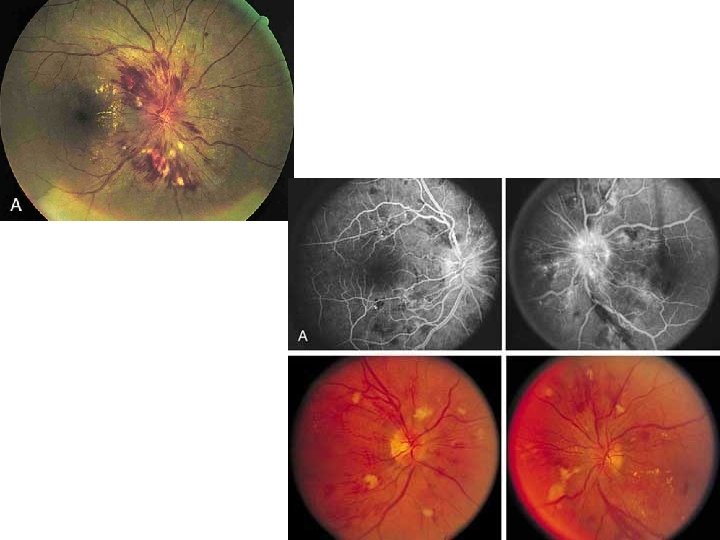
Clinical Findings • Of Complications/TOD – Brain: H/A, N/V, meningism, FND, delirium, decreased LOC, seizures, coma – Retina: blurred vision, papilledema (IV) +/- cotton wool exudate, flame shape hg, AV nipping and silver wiring (G I-III in chronic Htn) – CVS: chest pain, ACS (MR, ECG, trop), CHF, pulse/BP bi limbs deficit (AD, also of COA), AI (AD) – Kidneys: active sediment, proteinuria, hematuria, tubular casts.

Question 2 • What is the differential diagnosis of hypertensive emergencies/urgencies? What work up would you order for this patient? (Todd)

Hypertensive Emergency/Urgency: Differential Diagnosis • Untreated or suboptimally treated essential hypertension (most common) • Renal parenchymal disease – Including microvascular thrombosis • TTp, HUS, vasculitis, acute glomerulonephritis • Renal vascular disease (Renal artery stenosis) • Pregnancy Induced Hypertension/Preeclampsia/Eclampsa • Endocrine: – Pheochromocytoma (or exogenous catecholamines) – Cushing’s syndrome – Renin-secreting tumors
• Drugs – Sympathomimetic consumption/overdose (SPH/RCH) – Cocaine/crack – Amphetamines – PCP – Witdrawal from antihypertensive Rx – MAOI interactions
Others • Autonomic hyper-reactivity – Guillan-Barre – Autonomic dysreflexia – Porphyria • Elevated ICP
Investigations • Book for history and physical examination – Need for resuscitation (LOC, arrhythmias, pulmonary edema, seizures, tearing chest pain, etc) – History of HTN (and detailed history of Rx, compliance and course of care as available), drug use, pregnancy (and pregnancy hx), systemic vascular disease, etc.
Investigations – Previous difficulty managing BP, or flares of symptoms (pheo can’t be that rare if we’ve seen 2 spectacular cases within a year) – Medications including OTC and recreational drugs
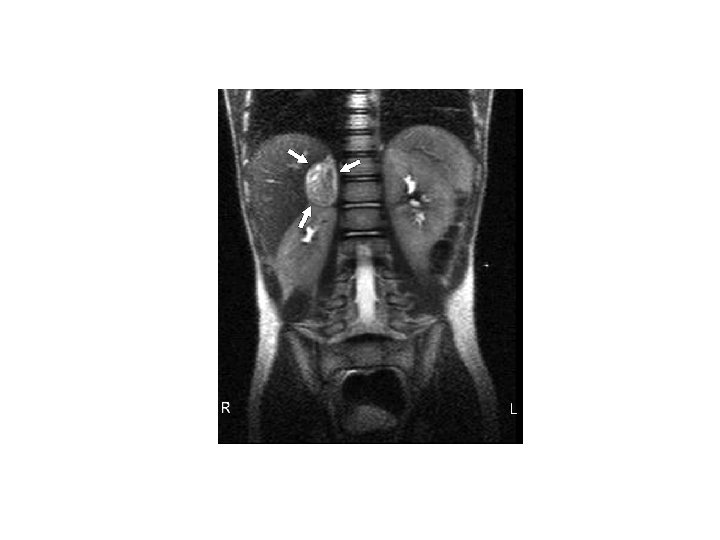
Investigations, continued • Physical exam: – Vital signs… HR as well as BP, to guide therapy • Arterial line, particularly if IV medications are used – Neuro (LOC/encephalopathy, seizures, focal deficits) – Cardiovascular (heart failure, volume status, arrhythmias) – Respiratory (pulmonary edema) – Abdominal exam • Systolic/diastolic bruits, palpable aneurysm • masses occupying the entire epigastrium and invading the liver and aorta (hey, you never know)
Investigations, continued • CBC ( Hemolytic anemia) • ‘Lytes, renal indices (renal failure as cause or consequence of hypertension) • Β-hcg • If Hx unclear, urine for cocaine or amphetamine metabolites
Investigations, continued • Chest X-ray (pulmonary edema) • ECG ( Myocardial ischemia or clues to chronicity, such chamber enlargement and strain patterns. ) • Echocardiogram (systolic/diastolic function, hypertrophy, chamber size)
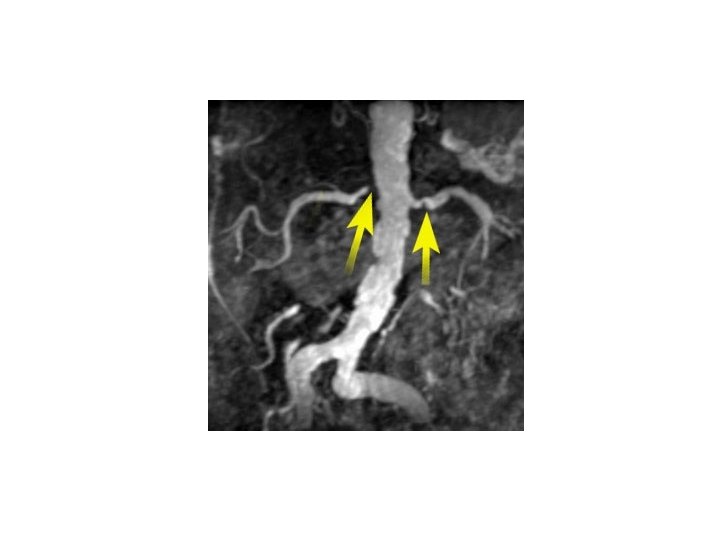
Investigations, continued • CT Brain: intracranial hemorrhage, tumor, posterior leukoencephalopathy • CT Abdomen/Pelvis – If contrast is possible (renal failure), this can be used to assess renal arteries as well as look at adrenals and extra-adrenal masses • CT Chest if aortic dissection is a concern
Here it is: Internal medicine-type stuff • Plasma renin and aldosterone • Urine metanephrines (24 -hr collection) – Serum metanephrines would be nice, if you could find a lab that would do them in a timely fashion
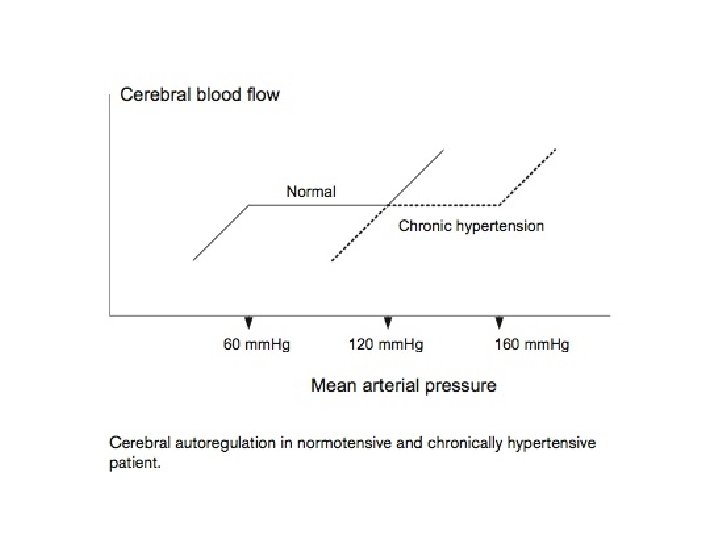
Question 3 • How quickly should the BP be lowered in Hypertensive urgencies and emergencies? • What is the effect of HTN on autoregulation of CBF? • Are there any conditions where you would choose not to lower their BP? (Omar)
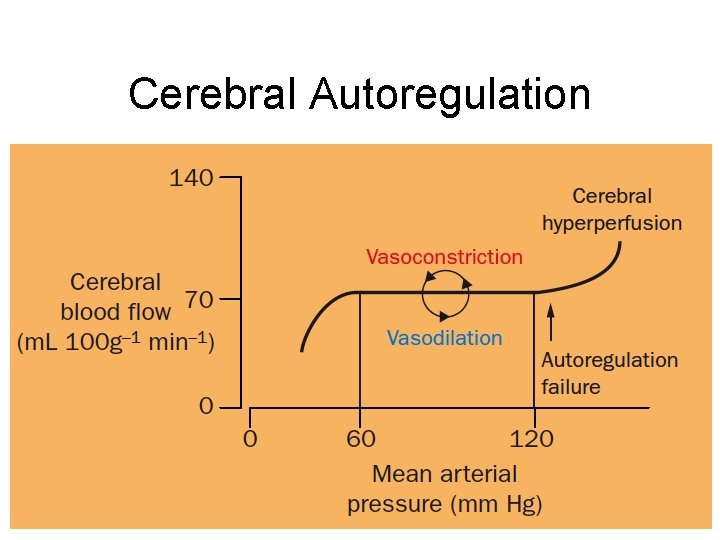
Cerebral Autoregulation
• How quickly should the BP be lowered in Hypertensive urgencies and emergencies?
Urgency • Rapid reduction in BP may associated with significant morbidity; organ hypoperfusion – Ischemia – Infarction • Lower gradually over 24 – 48 hours • Oral medications are advisable • Patients may have pressure induced natriuresis – consider volume repleting to prevent precipitous drops
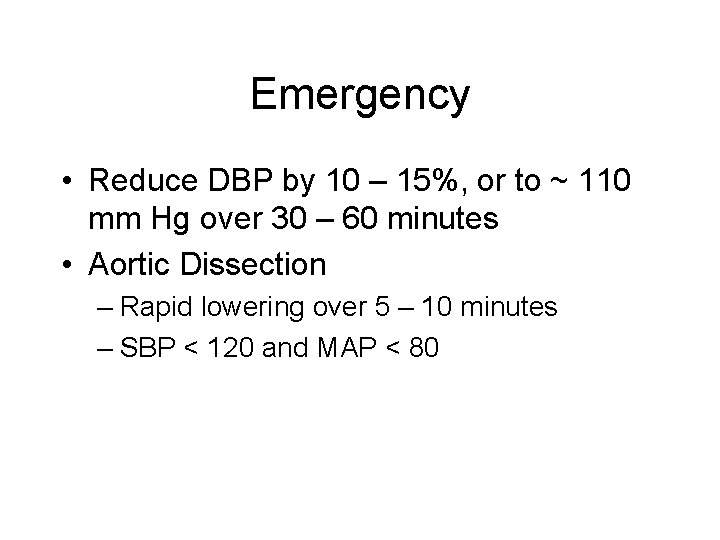
Emergency • Reduce DBP by 10 – 15%, or to ~ 110 mm Hg over 30 – 60 minutes • Aortic Dissection – Rapid lowering over 5 – 10 minutes – SBP < 120 and MAP < 80
• Are there any conditions where you would choose not to lower their BP?
CVA’s • Save the penumbra! • But maybe the penumbra does not want to be saved
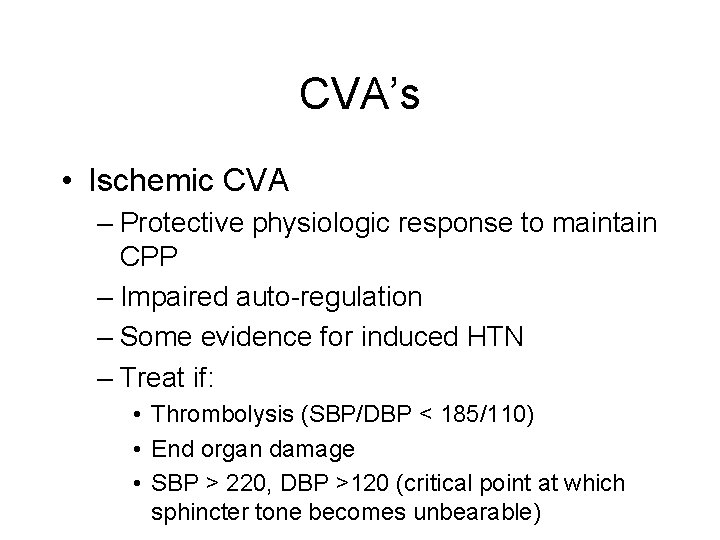
CVA’s • Ischemic CVA – Protective physiologic response to maintain CPP – Impaired auto-regulation – Some evidence for induced HTN – Treat if: • Thrombolysis (SBP/DBP < 185/110) • End organ damage • SBP > 220, DBP >120 (critical point at which sphincter tone becomes unbearable)
CVA’s • Hemorrhagic CVA – Controversial topic – No evidence HTN leads to increased size of ICH, but there is an association – Evidence suggests lowering BP rapidly leads to increased mortality – Maintain SBP < 200, DBP < 130 – Lowering MAP ~ 15% does not seem to reduce CBP
ATACH – Antihypertensive Treatment in Acute Cerebral Hemorrhage – 60 patients – Reduction in BP using Nicardipine – 170 – 200, 140 -170, 110 -140 mm Hg – No difference in any outcome measures • Neuro deterioration • Adverse events
INTERACT – Intensive BP reduction in acute cerebral hemorrhage – 404 patients with ICH – Intensive BP Tx SBP ~140 vs 180 – Marginal decrease in hematoma growth, but no differences in any clinical outcome
Question 4 • Please describe the various agents that can be used in hypertensive emergencies. (Marios)
Agents used in hypertensive emergencies
Optimal characteristics of drugs used in hypertensive emergencies 1. Easily titratable: – – Fast onset Sort duration of action 2. Minimal reflex activation of counterregulatory systems (sympathetic, RAAS) 3. Devoid of side-effects or drug interactions 4. Lack of tolerance or tachyphylaxis
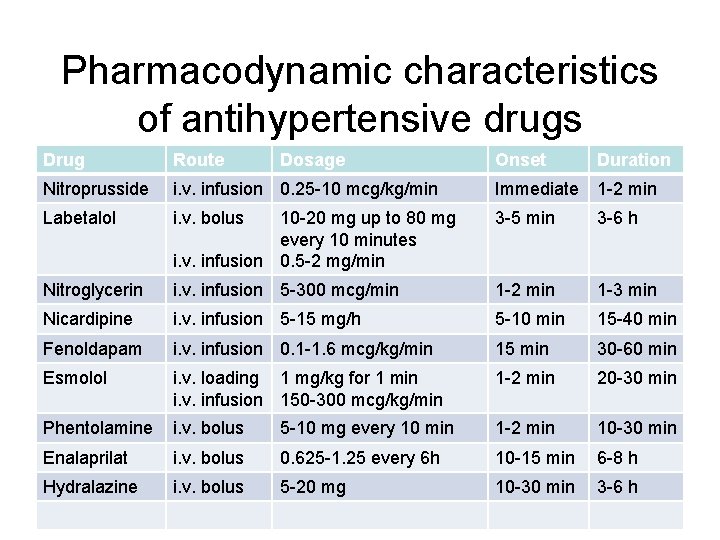
Pharmacodynamic characteristics of antihypertensive drugs Drug Route Dosage Onset Duration Nitroprusside i. v. infusion 0. 25 -10 mcg/kg/min Immediate 1 -2 min Labetalol i. v. bolus 10 -20 mg up to 80 mg every 10 minutes i. v. infusion 0. 5 -2 mg/min 3 -5 min 3 -6 h Nitroglycerin i. v. infusion 5 -300 mcg/min 1 -2 min 1 -3 min Nicardipine i. v. infusion 5 -15 mg/h 5 -10 min 15 -40 min Fenoldapam i. v. infusion 0. 1 -1. 6 mcg/kg/min 15 min 30 -60 min Esmolol i. v. loading 1 mg/kg for 1 min i. v. infusion 150 -300 mcg/kg/min 1 -2 min 20 -30 min Phentolamine i. v. bolus 5 -10 mg every 10 min 1 -2 min 10 -30 min Enalaprilat i. v. bolus 0. 625 -1. 25 every 6 h 10 -15 min 6 -8 h Hydralazine i. v. bolus 5 -20 mg 10 -30 min 3 -6 h
Nitroprusside • The prototype of a short-acting easy-totitrate arteriolar and venous vasodilator. • Most common adverse effect is hypotension which can be treated by reducing dosage and administering fluids if needed (lasts 1 -2 min) • Other adverse effects include reflex tachycardia and cyanide/thiocyanate
Nitroprusside • Nitroprusside is metabolized non-enzymatically through combination with hemoglobin to produce cyanomethemoglobin. • A mitochondrial enzyme in the liver (rhodanase), catalyzes the reaction of cyanide with thiosulphate to produce thiocyanate • Thyocyanate is then excreted in the urine • So hepatic insufficiency leads to cyanide accumulation whereas renal insufficiency leads to thiocyanate accumulation
Nitroprusside • Cyanide toxicity manifests as lactic acidosis, confusion, and hemodynamic instability. • Other signs include abdominal pain, delirium, headache, nausea, muscle spasms and restlessness. • Cyanide toxicity is best prevented by avoiding large doses (>3 mcg/kg/min) of nitroprusside for greater than 72 h, especially in patients with hepatic or renal dysfunction. • Maximal doses of 10 mcg/kg/min should not be administered for more than 10 minutes
Labetalol • A non-selective β-blocker with associated αblocking activity, in a 7 to 1 ratio in i. v. formulation. • Reduces peripheral vascular resitance with mild reduction in heart rate while maintaining cardiac output. • Contraindicated in reactive airway disease or second to third degree heart block. • Should be used with caution in patients with second to thir degree heart block.
Nitroglycerin • A venous and coronary artery dilator. • Can dilate systemic arteries at higher doses. • Indicated in patients with acute coronary syndromes; has also been used in perioperative hypertension. • Side effects include headache, nausea, bradycardia, hypotension, and methemoglobinemia.
Nicardipine • A dihydropyridine CCB with systemic and coronary vasodilating effects. • No negative inotropic or a-v conduction effects. • Used in perioperative hypertension and eclampsia/preeclampsia.
Esmolol • Short-acting cardioselective β-blocker that can be used in perioperative hypertension and tachycardia. • If no other agents are used , a prolonged esmolol infusion is a relatively expensive means of blood pressure control
Phentolamine • Periphral α-blocker indicated for management of hypertensive emergencies associated with chatecholamine excess such as pheo, maoi interaction, antihypertensive withdrawal syndrome, and cocaine abuse. • Can cause tachycardia, hypotension,
Enalaprilat • The IV formulation and active metabolite of enalapril. • Its long duration of action and variable response, do not make it an ideal candidate for hypertensive emergencies. • Contraindicated during preganancy, and in renal failure, esp. in renal artery stenosis.
Hydralazine • An arteriolar vasodilator. • Difficult to use due to its variable magnitude and rate of response. • Improves placental blood flow so good for preeclampsia/eclampsia • Side effects include tachycardia, and increased CO/myocarial oxygen consumption. • Should therefore not be used in aortic dissection or myocardial ischemia.
Pheochromocytoma • Phentolamine has classically been the drug of choice for pheo, but labetalol and nitroprusside are also effective.
Aortic dissection • Goal is to reduce the shear force, and therefore the d. P/dt. • Goal is an SBP of 100 -110 achieved with a beta-blocker and an easily titratable vasodilator if necessary. • A vasodilator should not be used alone as this can increase shear force. • Labetalol is a good agent as it provides both beta blockade and vasodilatation as one agent.
Preeclampsia/eclampsia • Diastolic pressure should be reduced to 90 -100 mm. Hg. • Precipitous drops should be avoided as they may compromise placental circulation. • Hydralazine and labetalol are the usual agents of choice. Nifedipine can also be used. • ACE inhibitors should not be used due to adverse fetal effects.
- Slides: 52