
Case 9 Stable Tachycardias 2001 American Heart Association
Case 9 Stable Tachycardias © 2001 American Heart Association 1
Stable Tachycardias u Overview • Step 1: Assess patient • Step 2: Identify and evaluate arrhythmia • Step 3: Treat arrhythmia 2
Stable Tachycardia u Initial therapy • • • Administer oxygen Start IV Attach monitor Obtain 12 -lead ECG Obtain portable chest x-ray in hospital setting 3
Step 1 Is patient stable or unstable? u Patient has serious signs or symptoms? Look for • • Chest pain (ischemic? possible ACS? ) Shortness of breath (lungs getting ‘wet’? possible CHF? ) Low blood pressure (orthostatic? dizzy? lightheaded? ) Decreased level of consciousness (poor cerebral perfusion? ) • Clinical shock (cool and clammy? peripheral vasoconstriction? u Are the signs and symptoms due to the rapid heart rate? 4

Step 2 u Identify arrhythmia; classify patient into 1 of 4 tachycardia categories: 1. Atrial fibrillation/flutter 2. Narrow-complex tachycardia 3. Stable wide-complex tachycardia, unknown type 4. Stable monomorphic VT and/or stable polymorphic VT 5

1. Atrial Fibrillation/Flutter u Your evaluation of atrial fibrillation/flutter should focus on 4 clinical features. u What are they? 6
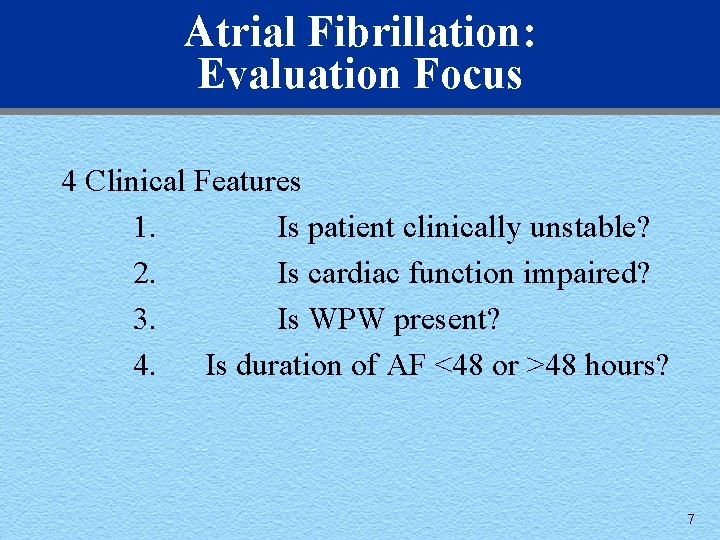
Atrial Fibrillation: Evaluation Focus 4 Clinical Features 1. Is patient clinically unstable? 2. Is cardiac function impaired? 3. Is WPW present? 4. Is duration of AF <48 or >48 hours? 7
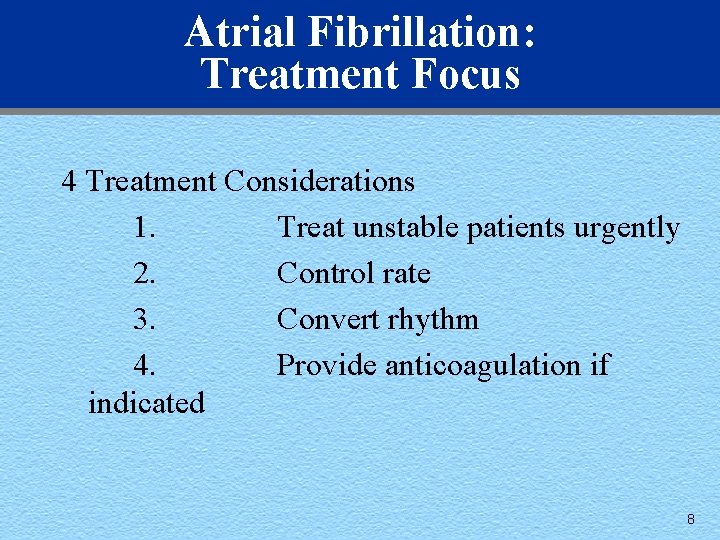
Atrial Fibrillation: Treatment Focus 4 Treatment Considerations 1. Treat unstable patients urgently 2. Control rate 3. Convert rhythm 4. Provide anticoagulation if indicated 8
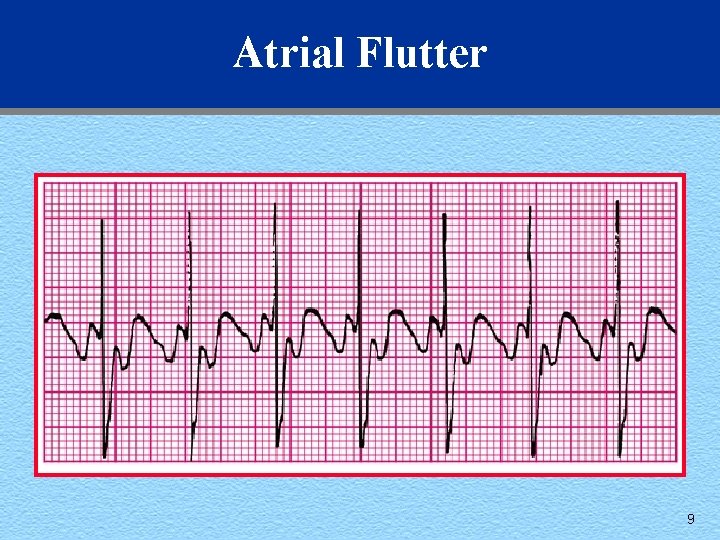
Atrial Flutter 9
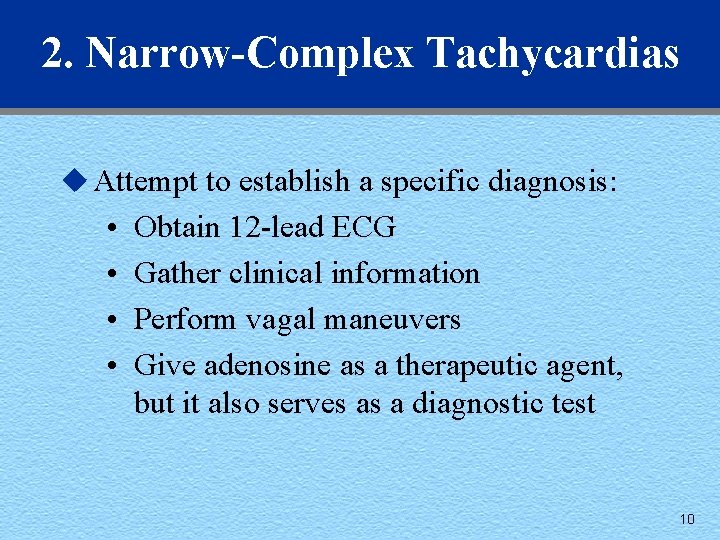
2. Narrow-Complex Tachycardias u Attempt to establish a specific diagnosis: • • Obtain 12 -lead ECG Gather clinical information Perform vagal maneuvers Give adenosine as a therapeutic agent, but it also serves as a diagnostic test 10
2. Narrow-Complex Tachycardias (cont’d) u Diagnostic efforts yield • Ectopic atrial tachycardia • Multifocal atrial tachycardia • Paroxsymal supraventricular tachycardia (PSVT) 11
2. Narrow-Complex Tachycardias (cont’d) Treatment considerations u Attempt therapeutic diagnostic maneuver: • Vagal stimulation • Adenosine u Patient: impaired heart vs normal cardiac function? u Junctional tachycardia: • Automatic focus tachycardias respond better to blocking agents 12
2. Narrow-Complex Tachycardias (cont’d) Treatment considerations (cont’d) u PSVT: • Re-entry tachycardia responds better to cardioversion u Ectopic or multifocal atrial tachycardia: • Automatic focus tachycardias respond better to blocking agents 13
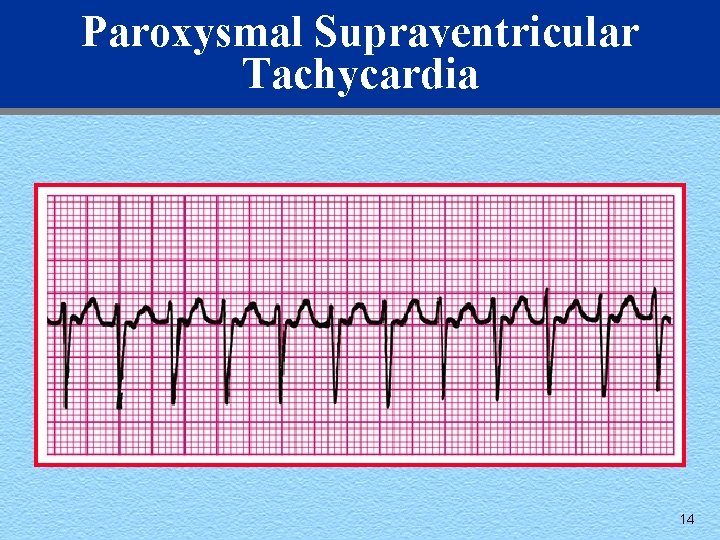
Paroxysmal Supraventricular Tachycardia 14
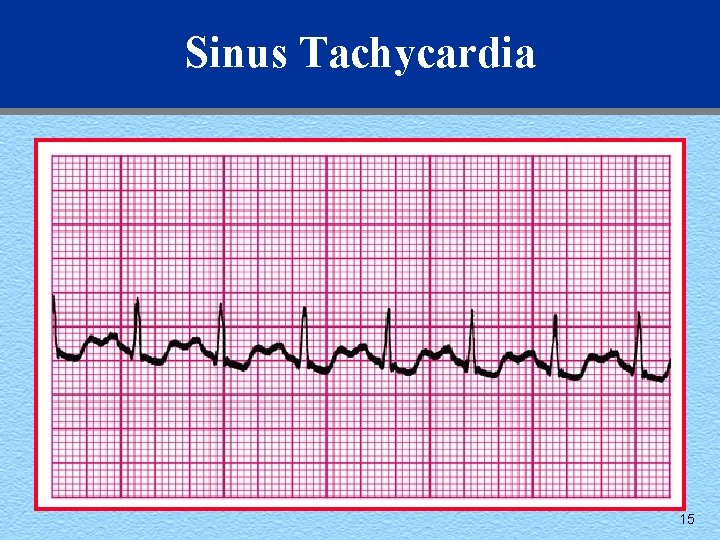
Sinus Tachycardia 15
3. Stable Wide-Complex Tachycardia, Unknown Type u Attempt to establish a specific diagnosis: • 12 -lead ECG • Esophageal leads • Clinical information 16
3. Stable Wide-Complex Tachycardia, Unknown Type u Attempt to establish a specific diagnosis: • Confirmed as an SVT • Wide-complex tachycardia of unknown type • Confirmed as stable VT 17
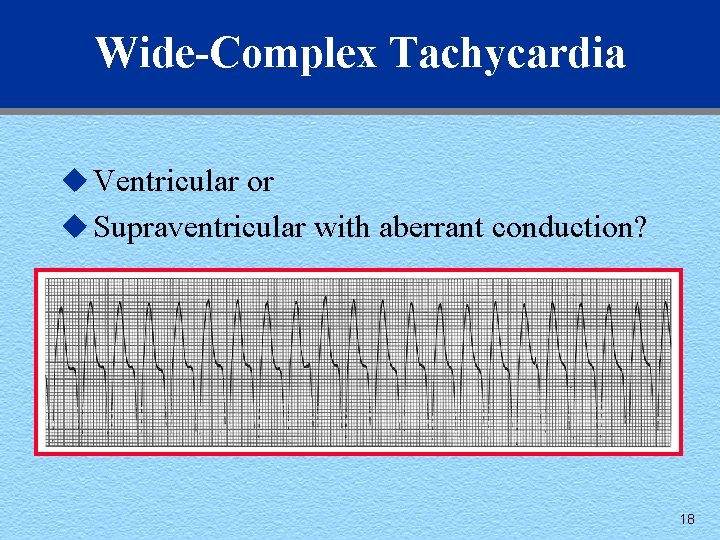
Wide-Complex Tachycardia u Ventricular or u Supraventricular with aberrant conduction? 18
4. Stable Monomorphic/ Polymorphic VT u Monomorphic VT: is cardiac function impaired? • Preserved: procainamide • Impaired: amiodarone OR lidocaine OR synchronized cardioversion u Polymorphic VT: QT interval (baseline) prolonged? • Normal: treat ischemia, correct electrolytes (amiodarone or lidocaine if heart impaired) • Prolonged: correct electrolytes – Magnesium, overdrive pacing, isoproterenol, dilantin, lidocaine 19
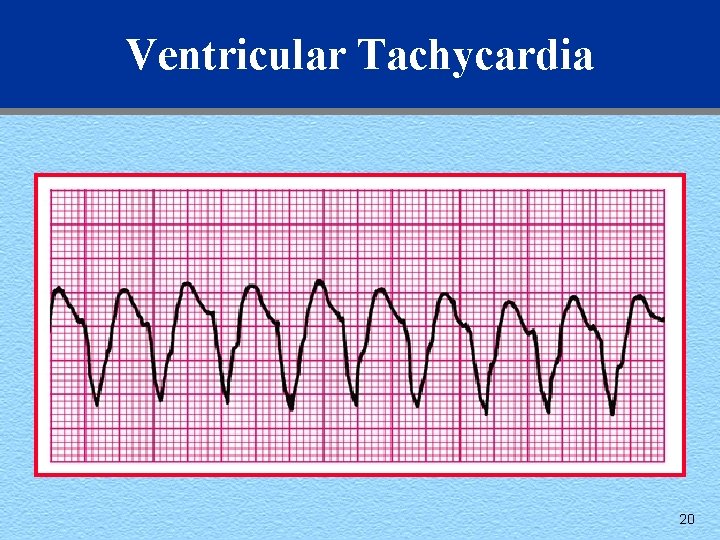
Ventricular Tachycardia 20
Stable Tachycardia u Initial therapy • • • Administer oxygen Start IV Attach monitor Obtain 12 -lead ECG Obtain portable chest x-ray 21
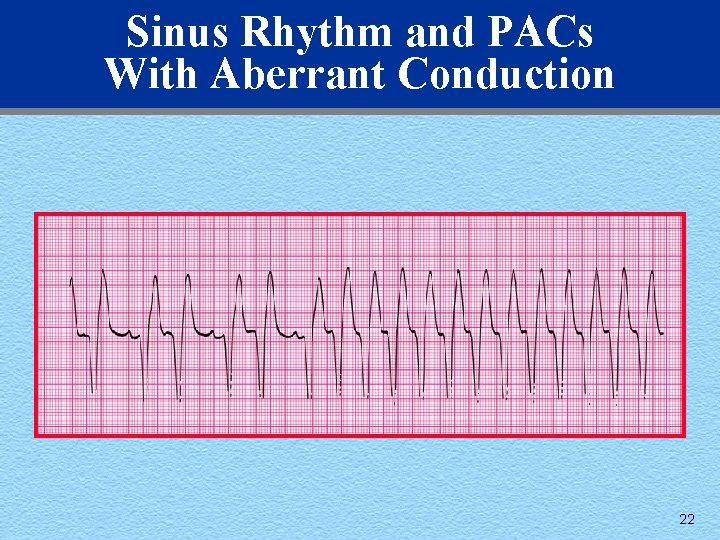
Sinus Rhythm and PACs With Aberrant Conduction 22
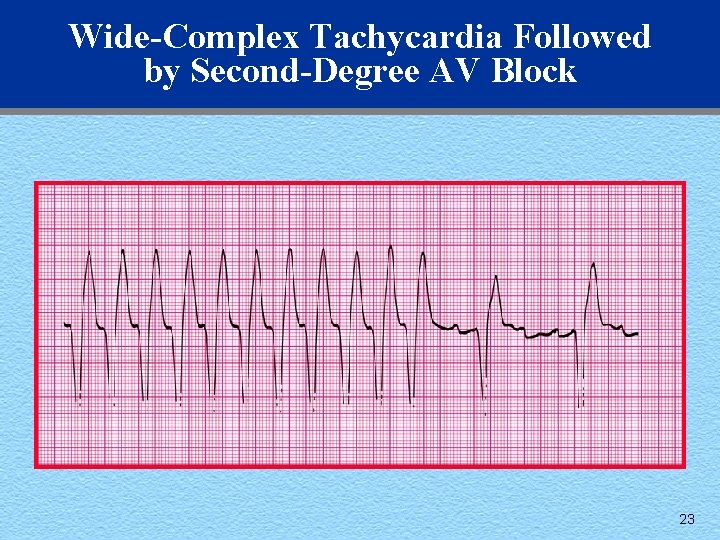
Wide-Complex Tachycardia Followed by Second-Degree AV Block 23
- Slides: 23