
CASE 4 Bacterial Pathogenesis of Staphylococcus aureus PATH
CASE 4 Bacterial Pathogenesis of Staphylococcus aureus PATH 417 A Karen Lin April 6 th, 2018
CASE 4 – A NEW BABY Elizabeth’s pregnancy and the birth of Amanda had gone well however, Elizabeth and Amanda were now struggling with breastfeeding. Elizabeth was aware from her prenatal classes of the various reasons why breastfeeding might be difficult. On the advice of a friend she made arrangements for a lactation consultant to visit her at home. She continued trying to ‘latch’ and feed Amanda in the days leading up to the visit but stopped when she began to experience breast pain and noticed that her right breast was red all around the nipple. She was feeling stressed and tired, along with a feeling of general malaise that she attributed to the stress associated with trying to breastfeed her newborn baby. Based on Elizabeth’s symptoms, the lactation consultant made a preliminary diagnosis of mastitis and suggested that Elizabeth see her doctor for a full diagnosis and possible antibiotic treatment. Do the symptoms that Elizabeth is experiencing concur with the preliminary diagnosis? What is the most likely bacterial cause and what are the antibiotics of choice to treat it?

QUESTION 1 Encounter: where does the organism normally reside, geographically and host wise? Staphylococcus aureus are gram positive, aerobic, cocci-shaped organisms. This pathogen is normally found on human surfaces, but can induce an infection in immunocompromised individuals. They are also found on a variety of environmental surfaces. Human Environment Staphylococcus aureus • Skin, mucous membranes of nasal passage, axillae • Drinking water supplies, food manufacturing environments, hospital environments
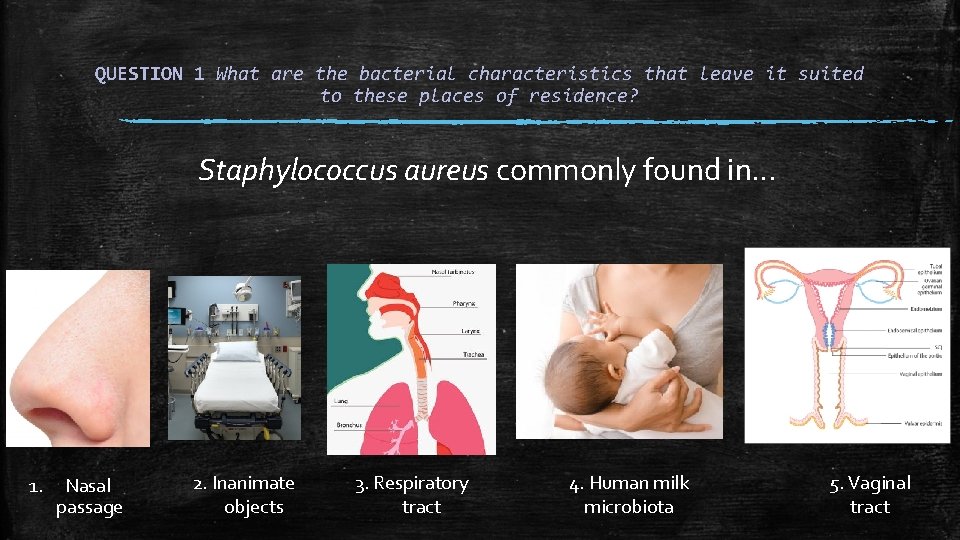
QUESTION 1 What are the bacterial characteristics that leave it suited to these places of residence? Staphylococcus aureus commonly found in… 1. Nasal passage 2. Inanimate objects 3. Respiratory tract 4. Human milk microbiota 5. Vaginal tract
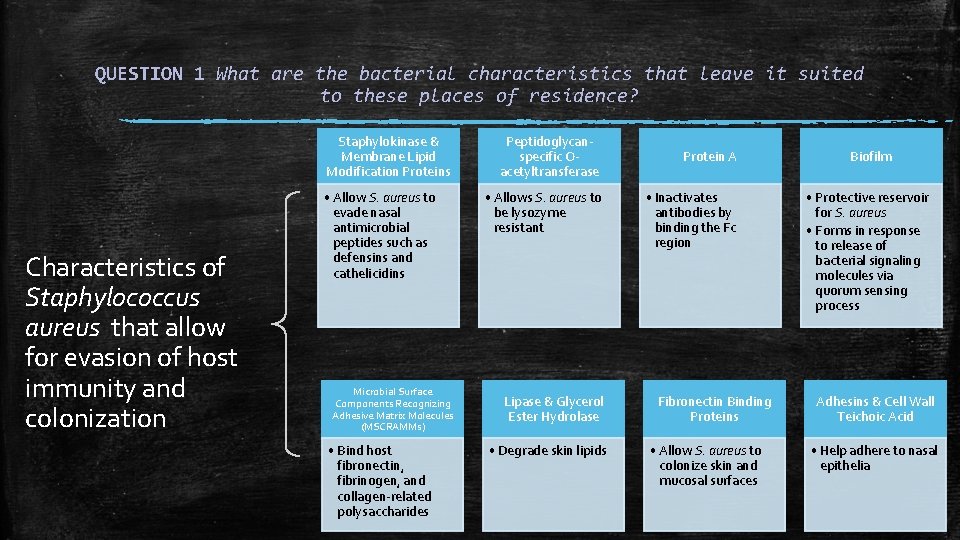
QUESTION 1 What are the bacterial characteristics that leave it suited to these places of residence? Staphylokinase & Membrane Lipid Modification Proteins Characteristics of Staphylococcus aureus that allow for evasion of host immunity and colonization • Allow S. aureus to evade nasal antimicrobial peptides such as defensins and cathelicidins Microbial Surface Components Recognizing Adhesive Matrix Molecules (MSCRAMMs) • Bind host fibronectin, fibrinogen, and collagen-related polysaccharides Peptidoglycanspecific Oacetyltransferase • Allows S. aureus to be lysozyme resistant Lipase & Glycerol Ester Hydrolase • Degrade skin lipids Protein A • Inactivates antibodies by binding the Fc region Fibronectin Binding Proteins • Allow S. aureus to colonize skin and mucosal surfaces Biofilm • Protective reservoir for S. aureus • Forms in response to release of bacterial signaling molecules via quorum sensing process Adhesins & Cell Wall Teichoic Acid • Help adhere to nasal epithelia
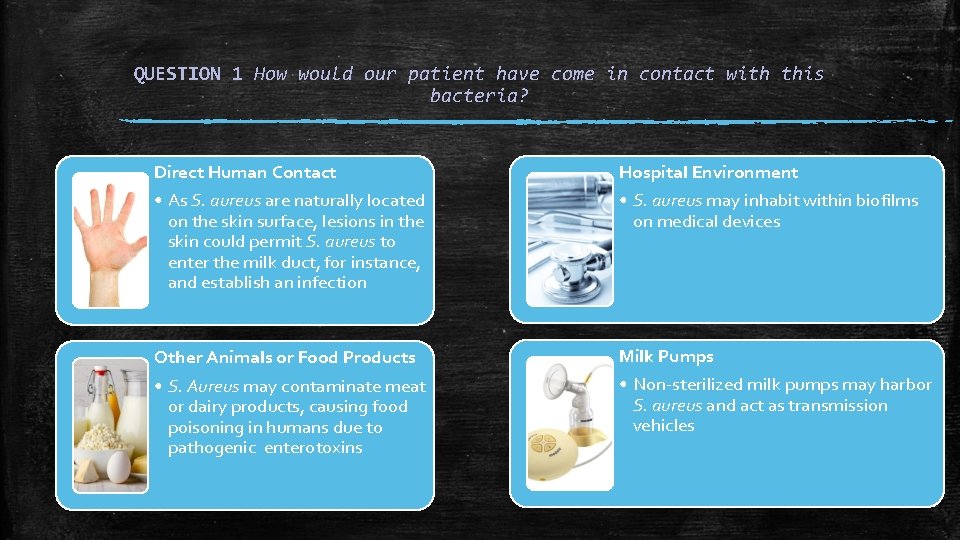
QUESTION 1 How would our patient have come in contact with this bacteria? Direct Human Contact • As S. aureus are naturally located on the skin surface, lesions in the skin could permit S. aureus to enter the milk duct, for instance, and establish an infection Hospital Environment • S. aureus may inhabit within biofilms on medical devices Other Animals or Food Products • S. Aureus may contaminate meat or dairy products, causing food poisoning in humans due to pathogenic enterotoxins Milk Pumps • Non-sterilized milk pumps may harbor S. aureus and act as transmission vehicles
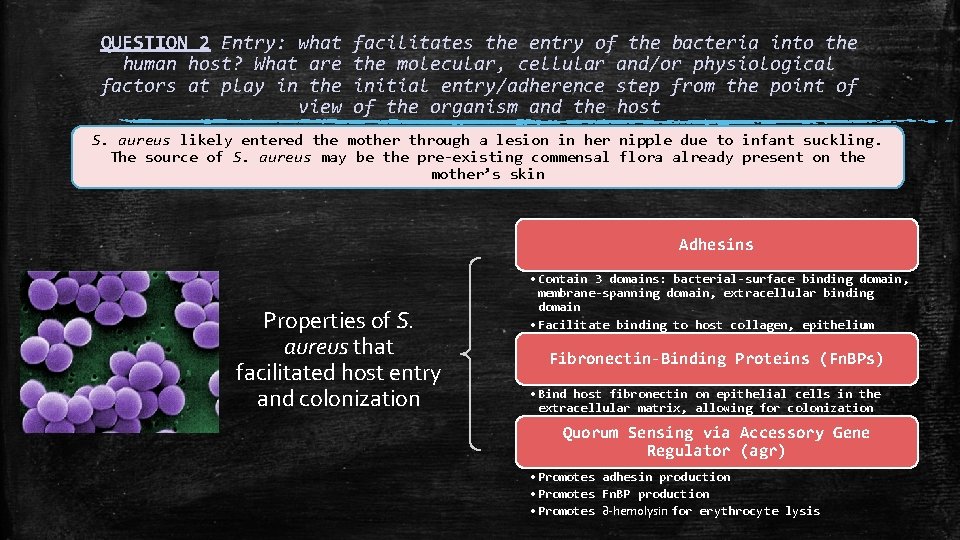
QUESTION 2 Entry: what human host? What are factors at play in the view facilitates the entry of the bacteria into the molecular, cellular and/or physiological initial entry/adherence step from the point of of the organism and the host S. aureus likely entered the mother through a lesion in her nipple due to infant suckling. The source of S. aureus may be the pre-existing commensal flora already present on the mother’s skin Adhesins Properties of S. aureus that facilitated host entry and colonization • Contain 3 domains: bacterial-surface binding domain, membrane-spanning domain, extracellular binding domain • Facilitate binding to host collagen, epithelium Fibronectin-Binding Proteins (Fn. BPs) • Bind host fibronectin on epithelial cells in the extracellular matrix, allowing for colonization Quorum Sensing via Accessory Gene Regulator (agr) • Promotes adhesin production • Promotes Fn. BP production • Promotes ∂-hemolysin for erythrocyte lysis
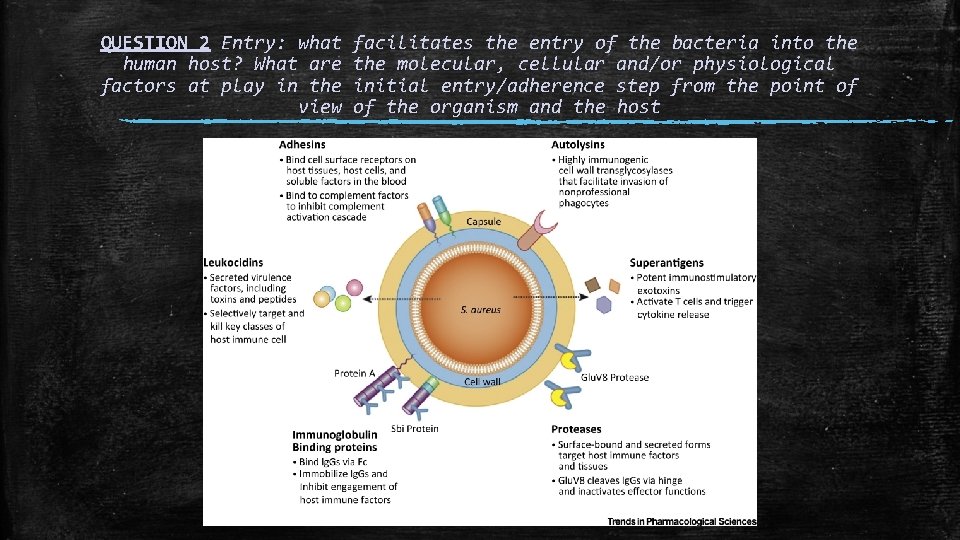
QUESTION 2 Entry: what human host? What are factors at play in the view facilitates the entry of the bacteria into the molecular, cellular and/or physiological initial entry/adherence step from the point of of the organism and the host
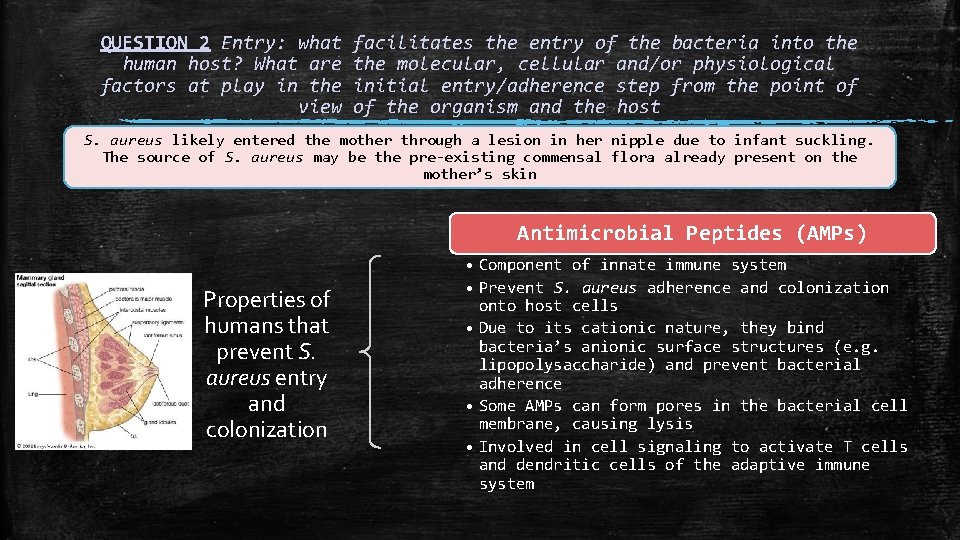
QUESTION 2 Entry: what human host? What are factors at play in the view facilitates the entry of the bacteria into the molecular, cellular and/or physiological initial entry/adherence step from the point of of the organism and the host S. aureus likely entered the mother through a lesion in her nipple due to infant suckling. The source of S. aureus may be the pre-existing commensal flora already present on the mother’s skin Antimicrobial Peptides (AMPs) Properties of humans that prevent S. aureus entry and colonization • Component of innate immune system • Prevent S. aureus adherence and colonization onto host cells • Due to its cationic nature, they bind bacteria’s anionic surface structures (e. g. lipopolysaccharide) and prevent bacterial adherence • Some AMPs can form pores in the bacterial cell membrane, causing lysis • Involved in cell signaling to activate T cells and dendritic cells of the adaptive immune system
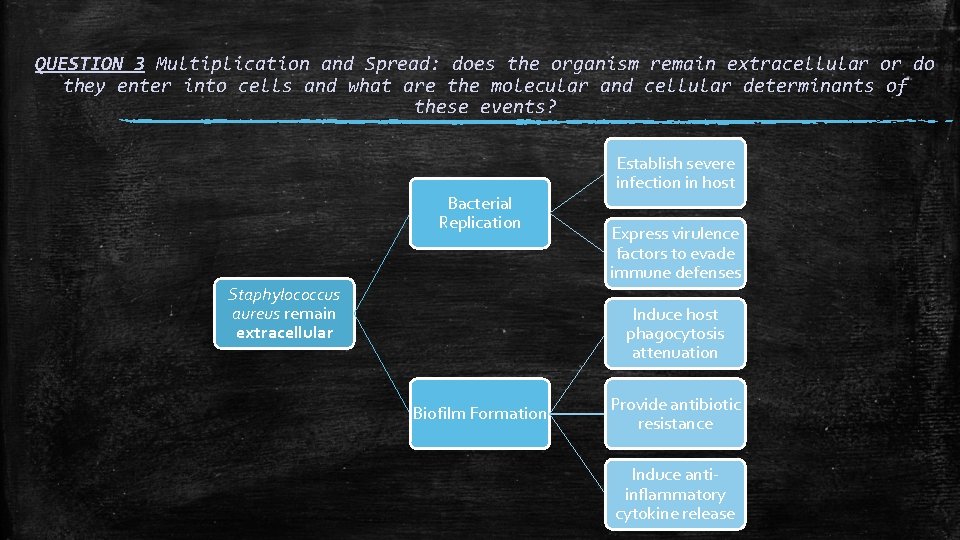
QUESTION 3 Multiplication and Spread: does the organism remain extracellular or do they enter into cells and what are the molecular and cellular determinants of these events? Bacterial Replication Staphylococcus aureus remain extracellular Establish severe infection in host Express virulence factors to evade immune defenses Induce host phagocytosis attenuation Biofilm Formation Provide antibiotic resistance Induce antiinflammatory cytokine release
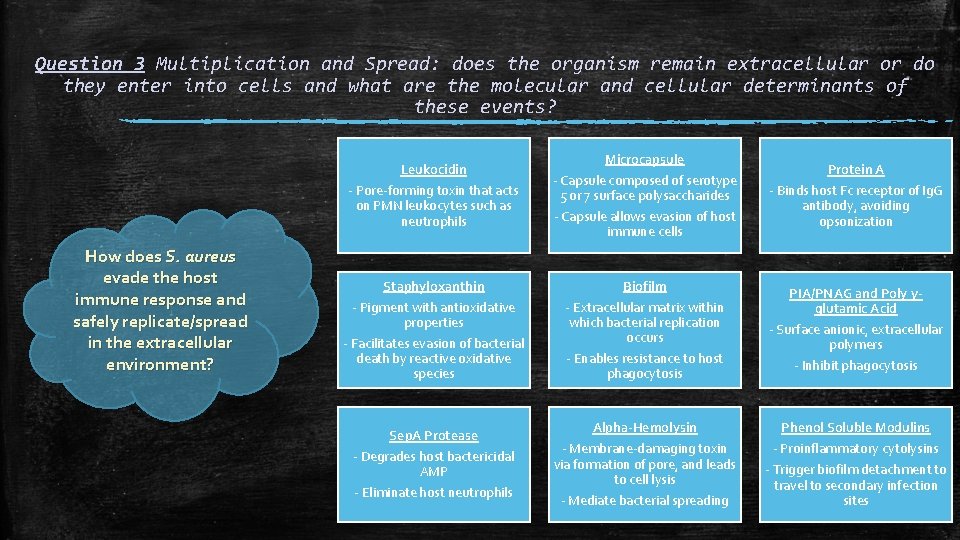
Question 3 Multiplication and Spread: does the organism remain extracellular or do they enter into cells and what are the molecular and cellular determinants of these events? How does S. aureus evade the host immune response and safely replicate/spread in the extracellular environment? Leukocidin - Pore-forming toxin that acts on PMN leukocytes such as neutrophils Microcapsule - Capsule composed of serotype 5 or 7 surface polysaccharides - Capsule allows evasion of host immune cells Staphyloxanthin Biofilm - Pigment with antioxidative properties - Facilitates evasion of bacterial death by reactive oxidative species - Extracellular matrix within which bacterial replication occurs - Enables resistance to host phagocytosis Sep. A Protease - Degrades host bactericidal AMP - Eliminate host neutrophils Alpha-Hemolysin - Membrane-damaging toxin via formation of pore, and leads to cell lysis - Mediate bacterial spreading Protein A - Binds host Fc receptor of Ig. G antibody, avoiding opsonization PIA/PNAG and Poly γglutamic Acid - Surface anionic, extracellular polymers - Inhibit phagocytosis Phenol Soluble Modulins - Proinflammatory cytolysins - Trigger biofilm detachment to travel to secondary infection sites
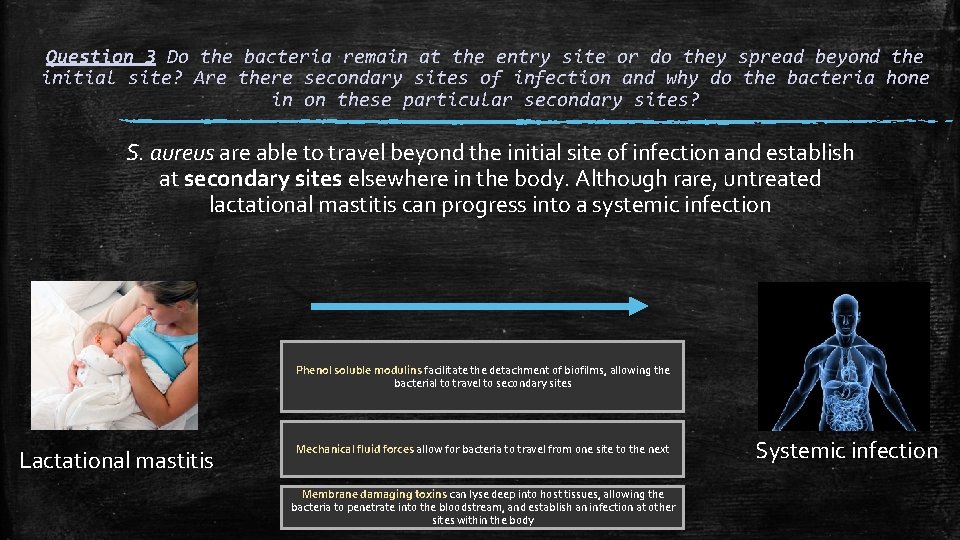
Question 3 Do the bacteria remain at the entry site or do they spread beyond the initial site? Are there secondary sites of infection and why do the bacteria hone in on these particular secondary sites? S. aureus are able to travel beyond the initial site of infection and establish at secondary sites elsewhere in the body. Although rare, untreated lactational mastitis can progress into a systemic infection Phenol soluble modulins facilitate the detachment of biofilms, allowing the bacterial to travel to secondary sites Lactational mastitis Mechanical fluid forces allow for bacteria to travel from one site to the next Membrane damaging toxins can lyse deep into host tissues, allowing the bacteria to penetrate into the bloodstream, and establish an infection at other sites within the body Systemic infection
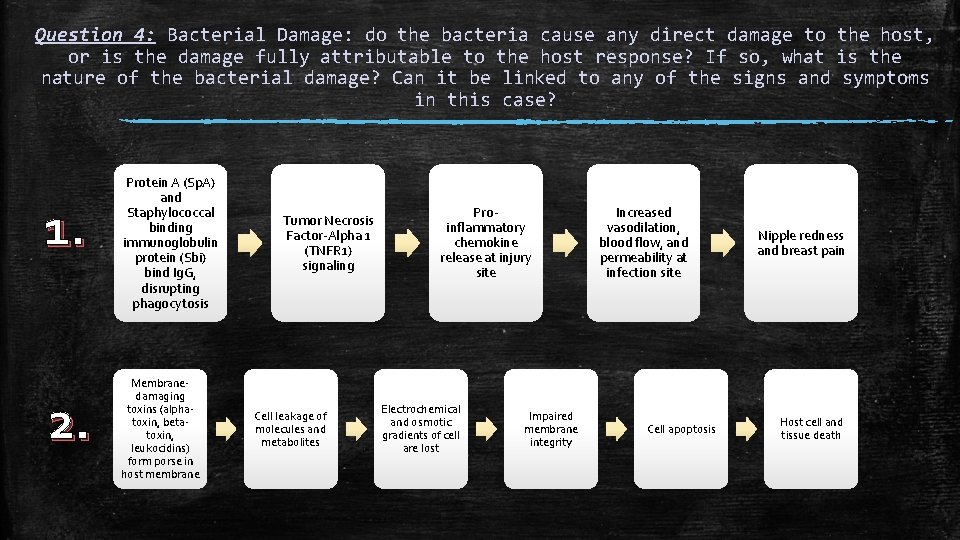
Question 4: Bacterial Damage: do the bacteria cause any direct damage to the host, or is the damage fully attributable to the host response? If so, what is the nature of the bacterial damage? Can it be linked to any of the signs and symptoms in this case? 1. 2. Protein A (Sp. A) and Staphylococcal binding immunoglobulin protein (Sbi) bind Ig. G, disrupting phagocytosis Membranedamaging toxins (alphatoxin, betatoxin, leukocidins) form porse in host membrane Tumor Necrosis Factor-Alpha 1 (TNFR 1) signaling Cell leakage of molecules and metabolites Proinflammatory chemokine release at injury site Electrochemical and osmotic gradients of cell are lost Impaired membrane integrity Increased vasodilation, blood flow, and permeability at infection site Cell apoptosis Nipple redness and breast pain Host cell and tissue death
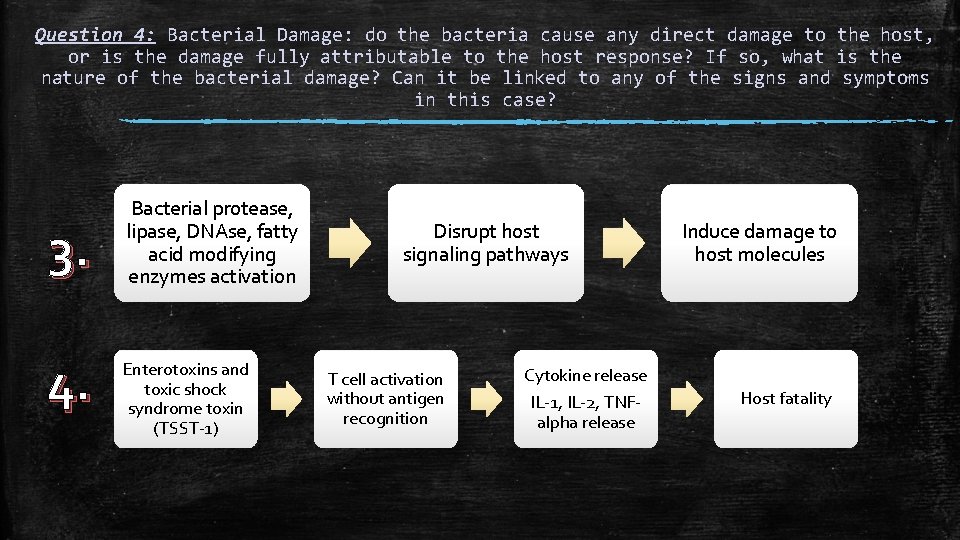
Question 4: Bacterial Damage: do the bacteria cause any direct damage to the host, or is the damage fully attributable to the host response? If so, what is the nature of the bacterial damage? Can it be linked to any of the signs and symptoms in this case? 3. 4. Bacterial protease, lipase, DNAse, fatty acid modifying enzymes activation Enterotoxins and toxic shock syndrome toxin (TSST-1) Disrupt host signaling pathways T cell activation without antigen recognition Cytokine release IL-1, IL-2, TNFalpha release Induce damage to host molecules Host fatality
- Slides: 14