
Cascading Discrimination Typical LV System Level 1 ACBs
Cascading & Discrimination

Typical LV System Level 1 ACBs - 6300 A General LV Switchboard Level 2 ACB - 3200 A MCCB – 1250 A Fuses – 630 A Level 4 MCBs - 100 A Switchboard, Panelboard or MCC Final Distribution Boards E 62649 Level 3
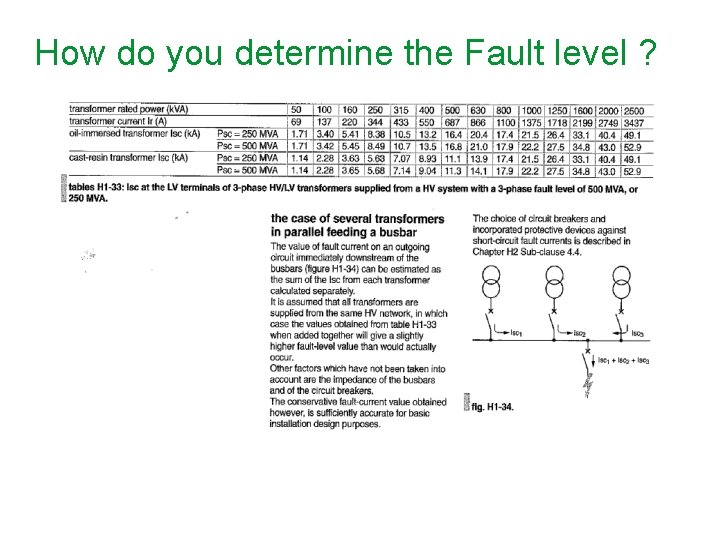
How do you determine the Fault level ?

Terminology Overload BSEN 60947 -2 >105% nominal current in an electrically sound circuit over a given period of time. ( Long Time Protection ) Short Circuit Electrical fault between Phases or to Earth usually >10 x nominal current ( Instantaneous Protection ) Nominal Current = rating of the breaker

Terminology BSEN 60947 -2 Icu Ultimate breaking capacity tested by O- CO O = opening or breaking operation C = closing or making operation. test for di-electric withstand @ 2 x rated voltage , but not less that 1000 v, example: Icu = 70 KA Ics Service Rating , tested by O-CO-CO test for di-electric withstand @ 2 x rated voltage. temperature rise test at nominal operating current sometimes expressed as a % of Icu example Icu/Ics = 50% standard ratios 100%, 75%, 50% & 25%

Terminology BSEN 60947 -2 Utilisation category Cat A a circuit breaker not specifically designed with an intentional time delay in respect of providing selectivity under short circuit conditions (eg. Lower rating MCCBs – Compact NSX) Cat B a circuit breaker with an intentional time delay in respect of providing selectivity under short circuit conditions, such circuit breakers have a short time withstand current rating ( Icw ) (eg. Large MCCBs & ACBs – Compact NS, Masterpact NT & NW)
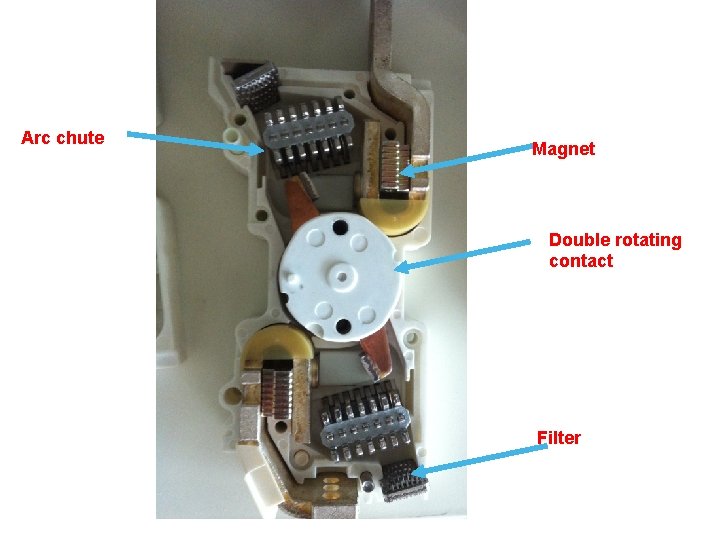
Arc chute Magnet Double rotating contact Filter

Fundamental Features

Control and Settings video_007
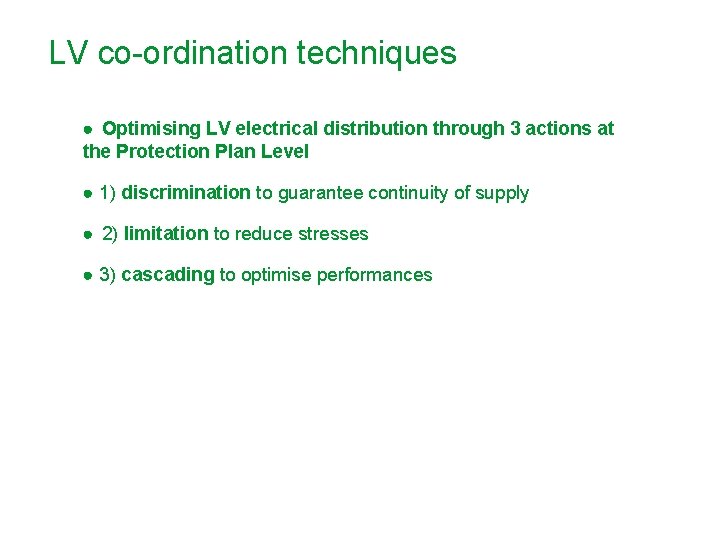
LV co-ordination techniques ● Optimising LV electrical distribution through 3 actions at the Protection Plan Level ● 1) discrimination to guarantee continuity of supply ● 2) limitation to reduce stresses ● 3) cascading to optimise performances
The IEC 60947 -2 standard and co-ordination of protection devices ● Recognises the 2 co-ordination elements (appendix A) o o discrimination cascading ● Defines testing to guarantee this co-ordination E 55229 ● Characterises the circuit-breakers capable of time discrimination utilisation category B
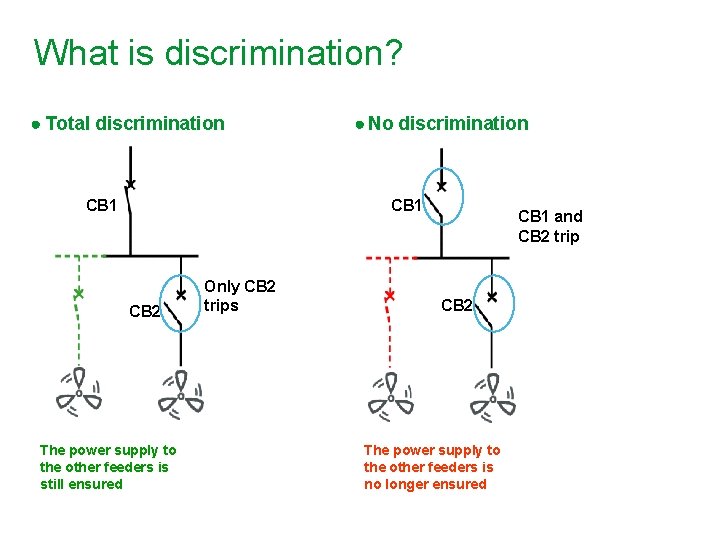
What is discrimination? ● Total discrimination CB 1 ● No discrimination CB 1 CB 2 The power supply to the other feeders is still ensured Only CB 2 trips CB 1 and CB 2 trip CB 2 The power supply to the other feeders is no longer ensured
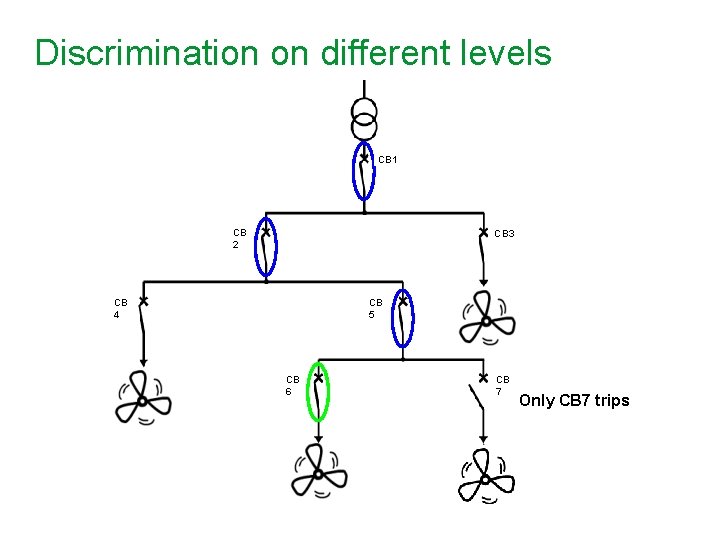
Discrimination on different levels CB 1 CB 2 CB 3 CB 4 CB 5 CB 6 CB 7 Only CB 7 trips
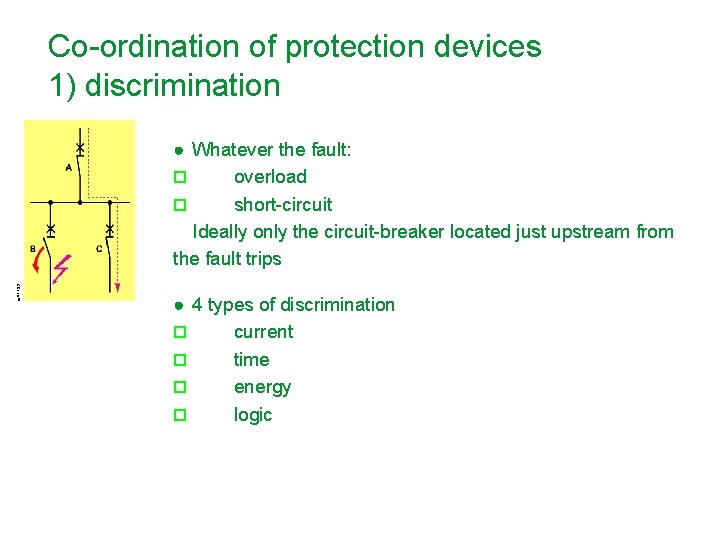
Co-ordination of protection devices 1) discrimination E 41139 ● Whatever the fault: o overload o short-circuit Ideally only the circuit-breaker located just upstream from the fault trips ● 4 types of discrimination o current o time o energy o logic
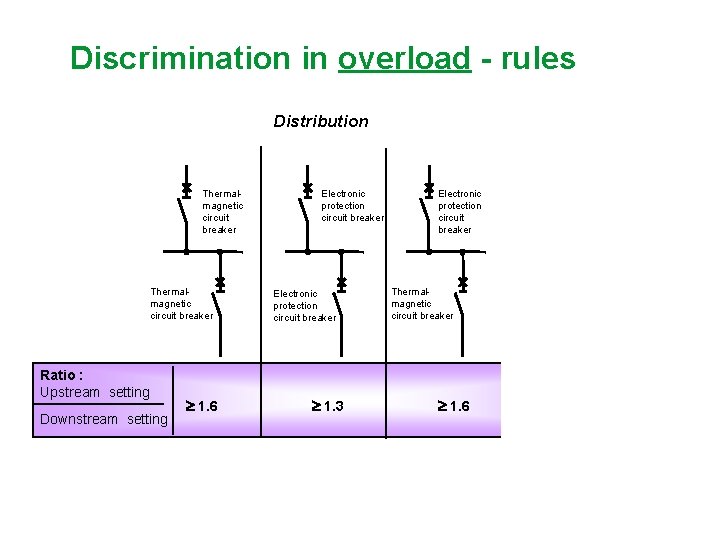
Discrimination in overload - rules Distribution Thermalmagnetic circuit breaker Ratio : Upstream setting Downstream setting 1. 6 Electronic protection circuit breaker 1. 3 Motor (circuit) Electronic protection circuit breaker Thermalmagnetic circuit breaker 1. 6 Thermal-magnetic or electronic protection circuit breaker Thermalmagnetic or electronic protection circuit breaker 3
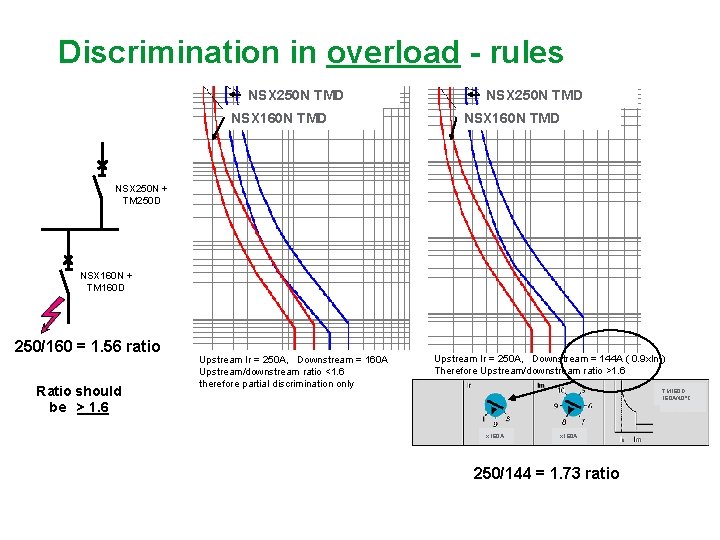
Discrimination in overload - rules NSX 250 N TMD NSX 160 N TMD NSX 250 N + TM 250 D NSX 160 N + TM 160 D 250/160 = 1. 56 ratio Ratio should be > 1. 6 Upstream Ir = 250 A, Downstream = 160 A Upstream/downstream ratio <1. 6 therefore partial discrimination only Upstream Ir = 250 A, Downstream = 144 A ( 0. 9 x. In ) Therefore Upstream/downstream ratio >1. 6 TM 160 D 160 A/40 o. C x 160 A 250/144 = 1. 73 ratio
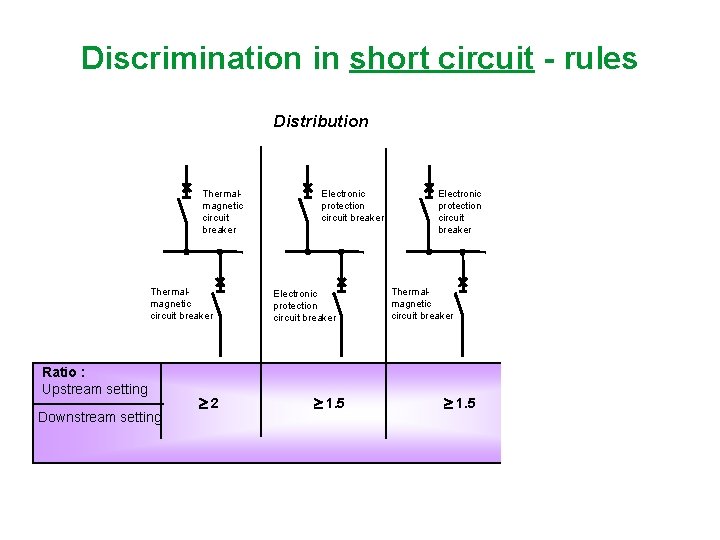
Discrimination in short circuit - rules Distribution Thermalmagnetic circuit breaker Ratio : Upstream setting Downstream setting 2 Electronic protection circuit breaker 1. 5 Motor (circuit) Electronic protection circuit breaker Thermalmagnetic circuit breaker 1. 5 Thermal-magnetic or electronic protection circuit breaker Thermalmagnetic or electronic protection circuit breaker 2 [TM upstream] 1. 5 [Micrologic upstream]
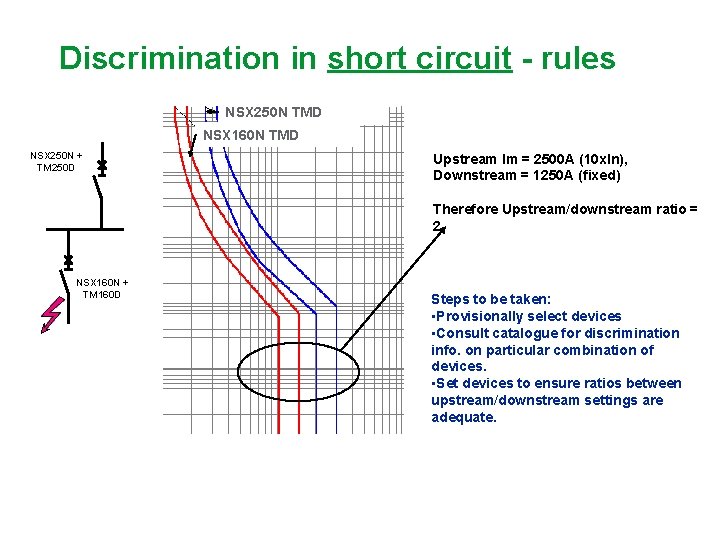
Discrimination in short circuit - rules NSX 250 N TMD NSX 160 N TMD NSX 250 N + TM 250 D Upstream Im = 2500 A (10 x. In), Downstream = 1250 A (fixed) Therefore Upstream/downstream ratio = 2 NSX 160 N + TM 160 D Steps to be taken: • Provisionally select devices • Consult catalogue for discrimination info. on particular combination of devices. • Set devices to ensure ratios between upstream/downstream settings are adequate.

Energy based Discrimination according to IEC 60947 -2 n Energy let through curve of the downstream device n Non-tripping energy curve of the upstream device. n EN 60947 -2 defines the method for calculating discrimination by comparing the operational curves based on the energy provided: downstream device upstream device
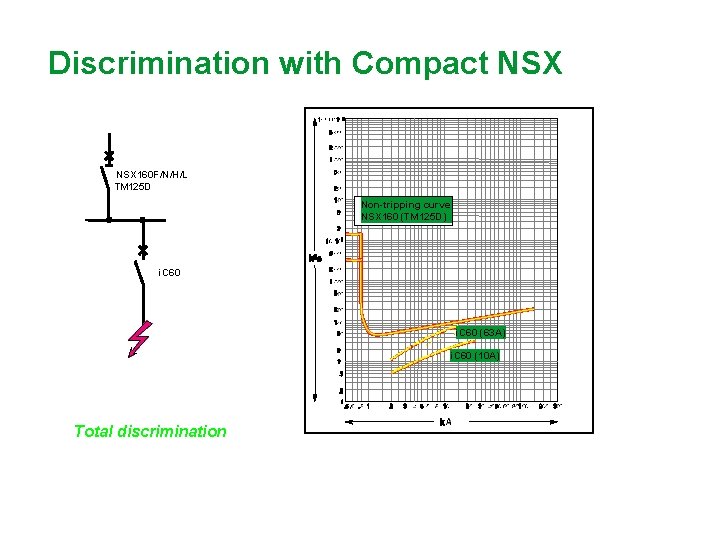
Discrimination with Compact NSX 160 F/N/H/L TM 125 D Non-tripping curve NSX 160 (TM 125 D) i. C 60 (63 A) i. C 60 (10 A) Total discrimination
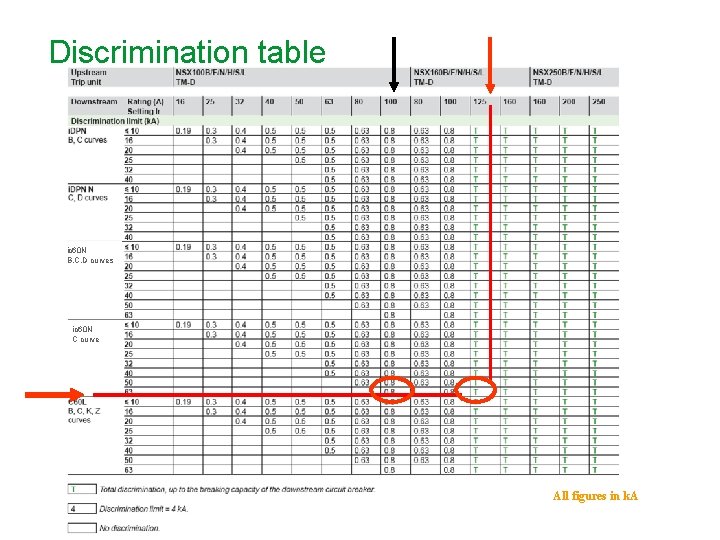
Discrimination table ic 60 N B, C, D curves ic 60 N C curve All figures in k. A
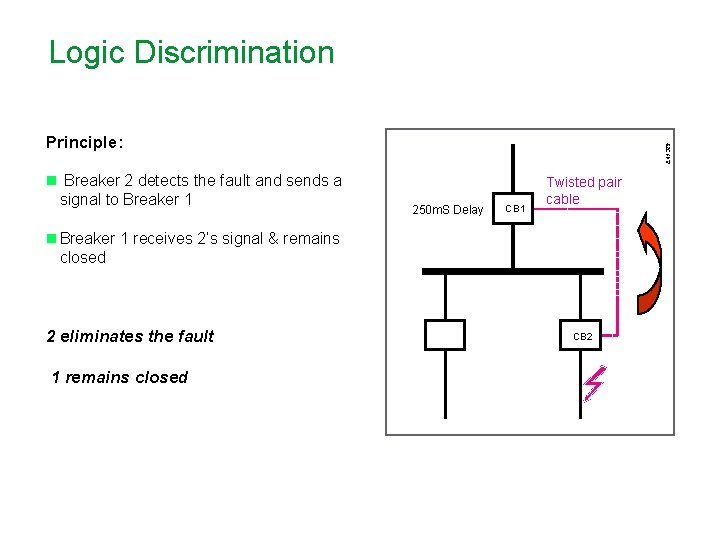
Logic Discrimination n Breaker 2 detects the fault and sends a signal to Breaker 1 E 41329 Principle: 250 m. S Delay CB 1 Twisted pair cable n Breaker 1 receives 2’s signal & remains closed 2 eliminates the fault 1 remains closed CB 2
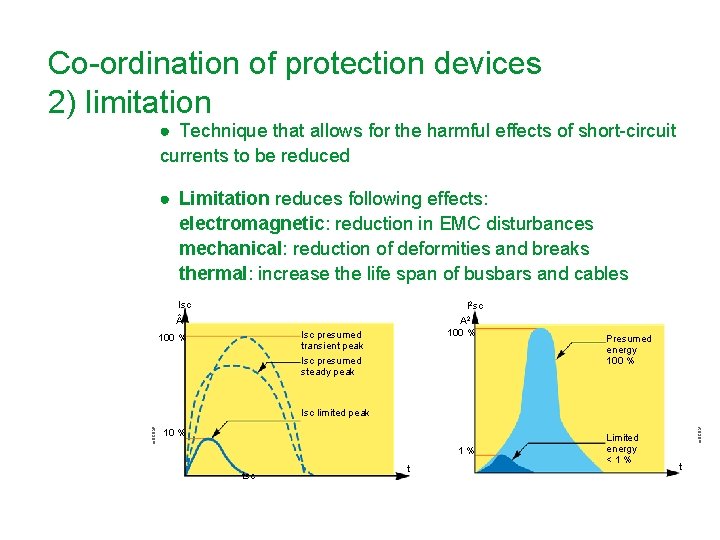
Co-ordination of protection devices 2) limitation ● Technique that allows for the harmful effects of short-circuit currents to be reduced ● Limitation reduces following effects: electromagnetic: reduction in EMC disturbances mechanical: reduction of deformities and breaks thermal: increase the life span of busbars and cables Isc I 2 sc A 2 100 % Isc presumed transient peak 100 % Isc presumed steady peak Presumed energy 100 % 1% tsc t Limited energy <1% E 62651 E 62650 Isc limited peak t
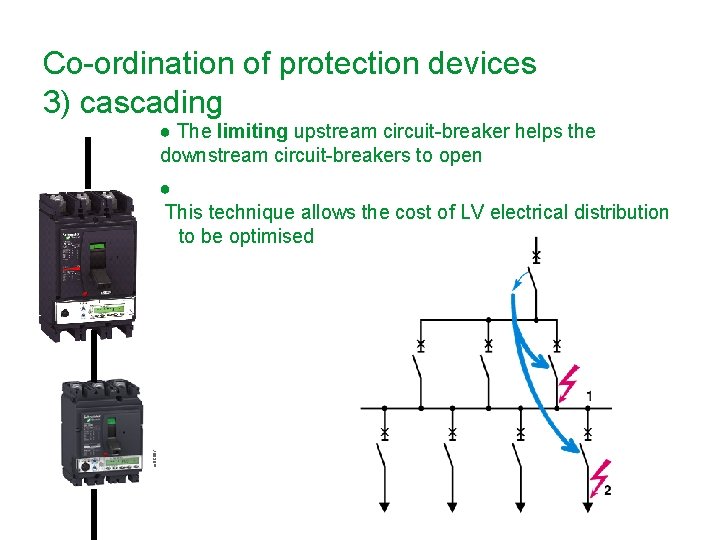
Co-ordination of protection devices 3) cascading ● The limiting upstream circuit-breaker helps the downstream circuit-breakers to open E 62667 ● This technique allows the cost of LV electrical distribution to be optimised
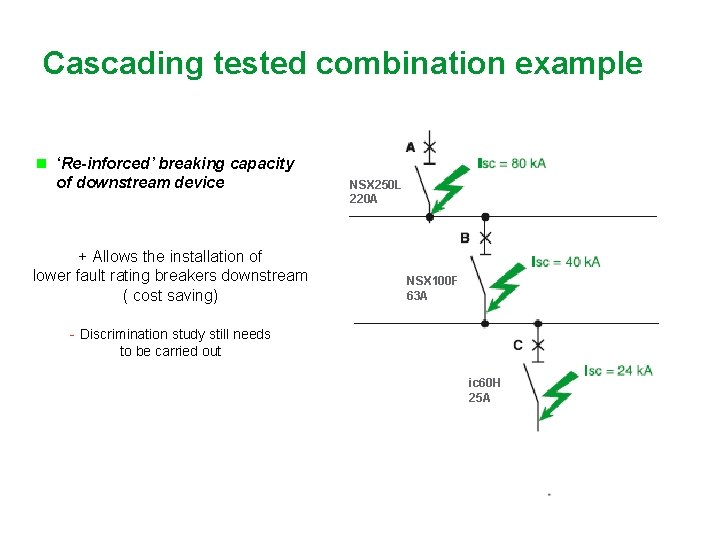
E 41149 Cascading tested combination example n ‘Re-inforced’ breaking capacity of downstream device + Allows the installation of lower fault rating breakers downstream ( cost saving) NSX 250 L 220 A NSX 100 F 63 A - Discrimination study still needs to be carried out ic 60 H 25 A
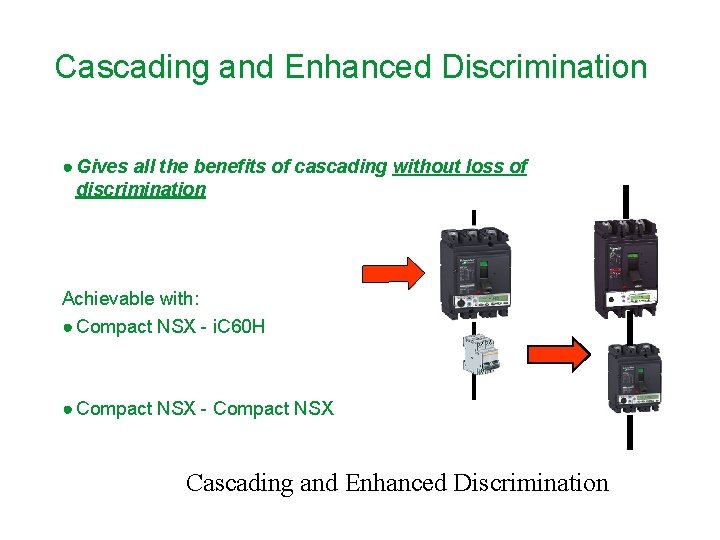
Cascading and Enhanced Discrimination ● Gives all the benefits of cascading without loss of discrimination Achievable with: ● Compact NSX - i. C 60 H ● Compact NSX - Compact NSX Cascading and Enhanced Discrimination
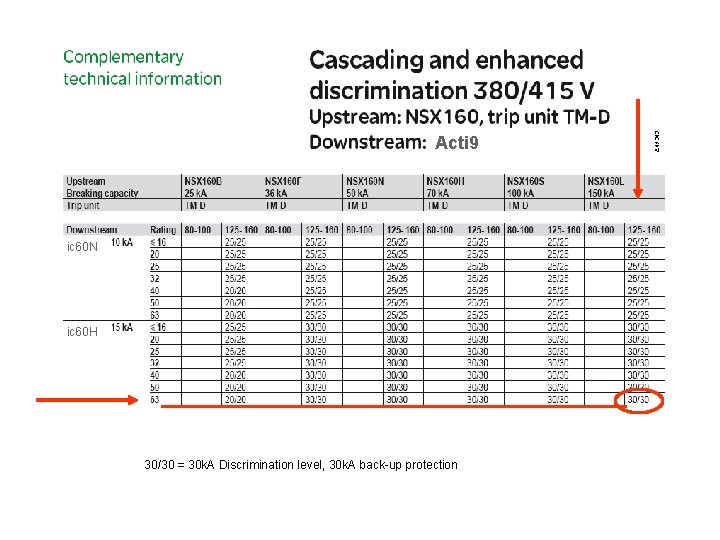
ic 60 N ic 60 H 30/30 = 30 k. A Discrimination level, 30 k. A back-up protection E 41343 Acti 9
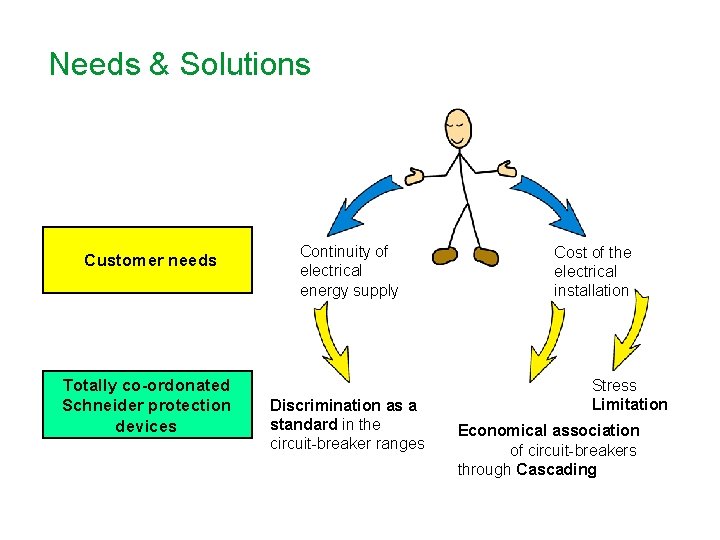
Needs & Solutions Customer needs Totally co-ordonated Schneider protection devices Continuity of electrical energy supply Discrimination as a standard in the circuit-breaker ranges Cost of the electrical installation Stress Limitation Economical association of circuit-breakers through Cascading
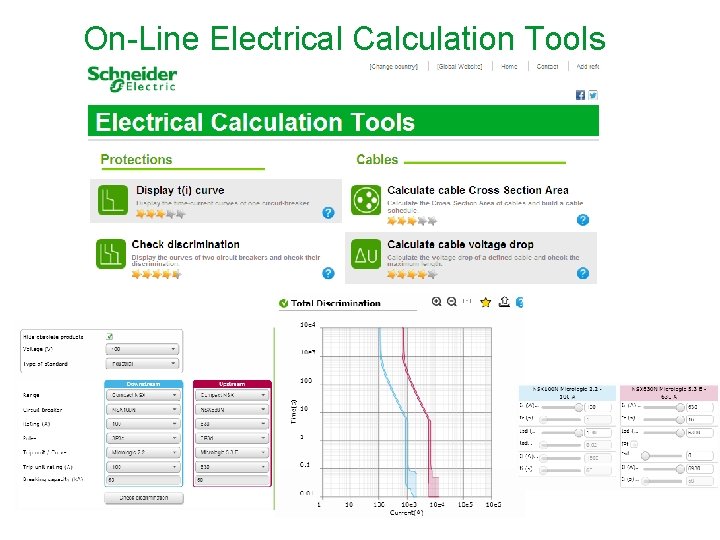
On-Line Electrical Calculation Tools
Complementary Technical Information
- Slides: 30