
CASCADED BJT AMPLIFIER Darlington connection Darlington pair Internal
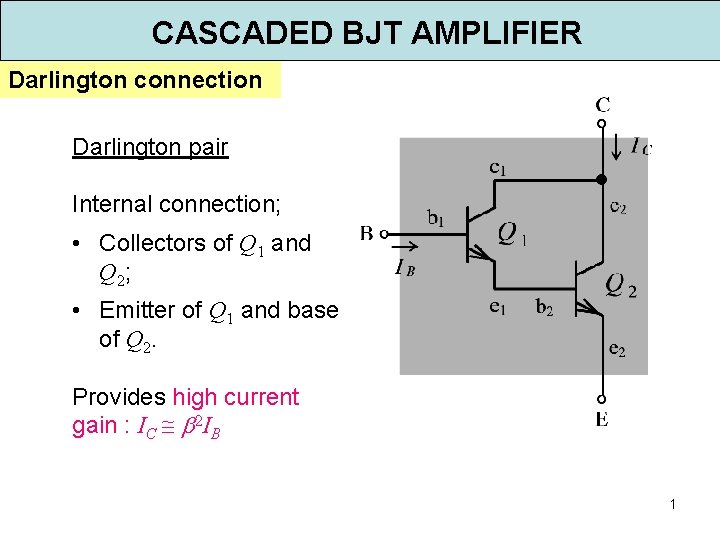
CASCADED BJT AMPLIFIER Darlington connection Darlington pair Internal connection; • Collectors of Q 1 and Q 2; • Emitter of Q 1 and base of Q 2. Provides high current gain : IC 2 IB 1
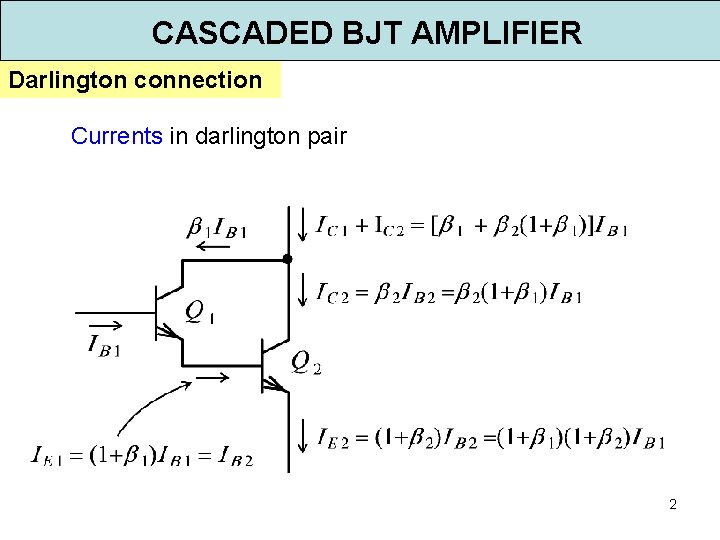
CASCADED BJT AMPLIFIER Darlington connection Currents in darlington pair 2
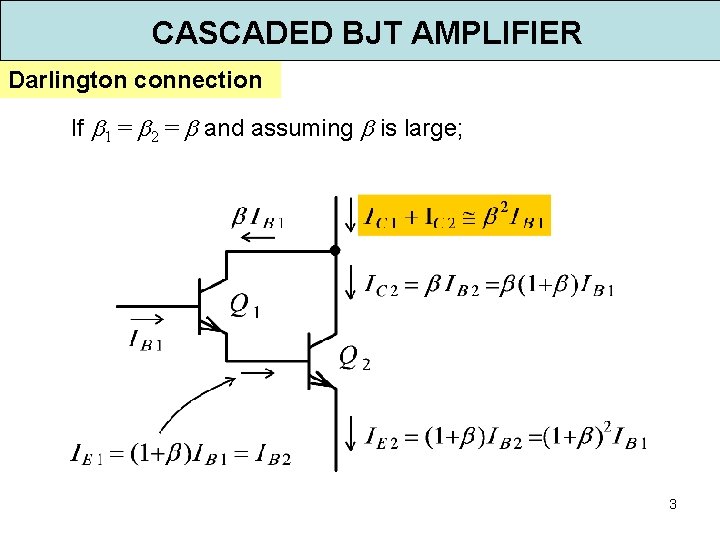
CASCADED BJT AMPLIFIER Darlington connection If 1 = 2 = and assuming is large; 3
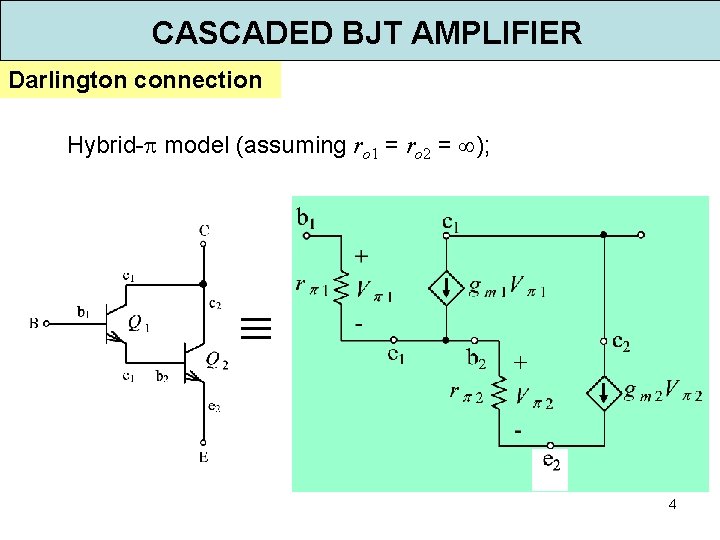
CASCADED BJT AMPLIFIER Darlington connection Hybrid- model (assuming ro 1 = ro 2 = ); 4
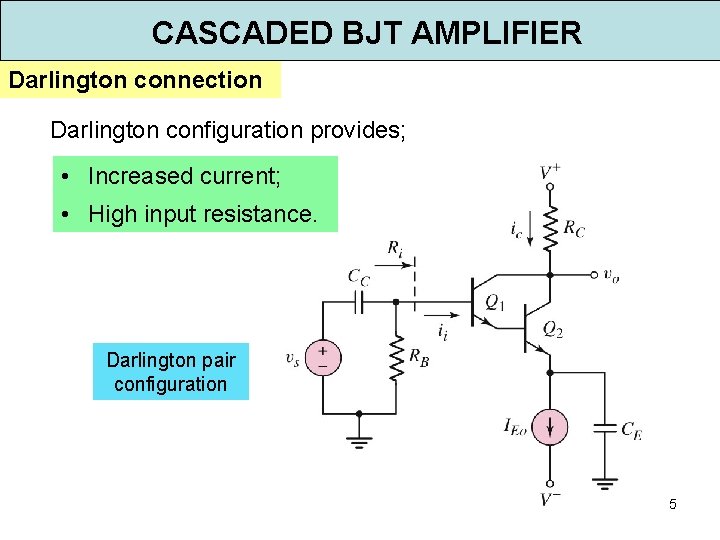
CASCADED BJT AMPLIFIER Darlington connection Darlington configuration provides; • Increased current; • High input resistance. Darlington pair configuration 5
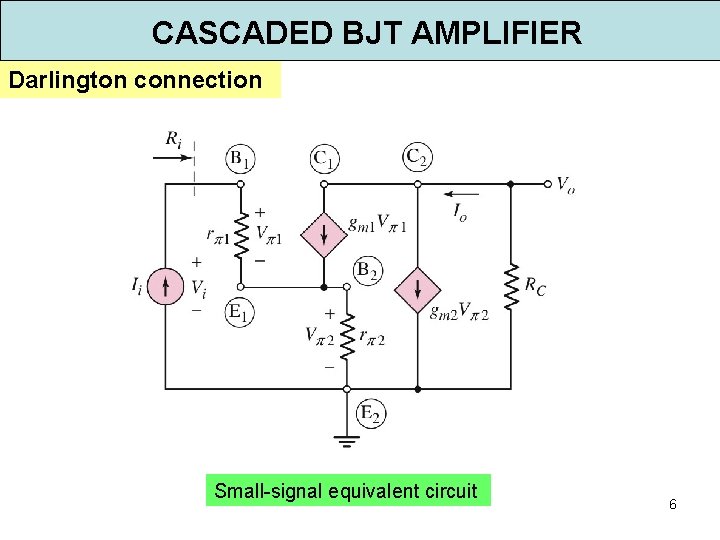
CASCADED BJT AMPLIFIER Darlington connection Small-signal equivalent circuit 6
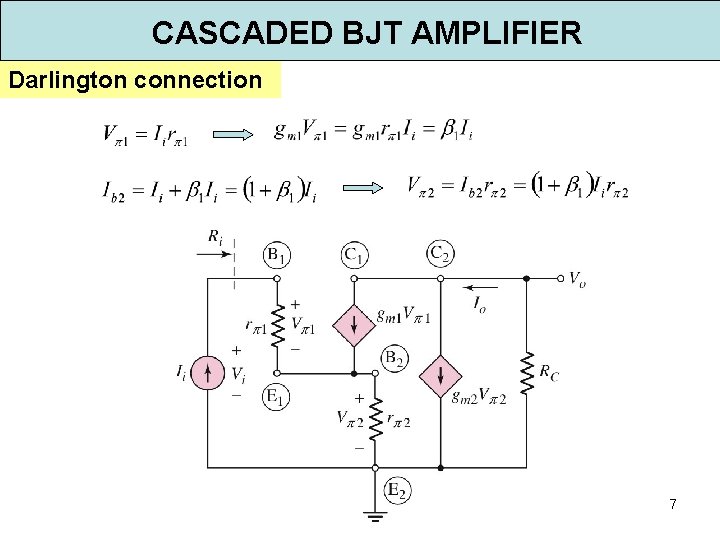
CASCADED BJT AMPLIFIER Darlington connection 7
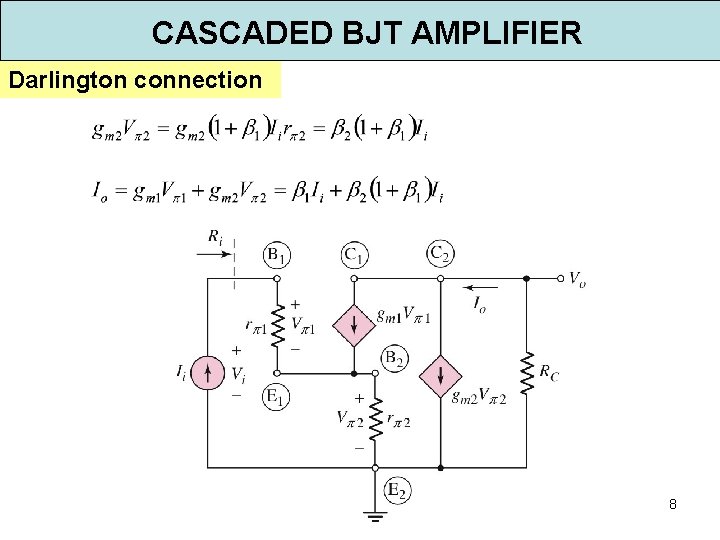
CASCADED BJT AMPLIFIER Darlington connection 8
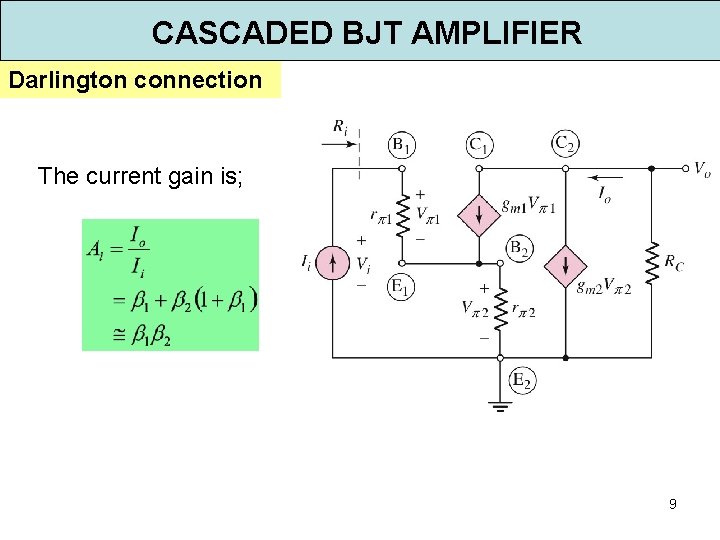
CASCADED BJT AMPLIFIER Darlington connection The current gain is; 9
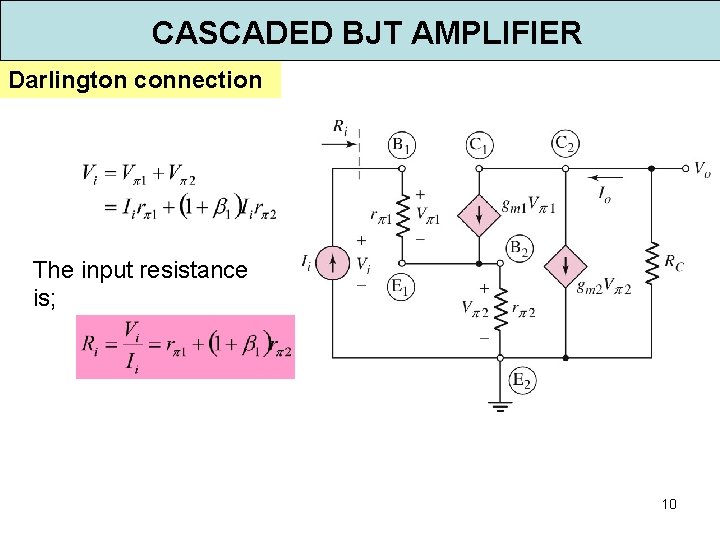
CASCADED BJT AMPLIFIER Darlington connection The input resistance is; 10
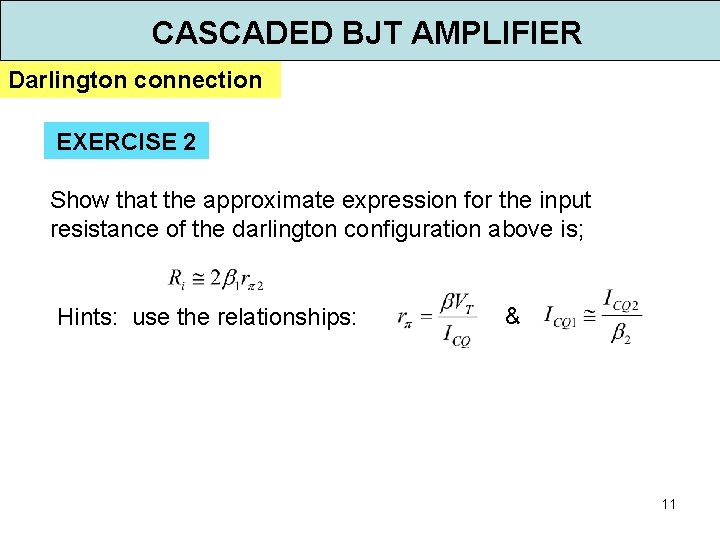
CASCADED BJT AMPLIFIER Darlington connection EXERCISE 2 Show that the approximate expression for the input resistance of the darlington configuration above is; Hints: use the relationships: & 11
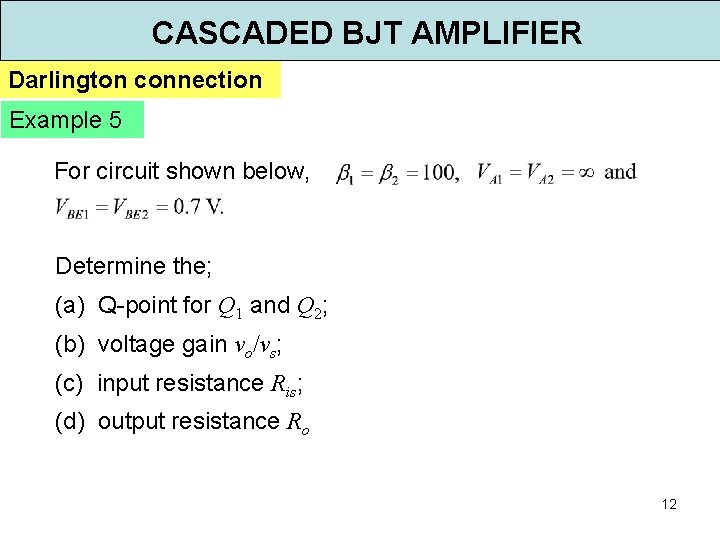
CASCADED BJT AMPLIFIER Darlington connection Example 5 For circuit shown below, Determine the; (a) Q-point for Q 1 and Q 2; (b) voltage gain vo/vs; (c) input resistance Ris; (d) output resistance Ro 12
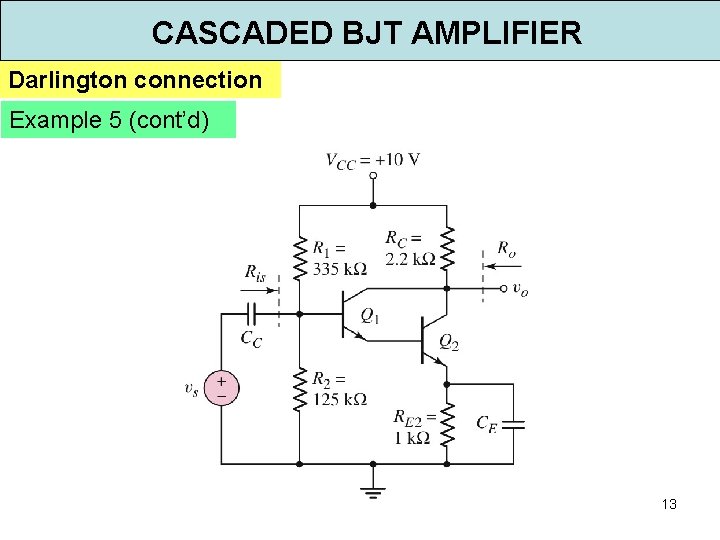
CASCADED BJT AMPLIFIER Darlington connection Example 5 (cont’d) 13
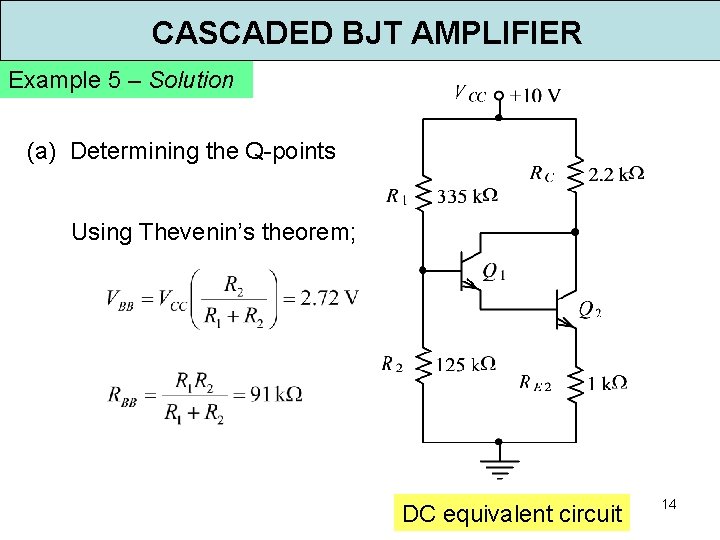
CASCADED BJT AMPLIFIER Example 5 – Solution (a) Determining the Q-points Using Thevenin’s theorem; DC equivalent circuit 14
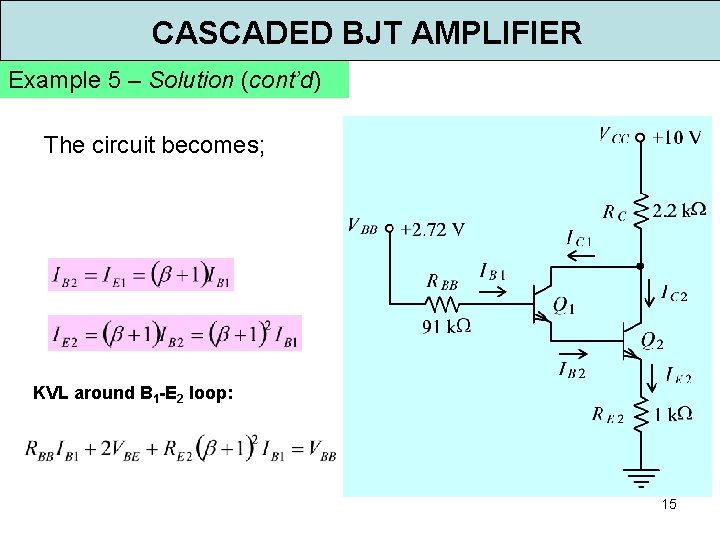
CASCADED BJT AMPLIFIER Example 5 – Solution (cont’d) The circuit becomes; KVL around B 1 -E 2 loop: 15
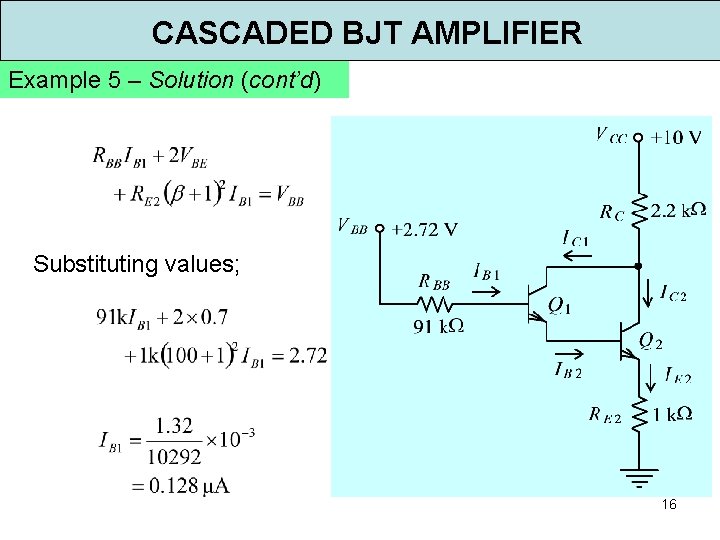
CASCADED BJT AMPLIFIER Example 5 – Solution (cont’d) Substituting values; 16
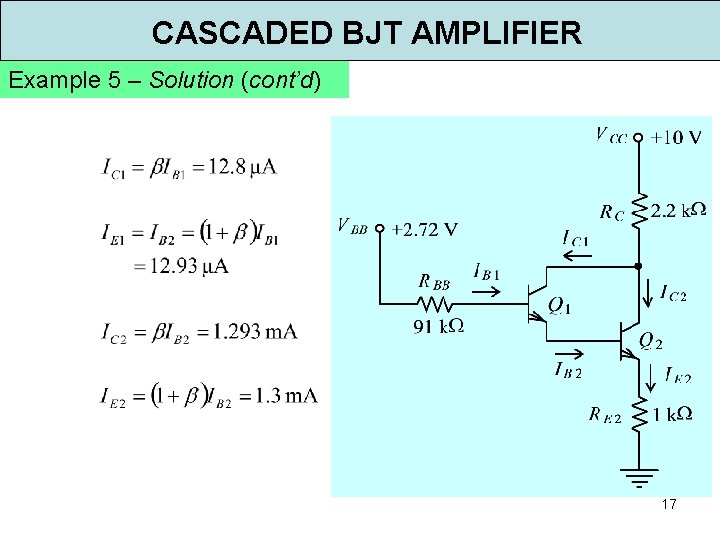
CASCADED BJT AMPLIFIER Example 5 – Solution (cont’d) 17
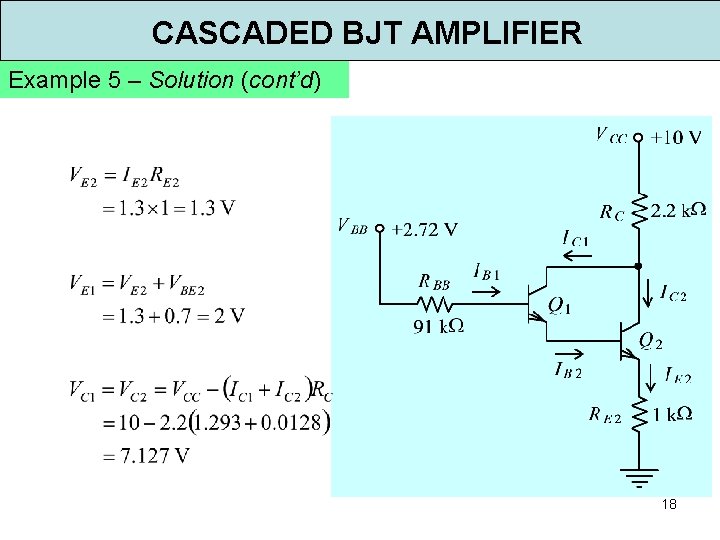
CASCADED BJT AMPLIFIER Example 5 – Solution (cont’d) 18
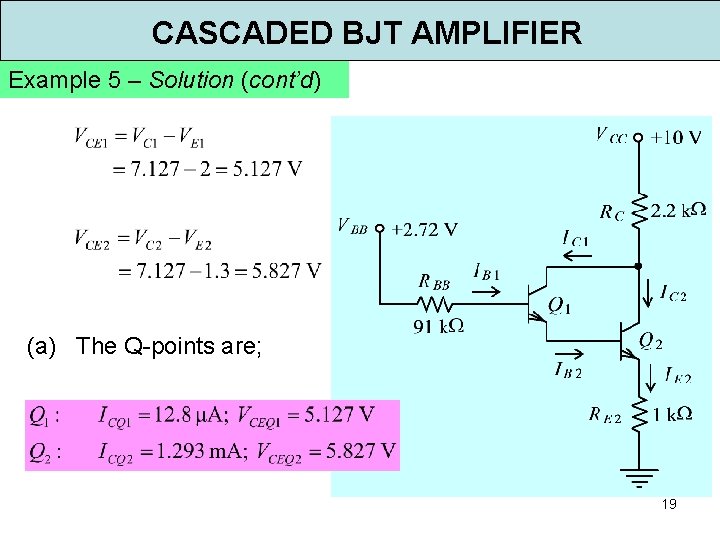
CASCADED BJT AMPLIFIER Example 5 – Solution (cont’d) (a) The Q-points are; 19
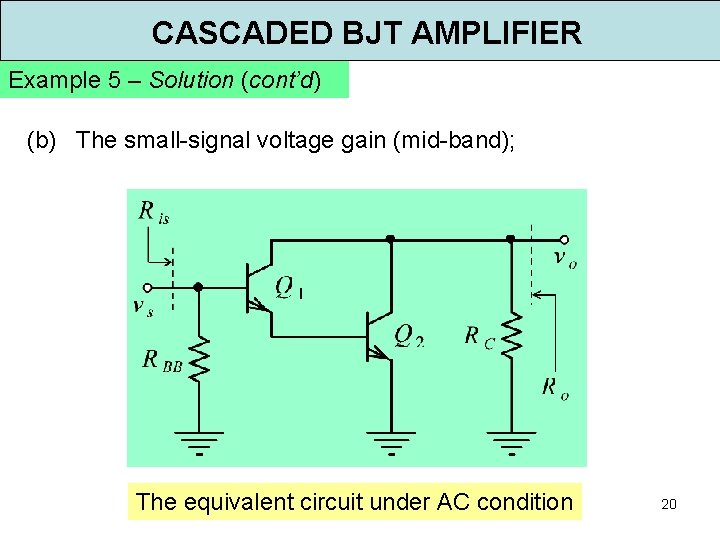
CASCADED BJT AMPLIFIER Example 5 – Solution (cont’d) (b) The small-signal voltage gain (mid-band); The equivalent circuit under AC condition 20
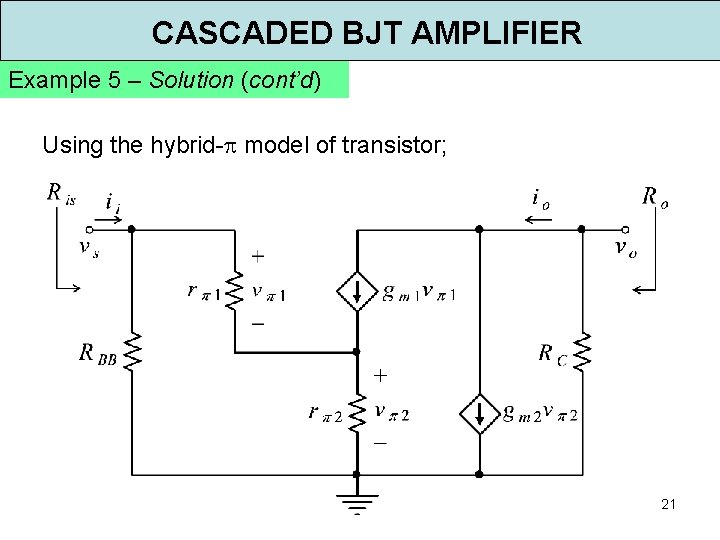
CASCADED BJT AMPLIFIER Example 5 – Solution (cont’d) Using the hybrid- model of transistor; 21
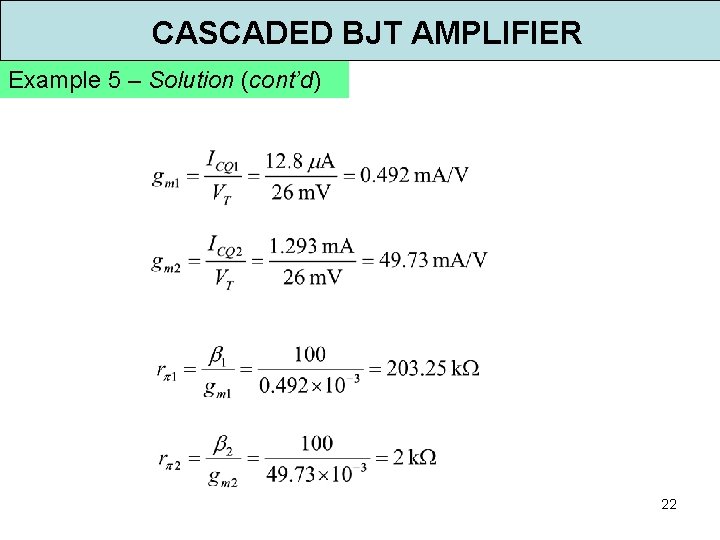
CASCADED BJT AMPLIFIER Example 5 – Solution (cont’d) 22
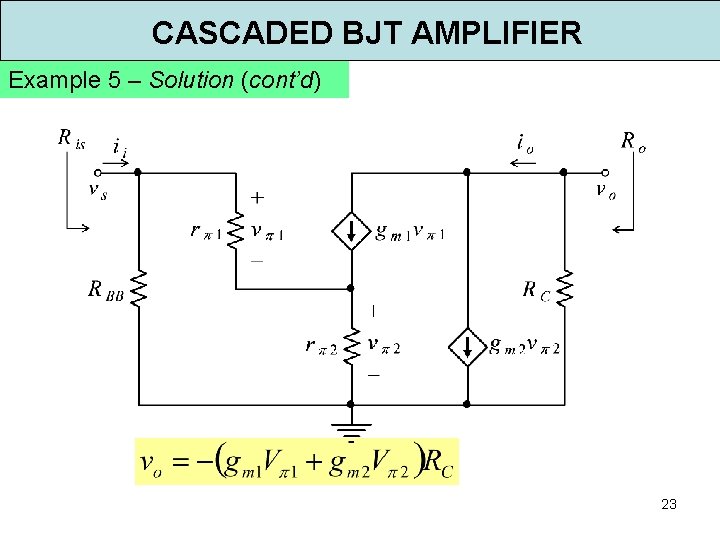
CASCADED BJT AMPLIFIER Example 5 – Solution (cont’d) 23
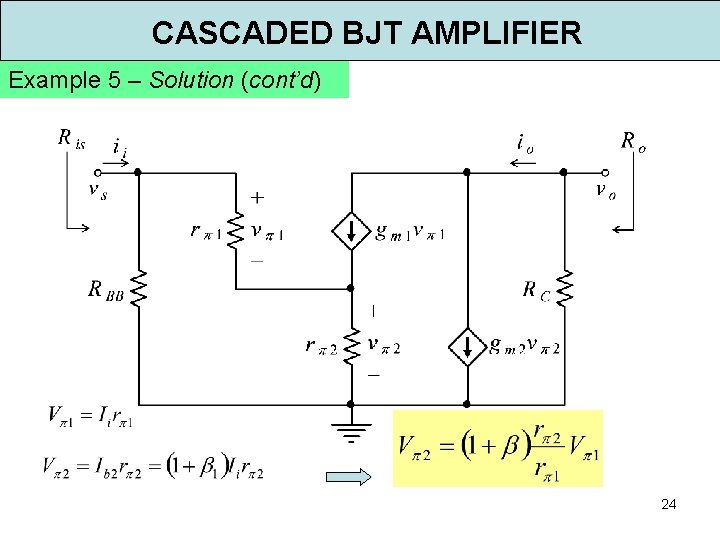
CASCADED BJT AMPLIFIER Example 5 – Solution (cont’d) 24
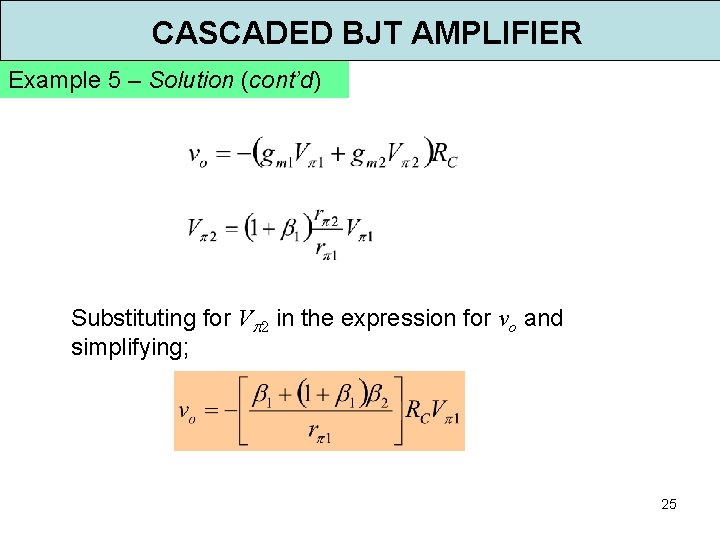
CASCADED BJT AMPLIFIER Example 5 – Solution (cont’d) Substituting for V 2 in the expression for vo and simplifying; 25
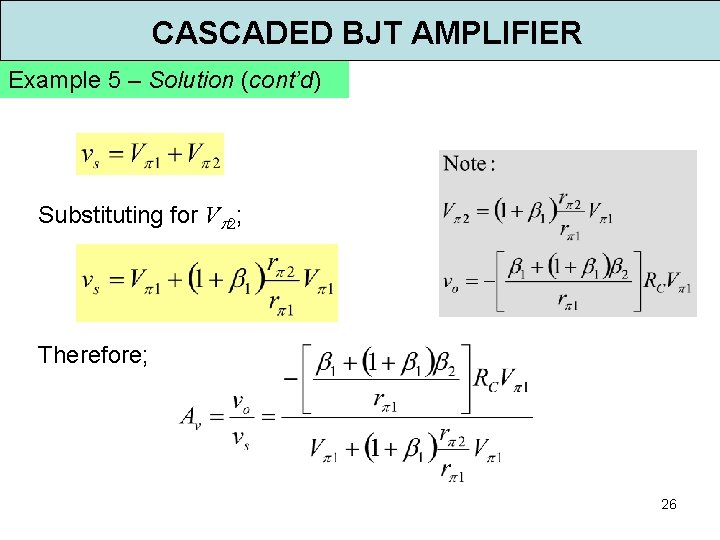
CASCADED BJT AMPLIFIER Example 5 – Solution (cont’d) Substituting for V 2; Therefore; 26
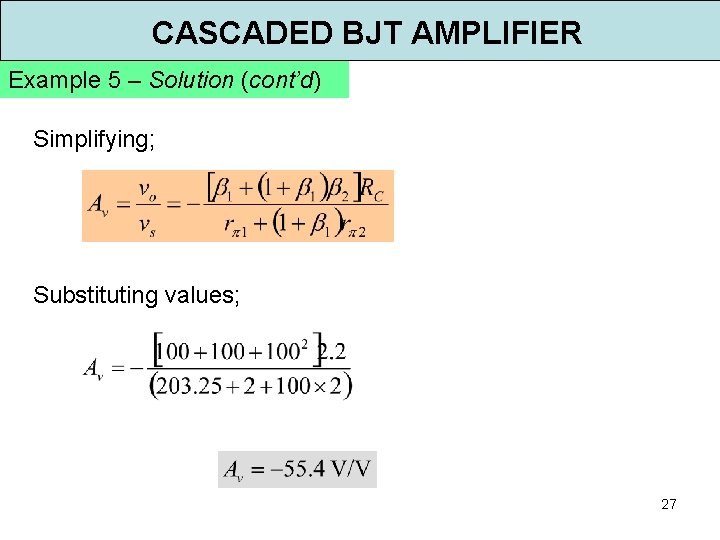
CASCADED BJT AMPLIFIER Example 5 – Solution (cont’d) Simplifying; Substituting values; 27
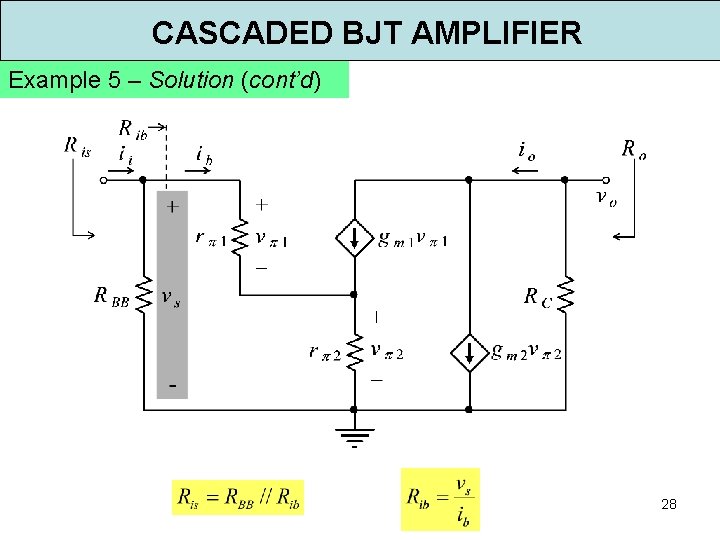
CASCADED BJT AMPLIFIER Example 5 – Solution (cont’d) 28
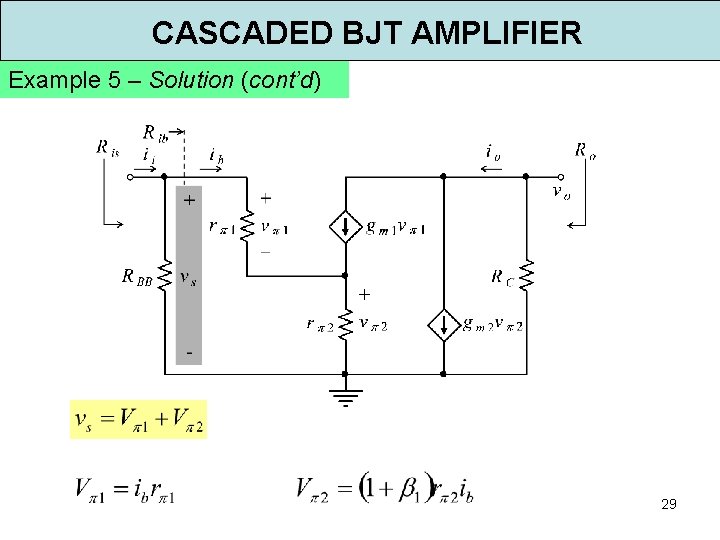
CASCADED BJT AMPLIFIER Example 5 – Solution (cont’d) 29
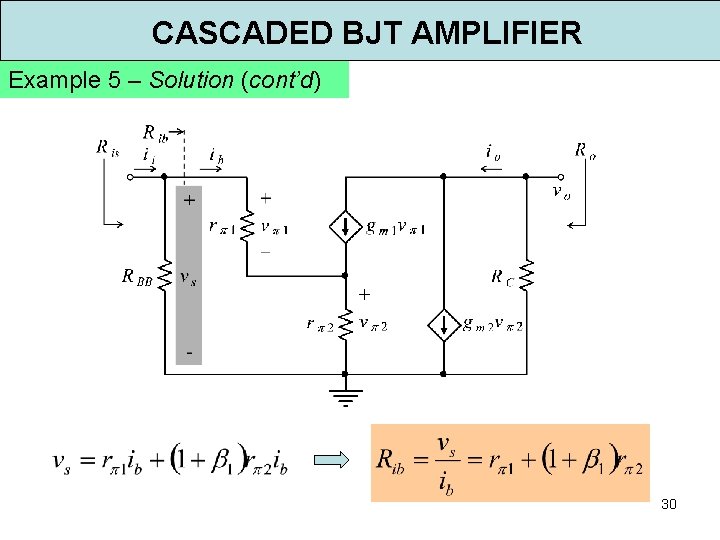
CASCADED BJT AMPLIFIER Example 5 – Solution (cont’d) 30
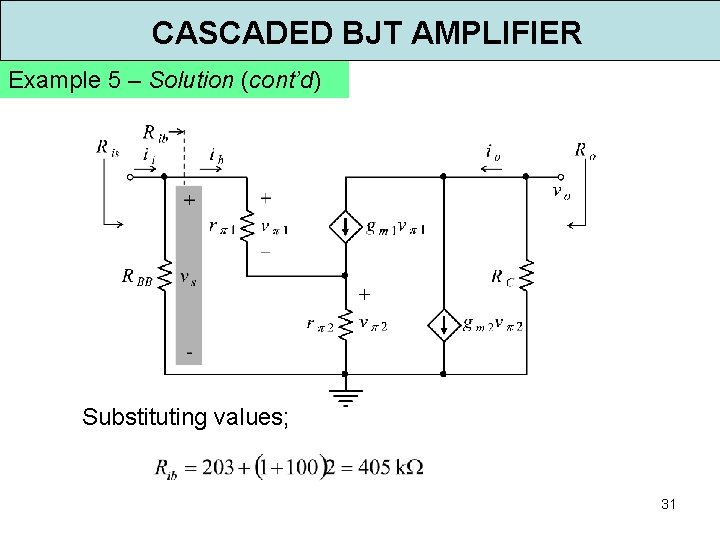
CASCADED BJT AMPLIFIER Example 5 – Solution (cont’d) Substituting values; 31
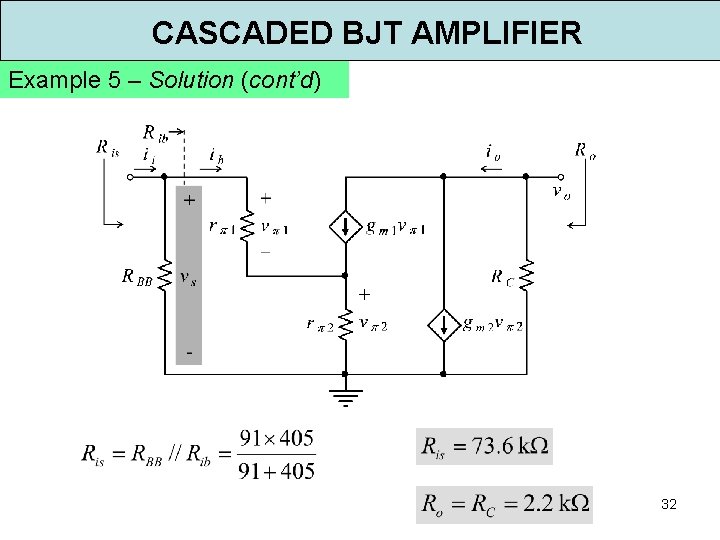
CASCADED BJT AMPLIFIER Example 5 – Solution (cont’d) 32
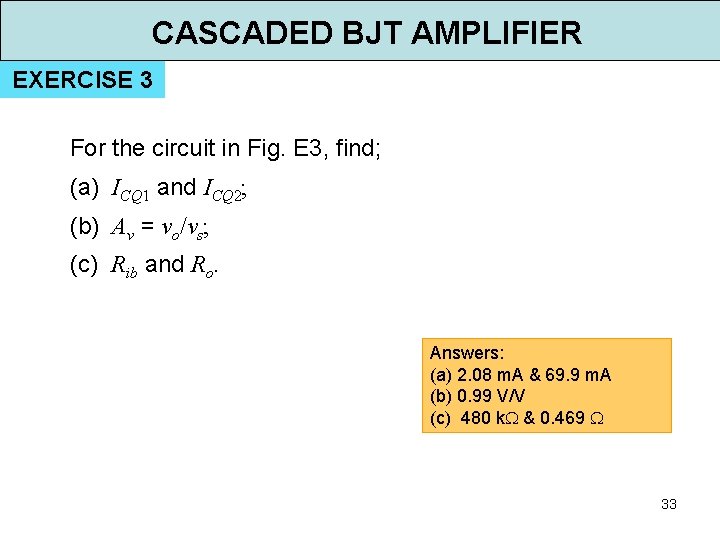
CASCADED BJT AMPLIFIER EXERCISE 3 For the circuit in Fig. E 3, find; (a) ICQ 1 and ICQ 2; (b) Av = vo/vs; (c) Rib and Ro. Answers: (a) 2. 08 m. A & 69. 9 m. A (b) 0. 99 V/V (c) 480 k & 0. 469 33
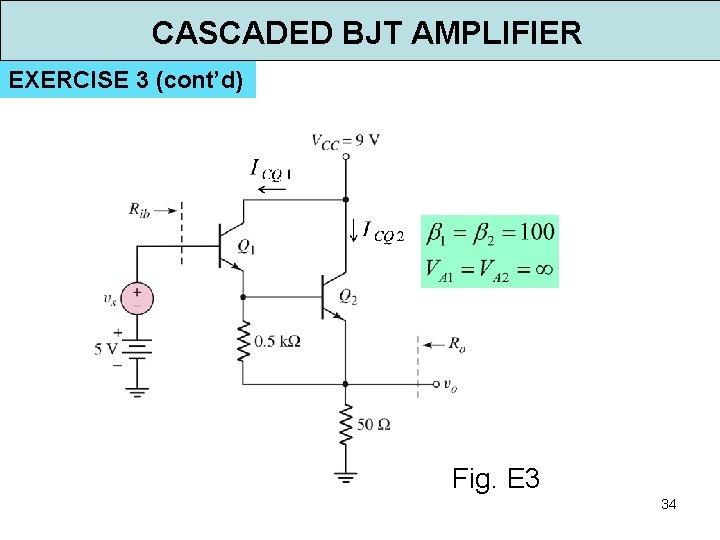
CASCADED BJT AMPLIFIER EXERCISE 3 (cont’d) Fig. E 3 34
- Slides: 34