
Carving Up Africa The Age of African Imperialism
- Slides: 24
Carving Up Africa The Age of African Imperialism
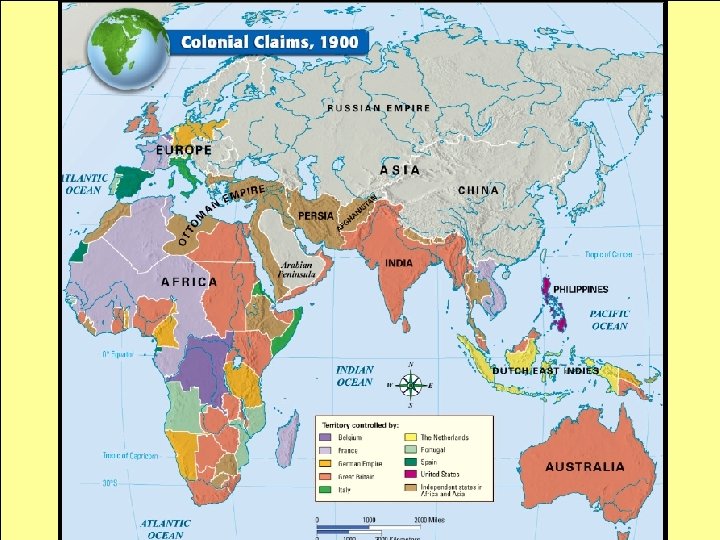
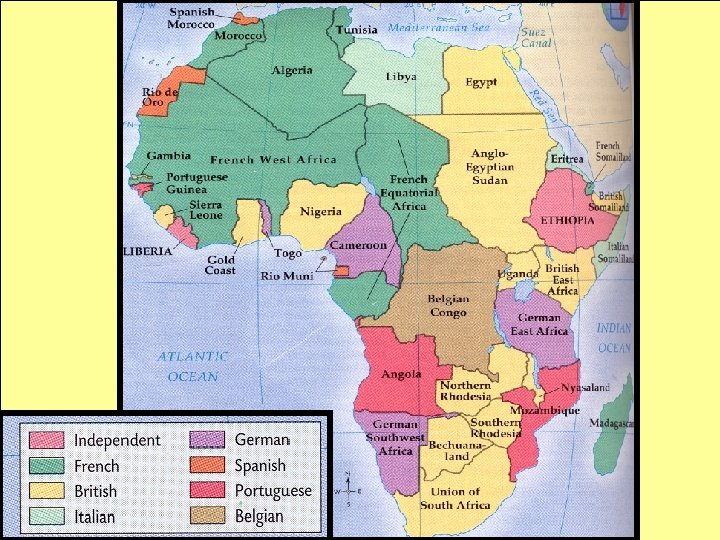
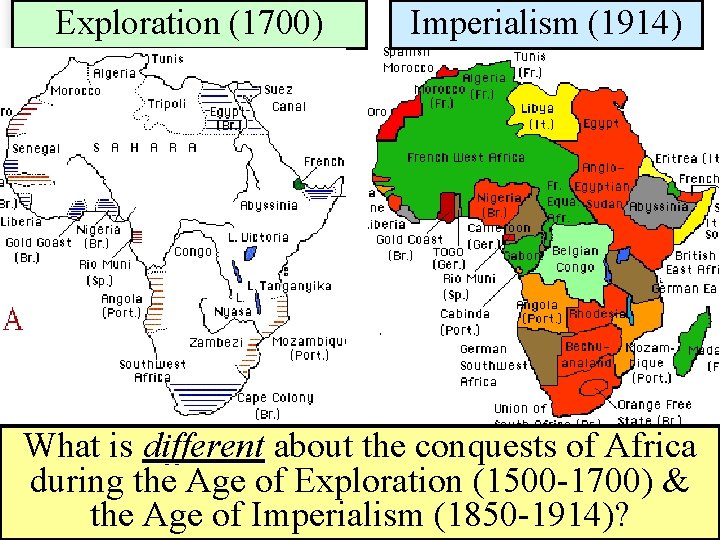
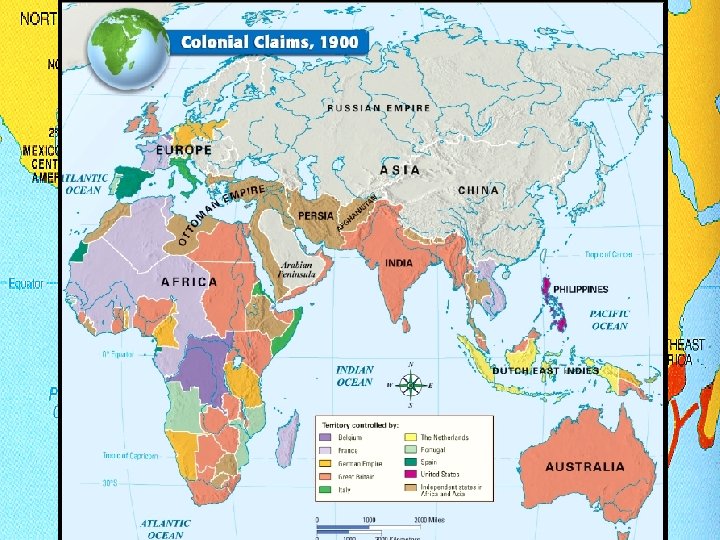
Ignorance & Interest in Africa n Until the 1800 s, little was known about Africa except its coastal areas – David Livingstone began to explore the unknown areas in Africa, causing a huge interest in Africa & a mad race for colonies from 1880 -1914 – Starting in 1885, 14 European nations partitioned (divided) Africa; By 1914— 90% of Africa was controlled by Europeans
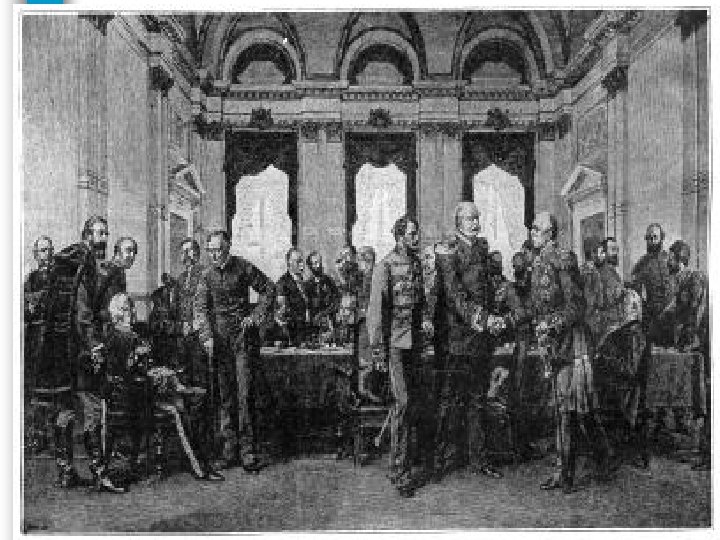
The Congress of Berlin n By 1885, scramble for African colonies became fierce! – 12 major European countries, the USA, Russia, & Ottoman Empire met to “define the rules of the game” regarding imperialism in Africa – This Congress of Berlin settled issues such as navigation & trade rights, future colonization of Africa • But it was not attended by any African nation!
Exploration (1700) Imperialism (1914) What is different about the conquests of Africa during the Age of Exploration (1500 -1700) & the Age of Imperialism (1850 -1914)?
Belgium n After David Livingstone’s reports of the potential of central Africa, Belgium became the first country to colonize Africa, claiming the Congo (in 1879) n Medicine & new steamboats allowed explorers to go further inland to explore
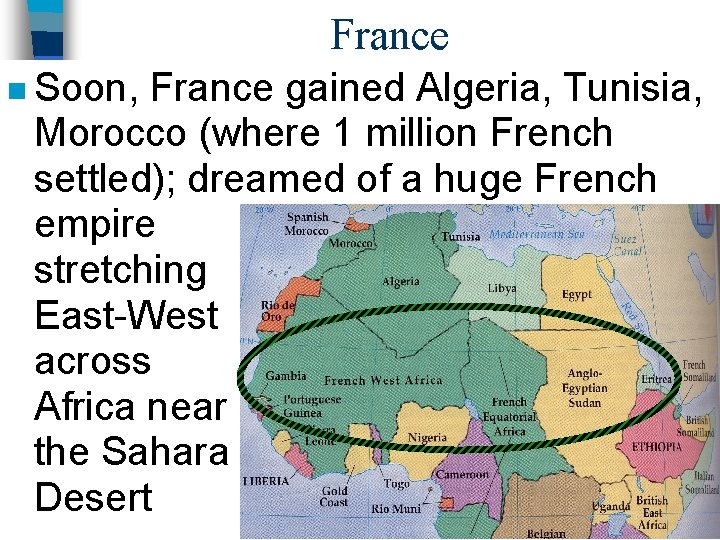
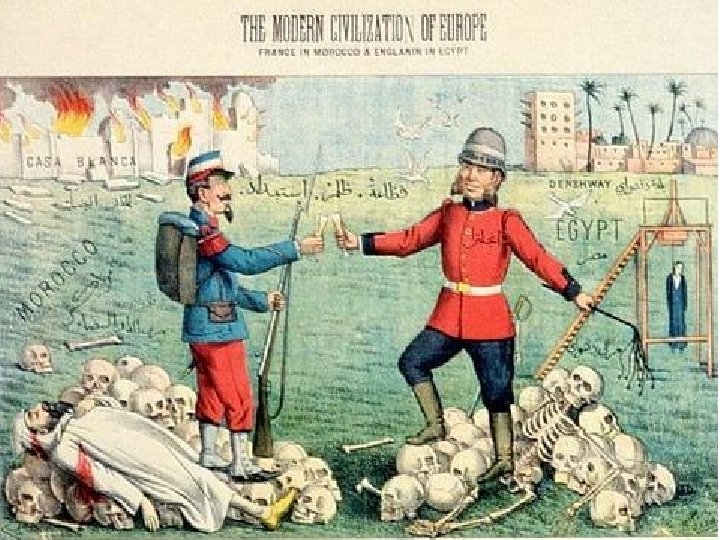
France n Soon, France gained Algeria, Tunisia, Morocco (where 1 million French settled); dreamed of a huge French empire stretching East-West across Africa near the Sahara Desert
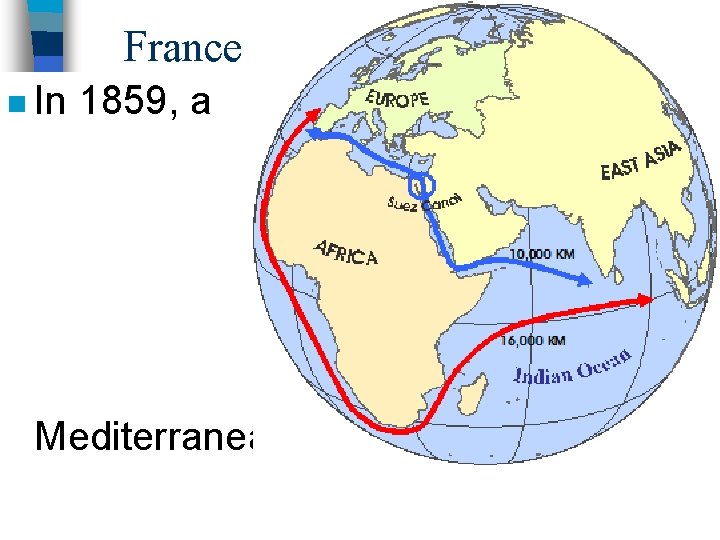
France n In 1859, a company built the Suez Canal to connect the Red Sea & the Mediterranean Sea French
England n England had important colonies in India & Australia so the Suez Canal was very important n In 1882, Britain gained control of the Suez Canal & made Egypt a protectorate, took control of Sudan, & parts of East Africa
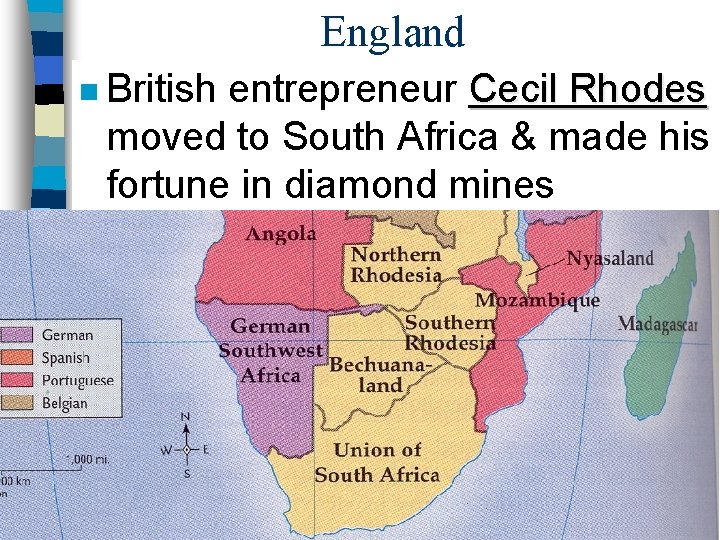
England n British entrepreneur Cecil Rhodes moved to South Africa & made his fortune in diamond mines
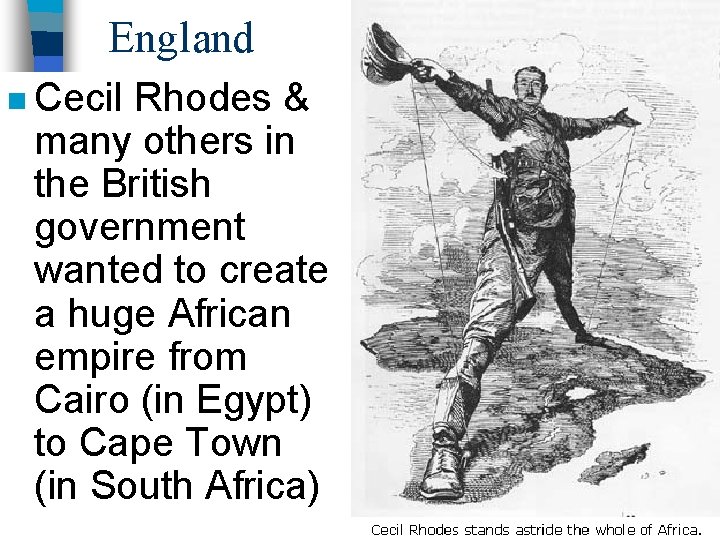
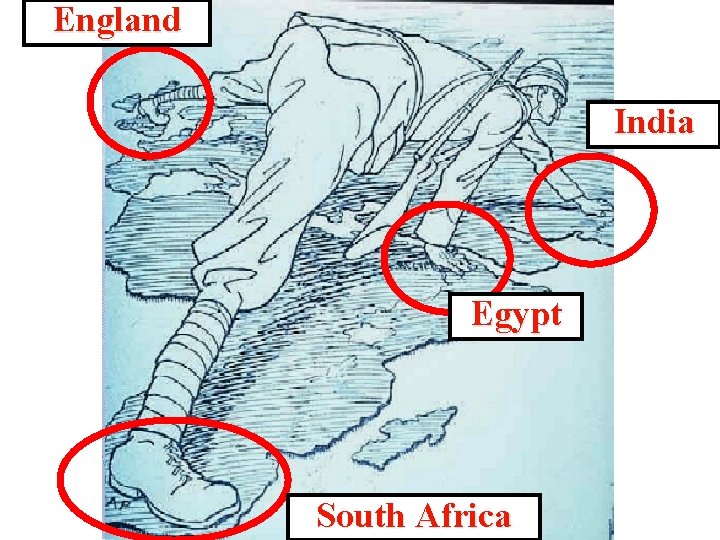
England n Cecil Rhodes & many others in the British government wanted to create a huge African empire from Cairo (in Egypt) to Cape Town (in South Africa)
England India Egypt South Africa
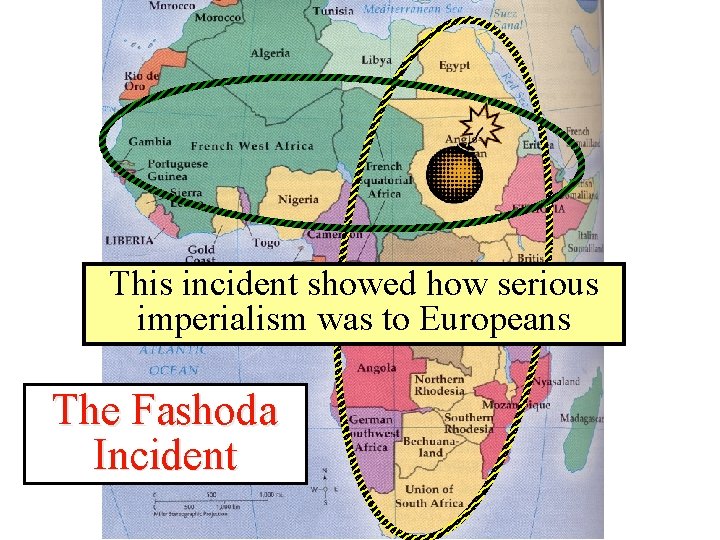
England n The race for African colonies led to a near war between France & England called the Fashoda Incident: Incident –England’s north-south “empire” overlapped France’s east-west “empire” near the town of Fashoda in the Sudan
This incident showed how serious imperialism was to Europeans The Fashoda Incident
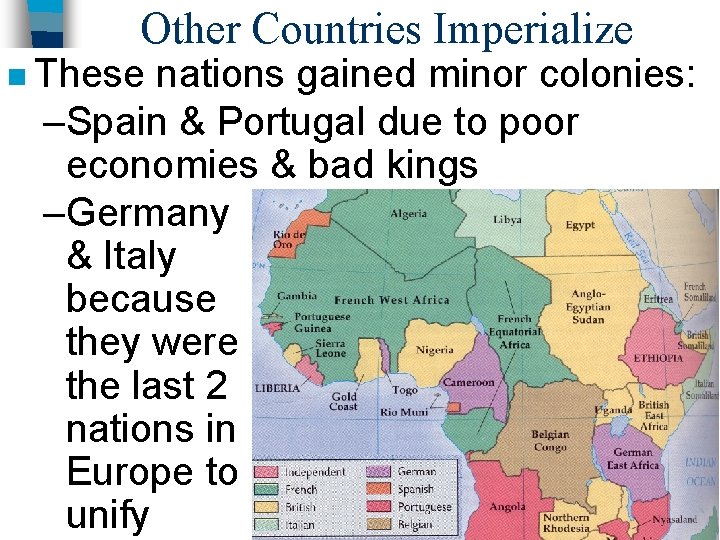
Other Countries Imperialize n These nations gained minor colonies: –Spain & Portugal due to poor economies & bad kings –Germany & Italy because they were the last 2 nations in Europe to unify
So, Was Imperialism Good or Bad?
Effects of Imperialism n Imperialists profited from colonial mines, plantations, & factories n Africans were hired at low wages, were not taught professional skills, & were heavily taxed; tribes fought other tribes n Schools & churches were set up to “reteach” Western ways; led to a decline in African traditions
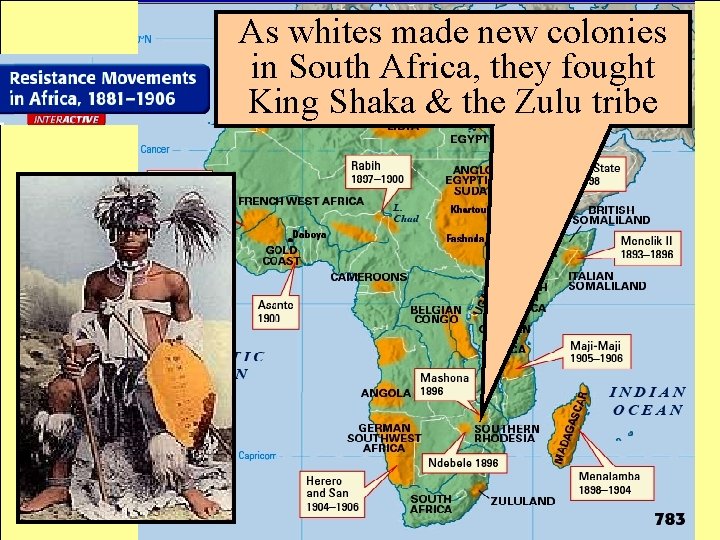
As whites made new colonies in South Africa, they fought King Shaka & the Zulu tribe
Effects of Imperialism n Whites in South Africa used segregation called Apartheid (legal separation of blacks & whites); Apartheid kept Africans out of power for over 100 years n Over time, educated Africans all over the continent demanded selfrule; by 2000 complete independence from European rule