
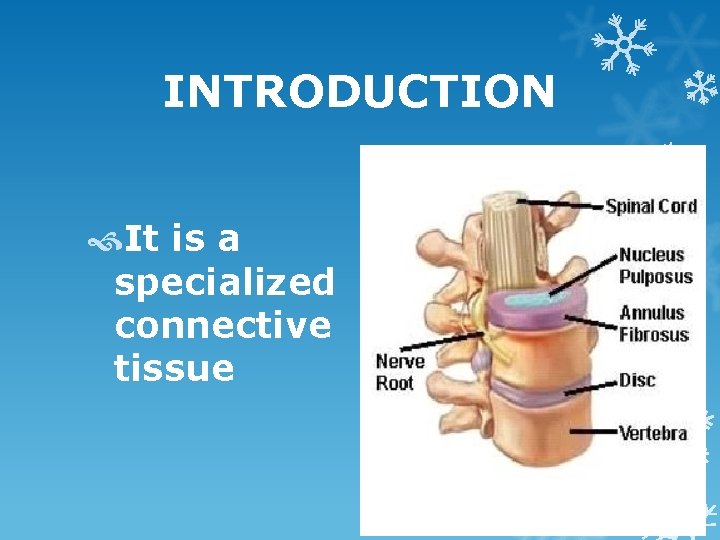
CARTILAGE INTRODUCTION It is a specialized connective tissue



- Slides: 21
CARTILAGE
INTRODUCTION It is a specialized connective tissue
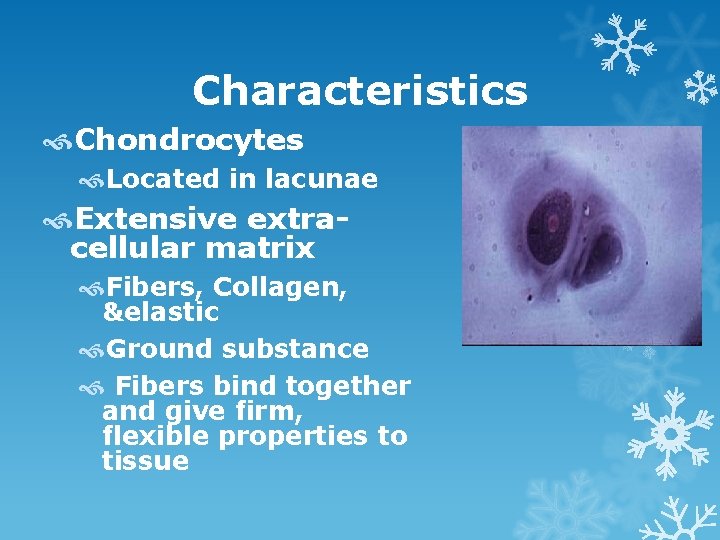
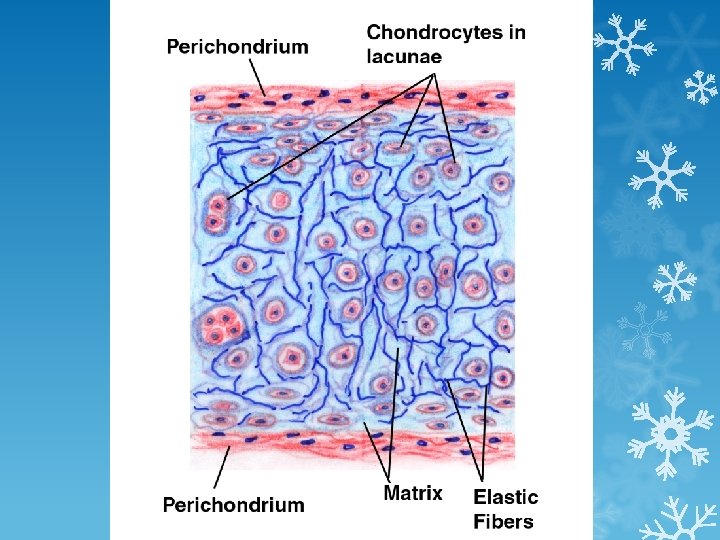
Characteristics Chondrocytes Located in lacunae Extensive extracellular matrix Fibers, Collagen, &elastic Ground substance Fibers bind together and give firm, flexible properties to tissue
Functions of Cartilage Firm consistency of the extracellular matrix allows the tissue to bear mechanical stresses without permanent distortion Supports soft tissues. Shock-absorbing because it is resilient. Smooth surface allows sliding. Essential for growth, development of bone.
TYPES OF CARTILAGE There are 3 types of cartilage Hyaline cartilage Fibrous cartilage Elastic cartilage
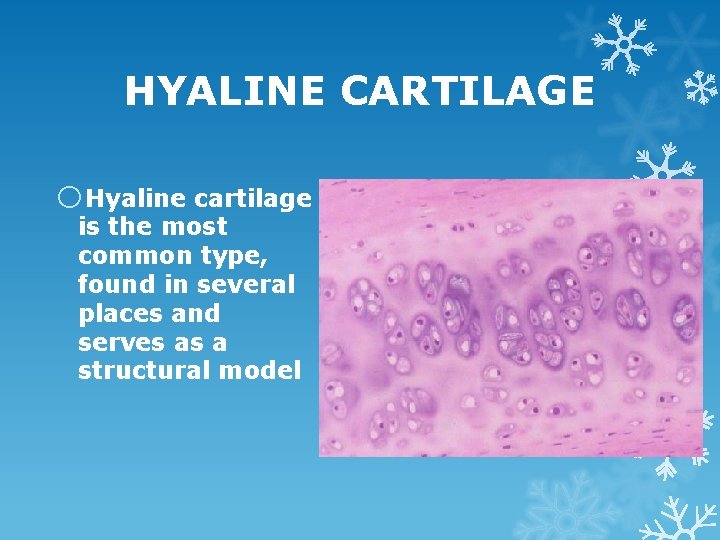
HYALINE CARTILAGE o. Hyaline cartilage is the most common type, found in several places and serves as a structural model
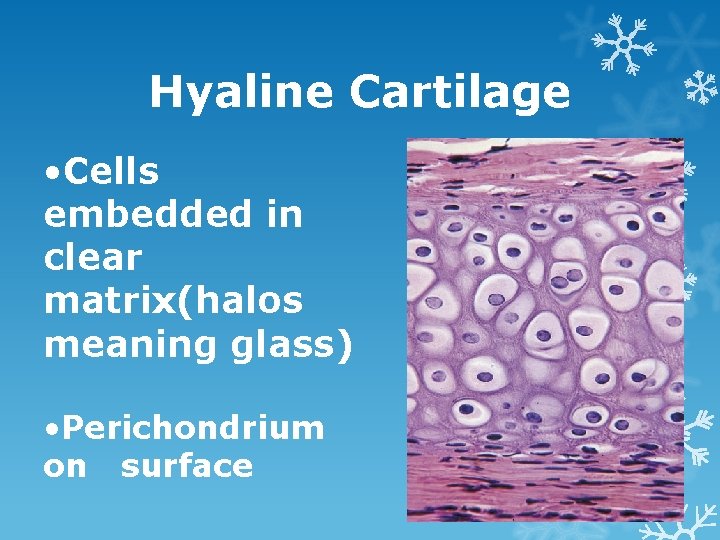
Hyaline Cartilage • Cells embedded in clear matrix(halos meaning glass) • Perichondrium on surface
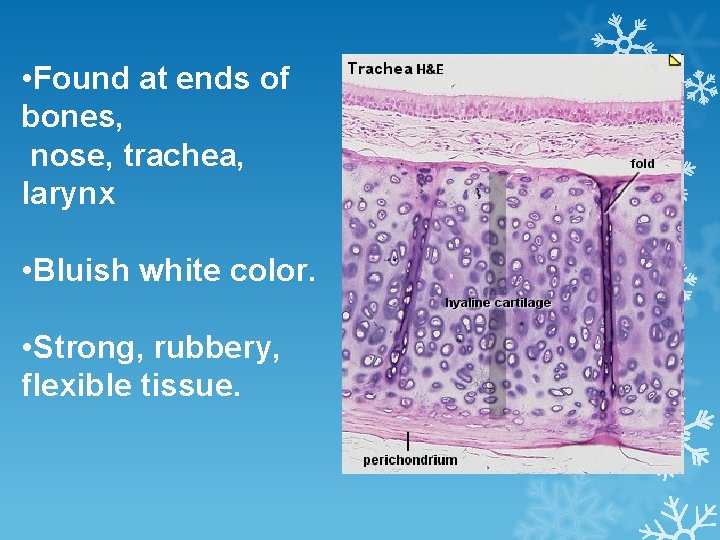
• Found at ends of bones, nose, trachea, larynx • Bluish white color. • Strong, rubbery, flexible tissue.
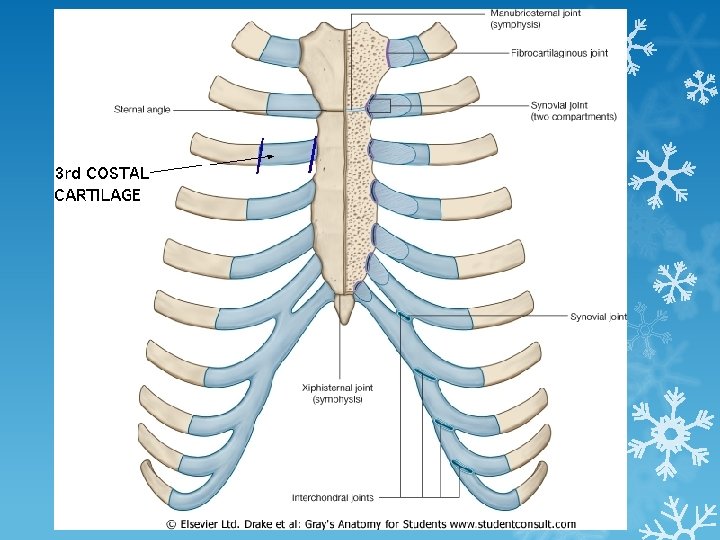
TYPES OF HYALINE CARTILAGE It has two types Articular Costal
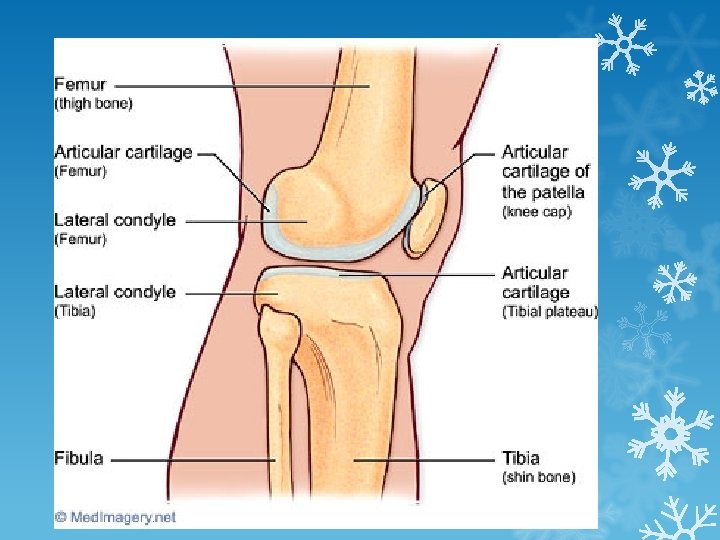
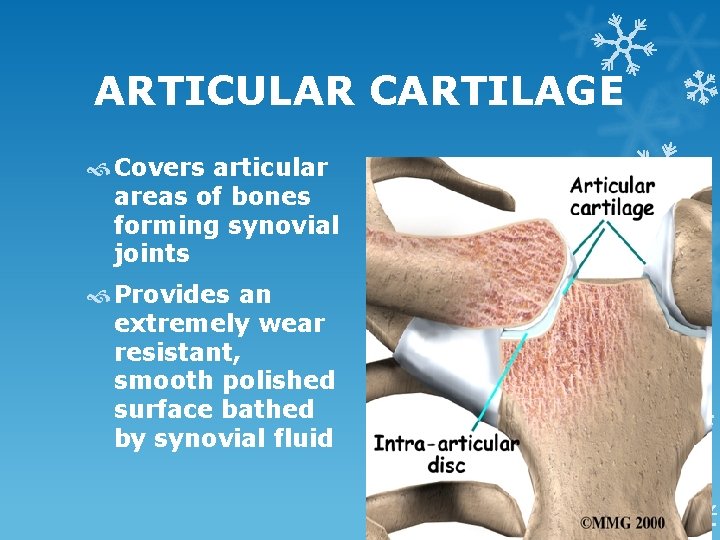
ARTICULAR CARTILAGE Covers articular areas of bones forming synovial joints Provides an extremely wear resistant, smooth polished surface bathed by synovial fluid
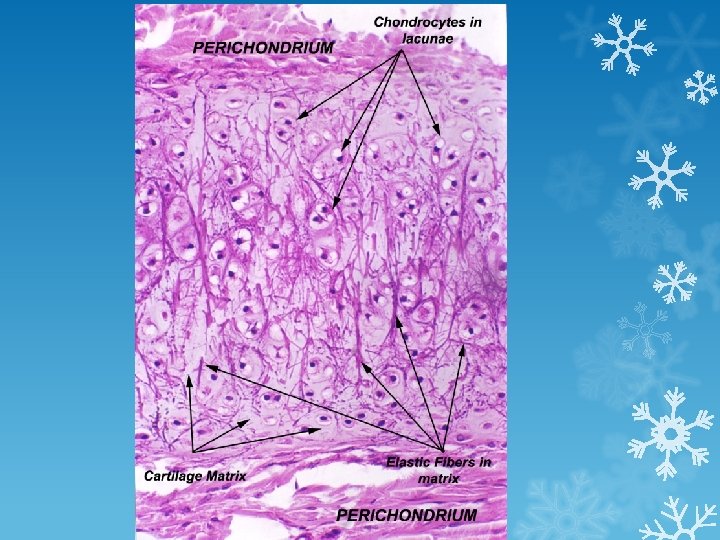
ELASTIC CARTILAGE Yellowish in colour Contains elastic fibers
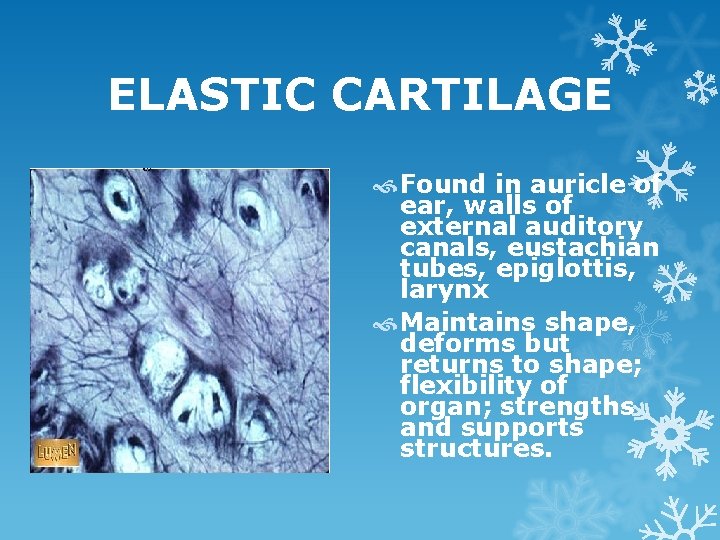
ELASTIC CARTILAGE Found in auricle of ear, walls of external auditory canals, eustachian tubes, epiglottis, larynx Maintains shape, deforms but returns to shape; flexibility of organ; strengths and supports structures.
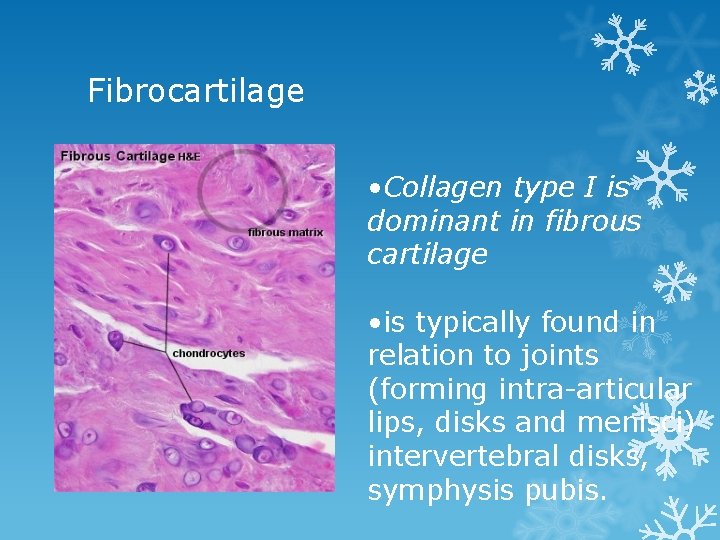
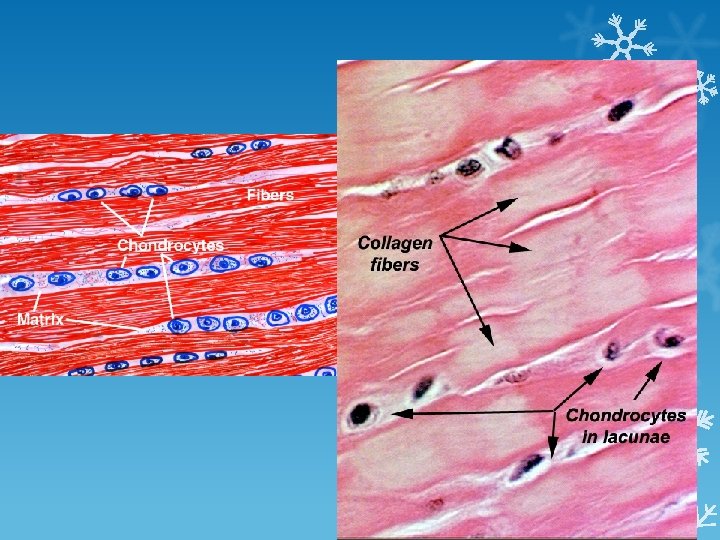
Fibrocartilage • Collagen type I is dominant in fibrous cartilage • is typically found in relation to joints (forming intra-articular lips, disks and menisci) intervertebral disks, symphysis pubis.