
Carrying Capacity Sustainable population size in an environment
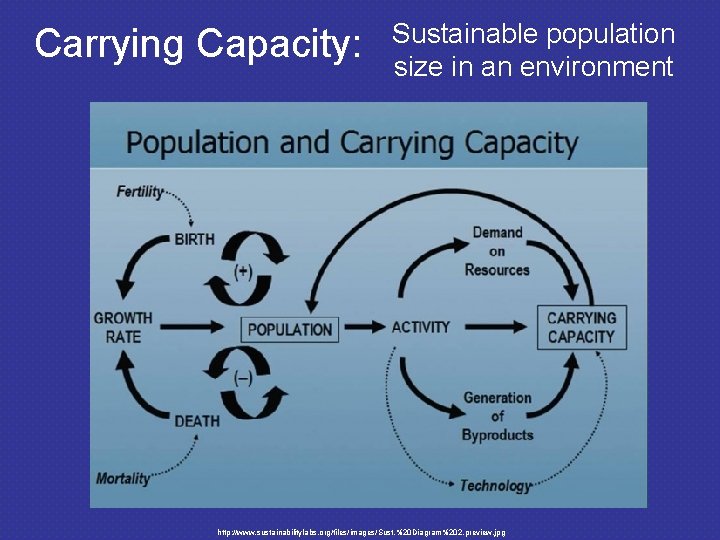
Carrying Capacity: Sustainable population size in an environment http: //www. sustainabilitylabs. org/files/images/Sust. %20 Diagram%202. preview. jpg
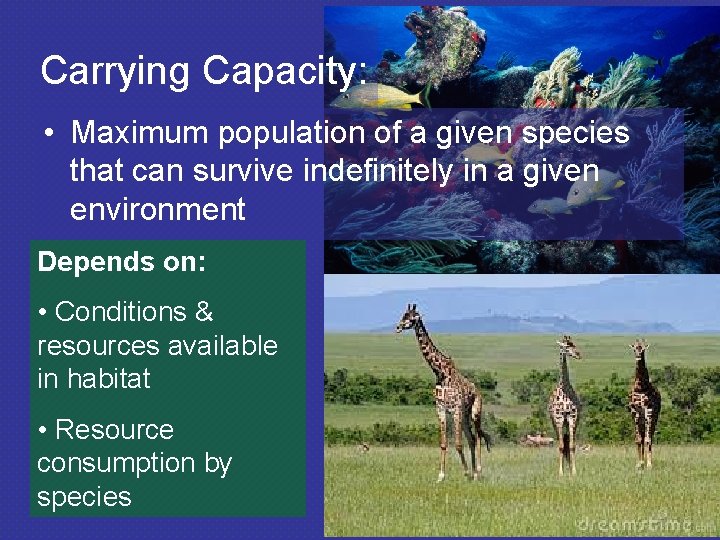
Carrying Capacity: • Maximum population of a given species that can survive indefinitely in a given environment Depends on: • Conditions & resources available in habitat • Resource consumption by species
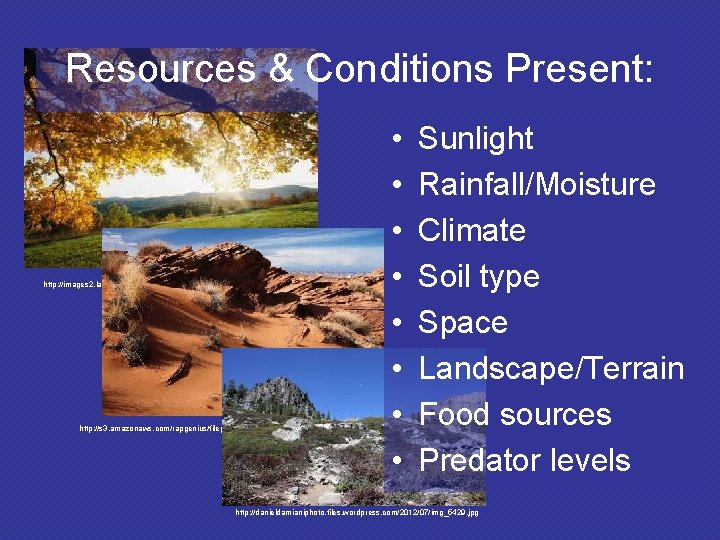
Resources & Conditions Present: http: //images 2. layoutsparks. com/1/175362/sunlight-trees-woods. jpg • • http: //s 3. amazonaws. com/rapgenius/filepicker%2 Fs. FCTed. Rr. S 6 e. Er. J 7 b 0 cw. Y_hot_desert. jpg Sunlight Rainfall/Moisture Climate Soil type Space Landscape/Terrain Food sources Predator levels http: //danieldamianiphoto. files. wordpress. com/2012/07/img_5429. jpg
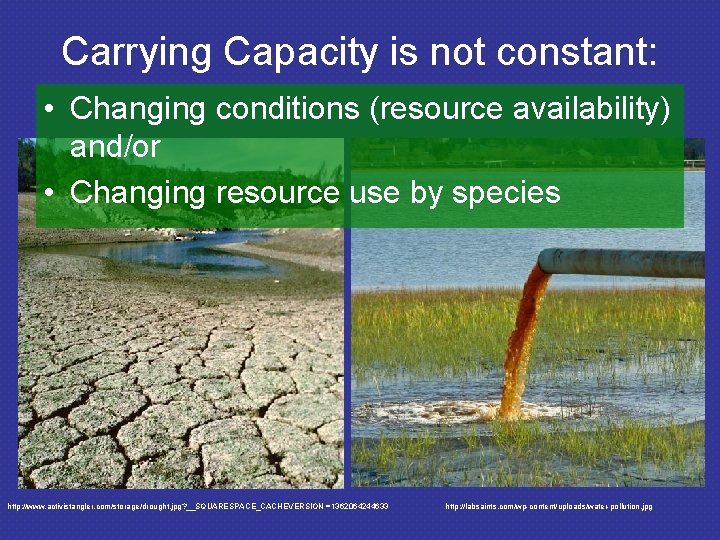
Carrying Capacity is not constant: • Changing conditions (resource availability) and/or • Changing resource use by species http: //www. activistangler. com/storage/drought. jpg? __SQUARESPACE_CACHEVERSION =1362064244633 http: //labsaints. com/wp-content/uploads/water-pollution. jpg
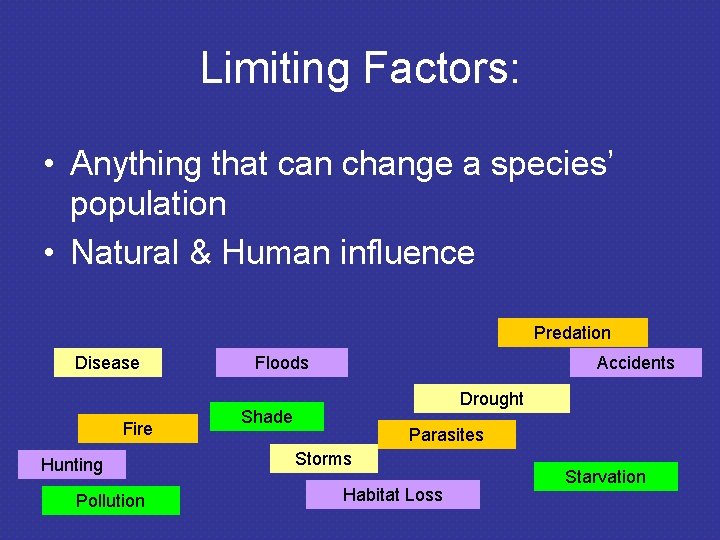
Limiting Factors: • Anything that can change a species’ population • Natural & Human influence Predation Disease Fire Hunting Pollution Floods Accidents Drought Shade Parasites Storms Habitat Loss Starvation

Carrying Capacity for a Species: http: //culturingscience. files. wordpress. com/2010/10/carrying-capacity. jpg
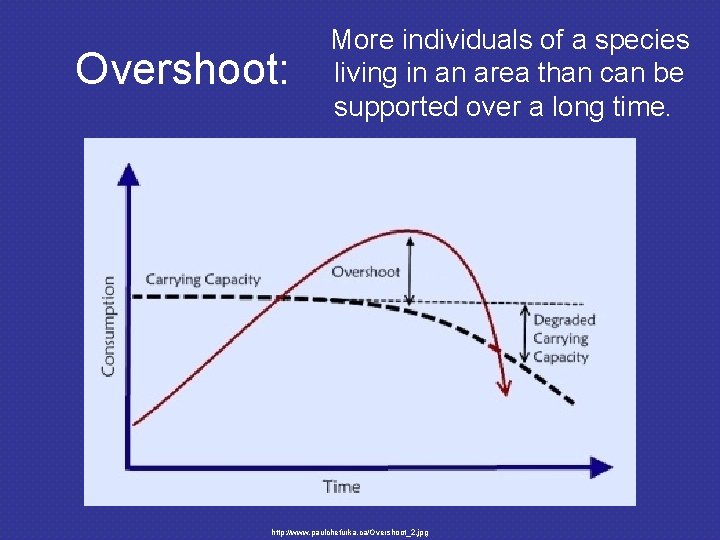
Overshoot: More individuals of a species living in an area than can be supported over a long time. http: //www. paulchefurka. ca/Overshoot_2. jpg
Carrying Capacity Overview: • Defined as a sustainable population level for a species within an environment • Influenced by abiotic (non-living) and biotic (living) factors • Connecting resource use & availability with population http: //nssdc. gsfc. nasa. gov/image/planetary/earth/apollo 17_earth. jpg
- Slides: 8