
Carrying Capacity How It Affects Populations Carrying Capacity
- Slides: 18
Carrying Capacity How It Affects Populations
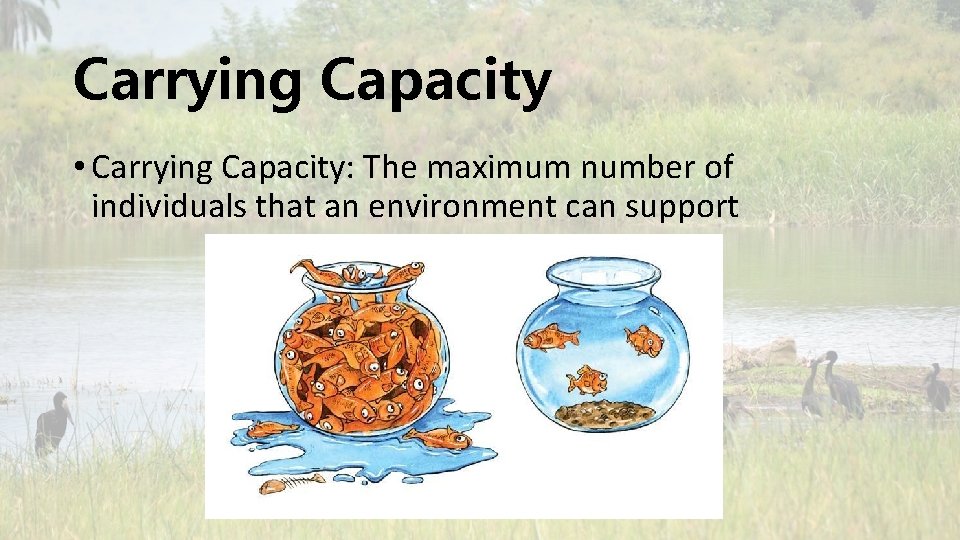
Carrying Capacity • Carrying Capacity: The maximum number of individuals that an environment can support
Question…. . • Do humans have a carrying capacity? • 7. 8 Billion People in the world right now. • The world population is projected to reach 9. 9 billion by 2050!
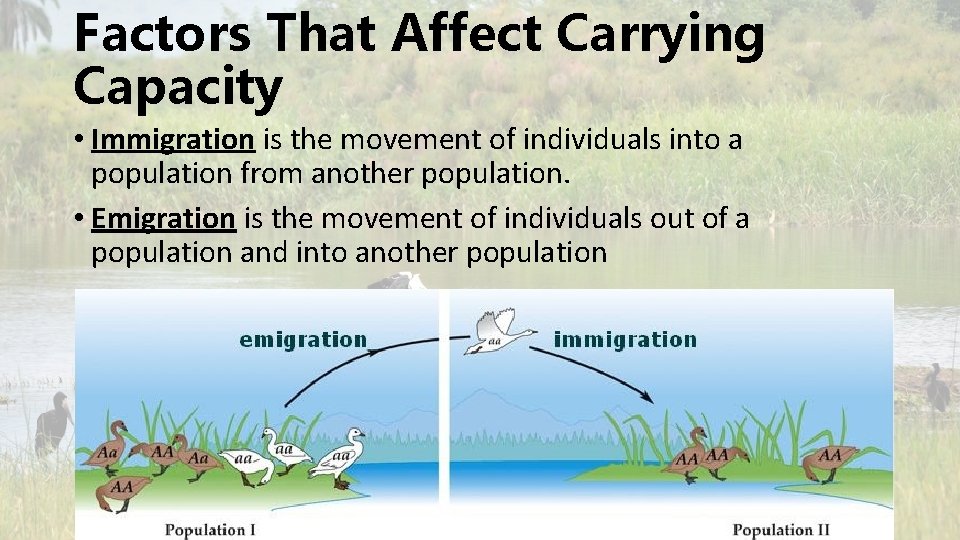
Factors That Affect Carrying Capacity • Immigration is the movement of individuals into a population from another population. • Emigration is the movement of individuals out of a population and into another population
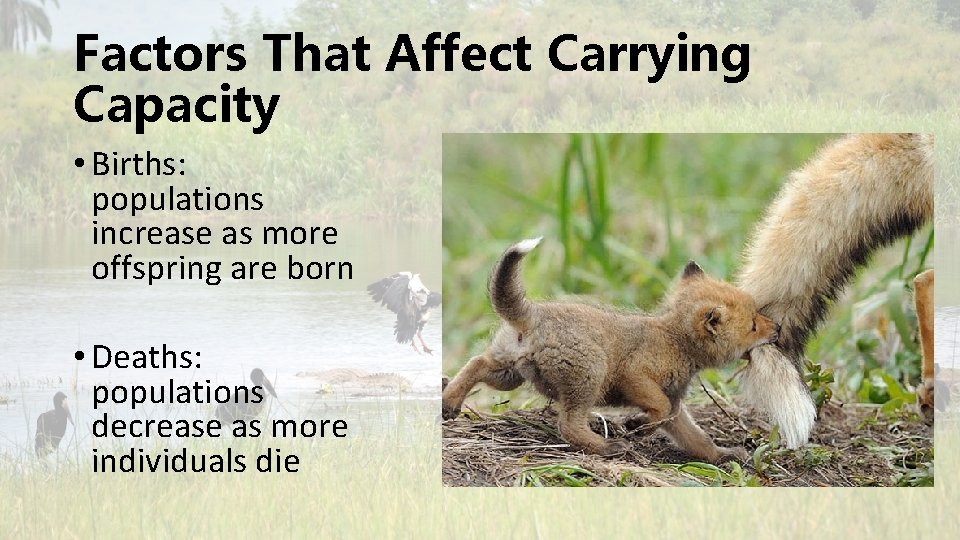
Factors That Affect Carrying Capacity • Births: populations increase as more offspring are born • Deaths: populations decrease as more individuals die
Population graphs… • Just like from math you will make a graph with an X and a Y axis. • 99% of the time period will be labeled on the X axis. • # of individuals will be labeled on the Y axis. • MUST SHOW LABELING!!
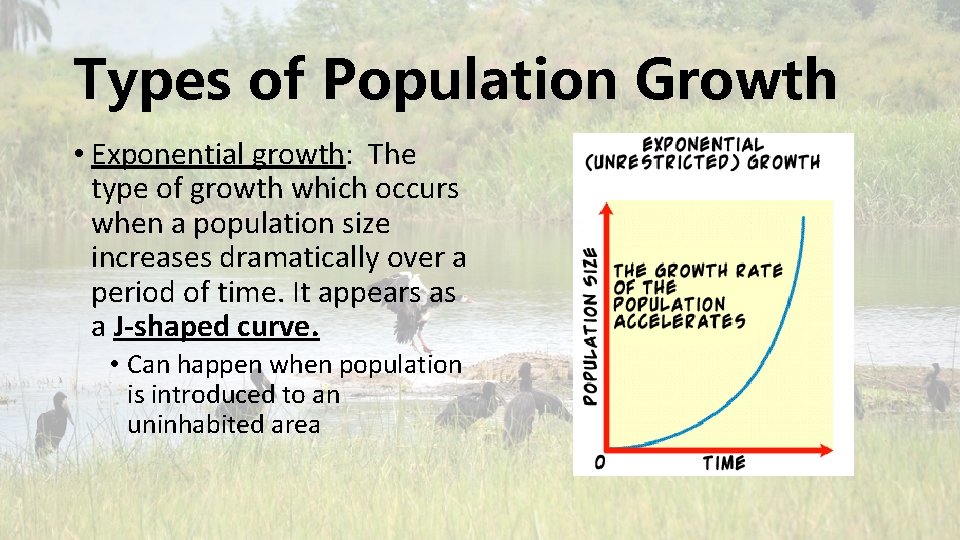
Types of Population Growth • Exponential growth: The type of growth which occurs when a population size increases dramatically over a period of time. It appears as a J-shaped curve. • Can happen when population is introduced to an uninhabited area
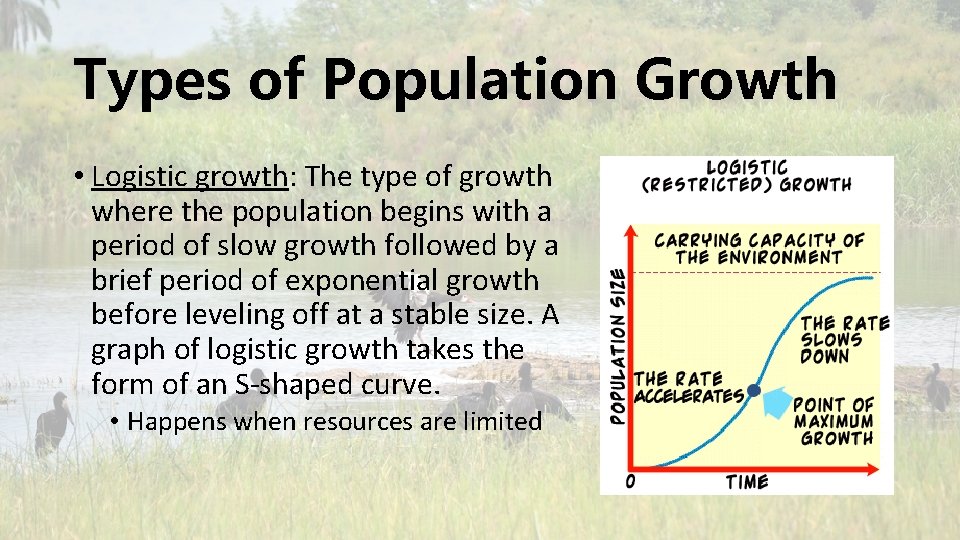
Types of Population Growth • Logistic growth: The type of growth where the population begins with a period of slow growth followed by a brief period of exponential growth before leveling off at a stable size. A graph of logistic growth takes the form of an S-shaped curve. • Happens when resources are limited
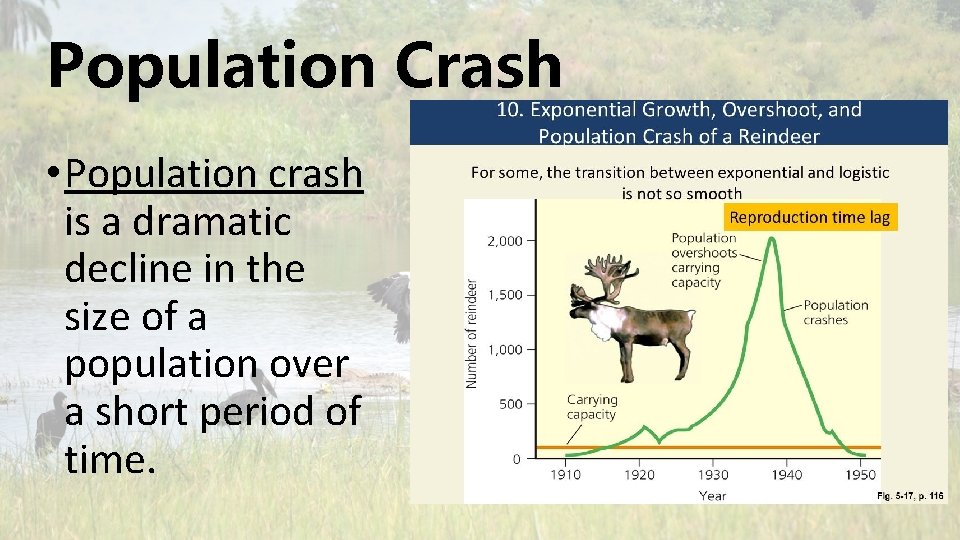
Population Crash • Population crash is a dramatic decline in the size of a population over a short period of time.
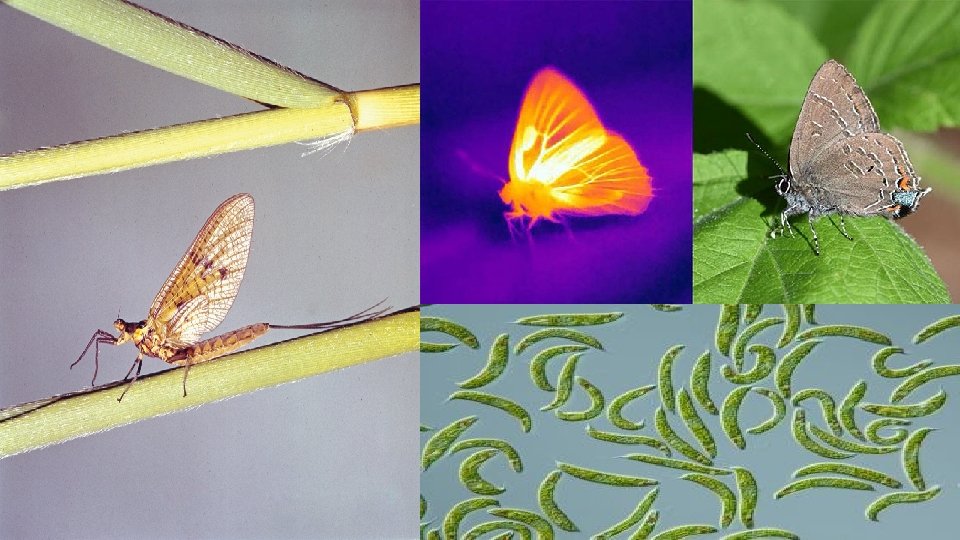
Life history patterns • Rapid life history patterns- Organisms with this reproductive pattern have small body size, mature rapidly, reproduce early, and have short life spans. • Usually due to high mortality rate, low life expectancy, or Small population size. • Mayflies video: https: //www. youtube. com/watch? v=y. Ct. Qa 5 ajmp. U
Thing to mention • Rapid life history pattern organisms have little to no parental care for their young. • Why do you think that is?
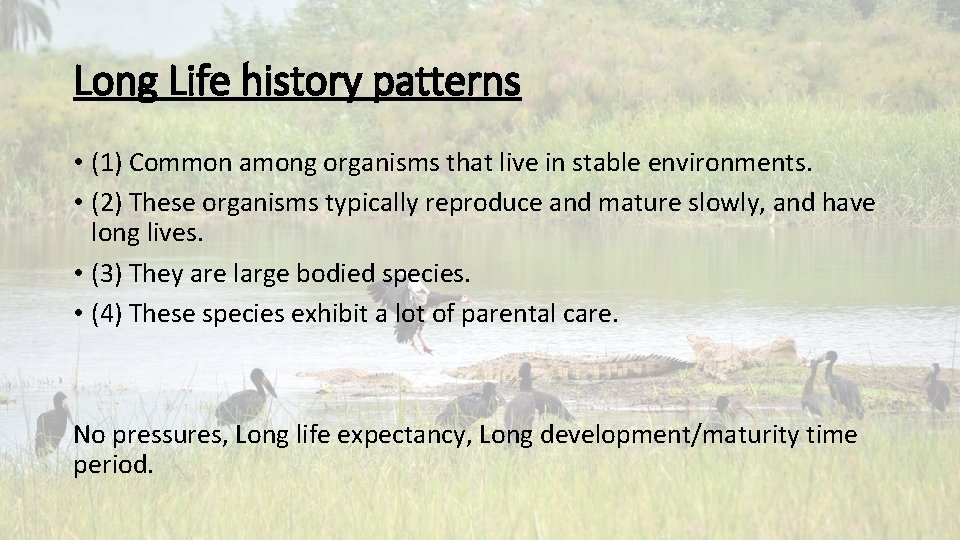
Long Life history patterns • (1) Common among organisms that live in stable environments. • (2) These organisms typically reproduce and mature slowly, and have long lives. • (3) They are large bodied species. • (4) These species exhibit a lot of parental care. No pressures, Long life expectancy, Long development/maturity time period.
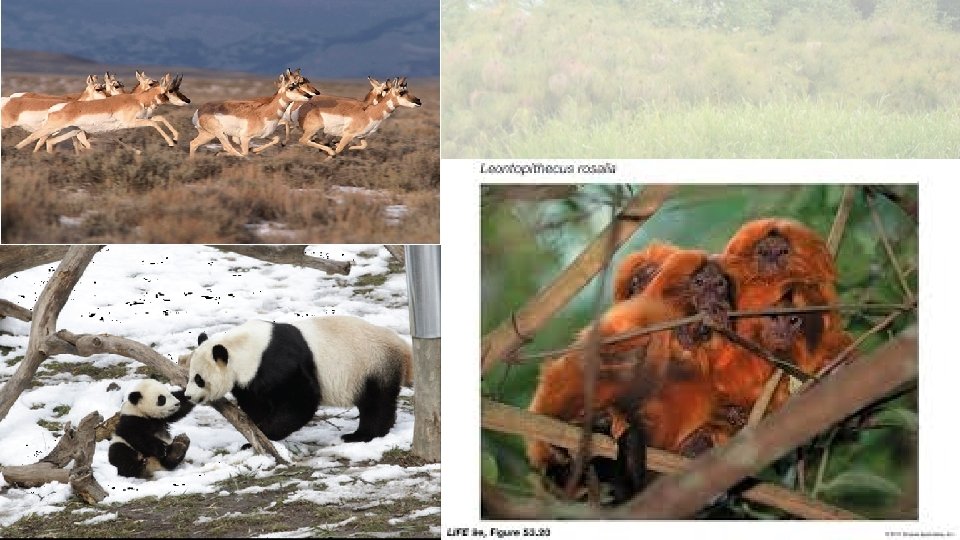
Thing to mention. • Organisms that undergo long life history patterns will typically have less offspring, but more parental care. • Why?
Activity • Model population growth. Model organisms that would display exponential growth, and then model an organism that would display Logistic growth. Show what would happen over a time period of 10 years. Show Graphs, and give Model examples!
Questions… • 1. These are non-living factors which can influence population growth. Such as temperature, availability of water etc. • 2. Organisms with this reproductive pattern have small body size, mature rapidly, reproduce early, and have short life spans. • 3. A population that grows until it reaches its carrying capacity usually has the shape of an……?
Questions Continued • 4. This is the movement of individuals out of a population and into another population…. . • 5. This is the maximum number of individuals that an environment can support.