
Carnegie Mellon Worcester Polytechnic Institute Instructionlevel Parallelism Superscalar
- Slides: 19
Carnegie Mellon Worcester Polytechnic Institute Instruction-level Parallelism “Superscalar” Processors Professor Hugh C. Lauer CS-4515, System Programming Concepts (Slides include copyright materials from Computer Architecture: A Quantitative Approach, 5 th ed. , by Hennessy and Patterson and from Computer Organization and Design, 4 th ed. by Patterson and Hennessy) CS-4515, D-Term 2015 Instruction-Level Parallelism 1
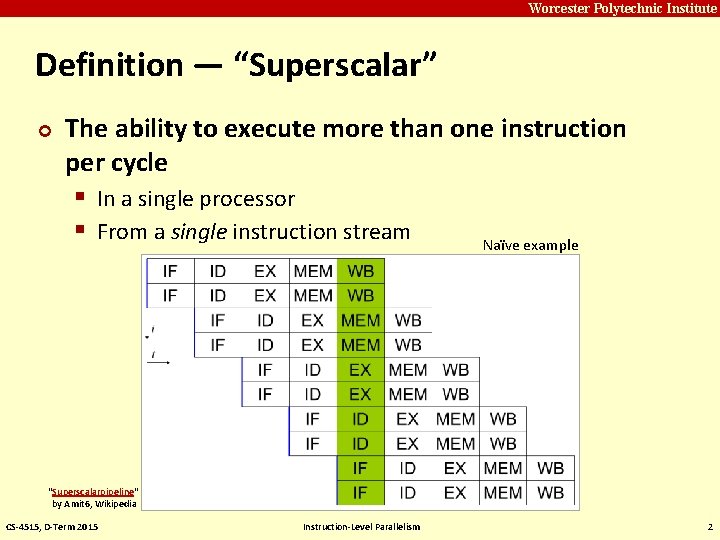
Carnegie Mellon Worcester Polytechnic Institute Definition — “Superscalar” ¢ The ability to execute more than one instruction per cycle § In a single processor § From a single instruction stream Naïve example "Superscalarpipeline" by Amit 6, Wikipedia CS-4515, D-Term 2015 Instruction-Level Parallelism 2
Carnegie Mellon Worcester Polytechnic Institute Requires ¢ ¢ ¢ Ability to fetch more than one instruction at a time from instruction stream Multiple execution units Ability to deal with multiple control and data hazards on each cycle Ability to write and/or forward results All to maintain instruction rate > 1 per cycle § CPI < 1. 0 ! CS-4515, D-Term 2015 Instruction-Level Parallelism 3
Carnegie Mellon Worcester Polytechnic Institute Reading assignment ¢ ¢ Re-read §C. 7 § Especially “Dynamically Scheduled Pipelines” Chapter 3 § Esp § 3. 4, “Overcoming Data Hazards with Dynamic Scheduling ¢ Next week: – Team C will discuss Tomasulo’s algorithm and advanced numeric computing CS-4515, D-Term 2015 Instruction-Level Parallelism 4
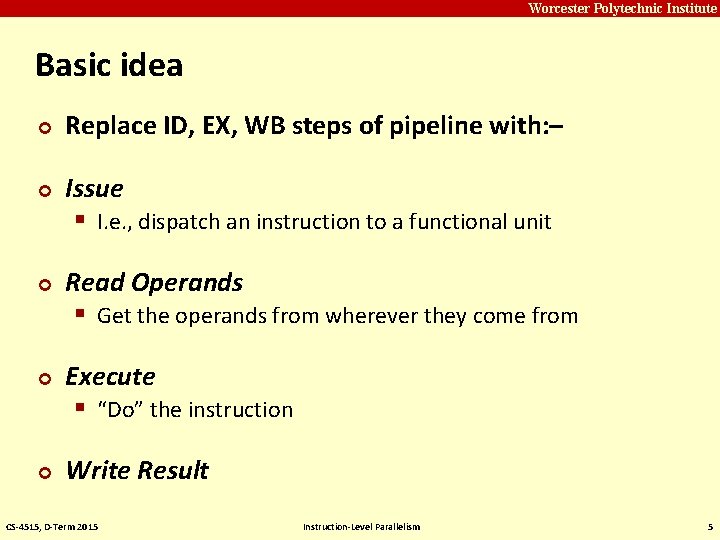
Carnegie Mellon Worcester Polytechnic Institute Basic idea ¢ ¢ ¢ Replace ID, EX, WB steps of pipeline with: – Issue § I. e. , dispatch an instruction to a functional unit Read Operands § Get the operands from wherever they come from Execute § “Do” the instruction Write Result CS-4515, D-Term 2015 Instruction-Level Parallelism 5
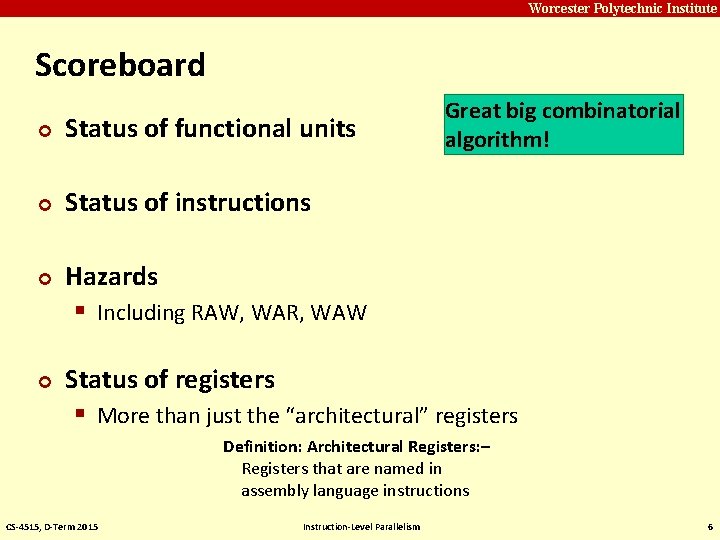
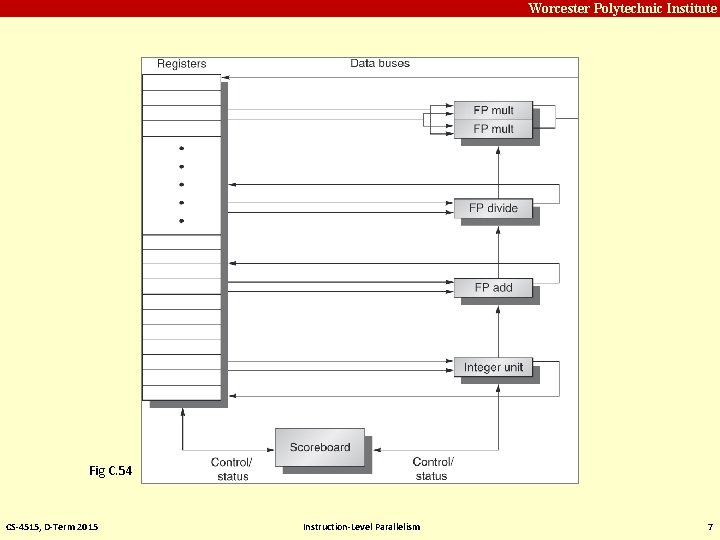
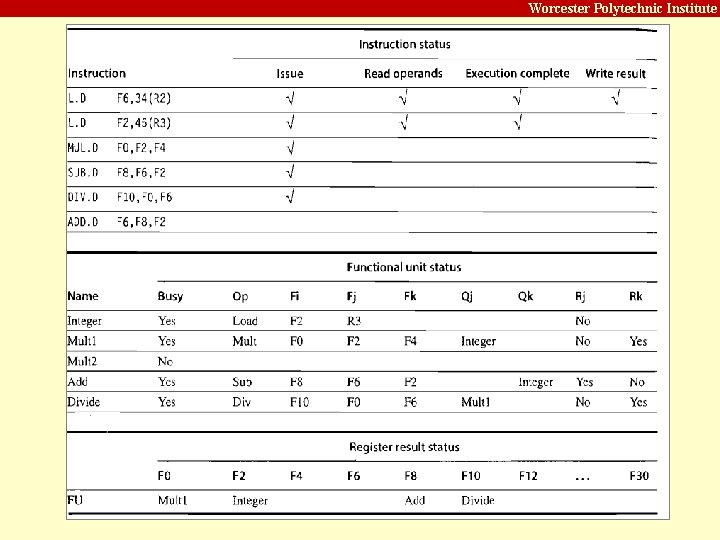
Carnegie Mellon Worcester Polytechnic Institute Scoreboard ¢ Status of functional units ¢ Status of instructions ¢ ¢ Great big combinatorial algorithm! Hazards § Including RAW, WAR, WAW Status of registers § More than just the “architectural” registers Definition: Architectural Registers: – Registers that are named in assembly language instructions CS-4515, D-Term 2015 Instruction-Level Parallelism 6
Carnegie Mellon Worcester Polytechnic Institute Fig C. 54 CS-4515, D-Term 2015 Instruction-Level Parallelism 7
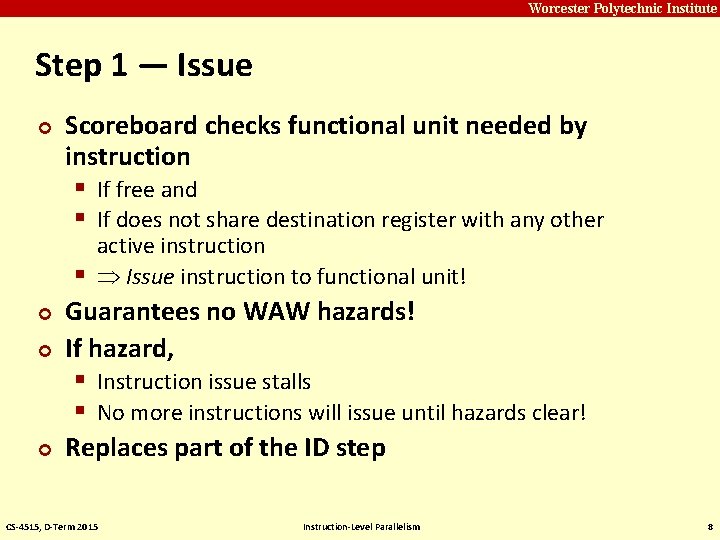
Carnegie Mellon Worcester Polytechnic Institute Step 1 — Issue ¢ Scoreboard checks functional unit needed by instruction § If free and § If does not share destination register with any other active instruction § Issue instruction to functional unit! ¢ ¢ ¢ Guarantees no WAW hazards! If hazard, § Instruction issue stalls § No more instructions will issue until hazards clear! Replaces part of the ID step CS-4515, D-Term 2015 Instruction-Level Parallelism 8
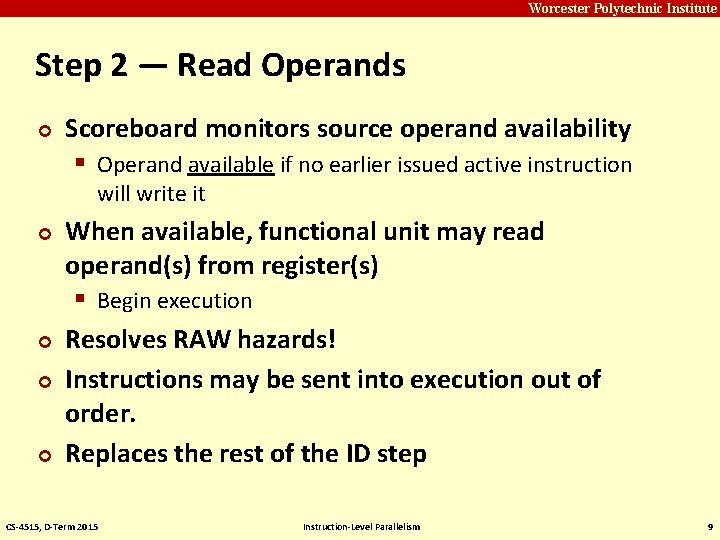
Carnegie Mellon Worcester Polytechnic Institute Step 2 — Read Operands ¢ Scoreboard monitors source operand availability § Operand available if no earlier issued active instruction will write it ¢ ¢ When available, functional unit may read operand(s) from register(s) § Begin execution Resolves RAW hazards! Instructions may be sent into execution out of order. Replaces the rest of the ID step CS-4515, D-Term 2015 Instruction-Level Parallelism 9
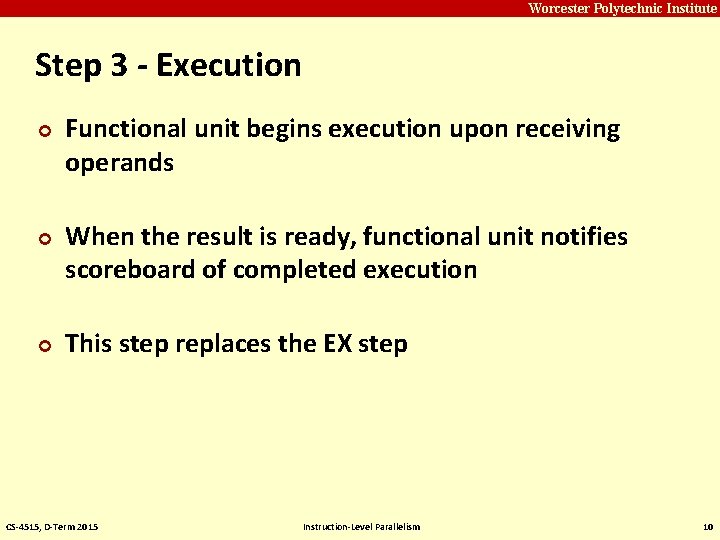
Carnegie Mellon Worcester Polytechnic Institute Step 3 - Execution ¢ ¢ ¢ Functional unit begins execution upon receiving operands When the result is ready, functional unit notifies scoreboard of completed execution This step replaces the EX step CS-4515, D-Term 2015 Instruction-Level Parallelism 10
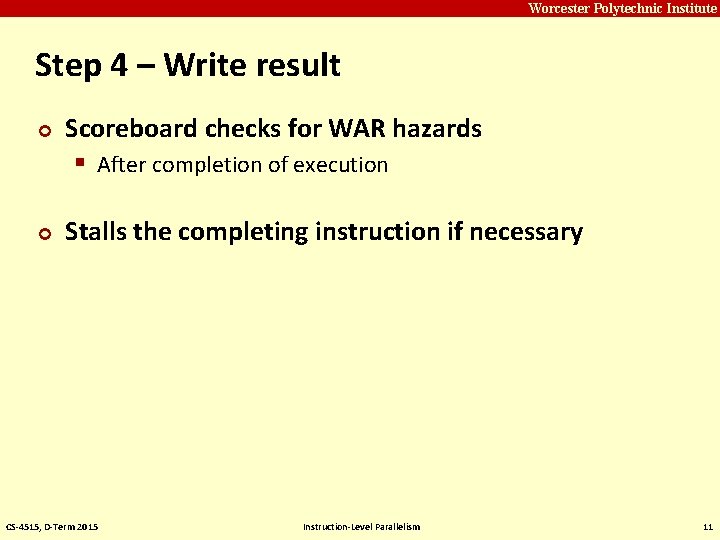
Carnegie Mellon Worcester Polytechnic Institute Step 4 – Write result ¢ ¢ Scoreboard checks for WAR hazards § After completion of execution Stalls the completing instruction if necessary CS-4515, D-Term 2015 Instruction-Level Parallelism 11
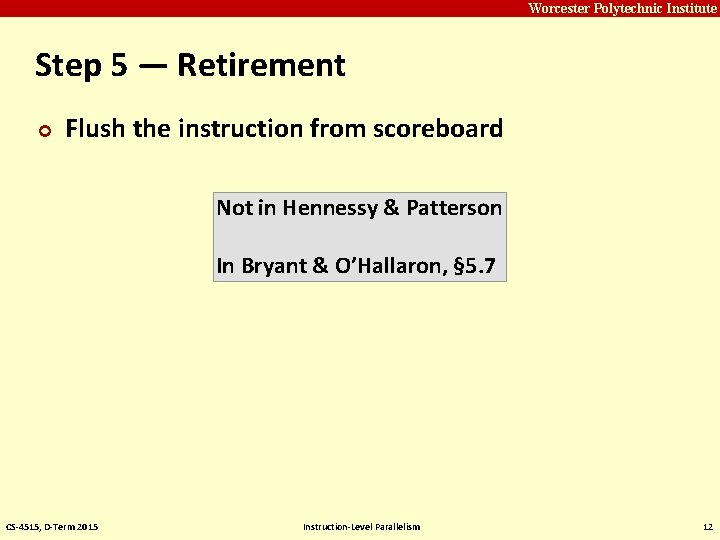
Carnegie Mellon Worcester Polytechnic Institute Step 5 — Retirement ¢ Flush the instruction from scoreboard Not in Hennessy & Patterson In Bryant & O’Hallaron, § 5. 7 CS-4515, D-Term 2015 Instruction-Level Parallelism 12
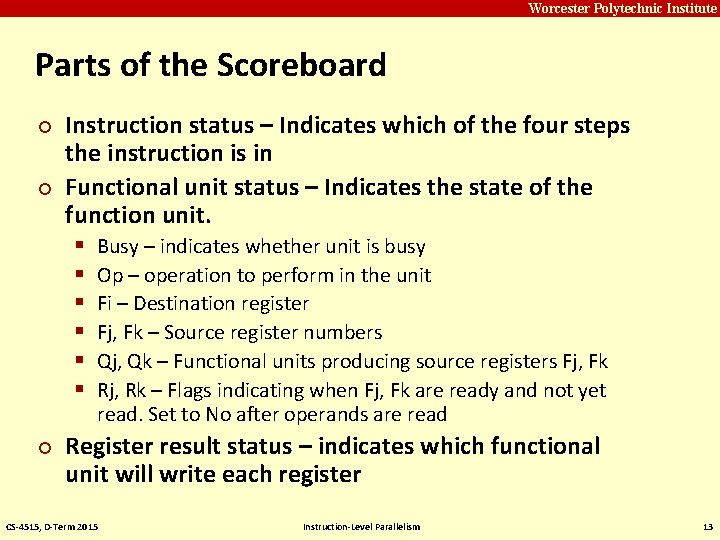
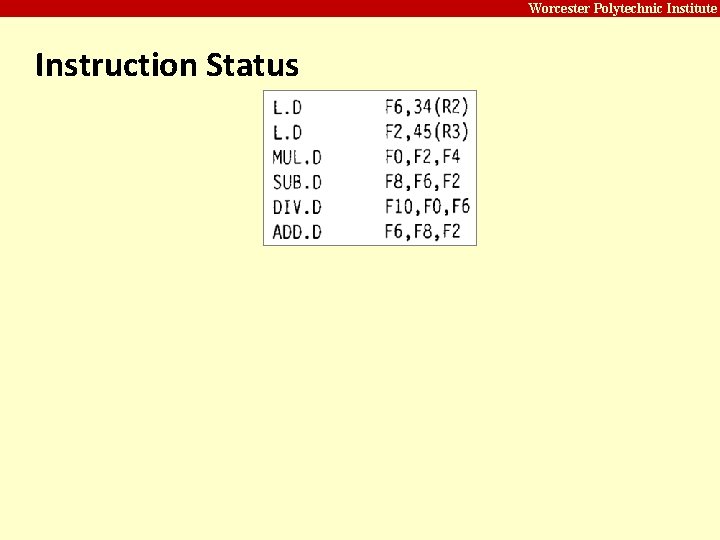
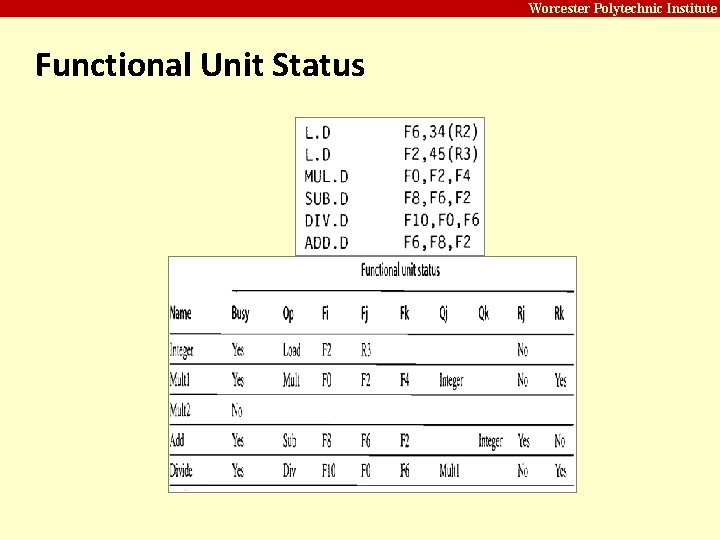
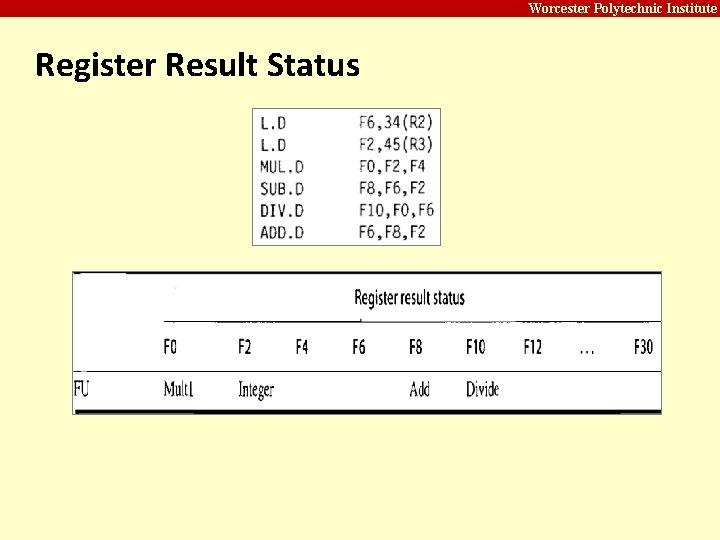
Carnegie Mellon Worcester Polytechnic Institute Parts of the Scoreboard ¢ ¢ Instruction status – Indicates which of the four steps the instruction is in Functional unit status – Indicates the state of the function unit. § Busy – indicates whether unit is busy § Op – operation to perform in the unit § Fi – Destination register § Fj, Fk – Source register numbers § Qj, Qk – Functional units producing source registers Fj, Fk § Rj, Rk – Flags indicating when Fj, Fk are ready and not yet read. Set to No after operands are read ¢ Register result status – indicates which functional unit will write each register CS-4515, D-Term 2015 Instruction-Level Parallelism 13
Carnegie Mellon Worcester Polytechnic Institute Instruction Status
Carnegie Mellon Worcester Polytechnic Institute Functional Unit Status
Carnegie Mellon Worcester Polytechnic Institute Register Result Status
Carnegie Mellon Worcester Polytechnic Institute
Carnegie Mellon Worcester Polytechnic Institute Dynamic Scheduling ¢ ¢ Hardware rearranges the execution order of instructions § Helps to avoid stalls § Simplifies the compiler § Tolerates unpredictable delays (ex. , cache misses) Does not change the data flow of the program § Necessary for correct execution CS-4515, B-Term 2012 Instruction-Level Parallelism 18
Carnegie Mellon Worcester Polytechnic Institute Questions? CS-4515, D-Term 2015 Instruction-Level Parallelism 19