
Carnegie Mellon Timing and Verification Design of Digital

- Slides: 48
Carnegie Mellon Timing and Verification Design of Digital Circuits 2017 Srdjan Capkun Onur Mutlu (Guest starring: Frank K. Gürkaynak and Aanjhan Ranganathan) http: //www. syssec. ethz. ch/education/Digitaltechnik_17 Adapted from Digital Design and Computer Architecture, David Money Harris & Sarah L. Harris © 2007 Elsevier 1
Carnegie Mellon What will we learn ¢ Timing in Combinational circuits § Propagation and Contamination Delays ¢ Timing for Sequential circuits § Setup and Hold time § How fast can my circuit work? ¢ How timing is modeled in Verilog ¢ Verification using Verilog § How can we make sure the circuit works correctly § Designing Testbenches 2
Carnegie Mellon The Goal Of Circuit Design Is To Optimize: ¢ Area § Net circuit area is proportional to the cost of the device ¢ Speed / Throughput § We want circuits that work faster, or do more ¢ Power / Energy § Mobile devices need to work with a limited power supply § High performance devices dissipate more than 100 W/cm 2 ¢ Design Time § Designers are expensive § The competition will not wait for you 3
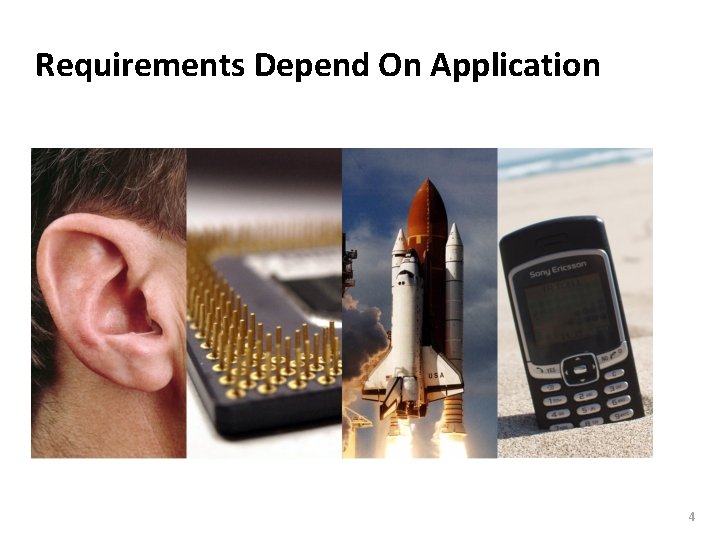
Carnegie Mellon Requirements Depend On Application 4
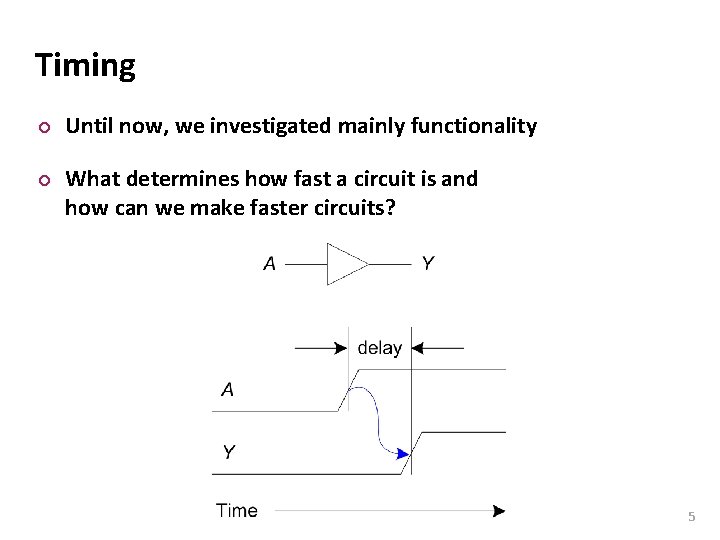
Carnegie Mellon Timing ¢ ¢ Until now, we investigated mainly functionality What determines how fast a circuit is and how can we make faster circuits? 5
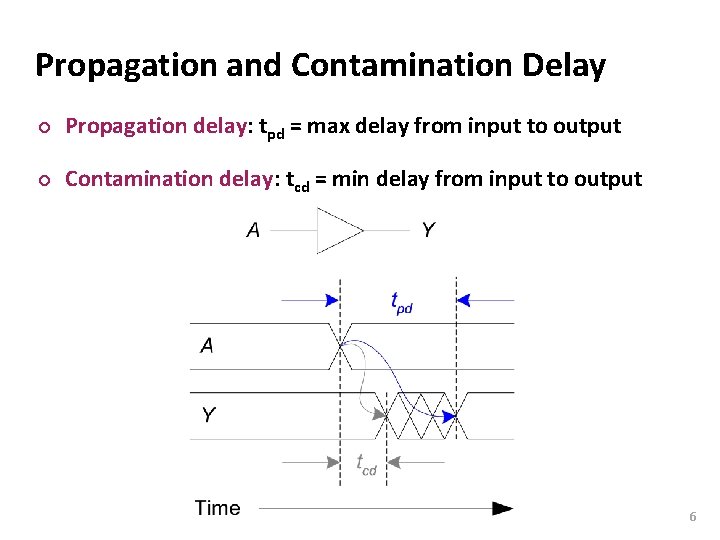
Carnegie Mellon Propagation and Contamination Delay ¢ Propagation delay: tpd = max delay from input to output ¢ Contamination delay: tcd = min delay from input to output 6
Carnegie Mellon Propagation & Contamination Delay ¢ Delay is caused by § Capacitance and resistance in a circuit § Speed of light limitation (not as fast as you think!) ¢ Reasons why tpd and tcd may be different: § Different rising and falling delays § Multiple inputs and outputs, some of which are faster than others § Circuits slow down when hot and speed up when cold 7
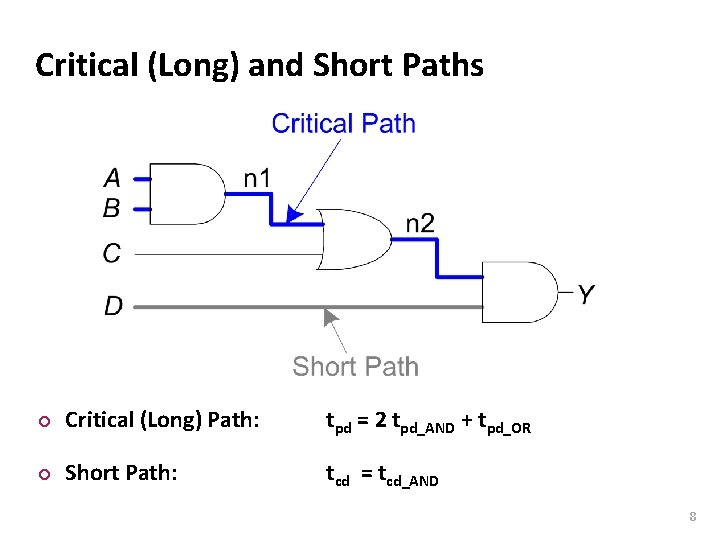
Carnegie Mellon Critical (Long) and Short Paths ¢ Critical (Long) Path: tpd = 2 tpd_AND + tpd_OR ¢ Short Path: tcd = tcd_AND 8
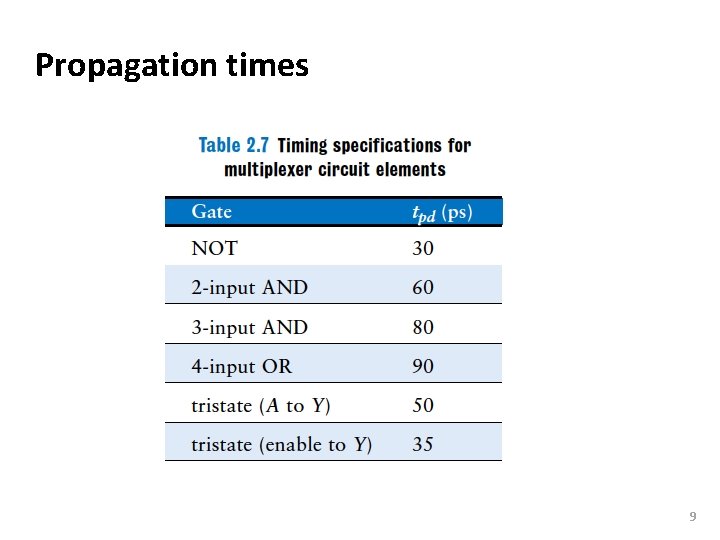
Carnegie Mellon Propagation times 9
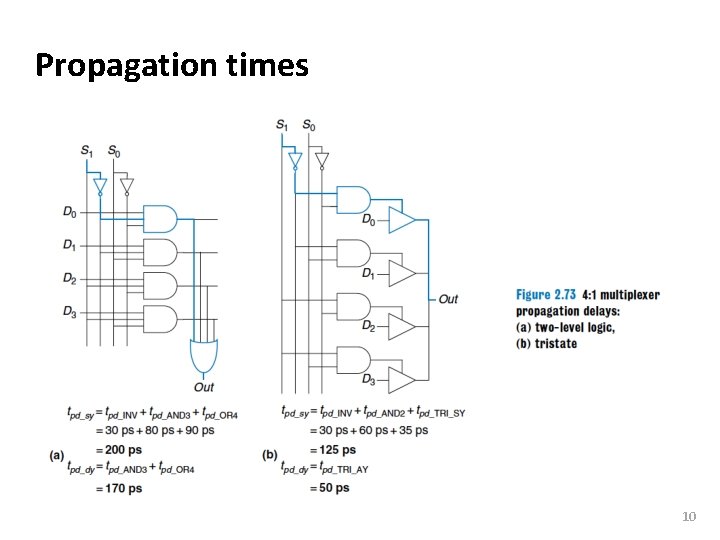
Carnegie Mellon Propagation times 10
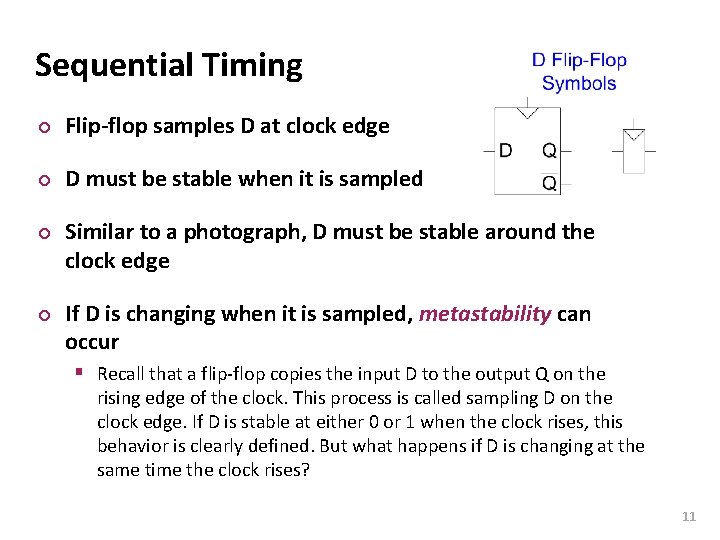
Carnegie Mellon Sequential Timing ¢ Flip-flop samples D at clock edge ¢ D must be stable when it is sampled ¢ ¢ Similar to a photograph, D must be stable around the clock edge If D is changing when it is sampled, metastability can occur § Recall that a flip-flop copies the input D to the output Q on the rising edge of the clock. This process is called sampling D on the clock edge. If D is stable at either 0 or 1 when the clock rises, this behavior is clearly defined. But what happens if D is changing at the same time the clock rises? 11
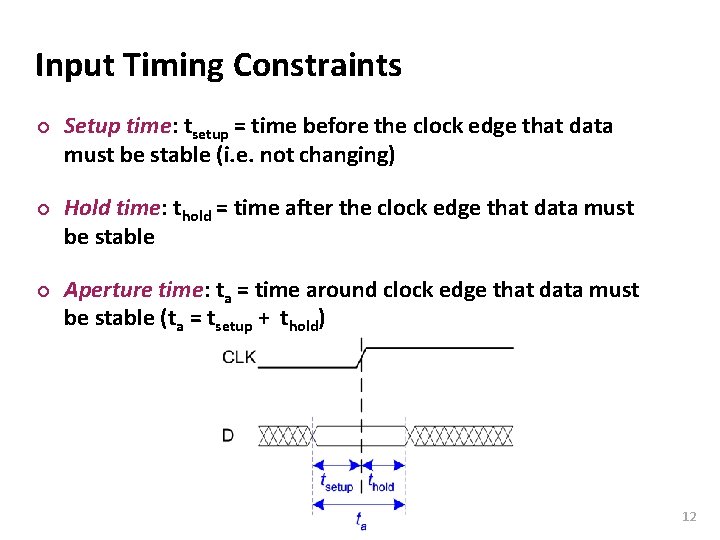
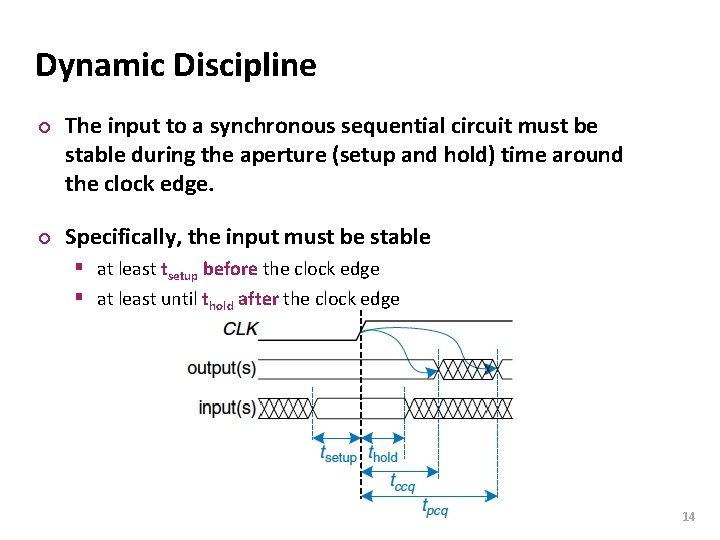
Carnegie Mellon Input Timing Constraints ¢ ¢ ¢ Setup time: tsetup = time before the clock edge that data must be stable (i. e. not changing) Hold time: thold = time after the clock edge that data must be stable Aperture time: ta = time around clock edge that data must be stable (ta = tsetup + thold) 12
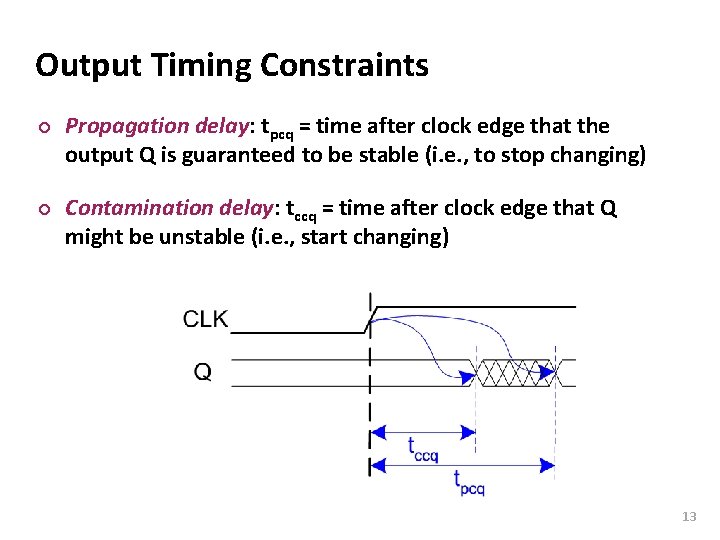
Carnegie Mellon Output Timing Constraints ¢ ¢ Propagation delay: tpcq = time after clock edge that the output Q is guaranteed to be stable (i. e. , to stop changing) Contamination delay: tccq = time after clock edge that Q might be unstable (i. e. , start changing) 13
Carnegie Mellon Dynamic Discipline ¢ ¢ The input to a synchronous sequential circuit must be stable during the aperture (setup and hold) time around the clock edge. Specifically, the input must be stable § at least tsetup before the clock edge § at least until thold after the clock edge 14
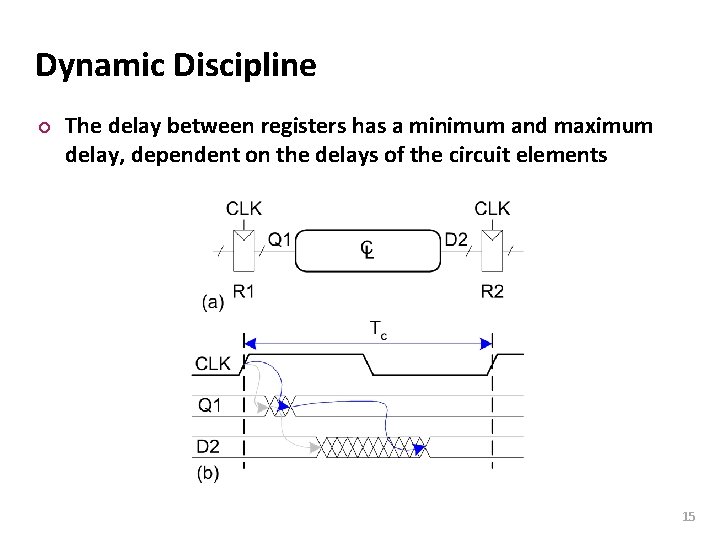
Carnegie Mellon Dynamic Discipline ¢ The delay between registers has a minimum and maximum delay, dependent on the delays of the circuit elements 15
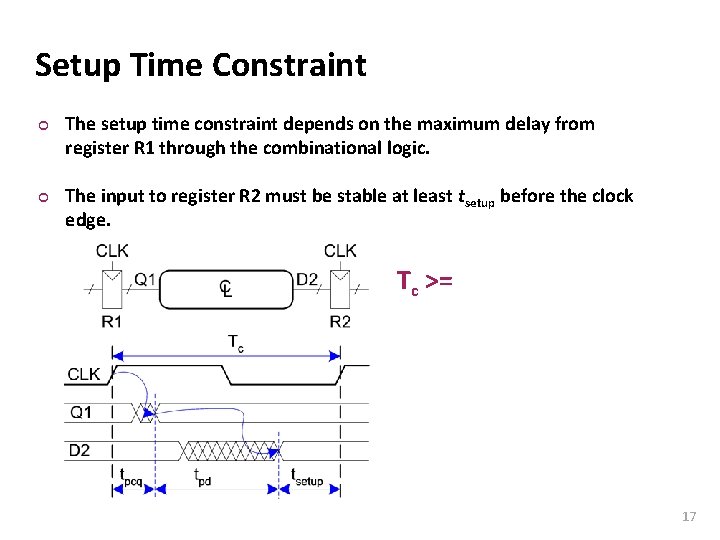
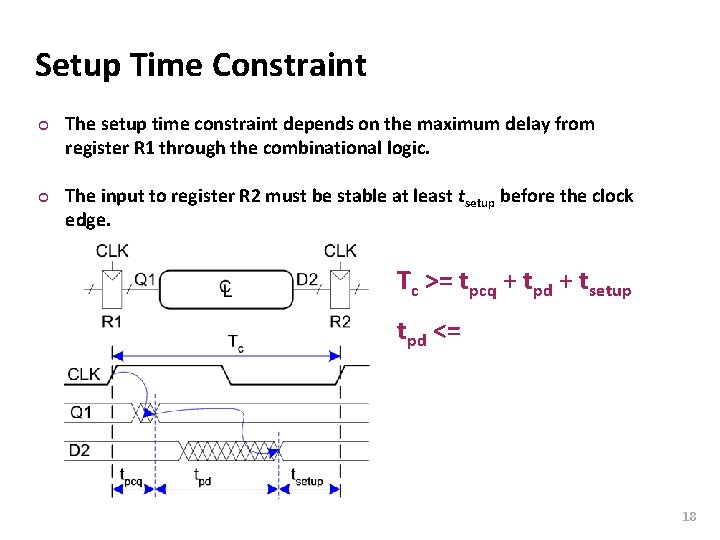
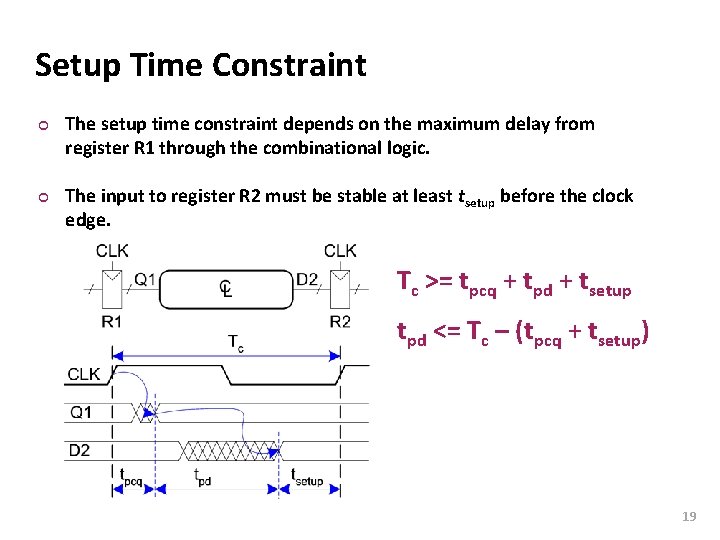
Carnegie Mellon Setup Time Constraint ¢ ¢ ¢ The clock period or cycle time, Tc, is the time between rising edges of a repetitive clock signal. Its reciprocal, fc=1/Tc, is the clock frequency. All else being the same, increasing the clock frequency increases the work that a digital system can accomplish per unit time. Frequency is measured in units of Hertz (Hz), or cycles per second: § 1 megahertz (MHz) 106 Hz § 1 gigahertz (GHz) 109 Hz. 16
Carnegie Mellon Setup Time Constraint ¢ ¢ The setup time constraint depends on the maximum delay from register R 1 through the combinational logic. The input to register R 2 must be stable at least tsetup before the clock edge. Tc >= 17
Carnegie Mellon Setup Time Constraint ¢ ¢ The setup time constraint depends on the maximum delay from register R 1 through the combinational logic. The input to register R 2 must be stable at least tsetup before the clock edge. Tc >= tpcq + tpd + tsetup tpd <= 18
Carnegie Mellon Setup Time Constraint ¢ ¢ The setup time constraint depends on the maximum delay from register R 1 through the combinational logic. The input to register R 2 must be stable at least tsetup before the clock edge. Tc >= tpcq + tpd + tsetup tpd <= Tc – (tpcq + tsetup) 19
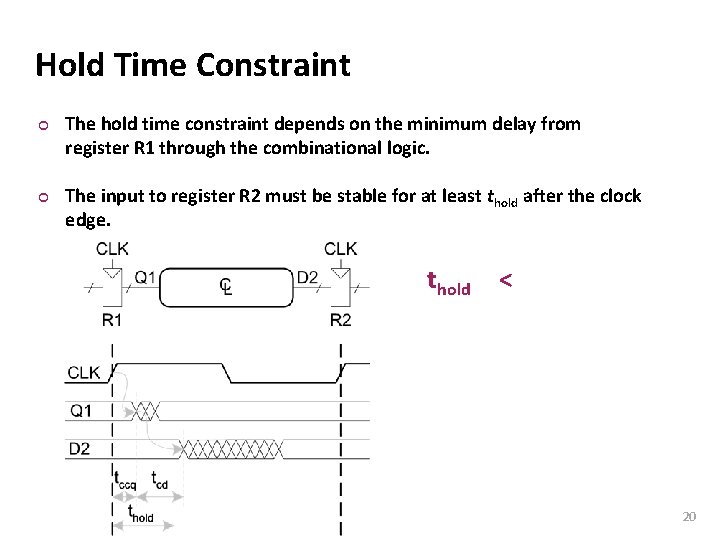
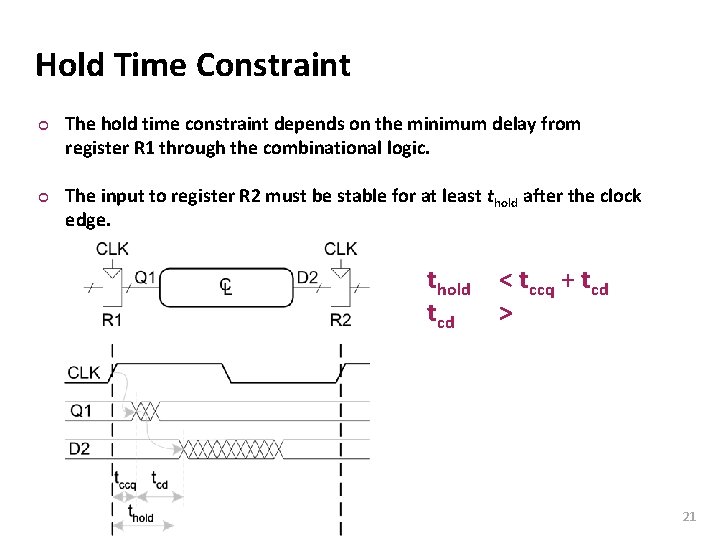
Carnegie Mellon Hold Time Constraint ¢ ¢ The hold time constraint depends on the minimum delay from register R 1 through the combinational logic. The input to register R 2 must be stable for at least thold after the clock edge. thold < 20
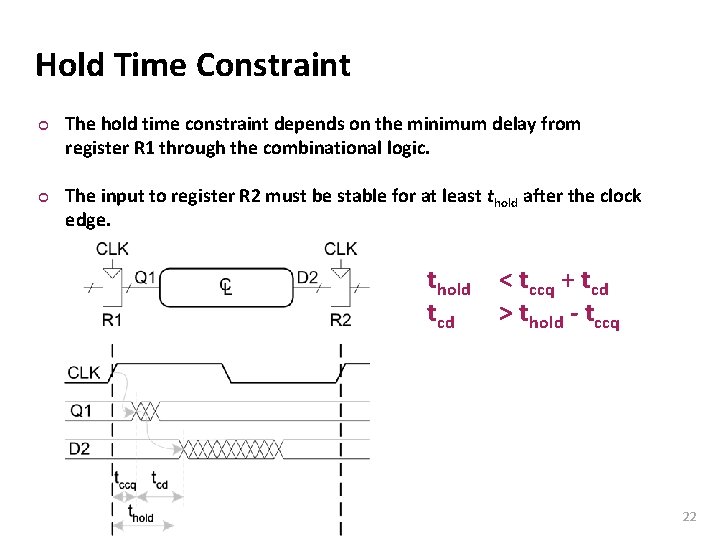
Carnegie Mellon Hold Time Constraint ¢ ¢ The hold time constraint depends on the minimum delay from register R 1 through the combinational logic. The input to register R 2 must be stable for at least thold after the clock edge. thold tcd < tccq + tcd > 21
Carnegie Mellon Hold Time Constraint ¢ ¢ The hold time constraint depends on the minimum delay from register R 1 through the combinational logic. The input to register R 2 must be stable for at least thold after the clock edge. thold tcd < tccq + tcd > thold - tccq 22
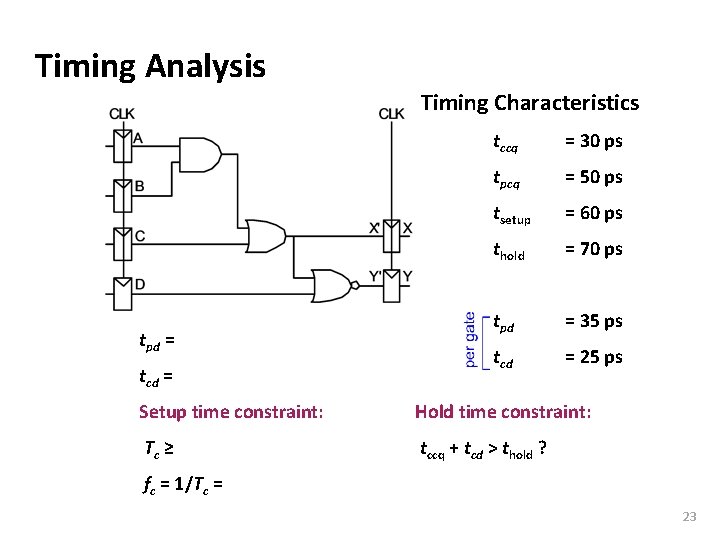
Carnegie Mellon Timing Analysis Timing Characteristics tpd = tccq = 30 ps tpcq = 50 ps tsetup = 60 ps thold = 70 ps tpd = 35 ps tcd = 25 ps Setup time constraint: Hold time constraint: Tc ≥ tccq + tcd > thold ? fc = 1/Tc = 23
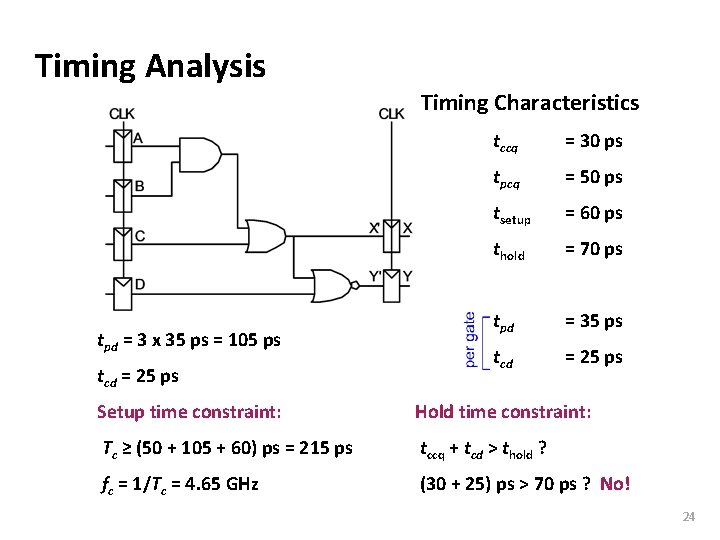
Carnegie Mellon Timing Analysis Timing Characteristics tpd = 3 x 35 ps = 105 ps tcd = 25 ps tccq = 30 ps tpcq = 50 ps tsetup = 60 ps thold = 70 ps tpd = 35 ps tcd = 25 ps Setup time constraint: Hold time constraint: Tc ≥ (50 + 105 + 60) ps = 215 ps tccq + tcd > thold ? fc = 1/Tc = 4. 65 GHz (30 + 25) ps > 70 ps ? No! 24
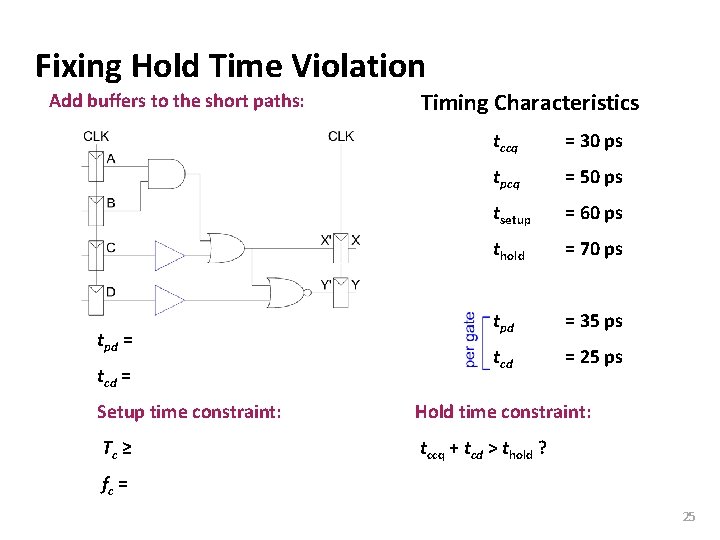
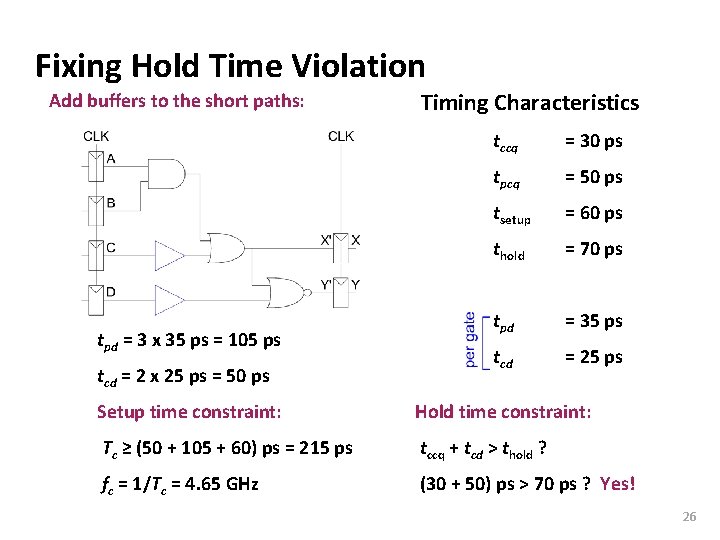
Carnegie Mellon Fixing Hold Time Violation Add buffers to the short paths: tpd = tcd = Timing Characteristics tccq = 30 ps tpcq = 50 ps tsetup = 60 ps thold = 70 ps tpd = 35 ps tcd = 25 ps Setup time constraint: Hold time constraint: Tc ≥ tccq + tcd > thold ? fc = 25
Carnegie Mellon Fixing Hold Time Violation Add buffers to the short paths: tpd = 3 x 35 ps = 105 ps tcd = 2 x 25 ps = 50 ps Timing Characteristics tccq = 30 ps tpcq = 50 ps tsetup = 60 ps thold = 70 ps tpd = 35 ps tcd = 25 ps Setup time constraint: Hold time constraint: Tc ≥ (50 + 105 + 60) ps = 215 ps tccq + tcd > thold ? fc = 1/Tc = 4. 65 GHz (30 + 50) ps > 70 ps ? Yes! 26
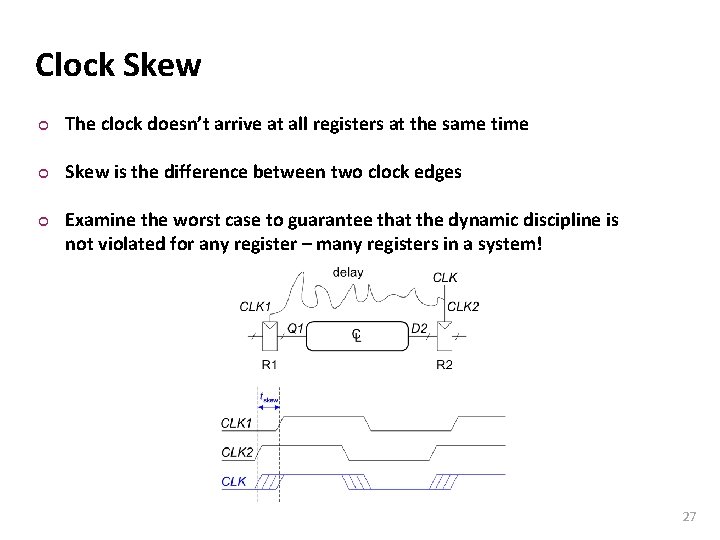
Carnegie Mellon Clock Skew ¢ The clock doesn’t arrive at all registers at the same time ¢ Skew is the difference between two clock edges ¢ Examine the worst case to guarantee that the dynamic discipline is not violated for any register – many registers in a system! 27
Carnegie Mellon 600 m Preikestolen - Norway 28
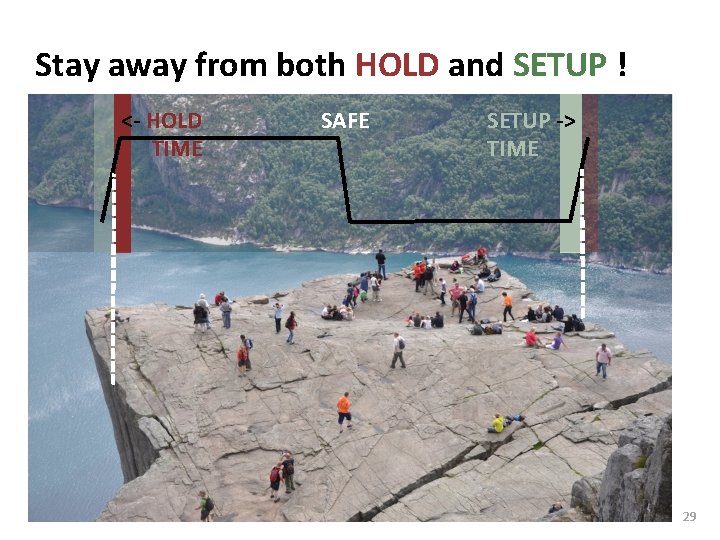
Carnegie Mellon Stay away from both HOLD and SETUP ! <- HOLD TIME SAFE SETUP -> TIME 29
Carnegie Mellon How Do You Know That A Circuit Works? ¢ You have written the Verilog code of a circuit § Does it work correctly? § Even if the syntax is correct, it might do what you want? § What exactly it is that you want anyway? ¢ Trial and error can be costly § You need to ‘test’ your circuit in advance ¢ In modern digital designs, functional verification is the most time consuming design stage. 30
Carnegie Mellon The Idea Behind A Testbench ¢ Using a computer simulator to test your circuit § § You instantiate your design Supply the circuit with some inputs See what it does Does it return the “correct” outputs? 31
Carnegie Mellon Testbenches ¢ HDL code written to test another HDL module, the device under test (dut), also called the unit under test (uut) ¢ Not synthesizeable ¢ Types of testbenches: § Simple testbench § Self-checking testbench with testvectors 32
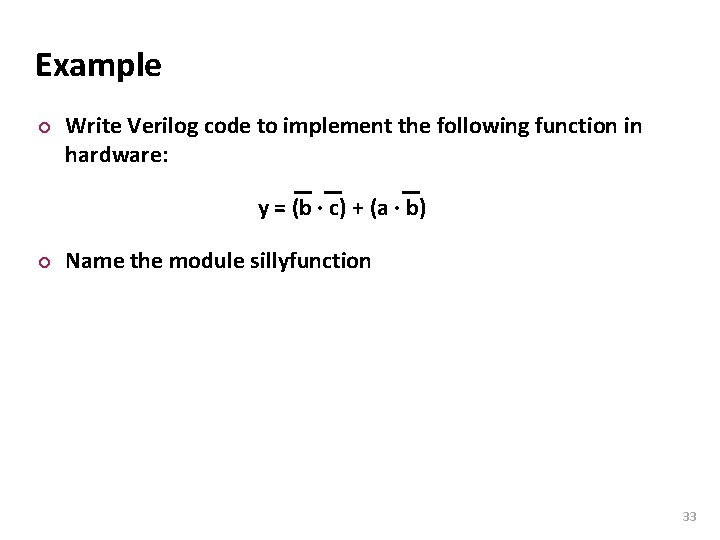
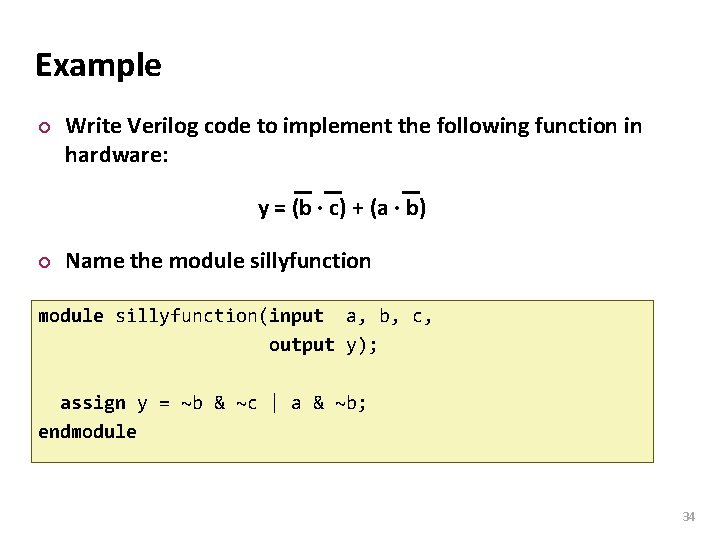
Carnegie Mellon Example ¢ Write Verilog code to implement the following function in hardware: y = (b ∙ c) + (a ∙ b) ¢ Name the module sillyfunction 33
Carnegie Mellon Example ¢ Write Verilog code to implement the following function in hardware: y = (b ∙ c) + (a ∙ b) ¢ Name the module sillyfunction(input a, b, c, output y); assign y = ~b & ~c | a & ~b; endmodule 34
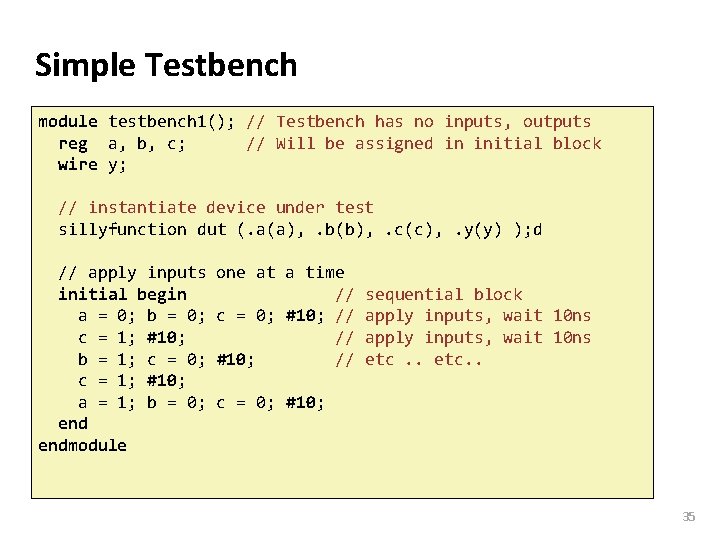
Carnegie Mellon Simple Testbench module testbench 1(); // Testbench has no inputs, outputs reg a, b, c; // Will be assigned in initial block wire y; // instantiate device under test sillyfunction dut (. a(a), . b(b), . c(c), . y(y) ); d // apply inputs initial begin a = 0; b = 0; c = 1; #10; b = 1; c = 0; c = 1; #10; a = 1; b = 0; endmodule one at a time // c = 0; #10; // // #10; // sequential block apply inputs, wait 10 ns etc. . c = 0; #10; 35
Carnegie Mellon Simple Testbench ¢ Simple testbench instantiates the design under test ¢ It applies a series of inputs ¢ The outputs have to be observed and compared using a simulator program. § This type of testbench does not help with the outputs ¢ ¢ initial statement is similar to always, it just starts once at the beginning, and does not repeat. The statements have to be blocking. 36
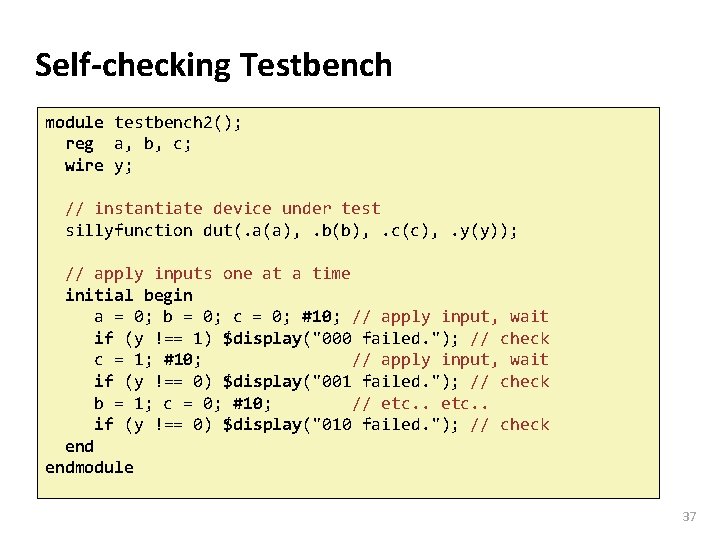
Carnegie Mellon Self-checking Testbench module testbench 2(); reg a, b, c; wire y; // instantiate device under test sillyfunction dut(. a(a), . b(b), . c(c), . y(y)); // apply inputs one at a time initial begin a = 0; b = 0; c = 0; #10; // apply input, wait if (y !== 1) $display("000 failed. "); // check c = 1; #10; // apply input, wait if (y !== 0) $display("001 failed. "); // check b = 1; c = 0; #10; // etc. . if (y !== 0) $display("010 failed. "); // check endmodule 37
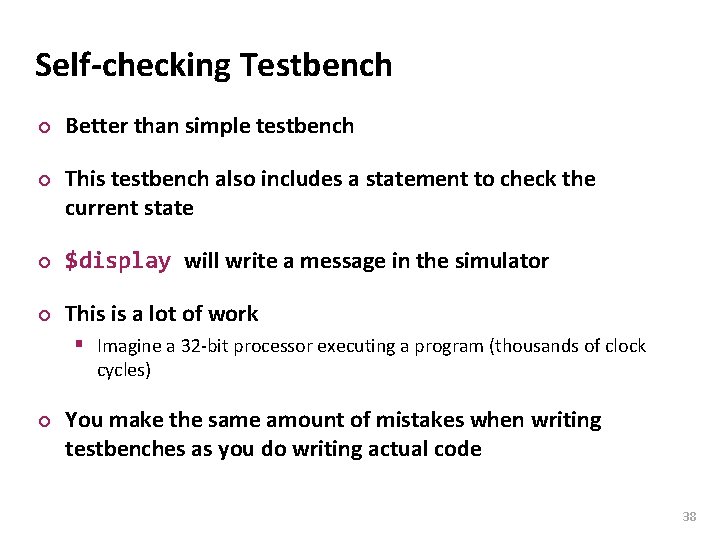
Carnegie Mellon Self-checking Testbench ¢ ¢ Better than simple testbench This testbench also includes a statement to check the current state ¢ $display will write a message in the simulator ¢ This is a lot of work § Imagine a 32 -bit processor executing a program (thousands of clock cycles) ¢ You make the same amount of mistakes when writing testbenches as you do writing actual code 38
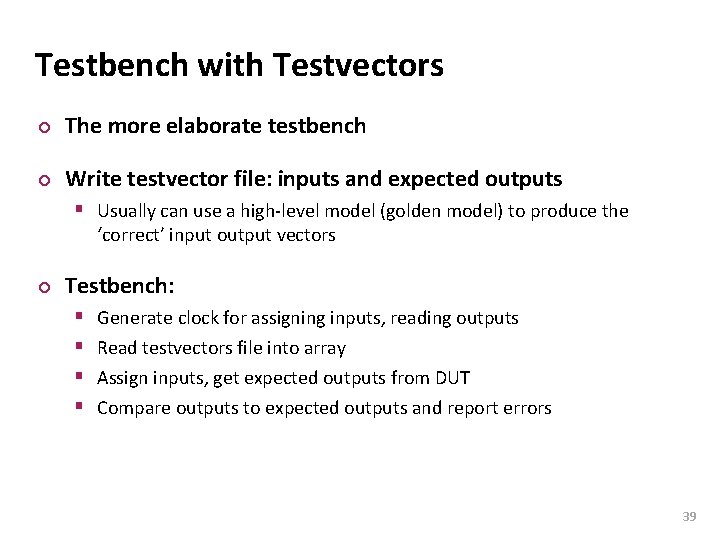
Carnegie Mellon Testbench with Testvectors ¢ The more elaborate testbench ¢ Write testvector file: inputs and expected outputs § Usually can use a high-level model (golden model) to produce the ‘correct’ input output vectors ¢ Testbench: § § Generate clock for assigning inputs, reading outputs Read testvectors file into array Assign inputs, get expected outputs from DUT Compare outputs to expected outputs and report errors 39
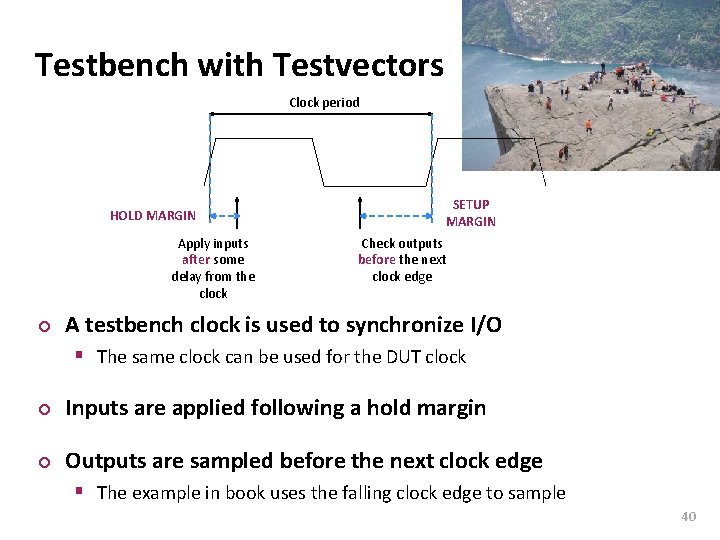
Carnegie Mellon Testbench with Testvectors Clock period HOLD MARGIN Apply inputs after some delay from the clock ¢ SETUP MARGIN Check outputs before the next clock edge A testbench clock is used to synchronize I/O § The same clock can be used for the DUT clock ¢ Inputs are applied following a hold margin ¢ Outputs are sampled before the next clock edge § The example in book uses the falling clock edge to sample 40
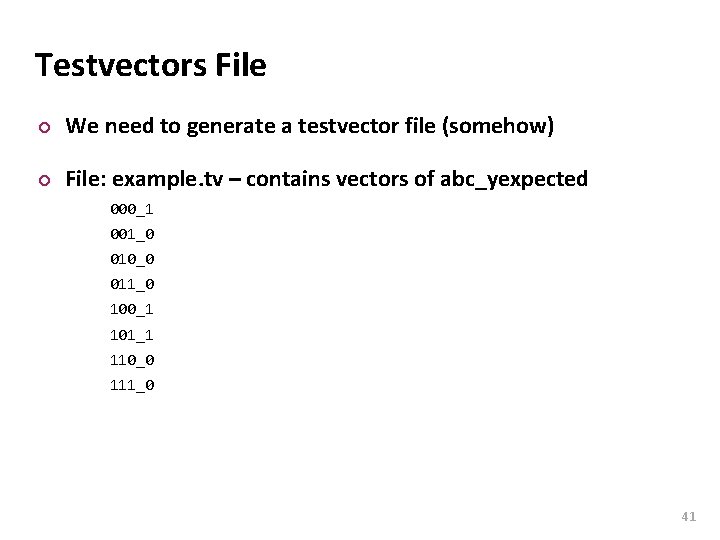
Carnegie Mellon Testvectors File ¢ We need to generate a testvector file (somehow) ¢ File: example. tv – contains vectors of abc_yexpected 000_1 001_0 010_0 011_0 100_1 101_1 110_0 111_0 41
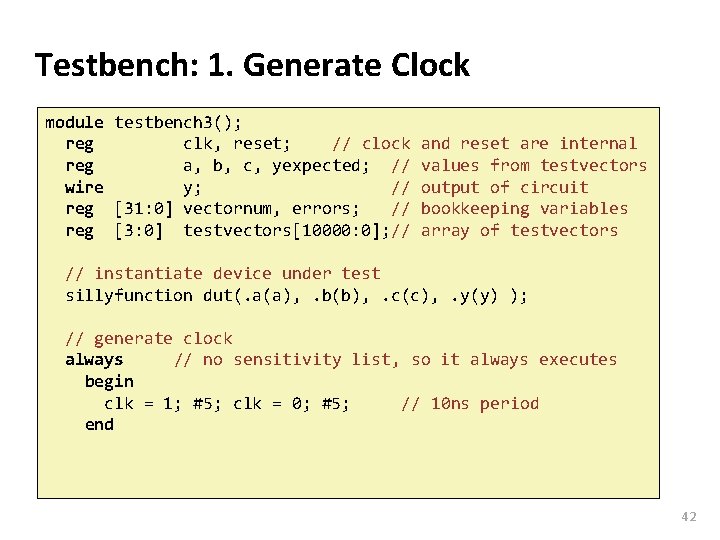
Carnegie Mellon Testbench: 1. Generate Clock module testbench 3(); reg clk, reset; // clock reg a, b, c, yexpected; // wire y; // reg [31: 0] vectornum, errors; // reg [3: 0] testvectors[10000: 0]; // and reset are internal values from testvectors output of circuit bookkeeping variables array of testvectors // instantiate device under test sillyfunction dut(. a(a), . b(b), . c(c), . y(y) ); // generate clock always // no sensitivity list, so it always executes begin clk = 1; #5; clk = 0; #5; // 10 ns period end 42
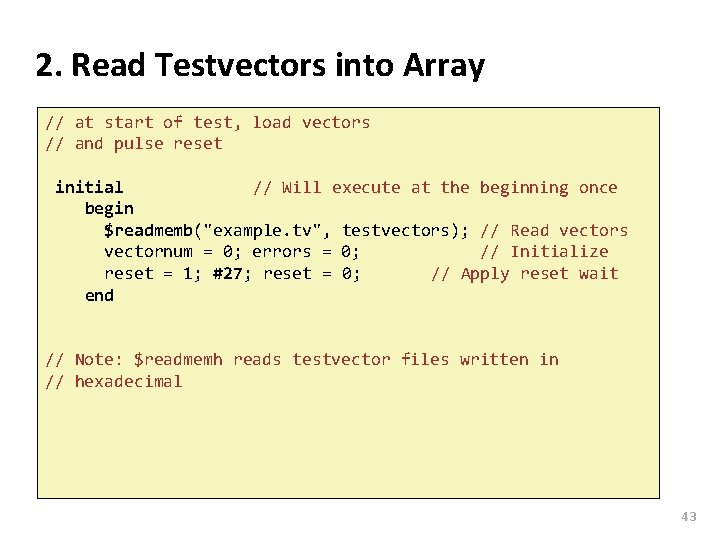
Carnegie Mellon 2. Read Testvectors into Array // at start of test, load vectors // and pulse reset initial // Will execute at the beginning once begin $readmemb("example. tv", testvectors); // Read vectors vectornum = 0; errors = 0; // Initialize reset = 1; #27; reset = 0; // Apply reset wait end // Note: $readmemh reads testvector files written in // hexadecimal 43
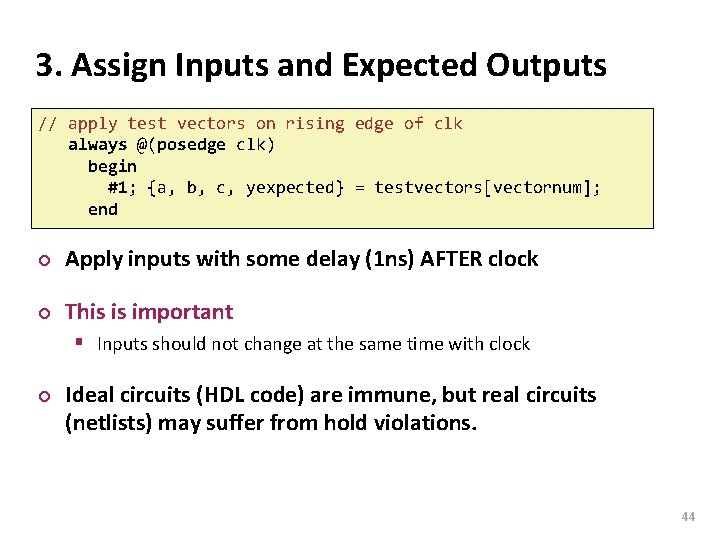
Carnegie Mellon 3. Assign Inputs and Expected Outputs // apply test vectors on rising edge of clk always @(posedge clk) begin #1; {a, b, c, yexpected} = testvectors[vectornum]; end ¢ Apply inputs with some delay (1 ns) AFTER clock ¢ This is important § Inputs should not change at the same time with clock ¢ Ideal circuits (HDL code) are immune, but real circuits (netlists) may suffer from hold violations. 44
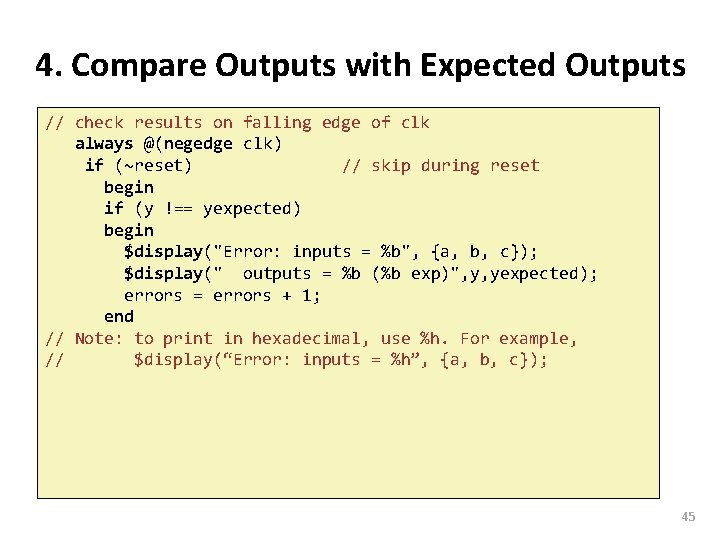
Carnegie Mellon 4. Compare Outputs with Expected Outputs // check results on falling edge of clk always @(negedge clk) if (~reset) // skip during reset begin if (y !== yexpected) begin $display("Error: inputs = %b", {a, b, c}); $display(" outputs = %b (%b exp)", y, yexpected); errors = errors + 1; end // Note: to print in hexadecimal, use %h. For example, // $display(“Error: inputs = %h”, {a, b, c}); 45
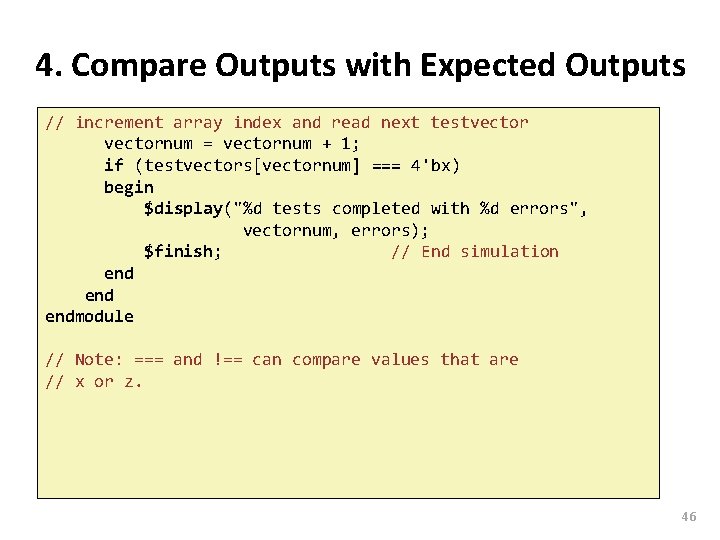
Carnegie Mellon 4. Compare Outputs with Expected Outputs // increment array index and read next testvectornum = vectornum + 1; if (testvectors[vectornum] === 4'bx) begin $display("%d tests completed with %d errors", vectornum, errors); $finish; // End simulation end endmodule // Note: === and !== can compare values that are // x or z. 46
Carnegie Mellon Golden Models ¢ A golden model represents the ideal behavior of your circuit. § Still it has to be developed § It is difficult to get it right (bugs in the golden model!) § Can be done in C, Perl, Python, Matlab or even in Verilog ¢ The behavior of the circuit is compared against this golden model. § Allows automated systems (very important) 47
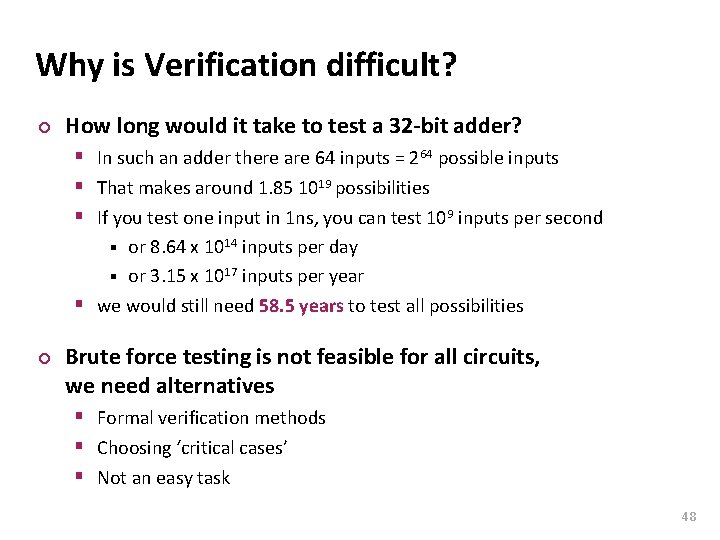
Carnegie Mellon Why is Verification difficult? ¢ How long would it take to test a 32 -bit adder? § In such an adder there are 64 inputs = 264 possible inputs § That makes around 1. 85 1019 possibilities § If you test one input in 1 ns, you can test 109 inputs per second or 8. 64 x 1014 inputs per day § or 3. 15 x 1017 inputs per year § we would still need 58. 5 years to test all possibilities § ¢ Brute force testing is not feasible for all circuits, we need alternatives § Formal verification methods § Choosing ‘critical cases’ § Not an easy task 48