
Carmina Burana O Fortuna velut luna statu variabilis
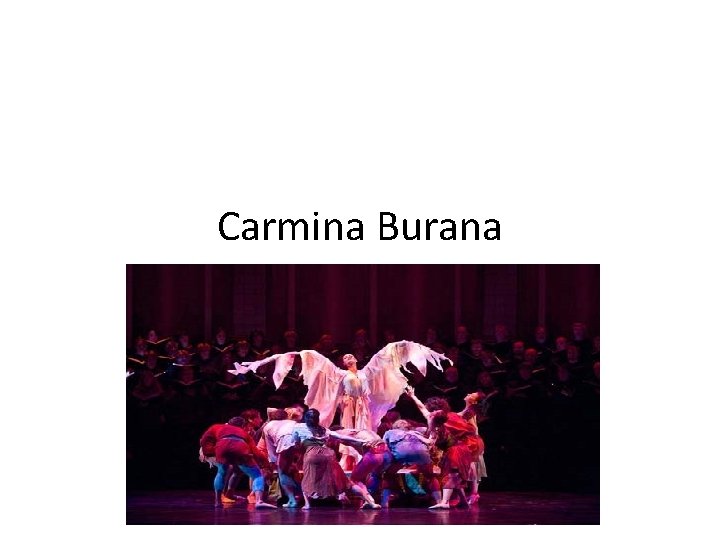
Carmina Burana

O Fortuna velut luna statu variabilis, semper crescis aut decrescis; vita detestabilis nunc obdurat et tunc curat ludo mentis aciem, egestatem, potestatem dissolvit ut glaciem. fortuna, f 2 ludo, m • Fortuna is 1 vocative Nom a ae Nom us i • velut = Gen ae arum Gen i orum just like Dat ae is Dat o is (simile) am orasadjective Acc um os There is one. Accnoun in each • -s = you Abl a is Abl o is of (o, s, thet, five declensions. Find them. mus, tis, Find words, in each declension, nt, I, 5 you, 3 rd one variabilis, c 4 th statu, m he, we - telling es Nomwhich us us and down, me youwrite they) it. Nom Gen is um Gen us uum • declension 3 rd decl it’s in. ibus Dat ui ibus adj w/ 1 st Dat i decl noun Acc em es Acc um us • -t = he/ Abl e ibus Abl u ibus she/ it • -em = th the (subj) 5 aciem, f Nom direct of (poss) Nom es es Gen object to/ for Gen ei erum Dat • ut = as/ like (DO) Dat ei ebus Acc (simile) by/w/fr/ Acc em es Abl st Abl nd e ebus in
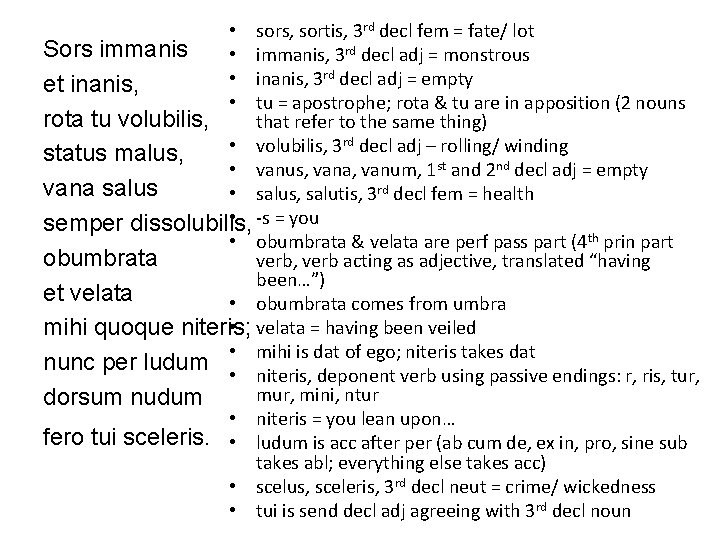
sors, sortis, 3 rd decl fem = fate/ lot Sors immanis, 3 rd decl adj = monstrous inanis, 3 rd decl adj = empty et inanis, tu = apostrophe; rota & tu are in apposition (2 nouns rota tu volubilis, that refer to the same thing) rd decl adj – rolling/ winding • volubilis, 3 status malus, • vanus, vana, vanum, 1 st and 2 nd decl adj = empty vana salus • salus, salutis, 3 rd decl fem = health • -s = you semper dissolubilis, • obumbrata & velata are perf pass part (4 th prin part obumbrata verb, verb acting as adjective, translated “having been…”) et velata • obumbrata comes from umbra • velata = having been veiled mihi quoque niteris; nunc per ludum • mihi is dat of ego; niteris takes dat • niteris, deponent verb using passive endings: r, ris, tur, mini, ntur dorsum nudum • niteris = you lean upon… fero tui sceleris. • ludum is acc after per (ab cum de, ex in, pro, sine sub takes abl; everything else takes acc) • scelus, sceleris, 3 rd decl neut = crime/ wickedness • tui is send decl adj agreeing with 3 rd decl noun • •
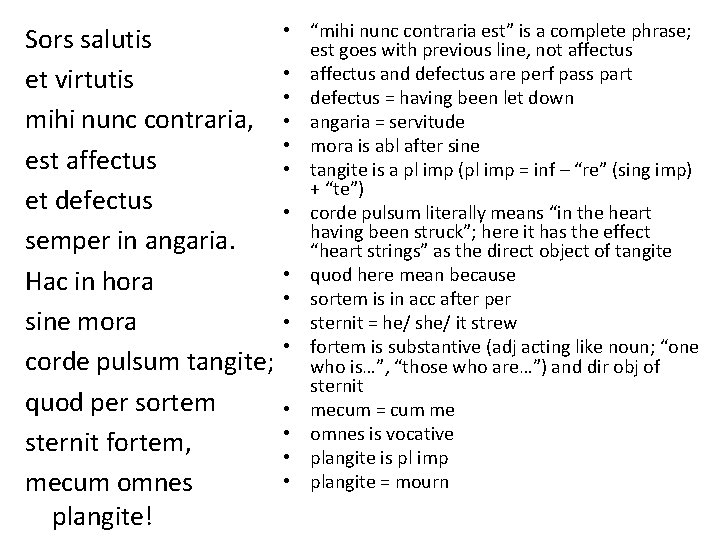
Sors salutis et virtutis mihi nunc contraria, est affectus et defectus semper in angaria. Hac in hora sine mora corde pulsum tangite; quod per sortem sternit fortem, mecum omnes plangite! • “mihi nunc contraria est” is a complete phrase; est goes with previous line, not affectus • affectus and defectus are perf pass part • defectus = having been let down • angaria = servitude • mora is abl after sine • tangite is a pl imp (pl imp = inf – “re” (sing imp) + “te”) • corde pulsum literally means “in the heart having been struck”; here it has the effect “heart strings” as the direct object of tangite • quod here mean because • sortem is in acc after per • sternit = he/ she/ it strew • fortem is substantive (adj acting like noun; “one who is…”, “those who are…”) and dir obj of sternit • mecum = cum me • omnes is vocative • plangite is pl imp • plangite = mourn
- Slides: 4