
Caring for the Substance Exposed Newborn from Birth
Caring for the Substance Exposed Newborn from Birth and Beyond M. Cody Smith, MD Neonatology

Historical Aspects
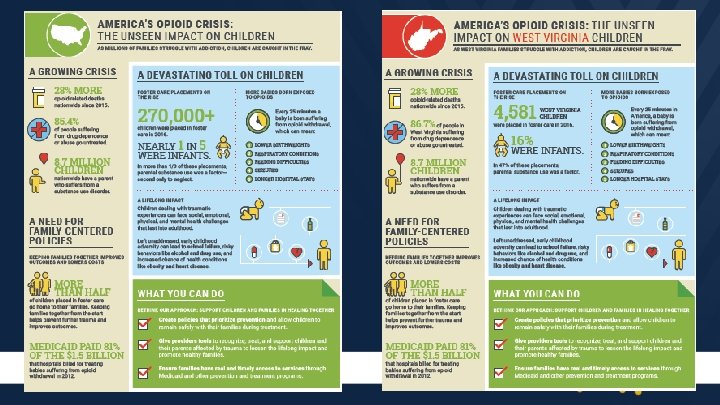
State Medicaid Programs Paying the Majority of the Cost • • Cost is 15 to 16 times higher than healthy infants Cost is rising –Mean hospital charges for discharges with NAS increased from $39, 400 in 2000 to $53, 400 in 2009 Patrick, S. , Schumacher, R. , Benneyworth, B. , Krans, E. , Mcallister, J. , & Davis, M. (2013). Neonatal Abstinence Syndrome and Associated Health Care Expenditures. Obstetric Anesthesia Digest, 33(2), 86. Roussos-Ross, K. , Reisfield, G. , Elliot, I. , Dalton, S. , & Gold, M. (2015). Opioid Use in Pregnant Women and the Increase in Neonatal Abstinence Syndrome. Journal of Addiction Medicine, 9(3), 222 -225.
Definitions • Addiction A primary, chronic, neurobiological disease with genetic, psychosocial, and environmental factors that influence its development and manifestation • Physical dependence A state of adaptation that is manifested by a drug class-specific withdrawal syndrome • Neonatal abstinence syndrome A form of physical dependence resulting from in utero exposure to opioids, anxiolytics, antidepressants, antipsychotics, and other substances NOWS: Neonatal Opioid Withdrawal Syndrome
Neonatal Abstinence Syndrome (NAS) • Results from abrupt discontinuation of chronic fetal substance exposure used by the mother during pregnancy
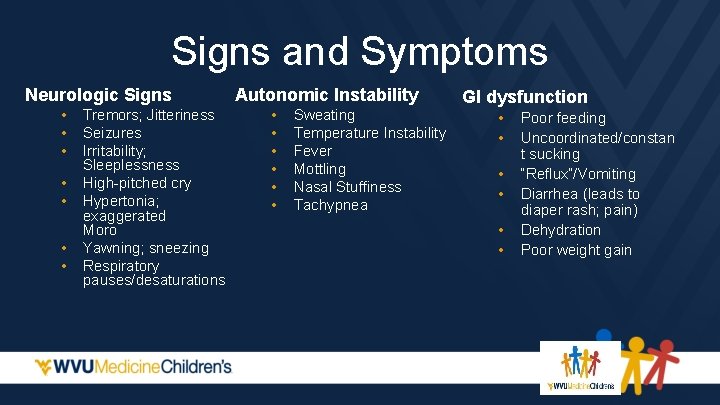
Signs and Symptoms Neurologic Signs • • Tremors; Jitteriness Seizures Irritability; Sleeplessness High-pitched cry Hypertonia; exaggerated Moro Yawning; sneezing Respiratory pauses/desaturations Autonomic Instability • • • Sweating Temperature Instability Fever Mottling Nasal Stuffiness Tachypnea GI dysfunction • • • Poor feeding Uncoordinated/constan t sucking “Reflux”/Vomiting Diarrhea (leads to diaper rash; pain) Dehydration Poor weight gain
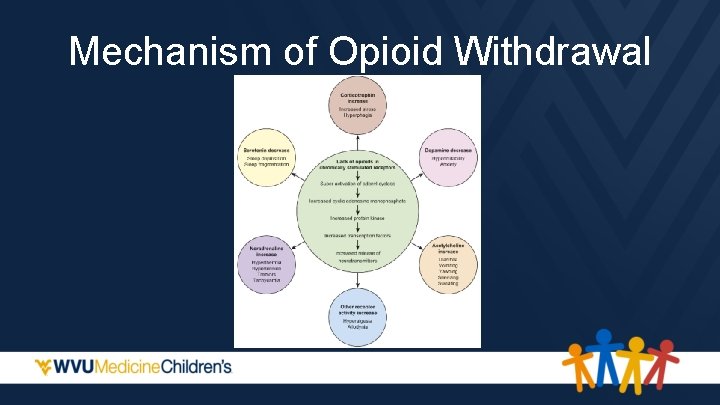
Mechanism of Opioid Withdrawal
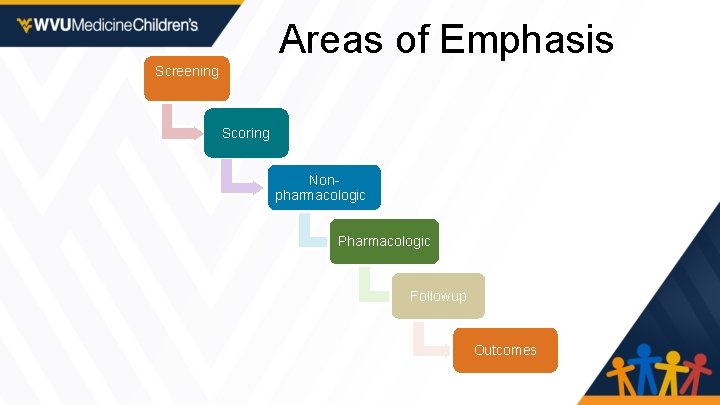
Areas of Emphasis Screening Scoring Nonpharmacologic Pharmacologic Followup Outcomes

AAP Screening Recommendations • Protocol for screening for maternal substance abuse. • Standardized the evaluation and treatment of at risk infants. • Begin NAS screening with a maternal history and physical examination. Source: Mark L. Hudak, MD, Rosemarie C. Tan, MD, , Ph. D, THE COMMITTEE ON DRUGS, and THE COMMITTEE ON FETUS AND NEWBORN, American Academy of Pediatrics.
AAP Screening Recommendations • Toxicological testing, as needed • Multiple risk factors: • • • maternal report or documentation of substance use late entry into care or no prenatal care previous unexplained late fetal demise precipitous labor placental abruption • Observed substance exposed infants for 4 -7. Source: Mark L. Hudak, MD, Rosemarie C. Tan, MD, , Ph. D, THE COMMITTEE ON DRUGS, and THE COMMITTEE ON FETUS AND NEWBORN, American Academy of Pediatrics.

AAP Scoring Recommendations • Consider withdrawal in infants if signs develop. • Score by using a published abstinence assessment tool. • Substance exposed infants who are asymptomatic or have minimal signs of withdrawal do not require pharmacologic therapy. Source: Mark L. Hudak, MD, Rosemarie C. Tan, MD, , Ph. D, THE COMMITTEE ON DRUGS, and THE COMMITTEE ON FETUS AND NEWBORN, American Academy of Pediatrics.

AAP Scoring Recommendations • Serial use of assessment tool may facilitate decisions for pharmacologic therapy and guide adjustments/ weaning. • Optimal threshold score for starting pharmacologic therapy is unknown. Source: Mark L. Hudak, MD, Rosemarie C. Tan, MD, , Ph. D, THE COMMITTEE ON DRUGS, and THE COMMITTEE ON FETUS AND NEWBORN, American Academy of Pediatrics.

NAS Scoring Scales • Finnegan Neonatal Abstinence Scoring Tool (1975) • 31 items • Modified Finnegan Scoring System (1986) • 21 of the original items • Reorganized into 3 categories • Lipsitz Neonatal Drug- Withdrawal Scoring System • 11 items • Neonatal Withdrawal Inventory • Neonatal Narcotic Withdrawal Index

Modified Finnegan Scoring System Hudak M L et al. Pediatrics 2012; 129: e 540 -e 560
Challenges for Consistency in Scoring Even though consistent training of staff to utilize assessment tools can increase interrater reliability, scoring with caregivers still remains subjective (Wiles, Ward, & Akinbi, 2014).

The “Eat, Sleep, Console” (ESC) Assessment Tool and Training Materials are copyrighted by Boston Medical Center Corporation, Dr. Matthew Grossman, Mary Hitchcock Memorial Hospital, Dartmouth-Hitchcock Clinic (2017).
AAP Treatment Recommendations • Initial approach: Nonpharmacologic supportive measures (minimizing environmental stimuli, promoting adequate rest and sleep, and providing sufficient caloric intake). • Encourage breastfeeding and the provision of expressed human milk if not contraindicated. Source: Mark L. Hudak, MD, Rosemarie C. Tan, MD, , Ph. D, THE COMMITTEE ON DRUGS, and THE COMMITTEE ON FETUS AND NEWBORN, American Academy of Pediatrics.
Evidenced Based Nonpharmacologic Care • Several interventions have proven to be effective in managing NAS and should be incorporated into standard of care for this population: • breastfeeding, swaddling, rooming-in, environmental control and skin to skin contact Source: Ryan, G. et al. Nonpharmacological management of neonatal abstinence syndrome: a review of the literature. J Matern Fetal Neonatal Med. 2019 May; 32(10): 1735 -1740.
AAP Treatment Recommendations • Second approach: pharmacotherapy • Caution: pharmacologic therapy could lengthen the duration of hospitalization and interfere with maternal-infant bonding. Source: Mark L. Hudak, MD, Rosemarie C. Tan, MD, , Ph. D, THE COMMITTEE ON DRUGS, and THE COMMITTEE ON FETUS AND NEWBORN, American Academy of Pediatrics.
AAP Treatment Recommendations • Pharmacologic therapy for withdrawalassociated seizures is indicated. • Vomiting, diarrhea, or both associated with dehydration and poor weight gain are relative indications for treatment. Source: Mark L. Hudak, MD, Rosemarie C. Tan, MD, , Ph. D, THE COMMITTEE ON DRUGS, and THE COMMITTEE ON FETUS AND NEWBORN, American Academy of Pediatrics.

High Calorie Formula • Early initiation of high-calorie formula for infants with prenatal methadone exposure may be beneficial for weight gain • ? low lactose Hospital Pediatrics 2018; 8; 7 Methadone-Exposed Infants: A Feasibility Study Randomized Clinical Trial of Standard- Versus High-Calorie Formula for
Feeding Difficulties
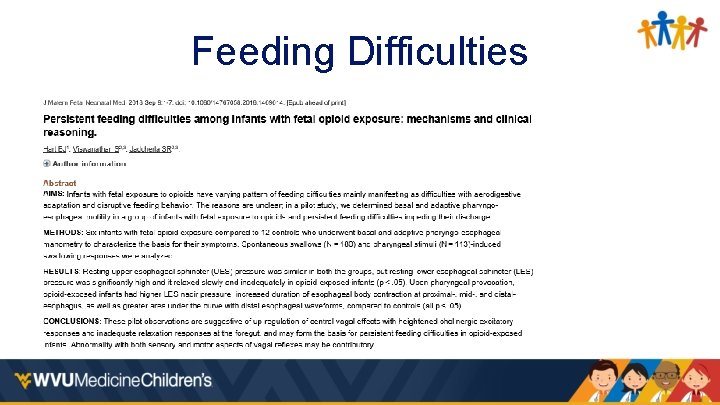
Feeding Difficulties • Per Dr. Jadcherla, “While feeding, the bolus doesn’t move efficiently, because of [increased] resistance, ” • “We now know it’s not reflux so we don’t treat it with acid-suppressive medication, ” • “Acid is needed for good digestion of milk. If acid’s suppressed, you create a new problem. ”
AAP Treatment Recommendations • Oral morphine solution and methadone when pharmacologic treatment is indicated. • Oral clonidine is also effective either as a primary or adjunctive therapy, but further trials needed. Source: Mark L. Hudak, MD, Rosemarie C. Tan, MD, , Ph. D, THE COMMITTEE ON DRUGS, and THE COMMITTEE ON FETUS AND NEWBORN, American Academy of Pediatrics.
AAP Treatment Recommendations • Buprenorphine for the treatment of NAS require additional study. • Optimal pharmacologic treatment of infants who are withdrawing from sedatives or hypnotics is unknown. • Insufficient evidence as to whether polysubstance exposed infants is best treated with an opioid, a barbiturate, a medication from another drug class, or a combination of drugs from different classes. Source: Mark L. Hudak, MD, Rosemarie C. Tan, MD, , Ph. D, THE COMMITTEE ON DRUGS, and THE COMMITTEE ON FETUS AND NEWBORN, American Academy of Pediatrics.
Outpatient Pharmacotherapy • Outpatient pharmacotherapy for NAS was associated with higher length of therapy and higher rates of ED utilization when compared with infants treated exclusively as inpatients. Source: J Pediatr. Maalouf F. Outpatient Pharmacotherapy for Neonatal Abstinence Syndrome. 2018 Aug; 199: 151 -157. jpeds. 2018. Epub 2018 May 10.
AAP Discharge Follow-up Recommendations • Outpatient follow-up should occur early and include reinforcement of the education of the caregiver about the risk of late withdrawal signs. Source: Mark L. Hudak, MD, Rosemarie C. Tan, MD, , Ph. D, THE COMMITTEE ON DRUGS, and THE COMMITTEE ON FETUS AND NEWBORN, American Academy of Pediatrics.
Safe Sleep: Back to sleep for every sleep • To reduce the risk of SIDS, infants should be placed for sleep in a supine position for every sleep by every caregiver until 1 year of age. • Side sleeping is not safe and is not advised.
Safe Sleep: Back to sleep for every sleep • Supine sleep position does not increase the risk of choking and aspiration in infants, even those with gastroesophageal reflux, because infants have airway anatomy and mechanisms that protect against aspiration.

Safe Sleep: Back to sleep for every sleep • Elevating the head of bed is ineffective in reducing gastroesophageal reflux and is not recommended • May result in the infant sliding to the foot of the crib into a position that may compromise respiration. • Many infants are smoke exposed as well… • Both maternal smoking during pregnancy and smoke in the infant’s environment after birth are major risk factors for SIDS.
Outcomes • Severity of withdrawal signs, including seizures, has not been proven to be associated with differences in longterm outcome after intrauterine drug exposure. • Treatment of drug withdrawal may not alter the long-term outcome. Source: Mark L. Hudak, MD, Rosemarie C. Tan, MD, , Ph. D, THE COMMITTEE ON DRUGS, and THE COMMITTEE ON FETUS AND NEWBORN, American Academy of Pediatrics.
Outcomes • Lack of evidence on the long-term effects of prenatal opioid exposure. • Long-term outcome of infants with NAS is unknown • infants were embedded within more general studies of infants with in utero opioid exposure • most studies followed infants for only a few years. Source: Reddy, U et al. Opioid Use in Pregnancy, Neonatal Abstinence Syndrome, and Childhood Outcomes: Executive Summary of a Joint Workshop by the Eunice Kennedy Shriver National Institute of Child Health and Human Development, American Congress of Obstetricians and Gynecologists, American Academy of Pediatrics, Society for Maternal-Fetal Medicine, Centers for Disease Control and Prevention, and the March of Dimes Foundation. Obstet Gynecol. 2017 July ; 130(1): 10– 28.
Outcomes • Findings from the follow-up literature on infants with prenatal opioid exposure are inconsistent. • Small sample sizes • Multiple confounding factors (polydrug use, environmental exposures, and poverty) not controlled for • Poor retention rates • No/inappropriate comparison group. • Preventive interventions that focus on enriching the early experiences of such children and improving the quality of the home environment are likely to be beneficial. Source: Reddy, U et al. Opioid Use in Pregnancy, Neonatal Abstinence Syndrome, and Childhood Outcomes: Executive Summary of a Joint Workshop by the Eunice Kennedy Shriver National Institute of Child Health and Human Development, American Congress of Obstetricians and Gynecologists, American Academy of Pediatrics, Society for Maternal-Fetal Medicine, Centers for Disease Control and Prevention, and the March of Dimes Foundation. Obstet Gynecol. 2017 July ; 130(1): 10– 28.
Outcomes • Chronic opiate use in pregnancy appears to increase the risk for a head circumference ≤ 10 th percentile and ≤ 3 rd percentile. • Femur and humerus lengths appear to be shortened suggesting a possible effect on bone growth. Chronic Opiate Use in Pregnancy and Newborn Head Circumference. American Journal of Perinatology 2015; 01: 027 -032
Outcomes • Infants with subclinical opioid exposures more likely to be diagnosed with: • • • behavioral or emotional disorders (3. 0% vs 1. 1%) developmental delay (15. 6% vs 7. 6%) speech disorder (10. 1% vs 6. 5%) strabismus (3. 4% vs 1. 0%) hepatitis C virus exposure (6. 8% vs 0. 1%). Hall ES. Developmental Disorders and Medical Complications Among Infants with Subclinical Intrauterine Opioid Exposures. Popul Health Manag. 2019 Feb; 22(1): 19 -24. Epub 2018 Jun 12.
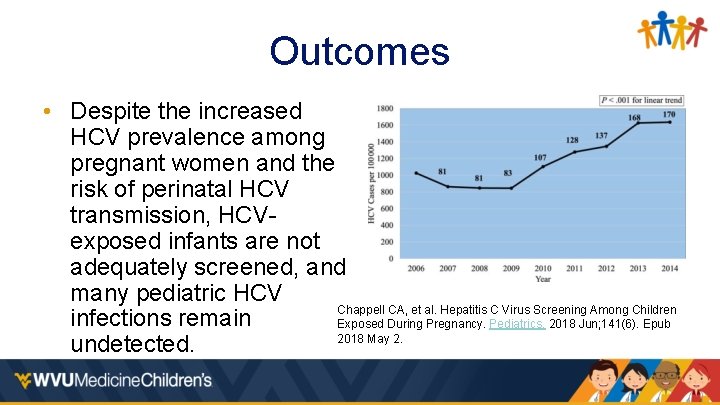
Outcomes • Despite the increased HCV prevalence among pregnant women and the risk of perinatal HCV transmission, HCVexposed infants are not adequately screened, and many pediatric HCV Chappell CA, et al. Hepatitis C Virus Screening Among Children infections remain Exposed During Pregnancy. Pediatrics. 2018 Jun; 141(6). Epub 2018 May 2. undetected.
Outcomes • A neonatal diagnostic code of NAS is strongly associated with poor and deteriorating school performance. Oei JL. Pediatrics. Neonatal Abstinence Syndrome and High School Performance. February 2017, VOLUME 139 / ISSUE 2
Outcomes • Children who lived with foster/adoptive families at follow up had higher cognitive scores than those who lived with biological relatives, especially motor scores. • 8% of children required treatment for strabismus. • Merhar, S. L. , Mc. Allister, J. M. , Wedig-Stevie, K. E. , Klein, A. C. , Meinzen-Derr, J. , & Poindexter, B. B. (2018). Retrospective review of neurodevelopmental outcomes in infants treated for neonatal abstinence syndrome. Journal of Perinatology, 38(5), 587– 592. https: //doi. org/10. 1038/s 41372 -018 -0088 -9
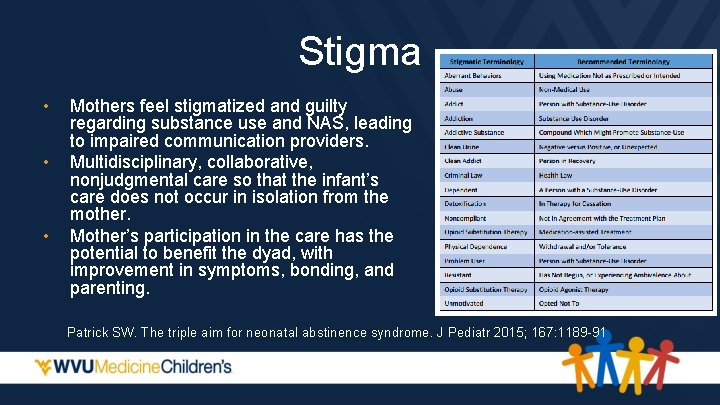
Stigma • • • Mothers feel stigmatized and guilty regarding substance use and NAS, leading to impaired communication providers. Multidisciplinary, collaborative, nonjudgmental care so that the infant’s care does not occur in isolation from the mother. Mother’s participation in the care has the potential to benefit the dyad, with improvement in symptoms, bonding, and parenting. Patrick SW. The triple aim for neonatal abstinence syndrome. J Pediatr 2015; 167: 1189 -91

Thank You mcsmith@hsc. wvu. edu
- Slides: 42