
CARING FOR PATIENTS WITH LOW BACK PAIN Sadia
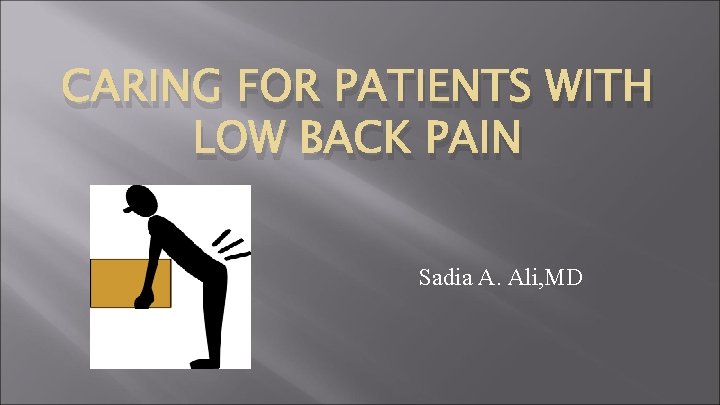
CARING FOR PATIENTS WITH LOW BACK PAIN Sadia A. Ali, MD
OBJECTIVES � � Understanding patient’s concerns and assessing disability Anatomy of low back Conduct a focused, evidence-based medical history and physical examination. Tailoring low back pain management plan on individual case basis for acute and sub-acute back pain.

OUTLINE � � � Background and Anatomy Classification, Etiology, History Physical exam Practice session Management scenarios
STATS � � 2 nd most common cause for office visit 60 -80% of population will have lower back pain at some time in their lives Most common cause of disability for persons < 45 years Costs to society: $20 -50 billion/year
UNDERSTANDING PTS � Mr. Joe has had lower back pain for the past 24 hours that he feels is related to carrying heavy boxes at work 2 days ago. He missed work today, Thursday. He wants to know what can be done for his back pain?
ACTION PLAN � Be able to recognize the difference between routine lower back pain and dangerous forms of lower back pain. � Provide information, advice, and a management plan.
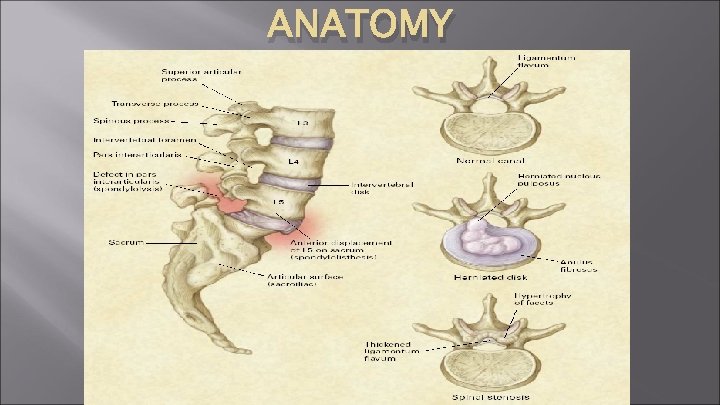
ANATOMY
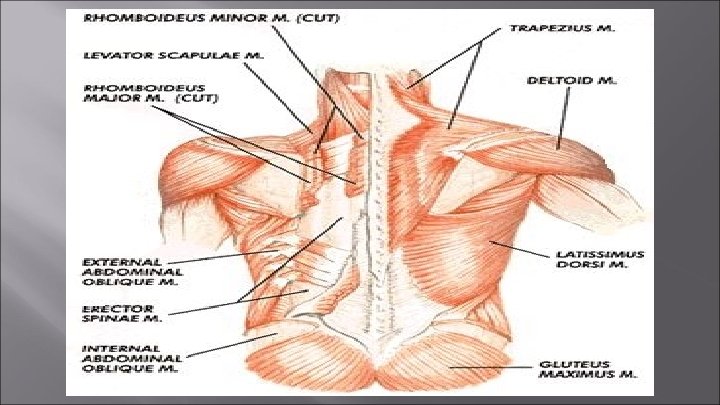
ANATOMY
CLASSIFICATION � ACUTE---- < 6 wks � SUB-ACUTE------ 6 -12 wks � CHRONIC------ >12 wks
CAUSES � � � Lumbar “strain” or “sprain” – 70% Degenerative changes – 10% Herniated disk – 4% Osteoporosis compression fractures – 4% Spinal stenosis – 3% Spondylolisthesis – 2% Spondylolysis, diskogenic low back pain or other instability – 2% Traumatic fracture - <1% Congenital disease - <1% Cancer – 0. 7% Inflammatory arthritis – 0. 3% Infections
HISTORY � � � DEMOGRAPHICS: Age, gender, co-morbidities , social and occupational history. PAIN: Onset, location, duration, intensity and frequency of pain, any past episodes of LBP, activities inc. pain, bladder or bowel dysfunction. FUNCTIONAL STATUS:
HISTORY cont GOAL: � Nonspecific LBP No specific patho-anatomical diagnosis � Back pain with radicular symptoms Radicular Radiculopathy Spinal stenosis (neurogenic claudication) � Another specific spinal cause Cancer, infection or cauda equina syndrome.
RED FLAGS � � � � Hx of CA Age > than 50 with other s/s or risk factors Fever, IVD, recent infection Urinary retention, multiple level motor deficits Osteoporosis, steroid use Abd pulsating mass Significant weakness, progressive weakness
YELLOW FLAGS Reflect chronicity, poor pt. outcome and psychosocial distress � BELIEF SYSTEM � COMORBIDITIES � AFFECTIVE FACTORS � WADDLLE’S SIGNS
PHYSICAL � � � � Inspection---Asymmetry, rash Palpation----Fx, spasm ROM----Flexion, extension, lat bending Motor/Sensory/Reflexes Provocative tests---SLR, FABER test Waddell Signs Gait Abd/rectal

PRACTICE SESSION Divide in 3 groups and practice back exam (refer to handout 1) �
CASE 2 Sam, a 30 -year-old man who works at the local home and garden center, strained his back three days ago while loading some plants. He tells his physician that he has been using a local heat wrap and ibuprofen (Motrin, Advil) 800 mg four times a day without relief. Sam denies any history of LBP, bowel or bladder dysfunction, radicular pain or weakness. A careful physical examination reveals limited flexibility and range of motion. Sam is locally tender over the right (R) paraspinal muscles. The lower extremity neurologic examination is otherwise within normal limits and shows a negative SLR test. Sam asks his physician whether he should initiate disability paperwork at this time.
ACTION PLAN! � � � � Goal: PAIN CONTROL & DISABILITY LIMITATION ----ACUTE BACK PAIN Hx & Physical Red/yellow flags Imaging? ? BED REST Pharmacologic rx--Non pharmacologic modalities
PHARMACOLOGIC MODALITIES � � � NSAIDS VS Acetaminophen Muscle relaxants (first 2 wks in NS LBP) Opioids (mod to severe, d/c if not impr) Benzodiazepines ( muscle spasm-not FDA approved) Systemic steroids (case reports-radicular symptoms) TCA and Gabapentin (radicular pain)
NON-PHARMACOLOGIC MODALITIES � � � Heat (level II)/Cold packs PT (2 -6 sessions in Sub-acute) Exercise (individualize plan) Chiropractic/Spinal manipulation(level II) Acupuncture(inconclusive) Brace, support(not effective)
FOLLOW UP � � Improves out-comes Questions chronicity Return to work and disability issues Communication with family and employer
Sam again! 6 wk f/u Sam is back at you office with no improvement---SUB ACUTE BACK PAIN � Re-evaluate pt � Imaging: � Plain X-ray: � � Age>50 years No improvement after 6 weeks Other worrisome findings MRI: After 6 weeks if have sciatica Pharmacologic �
INTERVENTION RX � Epidural injections: � Insufficient and conflicting evidence � Helpful in sub-acute LBP and radicular pain � Should be part of comprehensive plan � Facet joint injections: � No � improvement Local/Trigger point injections: � Possibly some benefit
RECAP � � � � Beware of red and yellow flags, assess disability Non-specific/ nerve distribution/Sp. Cause NSAIDs and Acetaminophen mainstay Acute LBP- spinal manipulation Imaging and bed rest not necessary in most cases Closer f/u Pt education
REFERENCES CORE CONTENT � AAFP (http: //www. aafp. org/online/en/home/cme/selfstud y/cmebulletin/acutelbp/article/read. html) � ESSENTIALS OF MUSCULOSKELETAL CARE � NEJM 2001 �
- Slides: 25