
Caring for Children Who Have Experienced Trauma Early



















- Slides: 49
Caring for Children Who Have Experienced Trauma Early Childhood (Ages 0 – 5)
Introductions • • • Social Workers Clinicians CASAs Attorneys Parents (birth, adoptive, foster, kinship) Others? 2
What Research Tells Us • Getting things right the first time is easier and more effective than trying to fix them later • Early childhood matters because experiences early in life can have a lasting impact on later learning, behavior, and health • Highly specialized interventions are needed as early as possible for children experiencing toxic stress • Early life experiences actually get under the skin and into the body, with lifelong effects on adult physical and mental health www. developingchild. harvard. edu 3
Exacerbating Risk Factors for Families • • Parental substance abuse Parental depression Poverty Abuse and neglect Lack of support systems Witnessing domestic violence Child’s own experience of trauma, especially multiple traumas 4
90 -100% Chance of Developmental Delays when Children Experience 6 -7 Risk Factors Barth et al. (2008) 5
Protective/Resilience Factors • One stable parent or caretaker • Higher IQ (Silva, 2000) • Good peer relationships (Criss, 2002) • Secure attachment and good care ages 0 -2 (Stroute, 1999) • Friendly, outgoing temperament in the child • Other supportive adults – i. e. , daycare providers 6
Video: The Science of Neglect • https: //www. youtube. com/watch? feature=player_embedded &v=b. F 3 j 5 UVCSCA 7
Urie Brofenbrenner Says: “In order to develop normally, a child requires progressively more complex joint activity with one or more adults who have an irrational emotional relationship with the child. Somebody’s got to be crazy about that kid. That’s number one. First, last, and always. ” Urie Bronfenbrenner (National Scientific Council on the Developing Child, Summer 2004) 8
Complex Trauma: The Impact on Attachment 9
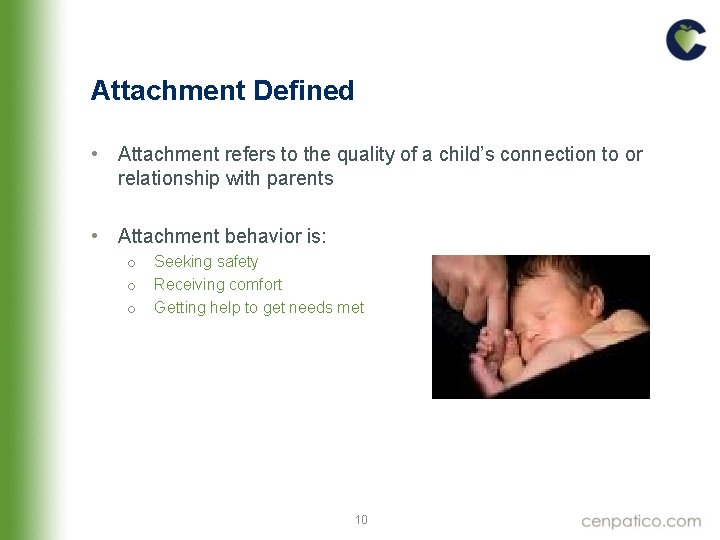
Attachment Defined • Attachment refers to the quality of a child’s connection to or relationship with parents • Attachment behavior is: o o o Seeking safety Receiving comfort Getting help to get needs met 10
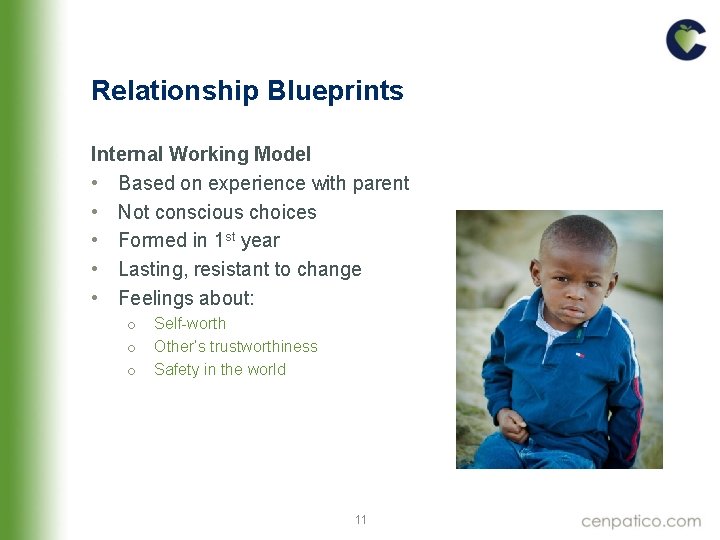
Relationship Blueprints Internal Working Model • Based on experience with parent • Not conscious choices • Formed in 1 st year • Lasting, resistant to change • Feelings about: o o o Self-worth Other’s trustworthiness Safety in the world 11
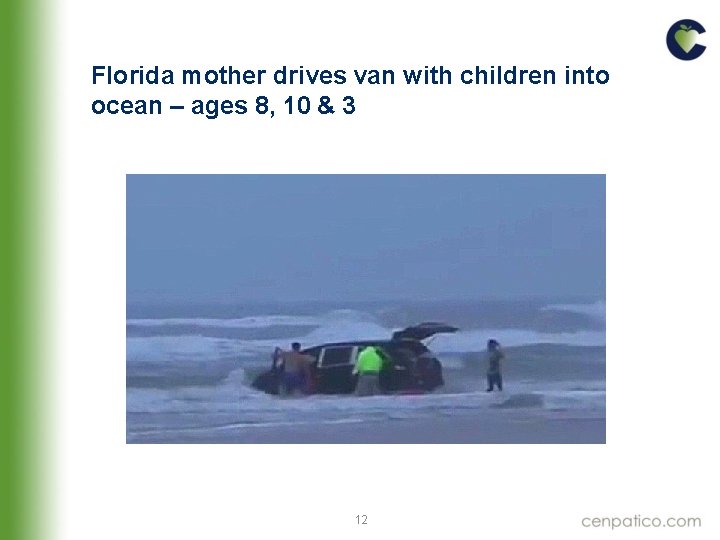
Florida mother drives van with children into ocean – ages 8, 10 & 3 12
Ebony Wilkerson • Mental Illness • Domestic Violence • Pregnant 13
Key points to remember • Parents and children function according to the relational problem built in their first relationships • If parents were frightening or neglectful, attachment difficulties may be created • A child cannot be disciplined out of this problem • A child needs to experience nurturing parents • Nurturing experiences revise their blueprint 14
Attachment Styles • Almost two-thirds of adults are secure/autonomous (60 -65%) • About 20% are avoidant/dismissive • About 10% are preoccupied • About 5 -10% are unresolved • Children are more likely to have the same style as parents • Foster children are more likely to be “secure” if foster parents are also secure/autonomous - Dozier et al. , 2000 15
Why is this so important? As parents, if we understand our attachment styles and we know what parenting roadmaps we automatically use, we are better able to parent with: o o Sensitivity Good emotional regulation Good behavioral regulation Using kindness and mindfulness In other words, we know our buttons and we keep them out of reach! 16
Trauma and Attachment Trauma occurring within the caregiving relationship • Parent is frightening or frightened • Physical, sexual, emotional abuse within the family environment • Neglect o o • Lack of food Lack of parent interaction Repeated separations o o o Losses of parent figures Many caregivers Numerous placements - www. attach. org 17
Mechanisms of Intergenerational Transmission of Trauma • Silence – The child senses their parent’s vulnerability and has to avoid anything that will trigger parent 18
The “Conspiracy of Silence” “What cannot be talked about can also not be put to rest; and if it is not, the wounds continue to fester from generation to generation. ” - B. Bettelhelm, 1984 19
Mechanisms of Intergenerational Transmission of Trauma • Over-disclosure The child is traumatized by hearing too much and having no ability to handle it 20
Mechanisms of Intergenerational Transmission of Trauma • Identification The child is repeatedly exposed to symptoms > identifies with parent’s role as victim and mimics parent’s behavior 21
Mechanisms of Intergenerational Transmission of Trauma • Re-enactment The survivor (i. e. , parent) re-enacts the trauma and in the process traumatizes the child or produces similar feelings. • Usually unconscious • Can endanger child 22
Impact on Infants • Maternal PTSD symptoms significantly impact infants’ behavior and the ability to develop secure attachments. - Schuengal, 1999 23
General Findings on Children Living with a Parent with PTSD • Feelings of shame • Feeling angry, but helpless to do anything about it and guilt about feeling angry • Feeling invisible • Emotional needs neglected • Self-blame and low self-esteem • Jumpy and nervous • Exhaustion from being parent’s caretaker 24
Family Violence • Intergenerational transfer of PTSD and unresolved trauma • Untreated family violence victims suffer from chronic or delayed PTSD • The trauma history becomes the central organizing factor in these families across generations 25
So How Do PTSD Symptoms Affect Parenting? • Intrusive Symptoms o Parent feels out of control, is unpredictable – affects trust o Parent reacts with anger to flashbacks – fear, self-blame, shame o Child may resent that life revolves around parent’s crises (Porterfield, 1996) o Parent is pre-occupied, adult trauma takes precedence over child’s needs (Scheeringa and Zeanah, 2001) o Parent may react as if the child is part of flashback 26
Nightmares and Insomnia • Makes for cranky parents, snap at child • Startling a sleeping parent can result in abuse • Nightmares may be scary to watch for a young child 27
Avoidance Symptoms • Parent avoids triggers or crowds so family avoids activities (Porterfield, 1996) • Parent is unable to go to school events or play with child • Parent cannot handle noise, snaps at child for normal toddler behavior • Child cannot have play dates because parent can’t handle it or is unpredictable 28
Avoidance of Triggers “In an attempt to avoid thinking about the trauma, people with PTSD often blame the trigger instead of the trauma for their feelings. . . , many times, they blame their family. ” - Porterfield, 1996 29
Negative Alterations in Cognition and Mood • Emotional numbing and detachment – child feels unloved and unworthy • Lack of emotional response • Risk of physical or emotional neglect • Making children afraid of the world • Constant anger 30
Hyperarousal Symptoms • Parent is on edge – family feels anxious • Some parents become overprotective • Parent may isolate and/or isolate the family (Porterfield, 1996) • Response to child’s roughhousing, quick movements as if it means danger • Anger outbursts – risk of abuse 31
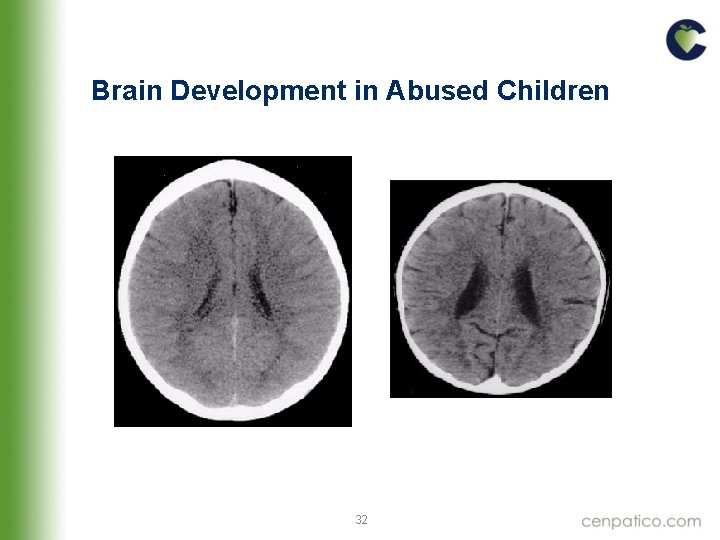
Brain Development in Abused Children 32
Solutions Repairing the Damaged Relationship through Relationships 33
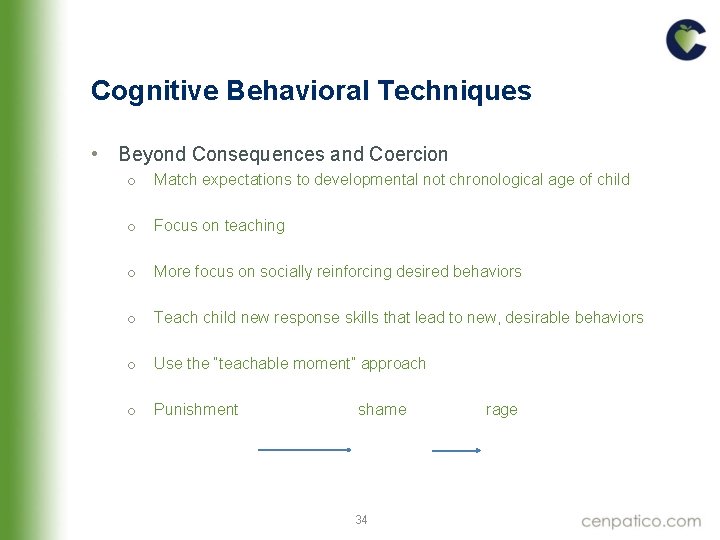
Cognitive Behavioral Techniques • Beyond Consequences and Coercion o Match expectations to developmental not chronological age of child o Focus on teaching o More focus on socially reinforcing desired behaviors o Teach child new response skills that lead to new, desirable behaviors o Use the “teachable moment” approach o Punishment shame 34 rage
Foundations of Therapeutic Parenting/Caregiving • Caregiver’s learn to “read” small clues to the child’s upset o Find the meaning of behavior based on the child’s past experiences • Teaching emotional regulation o o Negative feelings can be tolerated (by child) Help (from parent) is always available 35
Implicit and Preverbal Memory • Child may be triggered and react as if the terrifying event was happening again, but will not be able to explain his reaction • If parents/caregivers can accept the reality of the child’s fear, even without knowing the source of it, they will be more effective at comforting their child • Child needs to hear that the parent understands, and will do everything she can to keep him safe - www. attach. org 36
Trauma Triggers • Unresolved trauma is re-experienced mentally and physically o o o Sights Sounds Smells Facial expressions Tone of voice Physical surroundings • These hi-jack the brain – unconscious, pre-determined neural pathways • Behavior modification will NOT work – hi-jacked brain does not reason, it reacts 37
Touch re-regulates • Touch is integral to human development • Children need to learn to tolerate and welcome safe, nurturing touch • May take a long time and lots of experimenting • Must understand where the child is on the regulation/dysregulation continuum when deciding appropriateness of physical touch 38
Helping • Developmental Play • Floor time • Let the child lead the play with you acting as the scaffolding – hold the child together • Sensory rich environment – paints, colors, clay, water and sand 39
Centering the Child • Gentle hand to forehead • Gentle hand to back of neck • Breathing – o o Breathe in “smell the flowers” Breathe out “blow out the candles” 40
Establish Safety and Security • Respond to and provide opportunities for children to receive positive human physical contact to reaffirm needs for sensory comfort and care • Help children get enough sleep and nutrition • Provide them with physical symbols of nurturing, love or remembrance (i. e. , Life. Books) 41
Theraplay Nurturing Activities • Manicure o • Caring for hurts o • Check your child’s hands, arms, legs, etc. . . , for scratches or bruises. Give them magic kisses. Rub magic cream, lotion or powder on or around hurts. If your child won’t let you, try just gently touching hurts with cotton ball. Face painting o • Wash your child’s hands or feet in a basin of warm, soapy water. Gently dry them off and massage them with lotion, then paint their nails. Keep talking to your child as you paint, and finish off by reading books together while nails dry. Paint flowers and hearts on cheeks. Mustaches and beards are fun for boys. Make your child feel special. Twinkle Song o Adapt the words of this song to be about your child. With two adults, you can spread a blanket on the floor, lie your child down on it, then lift up the corners for a magic carpet ride. If your child needs “babying, ” swaddle them in the blanket and give them a drink from a bottle or lidded cup. 42
What Young Children Need • Explain traumas and related symptoms in age-appropriate language • Don’t share all the gory details • Don’t avoid sharing altogether 43
Messages Children Need to Hear • “It’s not your fault” • “You did not cause this” • “You can’t fix it” • “Someone else will take care of your parent (who? ), but it is not your job. ” • “Your parent still loves you but they have a problem right now that gets in the way of showing it” • “Lots of other adults care about you (and who)” 44
What’s a teacher to do? • • • Share child’s history and triggers Assess thoroughly Designate one safe person Communicate OFTEN, openly If safe person/teacher is absent, may keep child at home Changes in routine o Parties and field trips may be difficult • Have achievable expectations, natural consequences 45
Classroom strategies • Connect with the child at the beginning and end of the day • Child needs to know he is like the other children • Notice child’s behavior and help him understand it • Remain calm and kind so school is less scary o Child is sensitive to negative emotions • Give choices o o If child choose to not cooperate, let him know the results of that May not change the behavior for the next time 46
Classroom Strategies for Disruptive Times • Create a safety plan with the team • Escort child from the room to a quiet, calming place o not the childcare director’s office or principal’s office • Child should NEVER be left alone • If child hurts someone he needs an opportunity to mend the relationship 47
Resources • Center on the Developing Child - The mission of the Center on the Developing Child is train others on the role of cognitive development in young children and how science-based innovation can achieve breakthrough outcomes for children facing adversity. o • • http: //developingchild. harvard. edu/about/ Hope for Healing: A Parent’s Guide to Trauma and Attachment. Association for Treatment and Training in the Attachment of Children (ATTACh, April 2011) The Hope Filled Parent CD, Michael Trout (www. infantparent. com) Hughes, D. A. (2006). Building the bonds of attachment (2 nd ed. ). New York, NY: Jason Aronson, Inc. National Child Traumatic Stress Network (www. nctsn. org) 48
Thank You! Naijean Bernard-Onwere, Ph. D nonwere@cenpatico. com STAR Health – Texas Foster Care Progra