
Caring For A Patient With Palliative Care Needs


- Slides: 23
Caring For A Patient With Palliative Care Needs in The Nursing Home Setting Catherine Dunleavy Tara Winthrop Private Clinic
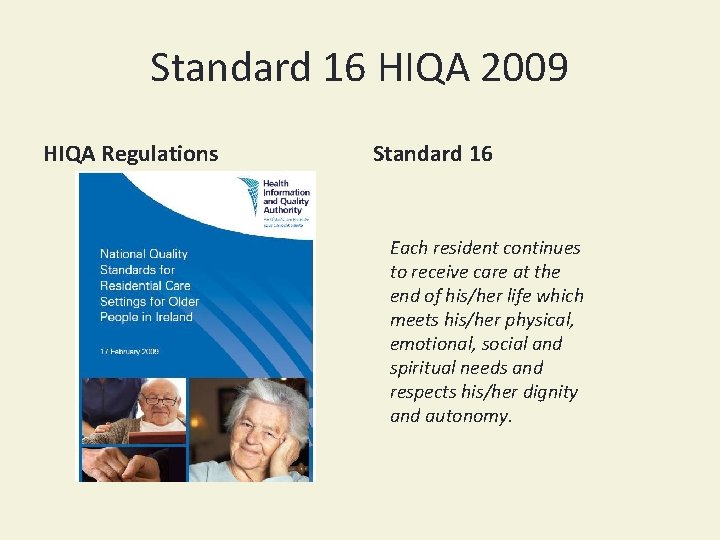
Standard 16 HIQA 2009 HIQA Regulations Standard 16 Each resident continues to receive care at the end of his/her life which meets his/her physical, emotional, social and spiritual needs and respects his/her dignity and autonomy.
Aims & Objectives • Overview of Dementia • Case History to Demonstrate Typical Palliative Care in Nursing Home Setting • HIQA and Palliative Care/ End Of Life Care.
Dementia & Palliative Care • Dementia is a syndrome affecting 35. 6 million people worldwide. There is deterioration in cognitive function (i. e. the ability to process thought) beyond what might be expected from normal ageing. It affects memory, thinking, orientation, comprehension, calculation, learning capacity, language, and judgement. Consciousness is not affected. (WHO 2012)
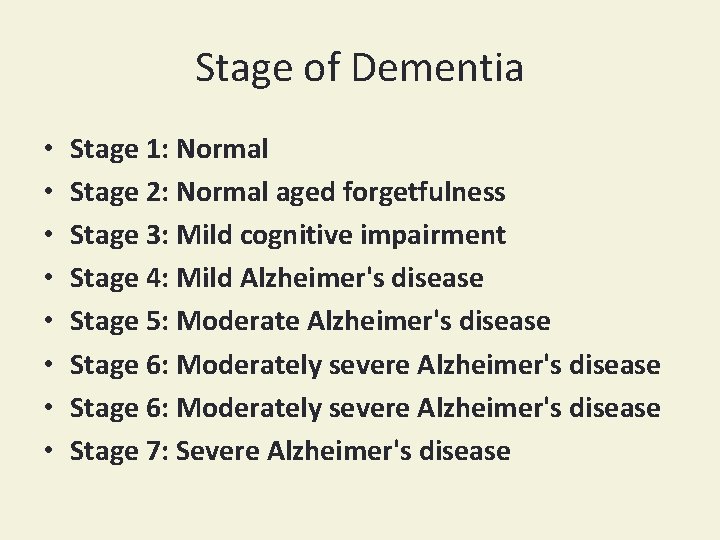
Stage of Dementia • • Stage 1: Normal Stage 2: Normal aged forgetfulness Stage 3: Mild cognitive impairment Stage 4: Mild Alzheimer's disease Stage 5: Moderate Alzheimer's disease Stage 6: Moderately severe Alzheimer's disease Stage 7: Severe Alzheimer's disease
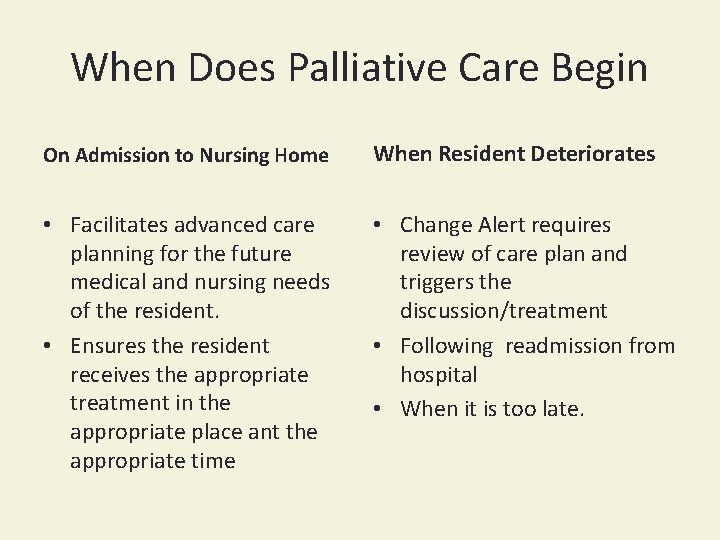
When Does Palliative Care Begin On Admission to Nursing Home When Resident Deteriorates • Facilitates advanced care planning for the future medical and nursing needs of the resident. • Ensures the resident receives the appropriate treatment in the appropriate place ant the appropriate time • Change Alert requires review of care plan and triggers the discussion/treatment • Following readmission from hospital • When it is too late.
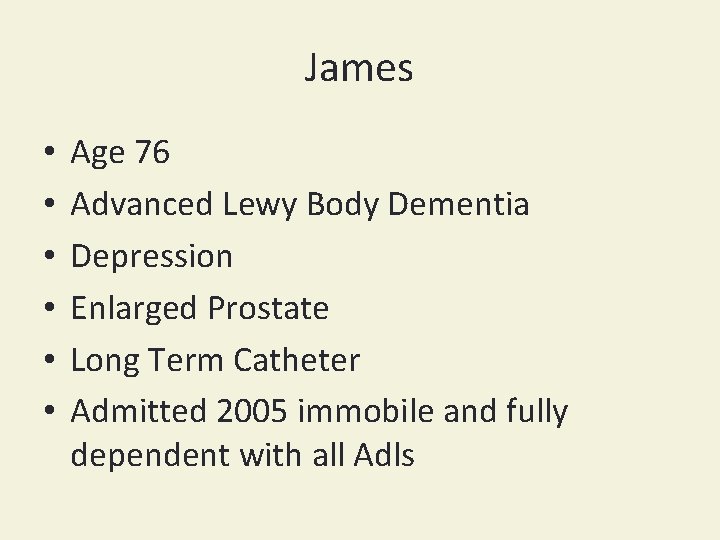
James • • • Age 76 Advanced Lewy Body Dementia Depression Enlarged Prostate Long Term Catheter Admitted 2005 immobile and fully dependent with all Adls
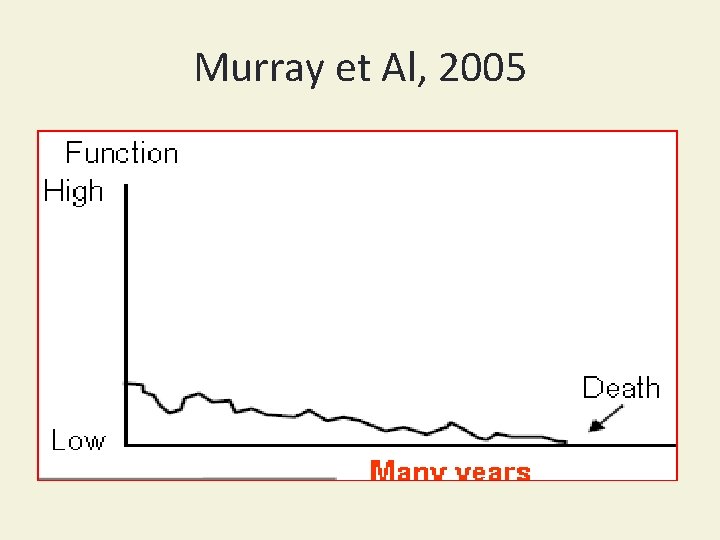
Murray et Al, 2005
Acute Episode Trajectory
When Does Palliative Care Begin ? • May 2010 following Acute Episode Aspiration Pneumonia • Nursing Home Comfort Care Plan/End Of Life • On Admission
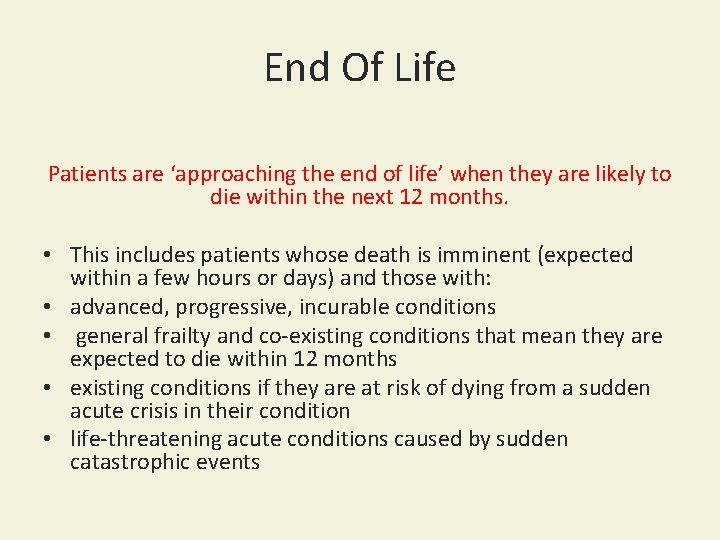
End Of Life Patients are ‘approaching the end of life’ when they are likely to die within the next 12 months. • This includes patients whose death is imminent (expected within a few hours or days) and those with: • advanced, progressive, incurable conditions • general frailty and co-existing conditions that mean they are expected to die within 12 months • existing conditions if they are at risk of dying from a sudden acute crisis in their condition • life-threatening acute conditions caused by sudden catastrophic events
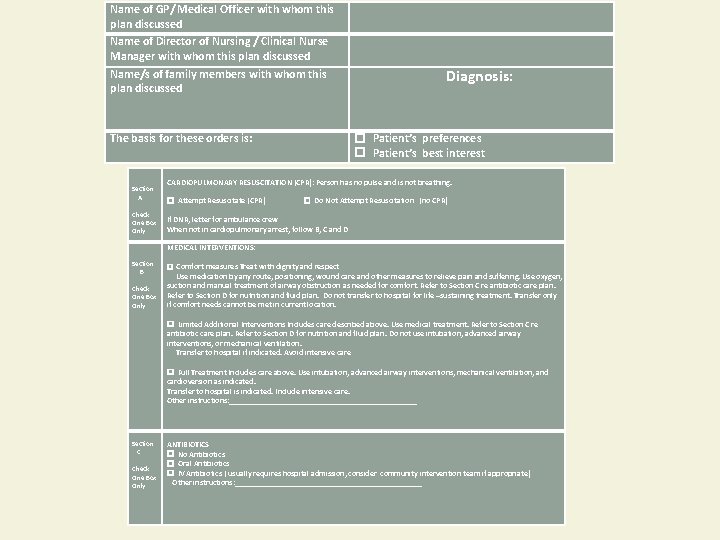
Name of GP/ Medical Officer with whom this plan discussed Name of Director of Nursing / Clinical Nurse Manager with whom this plan discussed Name/s of family members with whom this plan discussed The basis for these orders is: Diagnosis: Patient’s preferences Patient’s best interest Section A Check One Box Only CARDIOPULMONARY RESUSCITATION (CPR): Person has no pulse and is not breathing. Section B Check One Box Only MEDICAL INTERVENTIONS: Comfort measures Treat with dignity and respect Use medication by any route, positioning, wound care and other measures to relieve pain and suffering. Use oxygen, suction and manual treatment of airway obstruction as needed for comfort. Refer to Section C re antibiotic care plan. Refer to Section D for nutrition and fluid plan. Do not transfer to hospital for life –sustaining treatment. Transfer only if comfort needs cannot be met in current location. Limited Additional Interventions Includes care described above. Use medical treatment. Refer to Section C re antibiotic care plan. Refer to Section D for nutrition and fluid plan. Do not use intubation, advanced airway interventions, or mechanical ventilation. Transfer to hospital if indicated. Avoid intensive care Full Treatment Includes care above. Use intubation, advanced airway interventions, mechanical ventilation, and cardioversion as indicated. Transfer to hospital is indicated. Include intensive care. Other instructions: ________________________ Attempt Resuscitate (CPR) Do Not Attempt Resuscitation (no CPR) If DNR, letter for ambulance crew When not in cardiopulmonary arrest, follow B, C and D Section C Check One Box Only ANTIBIOTICS No Antibiotics Oral Antibiotics IV Antibiotics ( usually requires hospital admission, consider community intervention team if appropriate) Other instructions: ________________________
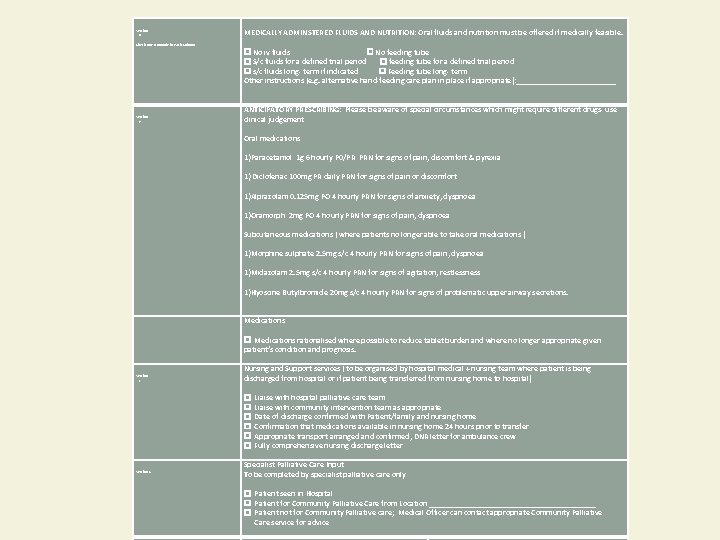
Section D Check One Box Only in Each Column Section E Section F Section G MEDICALLY ADMINSTERED FLUIDS AND NUTRITION: Oral fluids and nutrition must be offered if medically feasible. No iv fluids No feeding tube S/c fluids for a defined trial period feeding tube for a defined trial period s/c fluids long- term if indicated Feeding tube long- term Other instructions (e. g. alternative hand-feeding care plan in place if appropriate): _____________ ANTICIPATORY PRESCRIBING: Please be aware of special circumstances which might require different drugs- use clinical judgement Oral medications 1)Paracetamol 1 g 6 hourly P 0/PR PRN for signs of pain, discomfort & pyrexia 1) Diclofenac 100 mg PR daily PRN for signs of pain or discomfort 1)Alprazolam 0. 125 mg PO 4 hourly PRN for signs of anxiety, dyspnoea 1)Oramorph 2 mg PO 4 hourly PRN for signs of pain, dyspnoea Subcutaneous medications ( where patients no longer able to take oral medications ) 1)Morphine sulphate 2. 5 mg s/c 4 hourly PRN for signs of pain, dyspnoea 1)Midazolam 2. 5 mg s/c 4 hourly PRN for signs of agitation, restlessness 1)Hyoscine Butylbromide 20 mg s/c 4 hourly PRN for signs of problematic upper airway secretions. Medications rationalised where possible to reduce tablet burden and where no longer appropriate given patient’s condition and prognosis. Nursing and Support services ( to be organised by hospital medical + nursing team where patient is being discharged from hospital or if patient being transferred from nursing home to hospital) Liaise with hospital palliative care team Liaise with community intervention team as appropriate Date of discharge confirmed with Patient/family and nursing home Confirmation that medications available in nursing home 24 hours prior to transfer Appropriate transport arranged and confirmed, DNR letter for ambulance crew Fully comprehensive nursing discharge letter Specialist Palliative Care Input To be completed by specialist palliative care only Patient seen in Hospital Patient for Community Palliative Care from Location _____________________ Patient not for Community Palliative care; Medical Officer can contact appropriate Community Palliative Care service for advice
Care of James from 2010 -2013 • Symptom Management • 3 Monthly Reviews(full comprehensive assessment, must, pain scales, waterlow, care plan review, comfort care plan, manual handling, bed rail risk, medication reconciliation , evaluation • Acute episode in June 2013 change in appetite. • RIP in November 2013
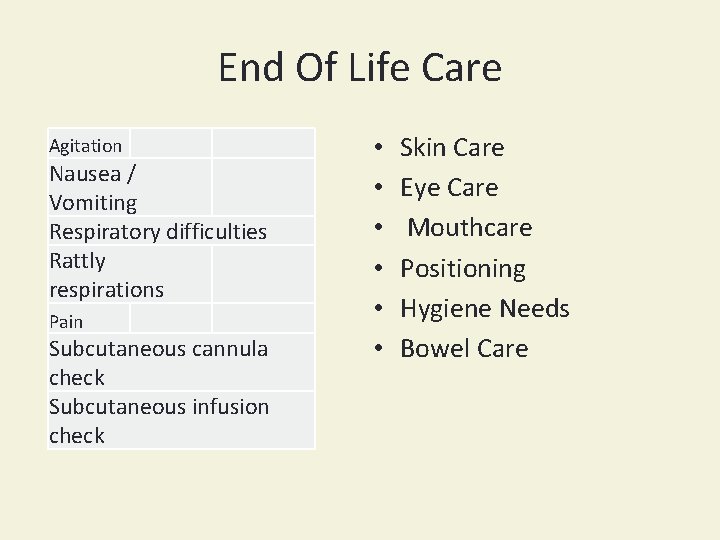
End Of Life Care Nausea / Vomiting Respiratory difficulties Rattly respirations Pain Subcutaneous cannula check Subcutaneous infusion check Agitation • • • Skin Care Eye Care Mouthcare Positioning Hygiene Needs Bowel Care
End Of Life Care • Psychological Support • Spiritual Needs Met • Explanation of procedures • End Of Life Wishes known and Discussed • Information Updates and Time for Questioning • Preferences and traditions known and respected.
The Journey Through Death and Dying: Families’ Experiences of the End-of-Life Care in Private Nursing Homes “Our research suggests a strong culture of good practice within private nursing homes, which provide a ‘home from home’ for elderly residents and enable relatives to be with their loved one at the end of life stage. The report further demonstrates that, where an end-of-life care plan is implemented in partnership with family members, an outcome of good quality care at the end of the resident’s life can be achieved. ” Dr. Mel Duffy 2014
Palliative Care For All • Standard 2. 4 • Each resident with a life-limiting condition or life threatening illness receives care and support, which maintains and enhances their quality of life, meets their needs and respects their dignity. HIQA 2014
HIQA • • Residents wishes Referrals to Palliative Care Staff Training Choice of Place of Death Family facilitated Procedures to be followed following death Staff and resident support Participation in Decision Making
Duty of Care The residential service has facilities in place to support end-of-life care so that a resident is not unnecessarily transferred to an acute setting except for specific medical reasons, and in accordance with their wishes.
Take Home Message • Dementia is a Terminal Illness • Recognising that Palliative care should begin when residents enter the nursing home setting. • Engagement is the key to successful palliative care for all.