
Caribbean South America Chapter 5 1 Physical FeaturesMountain
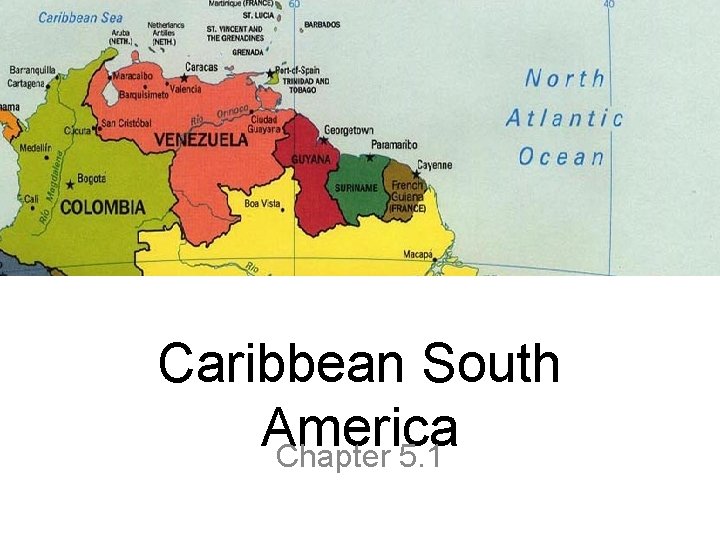
Caribbean South America Chapter 5. 1
Physical Features-Mountain Ranges • All are part of the Andes Mountain Range – Cordillera Occidental is west • Located in Columbia – Cordillera Central in the middle • Located in Columbia • Runs between 2 major rivers: Cauca (west) and Magdalena (east) • Is so volcanic, the fertile soil is good for growing coffee – Cordillera Oriental is east • Forms the western boarder of Venezuela – Cordillera de Merida is North • Located in Venezuela
Physical Features-Other • Lowland plains called llanos on the eastern side of the Andes are in both Colombia and Venezuela. • Amazon Rain Forest spills over into the southeast corner of Colombia. • Venezuela is covered with savannas and tropical rain forests in the Orinoco River basin. • Orinoco River is one of the longest rivers in South America (1, 330 miles long) • Southeast of Venezuela, the ground rises to the Guiana Highlands, which extend through Guyana, Suriname, and French Guiana.
Climate • Temperatures are hot everywhere, but there are different climates • Colombia • • Northern tip Semiarid Northwest coast tropical wet and dry West coast and southeast tropical wet Some of the center is maritime • Venezuela • Northwest coast semiarid • Most of the rest is tropical wet and dry • Guyana, Suriname, French Guiana • Northern coast is mostly tropical wet • South is tropical wet and dry
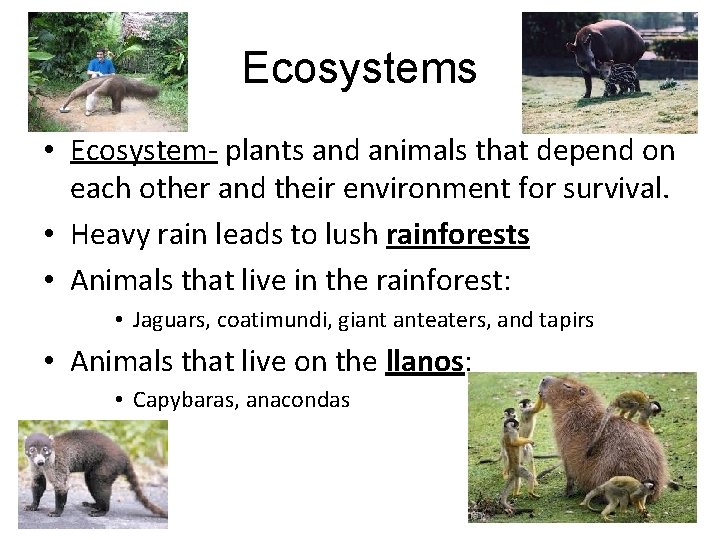
Ecosystems • Ecosystem- plants and animals that depend on each other and their environment for survival. • Heavy rain leads to lush rainforests • Animals that live in the rainforest: • Jaguars, coatimundi, giant anteaters, and tapirs • Animals that live on the llanos: • Capybaras, anacondas
People and the Landscape • Trade and human settlement have been tied together by natives as well as Europeans who conquered the areas. • Europeans stayed along the coast or moved to high ground with fertile soil and cool temperatures because they feared disease carried by insects. • Most people live in the urban areas in all of these countries, which are either on the coast as a busy port, or a farming community in the highlands.
How People Use Their Land • Guyana, Suriname, French Guiana • Crops for export • Sugar cane, bananas, rice, molasses, rum, and shrimp • Venezuela • Oil around Lake Maracaibo • 13% farming • Colombia • Export coffee, bananas, flowers • Sell sugar cane, cocoa beans, oilseed, corn, and tobacco in the country (all from only 2% of the land) • Colombians practice terraced farming-or sculpting the hillside into different levels for crops
A Diverse Population • Native Americans only make up a small percentage of people in this region; many natives died of European diseases. • Because of the variety of people, there is much cultural borrowing in dance, sports (cricket and baseball), music, and festivals. • Many natives married Europeans and their children are called mestizos. • Maroons-descended from Africans who escaped slavery into the rainforests for protection. • French Guiana • Mixed European and African descent • Guyana & Suriname- • Workers who migrated from India, Chinese, Javanese (from the Indonesian island of Java)
- Slides: 8