
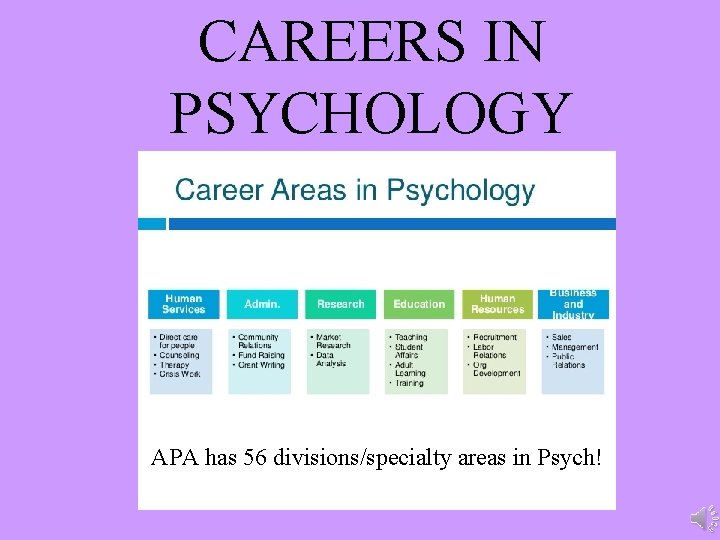
CAREERS IN PSYCHOLOGY APA has 56 divisionsspecialty areas

- Slides: 11
CAREERS IN PSYCHOLOGY APA has 56 divisions/specialty areas in Psych!
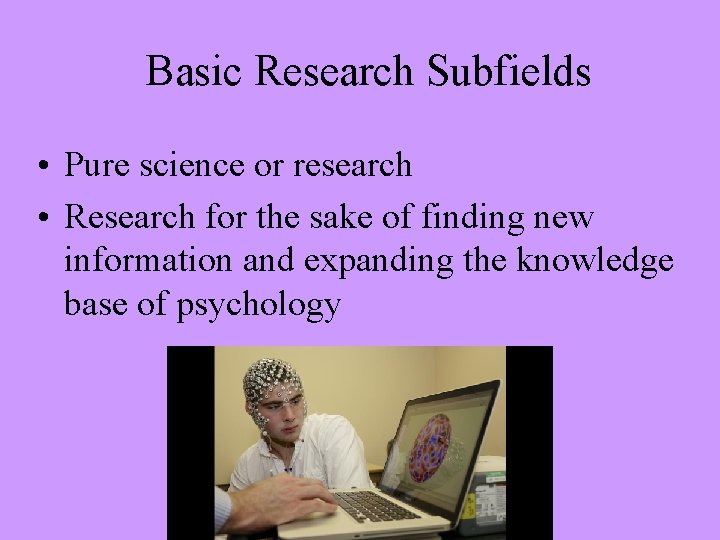
Basic Research Subfields • Pure science or research • Research for the sake of finding new information and expanding the knowledge base of psychology
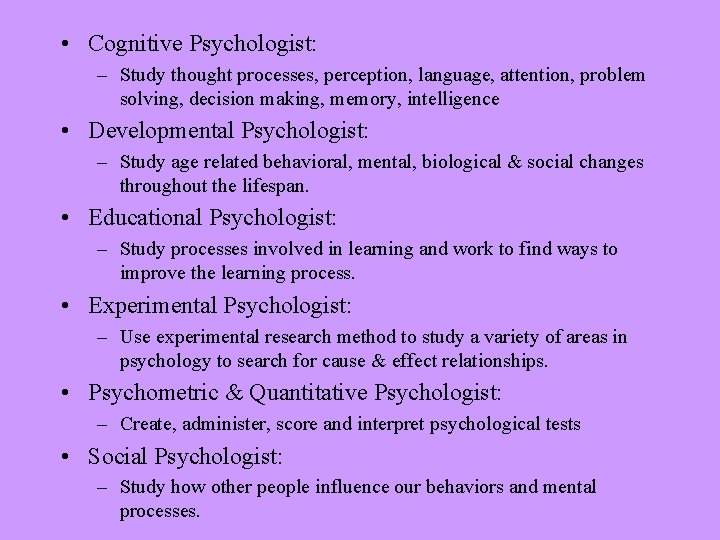
• Cognitive Psychologist: – Study thought processes, perception, language, attention, problem solving, decision making, memory, intelligence • Developmental Psychologist: – Study age related behavioral, mental, biological & social changes throughout the lifespan. • Educational Psychologist: – Study processes involved in learning and work to find ways to improve the learning process. • Experimental Psychologist: – Use experimental research method to study a variety of areas in psychology to search for cause & effect relationships. • Psychometric & Quantitative Psychologist: – Create, administer, score and interpret psychological tests • Social Psychologist: – Study how other people influence our behaviors and mental processes.
Applied Research • Research designed to solve specific practical problems
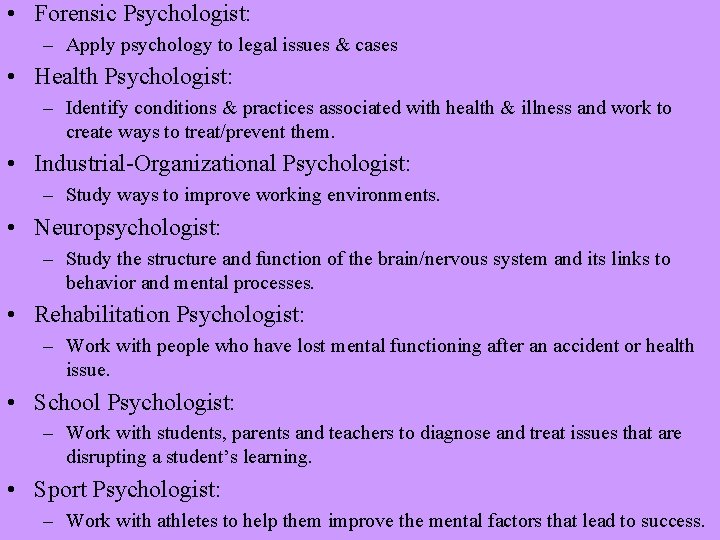
• Forensic Psychologist: – Apply psychology to legal issues & cases • Health Psychologist: – Identify conditions & practices associated with health & illness and work to create ways to treat/prevent them. • Industrial-Organizational Psychologist: – Study ways to improve working environments. • Neuropsychologist: – Study the structure and function of the brain/nervous system and its links to behavior and mental processes. • Rehabilitation Psychologist: – Work with people who have lost mental functioning after an accident or health issue. • School Psychologist: – Work with students, parents and teachers to diagnose and treat issues that are disrupting a student’s learning. • Sport Psychologist: – Work with athletes to help them improve the mental factors that lead to success.
The Helping Professions
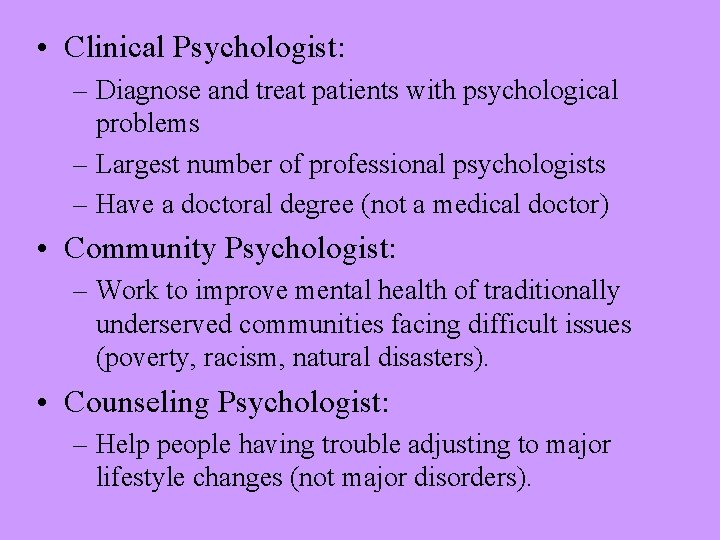
• Clinical Psychologist: – Diagnose and treat patients with psychological problems – Largest number of professional psychologists – Have a doctoral degree (not a medical doctor) • Community Psychologist: – Work to improve mental health of traditionally underserved communities facing difficult issues (poverty, racism, natural disasters). • Counseling Psychologist: – Help people having trouble adjusting to major lifestyle changes (not major disorders).
REVIEW QUESTION: The difference between basic and applied research is… ANSWER: Basic is scientific research trying to find new information. Applied is research that is trying to solve a practical problem.
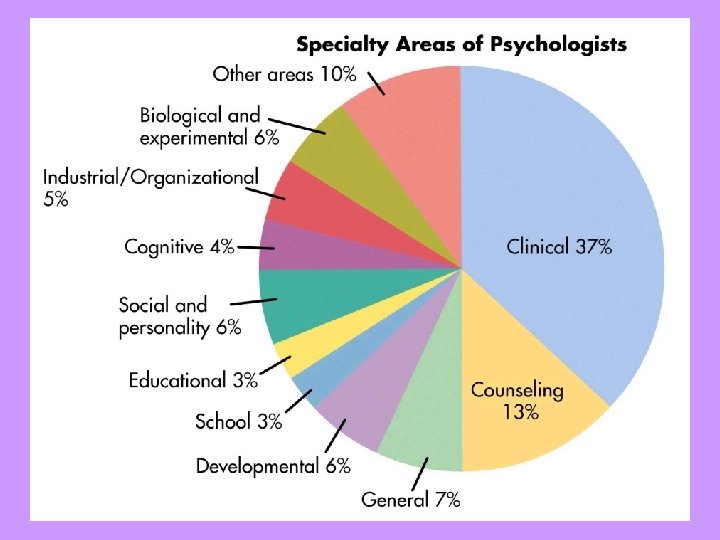
REVIEW QUESTION: Based on your reading, where do most psychologists work? ANSWER: Private Practice or Colleges & Universities