
Career Spotlight Speech Language Pathology A Helping Profession
- Slides: 12
Career Spotlight: Speech Language Pathology A Helping Profession
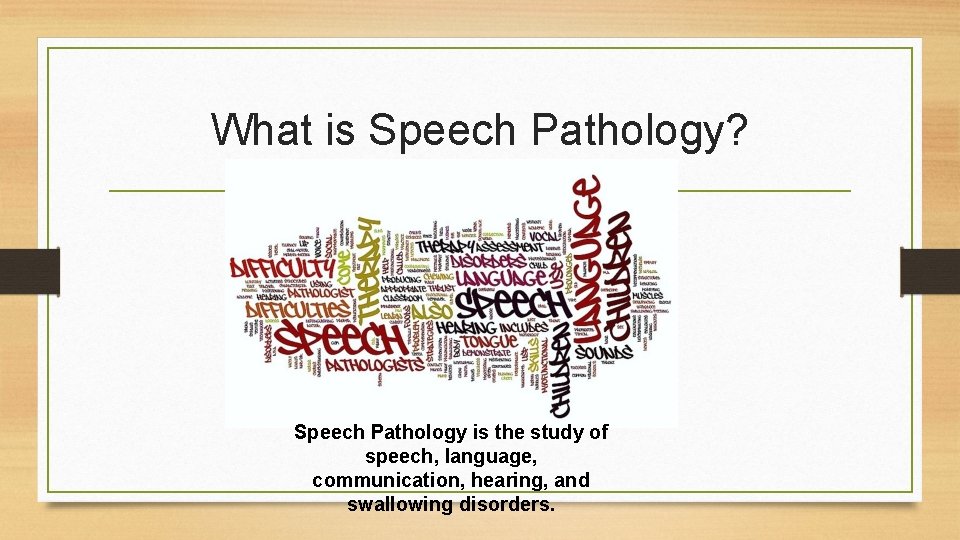
What is Speech Pathology? Speech Pathology is the study of speech, language, communication, hearing, and swallowing disorders.
What is a Speech Language Pathologist (SLP)? An SLP is a professional who provides clinical services, prevention, advocacy, education, administration, and research in the areas of communication and swallowing throughout the life span. Other similar titles include: Ø Speech Therapist Ø Speech Language Therapist Ø Logopedist Ø Acronyms include SLP, ST, or SLT
Who Does an SLP Work with? An SLP works with all populations: Ø Infants Ø Children Ø Teens Ø Young adults Ø Adults Ø Seniors
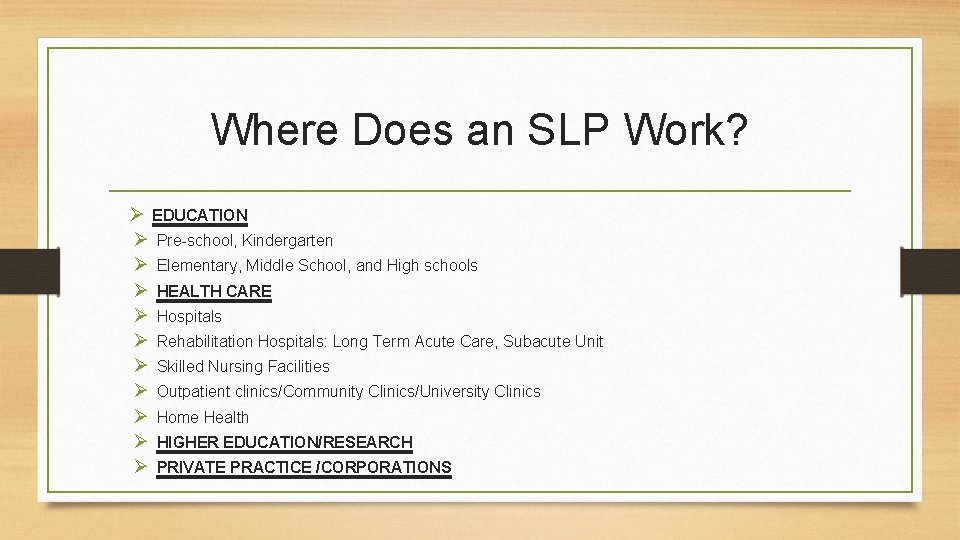
Where Does an SLP Work? Ø EDUCATION Ø Pre-school, Kindergarten Ø Elementary, Middle School, and High schools Ø HEALTH CARE Ø Hospitals Ø Rehabilitation Hospitals: Long Term Acute Care, Subacute Unit Ø Skilled Nursing Facilities Ø Outpatient clinics/Community Clinics/University Clinics Ø Home Health Ø HIGHER EDUCATION/RESEARCH Ø PRIVATE PRACTICE /CORPORATIONS
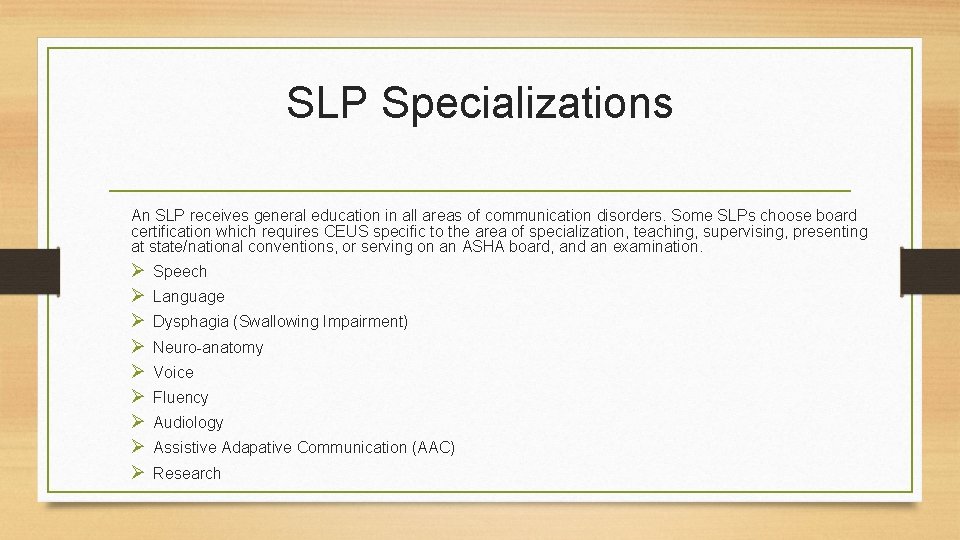
SLP Specializations An SLP receives general education in all areas of communication disorders. Some SLPs choose board certification which requires CEUS specific to the area of specialization, teaching, supervising, presenting at state/national conventions, or serving on an ASHA board, and an examination. Ø Ø Ø Ø Ø Speech Language Dysphagia (Swallowing Impairment) Neuro-anatomy Voice Fluency Audiology Assistive Adapative Communication (AAC) Research
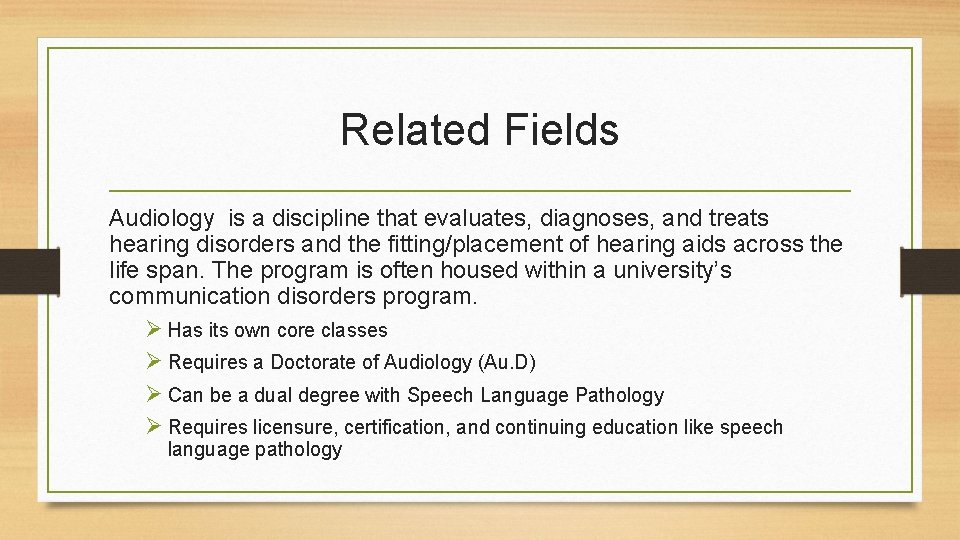
Related Fields Audiology is a discipline that evaluates, diagnoses, and treats hearing disorders and the fitting/placement of hearing aids across the life span. The program is often housed within a university’s communication disorders program. Ø Has its own core classes Ø Requires a Doctorate of Audiology (Au. D) Ø Can be a dual degree with Speech Language Pathology Ø Requires licensure, certification, and continuing education like speech language pathology
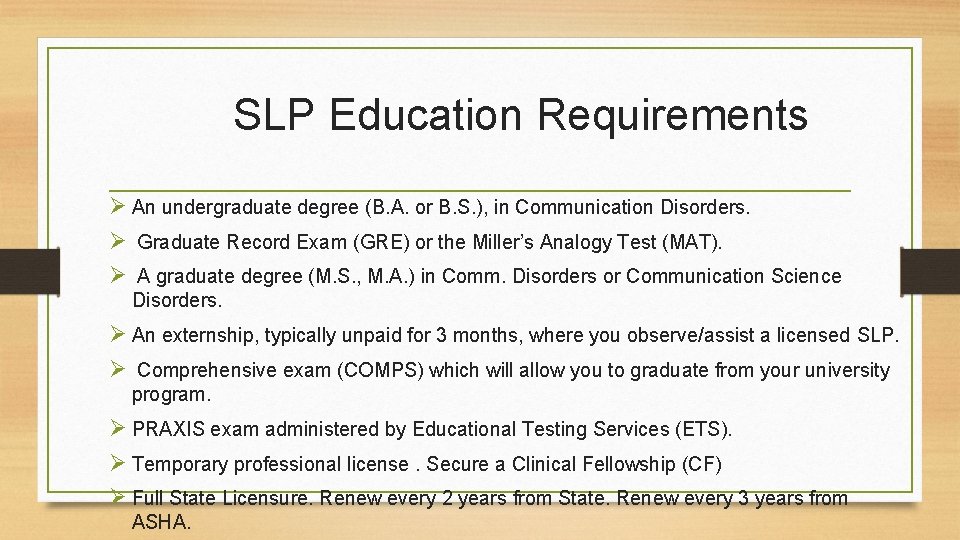
SLP Education Requirements Ø An undergraduate degree (B. A. or B. S. ), in Communication Disorders. Ø Graduate Record Exam (GRE) or the Miller’s Analogy Test (MAT). Ø A graduate degree (M. S. , M. A. ) in Comm. Disorders or Communication Science Disorders. Ø An externship, typically unpaid for 3 months, where you observe/assist a licensed SLP. Ø Comprehensive exam (COMPS) which will allow you to graduate from your university program. Ø PRAXIS exam administered by Educational Testing Services (ETS). Ø Temporary professional license. Secure a Clinical Fellowship (CF) Ø Full State Licensure. Renew every 2 years from State. Renew every 3 years from ASHA.
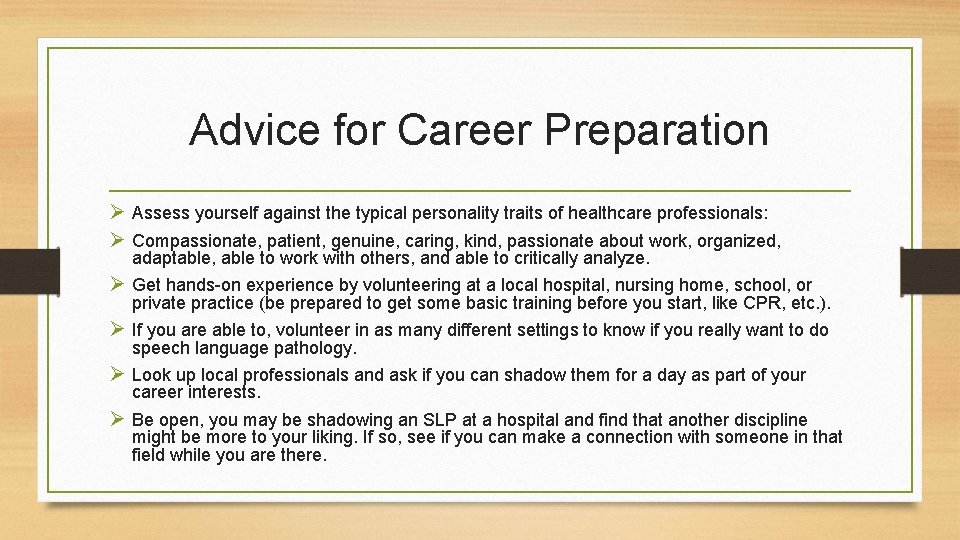
Advice for Career Preparation Ø Assess yourself against the typical personality traits of healthcare professionals: Ø Compassionate, patient, genuine, caring, kind, passionate about work, organized, adaptable, able to work with others, and able to critically analyze. Ø Get hands-on experience by volunteering at a local hospital, nursing home, school, or private practice (be prepared to get some basic training before you start, like CPR, etc. ). Ø If you are able to, volunteer in as many different settings to know if you really want to do speech language pathology. Ø Look up local professionals and ask if you can shadow them for a day as part of your career interests. Ø Be open, you may be shadowing an SLP at a hospital and find that another discipline might be more to your liking. If so, see if you can make a connection with someone in that field while you are there.
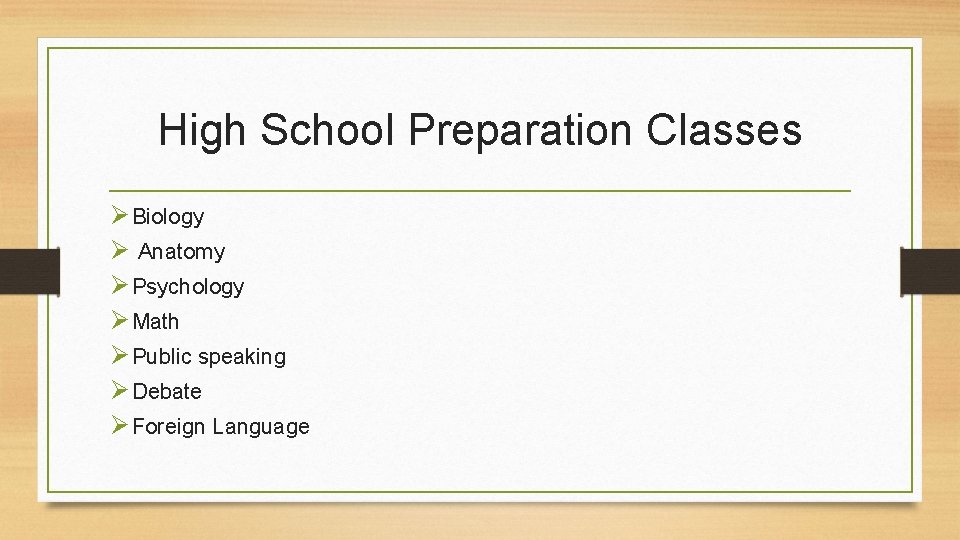
High School Preparation Classes Ø Biology Ø Anatomy Ø Psychology Ø Math Ø Public speaking Ø Debate Ø Foreign Language
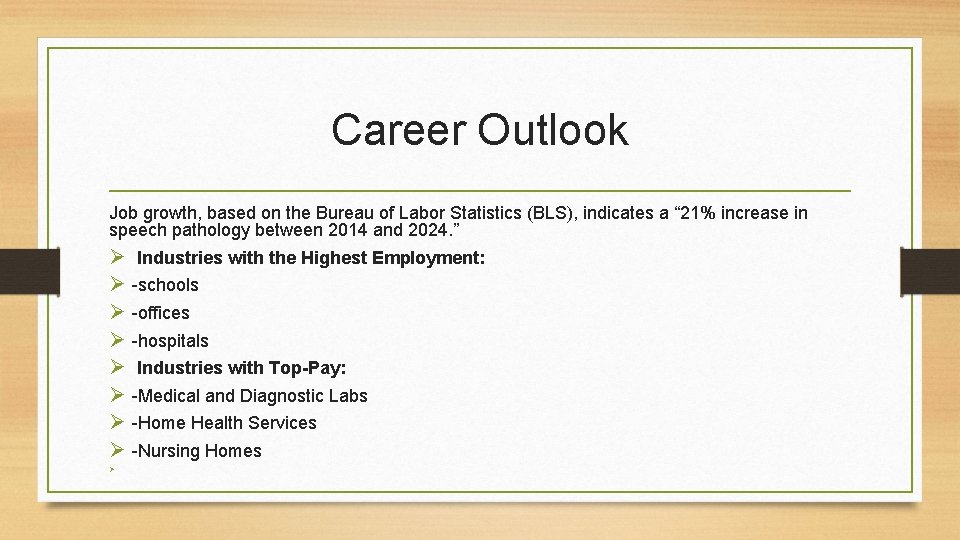
Career Outlook Job growth, based on the Bureau of Labor Statistics (BLS), indicates a “ 21% increase in speech pathology between 2014 and 2024. ” Ø Industries with the Highest Employment: Ø -schools Ø -offices Ø -hospitals Ø Industries with Top-Pay: Ø -Medical and Diagnostic Labs Ø -Home Health Services Ø -Nursing Homes Ø
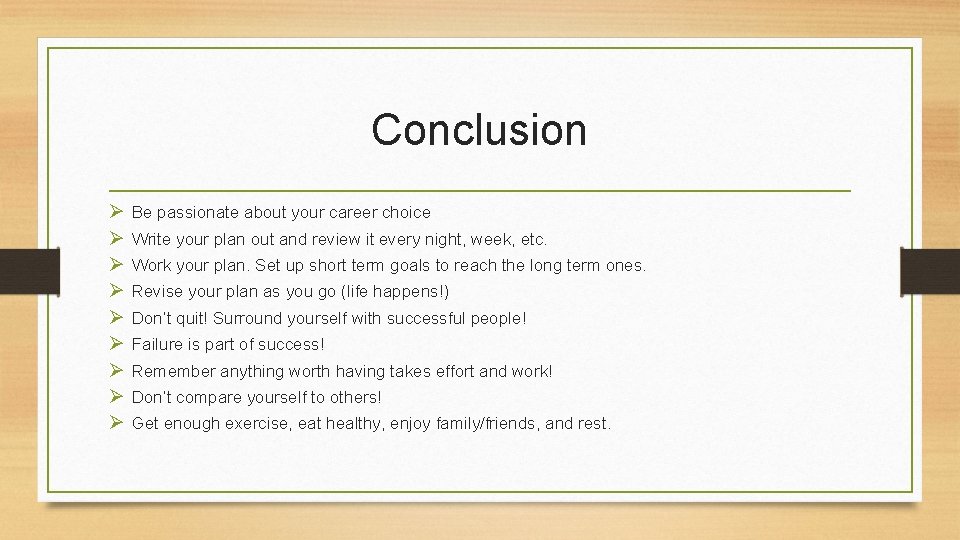
Conclusion Ø Ø Ø Ø Ø Be passionate about your career choice Write your plan out and review it every night, week, etc. Work your plan. Set up short term goals to reach the long term ones. Revise your plan as you go (life happens!) Don’t quit! Surround yourself with successful people! Failure is part of success! Remember anything worth having takes effort and work! Don’t compare yourself to others! Get enough exercise, eat healthy, enjoy family/friends, and rest.