
CAREER PATHWAYS FOR THE EVOLVING WORLD OF WORK


- Slides: 33
CAREER PATHWAYS FOR THE EVOLVING WORLD OF WORK PRESENTED BY Rachel Pleasants Mc. Donnell
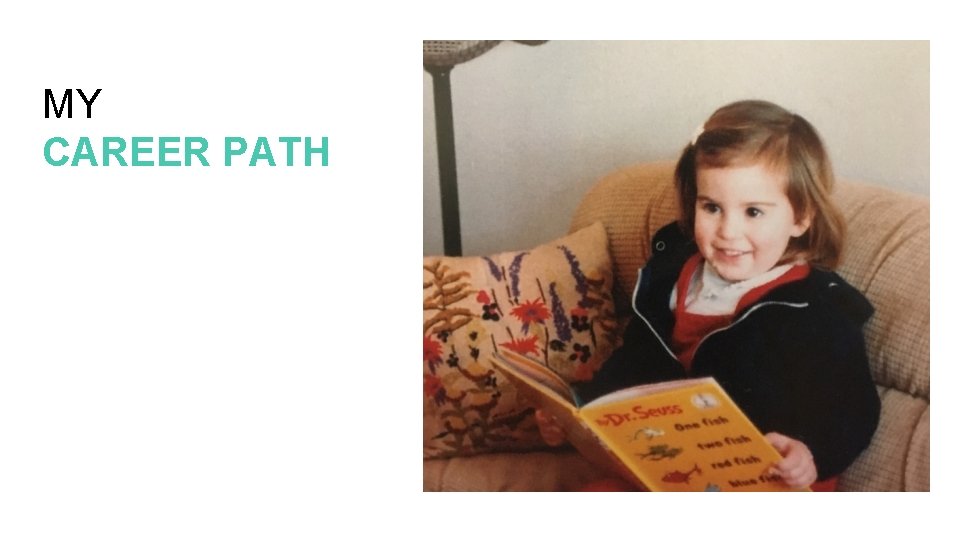
MY CAREER PATH
JFF: BUILDING A FUTURE THAT WORKS OUR WORK We drive meaningful change in the American workforce and education systems. For 35 years, JFF has led the way in designing innovative and scalable solutions that create access to economic advancement for all. OUR VISION The promise of education and economic mobility in America is achieved for everyone.
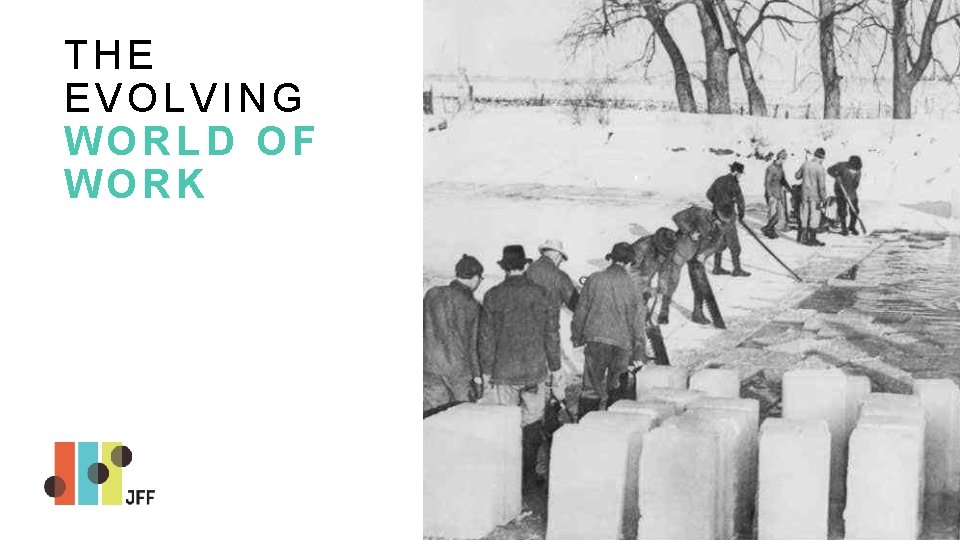
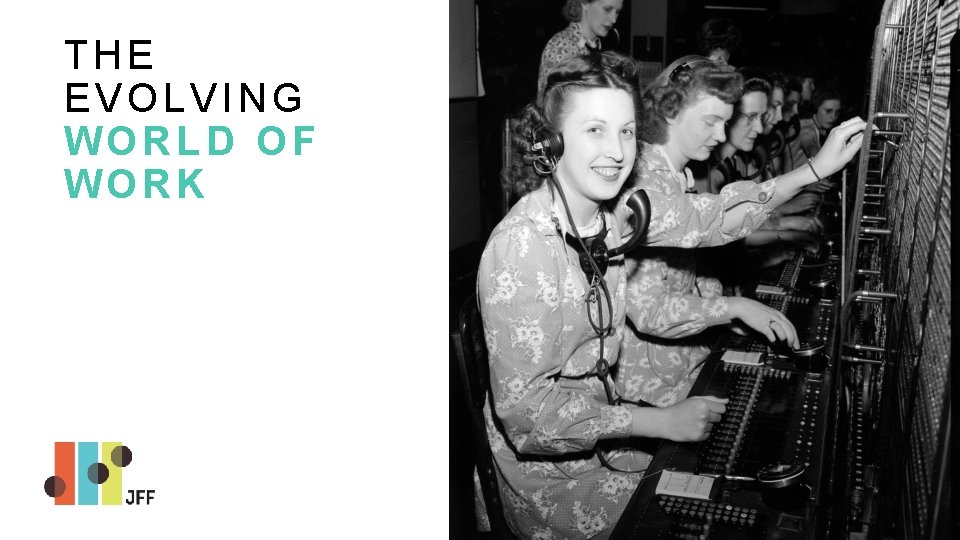
THE EVOLVING WORLD OF WORK
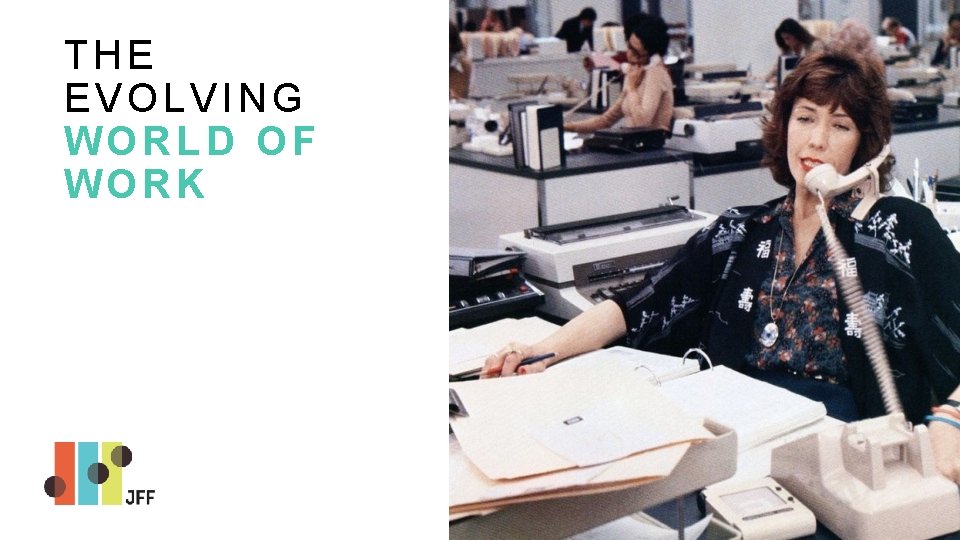
THE EVOLVING WORLD OF WORK
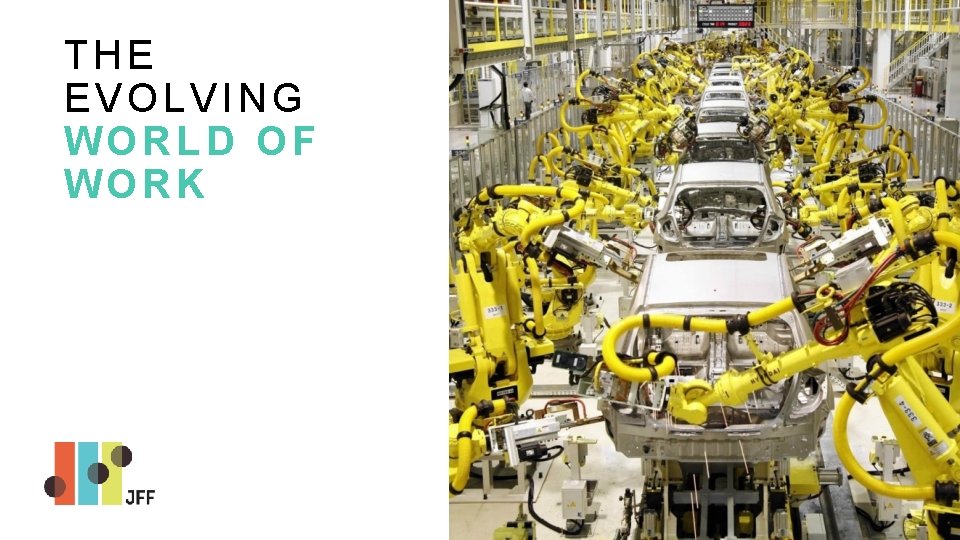
THE EVOLVING WORLD OF WORK
THE EVOLVING WORLD OF WORK
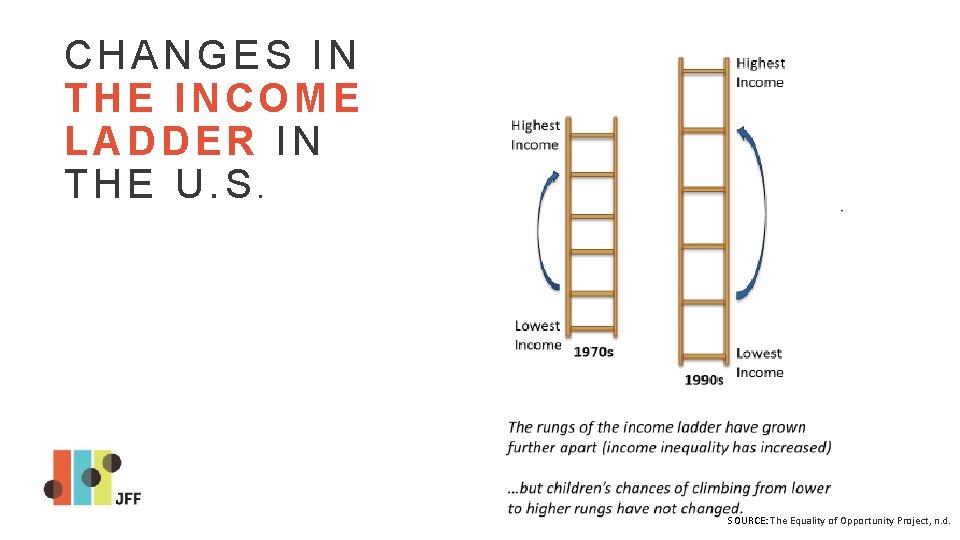
CHANGES IN THE INCOME LADDER IN THE U. S. SOURCE: The Equality of Opportunity Project, n. d.
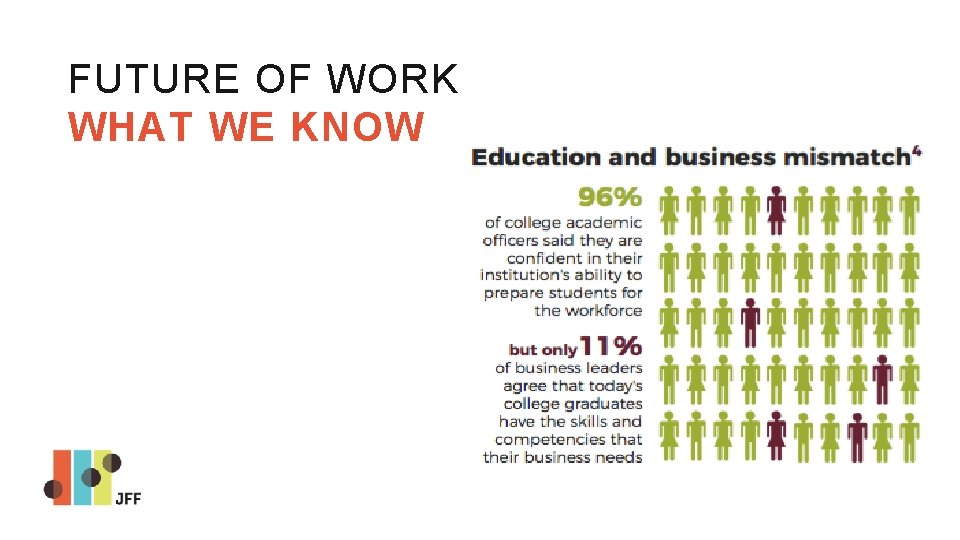
of Work: New Findings FUTURE OF Future WORK WHAT WE KNOW
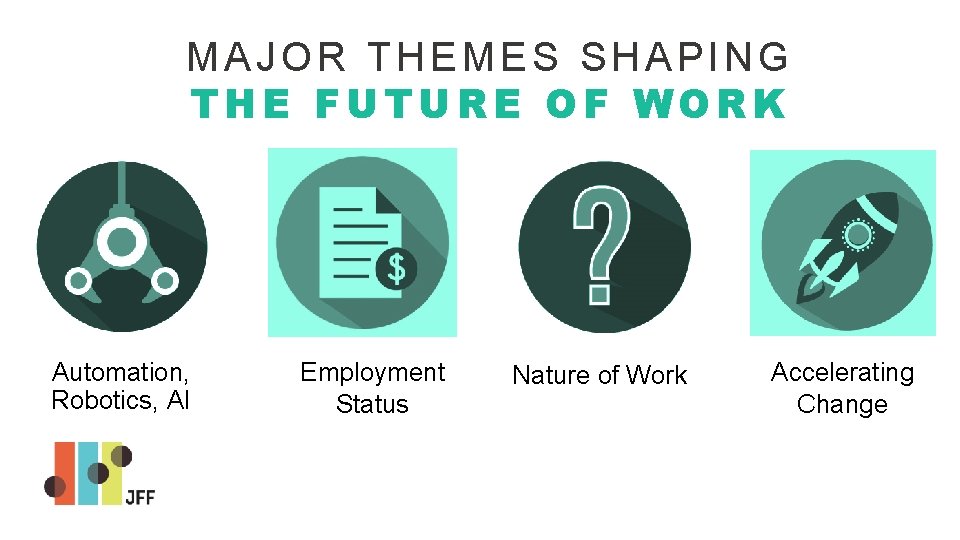
MAJOR THEMES SHAPING THE FUTURE OF WORK Automation, Robotics, AI Employment Status Nature of Work Accelerating Change
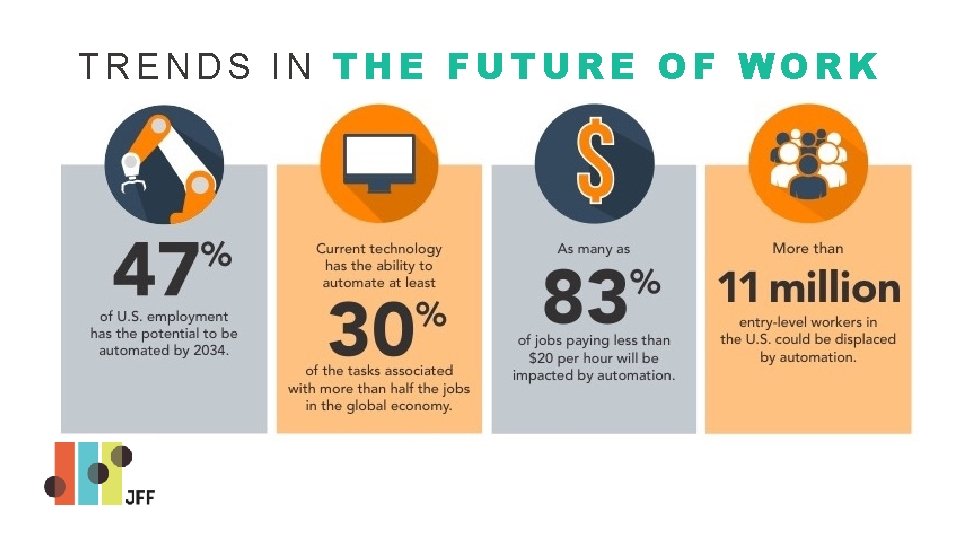
TRENDS IN THE FUTURE OF WORK
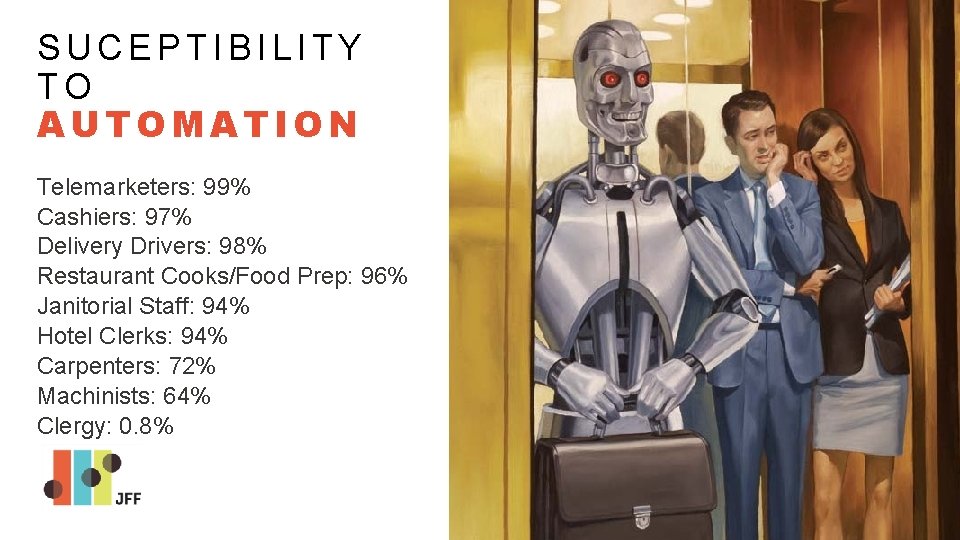
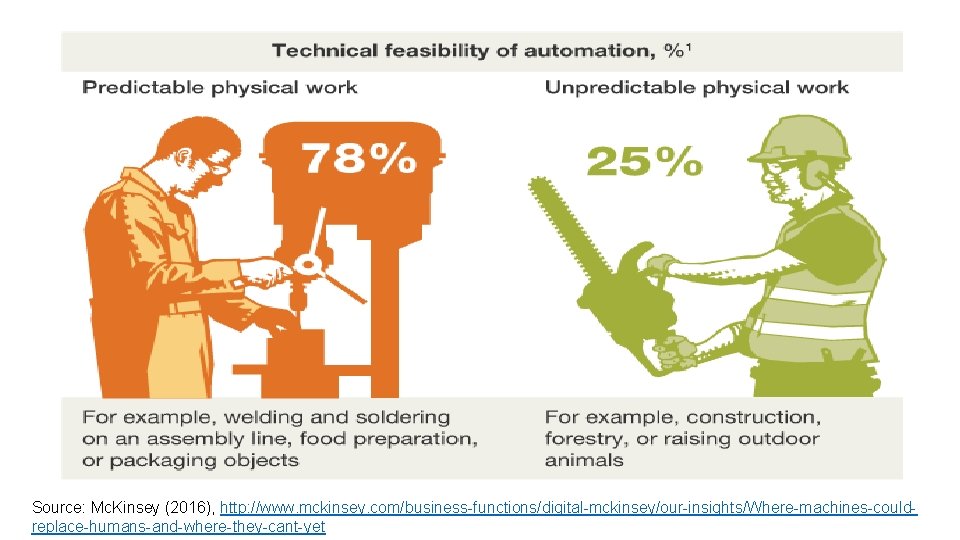
SUCEPTIBILITY TO AUTOMATION Telemarketers: 99% Cashiers: 97% Delivery Drivers: 98% Restaurant Cooks/Food Prep: 96% Janitorial Staff: 94% Hotel Clerks: 94% Carpenters: 72% Machinists: 64% Clergy: 0. 8%
Source: Mc. Kinsey (2016), http: //www. mckinsey. com/business-functions/digital-mckinsey/our-insights/Where-machines-couldreplace-humans-and-where-they-cant-yet
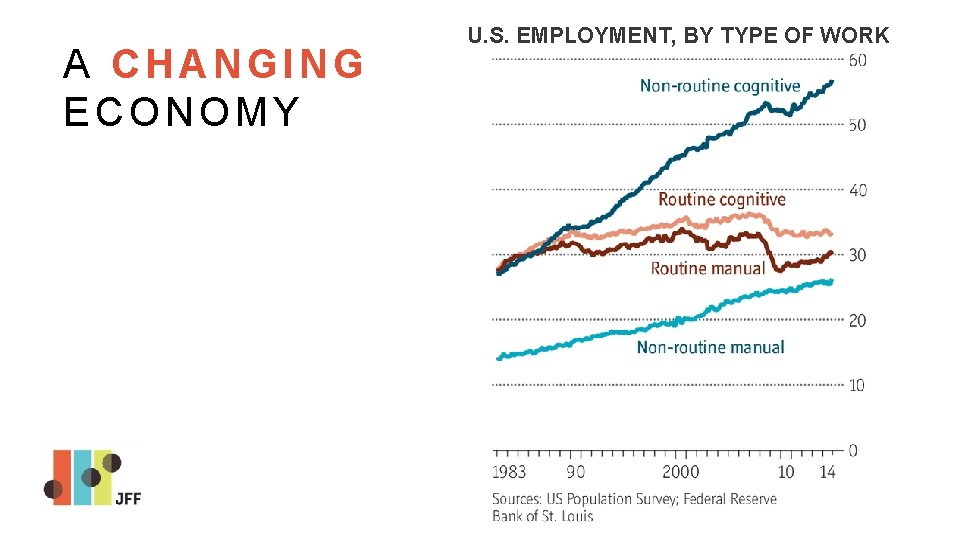
A CHANGING ECONOMY U. S. EMPLOYMENT, BY TYPE OF WORK
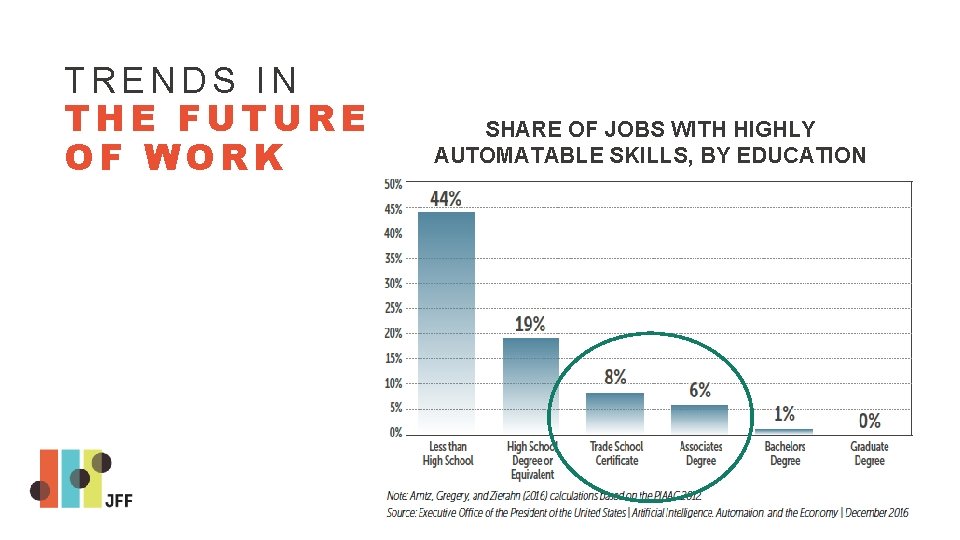
TRENDS IN THE FUTURE OF WORK SHARE OF JOBS WITH HIGHLY AUTOMATABLE SKILLS, BY EDUCATION
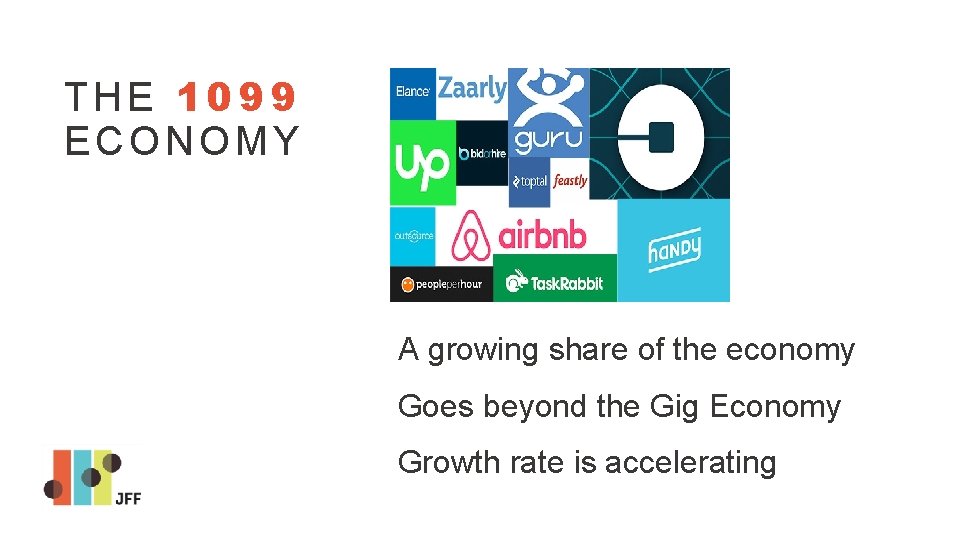
THE 1099 ECONOMY A growing share of the economy Goes beyond the Gig Economy Growth rate is accelerating
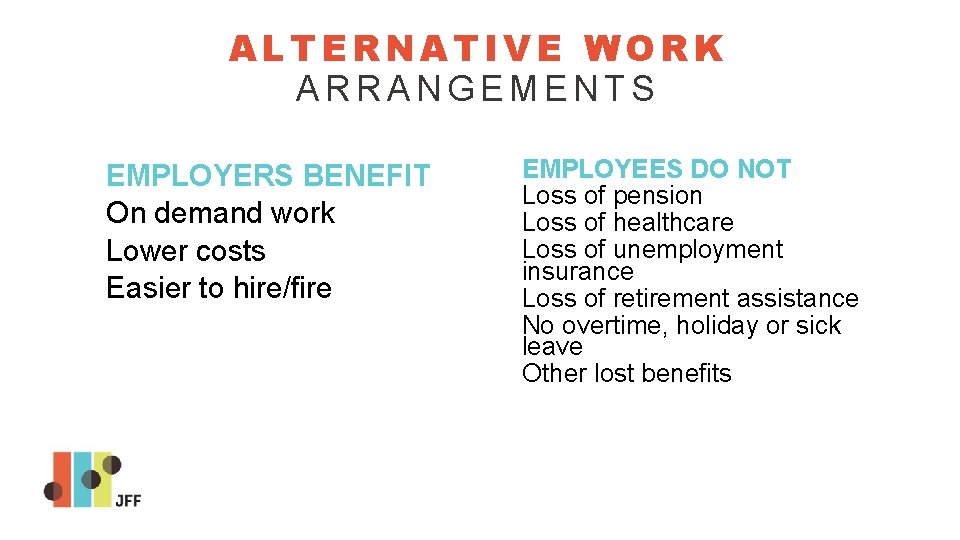
ALTERNATIVE WORK ARRANGEMENTS EMPLOYERS BENEFIT On demand work Lower costs Easier to hire/fire EMPLOYEES DO NOT Loss of pension Loss of healthcare Loss of unemployment insurance Loss of retirement assistance No overtime, holiday or sick leave Other lost benefits
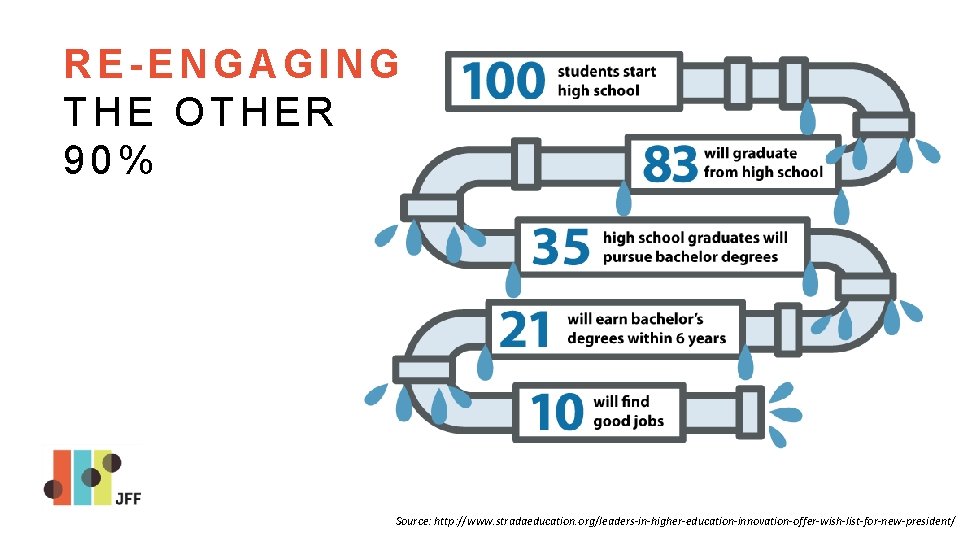
RE-ENGAGING THE OTHER 90% Source: http: //www. stradaeducation. org/leaders-in-higher-education-innovation-offer-wish-list-for-new-president/
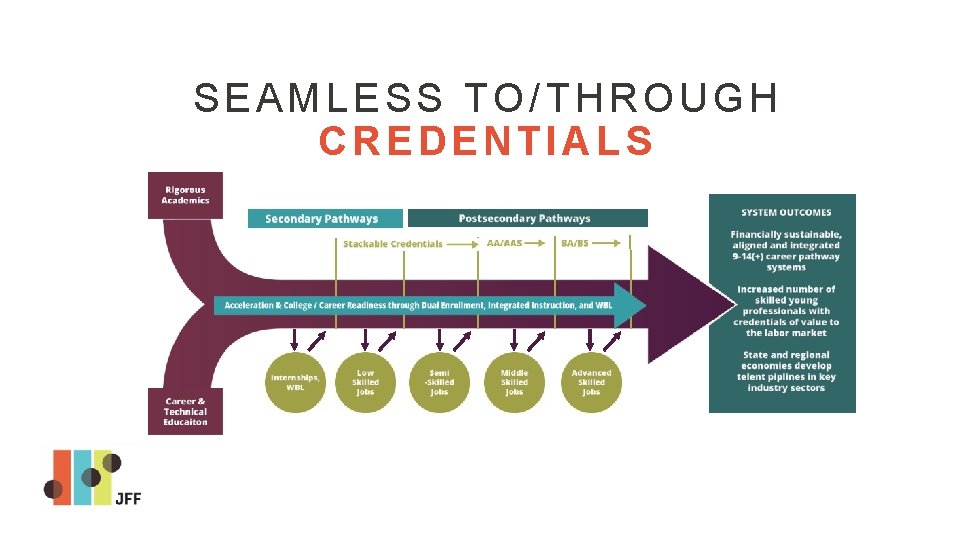
SEAMLESS TO/THROUGH CREDENTIALS
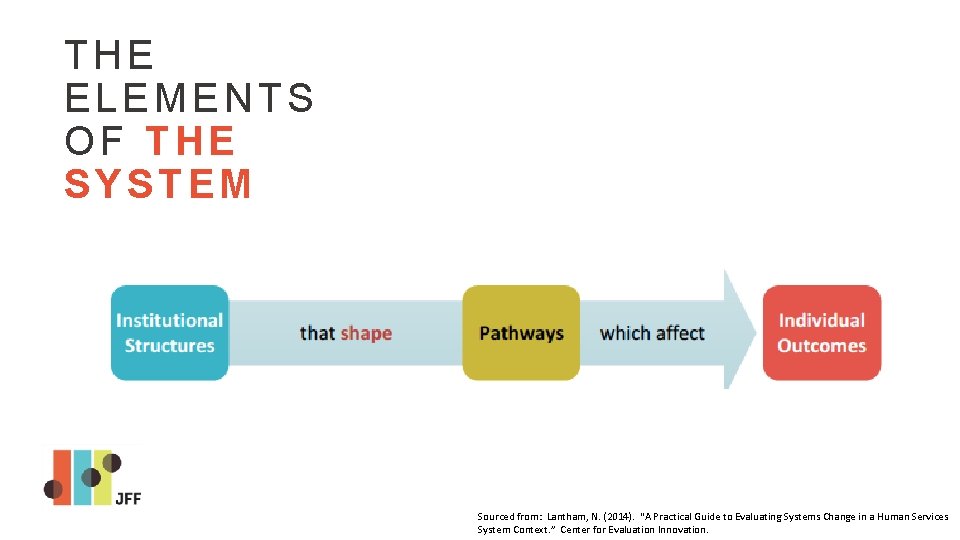
THE ELEMENTS OF THE SYSTEM Sourced from: Lantham, N. (2014). “A Practical Guide to Evaluating Systems Change in a Human Services System Context. ” Center for Evaluation Innovation.
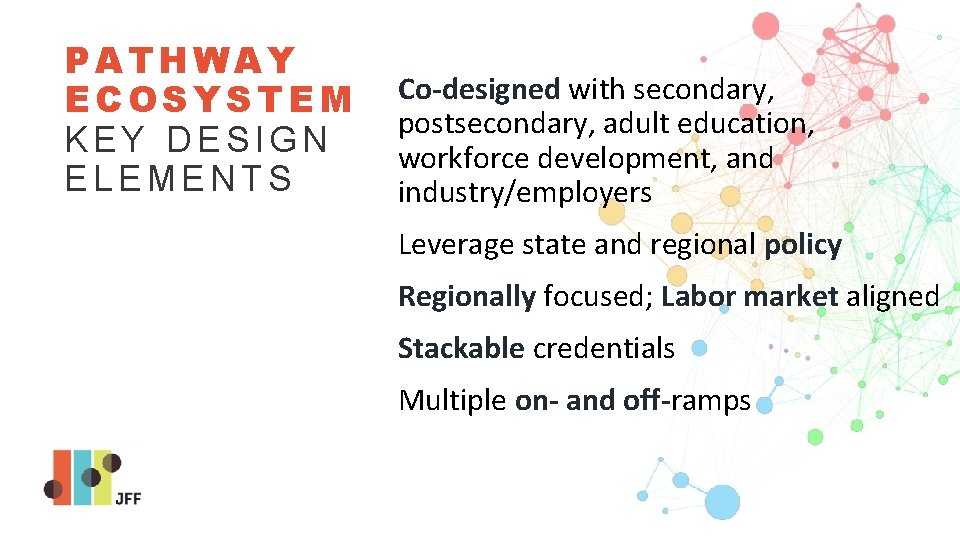
PATHWAY ECOSYSTEM KEY DESIGN ELEMENTS Co-designed with secondary, postsecondary, adult education, workforce development, and industry/employers Leverage state and regional policy Regionally focused; Labor market aligned Stackable credentials Multiple on- and off-ramps
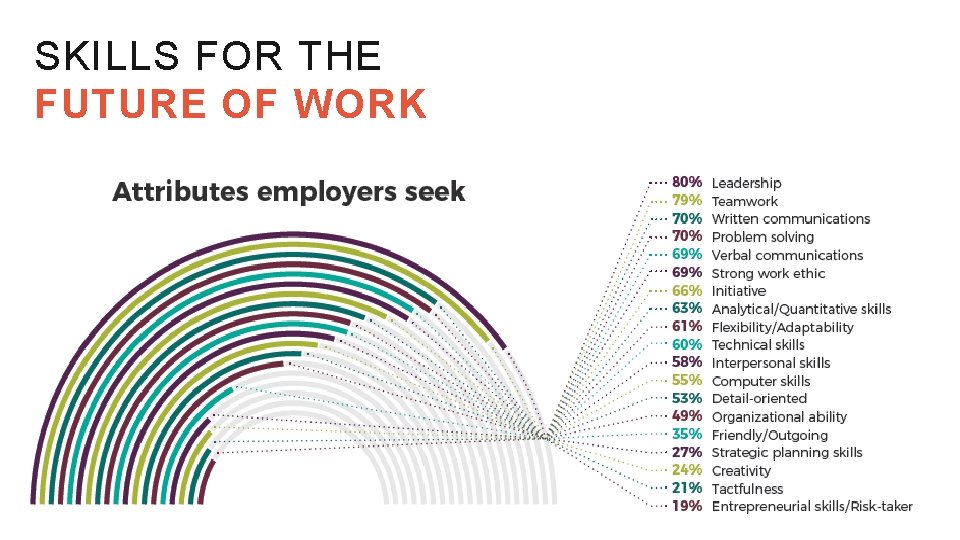
SKILLS FOR THE Future of Work: New Findings FUTURE OF WORK
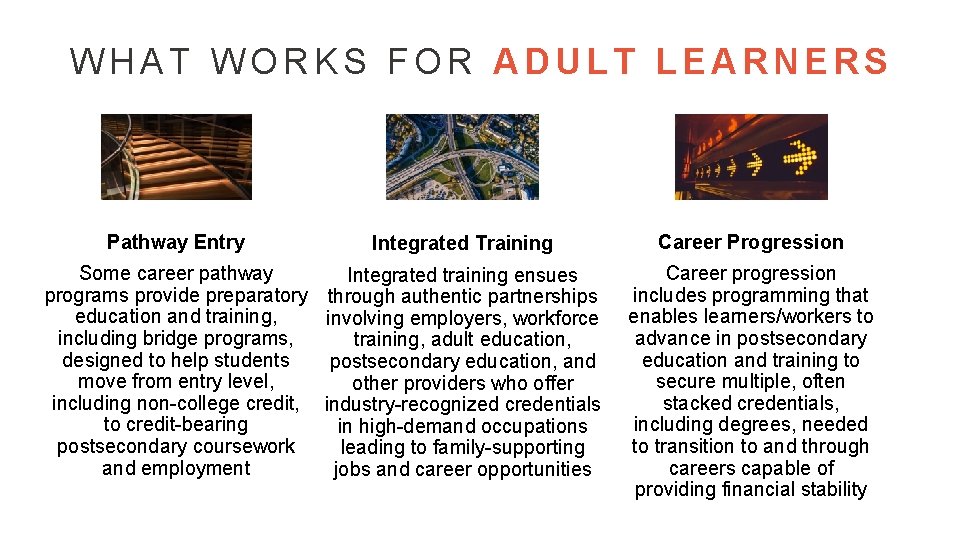
WHAT WORKS FOR ADULT LEARNERS Pathway Entry Integrated Training Some career pathway Integrated training ensues programs provide preparatory through authentic partnerships education and training, involving employers, workforce including bridge programs, training, adult education, designed to help students postsecondary education, and move from entry level, other providers who offer including non-college credit, industry-recognized credentials to credit-bearing in high-demand occupations postsecondary coursework leading to family-supporting and employment jobs and career opportunities Career Progression Career progression includes programming that enables learners/workers to advance in postsecondary education and training to secure multiple, often stacked credentials, including degrees, needed to transition to and through careers capable of providing financial stability
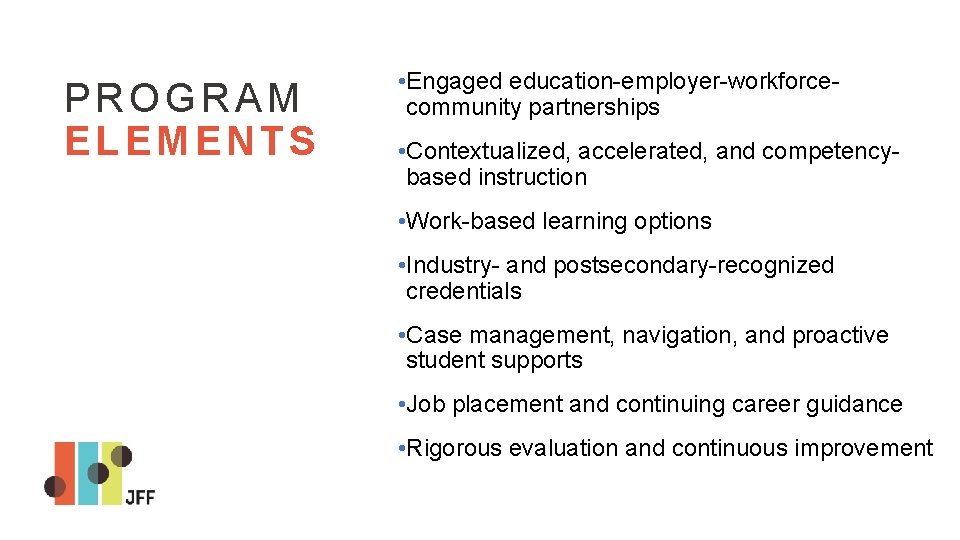
PROGRAM ELEMENTS • Engaged education-employer-workforcecommunity partnerships • Contextualized, accelerated, and competencybased instruction • Work-based learning options • Industry- and postsecondary-recognized credentials • Case management, navigation, and proactive student supports • Job placement and continuing career guidance • Rigorous evaluation and continuous improvement
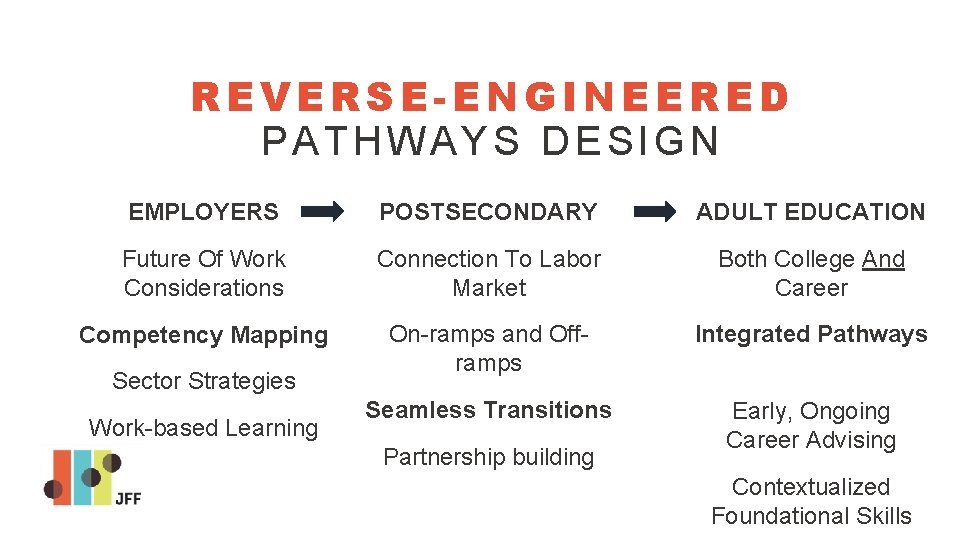
REVERSE-ENGINEERED PATHWAYS DESIGN EMPLOYERS POSTSECONDARY ADULT EDUCATION Future Of Work Considerations Connection To Labor Market Both College And Career Competency Mapping On-ramps and Offramps Integrated Pathways Seamless Transitions Early, Ongoing Career Advising Sector Strategies Work-based Learning Partnership building Contextualized Foundational Skills
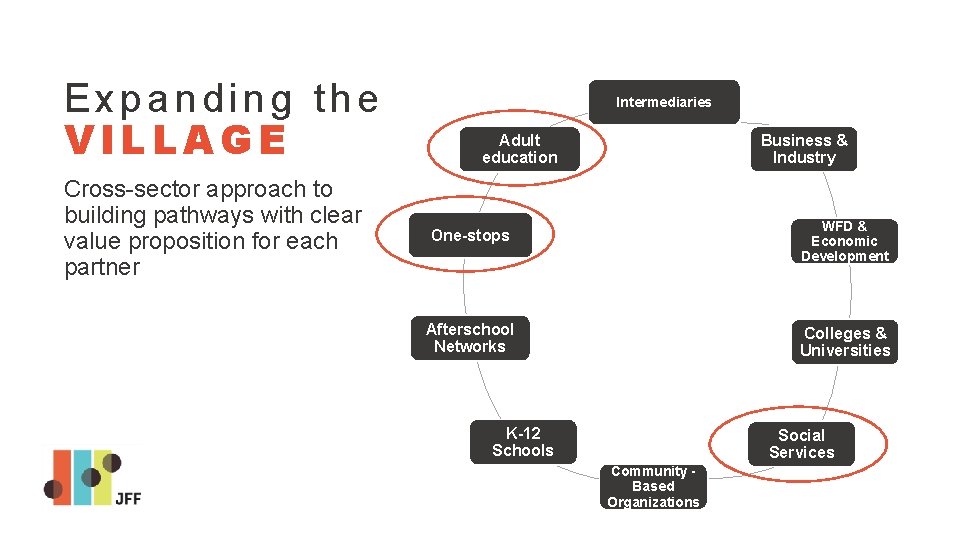
Expanding the VILLAGE Cross-sector approach to building pathways with clear value proposition for each partner Intermediaries Adult education Business & Industry One-stops WFD & Economic Development Afterschool Networks Colleges & Universities K-12 Schools Social Services Community Based Organizations
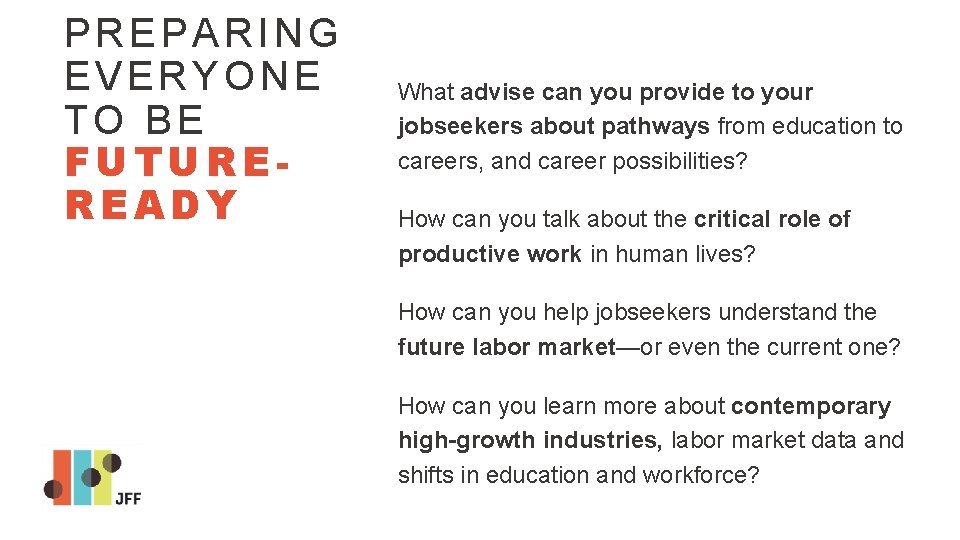
PREPARING EVERYONE TO BE FUTUREREADY What advise can you provide to your jobseekers about pathways from education to careers, and career possibilities? How can you talk about the critical role of productive work in human lives? How can you help jobseekers understand the future labor market—or even the current one? How can you learn more about contemporary high-growth industries, labor market data and shifts in education and workforce?
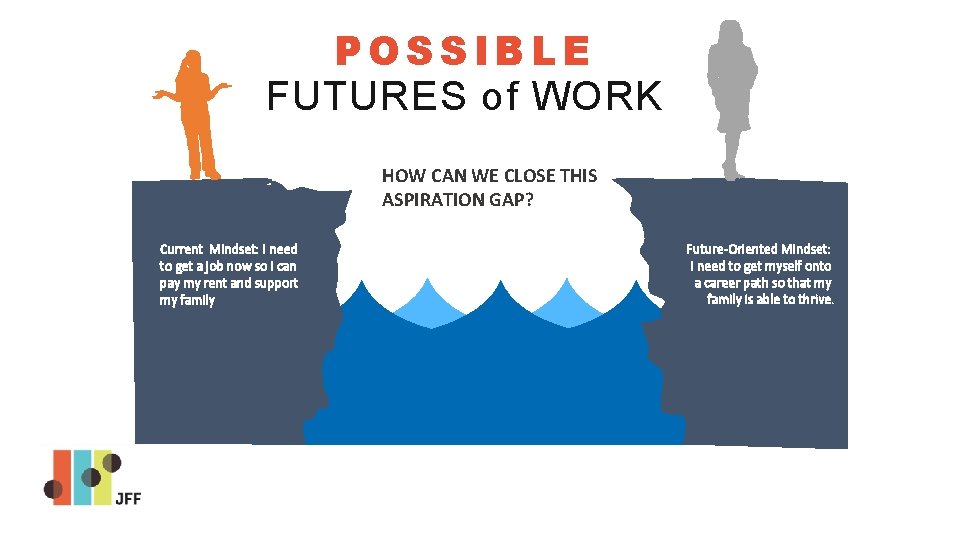
POSSIBLE FUTURES of WORK HOW CAN WE CLOSE THIS ASPIRATION GAP? Current Mindset: I need to get a job now so I can pay my rent and support my family Future-Oriented Mindset: I need to get myself onto a career path so that my family is able to thrive.
A QUICK RECAP • The labor market is changing rapidly • We don’t totally know what’s in store, but we have some good predictions • We need to build career pathways systems that can adapt to the changing world of work • That means thinking about how our organizations work, and how we all work together
WHERE SHALL WE GO? HOW SHALL WE GET THERE?
Rachel Pleasants Mc. Donnell Associate Director, Jobs for the Future rmcdonnell@jff. org TEL 617. 728. 4446 FAX 617. 728. 4857 info@jff. org 88 Broad Street, 8 th Floor, Boston, MA 02110 (HQ) 122 C Street, NW, Suite 650, Washington, DC 20001 505 14 th Street, Suite 340, Oakland, CA 94612 WWW. JFF. ORG