
Care of the patient with a tracheostomy WHAT


- Slides: 22
Care of the patient with a tracheostomy
WHAT IS A TRACHEOSTOMY? n n A tracheostomy is a surgical opening in the anterior wall of the trachea just below the larynx. It provides an alternative airway, bypassing the upper passages.
Types of tracheostomy n n n n Temporary Permanent Emergency Surgical Percutaneous Minitracheostomy Cricothyroidotomy
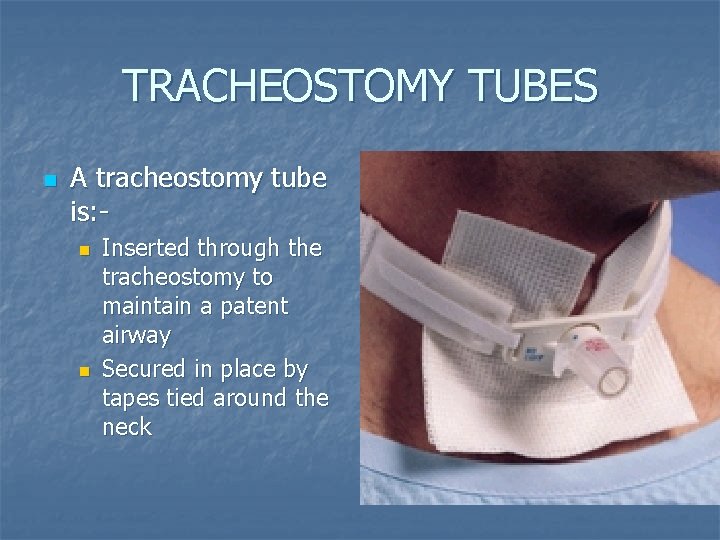
TRACHEOSTOMY TUBES n A tracheostomy tube is: n n Inserted through the tracheostomy to maintain a patent airway Secured in place by tapes tied around the neck
INDICATIONS n n n n n Upper airway obstruction. Emergency airway access Prolonged ventilation(e. g. ICU) To provide and maintain a patent airway To enable the removal of tracheobronchial secretions To permit long term positive pressure ventilation To improve patient comfort To decrease the work of breathing and increase volume of air entering the lungs As part of another procedure, for example, head and neck surgery.
CONTRAINDICATIONS n n n n Difficult anatomy Morbid obesity with short neck Limited neck movement Cervical spine injury – suspected or otherwise Aberrant blood vessels Thyroid or tracheal pathology coagulopathy Evidence of infection in the soft tissues of the neck at the insertion site
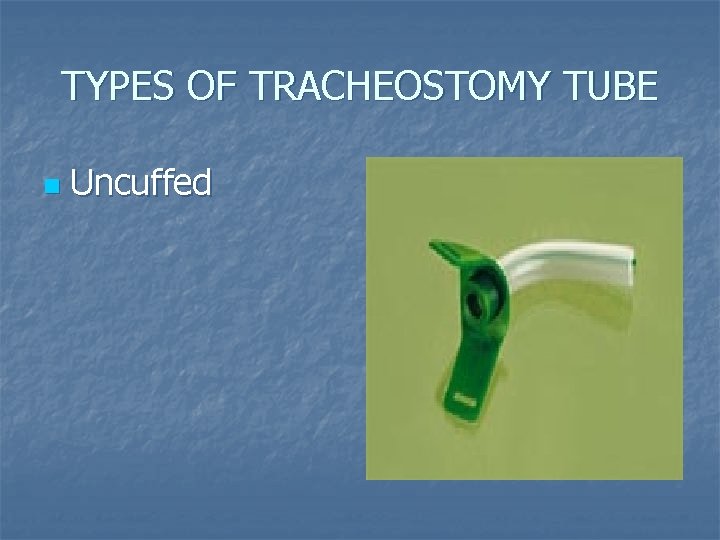
TYPES OF TRACHEOSTOMY TUBE n Uncuffed
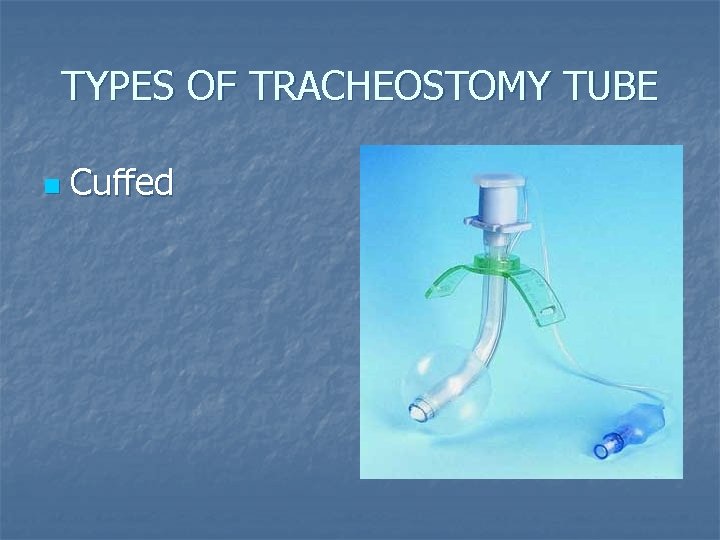
TYPES OF TRACHEOSTOMY TUBE n Cuffed
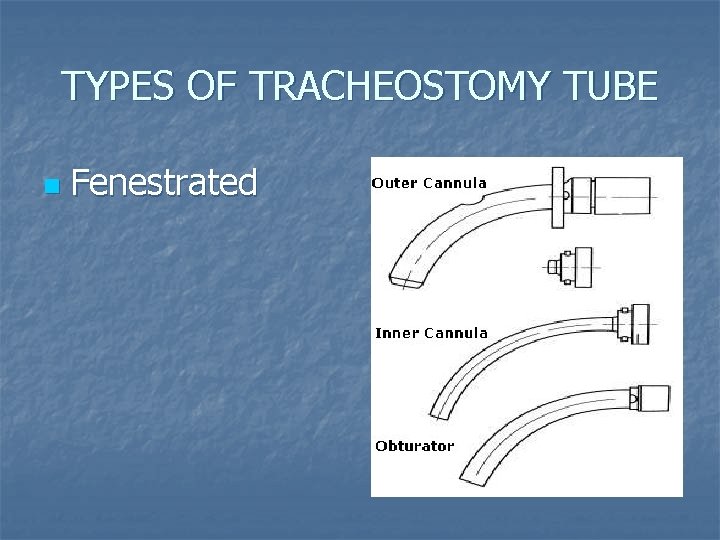
TYPES OF TRACHEOSTOMY TUBE n Fenestrated
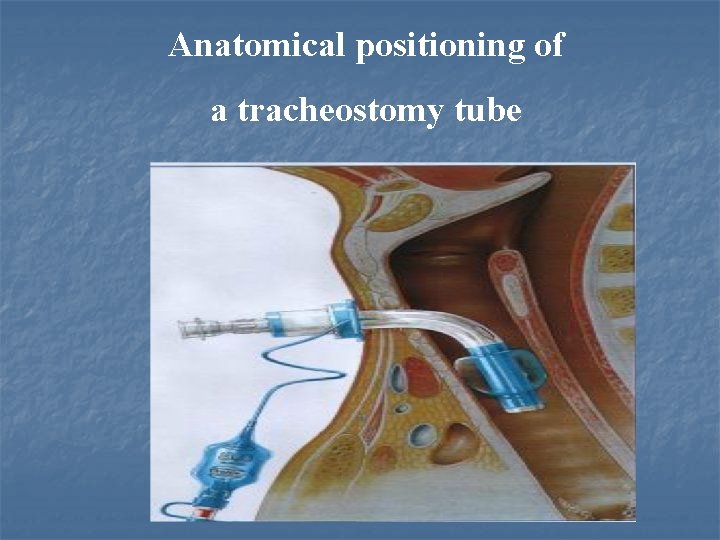
Anatomical positioning of a tracheostomy tube
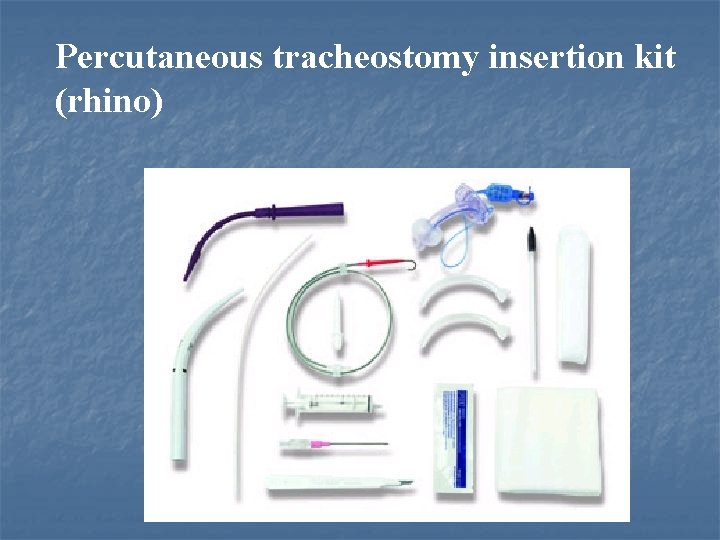
Percutaneous tracheostomy insertion kit (rhino)
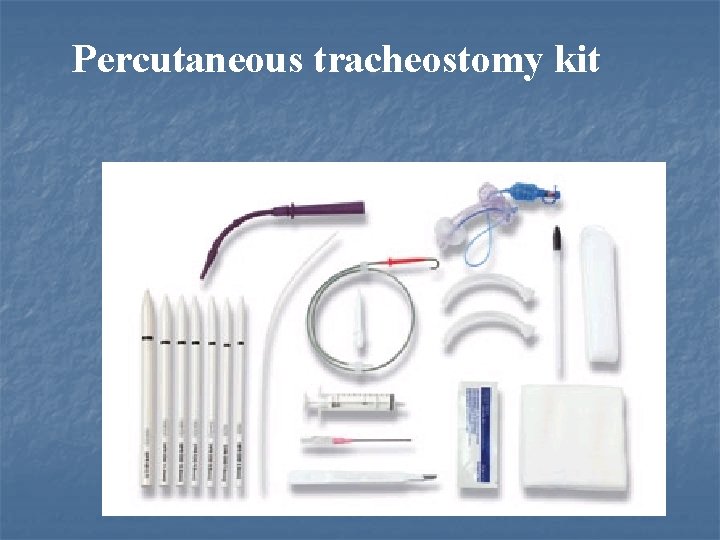
Percutaneous tracheostomy kit
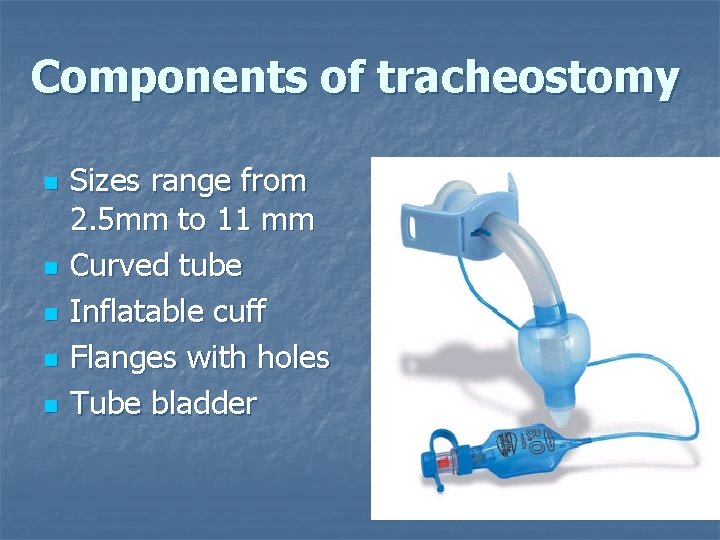
Components of tracheostomy n n n Sizes range from 2. 5 mm to 11 mm Curved tube Inflatable cuff Flanges with holes Tube bladder
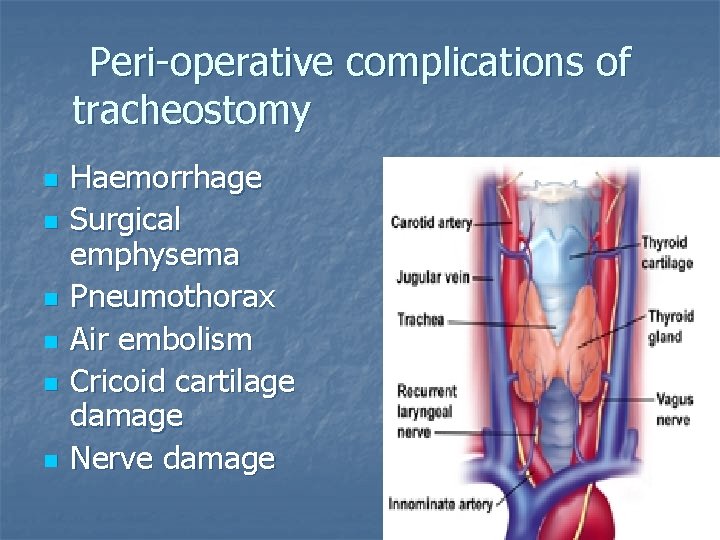
Peri-operative complications of tracheostomy n n n Haemorrhage Surgical emphysema Pneumothorax Air embolism Cricoid cartilage damage Nerve damage
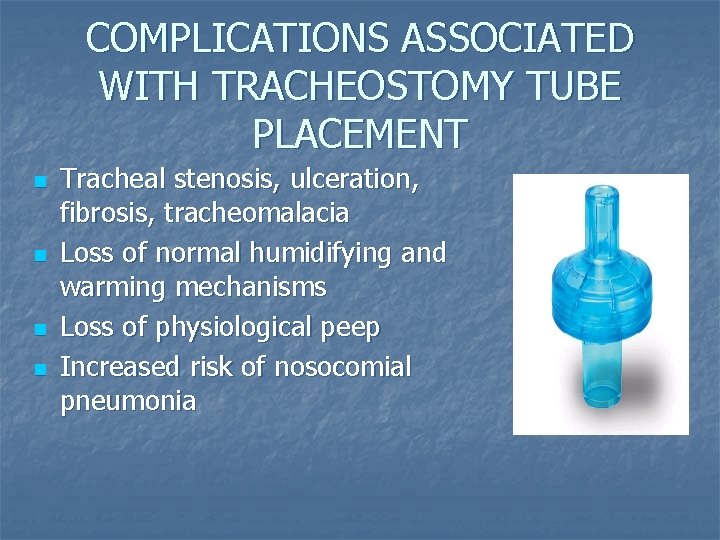
COMPLICATIONS ASSOCIATED WITH TRACHEOSTOMY TUBE PLACEMENT n n Tracheal stenosis, ulceration, fibrosis, tracheomalacia Loss of normal humidifying and warming mechanisms Loss of physiological peep Increased risk of nosocomial pneumonia
CARING FOR THE PATIENT n n Having a tracheostomy can be very traumatic and many patients find it difficult to adjust. Patients with a new tracheostomy will need lots of support, reassurance and education
Care of the patient with a tracheostomy n n n Safety first Care of the stoma Communication Psychological Nutrition Infection control
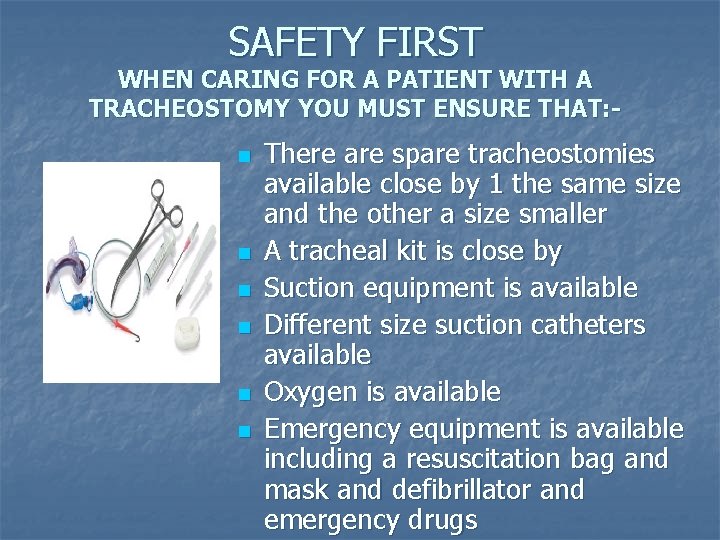
SAFETY FIRST WHEN CARING FOR A PATIENT WITH A TRACHEOSTOMY YOU MUST ENSURE THAT: n n n There are spare tracheostomies available close by 1 the same size and the other a size smaller A tracheal kit is close by Suction equipment is available Different size suction catheters available Oxygen is available Emergency equipment is available including a resuscitation bag and mask and defibrillator and emergency drugs
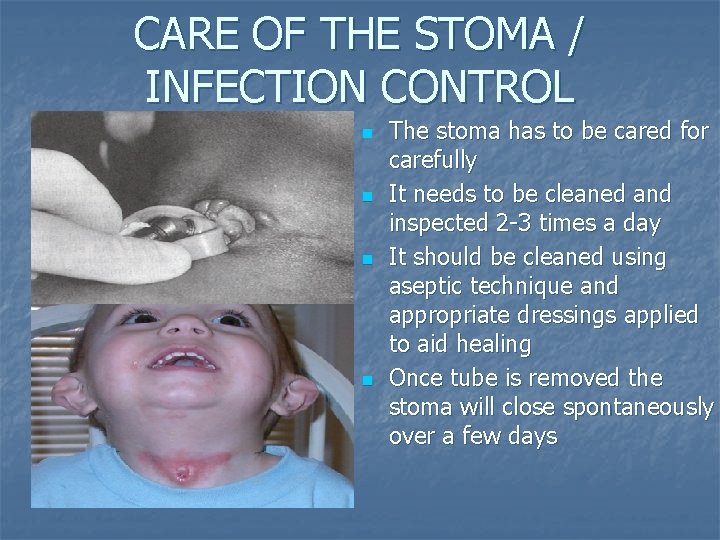
CARE OF THE STOMA / INFECTION CONTROL n n The stoma has to be cared for carefully It needs to be cleaned and inspected 2 -3 times a day It should be cleaned using aseptic technique and appropriate dressings applied to aid healing Once tube is removed the stoma will close spontaneously over a few days
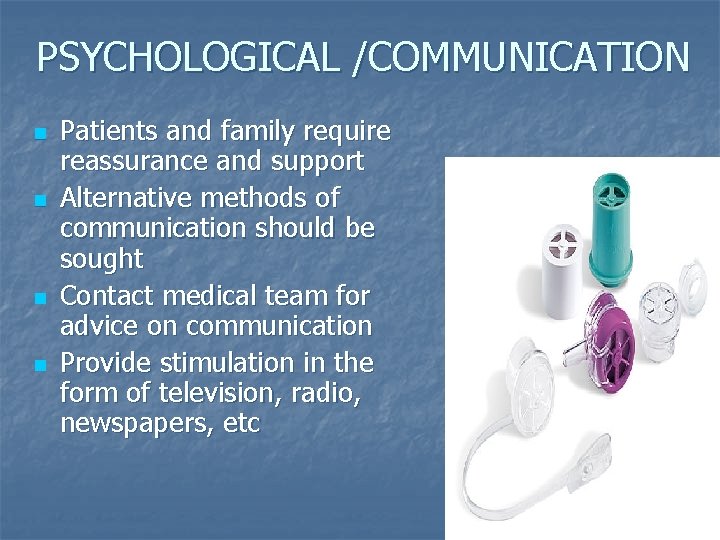
PSYCHOLOGICAL /COMMUNICATION n n Patients and family require reassurance and support Alternative methods of communication should be sought Contact medical team for advice on communication Provide stimulation in the form of television, radio, newspapers, etc
NUTRITION n n Check local policy on eating and drinking with tracheostomies Some trusts allow patients to eat and drink Others do not!! Usual ways of feeding include oral, nasogastric or parenteral.
SUMMARY Patients with tracheostomies can be found in many health care environments from intensive care/high dependency to the community n Caring for patients with tracheostomies can be difficult but rewarding n