
Care of the Child with Neurologic Issues Neurological



- Slides: 72
Care of the Child with Neurologic Issues
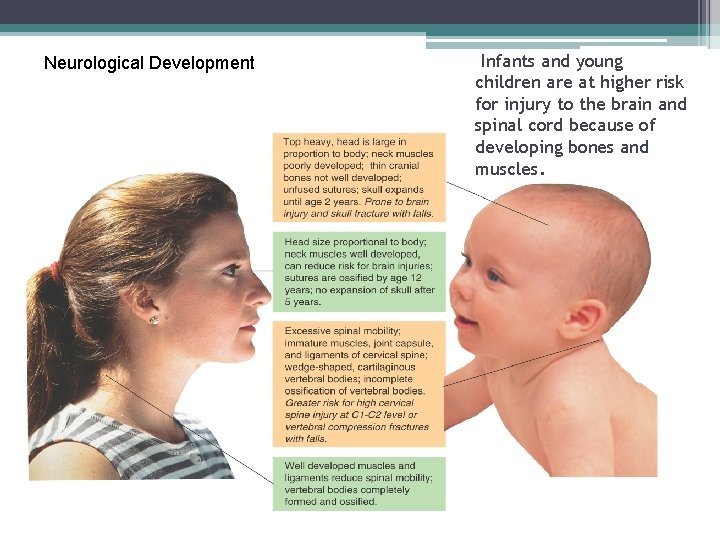
Neurological Development Infants and young children are at higher risk for injury to the brain and spinal cord because of developing bones and muscles.
Neurological Development • How do we measure brain growth? ▫ Normal AND abnormal growth ▫ Through what age is this a normal assessment method? • What are the areas called on the skull that remain open to allow for growth? ▫ Which closes first? • When do sutures begin to close? ▫ When are they completely ossified? • What is myelination? ▫ What is it responsible for?
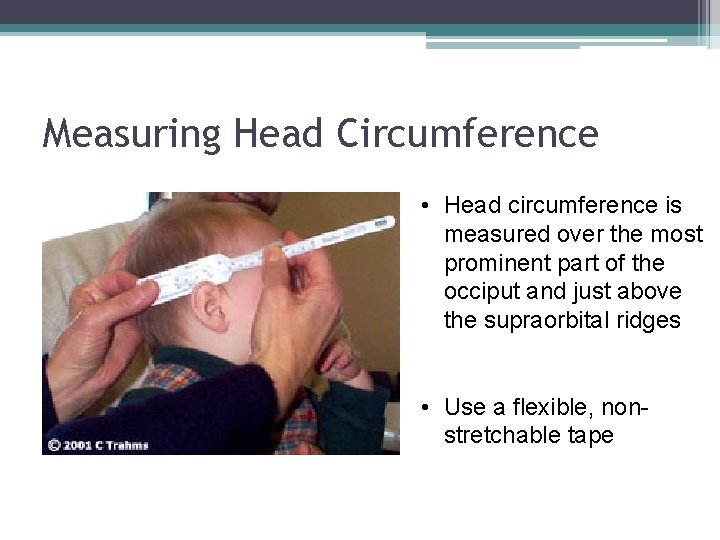
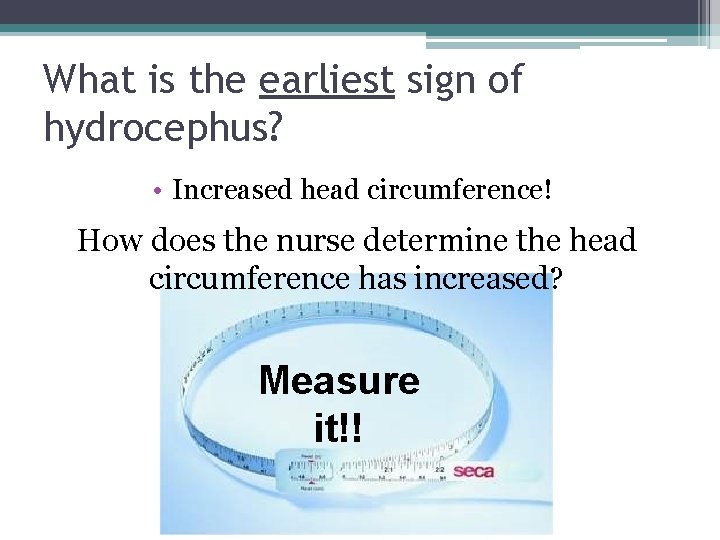
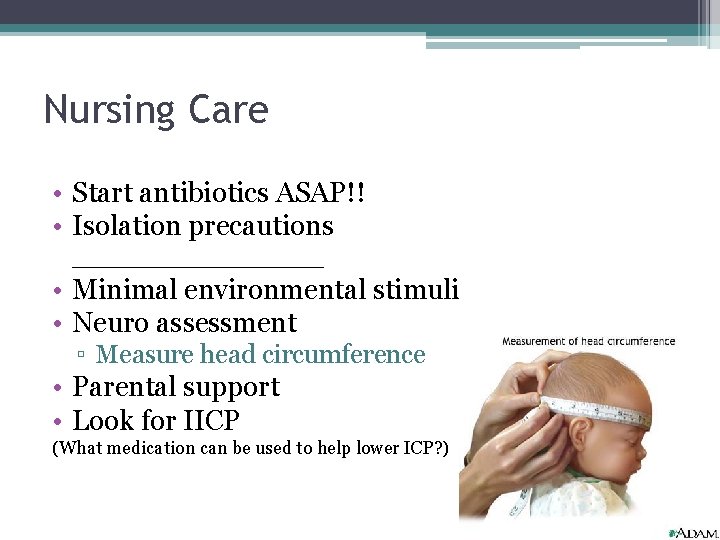
Measuring Head Circumference • Head circumference is measured over the most prominent part of the occiput and just above the supraorbital ridges • Use a flexible, nonstretchable tape
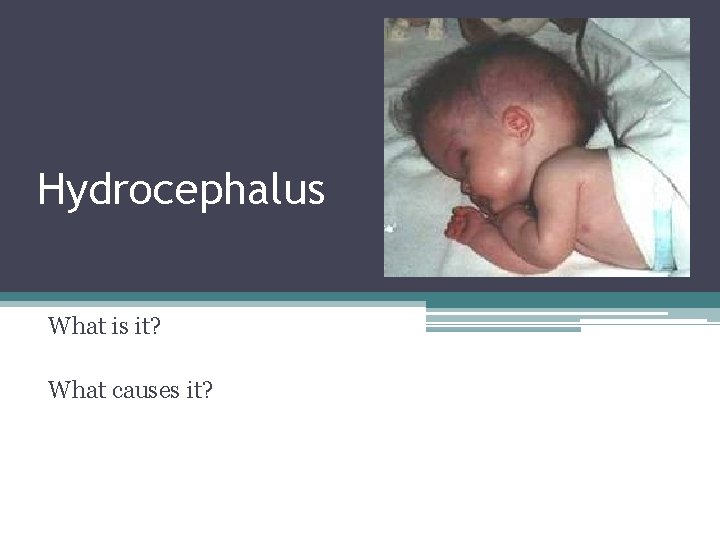
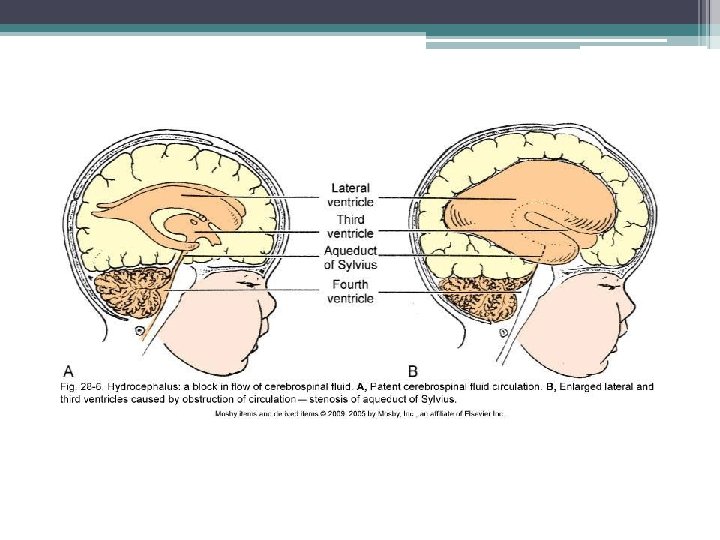
Hydrocephalus What is it? What causes it?
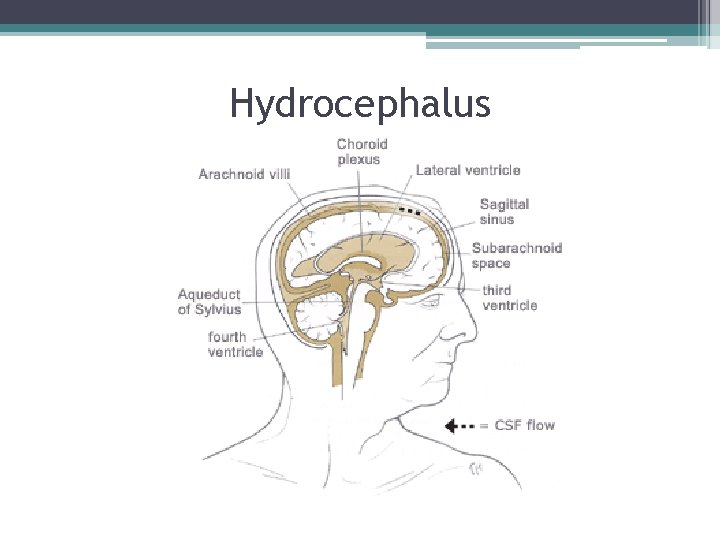
Hydrocephalus
Why are we worried about hydrocephalus? What complication can it lead to? ___________
What is the earliest sign of hydrocephus? • Increased head circumference! How does the nurse determine the head circumference has increased? Measure it!!
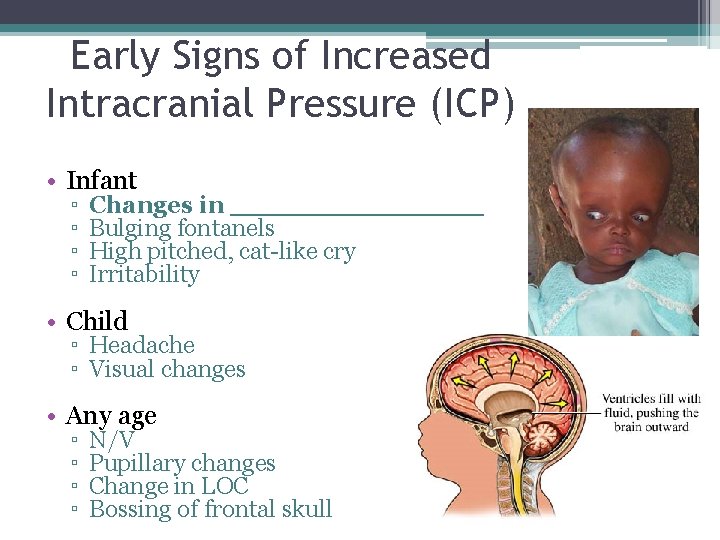
Early Signs of Increased Intracranial Pressure (ICP) • Infant ▫ ▫ Changes in ________ Bulging fontanels High pitched, cat-like cry Irritability • Child ▫ Headache ▫ Visual changes • Any age ▫ ▫ N/V Pupillary changes Change in LOC Bossing of frontal skull
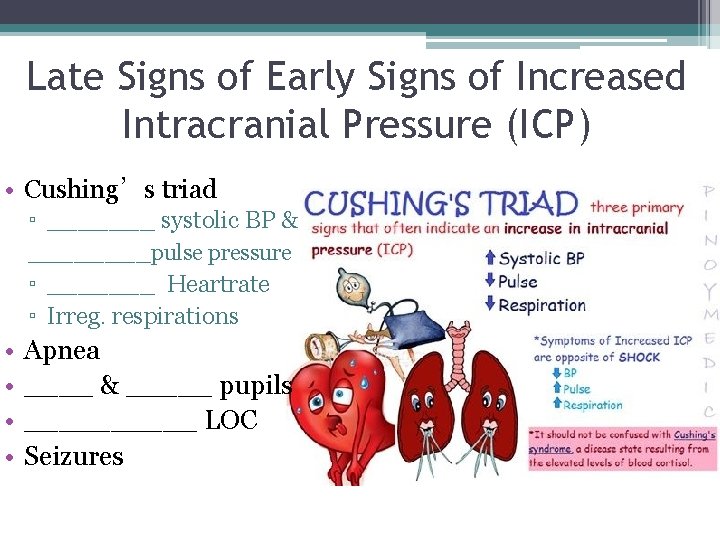
Late Signs of Early Signs of Increased Intracranial Pressure (ICP) • Cushing’s triad ▫ _______ systolic BP & ____pulse pressure ▫ _______ Heartrate ▫ Irreg. respirations • • Apnea ____ & _____ pupils _____ LOC Seizures
Hydrocephalus - Diagnosis & Treatment • Diagnosis: ▫ Signs & Sx ▫ US (prenatally or in neonate – if fontanels open) ▫ MRI, CT • Treatment: ▫ ▫ Diuretics Steroids VP Shunt placement (in OR) OR- remove obstruction
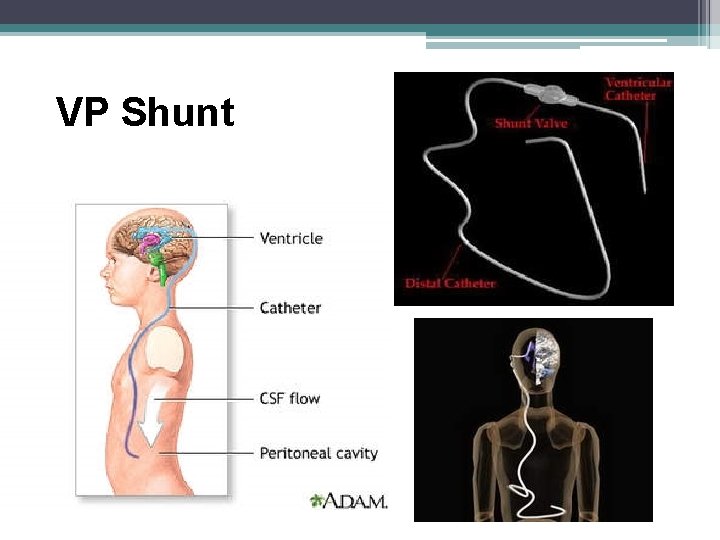
VP Shunt
Post-Op VP Shunt Care • • Positioning Pain Control Medications Incision Care ▫ Drainage ▫ Infection • Monitor for IICP and malfunction • Signs and sx of malfunction: • Education
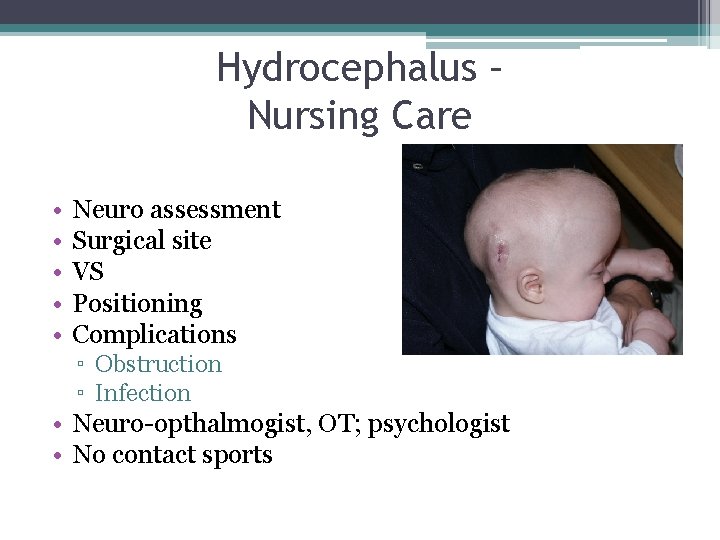
Hydrocephalus – Nursing Care • • • Neuro assessment Surgical site VS Positioning Complications ▫ Obstruction ▫ Infection • Neuro-opthalmogist, OT; psychologist • No contact sports
• In the assessment of the infant for hydrocephalus, the first sign the nurse would note is: • • A. Widening pulse pressure B. Headache. C. Increasing irritability & poor feeding D. Increasing head circumference
• After returning from the recovery room after placement of a shunt. The nurse’s immediate plan of care would NOT include: • A. Position off the operative site. • B. Obtain a head circumference. • C. Elevate the head 60 degrees • D. Monitor for signs of IICP
Meningitis: Viral & Bacterial
Bacterial Meningitis • Acute inflammation of meninges and CSF • Usually occurs under 5 years of age ▫ Increased risk for: __________ • Types ▫ Neisseria meningitidis (meingococcal) ▫ Haemophilus influenzae type B (H. flu or Hi. B) ▫ Streptococcus pneumoniae • Immunizations decreasing incidence
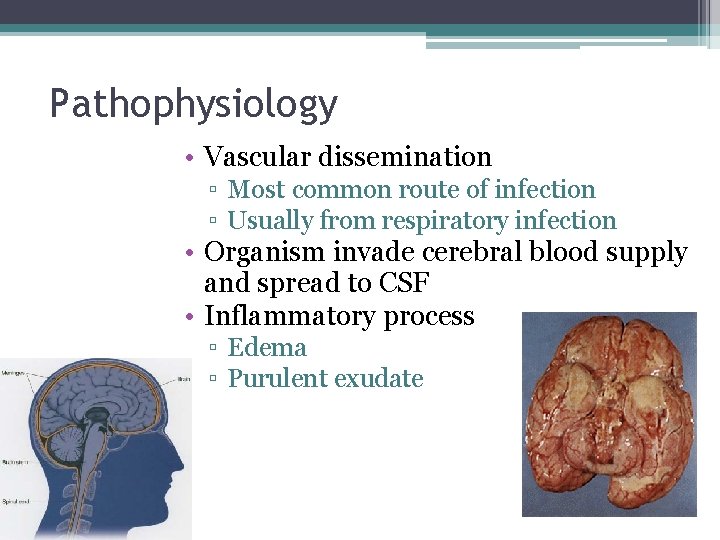
Pathophysiology • Vascular dissemination ▫ Most common route of infection ▫ Usually from respiratory infection • Organism invade cerebral blood supply and spread to CSF • Inflammatory process ▫ Edema ▫ Purulent exudate
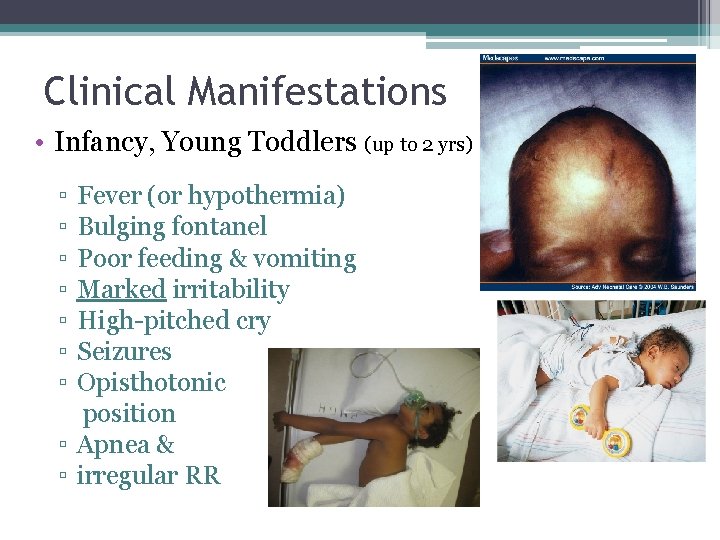
Clinical Manifestations • Infancy, Young Toddlers (up to 2 yrs) ▫ ▫ ▫ ▫ Fever (or hypothermia) Bulging fontanel Poor feeding & vomiting Marked irritability High-pitched cry Seizures Opisthotonic position ▫ Apnea & ▫ irregular RR
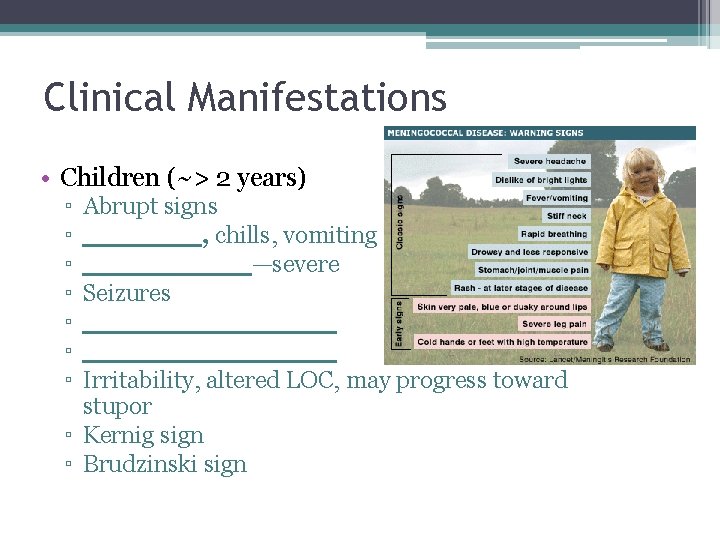
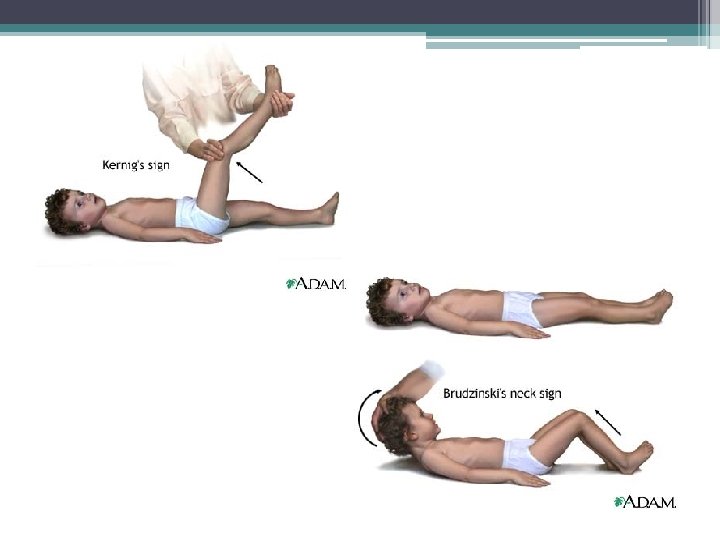
Clinical Manifestations • Children (~> 2 years) ▫ ▫ ▫ ▫ Abrupt signs _______, chills, vomiting _____—severe Seizures _______________ Irritability, altered LOC, may progress toward stupor ▫ Kernig sign ▫ Brudzinski sign
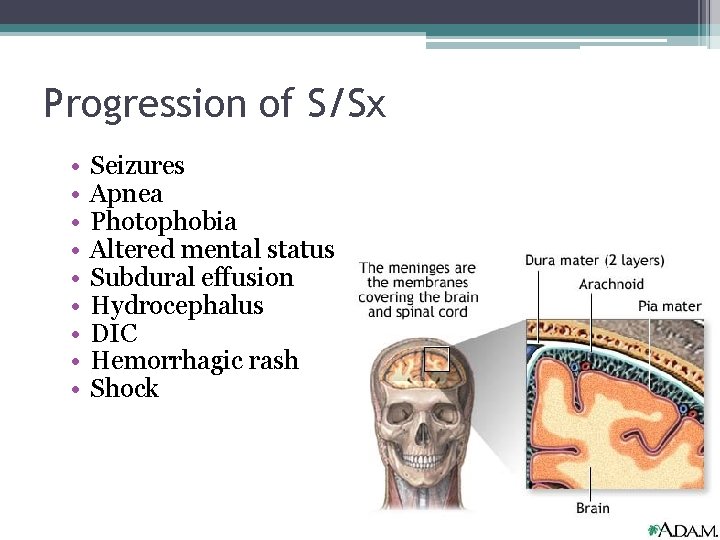
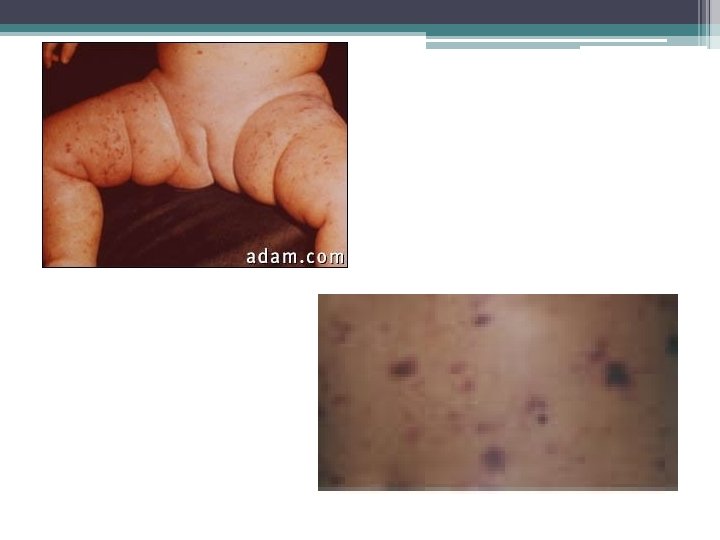
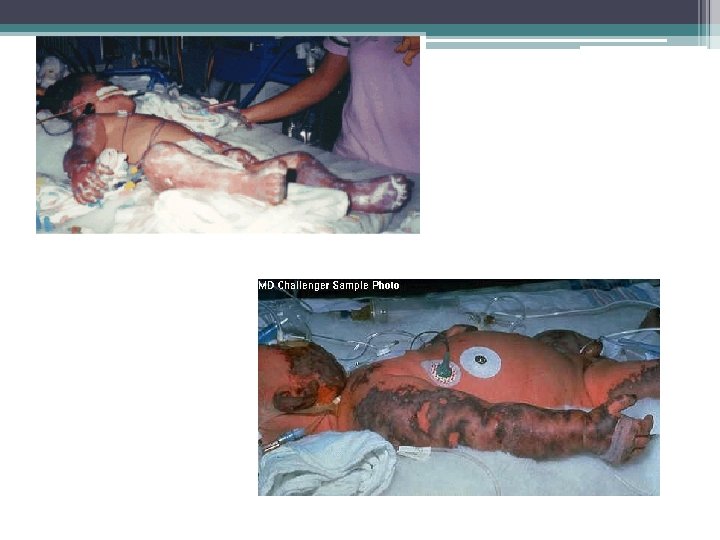
Progression of S/Sx • • • Seizures Apnea Photophobia Altered mental status Subdural effusion Hydrocephalus DIC Hemorrhagic rash Shock
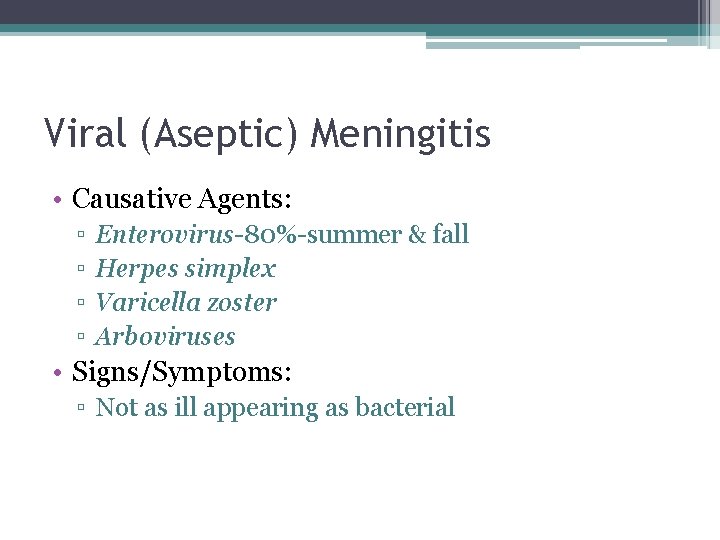
Viral (Aseptic) Meningitis • Causative Agents: ▫ ▫ Enterovirus-80%-summer & fall Herpes simplex Varicella zoster Arboviruses • Signs/Symptoms: ▫ Not as ill appearing as bacterial
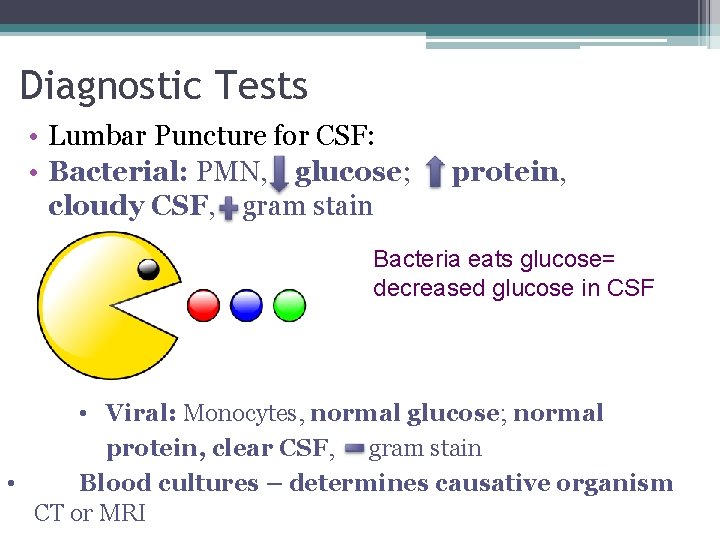
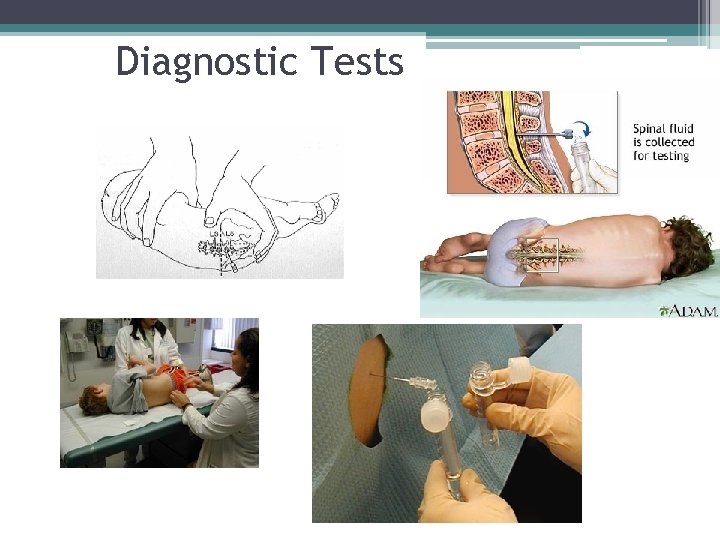
Diagnostic Tests • Lumbar Puncture for CSF: • Bacterial: PMN, glucose; cloudy CSF, gram stain protein, Bacteria eats glucose= decreased glucose in CSF • Viral: Monocytes, normal glucose; normal protein, clear CSF, gram stain • Blood cultures – determines causative organism CT or MRI
Diagnostic Tests
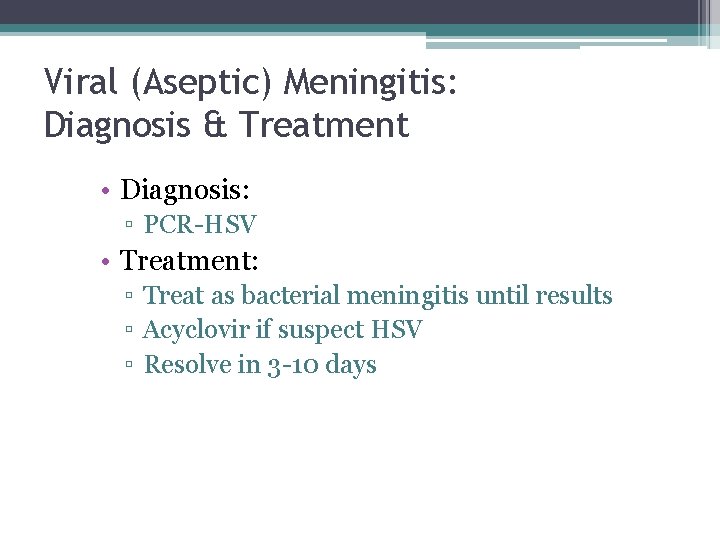
Viral (Aseptic) Meningitis: Diagnosis & Treatment • Diagnosis: ▫ PCR-HSV • Treatment: ▫ Treat as bacterial meningitis until results ▫ Acyclovir if suspect HSV ▫ Resolve in 3 -10 days
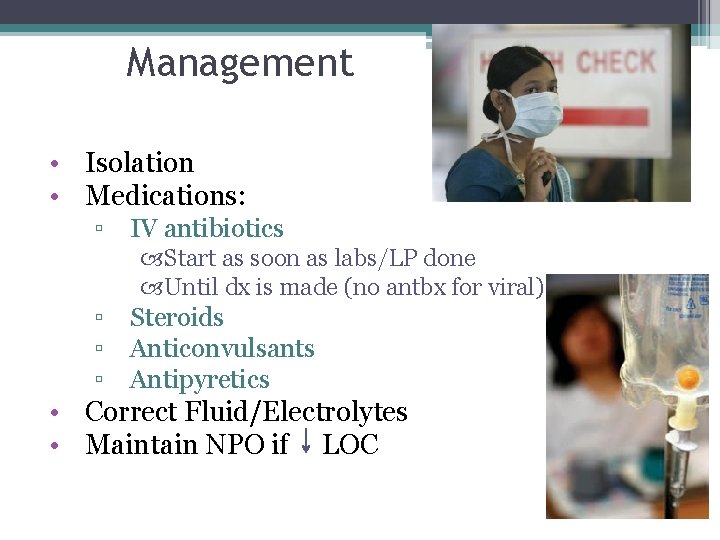
Management • Isolation • Medications: ▫ IV antibiotics Start as soon as labs/LP done Until dx is made (no antbx for viral) ▫ Steroids ▫ Anticonvulsants ▫ Antipyretics • Correct Fluid/Electrolytes • Maintain NPO if LOC
Management • Assessment of complications ▫ ▫ ▫ Hydrocephalus Brain Abscess Meningococcemia Destruction of brain tissue SIADH Increased ICP • Treatment of family • Long-term problems
Nursing Care • Start antibiotics ASAP!! • Isolation precautions _______ • Minimal environmental stimuli • Neuro assessment ▫ Measure head circumference • Parental support • Look for IICP (What medication can be used to help lower ICP? )
The most common mode of transmission for bacterial meningitis is: 1. 2. 3. 4. Vascular dissemination of a respiratory tract infection. Direct implantation from an invasive procedure. Direct extension from an infection in the mastoid sinuses. Direct extension from an infection in the nasal sinuses.
Reye Syndrome
Reye Syndrome • • Acute ______ & _______ dysfunction No ASA for children!! S/S: Diagnosis ▫ Based on LOC & lab findings • Treatment ▫ Supportive
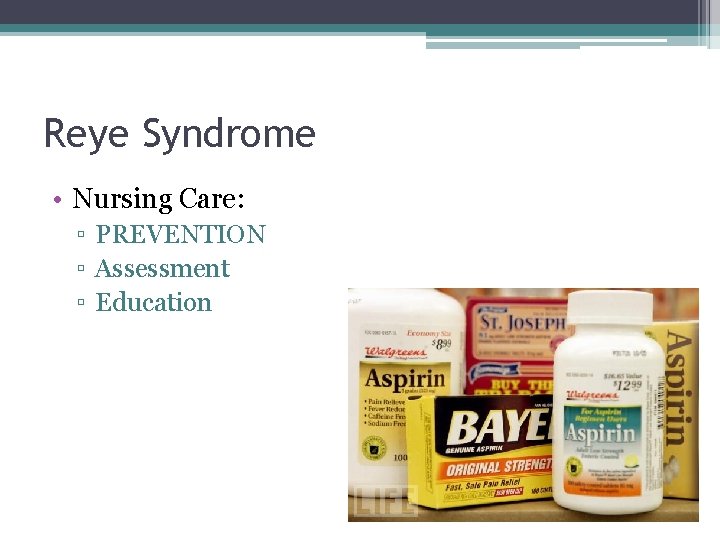
Reye Syndrome • Nursing Care: ▫ PREVENTION ▫ Assessment ▫ Education
Seizures
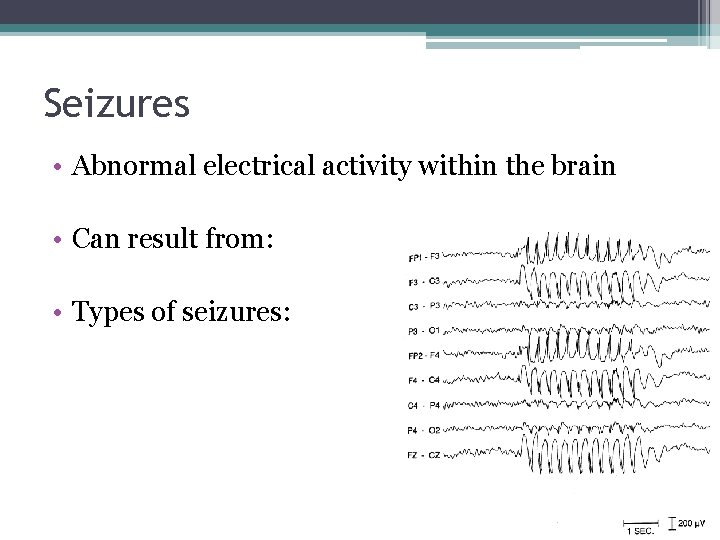
Seizures • Abnormal electrical activity within the brain • Can result from: • Types of seizures:
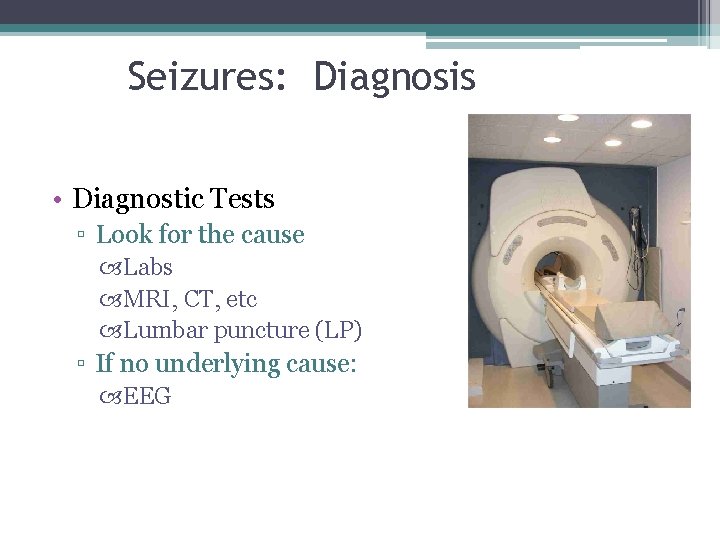
Seizures: Diagnosis • Diagnostic Tests ▫ Look for the cause Labs MRI, CT, etc Lumbar puncture (LP) ▫ If no underlying cause: EEG
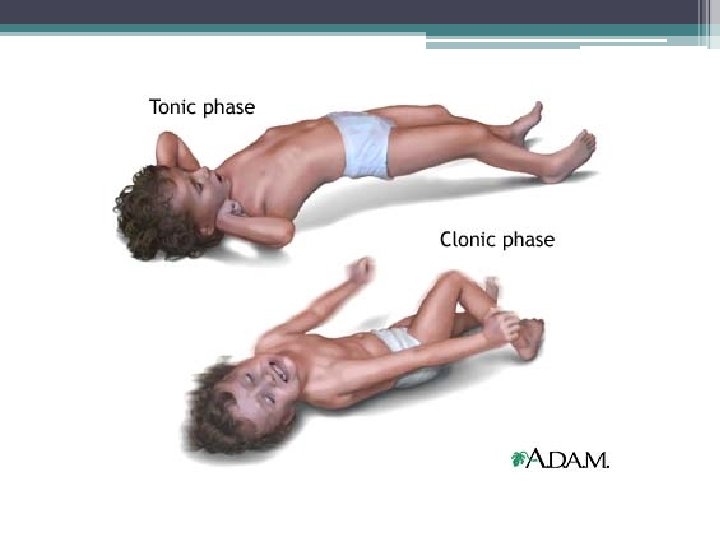
Febrile Seizures • Benign, Transient disorder • 9 months to 5 years • Appears to be r/t how high the fever goes ▫ Usually occurs during rise in temp • Clonic, Tonic-clonic ▫ Apnea and incontinence with tonic phase
Febrile Seizures • 2 Subtypes ▫ Simple febrile seizures Last less than 15 minutes Generalized Only one in 24 hours ▫ Complex febrile seizures Prolonged Multiple within 24 hours Can be focal Risk for epilepsy
Nursing Management of Febrile Seizures • Management ▫ Lab work and cranial radiographs NOT indicated ▫ Reduce fever with Acetaminophen ▫ No long-term meds for febrile sz d/t sideeffects ▫ Kept in holding area for observation ▫ Keep child in cool, light material
Epilepsy – What is it? • _________ seizure disorder • Recurrent, unprovoked seizures 2 nd/to underlying brain abnormality ▫ Diagnoses of CP & developmental delay ▫ Family history of afebrile seizures ▫ Unusually long febrile seizures
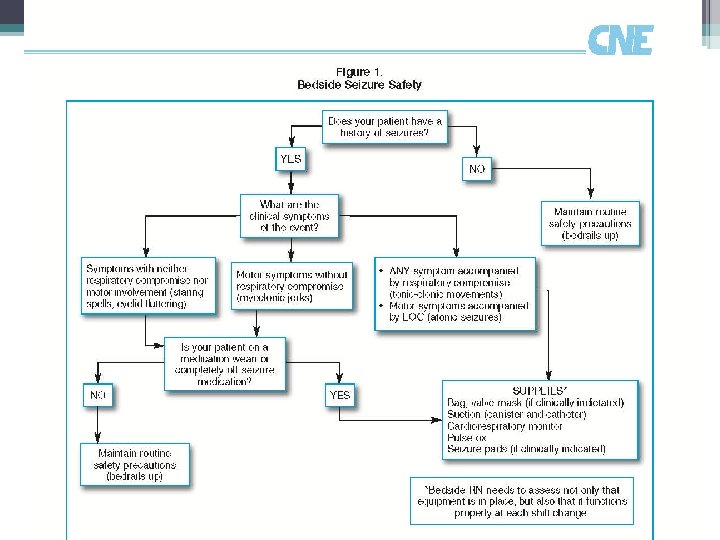
Nursing Management of seizures • Assessment & Intervention ▫ History ▫ Physical Exam If actively seizing? Positioning Neuro assessment LOC Postictal state ▫ Environment Seizure precautions
Nursing Management of Seizures • Parental education ▫ Reassurance Very scary with inappropriate interventions MOST seizures without long-term effects ▫ ▫ Could reoccur (33%) First Aid for seizures Medication Information Should wear medical alert bracelet
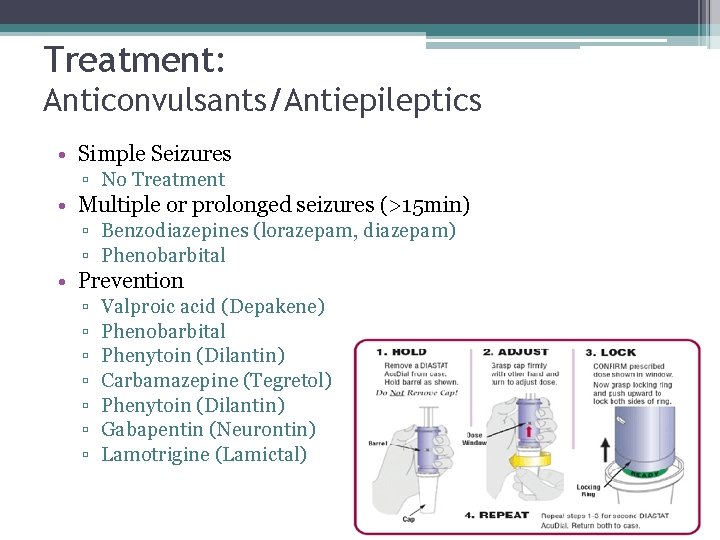
Treatment: Anticonvulsants/Antiepileptics • Simple Seizures ▫ No Treatment • Multiple or prolonged seizures (>15 min) ▫ Benzodiazepines (lorazepam, diazepam) ▫ Phenobarbital • Prevention ▫ ▫ ▫ ▫ Valproic acid (Depakene) Phenobarbital Phenytoin (Dilantin) Carbamazepine (Tegretol) Phenytoin (Dilantin) Gabapentin (Neurontin) Lamotrigine (Lamictal)
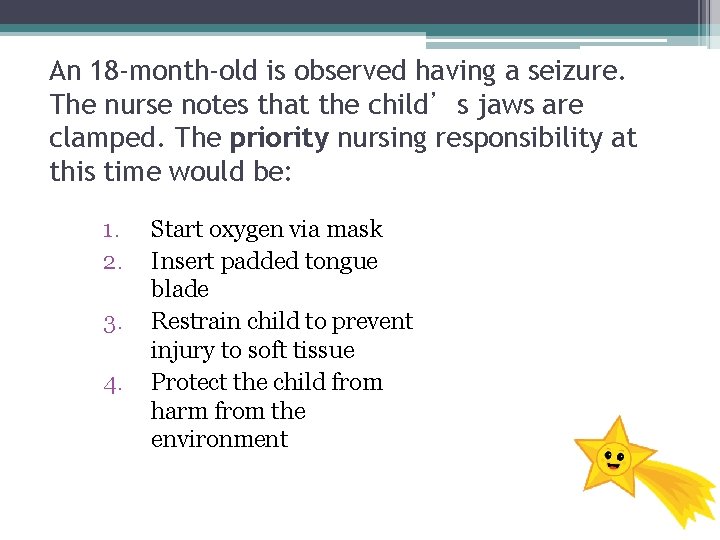
An 18 -month-old is observed having a seizure. The nurse notes that the child’s jaws are clamped. The priority nursing responsibility at this time would be: 1. 2. 3. 4. Start oxygen via mask Insert padded tongue blade Restrain child to prevent injury to soft tissue Protect the child from harm from the environment
Neural Tube Defects
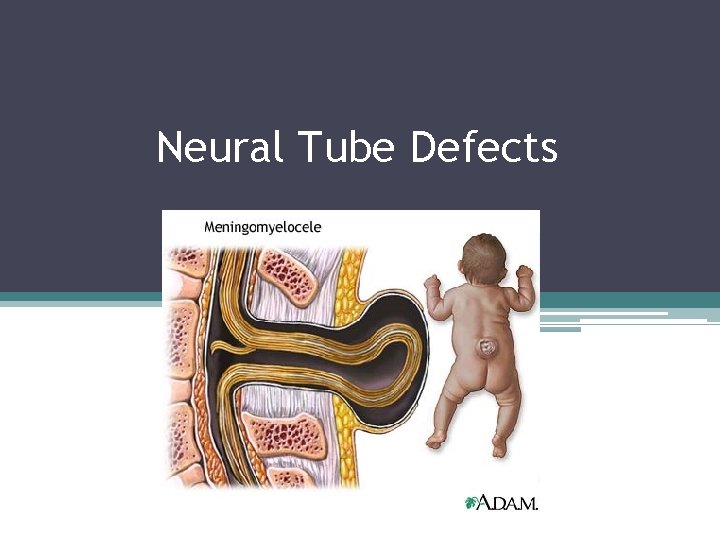
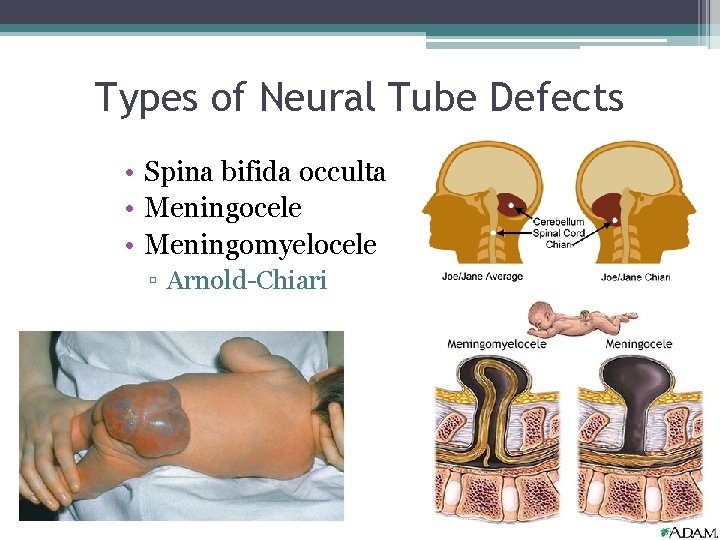
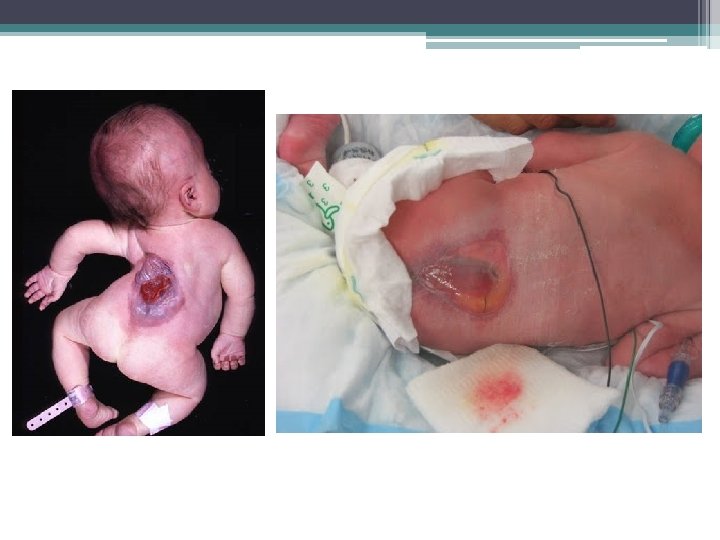
Types of Neural Tube Defects • Spina bifida occulta • Meningocele • Meningomyelocele ▫ Arnold-Chiari
Diagnostic Testing • Tests prior to birth: ▫ Alpha-fetoprotein ▫ High resolution fetal US • Tests after birth: ▫ US, CT, MRI ▫ Assess neurologic status
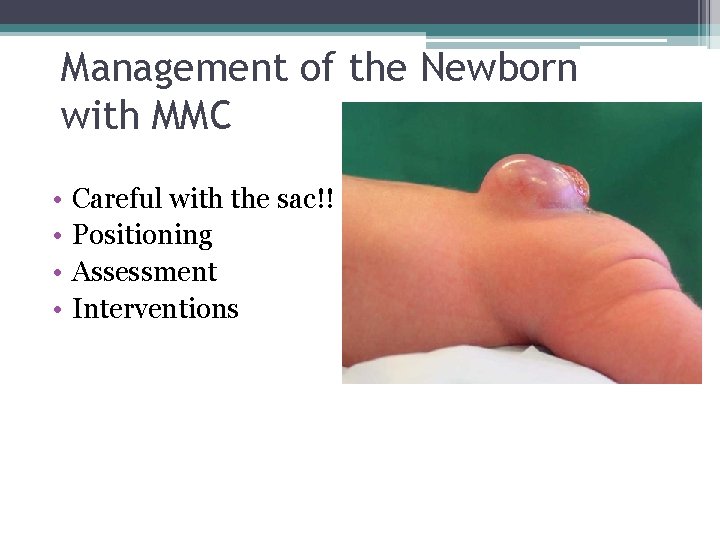
Management of the Newborn with MMC • • Careful with the sac!! Positioning Assessment Interventions
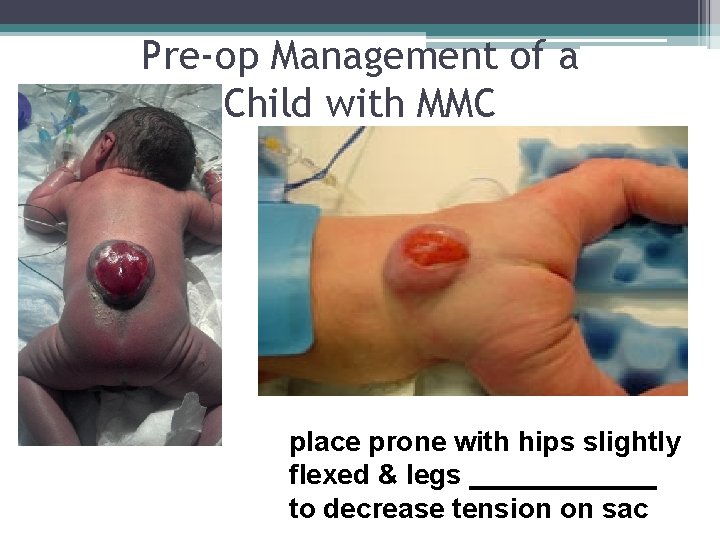
Pre-op Management of a Child with MMC place prone with hips slightly flexed & legs ______ to decrease tension on sac
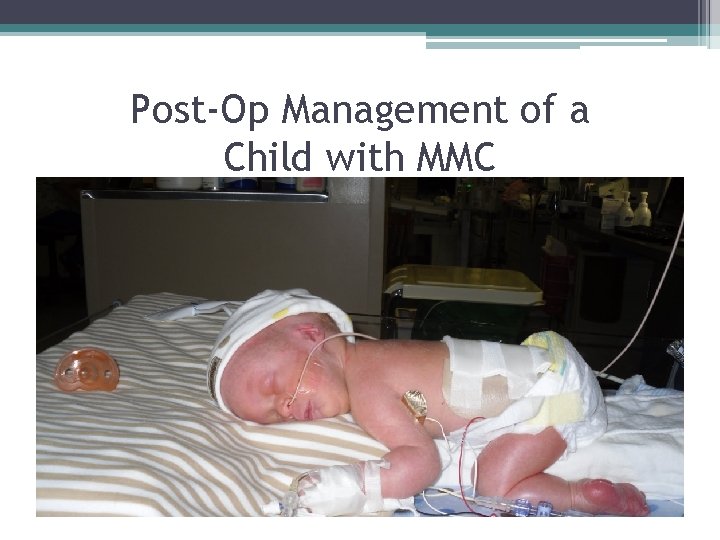
Post-Op Management of a Child with MMC
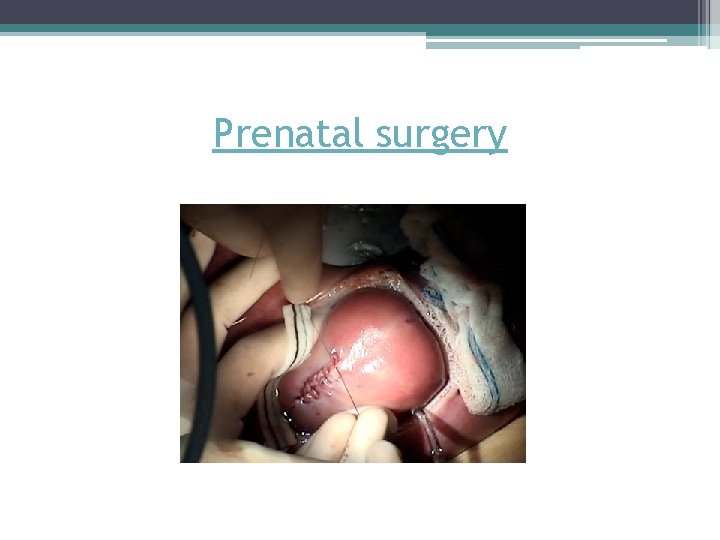
Prenatal surgery
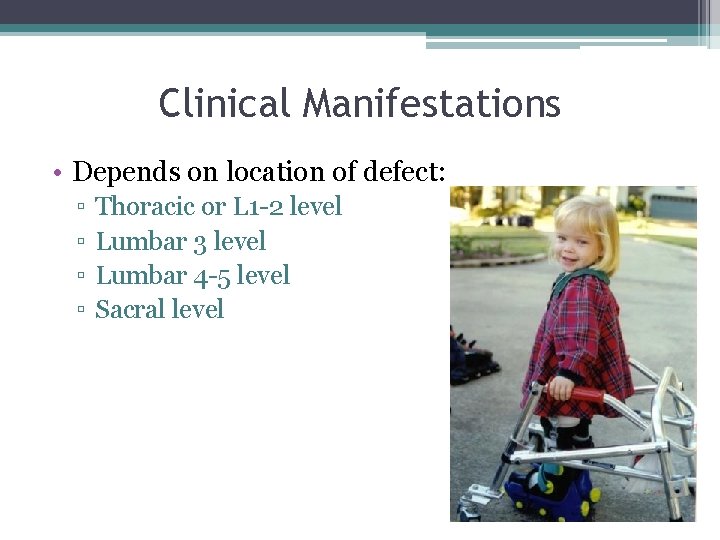
Clinical Manifestations • Depends on location of defect: ▫ ▫ Thoracic or L 1 -2 level Lumbar 3 level Lumbar 4 -5 level Sacral level
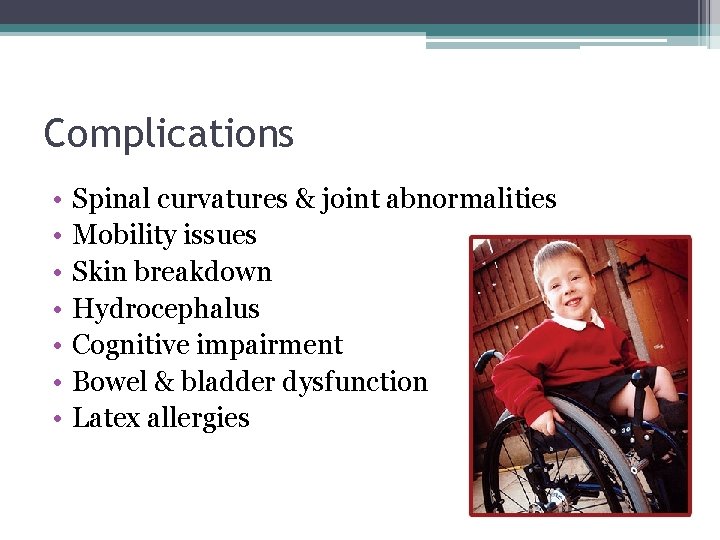
Complications • • Spinal curvatures & joint abnormalities Mobility issues Skin breakdown Hydrocephalus Cognitive impairment Bowel & bladder dysfunction Latex allergies
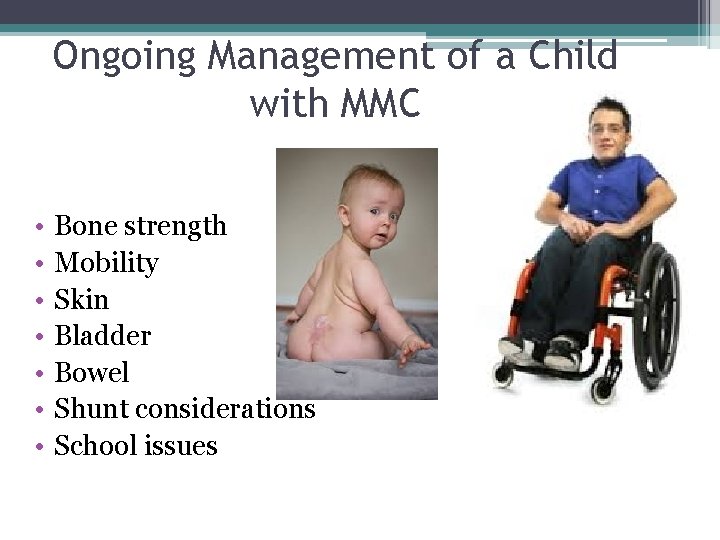
Ongoing Management of a Child with MMC • • Bone strength Mobility Skin Bladder Bowel Shunt considerations School issues
Cerebral Palsy
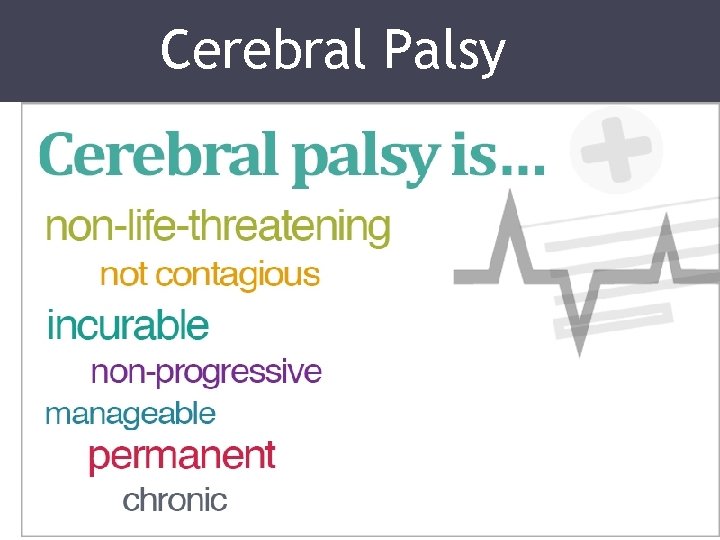
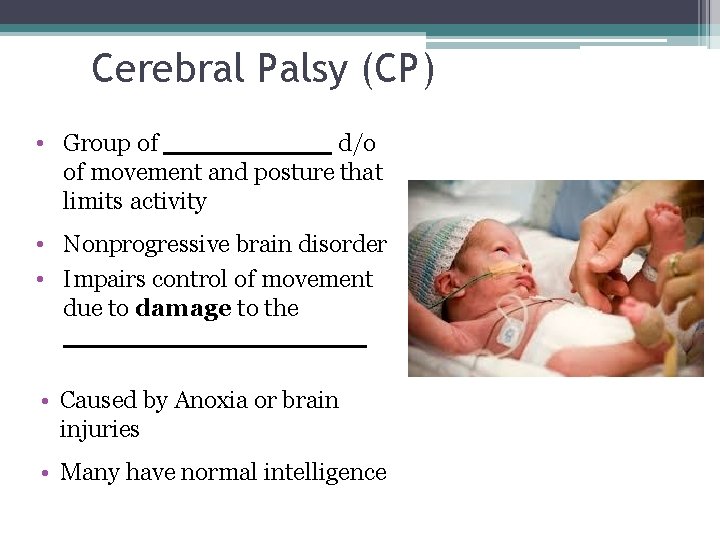
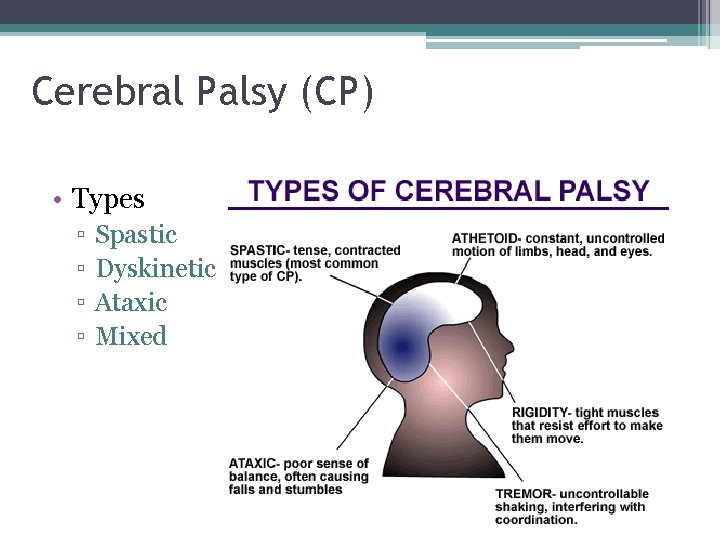
Cerebral Palsy (CP) • Group of _____ d/o of movement and posture that limits activity • Nonprogressive brain disorder • Impairs control of movement due to damage to the _________ • Caused by Anoxia or brain injuries • Many have normal intelligence
Cerebral Palsy (CP) • Types ▫ ▫ Spastic Dyskinetic Ataxic Mixed
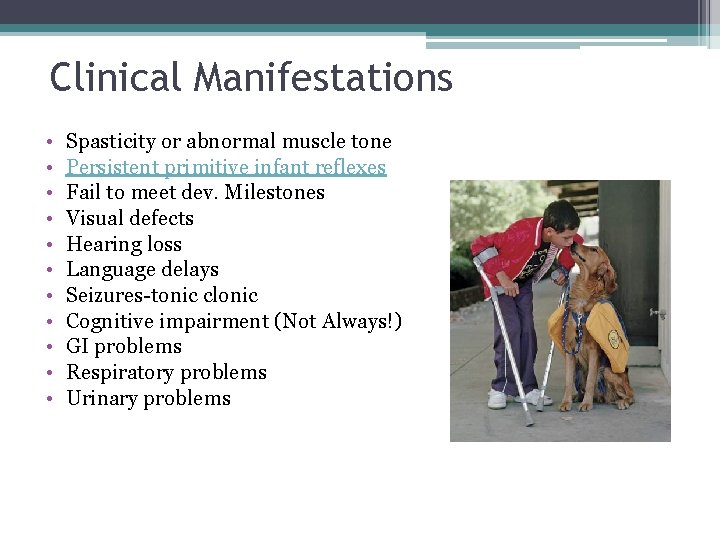
Clinical Manifestations • • • Spasticity or abnormal muscle tone Persistent primitive infant reflexes Fail to meet dev. Milestones Visual defects Hearing loss Language delays Seizures-tonic clonic Cognitive impairment (Not Always!) GI problems Respiratory problems Urinary problems
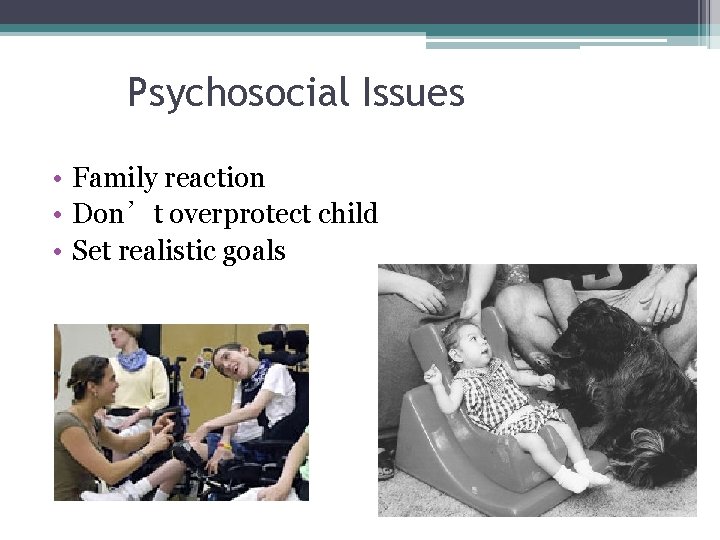
Psychosocial Issues • Family reaction • Don’t overprotect child • Set realistic goals
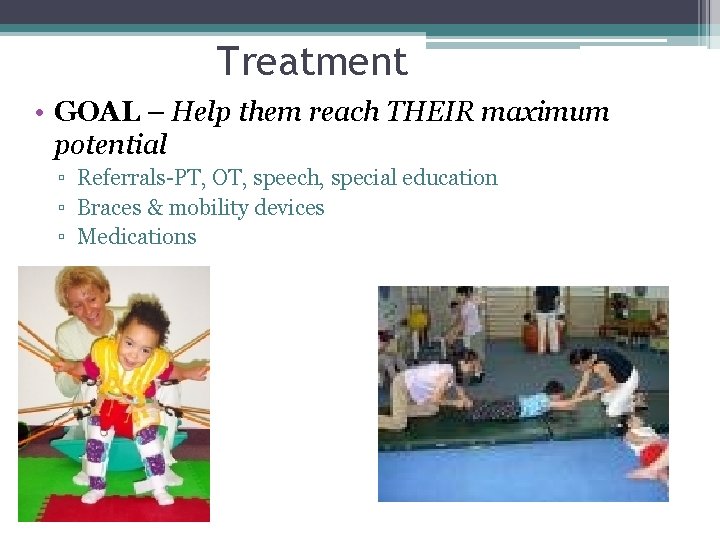
Treatment • GOAL – Help them reach THEIR maximum potential ▫ Referrals-PT, OT, speech, special education ▫ Braces & mobility devices ▫ Medications
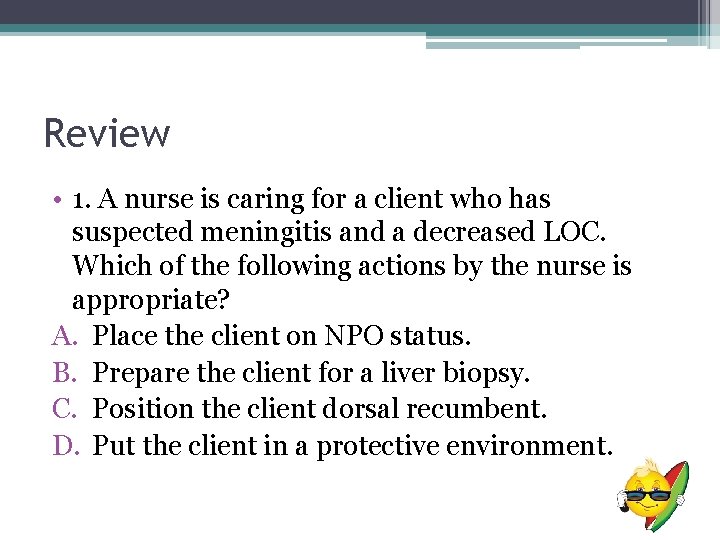
Review • 1. A nurse is caring for a client who has suspected meningitis and a decreased LOC. Which of the following actions by the nurse is appropriate? A. Place the client on NPO status. B. Prepare the client for a liver biopsy. C. Position the client dorsal recumbent. D. Put the client in a protective environment.
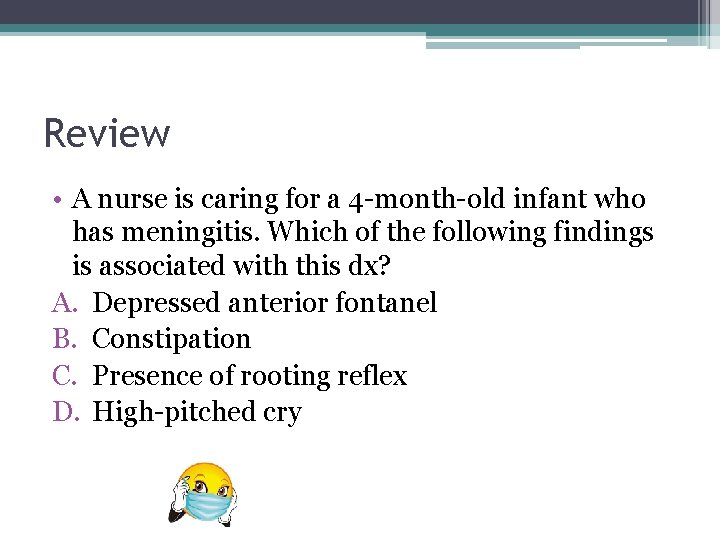
Review • A nurse is caring for a 4 -month-old infant who has meningitis. Which of the following findings is associated with this dx? A. Depressed anterior fontanel B. Constipation C. Presence of rooting reflex D. High-pitched cry
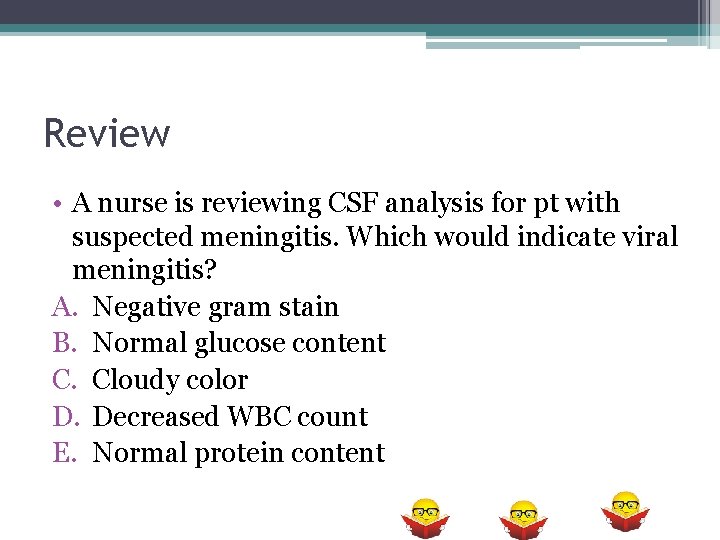
Review • A nurse is reviewing CSF analysis for pt with suspected meningitis. Which would indicate viral meningitis? A. Negative gram stain B. Normal glucose content C. Cloudy color D. Decreased WBC count E. Normal protein content
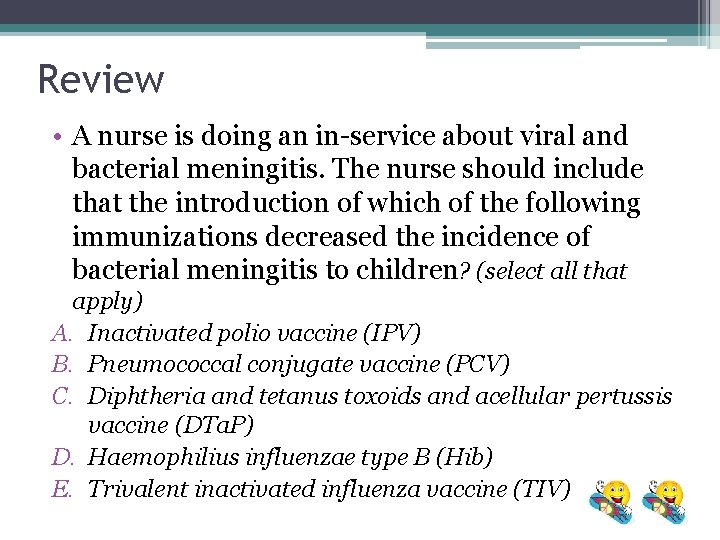
Review • A nurse is doing an in-service about viral and bacterial meningitis. The nurse should include that the introduction of which of the following immunizations decreased the incidence of bacterial meningitis to children? (select all that apply) A. Inactivated polio vaccine (IPV) B. Pneumococcal conjugate vaccine (PCV) C. Diphtheria and tetanus toxoids and acellular pertussis vaccine (DTa. P) D. Haemophilius influenzae type B (Hib) E. Trivalent inactivated influenza vaccine (TIV)
Review • A nurse is caring for a school-age client who possibly has Reye syndrome. Which of the following is a risk factor for developing Reye syndrome? A. Recent hx of infectious cystitis caused by Candida B. Recent hx of bacterial otitis media C. Recent episode of gastroenteritis D. Recent episode of Haemophilus influenzae meningitis