
Care Certificate Standards 5 6 Presented by Shona
Care Certificate Standards 5 & 6 Presented by Shona Mc. Gregor & Myriam Hembling
Aims and Objectives Std 5 By the end of the session you will be able to: Ø Ø Understand person centred values Understand working in a person centred way Ø Have an awareness of environments and factors that may be causing discomfort or distress Ø Understand factors that effect identity and self-esteem
Aims and objectives Std 6 Ø Understand the importance of effective communication at work Ø Understand how to meet the communication and language needs, wishes and preferences of individuals Ø Ø Understand how to promote effective communication Understand the principles and practices relating to confidentiality
Values in Health and Social Care Values are beliefs and ideas about how people should behave. Values are central to work in health and social care. They are principles that guide workers to understand right from wrong and are about what is important when caring and supporting individuals.
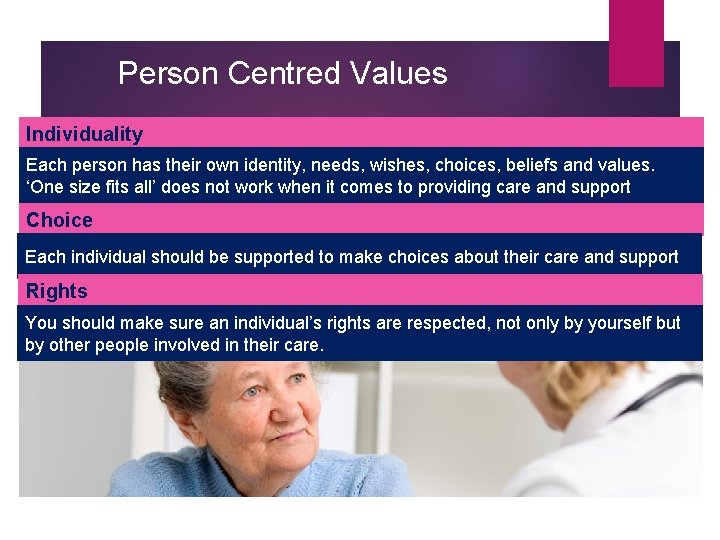
Person Centred Values Individuality Each person has their own identity, needs, wishes, choices, beliefs and values. ‘One size fits all’ does not work when it comes to providing care and support Choice Each individual should be supported to make choices about their care and support Rights You should make sure an individual’s rights are respected, not only by yourself but by other people involved in their care.

Person Centred Values Privacy Everyone has a right to private space and time when they need it. Privacy includes the individual’s private information Dignity Treating an individual in a dignified way shows respect, values their individuality and their ethical and moral beliefs. Do not make assumptions about their needs. Respect Believing and showing that an individual has importance as an individual. It involves recognising that they have their own opinions and feelings even if you do not agree with them. Partnership Working with the individual, their family and other workers. Successful partnership relies on communication and trust; valuing and respecting what others have to say.
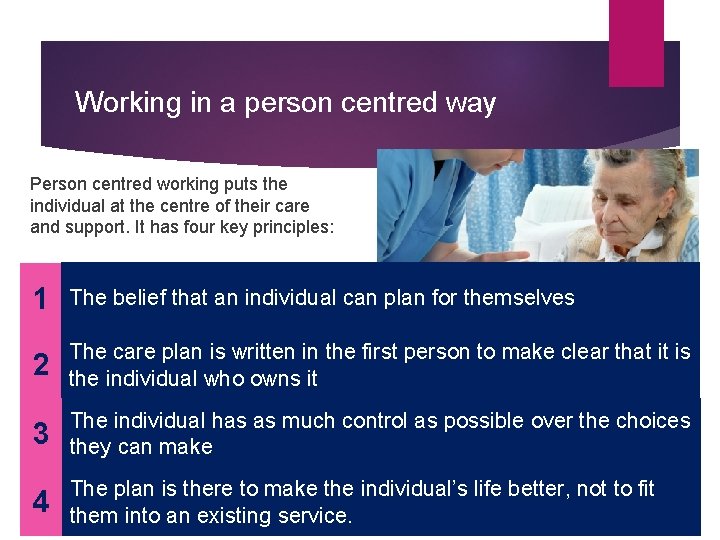
Working in a person centred way Person centred working puts the individual at the centre of their care and support. It has four key principles: 1 The belief that an individual can plan for themselves 2 The care plan is written in the first person to make clear that it is the individual who owns it 3 The individual has as much control as possible over the choices they can make 4 The plan is there to make the individual’s life better, not to fit them into an existing service.
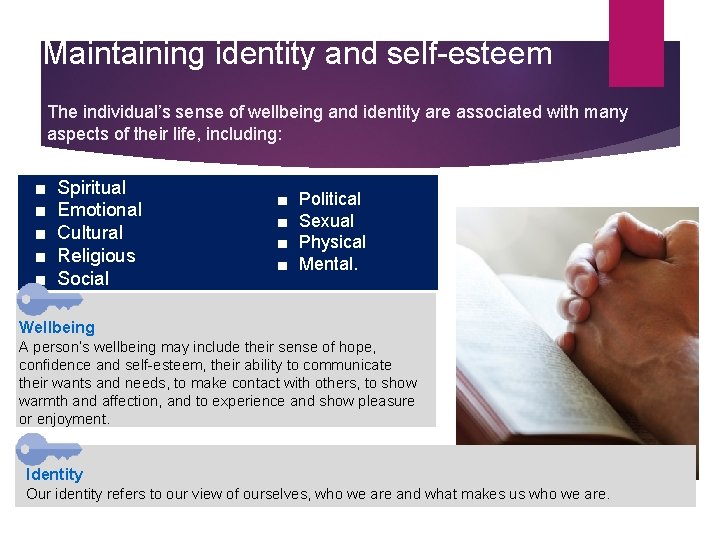
Maintaining identity and self-esteem The individual’s sense of wellbeing and identity are associated with many aspects of their life, including: ■ ■ ■ Spiritual Emotional Cultural Religious Social ■ ■ Political Sexual Physical Mental. Wellbeing A person’s wellbeing may include their sense of hope, confidence and self-esteem, their ability to communicate their wants and needs, to make contact with others, to show warmth and affection, and to experience and show pleasure or enjoyment. Identity Our identity refers to our view of ourselves, who we are and what makes us who we are.
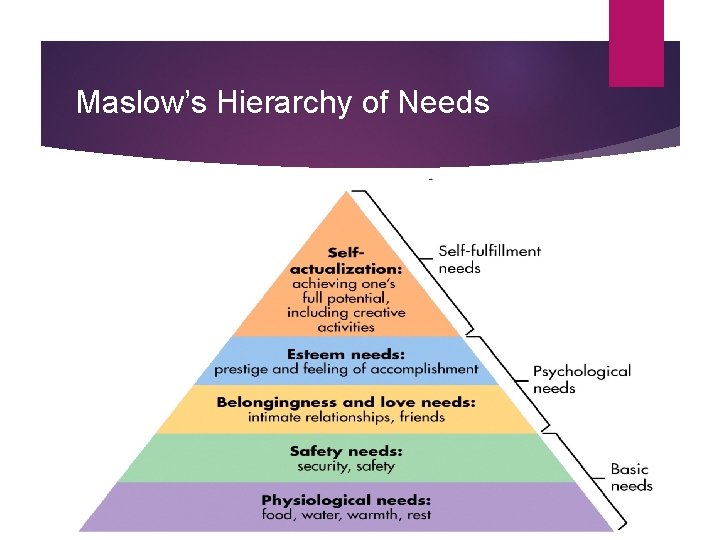
Maslow’s Hierarchy of Needs
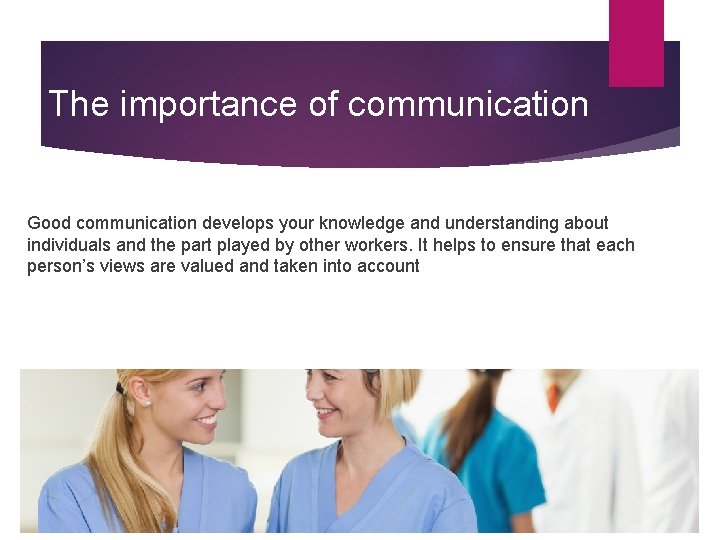
The importance of communication Good communication develops your knowledge and understanding about individuals and the part played by other workers. It helps to ensure that each person’s views are valued and taken into account
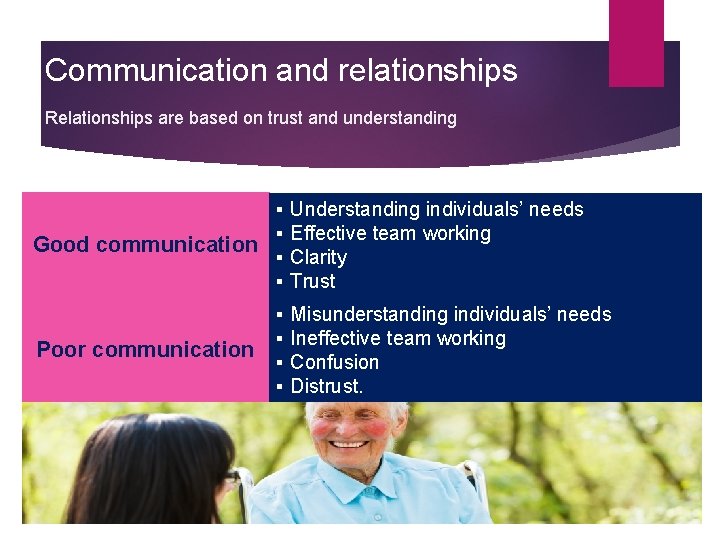
Communication and relationships Relationships are based on trust and understanding ▪ ▪ Good communication ▪ ▪ Poor communication ▪ ▪ Understanding individuals’ needs Effective team working Clarity Trust Misunderstanding individuals’ needs Ineffective team working Confusion Distrust.
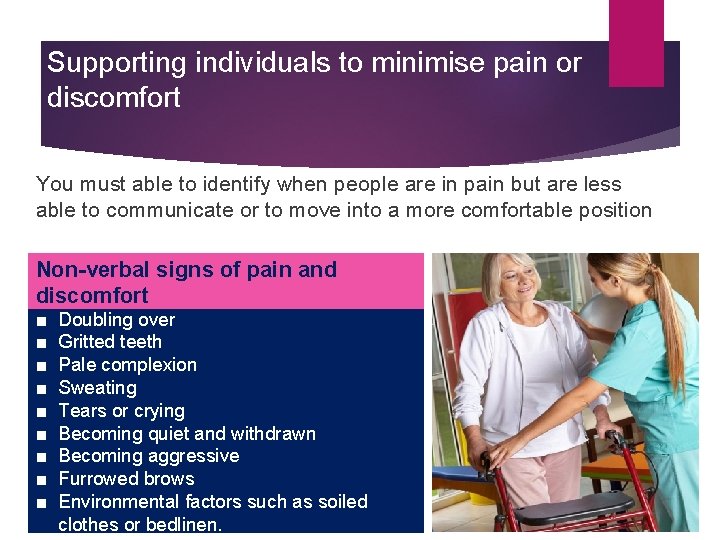
Supporting individuals to minimise pain or discomfort You must able to identify when people are in pain but are less able to communicate or to move into a more comfortable position Non-verbal signs of pain and discomfort ■ ■ ■ ■ ■ Doubling over Gritted teeth Pale complexion Sweating Tears or crying Becoming quiet and withdrawn Becoming aggressive Furrowed brows Environmental factors such as soiled clothes or bedlinen.
Minimising discomfort and distress Environmental factors that can affect an individual’s comfort and wellbeing: ■ Lighting ■ Noise ■ Temperature ■ Odours Ask the individual if they want you to change their environment to make them more comfortable - NEVER assume. Actions that can affect an individual’s comfort and wellbeing: ■ Moving a person who has stiff muscles or joints ■ Letting in bright light ■ Making a loud noise Always warn the individual if something may be uncomfortable. You MUST have consent to carry out a task
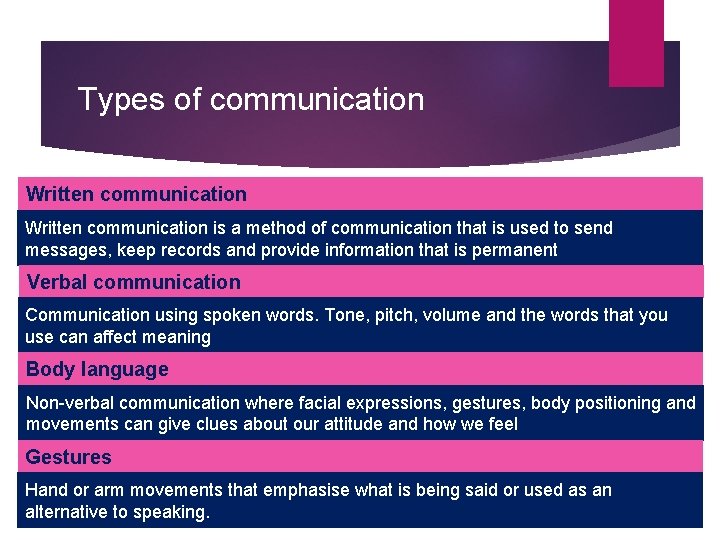
Types of communication Written communication is a method of communication that is used to send messages, keep records and provide information that is permanent Verbal communication Communication using spoken words. Tone, pitch, volume and the words that you use can affect meaning Body language Non-verbal communication where facial expressions, gestures, body positioning and movements can give clues about our attitude and how we feel Gestures Hand or arm movements that emphasise what is being said or used as an alternative to speaking.
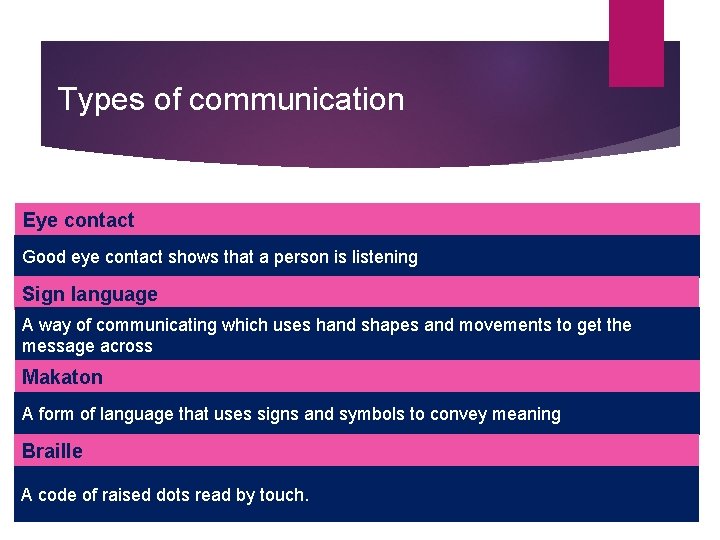
Types of communication Eye contact Good eye contact shows that a person is listening Sign language A way of communicating which uses hand shapes and movements to get the message across Makaton A form of language that uses signs and symbols to convey meaning Braille A code of raised dots read by touch.
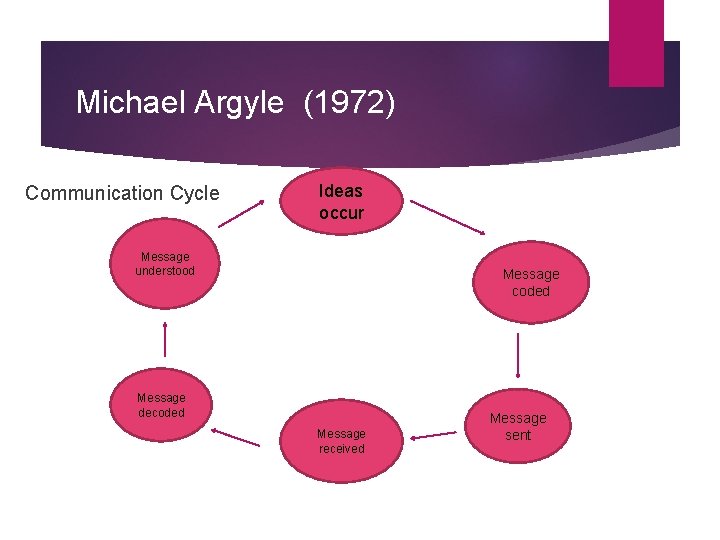
Michael Argyle (1972) Communication Cycle Ideas occur Message understood Message coded Message decoded Message received Message sent
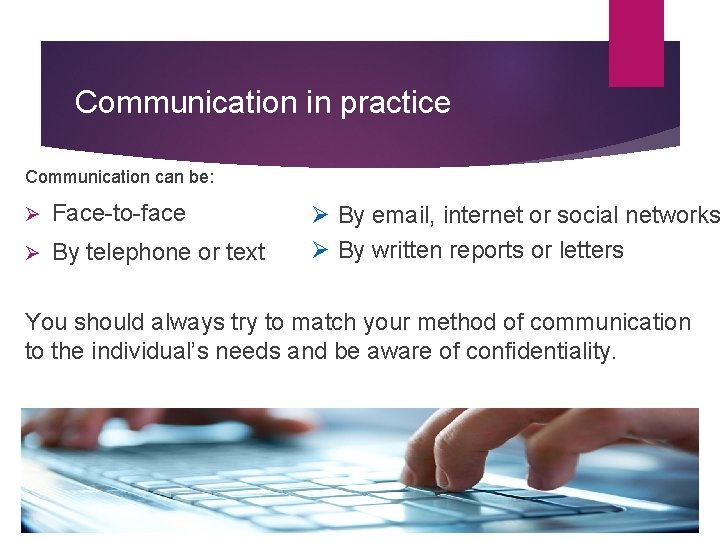
Communication in practice Communication can be: Ø Face-to-face Ø By telephone or text Ø By email, internet or social networks Ø By written reports or letters You should always try to match your method of communication to the individual’s needs and be aware of confidentiality.
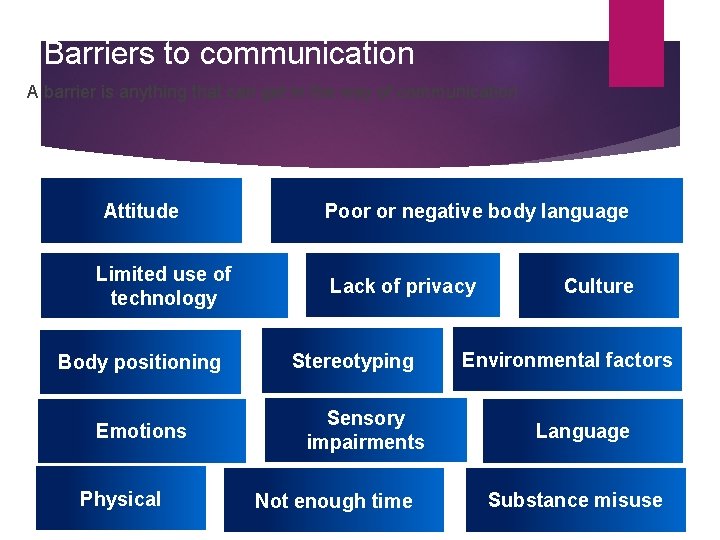
Barriers to communication A barrier is anything that can get in the way of communication Attitude Limited use of technology Body positioning Emotions Physical Poor or negative body language Lack of privacy Stereotyping Sensory impairments Not enough time Culture Environmental factors Language Substance misuse
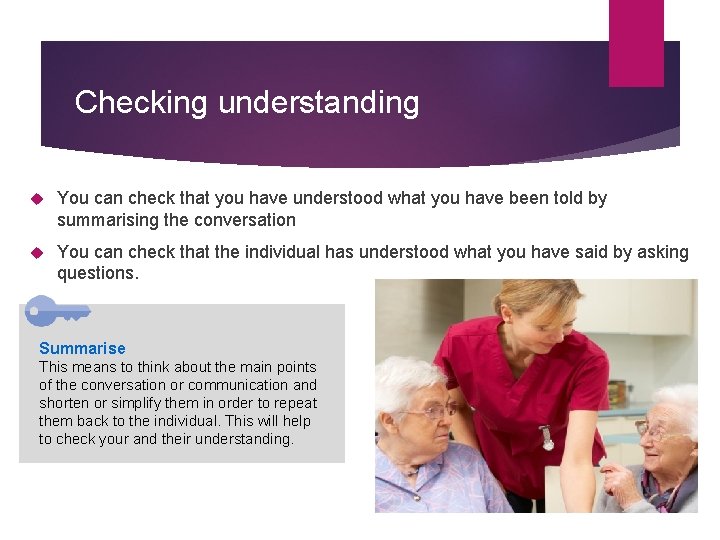
Checking understanding You can check that you have understood what you have been told by summarising the conversation You can check that the individual has understood what you have said by asking questions. Summarise This means to think about the main points of the conversation or communication and shorten or simplify them in order to repeat them back to the individual. This will help to check your and their understanding.
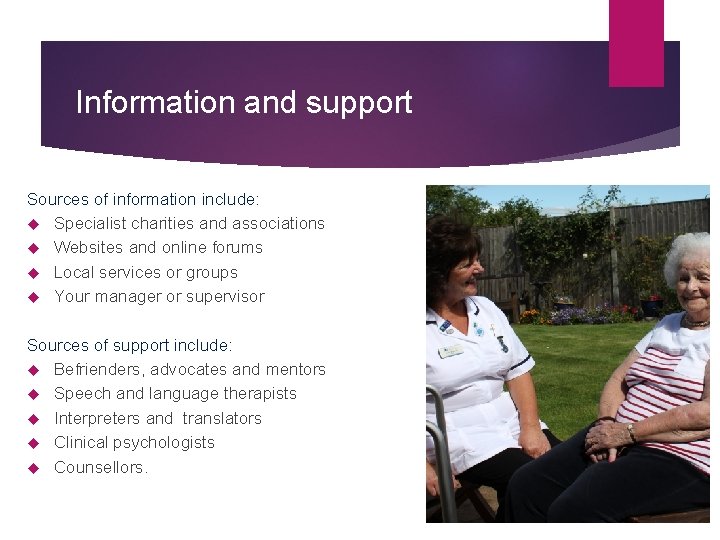
Information and support Sources of information include: Specialist charities and associations Websites and online forums Local services or groups Your manager or supervisor Sources of support include: Befrienders, advocates and mentors Speech and language therapists Interpreters and translators Clinical psychologists Counsellors.
Confidentiality Personal and sensitive information must be treated confidentially Sharing relevant information with other workers who ‘need to know’ Storing information securely Information should not usually be disclosed without the person’s informed consent Information should not be discussed where others can overhear REMEMBER In some circumstances information MUST be shared without consent.
Legislation relating to handling Info q Data Protection Act 1998 - q Freedom of Information Act 2000 - public “right of access” to info q Mental Capacity Act 2005 - 5 principles include taking practical steps q Mental Health Act 2007 - IMHAs to advocate for individuals q Disability Discrimination Act 2005 - places duties on Public the protection of personal data in UK. main piece of legislation that governs held by Public Authorities. to support individuals to make decisions. Also may need to work with IMCAs. Authorities to give “due regard” to the needs of disabled persons disabilities.
Any questions
What happens next…. ? Completing your care certificate: q For those of you having to complete the care certificate, this needs to be done over the course of your probationary period – normally 6 months from your start date. q In terms of training, this is just the beginning. There will be continued opportunities for you to attend further training & develop you knowledge over the course of your career with Home First.

- Slides: 25