
Care Certificate Standard 9 PRESENTED BY SHONA MCGREGOR
Care Certificate Standard 9 PRESENTED BY: SHONA MCGREGOR & MYRIAM HEMBLING
Aims and objectives By the end of the session you will be able to: Understand the experiences of people with mental health needs, dementia or learning disabilities Understand the importance of promoting positive health and wellbeing Understand the adaptions in care delivery relating to an individual and the importance of early detection Understand legal frameworks, policy and guidelines Understand mental capacity Introduction to End of Life Care
What do you understand is the difference between: Mental health Dementia Learning disability
What Is Mental Health? Mental health problems can affect the way you think, feel and behave. They affect around one in four people in Britain, and range from common mental health problems, such as depression and anxiety, to more rare problems such as schizophrenia and bipolar disorder. A mental health problem can feel just as bad, or worse, as any other physical illness – only you cannot see it.
What is Dementia? The word dementia describes a set of symptoms that may include memory loss and difficulties with thinking, problem solving or language. These changes are often small to start with, but for someone with dementia they have become severe enough to affect daily life. A person with dementia may also experience changes in their mood or behaviour. Dementia is caused when the brain is damaged by diseases, such as Alzheimer's disease or a series of strokes. Alzheimer's disease is the most common cause of dementia but not all dementia is due to Alzheimer's.
Learning Disability A learning disability can affect someone in a wide variety of ways. The terms ‘mild’ , ‘severe’ and ‘profound’ learning disability are sometimes used. They may have significantly reduced ability to understand new or complex information , to learn new skills Some people with learning disabilities live independently without much support whereas others require 24 hour care to perform most daily living skills Most people’s learning disability occurs from birth or a childhood illness and the effects are life long. It's important that people find the right, personalised support to lead a full and interesting life and have the same opportunities as everyone else.
Autism Autism is not a learning disability, but around half of people with autism may also have a learning disability, which will affect the level of support they need in their life. Some people may also receive a ‘dual diagnosis'; for example, they may have Down's syndrome and autism. Like a learning disability, autism is a lifelong condition. Someone may have mild, moderate or severe autism, so it is sometimes referred to as a spectrum, or autism spectrum disorder (ASD). There are three common features of autism, which might affect the way a person: interacts with others in a social situation is able to communicate with others thinks about and deals with social situations
Differences………. Learning disability is often confused with dyslexia and mental heath problems. Mencap describes dyslexia as a “learning difficulty” because, unlike learning disability, it does not affect intellect. Mental health problems can affect anyone at any time and may be overcome with treatment, which is not true of learning disability.
Historical Timeline Working in pairs or small groups discuss and then place each act alongside the appropriate year. Some acts may have been introduced at the same time. Think about the language being used within the statements to help you.
The Medical Model V The Social Model Compare the two models: What do you notice? Do you agree with the statements? Can you see which Acts from the previous activity were medically driven and which ones were socially driven
Case Studies Working in pairs or small groups look at the case studies and discuss a range of approaches to support them with their specific needs. Record your thoughts.
Dignity in Care DVD: choice and control Watch the clip and then reflect on your case studies again. What have you changed added to the care plan? Why have you done this? What will the impact be for that person?
Mental Capacity, what is it? It means: A person is said to lack mental capacity if: They fail to make a particular decision Or they fail to take a particular action for themselves at the time the decision or action needs to be taken. Mental capacity is time specific Mental capacity is always decision specific Who is affected by the Mental Capacity Act 2005? There are over 2 million people who may be affected at any one time. (since they may lack the mental capacity to make a decision about their life or welfare) There are over 6 million paid and unpaid carers who are supporting these needs
Mental Capacity: 5 Key principles 1. 2. 3. 4. 5. A person must be assumed to have capacity unless it is established that they lack capacity A person is not treated as unable to make a decision unless all practicable steps to help him to do so have been taken without success A person is not treated as unable to make a decision merely because he makes unwise decisions. An act done, or decision made, under this ACT for or on behalf of a person must be done, or made, in their best interests Before the act is done, or the decision is made, regard must be had to whether the purpose for which it is needed can be as effectively achieved in a way which is less restrictive of the persons rights and freedom of action
Consent to support is the principle that a person must give their permission before they receive any type of care support. This must be agreed on the basis of an assessment. Consent is required from a customer regardless of the intervention – from support with meals to personal care. The principle of consent is an important part of ethics and the international human rights law. It can be given verbally – for example by saying they are happy for you to wash their back. In writing – for example, by signing a Care Plan Capacity means the ability to use and understand information to make a decision, and communicate any decision made.
Dignity in Care : Privacy Watch and discuss make notes from your discussions
The 6 C’s What are the 6 C’s? q Care is our core business and that of our organisations, and the care we deliver helps the individual person and improves the health of the whole community. Caring defines us and our work. People receiving care expect it to be right for them, consistently, throughout every stage of their life. q Compassion is how care is given through relationships based on empathy, respect and dignity it can also be described as intelligent kindness, and is central to how people perceive their care. q Competence means all those in caring roles must have the ability to understand an individual’s health and social needs and the expertise, clinical and technical knowledge to deliver effective care and treatments based on research and evidence.
The 6 C’s q Communication is central to successful caring relationships and to effective team working. Listening is as important as what we say and do and essential for "no decision about me without me". Communication is the key to a good workplace with benefits for those in our care and staff alike. q Courage enables us to do the right thing for the people we care for, to speak up when we have concerns and to have the personal strength and vision to innovate and to embrace new ways of working. q Commitment A commitment to our patients and populations is a cornerstone of what we do. We need to build on our commitment to improve the care and experience of our patients, to take action to make this vision and strategy a reality for all and meet the health, care and support challenges ahead.
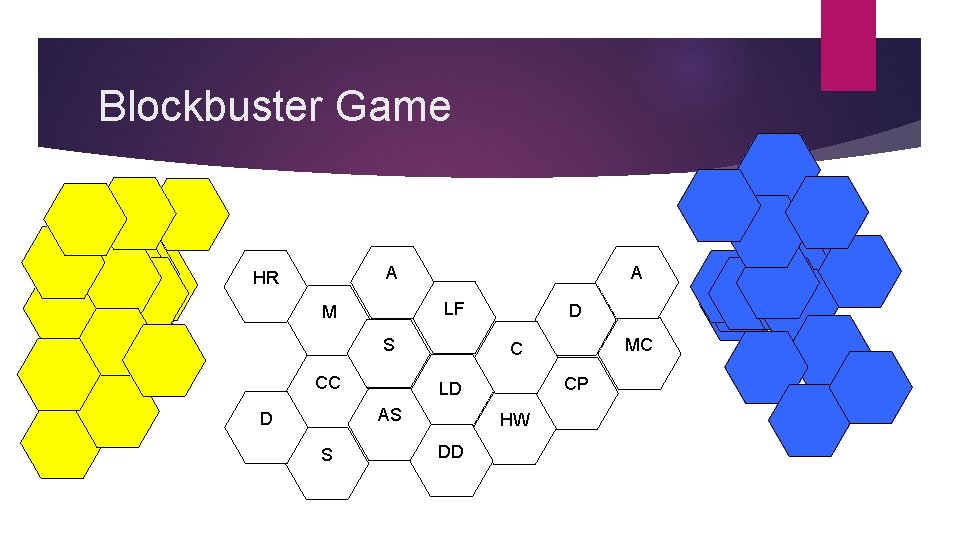
Blockbuster Game A HR A LF M S CC S MC C CP LD AS D D HW DD

Any Questions?
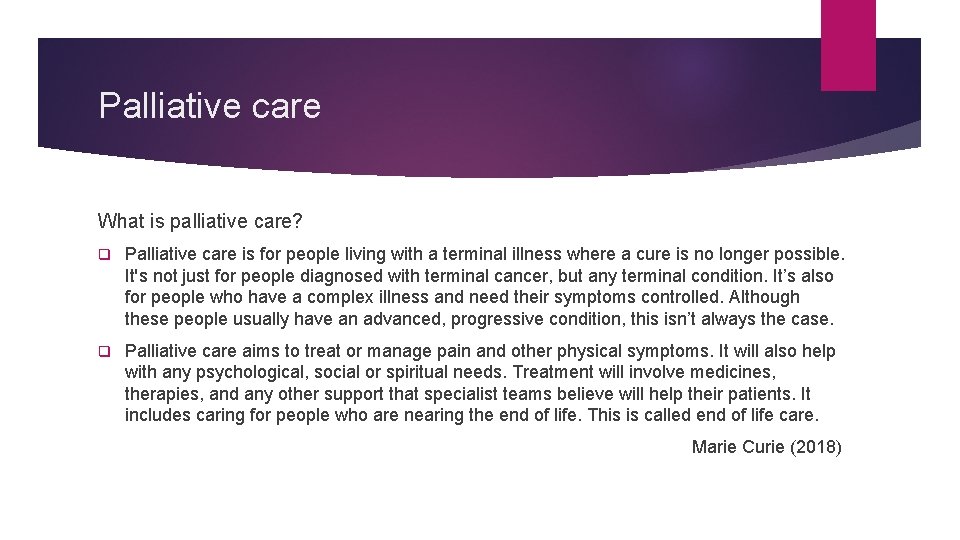
Palliative care What is palliative care? q Palliative care is for people living with a terminal illness where a cure is no longer possible. It's not just for people diagnosed with terminal cancer, but any terminal condition. It’s also for people who have a complex illness and need their symptoms controlled. Although these people usually have an advanced, progressive condition, this isn’t always the case. q Palliative care aims to treat or manage pain and other physical symptoms. It will also help with any psychological, social or spiritual needs. Treatment will involve medicines, therapies, and any other support that specialist teams believe will help their patients. It includes caring for people who are nearing the end of life. This is called end of life care. Marie Curie (2018)
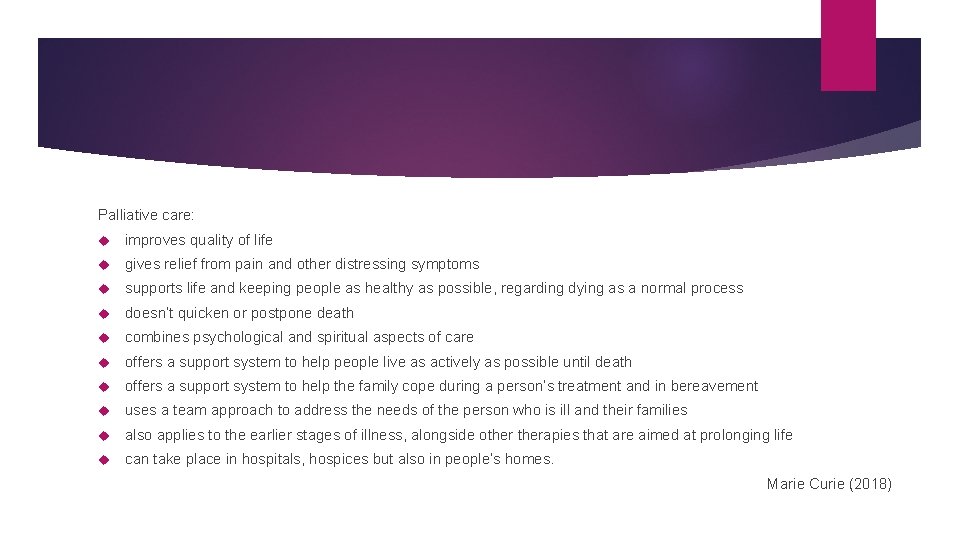
Palliative care: improves quality of life gives relief from pain and other distressing symptoms supports life and keeping people as healthy as possible, regarding dying as a normal process doesn’t quicken or postpone death combines psychological and spiritual aspects of care offers a support system to help people live as actively as possible until death offers a support system to help the family cope during a person’s treatment and in bereavement uses a team approach to address the needs of the person who is ill and their families also applies to the earlier stages of illness, alongside otherapies that are aimed at prolonging life can take place in hospitals, hospices but also in people’s homes. Marie Curie (2018)
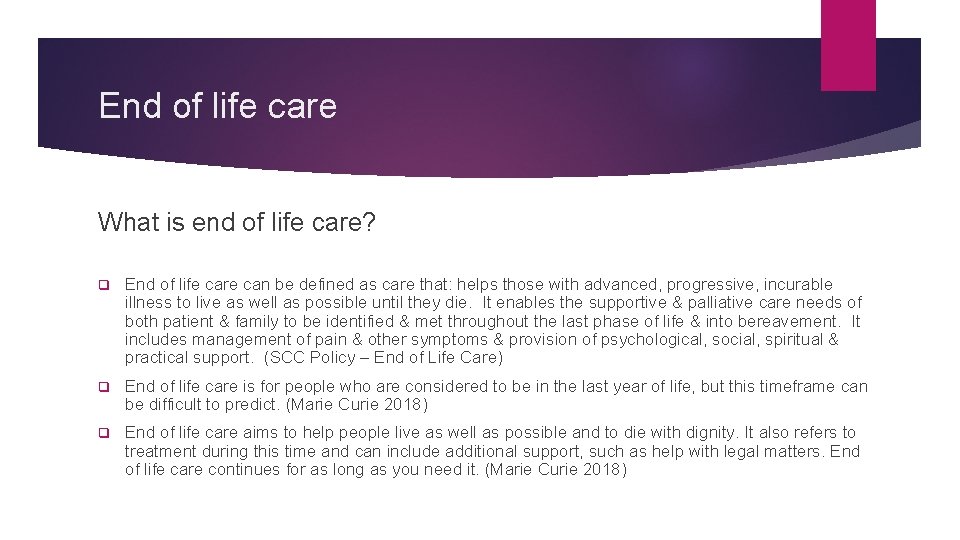
End of life care What is end of life care? q End of life care can be defined as care that: helps those with advanced, progressive, incurable illness to live as well as possible until they die. It enables the supportive & palliative care needs of both patient & family to be identified & met throughout the last phase of life & into bereavement. It includes management of pain & other symptoms & provision of psychological, social, spiritual & practical support. (SCC Policy – End of Life Care) q End of life care is for people who are considered to be in the last year of life, but this timeframe can be difficult to predict. (Marie Curie 2018) q End of life care aims to help people live as well as possible and to die with dignity. It also refers to treatment during this time and can include additional support, such as help with legal matters. End of life care continues for as long as you need it. (Marie Curie 2018)

Any Questions?
- Slides: 25