
Care and Support Planning The challenges we face


















![[SERVICE NAME] RECORD OF MENTAL CAPACITY ASSESSMENTS AND BEST INTEREST DECISIONS Name Date of](https://slidetodoc.com/presentation_image_h/7ff50bfbf2693427d85b6cf053fafee4/image-55.jpg "[SERVICE NAME] RECORD OF MENTAL CAPACITY ASSESSMENTS AND BEST INTEREST DECISIONS Name Date of")

- Slides: 73
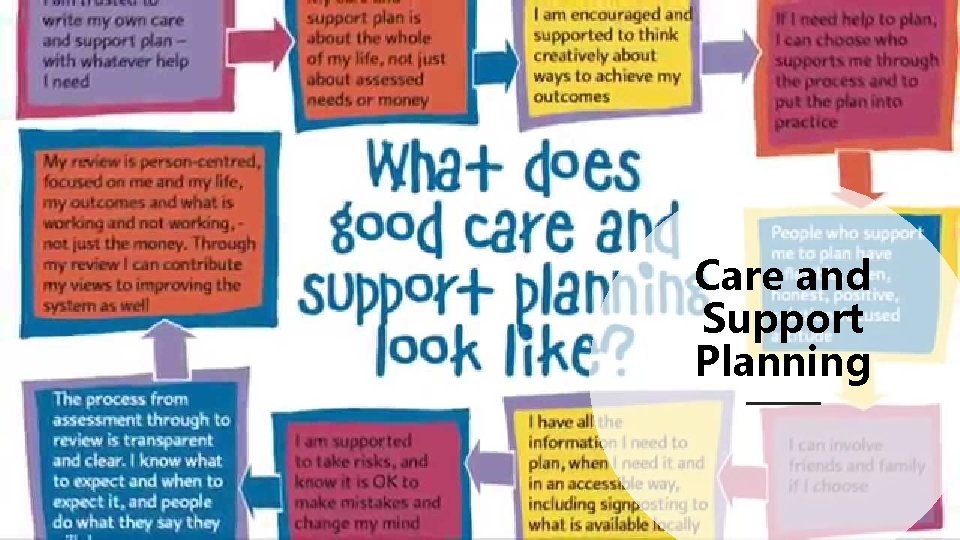
Care and Support Planning
The challenges we face Care plans were increasingly being required to serve too many functions and too many masters – they were in danger of becoming inaccessible and confusing. We needed to ensure that they capture people’s own interpretation of their needs and preferences. We needed to ensure that they promoted independence
The challenges we face We needed to ensure that they reflected input from professionals. We needed to ensure that they highlighted identified risks We needed to ensure that people’s consent to receive their care and treatment (support) was given and recorded
The challenges we face We needed to ensure that the nature of people’s involvement in planning their care and support was recorded.
Generating solutions …
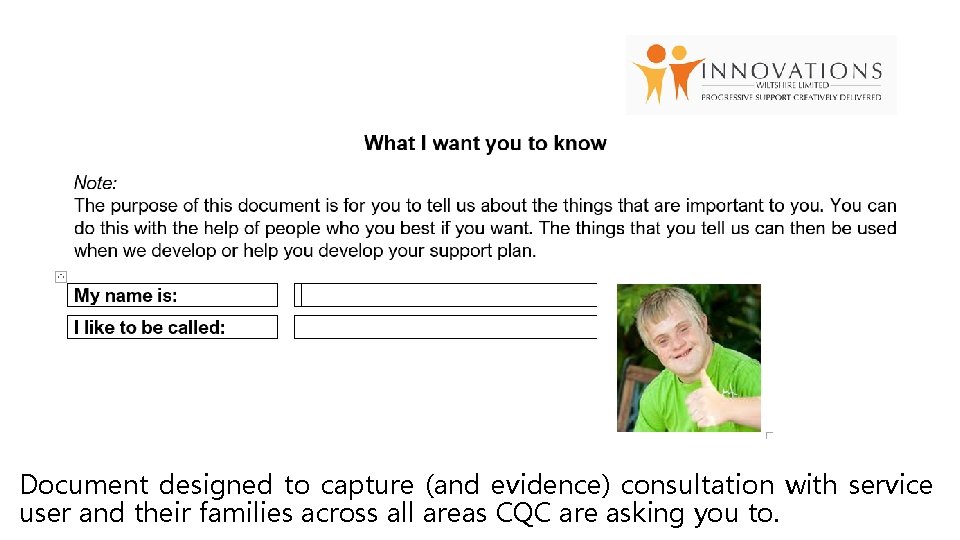
Document designed to capture (and evidence) consultation with service user and their families across all areas CQC are asking you to.
Informatio n about family and friends
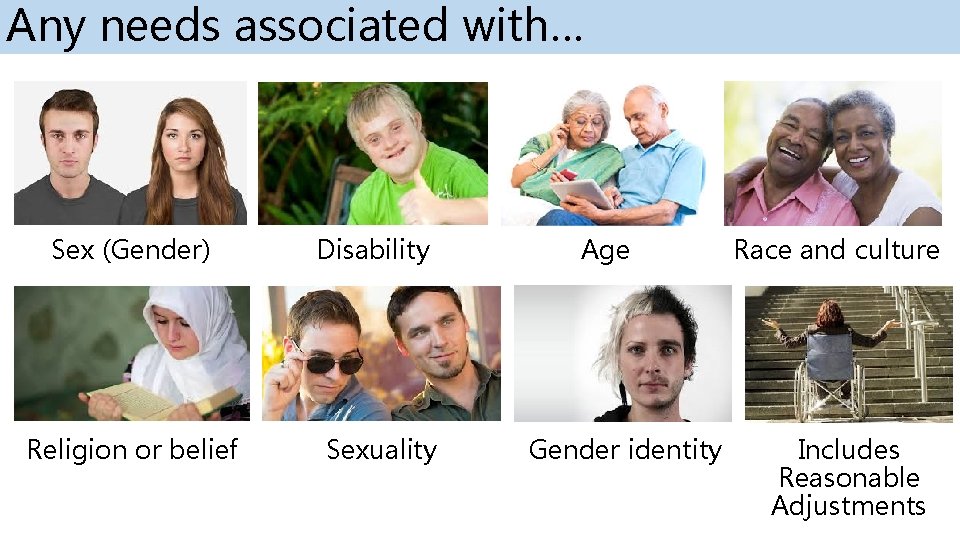
Any needs associated with… Sex (Gender) Religion or belief Disability Sexuality Age Gender identity Race and culture Includes Reasonable Adjustments
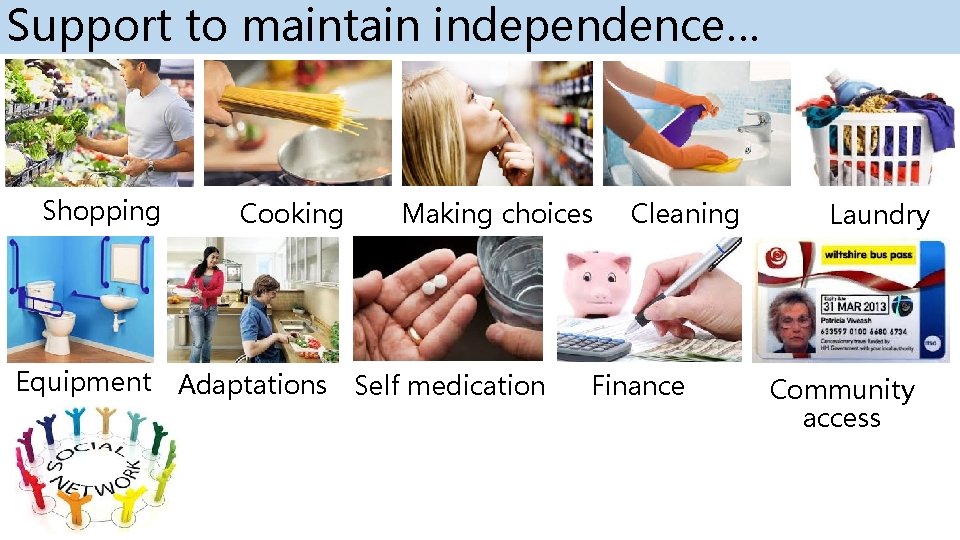
Support to maintain independence… Shopping Equipment Cooking Making choices Adaptations Self medication Cleaning Finance Laundry Community access
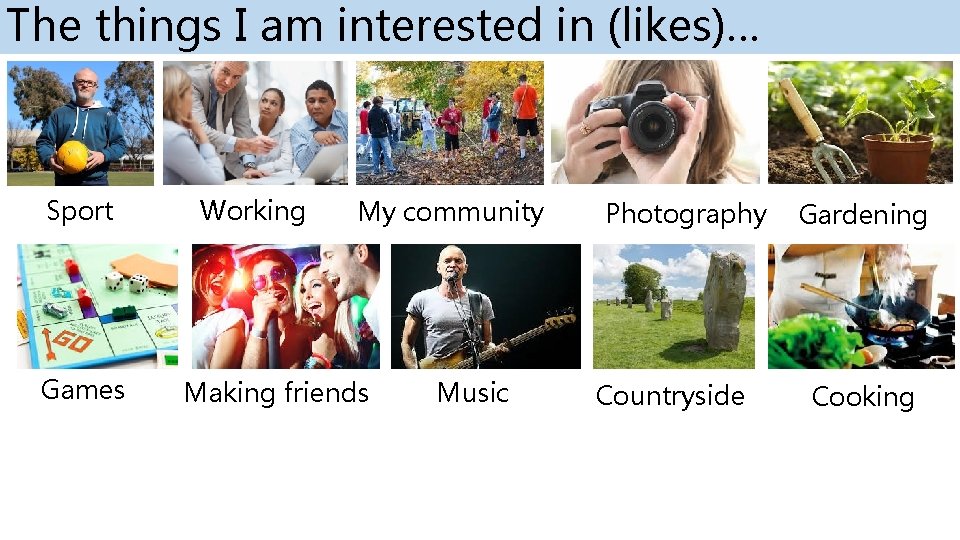
The things I am interested in (likes)… Sport Games Working My community Making friends Music Photography Countryside Gardening Cooking
The things I don’t like
The things I want from the service…
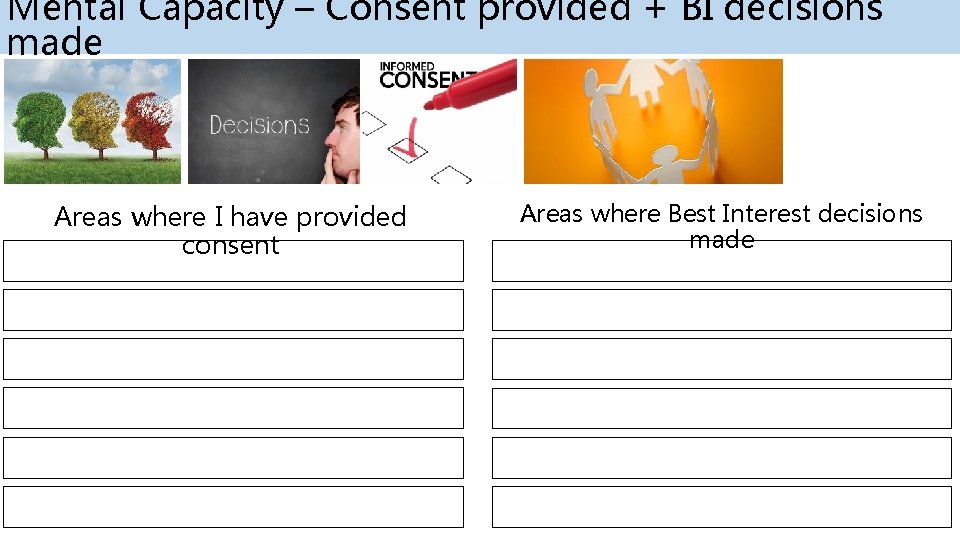
Mental Capacity – Consent provided + BI decisions made Areas where I have provided consent Areas where Best Interest decisions made
My morning and evening routines
My weekly routine
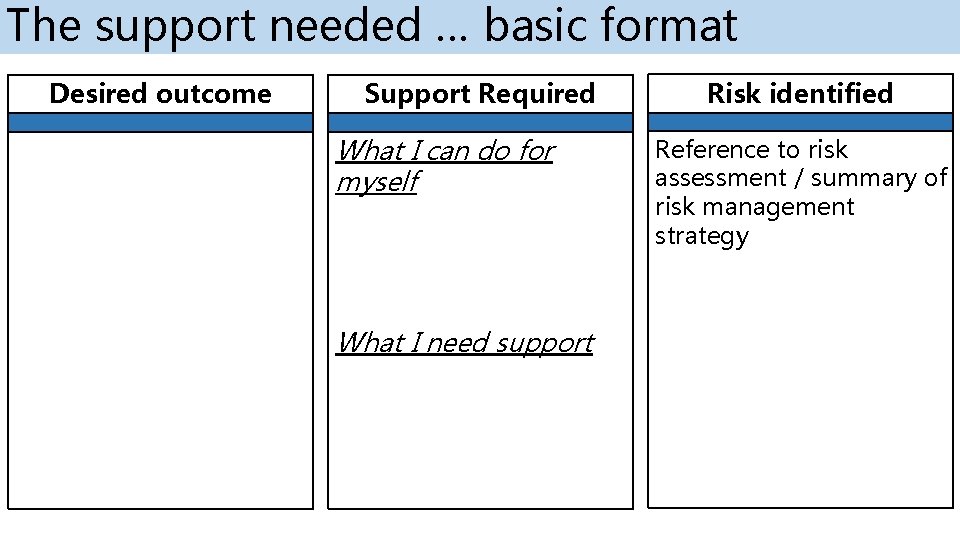
The support needed … basic format Desired outcome Support Required What I can do for myself What I need support Risk identified Reference to risk assessment / summary of risk management strategy
When thinking about outcomes …
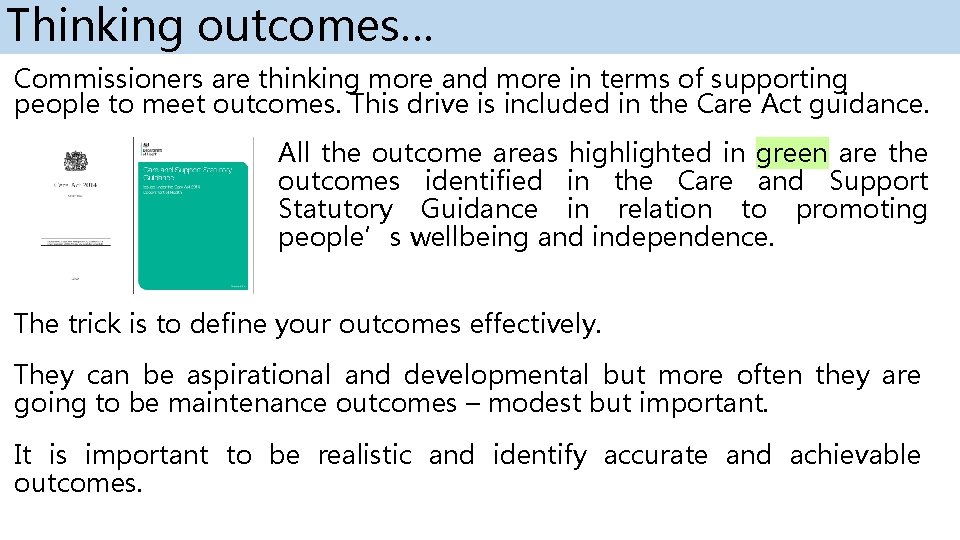
Thinking outcomes… Commissioners are thinking more and more in terms of supporting people to meet outcomes. This drive is included in the Care Act guidance. All the outcome areas highlighted in green are the outcomes identified in the Care and Support Statutory Guidance in relation to promoting people’s wellbeing and independence. The trick is to define your outcomes effectively. They can be aspirational and developmental but more often they are going to be maintenance outcomes – modest but important. It is important to be realistic and identify accurate and achievable outcomes.
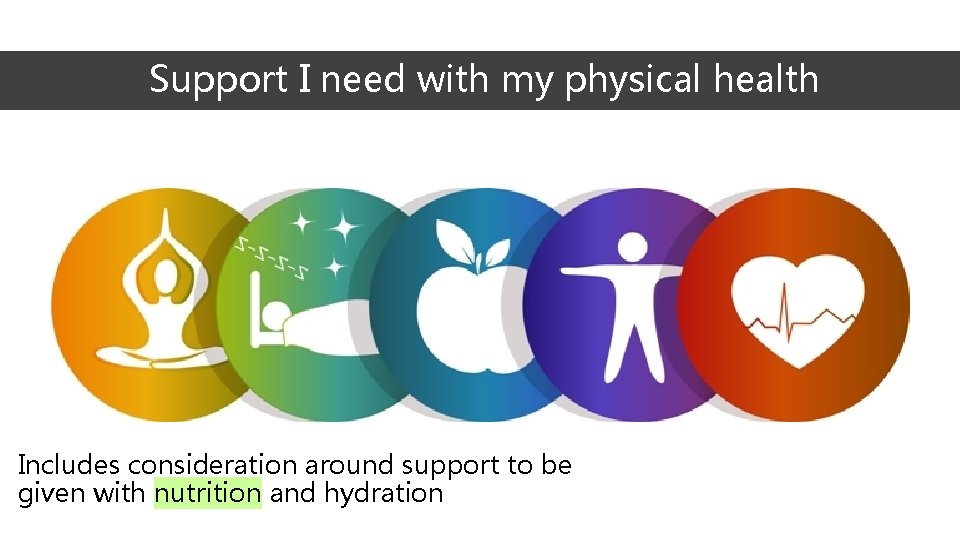
Support I need with my physical health Includes consideration around support to be given with nutrition and hydration
Support I need to maintain my mental health and emotional wellbeing
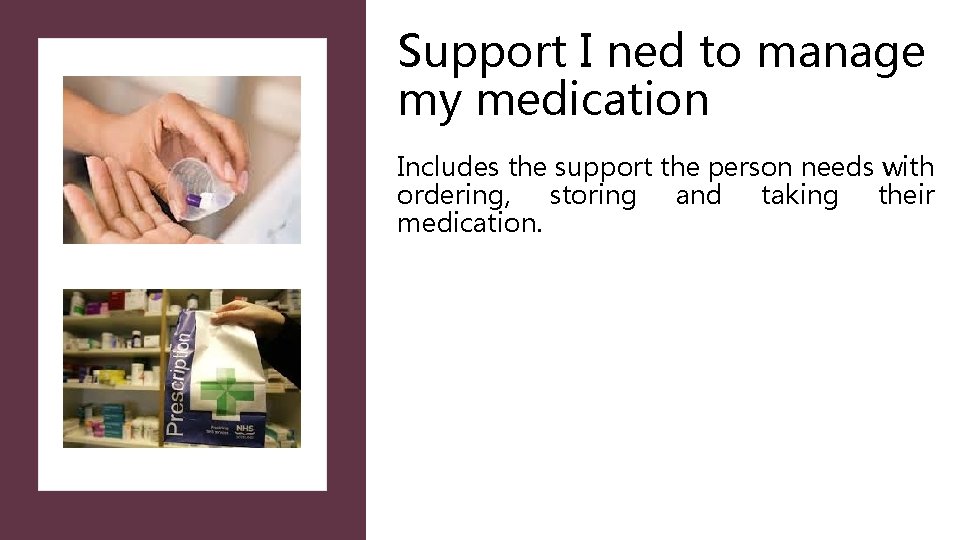
Support I ned to manage my medication Includes the support the person needs with ordering, storing and taking their medication.
Support I need to manage my cultural and spiritual needs
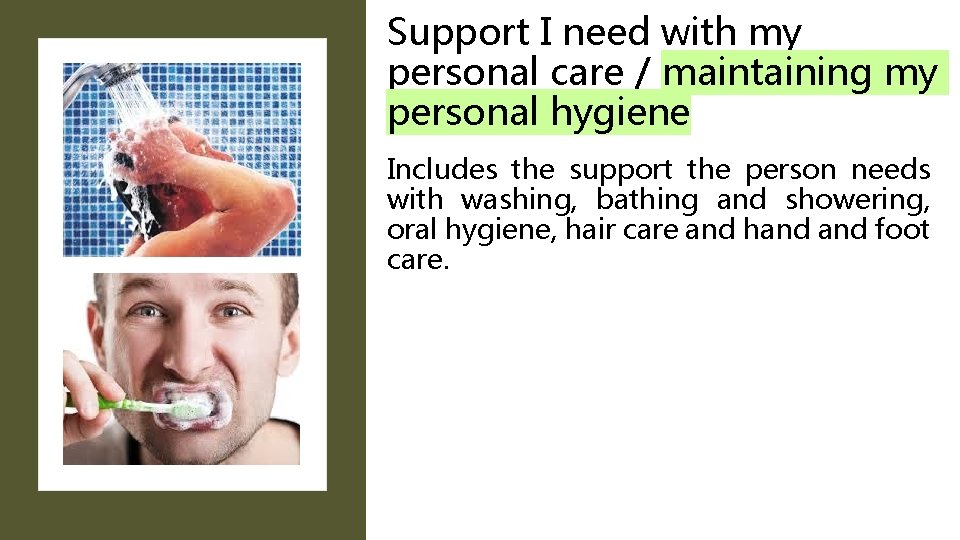
Support I need with my personal care / maintaining my personal hygiene Includes the support the person needs with washing, bathing and showering, oral hygiene, hair care and hand foot care.
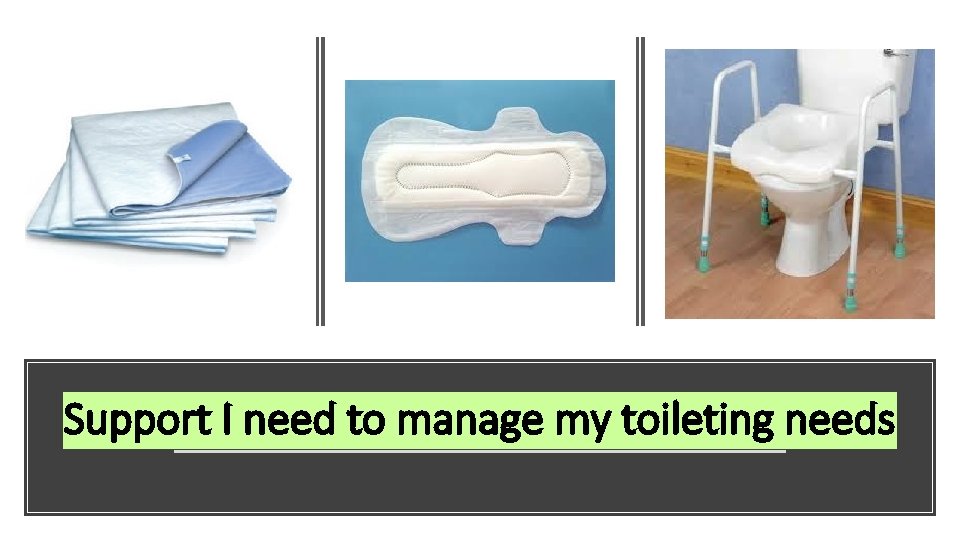
Support I need to manage my toileting needs
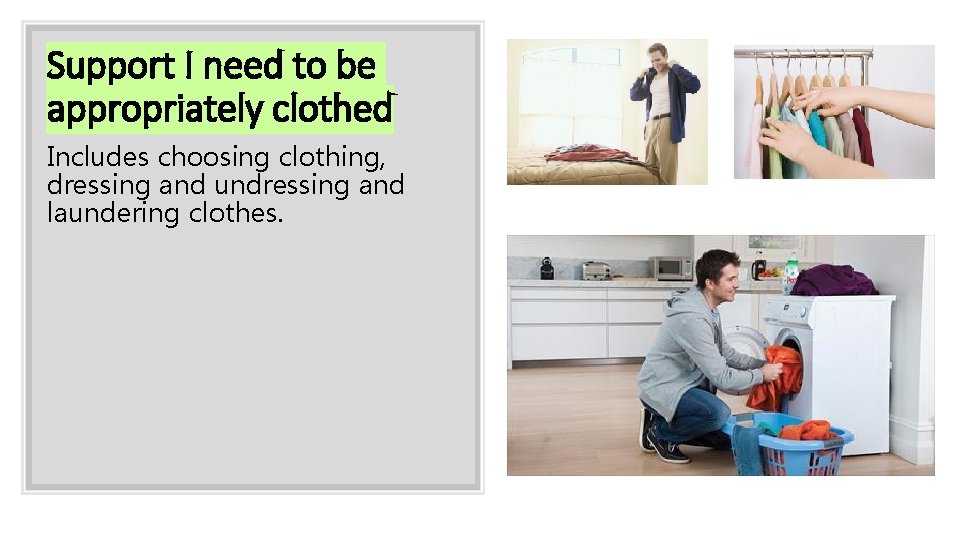
Support I need to be appropriately clothed Includes choosing clothing, dressing and undressing and laundering clothes.
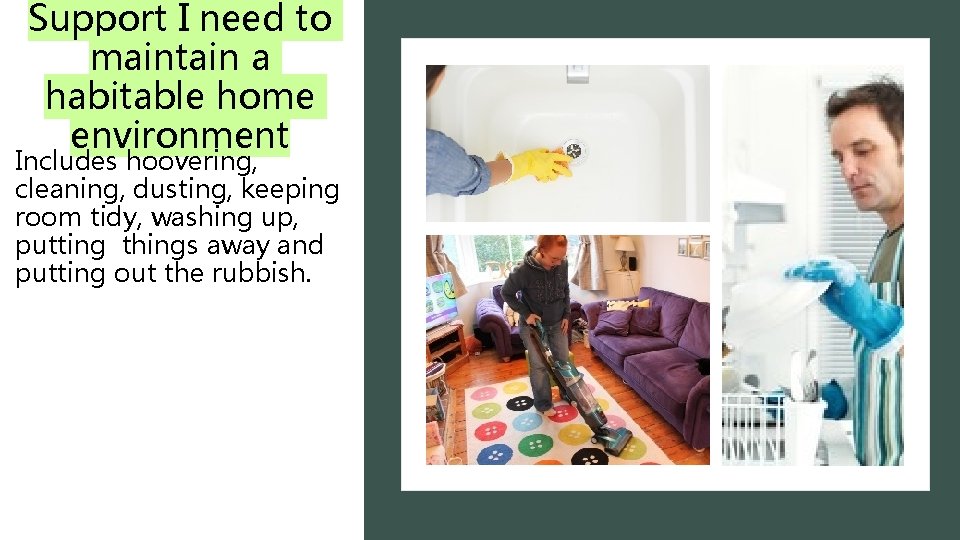
Support I need to maintain a habitable home environment Includes hoovering, cleaning, dusting, keeping room tidy, washing up, putting things away and putting out the rubbish.
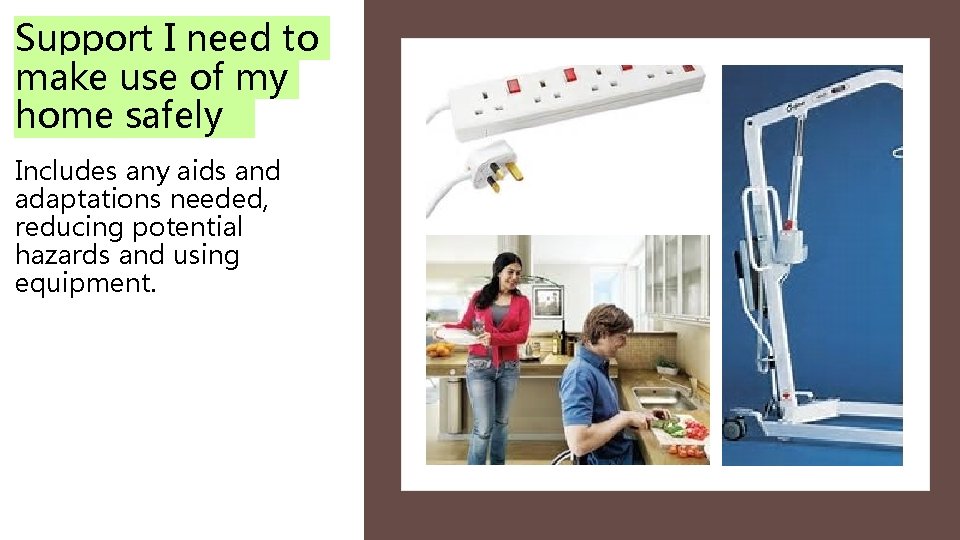
Support I need to make use of my home safely Includes any aids and adaptations needed, reducing potential hazards and using equipment.
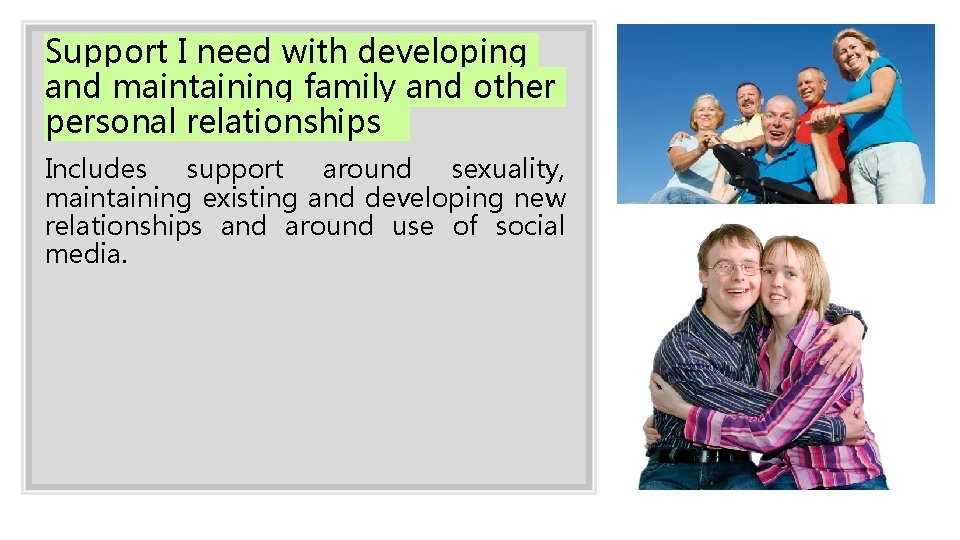
Support I need with developing and maintaining family and other personal relationships Includes support around sexuality, maintaining existing and developing new relationships and around use of social media.
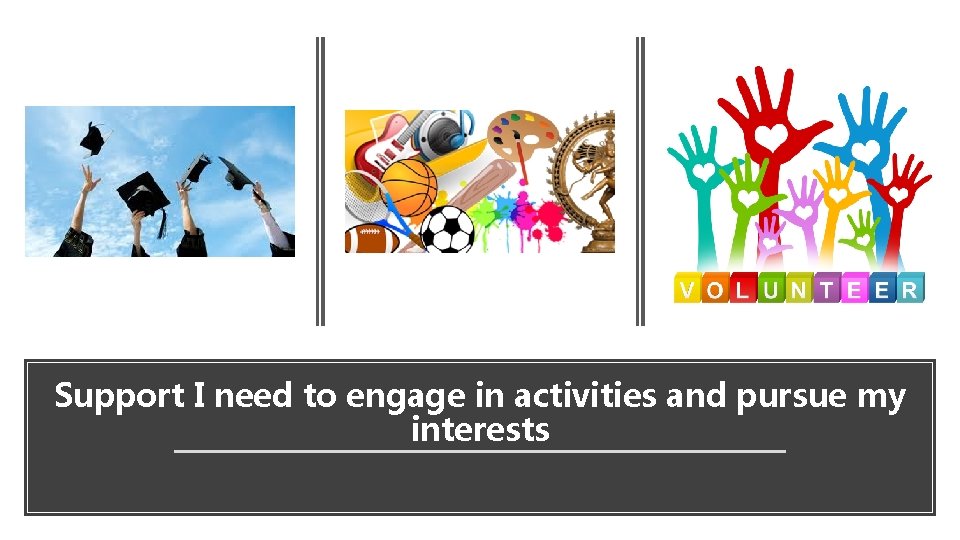
Support I need to engage in activities and pursue my interests
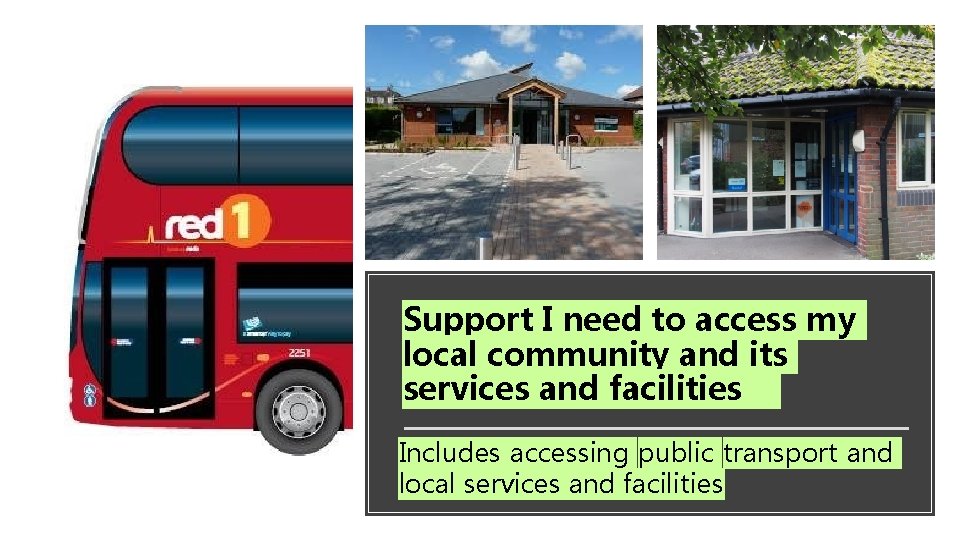
Support I need to access my local community and its services and facilities Includes accessing public transport and local services and facilities
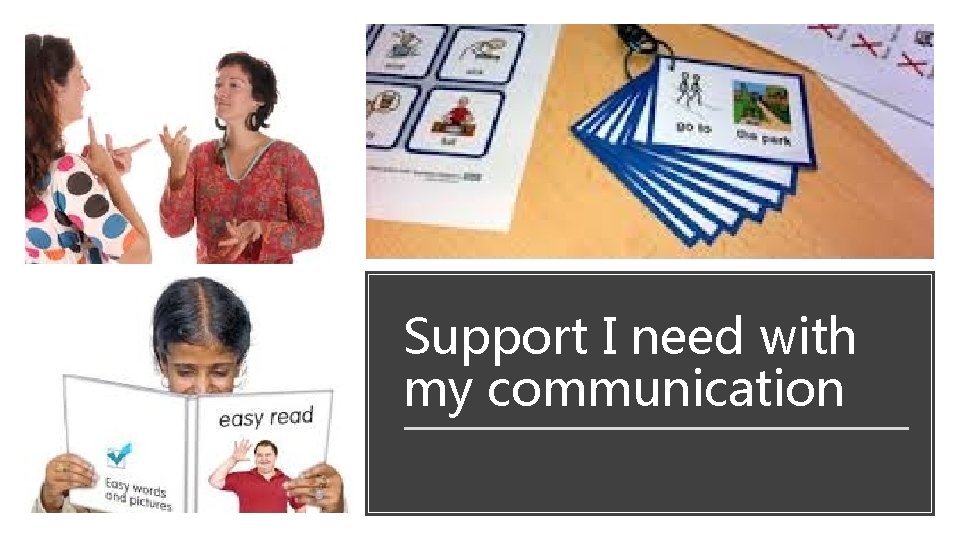
Support I need with my communication
Support I need with my behaviour If the person has significant support needs with their behaviour, further information can be found in their behaviour protocol.
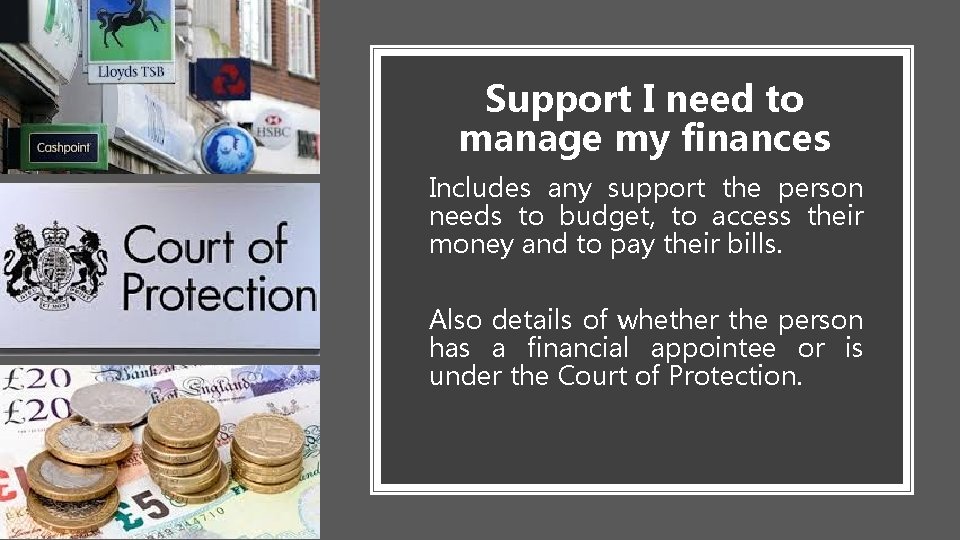
Support I need to manage my finances Includes any support the person needs to budget, to access their money and to pay their bills. Also details of whether the person has a financial appointee or is under the Court of Protection.
Sign off – How was the person involved in the process?
Statement around involvement (1) The person has been assessed as having capacity to be involved in planning their care and support. They are aware of its contents and have signed to agree to care and support being delivered in the ways described.
Statement around involvement (2) The person has been assessed as having capacity to be involved in planning their care and support but they do not wish to be.
Statement around involvement (3) The person has been assessed as not having the capacity to be involved in planning their care and support and so the contents of the plan have been designed to reflect their Best Interests and the least restrictive options.
Statement around involvement (4) An other …. may be needed in situations where people have the capacity to agree to their Care Plan but in reality don’t agree to the way elements of their care and support need to be provided.
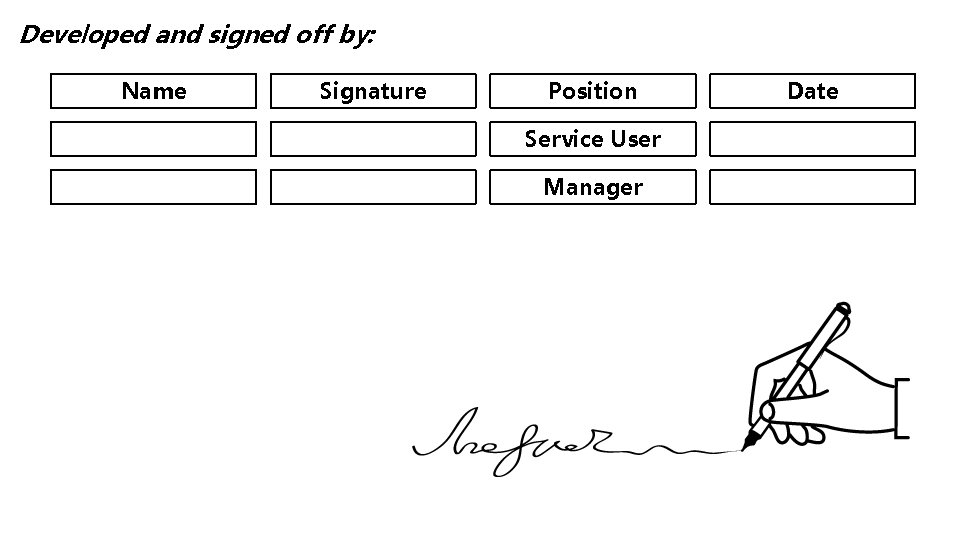
Developed and signed off by: Name Signature Position Service User Manager Date
Mental Capacity Assessment, Consent and Best Interests
The challenges we face Given its importance (and CQC’s focus on it) making sure we had a clear and comprehensive process for assessing MC, obtaining consent and establishing Best Interests. Making sure that we have a process that covers all key areas of care, treatment and support.
The challenges we face Making sure that the consent we obtain is ‘informed’ or ‘valid’. Therefore making sure that we can provide core information for all areas where we need to assess capacity or obtain consent. Making sure all areas where consent is required or Best Interest decisions are made are recorded and reviewed.
Want a process that is ‘easy as’ …
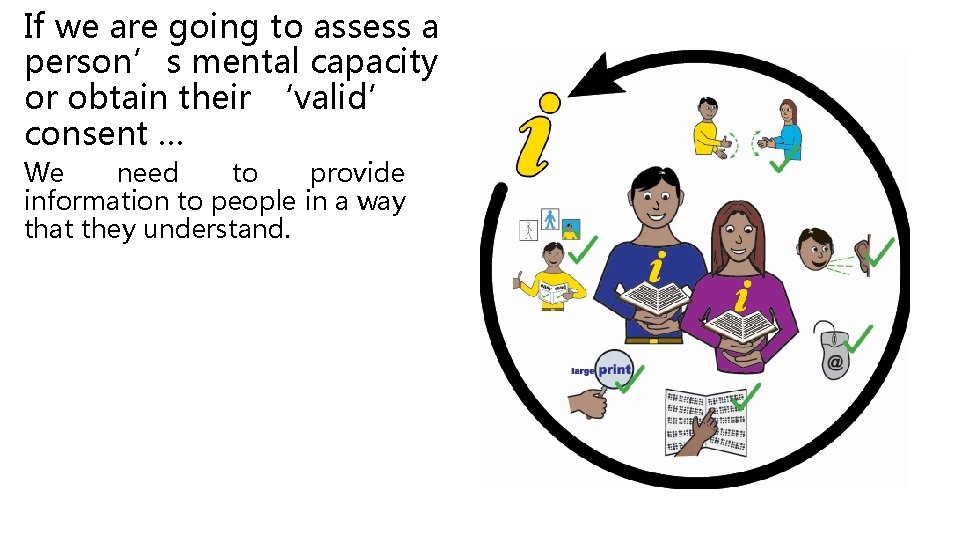
If we are going to assess a person’s mental capacity or obtain their ‘valid’ consent … We need to provide information to people in a way that they understand.
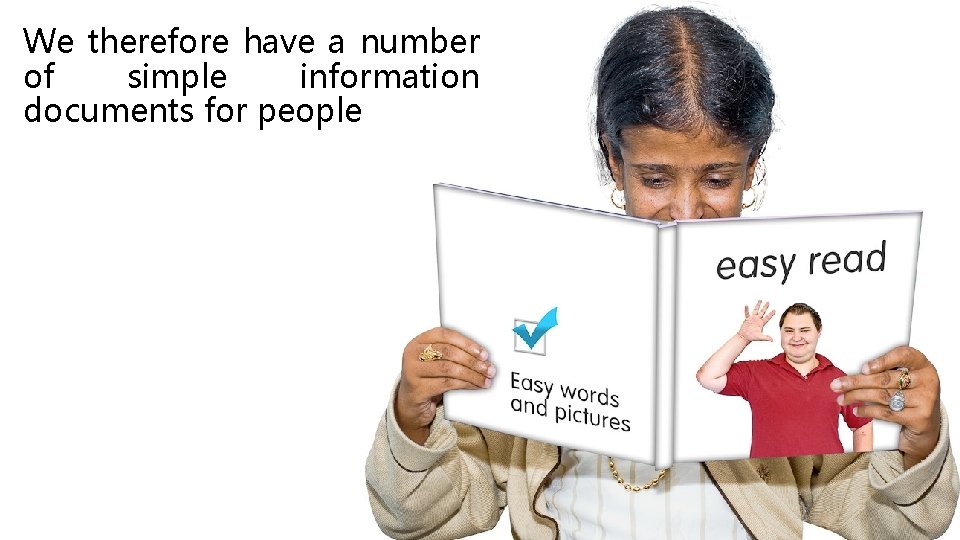
We therefore have a number of simple information documents for people
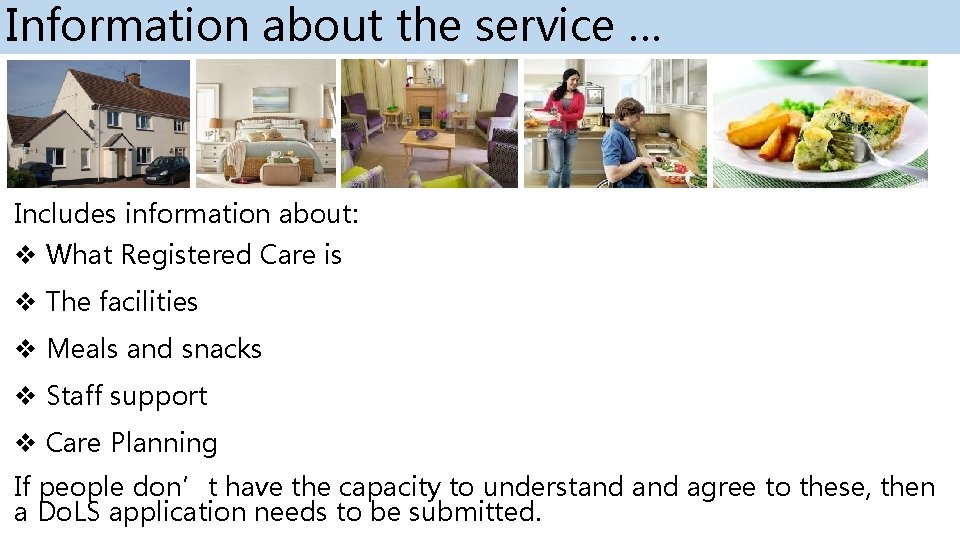
Information about the service … Includes information about: v What Registered Care is v The facilities v Meals and snacks v Staff support v Care Planning If people don’t have the capacity to understand agree to these, then a Do. LS application needs to be submitted.
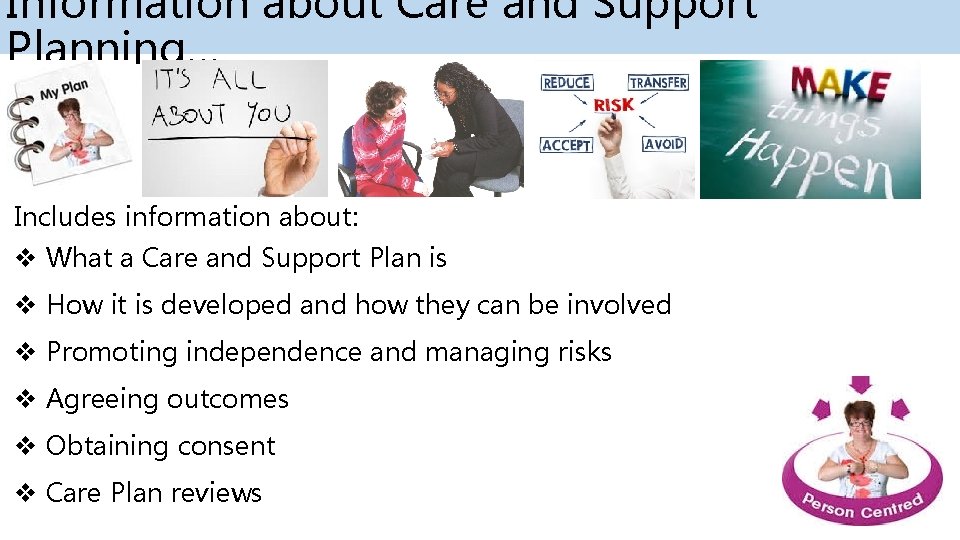
Information about Care and Support Planning… Includes information about: v What a Care and Support Plan is v How it is developed and how they can be involved v Promoting independence and managing risks v Agreeing outcomes v Obtaining consent v Care Plan reviews
Similar information provided around … Support to meet personal care needs Support to manage and administer medication
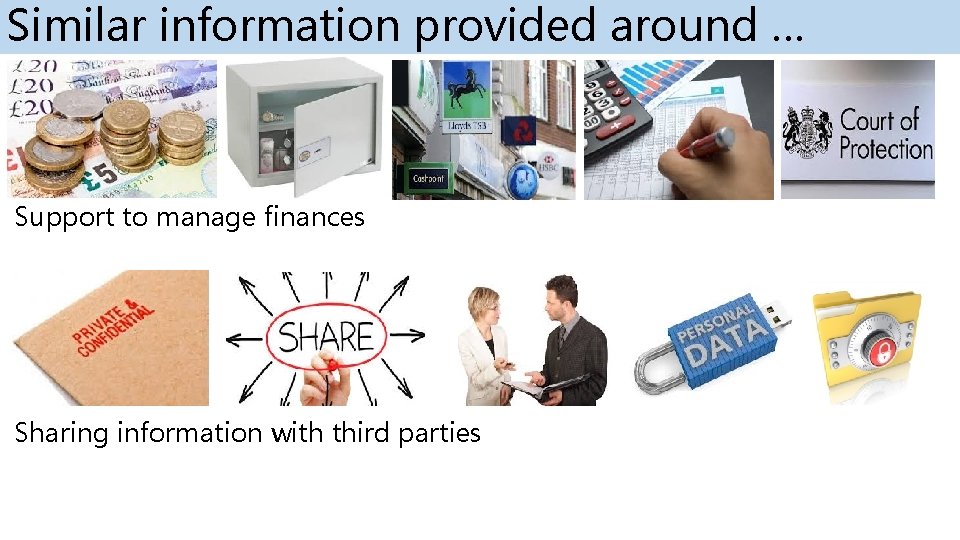
Similar information provided around … Support to manage finances Sharing information with third parties
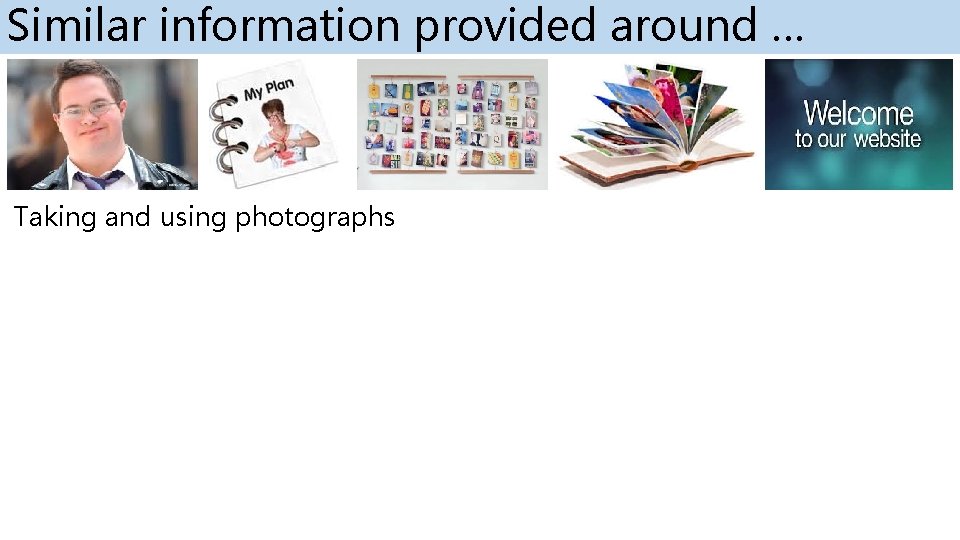
Similar information provided around … Taking and using photographs
We now have ‘topic specific’ Mental Capacity Assessments These relate to each of the areas where we provide people with information in relation to the care and treatment we provide. This is in recognition that capacity is ‘issue specific’ – they are a clear way of enabling us to view it as such
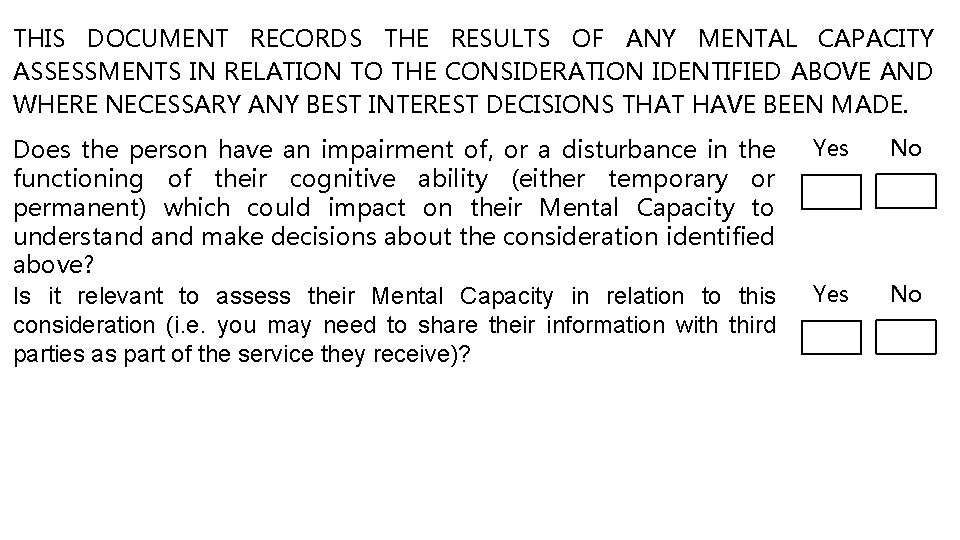
[SERVICE NAME] RECORD OF MENTAL CAPACITY ASSESSMENTS AND BEST INTEREST DECISIONS Name Date of Birth Date service started Assessment of Mental Capacity in relation to: Consideration - The person’s ability to understand when their personal information may need to be shared and to agree to this.
THIS DOCUMENT RECORDS THE RESULTS OF ANY MENTAL CAPACITY ASSESSMENTS IN RELATION TO THE CONSIDERATION IDENTIFIED ABOVE AND WHERE NECESSARY ANY BEST INTEREST DECISIONS THAT HAVE BEEN MADE. Does the person have an impairment of, or a disturbance in the functioning of their cognitive ability (either temporary or permanent) which could impact on their Mental Capacity to understand make decisions about the consideration identified above? Is it relevant to assess their Mental Capacity in relation to this consideration (i. e. you may need to share their information with third parties as part of the service they receive)? Yes No
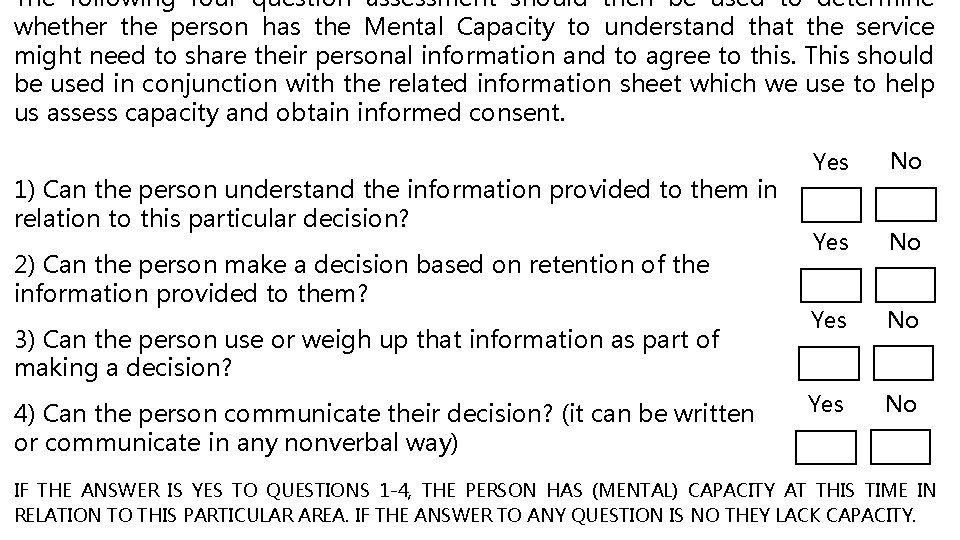
The following four question assessment should then be used to determine whether the person has the Mental Capacity to understand that the service might need to share their personal information and to agree to this. This should be used in conjunction with the related information sheet which we use to help us assess capacity and obtain informed consent. 1) Can the person understand the information provided to them in relation to this particular decision? 2) Can the person make a decision based on retention of the information provided to them? 3) Can the person use or weigh up that information as part of making a decision? 4) Can the person communicate their decision? (it can be written or communicate in any nonverbal way) Yes No IF THE ANSWER IS YES TO QUESTIONS 1 -4, THE PERSON HAS (MENTAL) CAPACITY AT THIS TIME IN RELATION TO THIS PARTICULAR AREA. IF THE ANSWER TO ANY QUESTION IS NO THEY LACK CAPACITY.
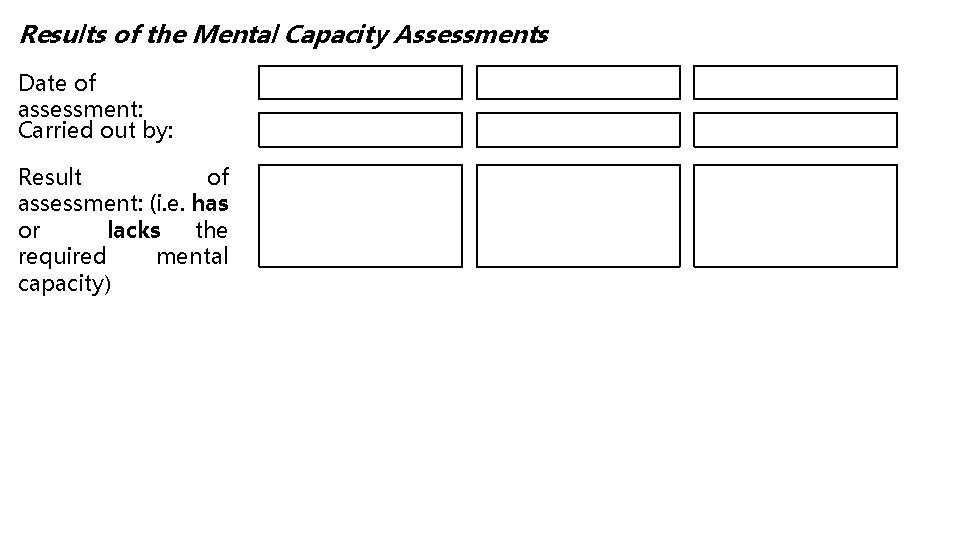
Results of the Mental Capacity Assessments Date of assessment: Carried out by: Result of assessment: (i. e. has or lacks the required mental capacity)
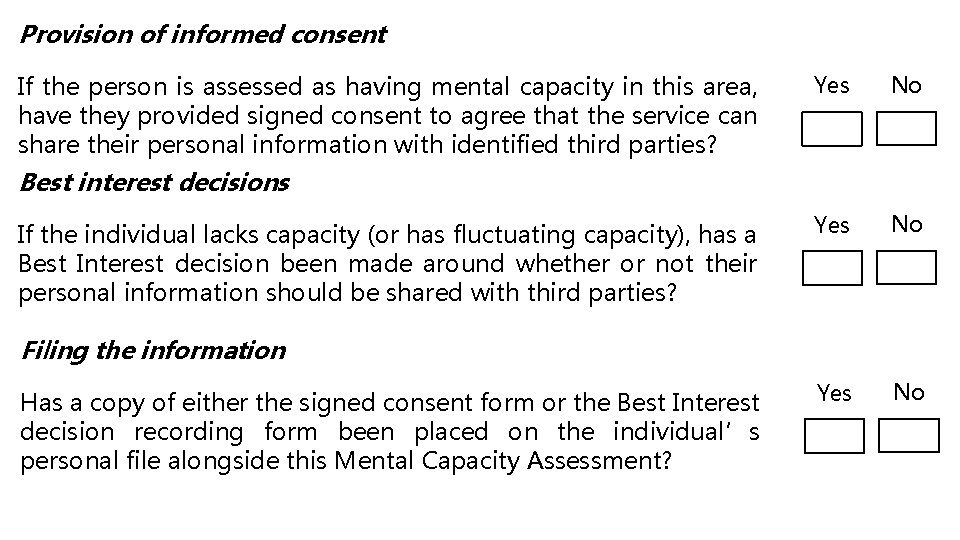
Provision of informed consent If the person is assessed as having mental capacity in this area, have they provided signed consent to agree that the service can share their personal information with identified third parties? Yes No Best interest decisions If the individual lacks capacity (or has fluctuating capacity), has a Best Interest decision been made around whether or not their personal information should be shared with third parties? Filing the information Has a copy of either the signed consent form or the Best Interest decision recording form been placed on the individual’s personal file alongside this Mental Capacity Assessment?
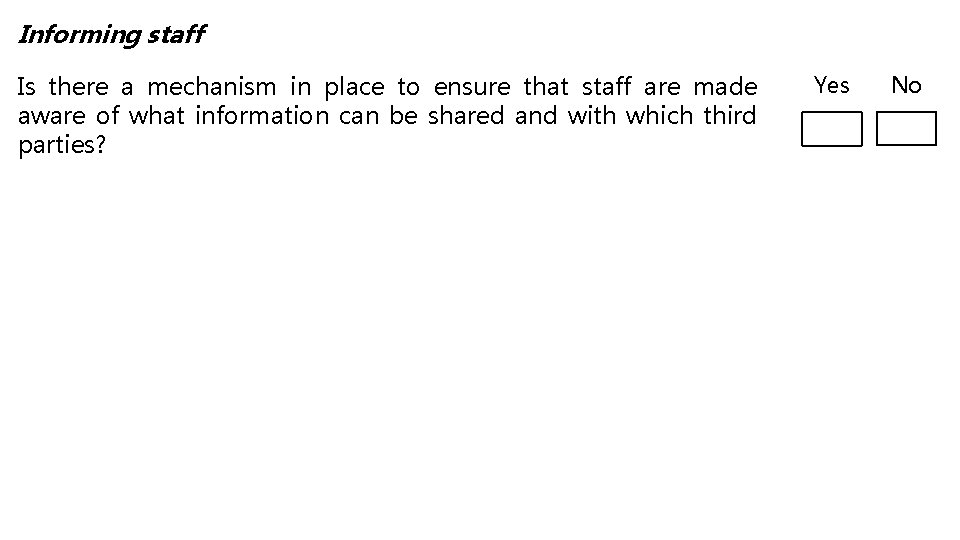
Informing staff Is there a mechanism in place to ensure that staff are made aware of what information can be shared and with which third parties? Yes No
If the person has the requisite mental capacity we need to obtain their ‘informed’ consent
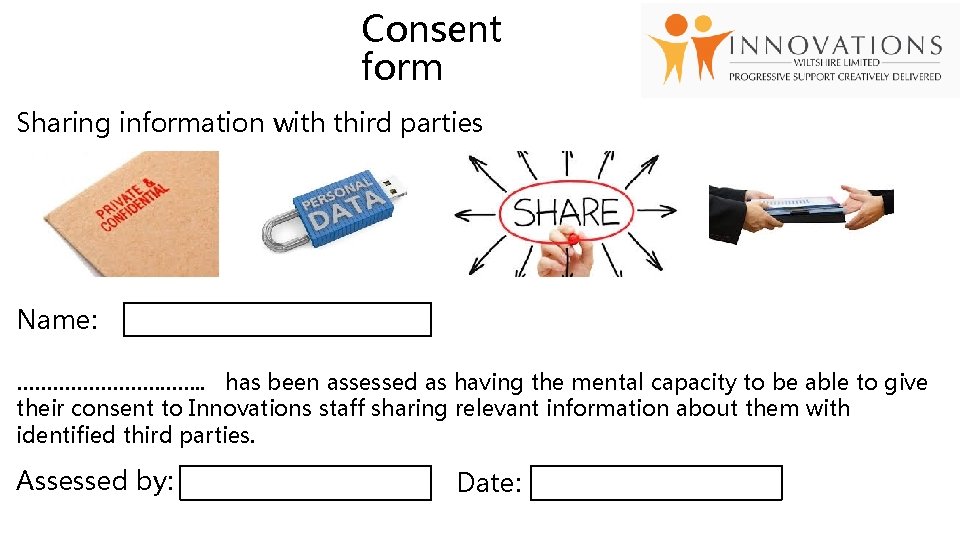
Consent form Sharing information with third parties Name: ……………. . has been assessed as having the mental capacity to be able to give their consent to Innovations staff sharing relevant information about them with identified third parties. Assessed by: Date:
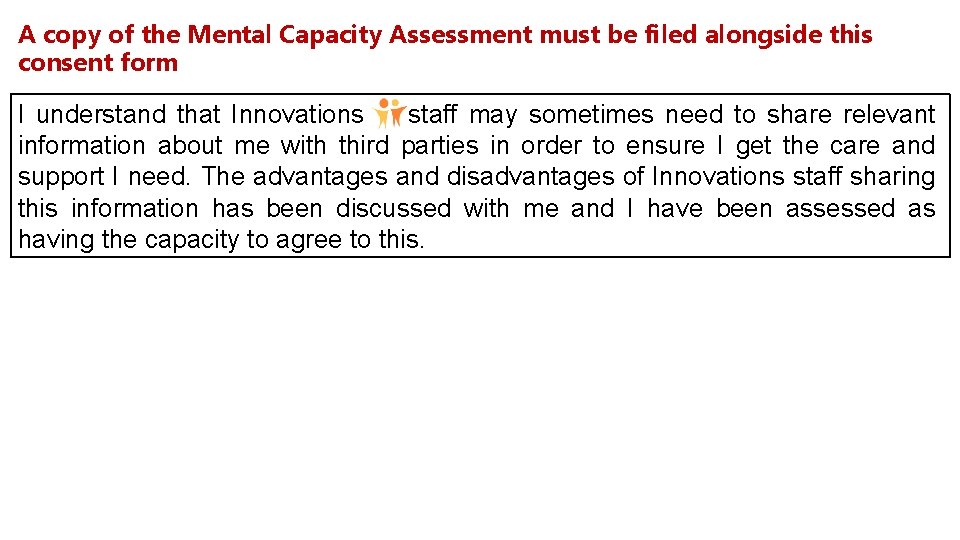
A copy of the Mental Capacity Assessment must be filed alongside this consent form I understand that Innovations staff may sometimes need to share relevant information about me with third parties in order to ensure I get the care and support I need. The advantages and disadvantages of Innovations staff sharing this information has been discussed with me and I have been assessed as having the capacity to agree to this.
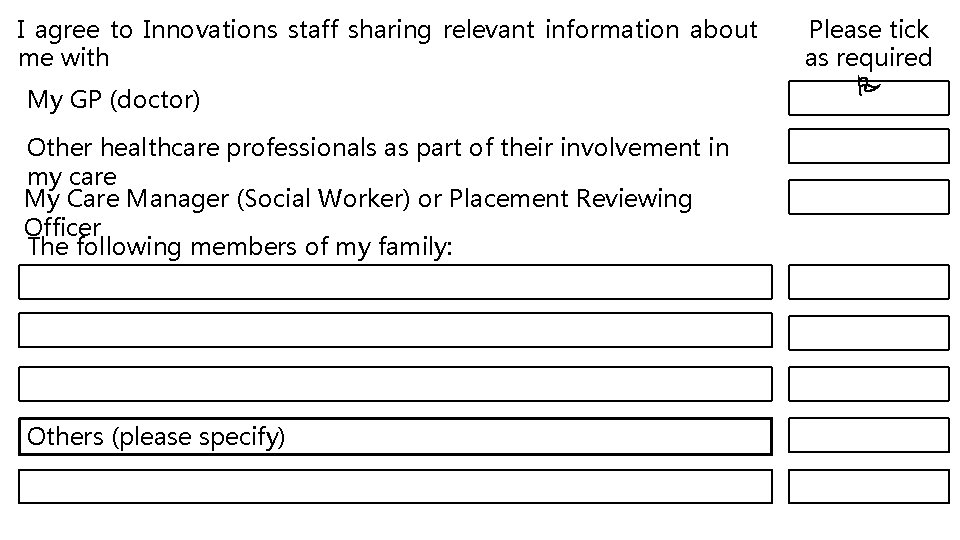
I agree to Innovations staff sharing relevant information about me with My GP (doctor) Other healthcare professionals as part of their involvement in my care My Care Manager (Social Worker) or Placement Reviewing Officer The following members of my family: Others (please specify) Please tick as required
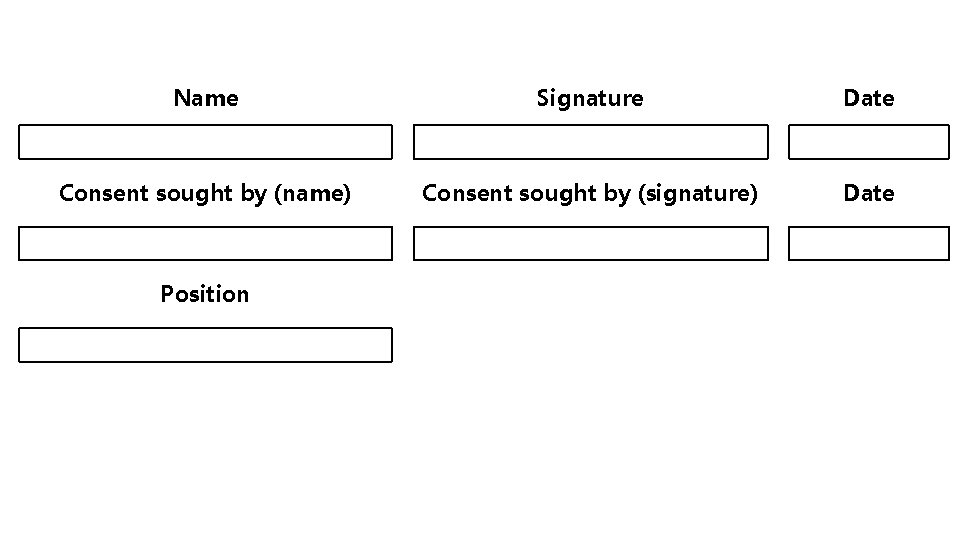
Name Signature Date Consent sought by (name) Consent sought by (signature) Date Position
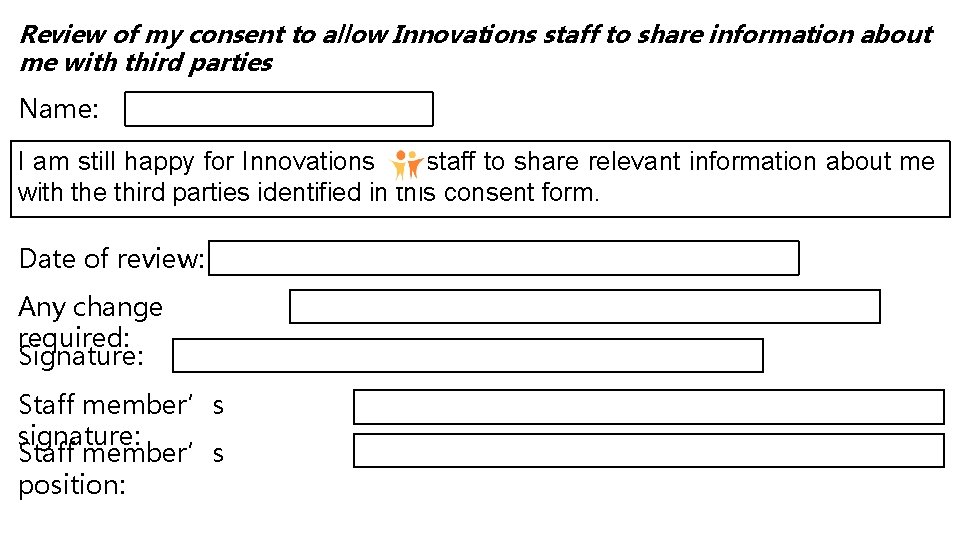
Review of my consent to allow Innovations staff to share information about me with third parties Name: I am still happy for Innovations staff to share relevant information about me with the third parties identified in this consent form. Date of review: Any change required: Signature: Staff member’s signature: Staff member’s position:
If the person lacks the requisite mental capacity we need to establish what would be in their Best Interests and record the decision
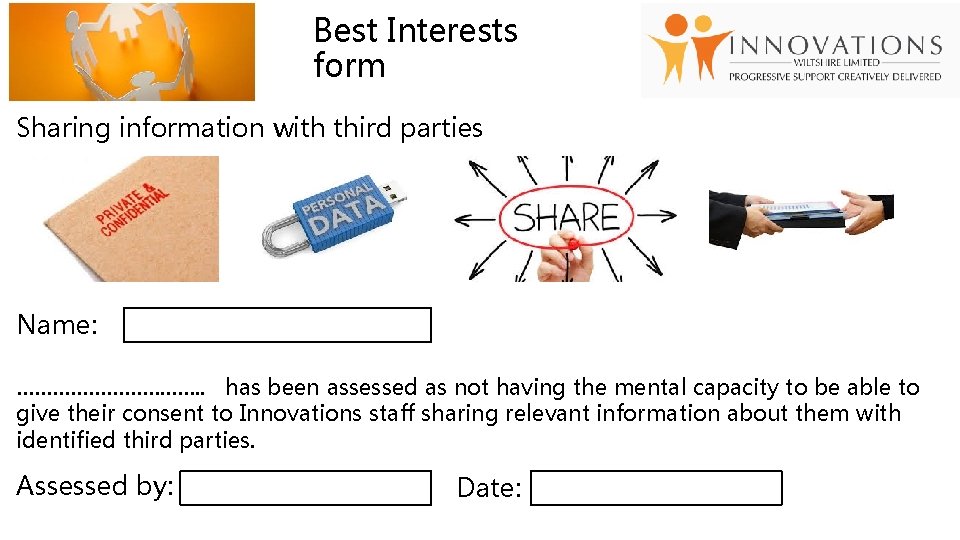
Best Interests form Sharing information with third parties Name: ……………. . has been assessed as not having the mental capacity to be able to give their consent to Innovations staff sharing relevant information about them with identified third parties. Assessed by: Date:
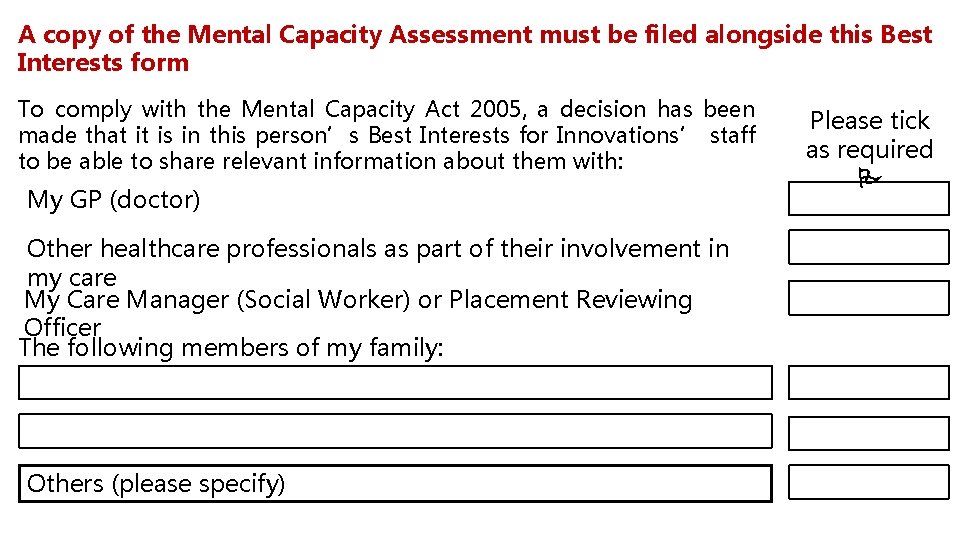
A copy of the Mental Capacity Assessment must be filed alongside this Best Interests form To comply with the Mental Capacity Act 2005, a decision has been made that it is in this person’s Best Interests for Innovations’ staff to be able to share relevant information about them with: My GP (doctor) Other healthcare professionals as part of their involvement in my care My Care Manager (Social Worker) or Placement Reviewing Officer The following members of my family: Others (please specify) Please tick as required
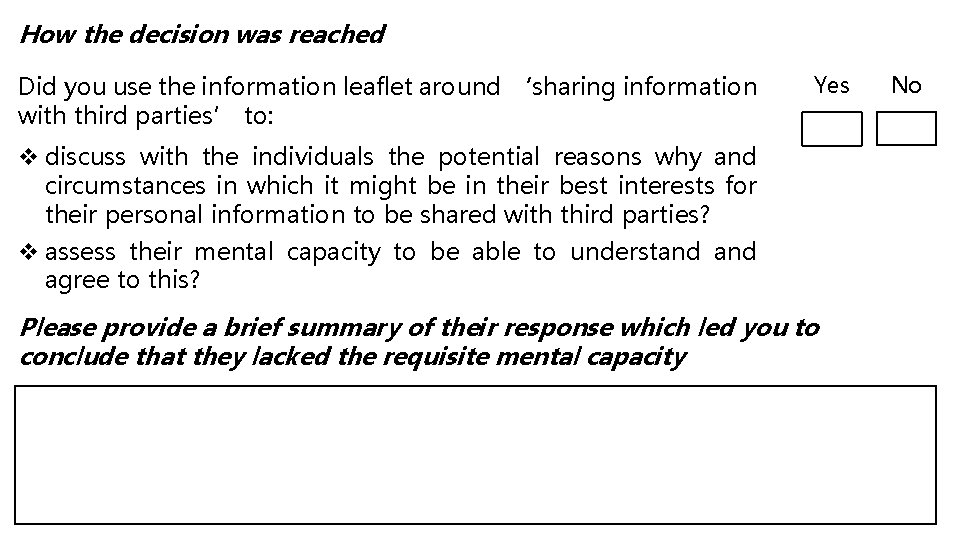
How the decision was reached Did you use the information leaflet around ‘sharing information with third parties’ to: Yes v discuss with the individuals the potential reasons why and circumstances in which it might be in their best interests for their personal information to be shared with third parties? v assess their mental capacity to be able to understand agree to this? Please provide a brief summary of their response which led you to conclude that they lacked the requisite mental capacity No
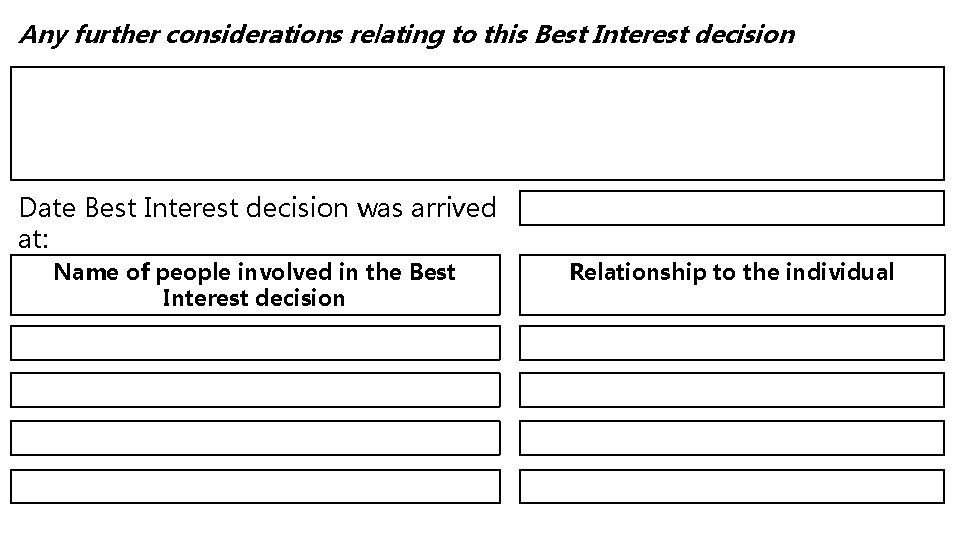
Any further considerations relating to this Best Interest decision Date Best Interest decision was arrived at: Name of people involved in the Best Interest decision Relationship to the individual
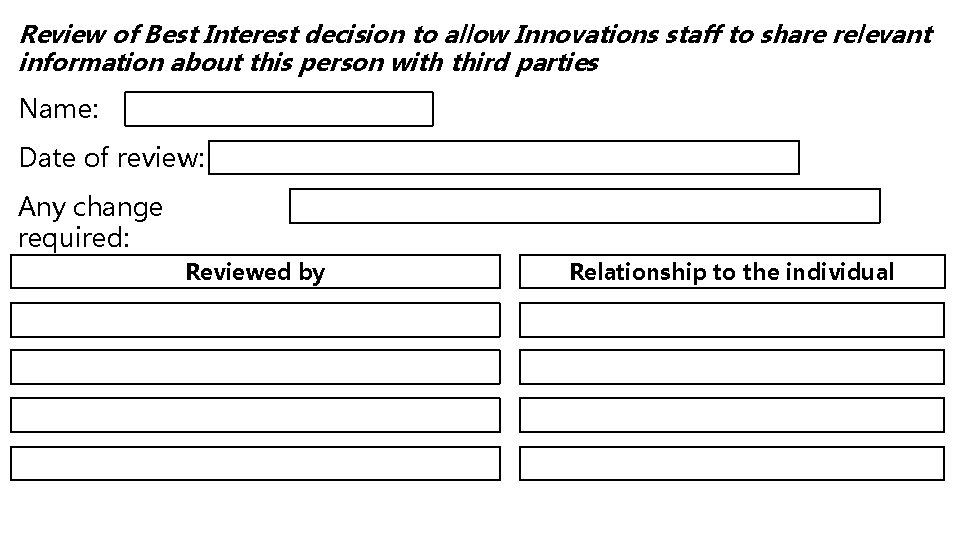
Review of Best Interest decision to allow Innovations staff to share relevant information about this person with third parties Name: Date of review: Any change required: Reviewed by Relationship to the individual
Lets do lunch