
CardiovascularCirculatory System 2015 2016 Ms Mc Cabe WHAT
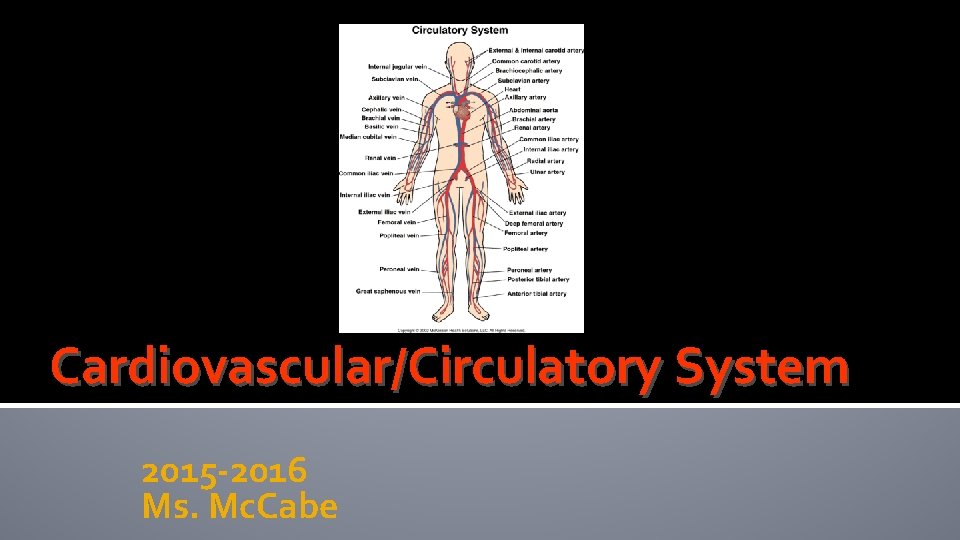
Cardiovascular/Circulatory System 2015 -2016 Ms. Mc. Cabe
WHAT ARE WE LEARNING TODAY? BENCHMARK OBJECTIVE �SC. 912. L. 14. 36: � Identify and investigate the general Describe the factors affecting blood flow through the cardiovascular system. functions of the circulatory system. � Describe the structure of the heart and explain how it pumps blood through the body.
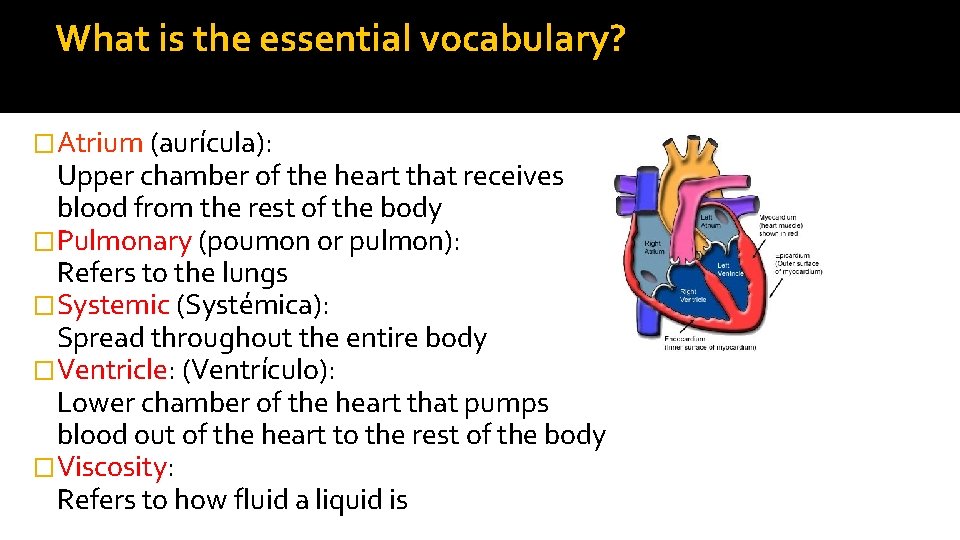
What is the essential vocabulary? �Atrium (aurícula): Upper chamber of the heart that receives blood from the rest of the body �Pulmonary (poumon or pulmon): Refers to the lungs �Systemic (Systémica): Spread throughout the entire body �Ventricle: (Ventrículo): Lower chamber of the heart that pumps blood out of the heart to the rest of the body �Viscosity: Refers to how fluid a liquid is
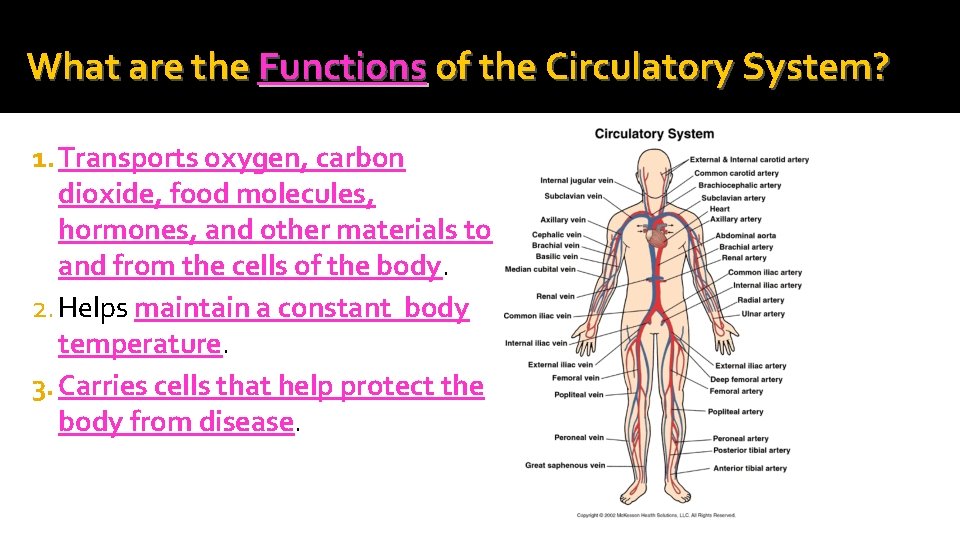
What are the Functions of the Circulatory System? 1. Transports oxygen, carbon dioxide, food molecules, hormones, and other materials to and from the cells of the body. 2. Helps maintain a constant body temperature. 3. Carries cells that help protect the body from disease.
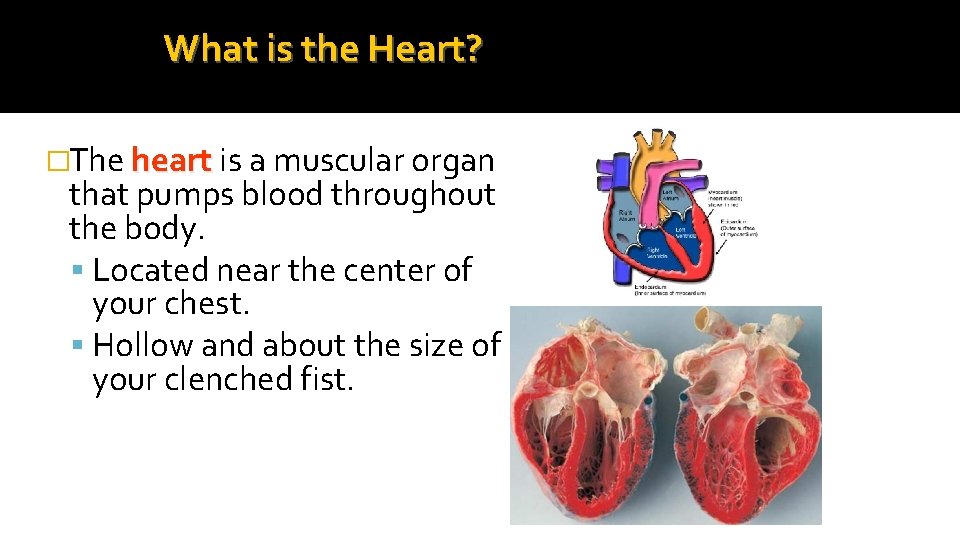
What is the Heart? �The heart is a muscular organ that pumps blood throughout the body. Located near the center of your chest. Hollow and about the size of your clenched fist.
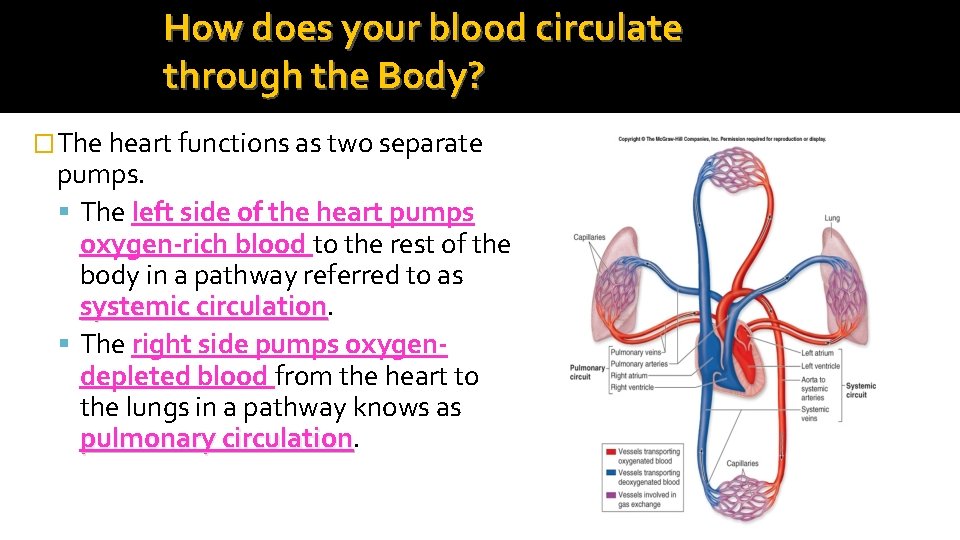
How does your blood circulate through the Body? � The heart functions as two separate pumps. The left side of the heart pumps oxygen-rich blood to the rest of the body in a pathway referred to as systemic circulation The right side pumps oxygendepleted blood from the heart to the lungs in a pathway knows as pulmonary circulation
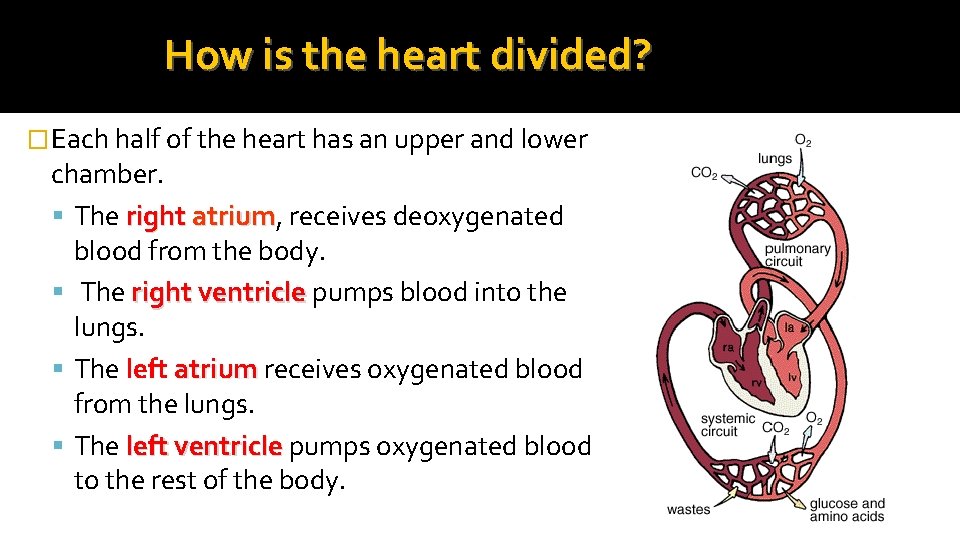
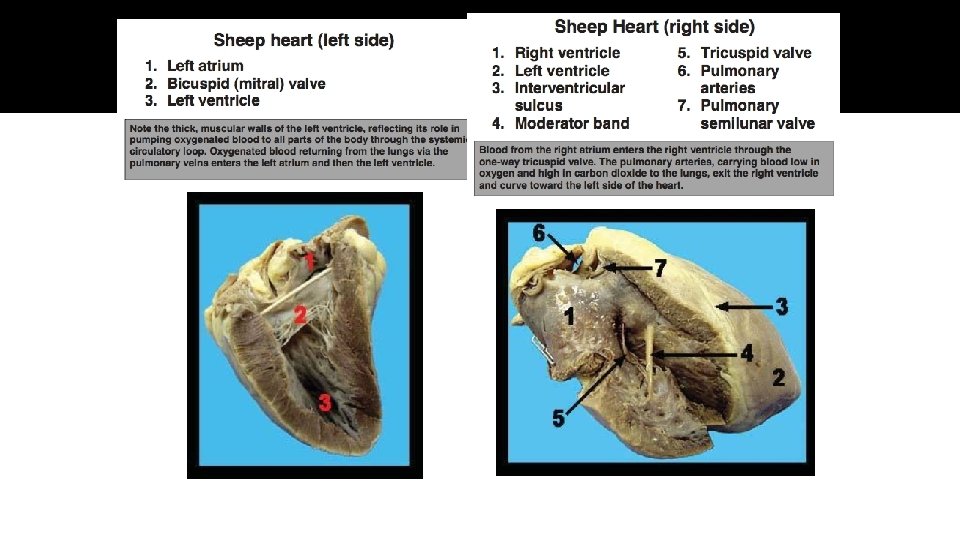
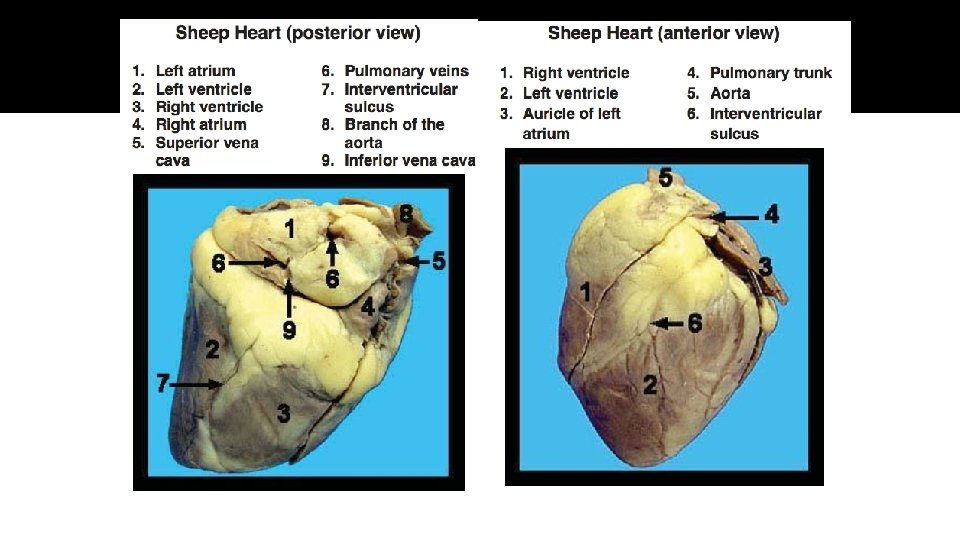
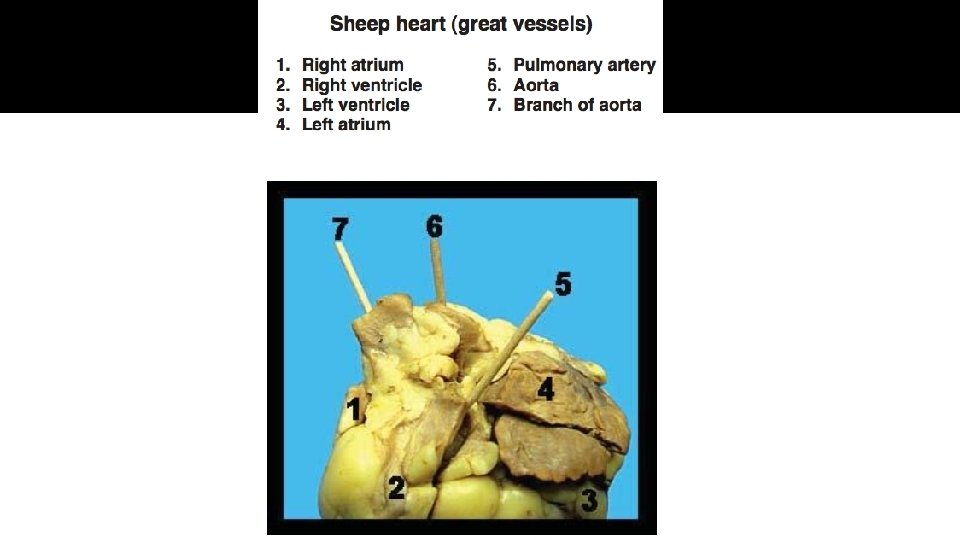
How is the heart divided? � Each half of the heart has an upper and lower chamber. The right atrium, atrium receives deoxygenated blood from the body. The right ventricle pumps blood into the lungs. The left atrium receives oxygenated blood from the lungs. The left ventricle pumps oxygenated blood to the rest of the body.
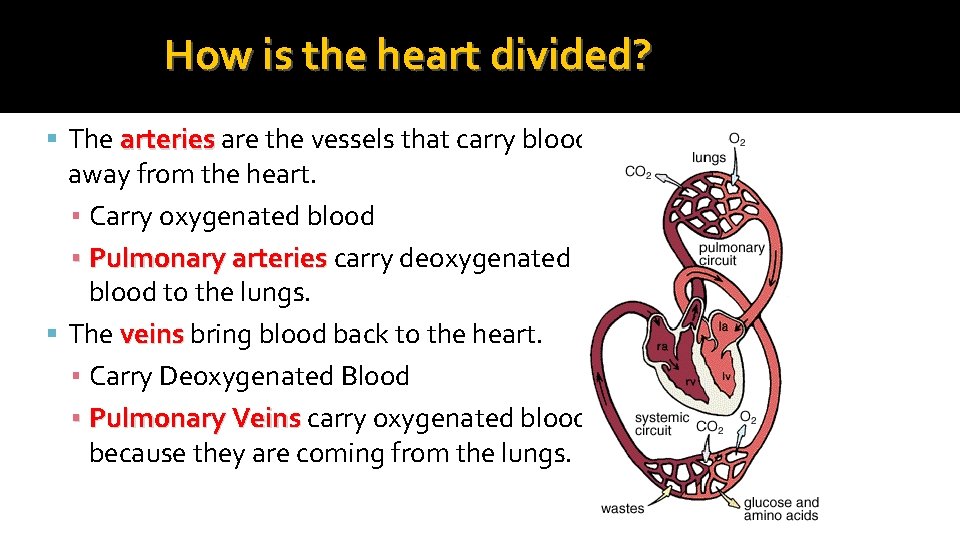
How is the heart divided? The arteries are the vessels that carry blood away from the heart. ▪ Carry oxygenated blood ▪ Pulmonary arteries carry deoxygenated blood to the lungs. The veins bring blood back to the heart. ▪ Carry Deoxygenated Blood ▪ Pulmonary Veins carry oxygenated blood because they are coming from the lungs.
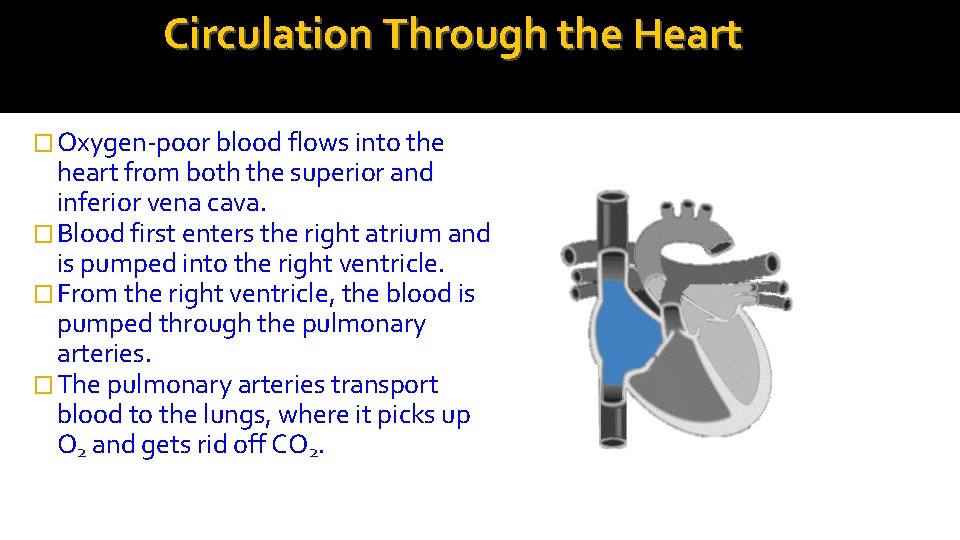
Circulation Through the Heart � Oxygen-poor blood flows into the heart from both the superior and inferior vena cava. � Blood first enters the right atrium and is pumped into the right ventricle. � From the right ventricle, the blood is pumped through the pulmonary arteries. � The pulmonary arteries transport blood to the lungs, where it picks up O 2 and gets rid off CO 2.
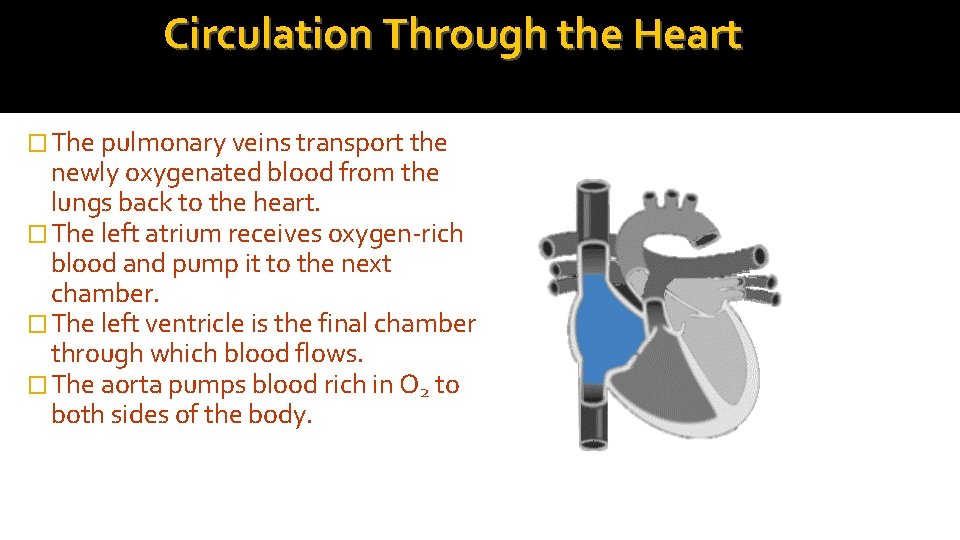
Circulation Through the Heart � The pulmonary veins transport the newly oxygenated blood from the lungs back to the heart. � The left atrium receives oxygen-rich blood and pump it to the next chamber. � The left ventricle is the final chamber through which blood flows. � The aorta pumps blood rich in O 2 to both sides of the body.
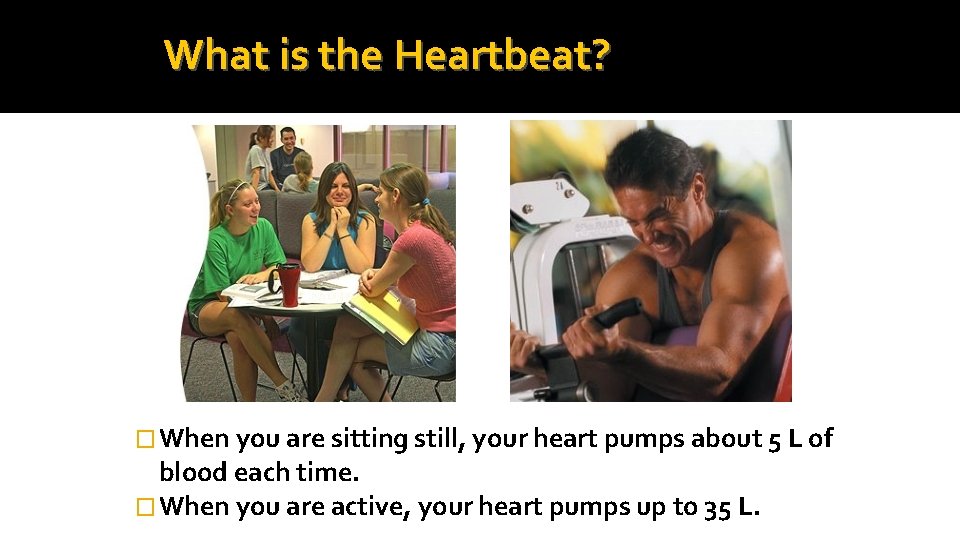
What is the Heartbeat? � When you are sitting still, your heart pumps about 5 L of blood each time. � When you are active, your heart pumps up to 35 L.
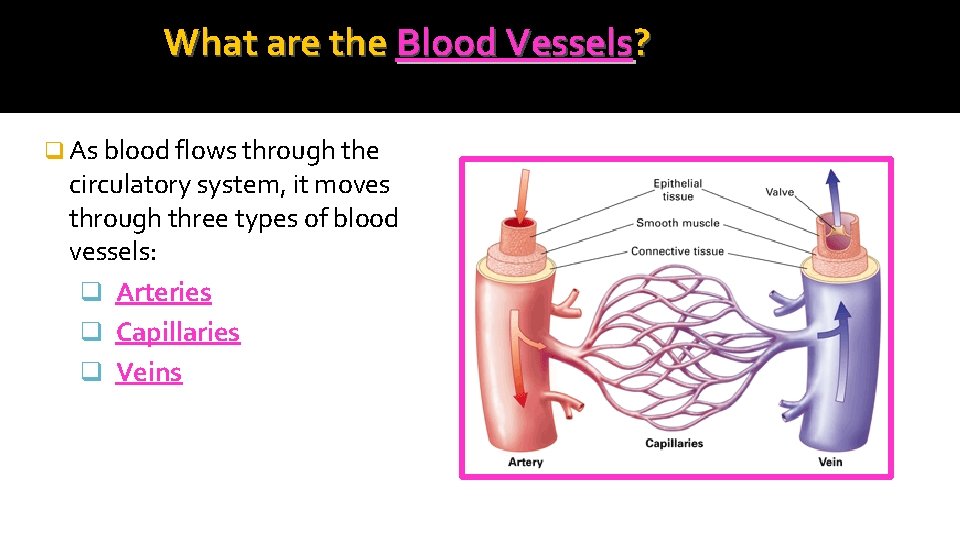
What are the Blood Vessels? q As blood flows through the circulatory system, it moves through three types of blood vessels: q Arteries q Capillaries q Veins
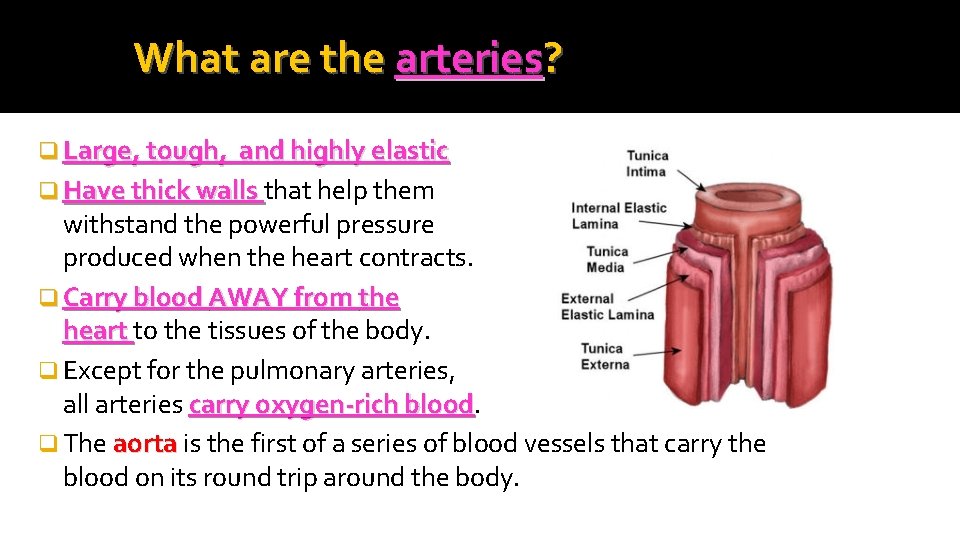
What are the arteries? q Large, tough, and highly elastic q Have thick walls that help them withstand the powerful pressure produced when the heart contracts. q Carry blood AWAY from the heart to the tissues of the body. q Except for the pulmonary arteries, all arteries carry oxygen-rich blood q The aorta is the first of a series of blood vessels that carry the blood on its round trip around the body.
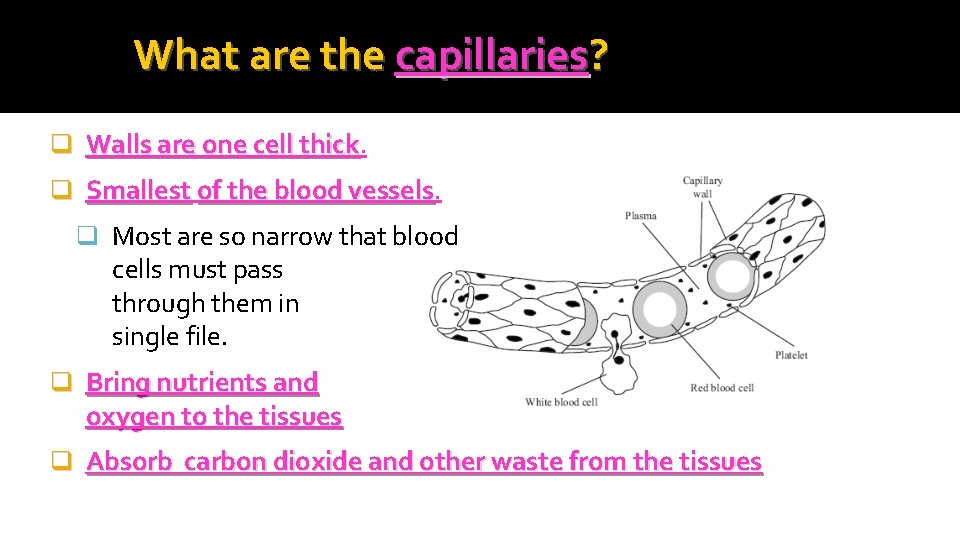
What are the capillaries? q Walls are one cell thick q Smallest of the blood vessels q Most are so narrow that blood cells must pass through them in single file. q Bring nutrients and oxygen to the tissues q Absorb carbon dioxide and other waste from the tissues
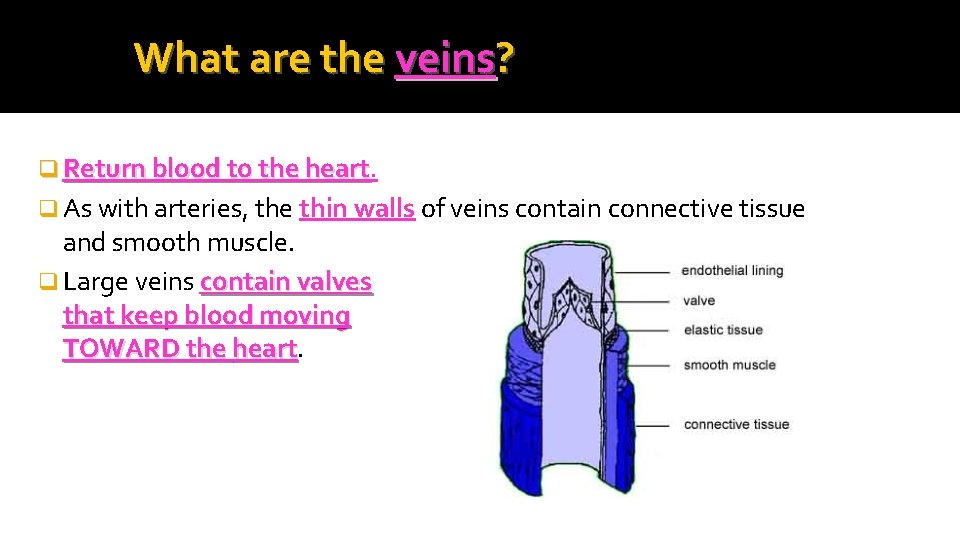
What are the veins? q Return blood to the heart q As with arteries, the thin walls of veins contain connective tissue and smooth muscle. q Large veins contain valves that keep blood moving TOWARD the heart
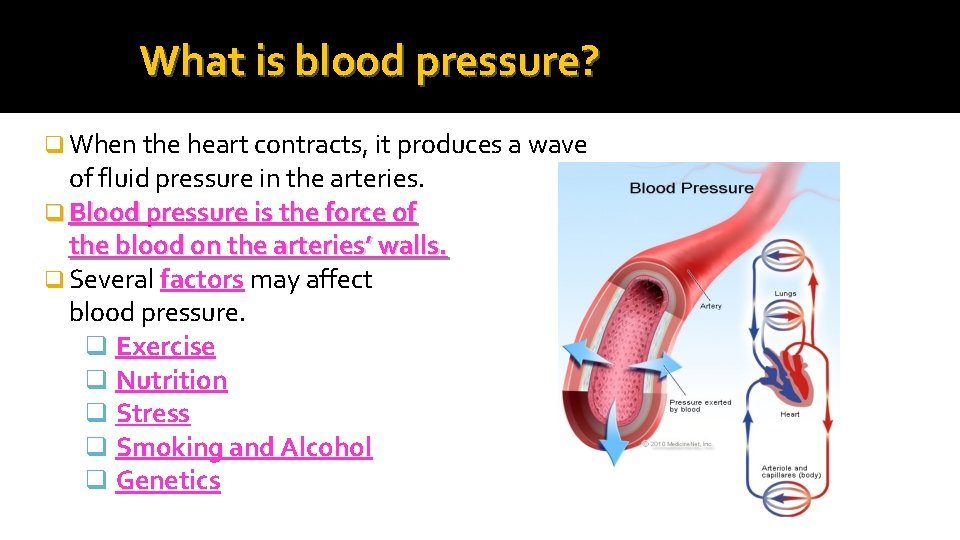
What is blood pressure? q When the heart contracts, it produces a wave of fluid pressure in the arteries. q Blood pressure is the force of the blood on the arteries’ walls. q Several factors may affect blood pressure. q Exercise q Nutrition q Stress q Smoking and Alcohol q Genetics
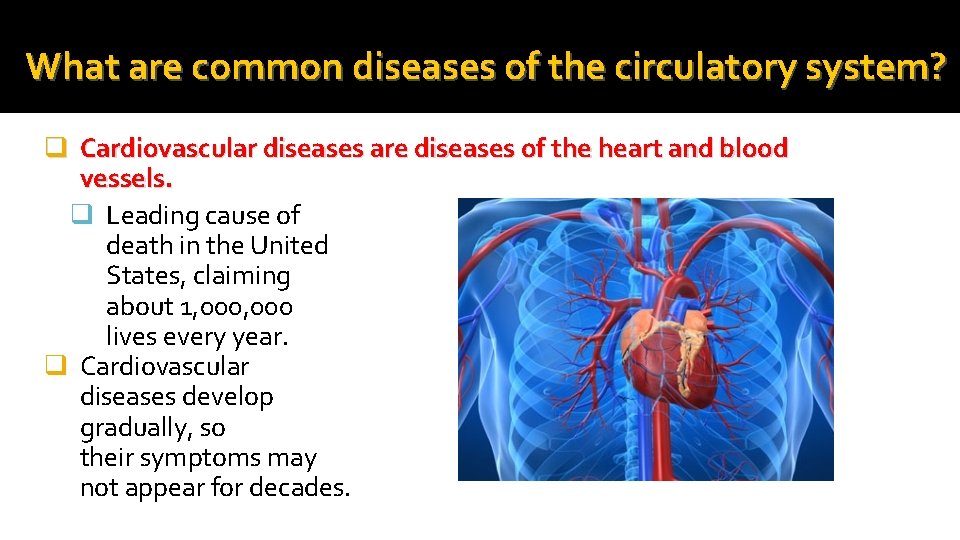
What are common diseases of the circulatory system? q Cardiovascular diseases are diseases of the heart and blood vessels. q Leading cause of death in the United States, claiming about 1, 000 lives every year. q Cardiovascular diseases develop gradually, so their symptoms may not appear for decades.
What are common diseases of the circulatory system? q High blood pressure, or hypertension, hypertension forces the heart to work harder, which may weaken or damage the heart muscle and blood vessels. q The most common arterial disease, and the one which is most often a contributory cause of death, particularly in old people, is arteriosclerosis, arteriosclerosis known popularly as hardening of the arteries. q The hardening usually is preceded by atherosclerosis, atherosclerosis an accumulation of fatty deposits, or plaque, on the inner lining of the arterial wall. q The deposits reduce the normal flow of the blood through the artery. q One of the substances associated with atherosclerosis is cholesterol.
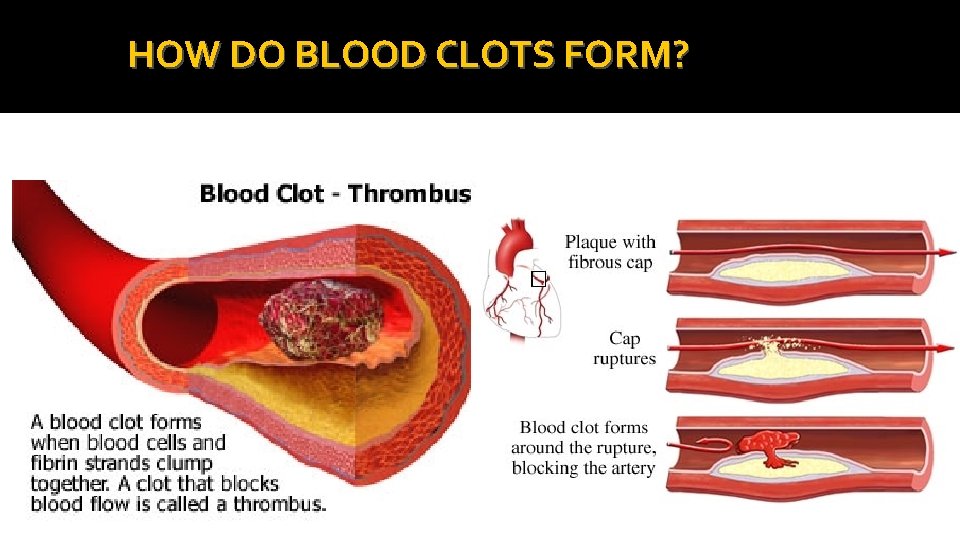
HOW DO BLOOD CLOTS FORM?
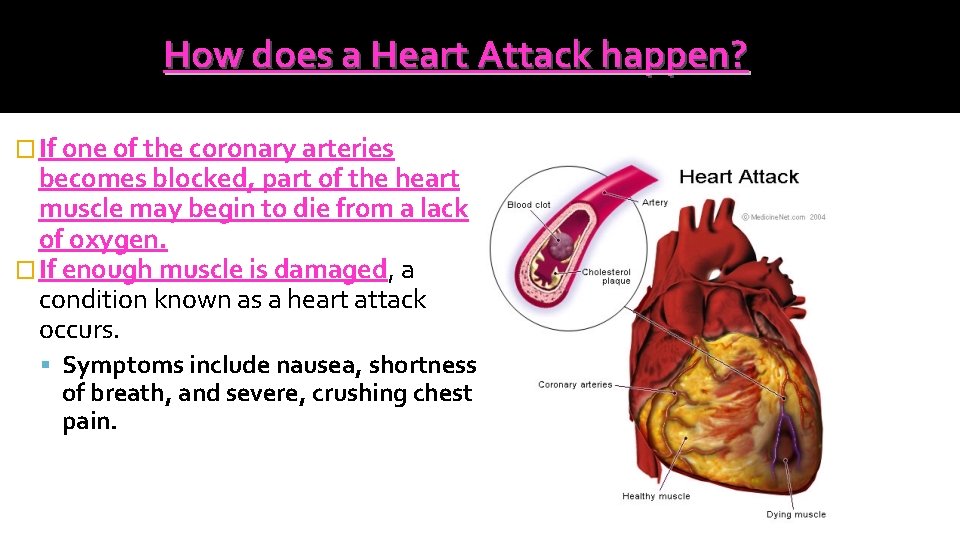
How does a Heart Attack happen? � If one of the coronary arteries becomes blocked, part of the heart muscle may begin to die from a lack of oxygen. � If enough muscle is damaged, a condition known as a heart attack occurs. Symptoms include nausea, shortness of breath, and severe, crushing chest pain.
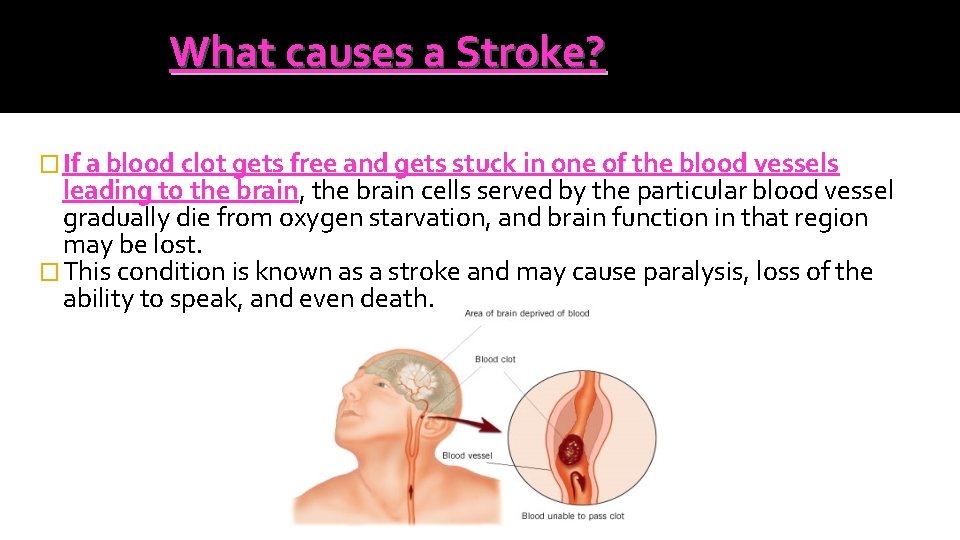
What causes a Stroke? � If a blood clot gets free and gets stuck in one of the blood vessels leading to the brain, the brain cells served by the particular blood vessel gradually die from oxygen starvation, and brain function in that region may be lost. � This condition is known as a stroke and may cause paralysis, loss of the ability to speak, and even death.
Collaborative Activity: Heart Diagram Get a Heart Diagram. Cut in half. With one partner, locate the structure and place the function with it using pg. 949 in your book. 4. Check answers & color. 5. Glue/tape into your blank page for the body book 1. 2. 3.
Homework 1. 2. 3. Get a Homework: Factors Affecting Blood Flow WS. Complete with Chapter 33 and other internet sources. Due next class.
- Slides: 26