
Cardiovascular System THREE TYPES OF CIRCULATION 1 Coronary
- Slides: 14
Cardiovascular System
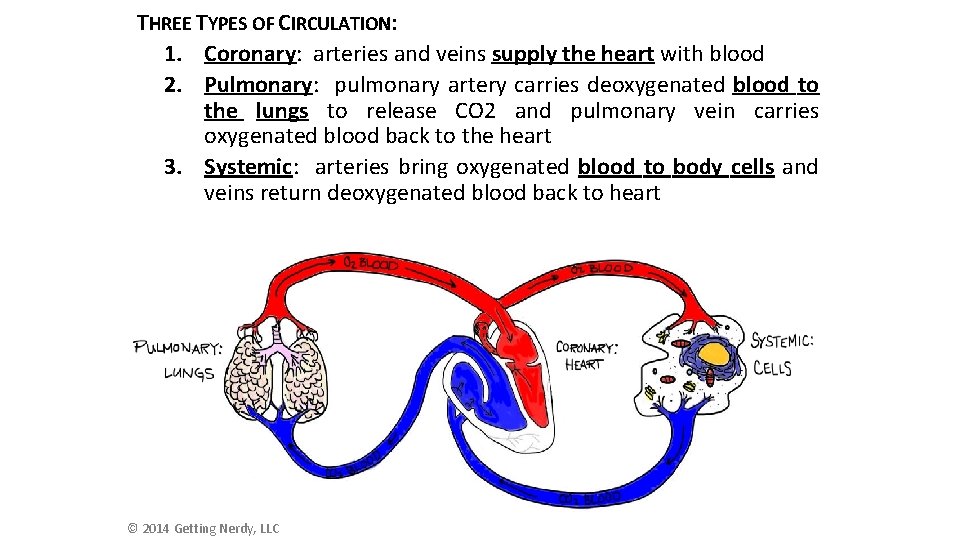
THREE TYPES OF CIRCULATION: 1. Coronary: arteries and veins supply the heart with blood 2. Pulmonary: pulmonary artery carries deoxygenated blood to the lungs to release CO 2 and pulmonary vein carries oxygenated blood back to the heart 3. Systemic: arteries bring oxygenated blood to body cells and veins return deoxygenated blood back to heart © 2014 Getting Nerdy, LLC
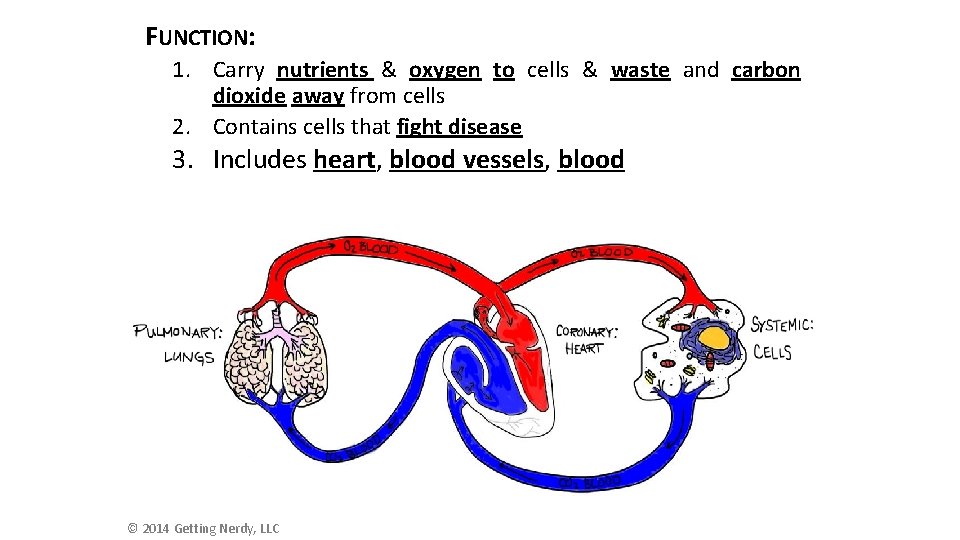
FUNCTION: 1. Carry nutrients & oxygen to cells & waste and carbon dioxide away from cells 2. Contains cells that fight disease 3. Includes heart, blood vessels, blood © 2014 Getting Nerdy, LLC
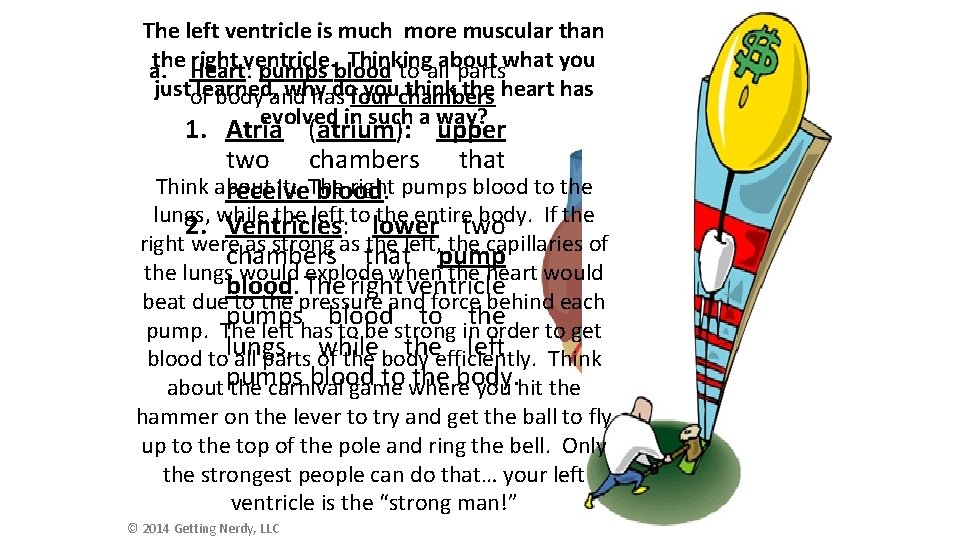
The left ventricle is much more muscular than the Heart: right ventricle. Thinking a. pumps blood to allabout partswhat you justof learned, why dofour youchambers think the heart has body and has evolved in such a way? 1. Atria (atrium): upper two chambers that Think about it: The right pumps blood to the receive blood. lungs, the left to lower the entiretwo body. If the 2. while Ventricles: right were as strong as the left, the capillaries of chambers that pump the lungs would explode when the heart would blood. The right ventricle beat due to the pressure and force behind each pumps blood to the pump. The left has to be strong in order to get while theefficiently. left blood tolungs, all parts of the body Think blood to where the body. about pumps the carnival game you hit the hammer on the lever to try and get the ball to fly up to the top of the pole and ring the bell. Only the strongest people can do that… your left ventricle is the “strong man!” © 2014 Getting Nerdy, LLC
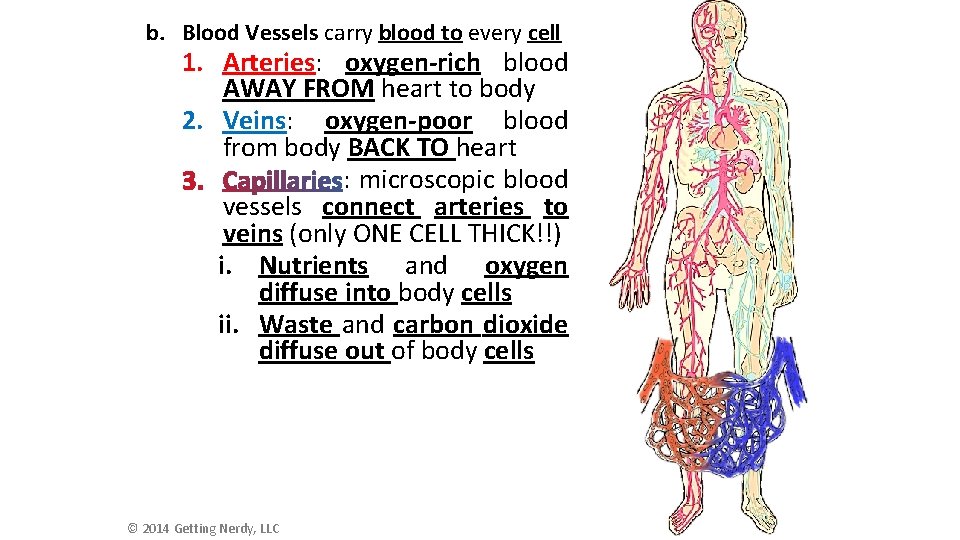
b. Blood Vessels carry blood to every cell 1. Arteries: oxygen-rich blood AWAY FROM heart to body 2. Veins: oxygen-poor blood from body BACK TO heart : microscopic blood vessels connect arteries to veins (only ONE CELL THICK!!) i. Nutrients and oxygen diffuse into body cells ii. Waste and carbon dioxide diffuse out of body cells © 2014 Getting Nerdy, LLC
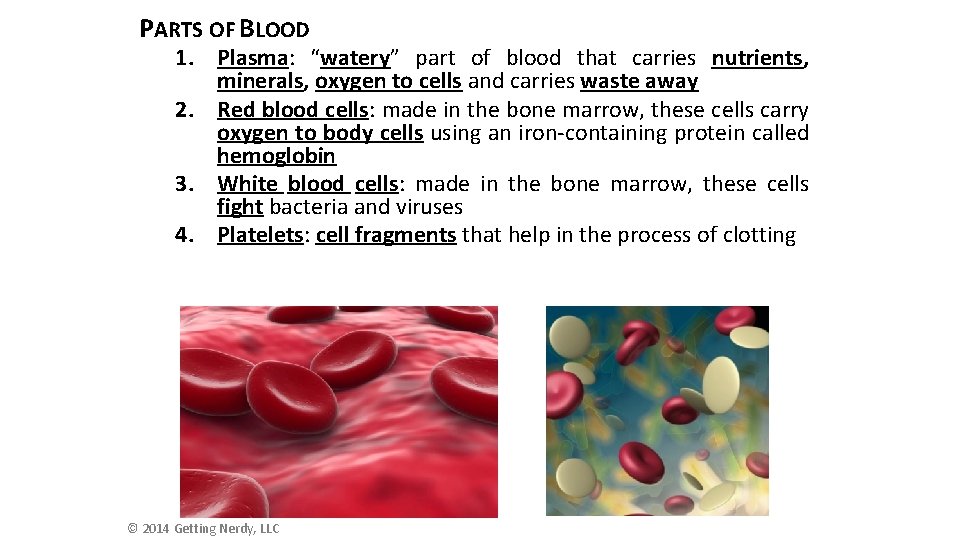
PARTS OF BLOOD 1. Plasma: “watery” part of blood that carries nutrients, minerals, oxygen to cells and carries waste away 2. Red blood cells: made in the bone marrow, these cells carry oxygen to body cells using an iron-containing protein called hemoglobin 3. White blood cells: made in the bone marrow, these cells fight bacteria and viruses 4. Platelets: cell fragments that help in the process of clotting © 2014 Getting Nerdy, LLC
Respiratory System
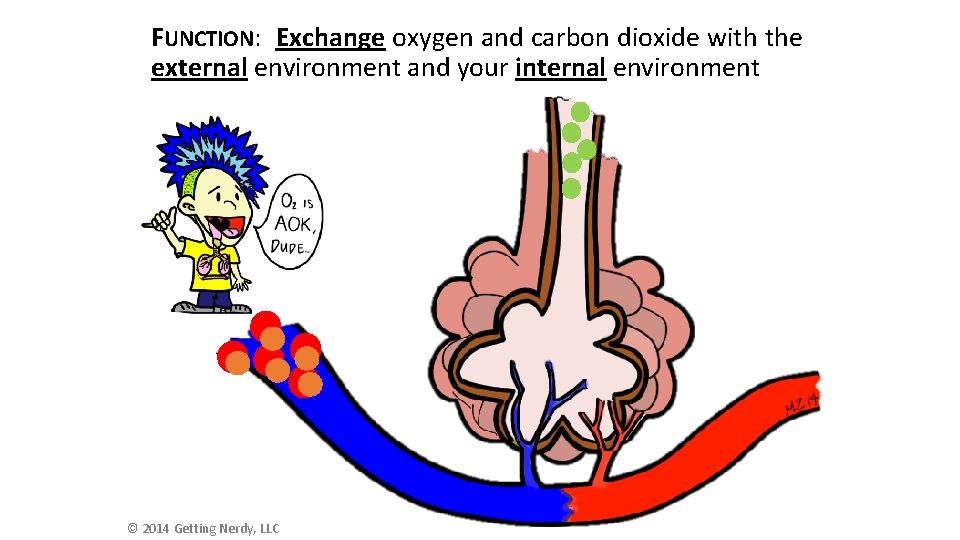
FUNCTION: Exchange oxygen and carbon dioxide with the external environment and your internal environment © 2014 Getting Nerdy, LLC
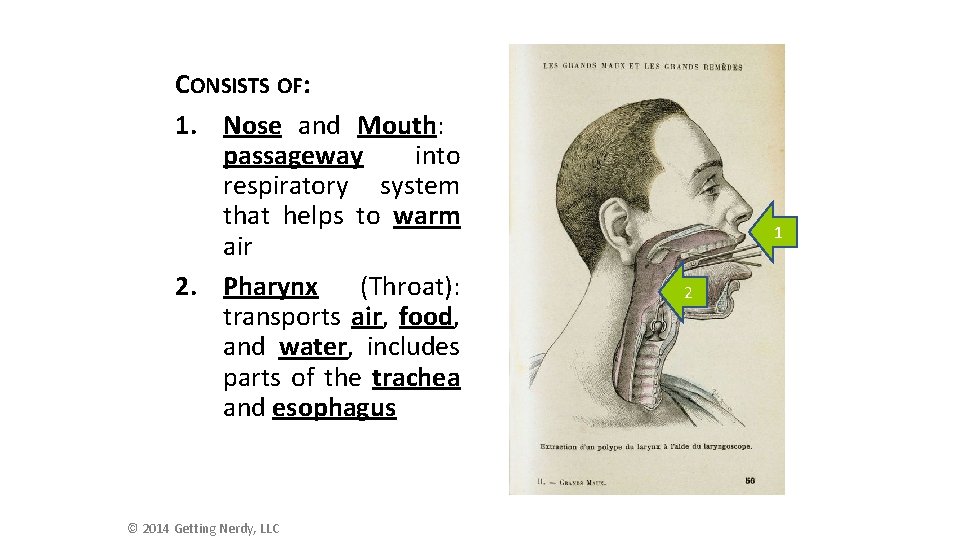
CONSISTS OF: 1. Nose and Mouth: passageway into respiratory system that helps to warm air 2. Pharynx (Throat): transports air, food, and water, includes parts of the trachea and esophagus © 2014 Getting Nerdy, LLC 1 2
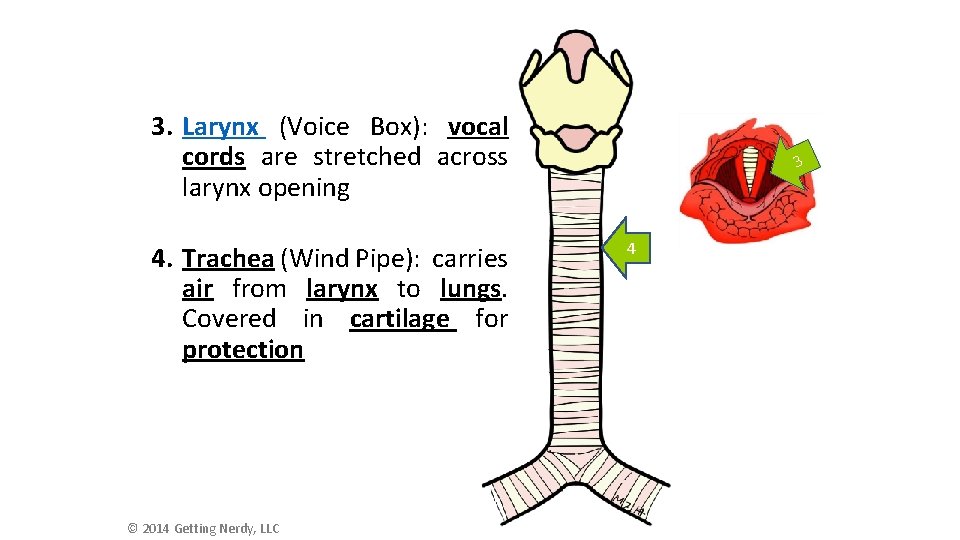
3. Larynx (Voice Box): vocal cords are stretched across larynx opening 4. Trachea (Wind Pipe): carries air from larynx to lungs. Covered in cartilage for protection © 2014 Getting Nerdy, LLC 3 4
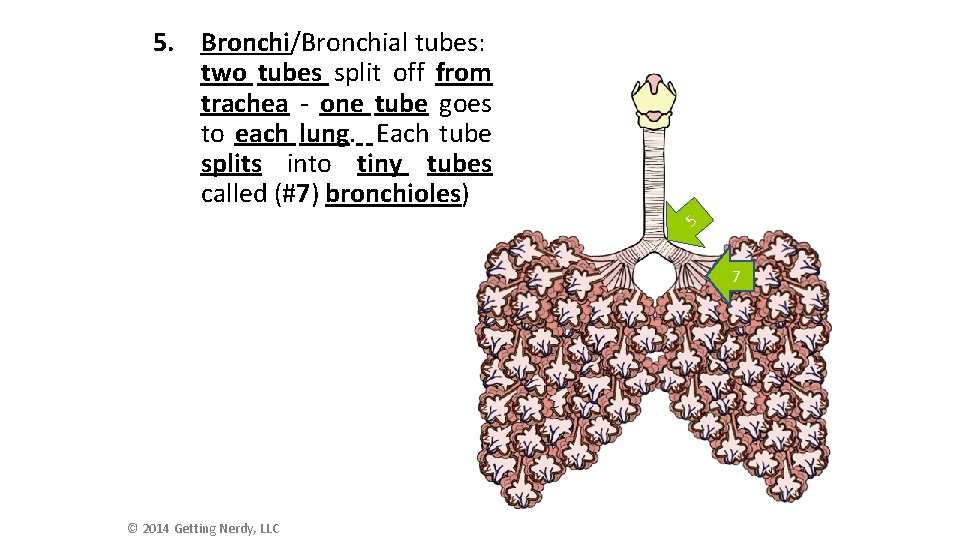
5. Bronchi/Bronchial tubes: two tubes split off from trachea - one tube goes to each lung. Each tube splits into tiny tubes called (#7) bronchioles) 5 7 © 2014 Getting Nerdy, LLC
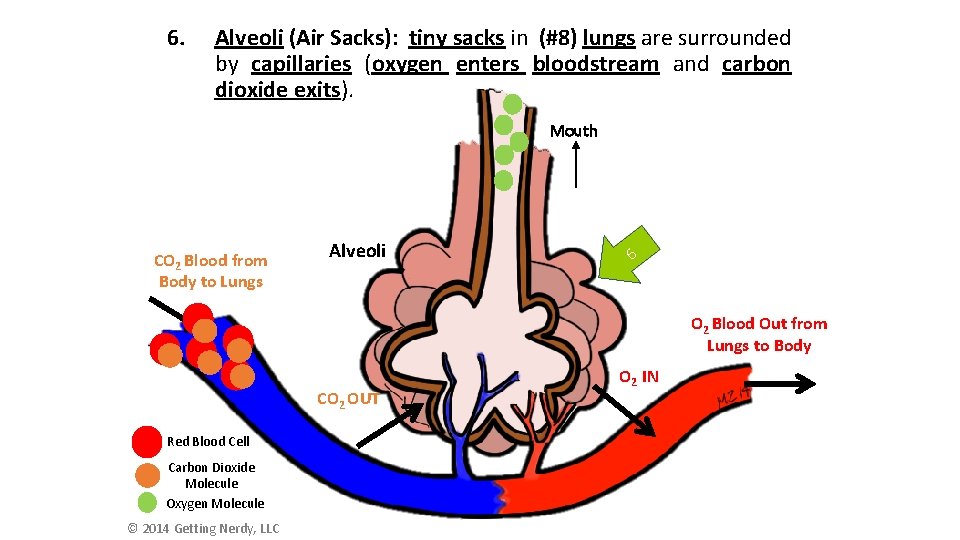
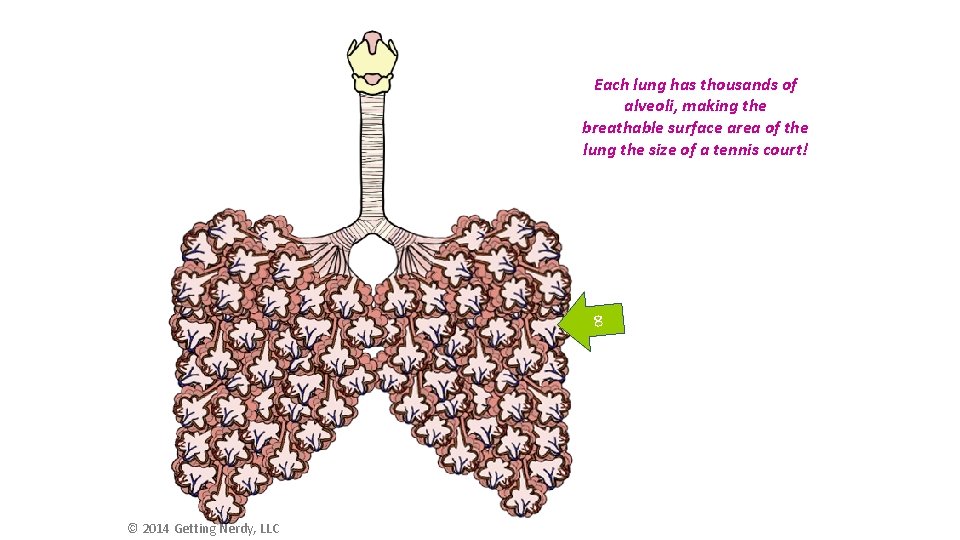
6. Alveoli (Air Sacks): tiny sacks in (#8) lungs are surrounded by capillaries (oxygen enters bloodstream and carbon dioxide exits). Mouth CO 2 Blood from Body to Lungs Alveoli 6 O 2 Blood Out from Lungs to Body CO 2 OUT Red Blood Cell Carbon Dioxide Molecule Oxygen Molecule © 2014 Getting Nerdy, LLC O 2 IN
Each lung has thousands of alveoli, making the breathable surface area of the lung the size of a tennis court! 8 © 2014 Getting Nerdy, LLC
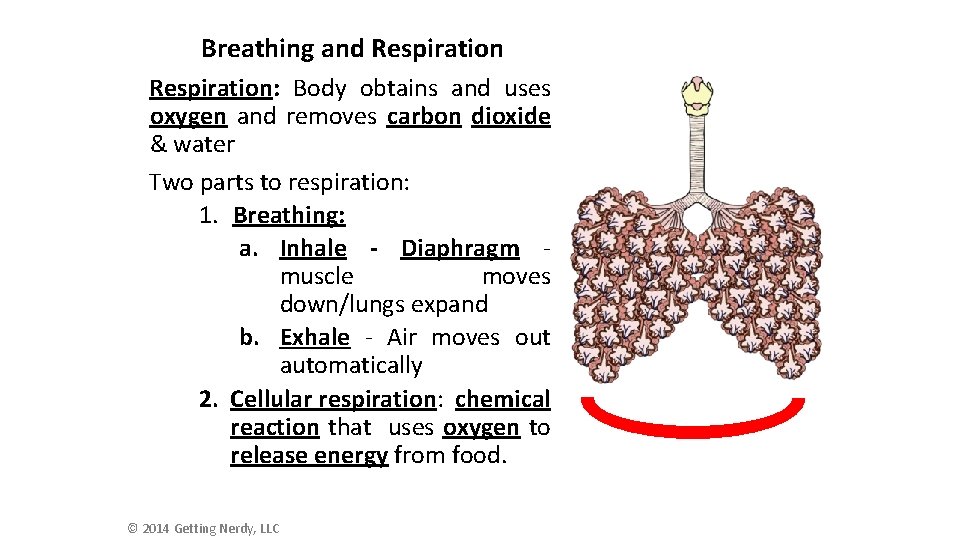
Breathing and Respiration: Body obtains and uses oxygen and removes carbon dioxide & water Two parts to respiration: 1. Breathing: a. Inhale - Diaphragm muscle moves down/lungs expand b. Exhale - Air moves out automatically 2. Cellular respiration: chemical reaction that uses oxygen to release energy from food. © 2014 Getting Nerdy, LLC