
Cardiovascular System The Integrated System for Blood Pressure
Cardiovascular System: The Integrated System for Blood Pressure Regulation Prepared by iqra ayub 1
Kidney Facts n n ~50 gallons of blood pass through the 2 kidneys every day ~1. 3 quarts of urine produced from the 50 gallons Kidneys about the size of a computer mouse Several important functions including role in maintaining BP 2

Objectives n n Compare and contrast the integrated system of both short-term and longterm (including kidney involvement) regulation of arterial blood pressure Compare and contrast the effects of various physiologic stressors on the integrated regulation of the cardiovascular system 3
Objectives (cont. ) n n Describe components in measuring cardiac output Describe factors that contribute to the homeostatic disruption of normal circulatory function 4
What We Already Know n Rapidly Acting Arterial Pressure Control Mechanisms n n SNS: effect on total peripheral vascular resistance and capacitance and cardiac pump Shift of fluid through the capillary walls 5
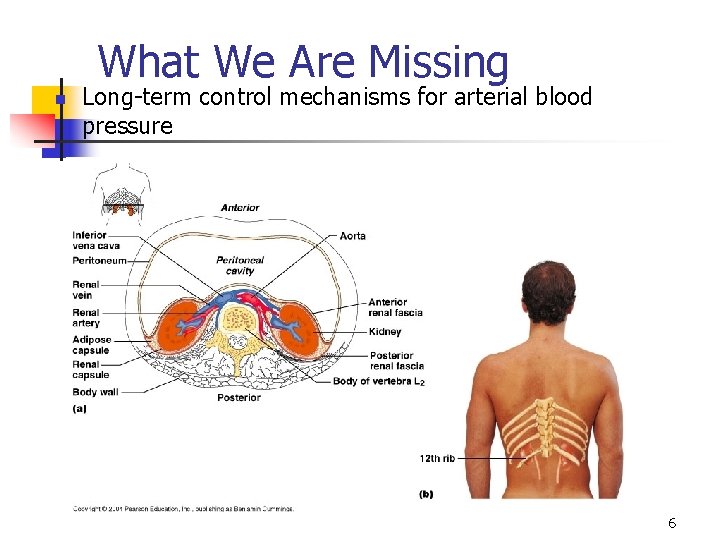
What We Are Missing n Long-term control mechanisms for arterial blood pressure 6
Long-term mechanisms for BP Regulation n n Related to maintaining homeostasis of body fluid volume Based on maintaining a balance between intake and output of body fluid n n Overall regulation of kidney excretion of H 2 O and Na+ Variables account for variation in blood volume 7
Simple Concept n n n Increase in extracellular fluid results in increased blood volume and arterial pressure Normal body response: kidneys excrete excess extracellular fluid and returns the pressure to normal Mechanism reverses if reduced blood volume 8
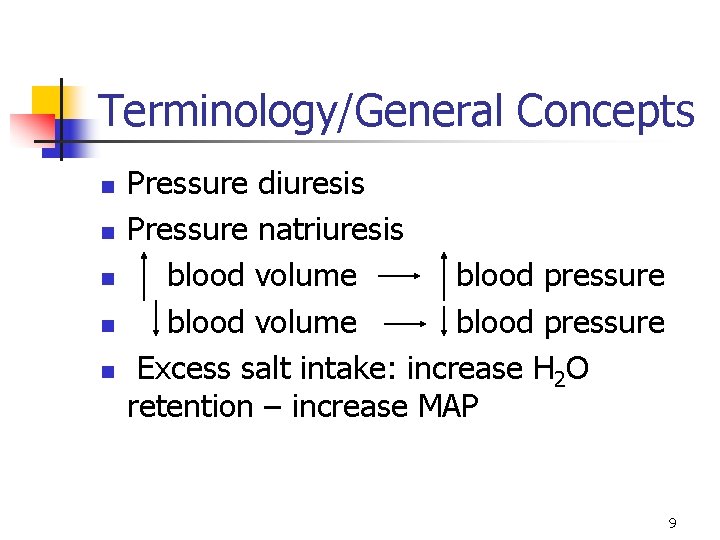
Terminology/General Concepts n n n Pressure diuresis Pressure natriuresis blood volume blood pressure Excess salt intake: increase H 2 O retention – increase MAP 9
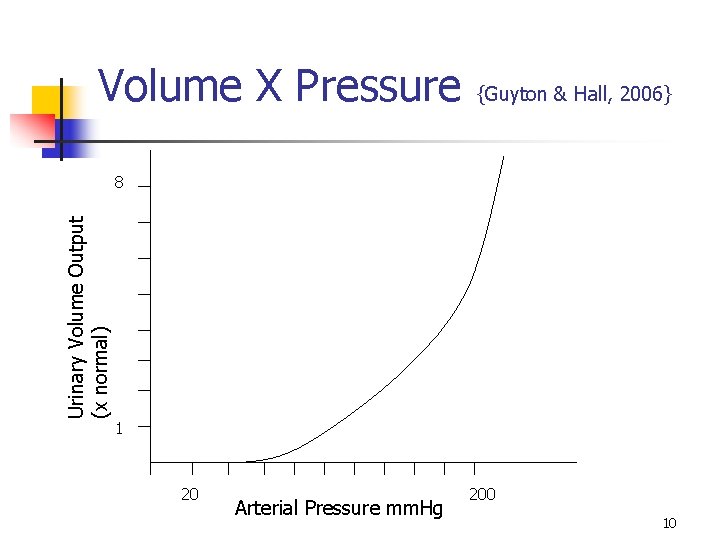
Volume X Pressure {Guyton & Hall, 2006} Urinary Volume Output (x normal) 8 1 20 Arterial Pressure mm. Hg 200 10
Renal Output Curve and Net Water/Salt Intake n n n Over long-term, water and salt intake must equal output Demonstrated at equilibrium point of curve Two determinants of long-term arterial pressure n n Location of renal output curve (shift? ) Level of intake line 11
TPR, Arterial Pressure and Kidney Function n n Arterial Pressure = CO X TPR If increase TPR: n n Get acute rise in arterial pressure However, normal kidney function will respond by returning arterial pressure to the pressure level of the equilibrium point – Why? 12
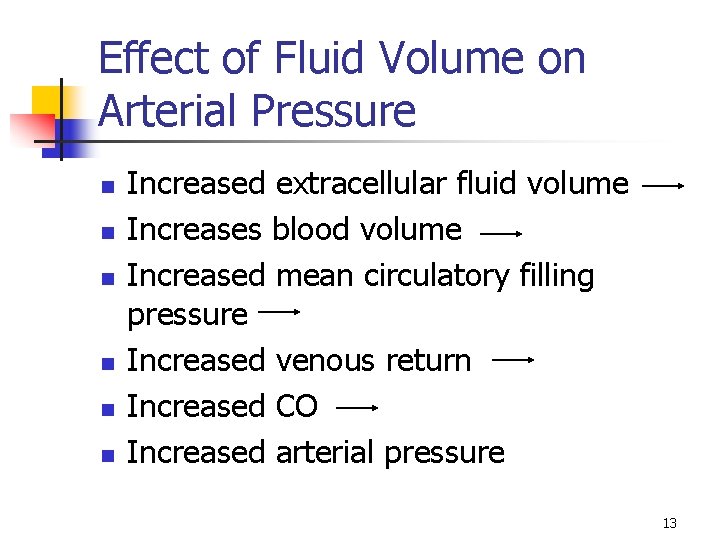
Effect of Fluid Volume on Arterial Pressure n n n Increased extracellular fluid volume Increases blood volume Increased mean circulatory filling pressure Increased venous return Increased CO Increased arterial pressure 13
CO: Two Mechanisms to Increase Arterial Pressure n Direct effect n n Increased CO increases pressure Indirect effect n Autoregulation 14
Salt Intake n n n Effect of Na+ greater than effect of H 2 O Why? Amount of salt accumulation in body is main determinant of extracellular fluid volume 15
Chronic Hypertension n MAP > 110 mm. Hg n Results of pathology n With dialysis, what happens if patient’s body fluid level is not kept at a normal level? 16
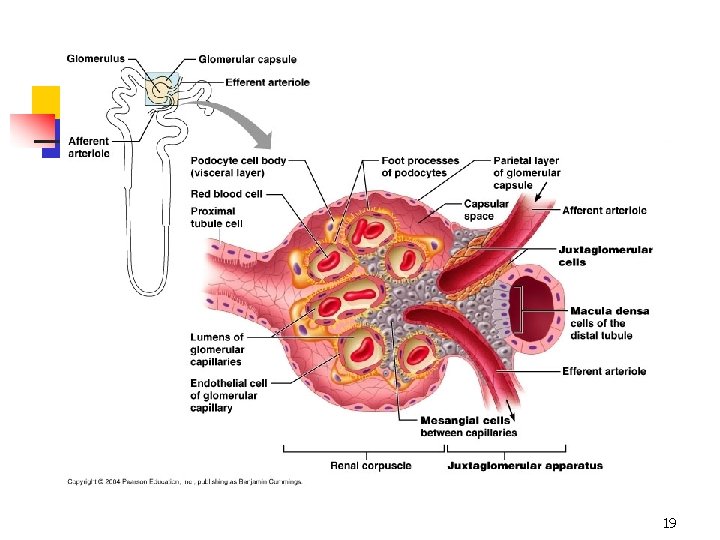
Renal Mechanisms for Control of BP n n Review: 1 st mechanism of kidney control of arterial pressure 2 nd system: Renin-Angiotensin 17
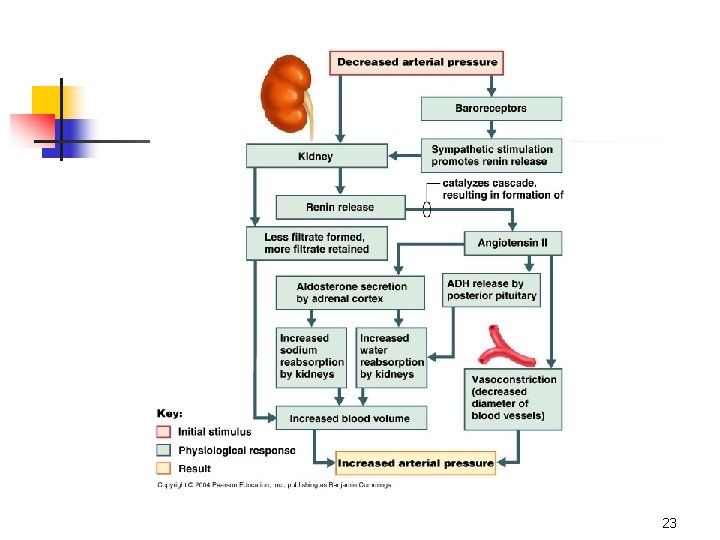
Renin-Angiotensin System n n n Renin – hormone that acts as an enzyme; released when arterial pressure drops – i. e. , when renal perfusion is inadequate Helps raise arterial pressure Can be life-saving system in circulatory shock 18
19
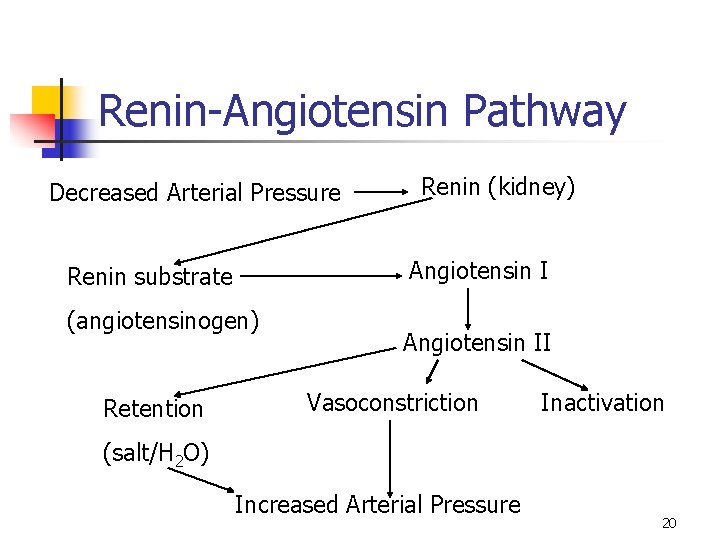
Renin-Angiotensin Pathway Decreased Arterial Pressure Angiotensin I Renin substrate (angiotensinogen) Retention Renin (kidney) Angiotensin II Vasoconstriction Inactivation (salt/H 2 O) Increased Arterial Pressure 20
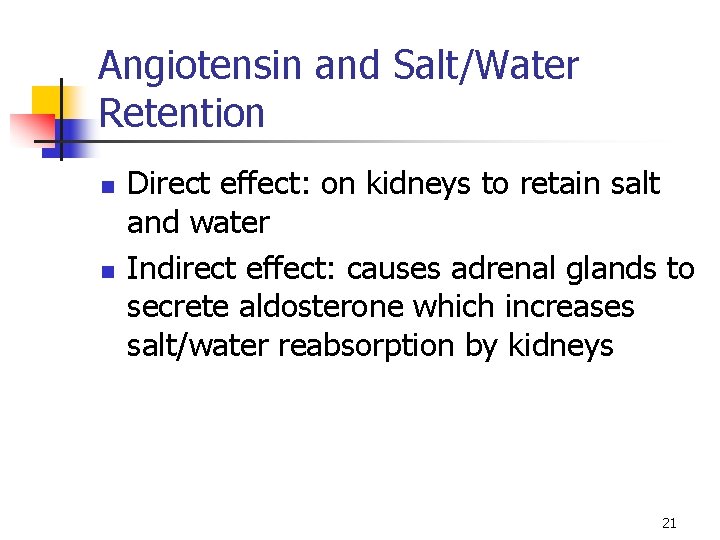
Angiotensin and Salt/Water Retention n n Direct effect: on kidneys to retain salt and water Indirect effect: causes adrenal glands to secrete aldosterone which increases salt/water reabsorption by kidneys 21
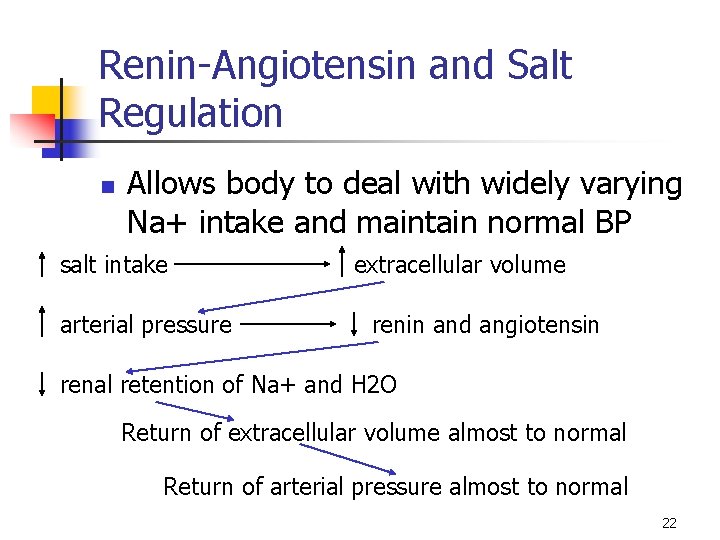
Renin-Angiotensin and Salt Regulation n Allows body to deal with widely varying Na+ intake and maintain normal BP salt intake arterial pressure extracellular volume renin and angiotensin renal retention of Na+ and H 2 O Return of extracellular volume almost to normal Return of arterial pressure almost to normal 22
23
Primary Hypertension = “Silent Killer” n n Unknown Cause – i. e. , not secondary to a known cause Influence of weight gain and sedentary lifestyle n PT role? 24
Weight Gain and Obesity Role in HTN n Cardiac output increased n SNS activity increased n Angiotensin II/Aldosterone levels increased 25
Treatment Options in HTN n n Lifestyle modifications Pharmacological n n Vasodilator drugs Natriuretic or diuretic drugs 26
Summary of Mechanisms to Control Arterial Pressure n Rapid (seconds) n Semi-rapid (minutes/hours) n Long-term (hours/days/months/years) 27

28
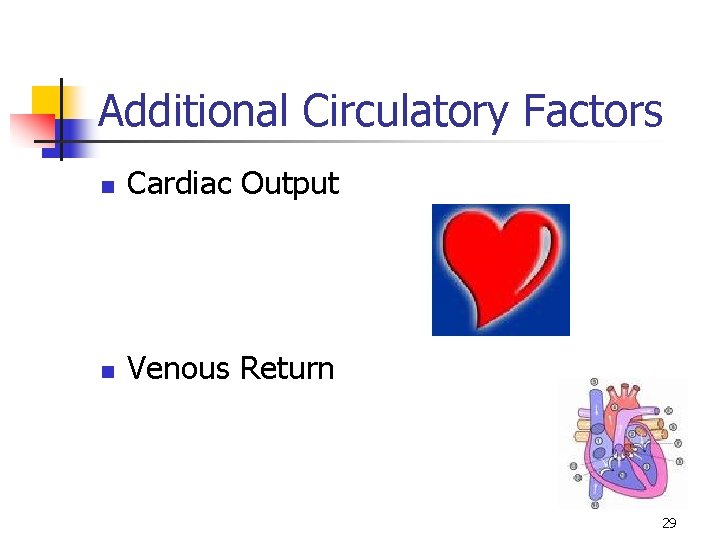
Additional Circulatory Factors n Cardiac Output n Venous Return 29
Cardiac Output and Venous Return n Cardiac output controlled by venous return under most normal unstressful conditions n n n Factors in the peripheral circulation affecting venous return to the heart (not heart itself) Sum of local blood flows contribute to venous return CO inversely related to TPR 30
Heart Influence on CO n Frank-Starling Law n Receptors n Heart is limiting factor if receives more venous return than it can handle 31
Cardiac Output n n Normal: ~5 L/min Normal CO plateaus at ~13 L/min without any special stimulation Hypereffective heart Hypoeffective heart 32
How Can We Measure CO? n Fick Principle n CO (L/min) = O 2 absorbed per minute by the lungs (ml/min)/A-VO 2 difference (ml/L of blood) 33
- Slides: 33