
CARDIOVASCULAR SYSTEM THE HEART Learning Objectives To be

CARDIOVASCULAR SYSTEM THE HEART Learning Objectives To be able to describe the structure of the heart and how blood is pumped through it. Content 1. 2. 1 Functions of the cardiovascular system applied to performance in physical activities: transport of oxygen; carbon dioxide and nutrients; clotting of open wounds; regulation of body temperature. 1. 2. 2 Structure of the cardiovascular system: atria; ventricles; septum; tricuspid; bicuspid and semi-lunar valves; aorta; vena cava; pulmonary artery; pulmonary vein; and their role in maintaining blood circulation during performance in physical activity and sport.
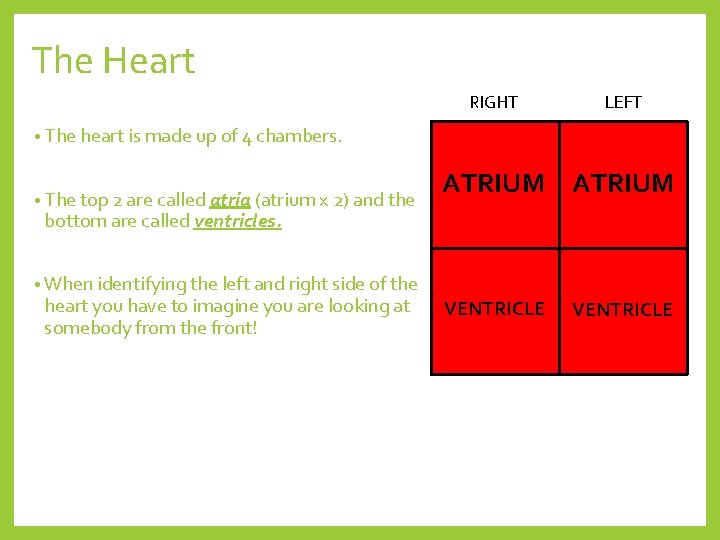
The Heart RIGHT LEFT • The heart is made up of 4 chambers. • The top 2 are called atria (atrium x 2) and the ATRIUM bottom are called ventricles. • When identifying the left and right side of the heart you have to imagine you are looking at somebody from the front! VENTRICLE
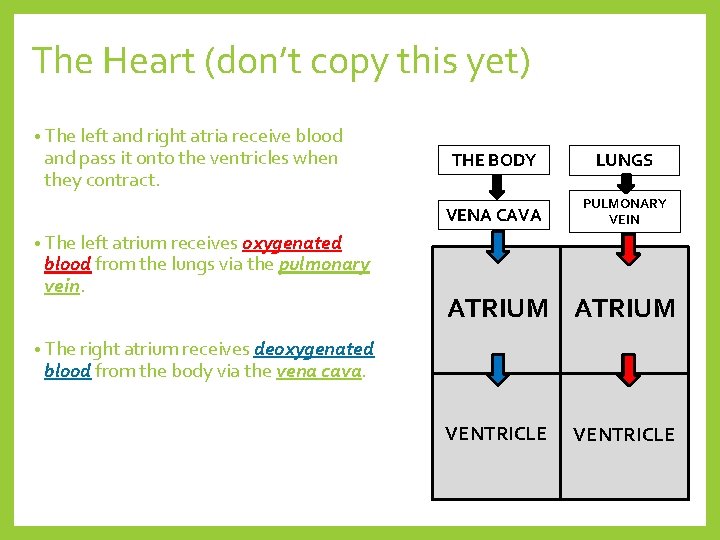
The Heart (don’t copy this yet) • The left and right atria receive blood and pass it onto the ventricles when they contract. THE BODY LUNGS VENA CAVA PULMONARY VEIN • The left atrium receives oxygenated blood from the lungs via the pulmonary vein. ATRIUM • The right atrium receives deoxygenated blood from the body via the vena cava. VENTRICLE
The Heart Oxygenated Blood • This refers to blood that has collected oxygen from the lungs – blood that is carrying oxygen. Deoxygenated Blood • This refers to blood that has had the oxygen it was carrying taken by working muscles to use for energy production.
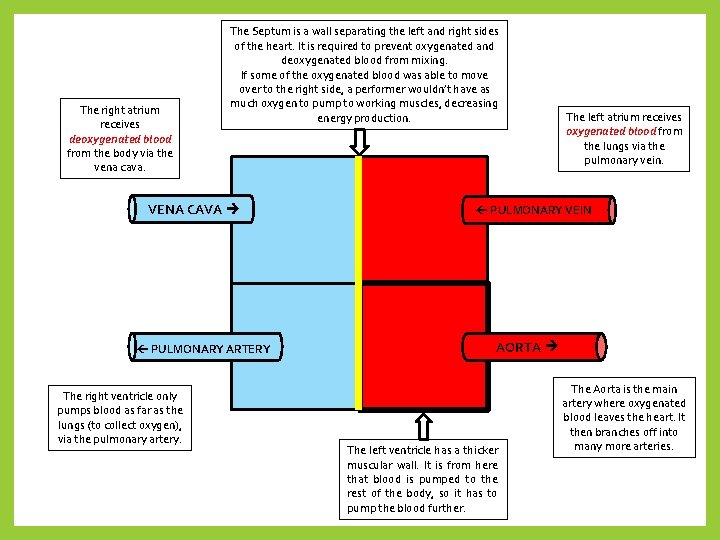
The right atrium receives deoxygenated blood from the body via the vena cava. The Septum is a wall separating the left and right sides of the heart. It is required to prevent oxygenated and deoxygenated blood from mixing. If some of the oxygenated blood was able to move over to the right side, a performer wouldn’t have as much oxygen to pump to working muscles, decreasing energy production. VENA CAVA PULMONARY ARTERY The right ventricle only pumps blood as far as the lungs (to collect oxygen), via the pulmonary artery. The left atrium receives oxygenated blood from the lungs via the pulmonary vein. PULMONARY VEIN AORTA The left ventricle has a thicker muscular wall. It is from here that blood is pumped to the rest of the body, so it has to pump the blood further. The Aorta is the main artery where oxygenated blood leaves the heart. It then branches off into many more arteries.
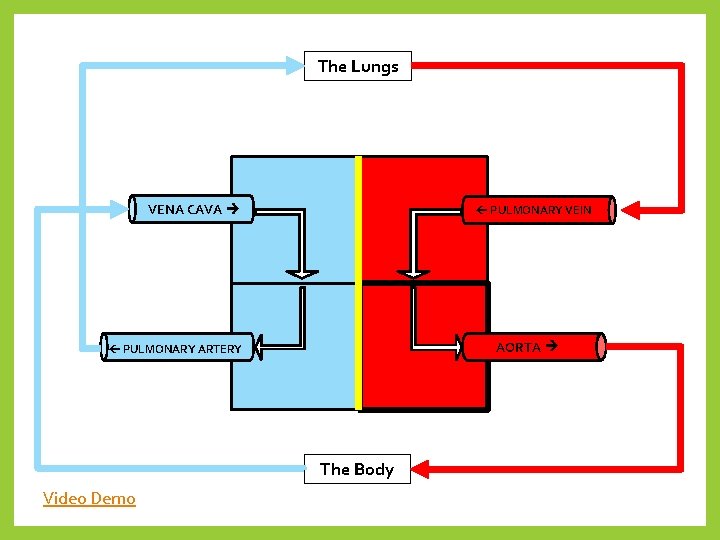
The Lungs VENA CAVA PULMONARY VEIN AORTA PULMONARY ARTERY The Body Video Demo
Valves • Valves are flaps which only allow blood to flow one way. • They are like emergency exit doors, which open to let you out but close behind you to prevent you going back in. • If we didn’t have valves in our heart and the blood could flow backwards, we wouldn’t be able to pump blood as quickly, either to our lungs to collect oxygen or to our working muscles to deliver the oxygen.
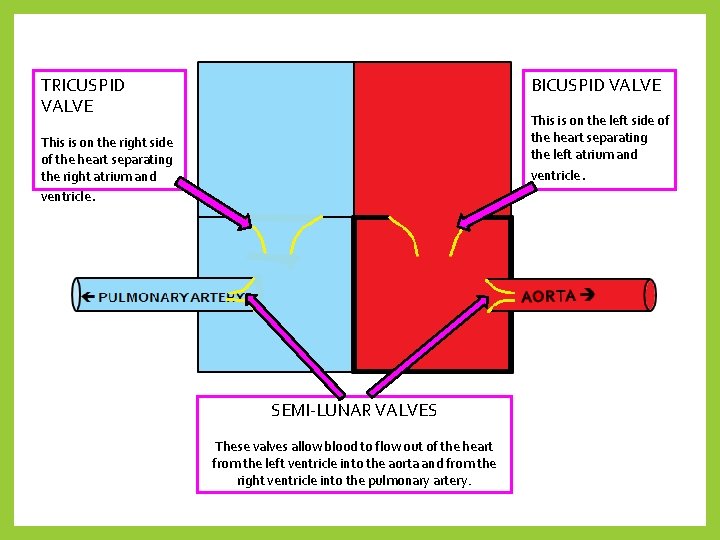
BICUSPID VALVE TRICUSPID VALVE This is on the left side of the heart separating the left atrium and ventricle. This is on the right side of the heart separating the right atrium and ventricle. SEMI-LUNAR VALVES These valves allow blood to flow out of the heart from the left ventricle into the aorta and from the right ventricle into the pulmonary artery.

Double Circulatory System As the heart pumps it circulates blood… • Blood is circulated from the heart to The Lungs the lungs and back again – this is called pulmonary circulation. • The second part is called systemic circulation – when blood is pumped to the working parts of the body and then returned to the heart. • This is why you hear 2 sounds during every heart beat. To summarise… The Body
Questions Explain the role of the septum in the heart (2 marks) Name the 4 main arteries and veins and state the chamber of the heart each is connected to. (4 marks) Give the name of the valves that allows blood to leave the heart from the ventricles. (1 mark)
- Slides: 10