
Cardiovascular System The Heart 1 Functions of the
- Slides: 38
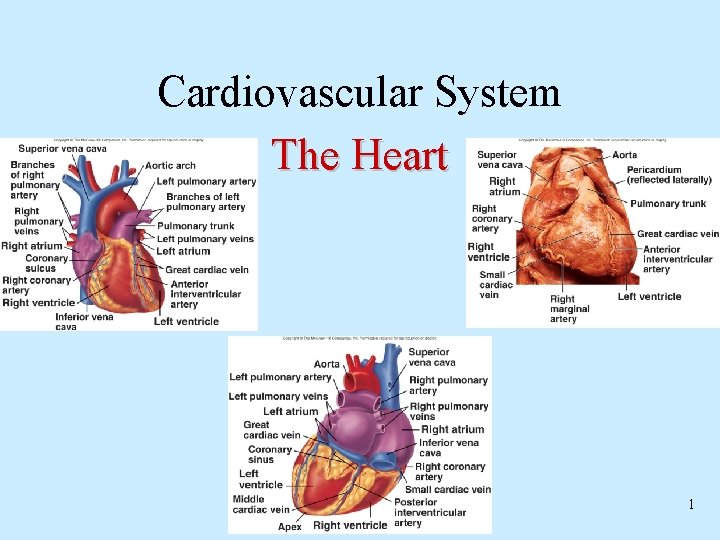
Cardiovascular System The Heart 1
Functions of the Heart • Generating blood pressure • Routing blood – Heart separates pulmonary and systemic circulations • Ensuring one-way blood flow – Heart valves ensure one-way flow • Regulating blood supply – Changes in contraction rate and force match blood delivery to changing metabolic needs 2
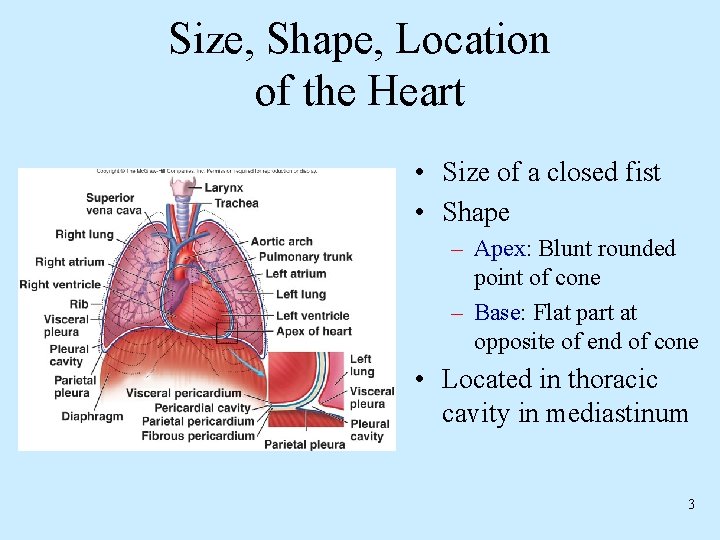
Size, Shape, Location of the Heart • Size of a closed fist • Shape – Apex: Blunt rounded point of cone – Base: Flat part at opposite of end of cone • Located in thoracic cavity in mediastinum 3
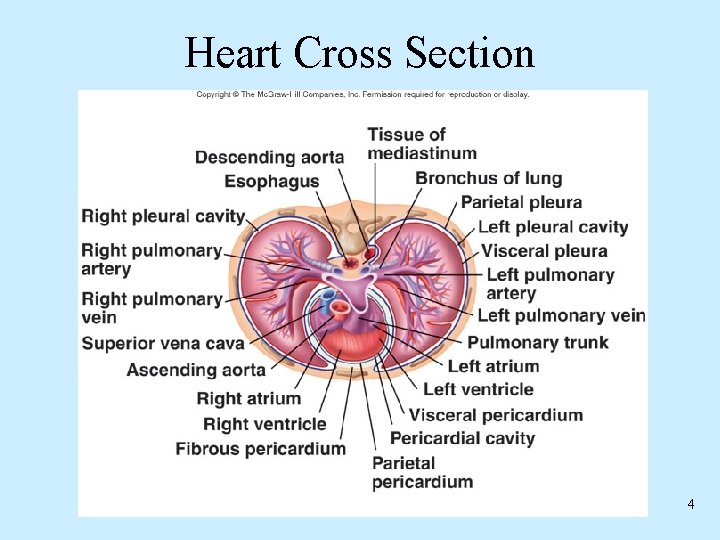
Heart Cross Section 4
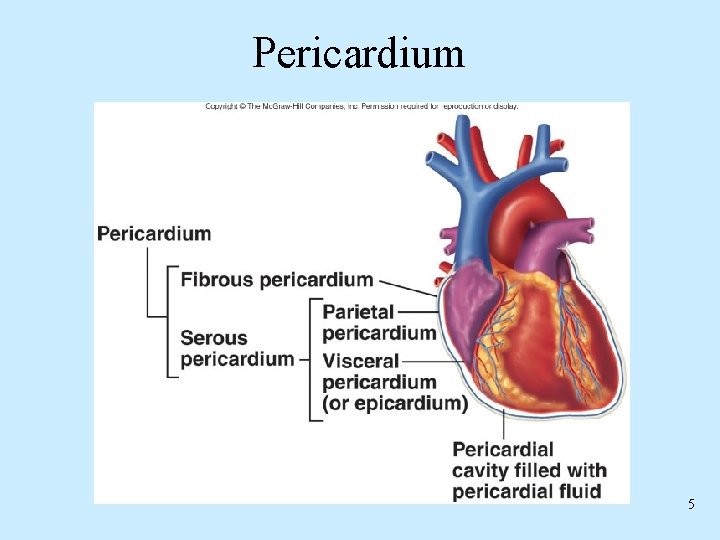
Pericardium 5
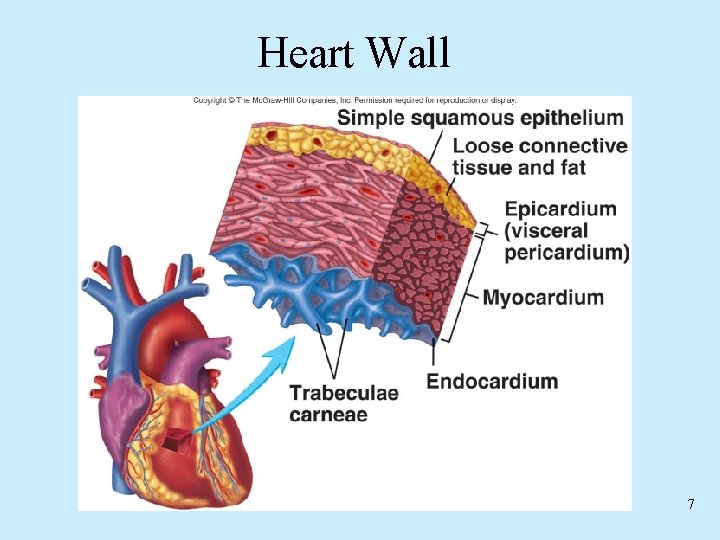
Heart Wall • Three layers of tissue – Epicardium: This serous membrane of smooth outer surface of heart – Myocardium: Middle layer composed of cardiac muscle cell and responsibility for heart contracting – Endocardium: Smooth inner surface of heart chambers 6
Heart Wall 7
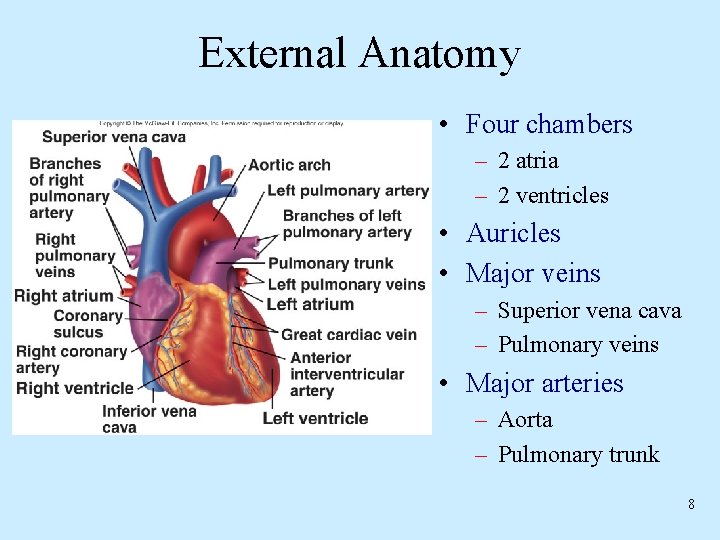
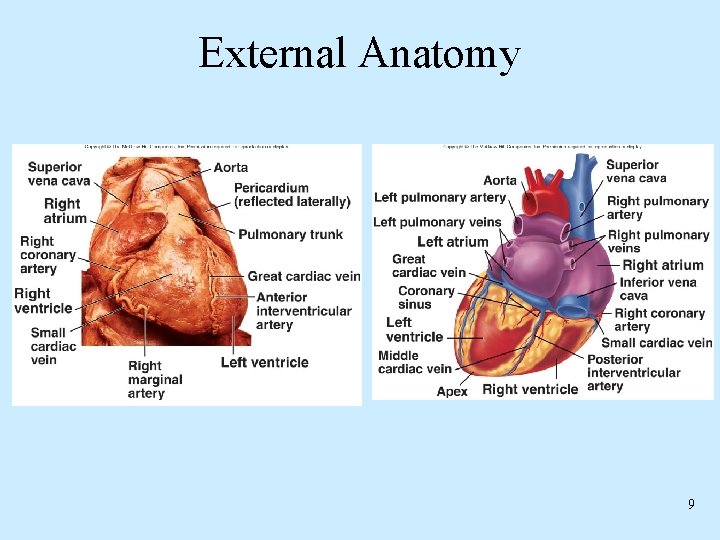
External Anatomy • Four chambers – 2 atria – 2 ventricles • Auricles • Major veins – Superior vena cava – Pulmonary veins • Major arteries – Aorta – Pulmonary trunk 8
External Anatomy 9
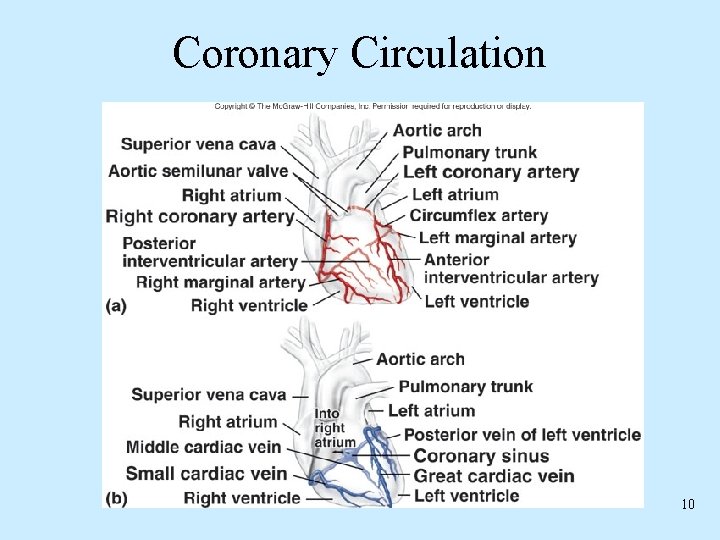
Coronary Circulation 10
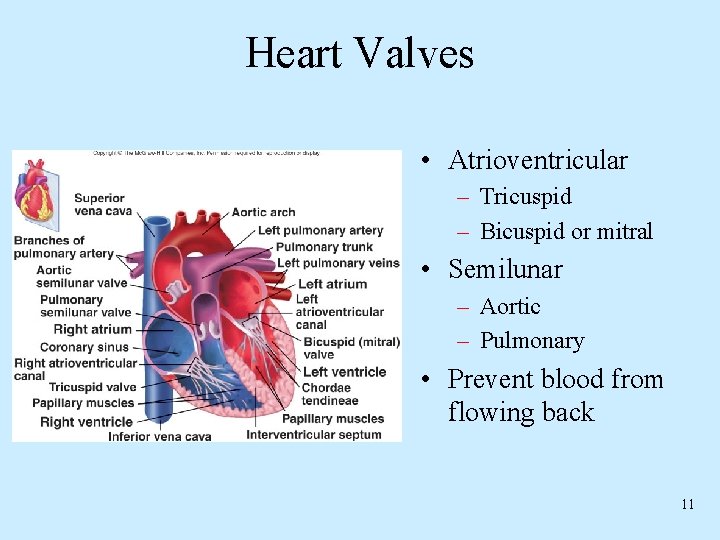
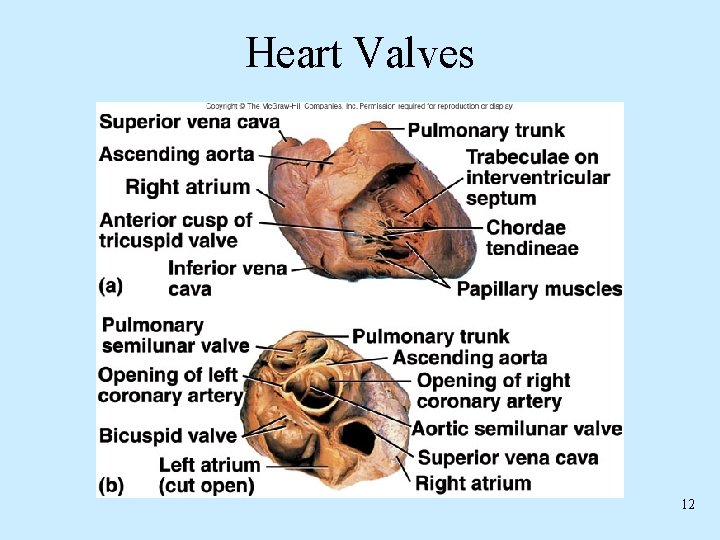
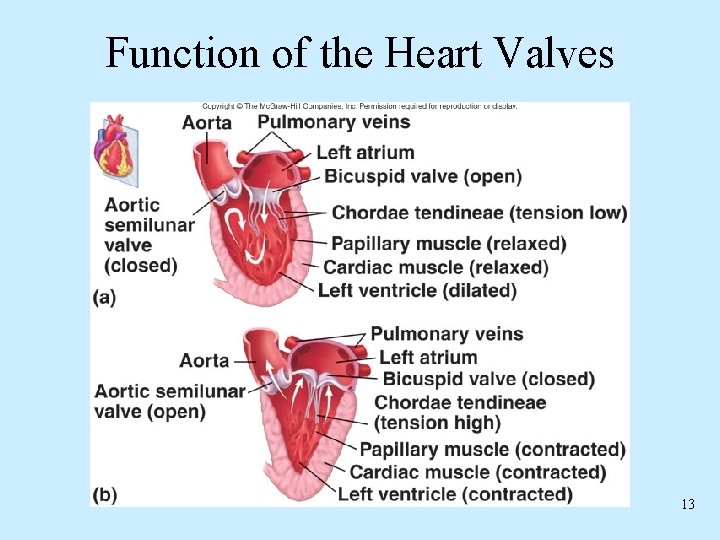
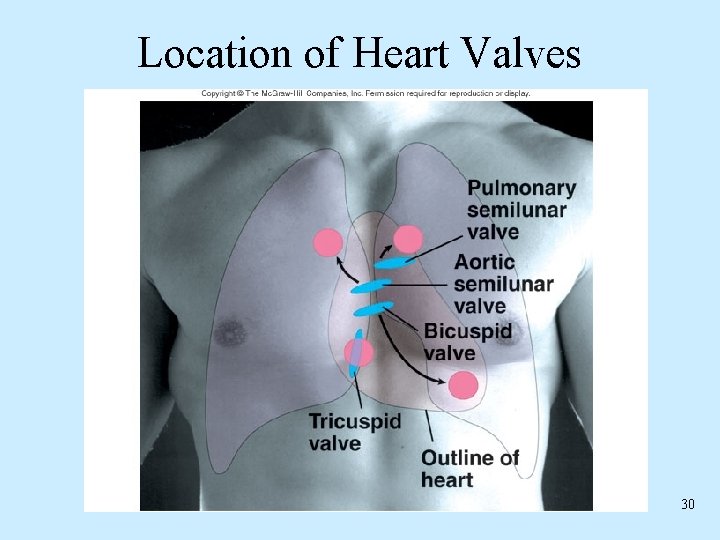
Heart Valves • Atrioventricular – Tricuspid – Bicuspid or mitral • Semilunar – Aortic – Pulmonary • Prevent blood from flowing back 11
Heart Valves 12
Function of the Heart Valves 13
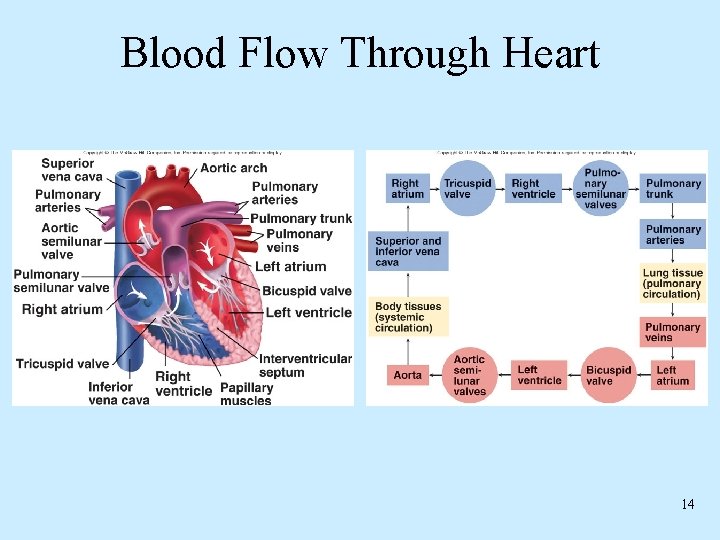
Blood Flow Through Heart 14
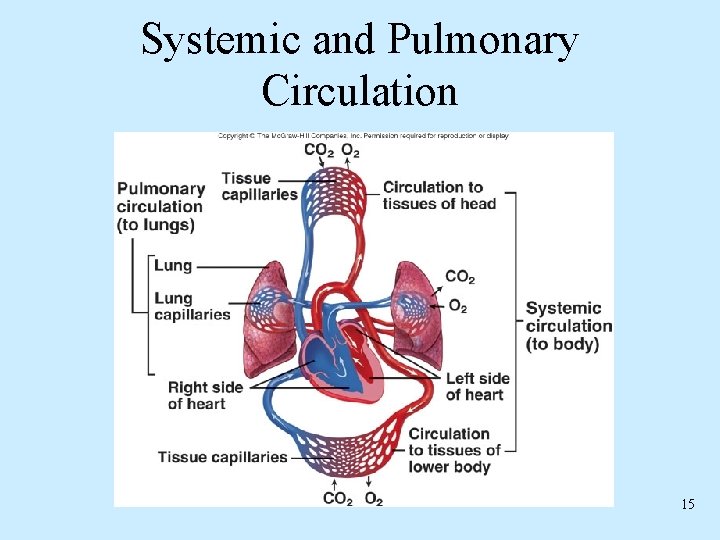
Systemic and Pulmonary Circulation 15
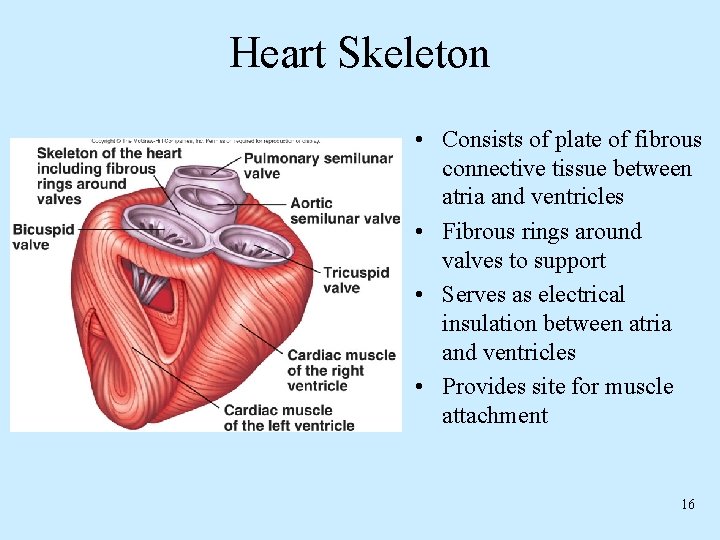
Heart Skeleton • Consists of plate of fibrous connective tissue between atria and ventricles • Fibrous rings around valves to support • Serves as electrical insulation between atria and ventricles • Provides site for muscle attachment 16
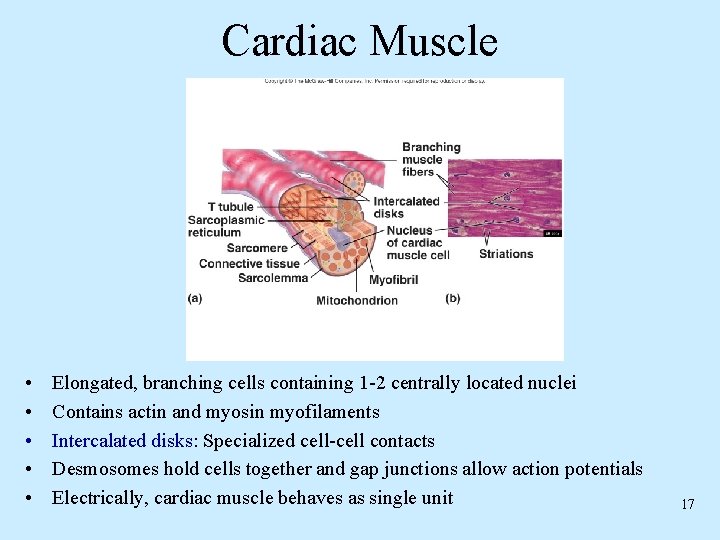
Cardiac Muscle • • • Elongated, branching cells containing 1 -2 centrally located nuclei Contains actin and myosin myofilaments Intercalated disks: Specialized cell-cell contacts Desmosomes hold cells together and gap junctions allow action potentials Electrically, cardiac muscle behaves as single unit 17
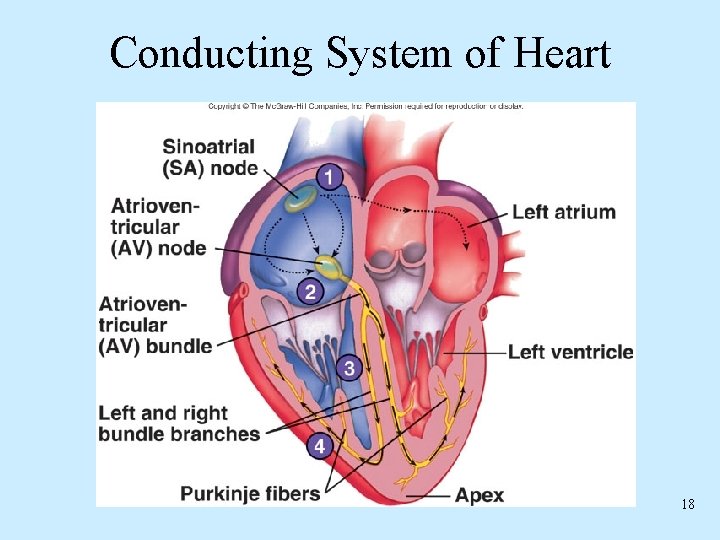
Conducting System of Heart 18
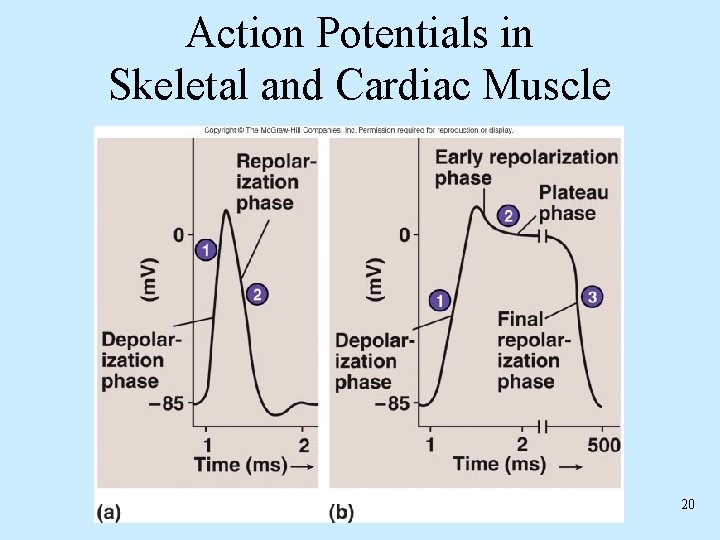
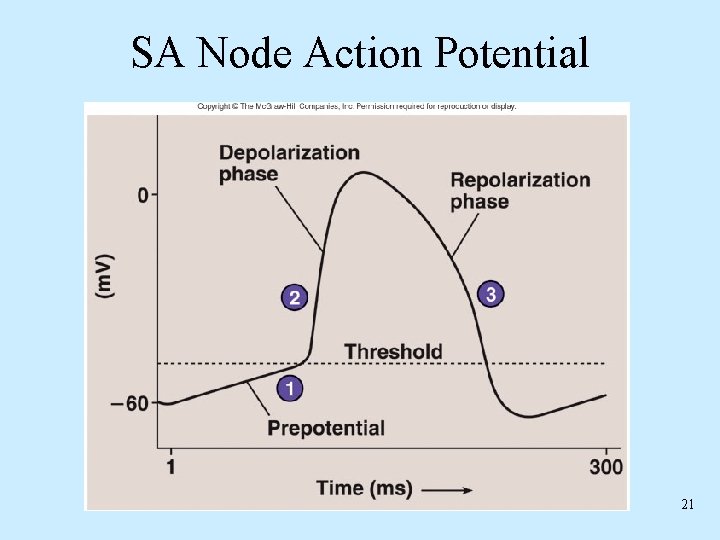
Electrical Properties • Resting membrane potential (RMP) present • Action potentials – Rapid depolarization followed by rapid, partial early repolarization. Prolonged period of slow repolarization which is plateau phase and a rapid final repolarization phase – Voltage-gated channels 19
Action Potentials in Skeletal and Cardiac Muscle 20
SA Node Action Potential 21
Refractory Period • Absolute: Cardiac muscle cell completely insensitive to further stimulation • Relative: Cell exhibits reduced sensitivity to additional stimulation • Long refractory period prevents tetanic contractions 22
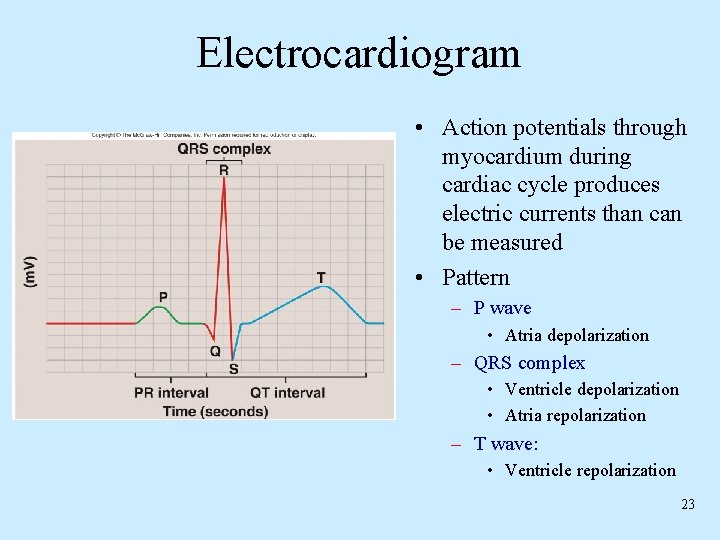
Electrocardiogram • Action potentials through myocardium during cardiac cycle produces electric currents than can be measured • Pattern – P wave • Atria depolarization – QRS complex • Ventricle depolarization • Atria repolarization – T wave: • Ventricle repolarization 23
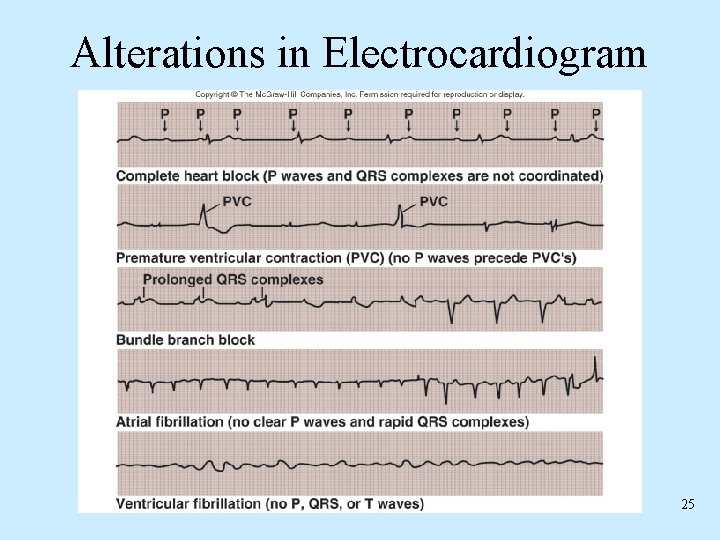
Cardiac Arrhythmias • Tachycardia: Heart rate in excess of 100 bpm • Bradycardia: Heart rate less than 60 bpm • Sinus arrhythmia: Heart rate varies 5% during respiratory cycle and up to 30% during deep respiration • Premature atrial contractions: Occasional shortened intervals between one contraction and succeeding, frequently occurs in healthy people 24
Alterations in Electrocardiogram 25
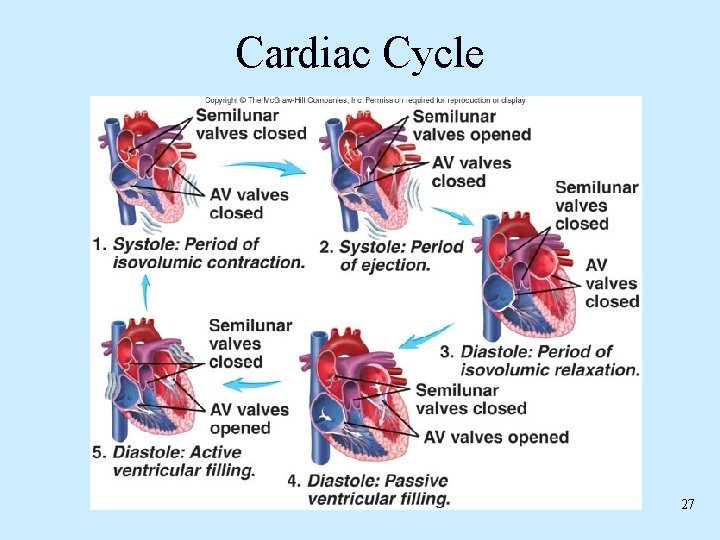
Cardiac Cycle • Heart is two pumps that work together, right and left half • Repetitive contraction (systole) and relaxation (diastole) of heart chambers • Blood moves through circulatory system from areas of higher to lower pressure. – Contraction of heart produces the pressure 26
Cardiac Cycle 27
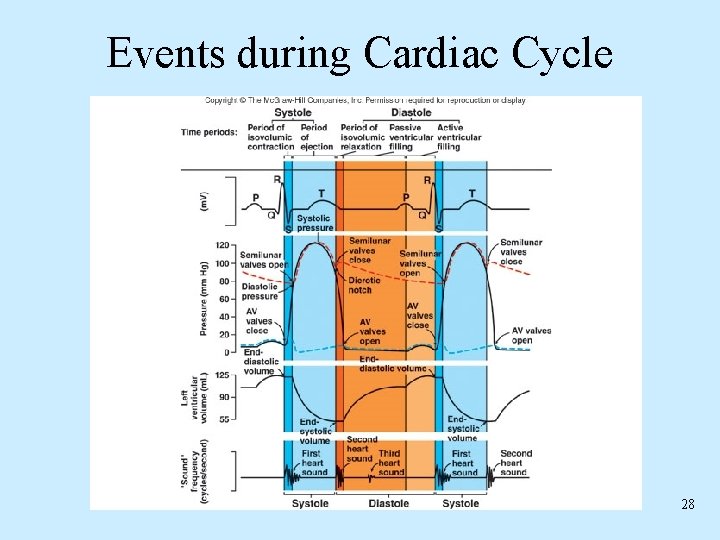
Events during Cardiac Cycle 28
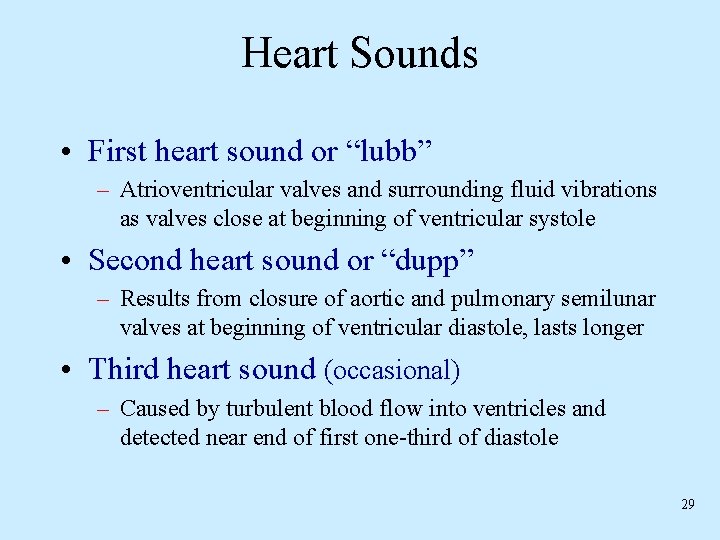
Heart Sounds • First heart sound or “lubb” – Atrioventricular valves and surrounding fluid vibrations as valves close at beginning of ventricular systole • Second heart sound or “dupp” – Results from closure of aortic and pulmonary semilunar valves at beginning of ventricular diastole, lasts longer • Third heart sound (occasional) – Caused by turbulent blood flow into ventricles and detected near end of first one-third of diastole 29
Location of Heart Valves 30
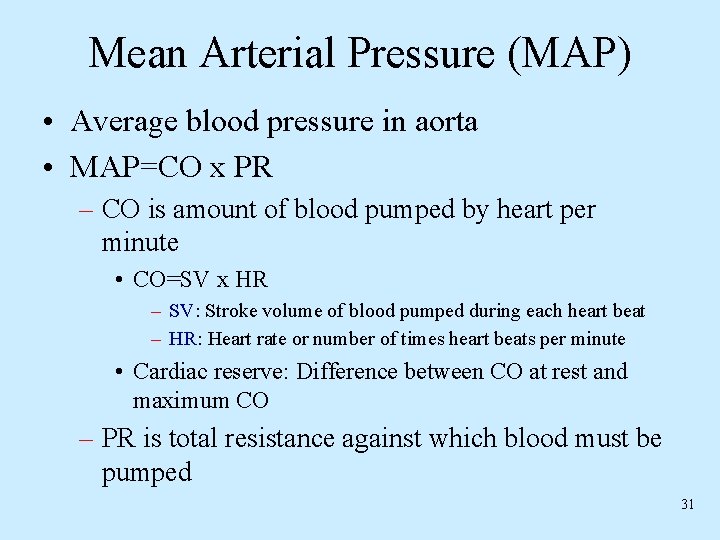
Mean Arterial Pressure (MAP) • Average blood pressure in aorta • MAP=CO x PR – CO is amount of blood pumped by heart per minute • CO=SV x HR – SV: Stroke volume of blood pumped during each heart beat – HR: Heart rate or number of times heart beats per minute • Cardiac reserve: Difference between CO at rest and maximum CO – PR is total resistance against which blood must be pumped 31
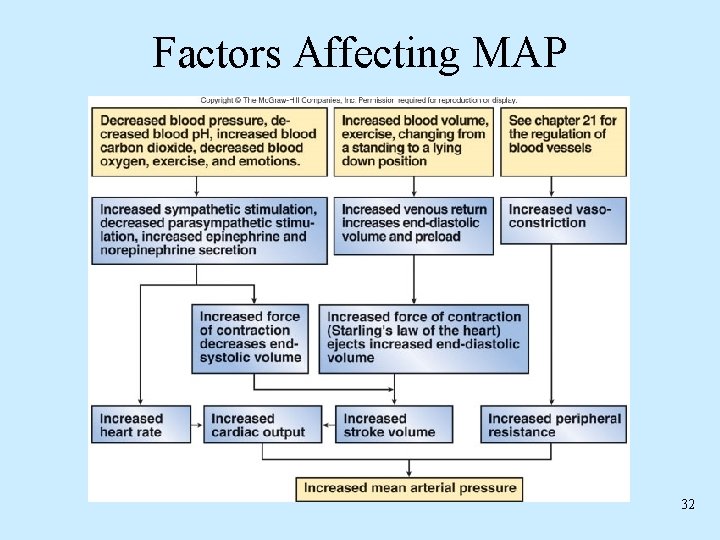
Factors Affecting MAP 32
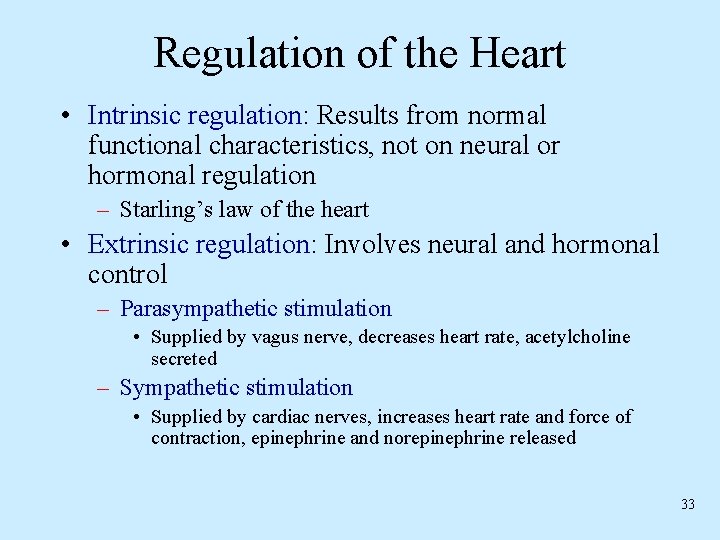
Regulation of the Heart • Intrinsic regulation: Results from normal functional characteristics, not on neural or hormonal regulation – Starling’s law of the heart • Extrinsic regulation: Involves neural and hormonal control – Parasympathetic stimulation • Supplied by vagus nerve, decreases heart rate, acetylcholine secreted – Sympathetic stimulation • Supplied by cardiac nerves, increases heart rate and force of contraction, epinephrine and norepinephrine released 33
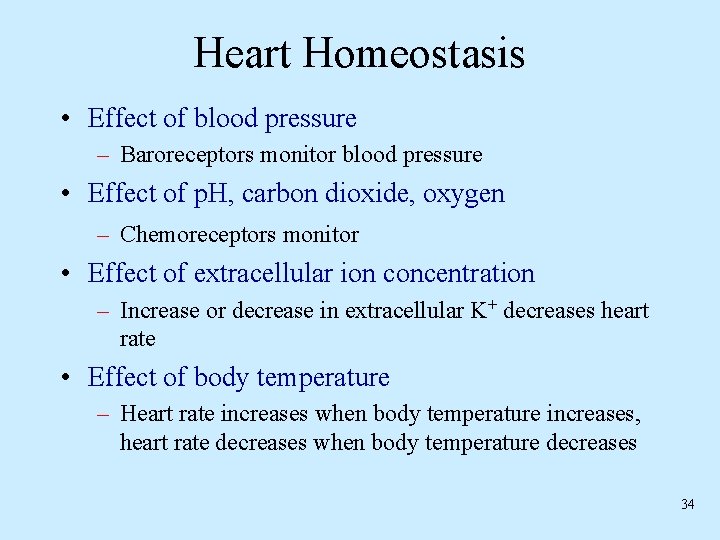
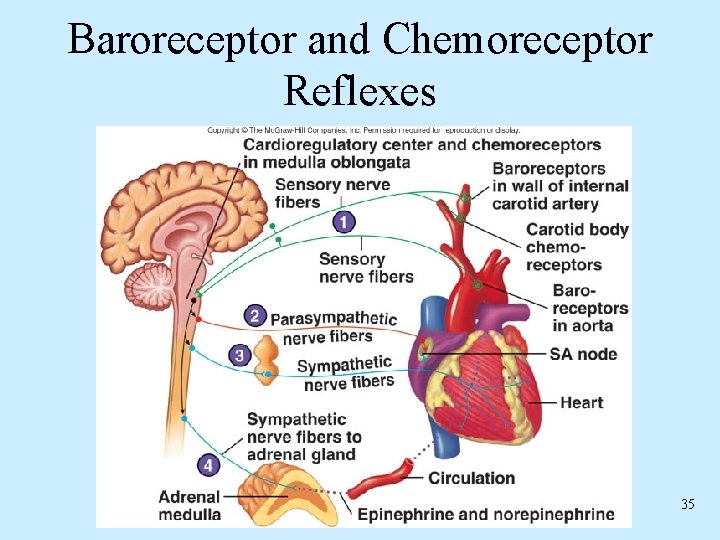
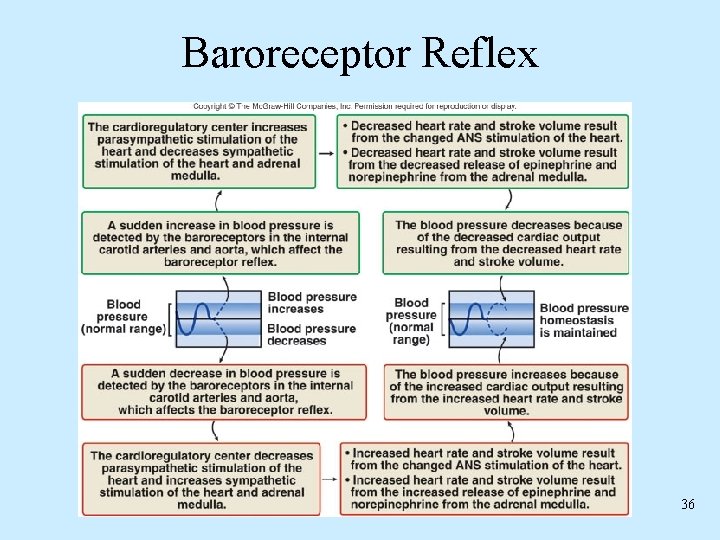
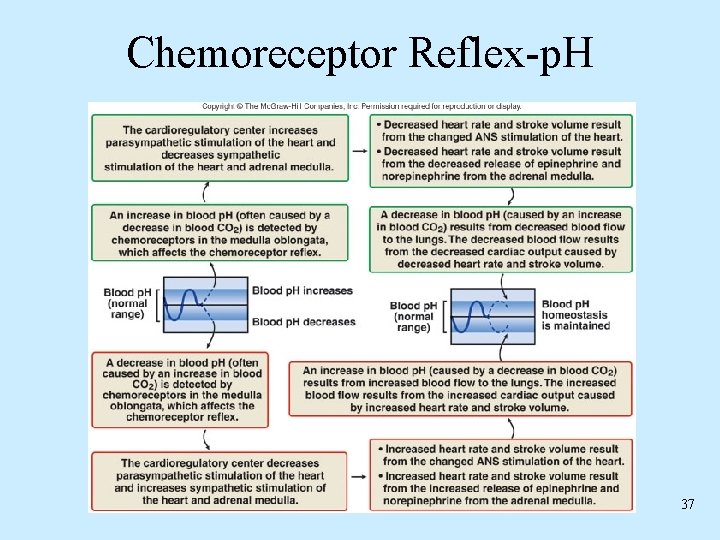
Heart Homeostasis • Effect of blood pressure – Baroreceptors monitor blood pressure • Effect of p. H, carbon dioxide, oxygen – Chemoreceptors monitor • Effect of extracellular ion concentration – Increase or decrease in extracellular K+ decreases heart rate • Effect of body temperature – Heart rate increases when body temperature increases, heart rate decreases when body temperature decreases 34
Baroreceptor and Chemoreceptor Reflexes 35
Baroreceptor Reflex 36
Chemoreceptor Reflex-p. H 37
Effects of Aging on the Heart • Gradual changes in heart function, minor under resting condition, more significant during exercise • Hypertrophy of left ventricle • Maximum heart rate decreases • Increased tendency for valves to function abnormally and arrhythmias to occur • Increased oxygen consumption required to pump same amount of blood 38